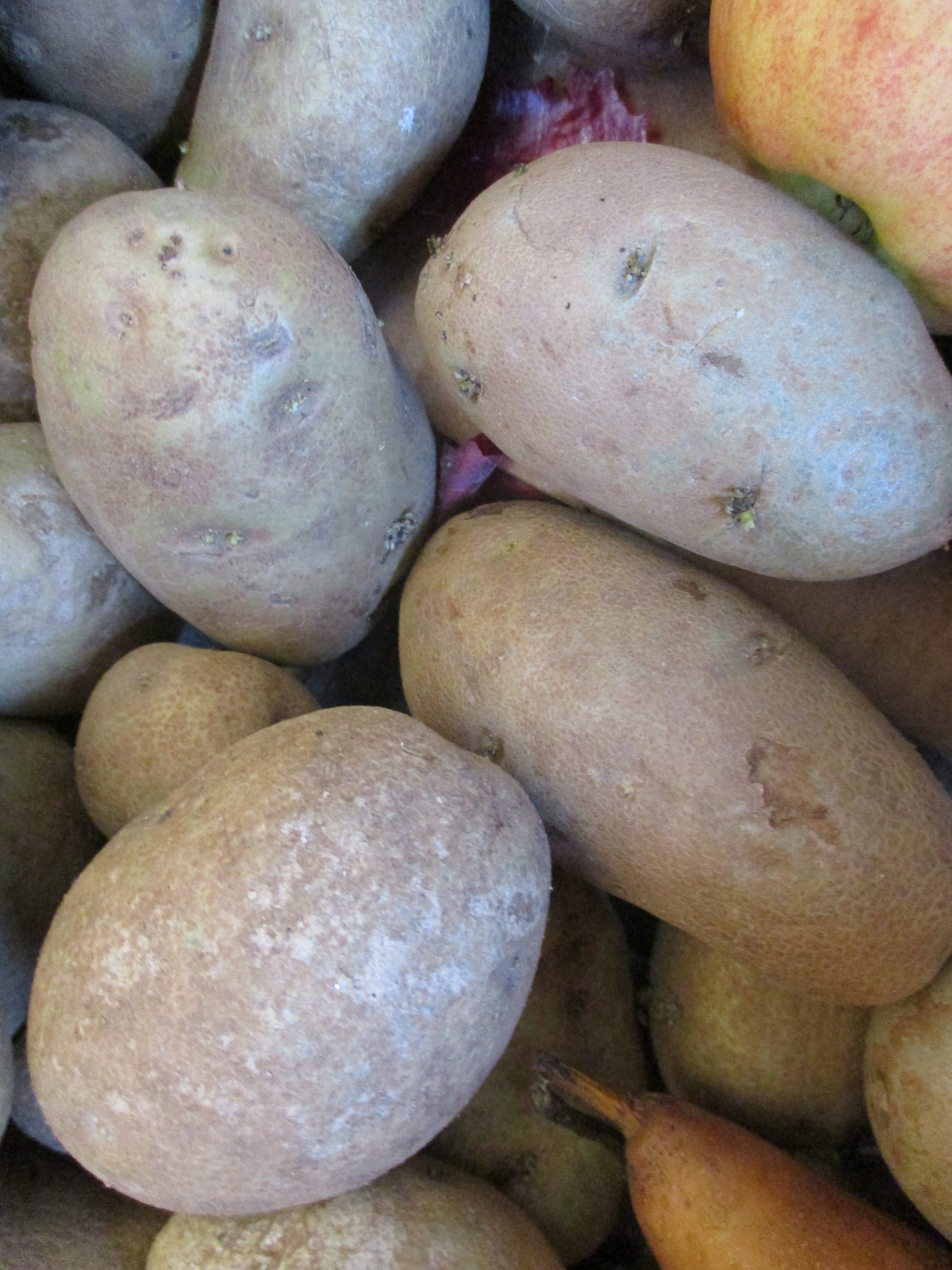
Rotating Vegetables Should Enhance Productivity

Tomato plants are greedy for nutrients.

Warm season vegetables are beginning to replace cool season vegetables. Some types prefer to start earlier than others. A few might displace lingering predecessors before the predecessors finish. Timing is not everything, though. Location may be as relevant. If the garden did not move, some vegetables should. Many or most benefit from rotating crops.

Vegetable plants are innately greedy in regard to particular nutrients. They might deplete such nutrients from their soil within a few years. Some may not take that long, particularly within less than ideal soils. However, different types of vegetables deplete different types of nutrients. Rotating vegetable plants disperses and decelerates this nutrient depletion.

Tomato plants deplete their favorite nutrients. Therefore, new tomato plants should likely avoid soil that tomatoes formerly occupied. Corn can use such soil instead, and may not notice a deficiency of nutrients. After all, each craves something different. Beans can use the same soil afterward for the same reason. Rotating crops shares resources equitably.

Bell peppers are related to tomatoes, so deplete similar nutrients. Therefore, they should also avoid soil that tomatoes formerly occupied. All types of beans should similarly avoid soil that any type of bean utilized. Fortunately, warm season vegetables are unrelated to most cool season vegetables. What grew last summer is now relevant for rotating crops.

Nutrient depletion is not permanent, though. Rotating crops, while accommodating such depletion, also accelerates replenishment. For example, beans should not deplete much of what tomatoes crave. They instead replenish some of what tomatoes crave. Tomatoes, can therefore eventually return to where they grew before. After all, rotation goes around.

Warm season vegetables generally require more nutrients than cool season vegetables. That is because so many warm season vegetables are actually fruits that contain seeds. Most cool season vegetables are vegetative, without seed. Consequently, warm season vegetables are more appreciative of rotating. Cool season vegetables are more passive. Cool season vegetables do not grow long enough locally to deplete much anyway.
Succession Planting Prolongs Vegetable Harvest

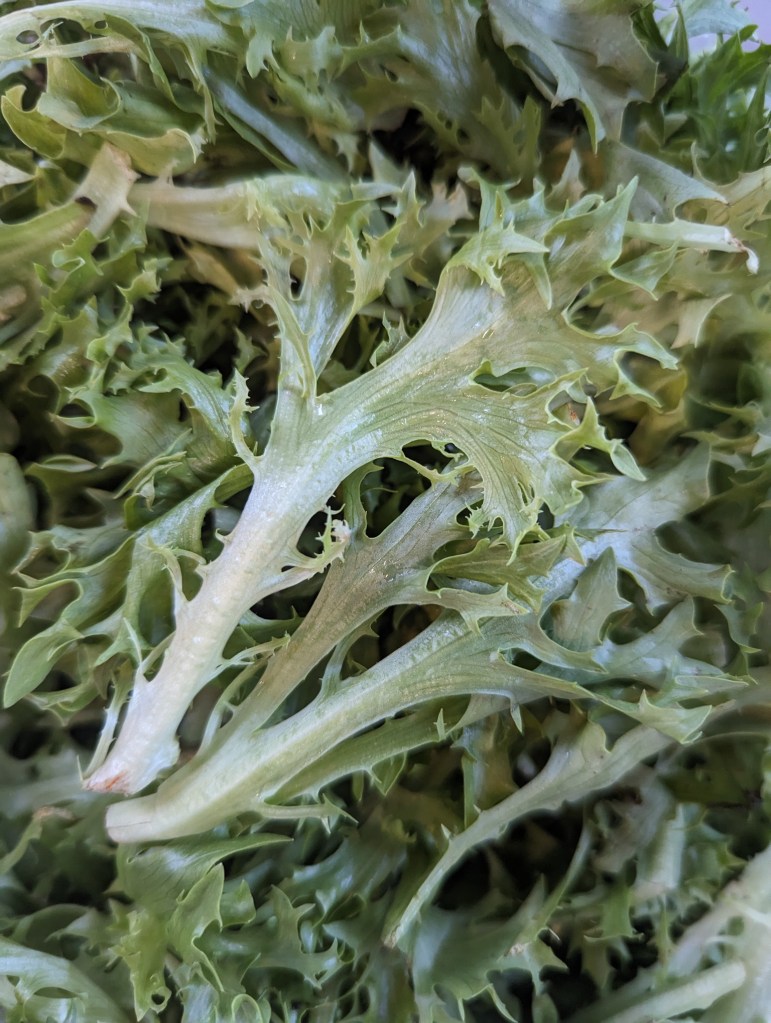
Frisee is for autumn and spring.

Winter vegetables might inspire both enthusiasm and trepidation as their season begins. Sowing their seed and plugging their seedlings into a fresh garden is delightful. Concern for their performance while summery warmth continues is not. It may take a while, but the weather will eventually cool. Later phases of succession planting will enjoy it even more.

Succession planting, which is the same as phasing, looks simpler than it is. Most simply, it is cultivation of small groups of any vegetable throughout its season. First groups might seem premature, but then seem less so as their season evolves. Subsequent groups are likely to seem more appropriate to their season. They can be one to several weeks later.

Planning is important for efficient use of space. The first groups of winter vegetables can use space as summer vegetables relinquish it. Later groups can use space as these first groups of winter vegetables relinquish it. However, with good crop rotation, any one type should not grow twice on the same sites. They prefer former sites of different vegetables.

So, succession planting is more complicated than growing one big group for the season. It is practical, though, for extending the harvests of individual varieties. The first groups of each variety are ready for harvest first. Each subsequent group should become ready as the preceding group finishes. The last group should finish at about the end of its season.

Different types of vegetables obviously respond differently to succession planting. Those that grow in autumn and spring but not winter need no other succession planting. Radish grows so fast that several phases can fit into one season. Cabbage can linger for so long that only two or three phases might be sufficient. Besides, they develop at different rates.

Succession planting is also effective for several spring bulbs that will soon be available. Although less obviously, and later next spring, prolonged planting should prolong bloom. However, reliably perennial bulbs synchronize for subsequent spring bloom. Succession planting is less effective for summer bulbs later. It only delays prolonged bloom for some that bloom for a recurrent bloom cycle.

Rotation Makes Gardens Go Round

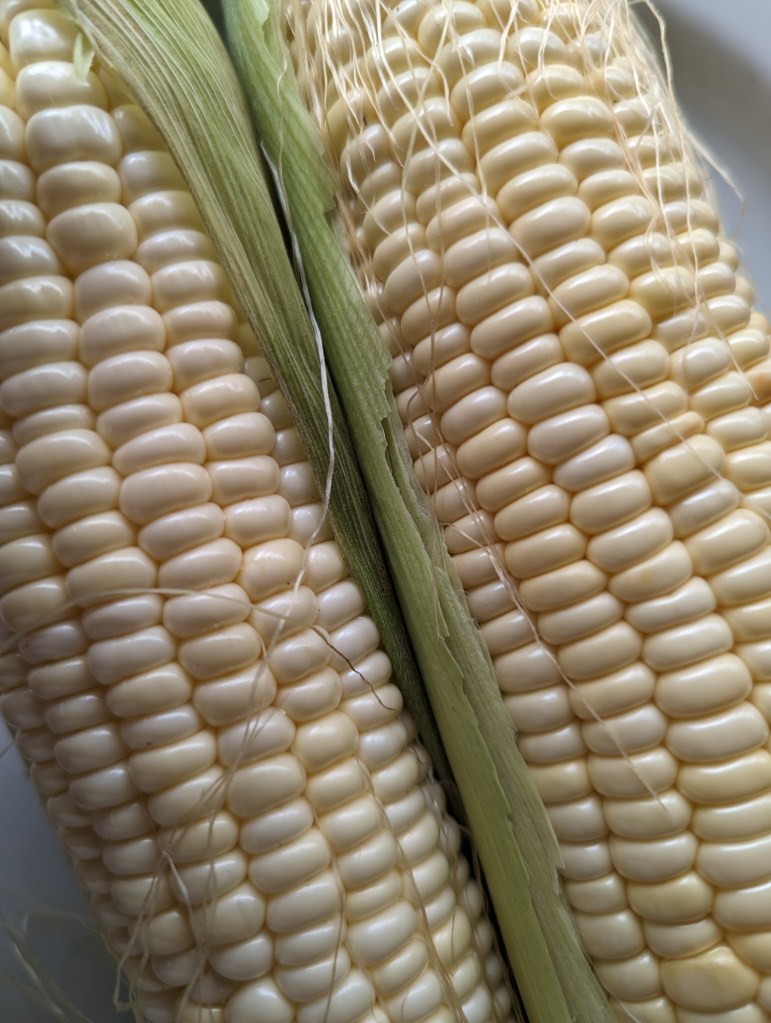
Corn is a consumptive summer vegetable.

Vegetables are greedy as they grow. They crave rich soil. They exploit it and abandon it at the end of their season. Nutrient depletion can be a problem for subsequent phases of similar vegetables. In other words, vegetables of any particular family consume the same nutrients. Each phase leaves a bit less for the next. Crop rotation disrupts this process.

Different types of vegetables deplete different types of nutrients. This is an advantage for a vegetable garden. Tomatoes can deplete soil nutrients for subsequent tomatoes. Corn, however, may not notice such depletion. It craves different nutrients, so may be content with what tomatoes did not consume. This is how and why crop rotation is so effective.

Crop rotation is simply a technique of not growing vegetables where similar types grew. Vegetables grow better where different types grew previously. Their formerly depleted but vacated soil can recuperate in their absence. They can return to the same soil after three years or so. Other vegetables that grow there for that time accelerate recuperation.

Warm season vegetables are generally more consumptive than cool season vegetables. That is because so many of them are actually fruits, such as tomatoes, corn and squash. More cool season vegetables are truly vegetative, such as lettuce, cabbage and carrots. Because they produce no bloom, seed or fruit prior to harvest, they need less resources.

Therefore, warm season vegetables are more responsive to crop rotation. Most are not relatives of the cool season vegetables that they are now replacing. Similar vegetables of the previous few summers are more of a concern. Tomatoes, eggplants and chilis are all of the Solanaceae family. They should avoid soil that their relatives used previously.

Similarly, if possible, corn should not grow where it grew within the past few years. Nor should beans. Fertilizer can compensate somewhat for soil depletion where rotation is impractical. For example, a fence may perpetually be the ideal support for pole beans. Spring lettuce, carrots and other vegetative vegetables may be less reliant on rotation. Although most squash benefit from rotation, zucchini seems to be productive regardless.

Rotation Improves Vegetable Garden Production

Summer squash are consumptive vegetables.

Vegetable plants are mostly unnaturally productive. Extensive breeding compels them to yield fruits and vegetative parts that are bigger, better and more abundant that what their ancestors produced. Increased production increases their reliance on resources. Without crop rotation, some sorts of vegetable plants noticeably deplete some of what they need. 

Rotation, which is the same as crop rotation or garden rotation, is a technique of growing vegetables where different types of vegetables grew previously. In other words, one type of vegetable does not grow in any one place for too long. Some vegetables may produce well in some types of soil for a few years. More consumptive types prefer annual rotation. 

This technique disrupts the depletion of particular nutrients that particular types of plants crave. It also allows for replenishment of depleted nutrients in the absences of plants that cause such depletion. Furthermore, some soil borne pathogens find this active cycling to be disruptive. Eventually, plants that cycled out can cycle back into a particular situation.

Tomato plants are particularly consumptive, so appreciate rotation in many types of soils. Eggplant and pepper are related to tomato, so crave many of the same resources, even if they are less consumptive. Therefore, they should not cycle directly into soil relinquished by tomatoes. Unrelated vegetables, such as squash, corn or bean, are more appropriate. 

Warm season vegetables that are now returning to the garden might appreciate rotation. A bit of research to determine appropriate placement for them may significantly enhance production. It helps to know which vegetables are related, such as mustard, collard, kale, radish and turnip (of Cruciferae Family), or squash and melon (of Cucubitaceae Family).

Because corn is so high, it should grow to the north of a vegetable garden. Unfortunately, rotation may dictate that it grows to the east for a while, or only in portions of the northern edge that it avoided for a while. Pole beans that like to climb wire fences may sometimes need reassignment to different portions of their fence. Peas should follow their example since they are related.

Garden Rotation Shares The Goodies

Beans produce better in new territory.

Certain parts of the vegetable garden are ideal for certain types of vegetables. Wire fences are perfect for pole beans to climb. Corn belongs at the northern edge where it will not shade lower plants. Vegetable gardening would be simpler if it were like permanent landscaping. Instead, vegetable plants are seasonal and very consumptive. They prefer fresh resources. Garden rotation gives them more of what they crave.

Garden rotation, or crop rotation, is growing vegetables where they have not grown recently. For the most efficiently planned gardens, it happens seasonally. Alternatively, some types of vegetables might be happy to grow repeatedly in the same soil for a few years. Some vegetable plants are more consumptive than others. Some soils are more susceptible to nutrient depletion than others. A few variables are involved.

Furthermore, the various vegetable plants deplete distinct sets of nutrients. Conversely, they allow other nutrients to replenish. That is why garden rotation is so effective. For example, if beans grow in the same location for too long, they deplete their favorite nutrients. The nutrients that they use less of secretly replenish. Tomatoes or corn might appreciate the replenishment, without craving so much of what is deficient.

Eventually, vegetable plants can return to a location where they grew a few years earlier. Again, a few variables are involved. Some might return after an absence of only a single year. Consumptive plants, such as tomatoes and beans, should avoid a previously used location for three or more years. So should related vegetables. Peppers and eggplants are related to tomatoes, so should avoid the same used locations.

Garden rotation can also inhibit proliferation of some soil borne pathogens. In other regions, this is a more serious concern. Soil borne pathogens that infest mildly during their first year might flourish with the same host material during a second year. Garden rotation deprives them of that.

Crop Rotation For Home Gardens

00325thumb
Pepper plants should get relocated annually.

Vegetable gardening is not permanent landscaping. With few exceptions, vegetable plants are annuals, like bedding plants. They do their respective jobs within only a few months. When finished, they relinquish their space to different vegetable plants of a different season. More of the same will be in season again in a few months. Crop rotation is something to consider when that happens.

Crop rotation is standard procedure for field crops involving several acres of the same variety of vegetable. Some crops grow on the same land for a few years. Some change annually. With few exceptions of big perennial vegetable plants, none stay in the same location for too long. Some fields go fallow for a season without production. Most simply produce a different type of vegetable.

Vegetables that grow for too long in the same soil eventually deplete some of the nutrients that they use most. Different types of vegetables deplete different types of nutrients. Crop rotation allows soil that was depleted by one type of vegetable to be used by another type that does not mind the depletion. While slowly depleted of a new set of nutrients, soil recovers from previous depletion.

For example, a sunny side of a fence is an ideal spot to grow pole beans. It is tempting to grow them there annually. However, they do not perform as well for a second season, and are likely to be scant for a third year. However, tomatoes appreciate what beans do to the soil, and do not miss what they took from it. After tomatoes take what they want for a season, beans are ready to return.

Crop rotation also helps to disrupt the proliferation of host-specific pathogens that overwinter in the soil and decomposing plant parts.

Generally, new vegetable plants should not be of the same family as vegetable plants that they replace in a particular location. Beans, squash, okra or corn should be happy where tomatoes grew last year. Peppers and eggplants are of the same plant family as tomatoes, so are likely to crave what the tomatoes already depleted. They are also susceptible to some of the same pathogens.

Crop Rotation Improves Vegetable Production

90327thumbA south or west facing fence is a perfect place to grow pole beans. Twine can be strung in a zig-zag pattern between single rows of partly protruding nails along the top and bottom. The spacing of the nails should match that of the pole bean plants. Bean seed sown at the base of the fence germinate and grow quickly. Vines are happy to cling to the string and climb to the top of the fence.

Alas, it is temporary. Pole beans are annuals. They start to grow now, produce all summer, and then yellow and ultimately die by autumn, leaving the fence bare again. If the technique is repeated in the same spot with the same sort of pole beans the following spring and summer, the plants could be noticeably less vigorous. Repeating if for a third season could be downright disappointing.

It is best to grow beans in a different location every year if possible. After a few years, they can return to the same fence. Until then, tall plants, like caged tomatoes or corn, can be cycled through the area in front of the fence. Tomatoes and corn also perform better if not grown in the same spots for more than one season at a time. This process of cycling crops is known as ‘crop rotation’.

Soil borne pathogens proliferate along with the host plants that sustain them. Such pathogens may not be a noticeable problem in the first year while they get established. However, they are likely to be established and ready to infest the same sorts of host plants more aggressively in a subsequent season. Crop rotation of the host plants to cleaner locations annually interrupts this process.

In local soils, crop rotation is likely more important to compensate for nutrient depletion. Tomatoes are greedy with particular nutrients that other vegetable plants may not need in such quantities. The same applies to other vegetable plants. Tomatoes planted where other tomatoes grew last year may notice a lack of the nutrients that they crave the most of. However, zucchini may not miss what the tomatoes of last year took. Conversely, tomatoes may not notice what may be lacking where zucchini or other vegetables grew last year.