Spontaneous Limb Failure Among Trees

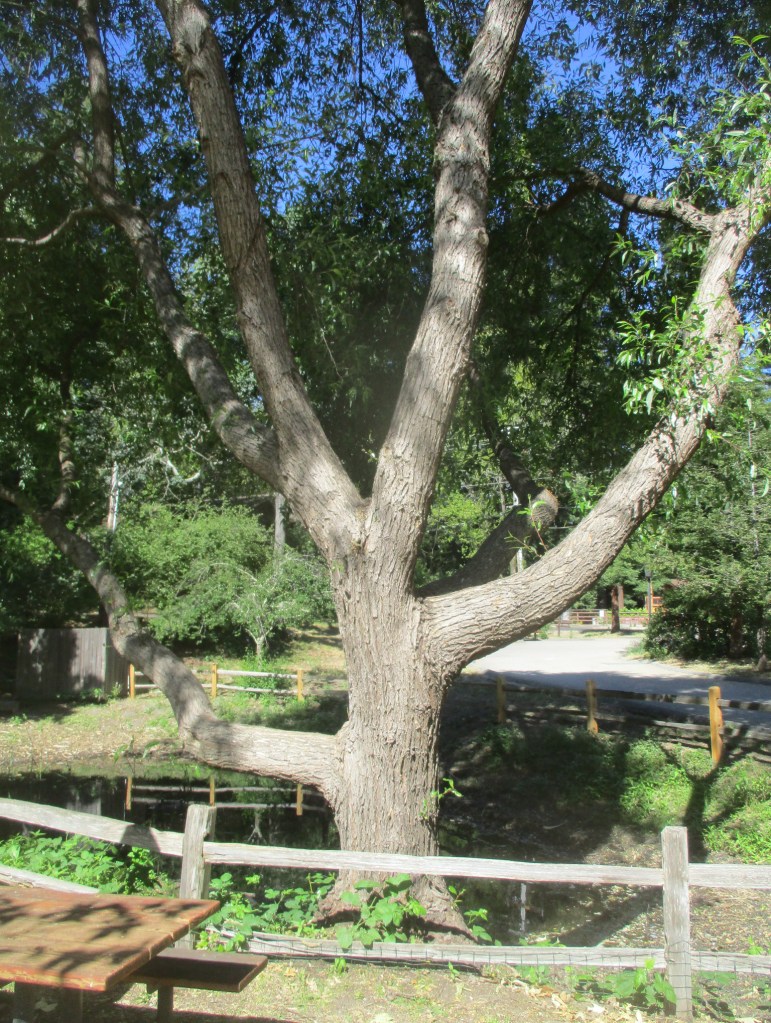
Willows commonly exhibit spontaneous limb failure.

Soil saturation is detrimental to trees for a few reasons. Excessive irrigation is almost as problematic, even without saturation. Chronic excessive moisture compromises stability by inhibiting deep root dispersion. Instead, it promotes shallower root buttressing. It may compromise structural integrity, too. It is generally the cause of spontaneous limb failure.

Spontaneous limb failure is exactly what it implies. Its spontaneity is what makes it more hazardous than limb failure caused by wind. It happens while the weather is calm, warm and perhaps humid, when least expected. Limbs might sag and produce cracking noises immediately prior to falling. However, they quite often fall suddenly and without warning.

Spontaneous limb failure is associated more with gravity than wind. It occurs as vigorous stems literally grow faster than they can support. Warm weather accelerates foliar growth that increases weight. A lack of wind and perhaps enhanced humidity inhibit evaporation from foliar surfaces. Inhibition of evapotranspiration limits weight loss during weight gain.

Deciduous trees are generally more susceptible to spontaneous limb failure. Sweetgum, willows, poplars and elms are particularly vulnerable. A few evergreen trees are likewise susceptible, though. They include coast live oak, Monterey cypress and a few eucalypti. Fruit trees exhibit spontaneous limb failure if they can not support the weight of their fruit.

The potential for spontaneous limb failure is rarely obvious. Limbs of some types of trees may visually appear to be too heavy or floppy. Limbs of Monterey pine, for example, may lean to one side if they sag prior to failure. However, valley oak, carob and sycamore are notorious for concealing their weaknesses. Even arborists can not predict all limb failure.

Wild trees within new landscapes are particularly vulnerable to spontaneous limb failure. They are not accustomed to irrigation through otherwise arid summers. Some can adapt as landscapes with irrigation develop around them. Others overindulge and become too heavy for their own trunks or limbs to support. New trees adapt to irrigation as they grow.

Chilean Rhubarb

Chilean rhubarb is a grand perennial.

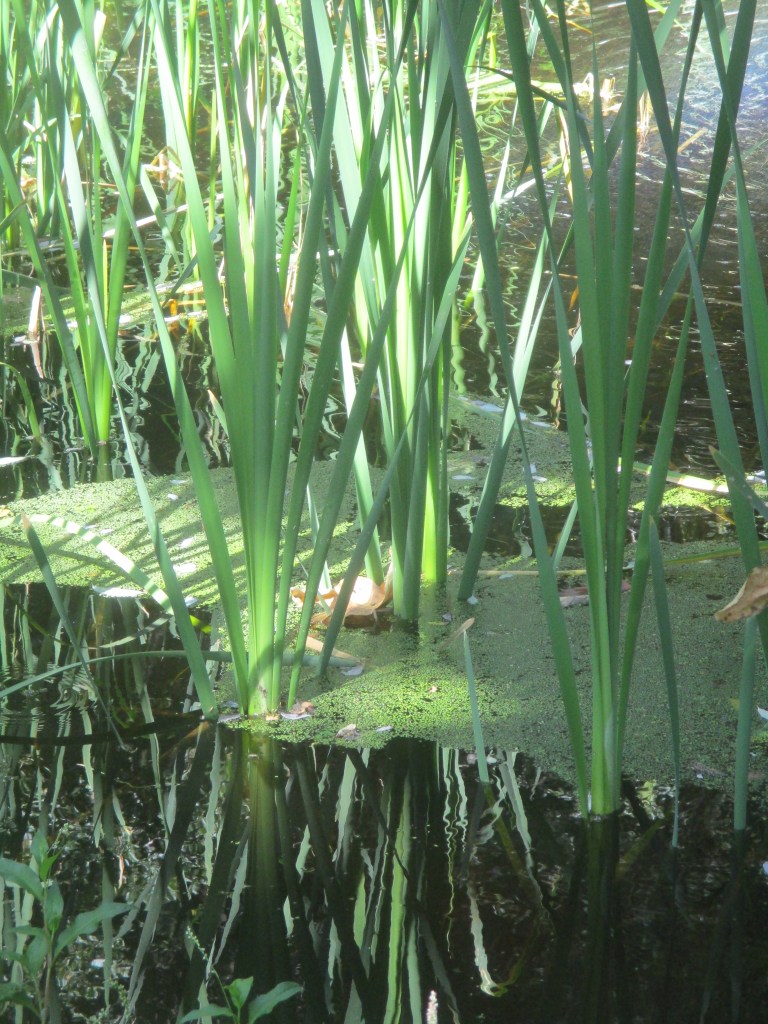
Only riparian and aquatic vegetation tolerates sustained soil saturation. Chilean rhubarb, Gunnera tinctoria, almost qualifies as such. It enjoys such generous irrigation that it may perform well on a bank of a pond or stream. However, it should be sufficiently high on its bank to avoid constant saturation. Otherwise, it can rot, likely during its winter dormancy.

Chilean rhubarb is a spectacular foliar plants. Its humongous lobed leaves may grow six feet wide and eight feet tall. Although they succumb to mild frost, they regenerate quickly from rhizomes for spring. Leaves and petioles have a rather raspy texture, with small soft spines. Odd conical floral spikes that bloom about now might grow nearly three feet high.

Although not related to real rhubarb, Chilean rhubarb is as edible as its name implies. Its big petioles only need peeling to remove the raspy exteriors. Locally, Chilean rhubarb is more of a striking ornamental perennial. It is as appropriate to woodsy gardens as it is to sleek modern gardens. The absence of its bold foliage for winter is the main disincentive for its usage.

Soil Saturation Can Drown Roots

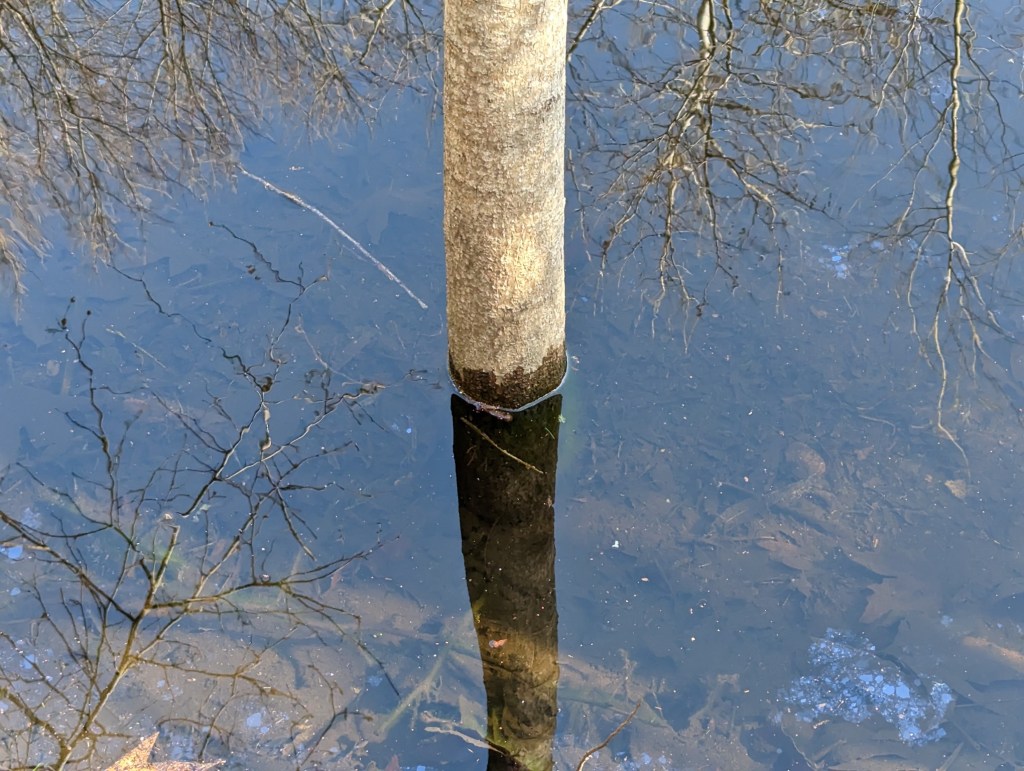
Only riparian species tolerate sustained saturation.

Irrigation must adapt to weather. It was unnecessary for exposed vegetation during rainy winter weather. It became necessary through drier spring weather. Now, it must adjust for increasingly warm and dry summer weather. This is not as simple as application of more water more frequently. Excessive irrigation causes soil saturation, which damages roots.

Soil saturation is unfortunately common within landscapes that gardeners maintain. The risk of desiccation is more of a concern to gardeners than wasteful irrigation. Desiccation is certainly more apparent than symptoms of saturation. Besides, gardeners assume the costs of neither water nor damaged vegetation. Chronic damage can become significant.

Soil saturation is less common within gardens that lack gardeners, but is not impossible. Soil within pots can become saturated if vigorous roots clog drainage holes. Water which lingers too long in saucers under pots maintains saturation. Irrigation that is too frequent, too generous or both maintains saturation. Of course, different soil types drain differently.

Soil saturation deprives roots of the aeration that they need to survive. A few species are somewhat tolerant of saturation, but fewer tolerate it for long. With few exceptions, newer roots avoid saturation, so disperse shallowly. For trees, this limits stability and increases their likelihood of displacing pavement. Even shrubbery might develop buttressing roots.

Roots that dispersed prior to saturation are vulnerable to rot as soil saturation increases. This not only destabilizes trees, but also compromises their health. Formerly healthy turf grass and ground cover become chlorotic. Some turf grass becomes infested with fungal pathogens, and perhaps moss. Flowers and fruits might shrivel before they develop fully.

It is impossible to prescribe ideal irrigation schedules and application rates for every site. Climate, soil type, slope, exposure and vegetation types are all considerations. Moisture requirements change seasonally and as vegetation matures. Only direct observation can help determine appropriate irrigation frequencies and rates. It is a very involved process.

Soil Saturation Kills

Use irrigation responsibly.

London plane tree is trendy not because it is all that excellent, but because it is so reliable. It is actually a rather trashy and messy tree that is susceptible to anthracnose and powdery mildew. Landscapers and gardeners like it so much only because the various maples, oaks and other better trees are more sensitive to soil saturation while they get established.

The truth is that most landscapers and gardeners do not want to put any effort into proper watering. While many of us let our lawns die to conserve a bit of water, they waste enough water on lawns and landscapes to sustain rice paddies! This keeps lawns and landscapes superficially green, but eventually causes problems.

Powdery mildew, anthracnose, molds, blights, rots and all sorts of diseases proliferate in damp conditions. Of course, gardeners are happy to apply fungicides and other chemicals to help control diseases; for a price. Also for a price, they are there to replace plants that succumb to any of the many diseases associated with excessive moisture.

Like London plane, several other trees and plants can survive excessive moisture, but only by adapting. If lower soil is regularly saturated, roots are confined to upper soil. This is not a problem for lily-of-the-Nile and many other perennials that can sneak their roots unnoticed into to the upper few inches of soil. However, trees can not get away with this habit for long; since their shallow and buttressing roots eventually expand to displace pavement, other plants and anything else that gets in their way.

Mature and old trees do not adapt. Their deep roots are already set in their ways, so will only rot if they get significantly more water than they are accustomed to. Oaks are particularly susceptible.

Unfortunately, there is no exact formula for determining how much water lawns and gardens should get. There are simply too many variables, such as soil type, drainage, exposure, weather and demand for moisture. Lawns need frequent watering without much volume. Trees prefer more generous watering, but less frequently.

Lawns and trees and everything else in between all need air within the root zone. Watering should therefore not keep soil constantly saturated, but instead allow for adequate drainage and aeration of the soil between watering, without complete desiccation. New plants will of course need more attention until they disperse their roots, but will be happier and healthier with proper watering.

Horridculture – Saturation

Saturation is almost a universal problem within almost all of the landscapes that I inspect that are ‘maintained’ by mow, blow and go ‘gardeners’. Without exception, all of such landscapes are outfitted with automated irrigation systems. Some of such systems are scheduled to apply much more water than they should for more time than they should. More typically, irrigation is applied much too frequently. Sometimes, irrigation is both too abundant and too frequent. Such excessive irrigation maintains unhealthy saturation within the soil. Roots are unable to disperse their roots into such saturated soil, and many roots that try ultimately rot. Some trees try to compensate by dispersing roots close to the surface of the soil, but because they are unable to disperse their roots deeply, they lack stability. Also, their shallow roots damage pavement and compete with other vegetation. What is even more egregious about saturation within ‘maintained’ landscapes is that, almost without exceptions, the so-called ‘landscape’ companies that ‘maintain’ them, likely after installing them, brag about their ‘water-wise’ and ‘sustainable’ landscape maintenance techniques. They install irrigation systems that could be quite efficient if they were to operate properly, but then never operate them properly. They install drought tolerant species that can survive with minimal irrigation, but then kill them with excessive irrigation. They replace the deceased plant material, only to kill and replace it again. They do not mind wasting water that their clients pay for, any more than they mind wasting plant material that their clients pay for. In fact, replacement of plant material is profitable for them, since they get paid for procedures associated with removal and installation. Realistically though, they are probably as oblivious to the profitability of their technique as they are to proper technique. In other words, they simply do not care.

Irrigation Must Not Be Excessive

Too much water can be a problem.

Remember when the Brady Bunch went to the Grand Canyon? Mrs. Brady read aloud from a brochure about how the Grand Canyon was formed by erosion of the Colorado River. Peter then commented, “Wow! No wonder you tell us not to leave the water running.” Too much watering in the garden certainly will not cause a canyon to form, but can cause all sorts of other big problems.

Roots rot if the the soil is constantly too wet. If the soil stays saturated, roots suffocate from the lack of aeration. Trees that survive saturation of deeper soil strata will disperse their roots shallowly near the less saturated surface, and will consequently be unstable. Besides, excessive watering is wasteful.

There are too many variables, such as exposure, drainage, humidity and temperature, to prescribe irrigation schedules that work for every site. Just remember that most plants like the soil to drain enough for the surface of the soil to at least look somewhat dry before getting watered again. Moss on the surface is an indication that things are too wet. Plants that like more water, like azaleas, rhododendrons, fuchsias, ferns and impatiens, do not mind if the soil stays somewhat damp, but only if the soil is porous and drains enough to also be aerated.

The most drought tolerant plants, which are generally also the most sensitive to excessive irrigation, ironically like to be watered somewhat regularly for the first few months after getting planted. This is because they are so reliant on well dispersed root systems. They need less, if any, watering once their roots get dispersed.

Watering should be done in the morning so that plants can soak in the water during the day, and the area can dry somewhat before the following evening. It is also better to water less frequently and a bit more generously than to water too frequently. This allows time for drainage and promotes deeper rooting. Fungal organisms associated with rot and foliar diseases proliferate overnight if the ground is damp at the surface and the air is humid.

Except for the few plants that like humidity, and those that need to be rinsed of aphid and honeydew, there is no need to wast water on foliage where it is simply lost to evaporation. Water should be applied to the soil where it is needed.

Too Much Water Is A Serious Problem.

Well, . . . this is an exaggeration.

The most common problem with landscapes that are maintained by maintenance gardeners is excessive irrigation. In fact, with very few exceptions, the only lawns that are maintained by gardeners that are not also irrigated excessively are too dry because the irrigation systems are not operational. Excessive irrigation is not only unhealthy for the landscapes, but costly.

Wasted water is obviously expensive, but also causes all sorts of expensive damage. Saturation of soil inhibits deep dispersion of roots, causing shallow roots to displace pavement. Shallowly rooted trees that are easily destabilized by wind can cause expensive damage, and are expensive to remove. Smaller plants that do not cause damage as they succumb to saturation and rot are still expensive to replace. The gardeners who get paid to maintain the landscapes should assume liability for the damages they cause, but instead charge to repair it! If they can not repair the damage, they typically happen to know someone who can.

Fortunately, those of us who maintain our gardens, or are at least involved with the maintenance, are not so generous with water. Although lawns need quite a bit of water, they also need adequate drainage. Besides, we tend to be more aware of the expense of water than gardeners are.

Now that it is autumn, irrigation needs to be decreased for various reasons. Rain will be providing more moisture as the seasons progress. While the weather gets cooler and more humid, and the days get shorter (less sunlight) not so much moisture evaporates. Most plants are either dormant or at least less active, so consume less moisture.

There are unfortunately no accurate formulas for decreasing frequency and duration of irrigation as the weather changes. It must be done by trial and error, by providing enough irrigation during dry spells without keeping conditions too wet. Of course, no irrigation is necessary during rainy weather, except only for plants that are sheltered by eaves. Hanging pots should be monitored because they are both sheltered from rain (if hanging from eaves), but also exposed to drying wind.

Also during autumn and winter, dormant plants need no fertilizer. That can wait until they wake up early in spring. Raking falling leaves from lawns, ground cover and low shrubbery is important though, since such debris shades the plants below while sunlight is already less abundant, and can also promote rot.

Saturation Of Soil Distresses Roots

Some riparian plants tolerate soil saturation.

Saturation of the soil should be a rare problem within the local chaparral climates. Water is a limited resource. That is why plants that are not native or endemic to other chaparral or desert climates rely on supplemental irrigation. Many exotic species would not survive through the locally long and dry summers without it. Water is only sufficient during winter.

The unfortunate reality is that soil saturation is among the more common problems within landscapes that rely on gardeners. Although most gardeners are proficient with irrigation, some are not. They would prefer to irrigate too generously than risk desiccation. They do not assume the expense of the water, or of the plant material that succumbs to saturation.

Although significantly less common within home gardens that do not rely on professional gardeners, soil saturation is possible. It occasionally happens within pots or planters that lack adequate drainage, or if the drainage becomes clogged. Saucers that contain water that would otherwise damage decking or flooring might inhibit drainage if constantly full.

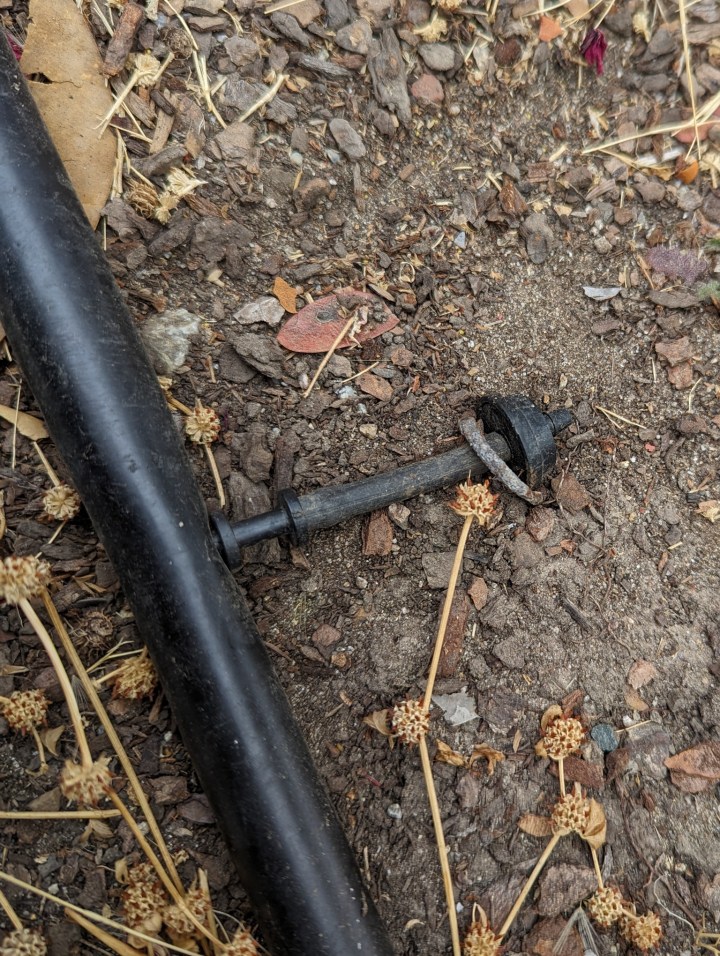
Besides within pots and planters, saturation is more likely within dense garden soil than within coarser soil. Downspouts could saturate surrounding soil through the rainy winter season. Leaky plumbing might do the same at any time, even if it is merely irrigation pipe that leaks only while operating. Of course, excessive irrigation produces most saturation.

Saturaturation deprives soil or medium of aeration. Roots avoid soil or medium that lacks adequate aeration. Trees and large shrubbery therefore disperse most of their roots near the surface of saturated soil. Such shallow root dispersion limits stability. The expansion of such shallow roots displaces and fractures pavement and curbs, and heaves lawn turf.

Excessive irrigation causes soil saturation during summer. Excessive frequency is more likely to cause saturation than excessive volumes of water. Unfortunately, it is impossible to prescribe appropriate irrigation schedules and application rates. Climate, soil type and plant material are all relevant considerations. Moisture requirements change seasonally, and from year to year, as plants mature.