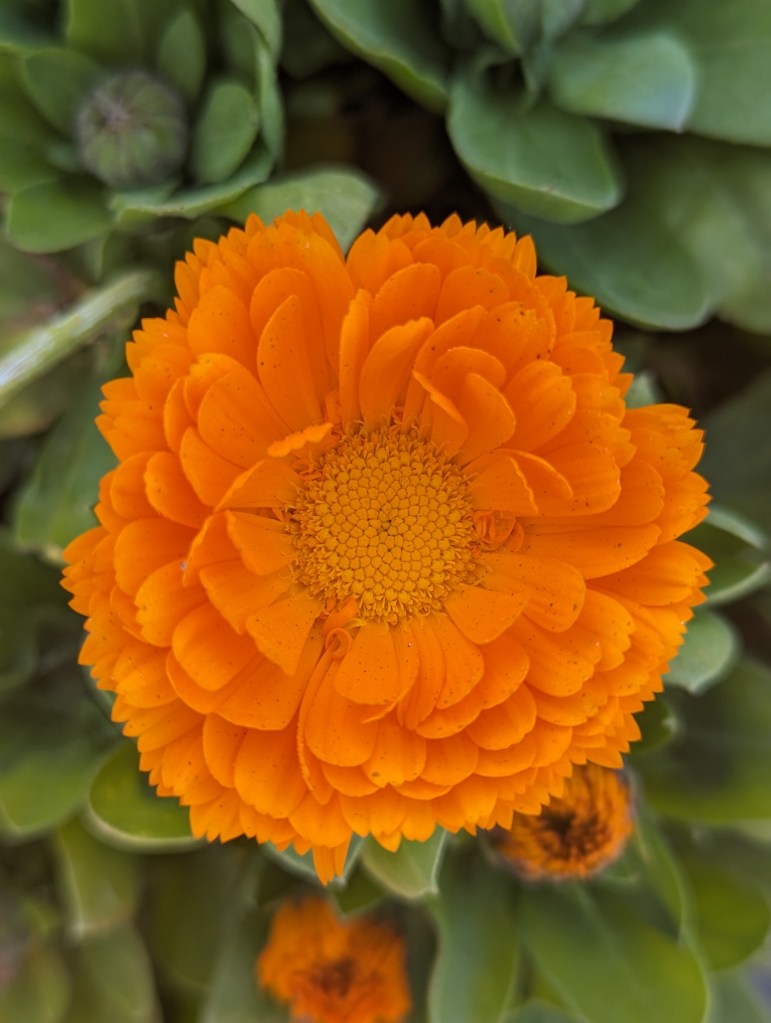
Late Summer Flowers Bloom Now

Pot marigold is an autumn annual.

Spring is the season with the most flowers. Winter is generally the season with the least. That is, of course, a generalization. There are plenty of flowers that bloom exclusively for winter color. Plenty more bloom randomly throughout the year, regardless of season. For now, late summer flowers are the most prominently colorful. Autumn flowers will be next.

Realistically, no bloom is random. Even flowers that bloom randomly throughout the year do so only because they can. Such flowers are mostly from mild climates where they can disperse seed at any time. Any pollinators that they rely on are also active throughout the year. Many randomly blooming flowers can effectively conform to more distinct seasons.

Most flowers bloom within a distinct season because it is most convenient for them. Most bloom for spring to maximize the time for their seed to develop before winter. Many of the earliest are tiny but abundant because they rely on wind for pollination. Later flowers can be bigger and more colorful to attract pollinators. Late summer flowers are no exception.

Different flowers have different priorities. Some of the earliest spring bloom needs time to produce seed after bloom. Several late summer flowers conversely need time to develop their blooms. Then, they produce seed relatively quickly before winter. This is why some late summer flowers are bolder but less abundant than spring flowers. They require time.

For example, sunflowers with relatively small blooms may bloom as early as late spring. However, those with bigger and bolder blooms are more familiar as late summer flowers. Such big blooms do not grow quickly, but are ready for their late pollinators nonetheless. They compensate for their lack of abundance with spectacularly grand individual bloom.

Many late summer flowers happen to be related to sunflowers. They include coneflower, dahlia, zinnia, sneezeweed, aster, and cosmos. Dahlias with larger flowers are later than those with smaller flowers. Marigold and chrysanthemum will become more seasonable later and into autumn. Unrelated canna and various sages are blooming well about now.

Winter Flowers Bloom In Season

Some flowers naturally bloom during winter.

Evergreen foliage and colorful berries might be more prominent than flowers about now. They should be. Evergreen foliage is, as implied, evergreen. Colorful berries need to be appealing to wildlife that disperses their seed through winter. Not so many winter flowers bloom, though. Most flowers want their bloom season to be favorable for their pollinators.

Flowers that do not rely on pollinators can bloom whenever they choose to. Yet, because they do not rely on pollinators, most waste no resources on floral color. Flowers are, after all, only colorful to attract pollinators. Therefore, if flowers that need no pollinators bloom now, most are easy to ignore. Flowers that are colorful now can probably justify being so.

Most colorful flowers bloom while their pollinators are most active, during warm weather. Some from cooler climates can bloom now simply because they do not know it is winter. Some from milder climates can bloom now because they do not know how cool winter is. Several winter flowers actually bloom now to exploit pollinators who are active in winter.

Winter flowers of some species of Salvia appeal very specifically to hummingbirds. Such species are native to regions where hummingbirds overwinter. Their floral colors are the sort that hummingbirds pursue. Their floral structure and nectar favor the eating habits of hummingbirds. They bloom during winter because that is when they expect their guests.

Camellias of various cultivars are among the most popular and reliable of winter flowers. Different cultivars bloom at slightly different times. Witch hazel cultivars can bloom nicely on bare stems where chill is adequate. Winter jasmine requires less chill and blooms as splendidly, but only with yellow. Oregon grape is also limited to yellow, but is evergreen.

Cool season annuals generally provide the most colorful of winter flowers. Unfortunately, most perform only until warmer spring or summer weather. Pansy, viola and primrose are the most familiar. Primrose becomes popular a bit later, and can continue as a short term perennial. Ornamental kale looks like big winter flowers, but is really big colorful foliage.