Cooler Weather Is Slower Weather

Cooling weather can damage new growth.

Weather is not quite as warm as it had been. Warm days do not last quite as long as they did earlier in summer. Afterward, the longer nights get a bit cooler. Technically, autumn is only a few days from now. Although seasonal changes are mild, and a bit later here than in other regions, they eventually catch up. Plant activity has already been getting slower.

Seasonal changes keep gardening interesting. Plants that are now growing slower than earlier may need less attention. However, some need more attention, precisely because they are growing slower. Some of the work that was so important through summer should conclude until spring. Some of the work that will be important through winter begins now. 

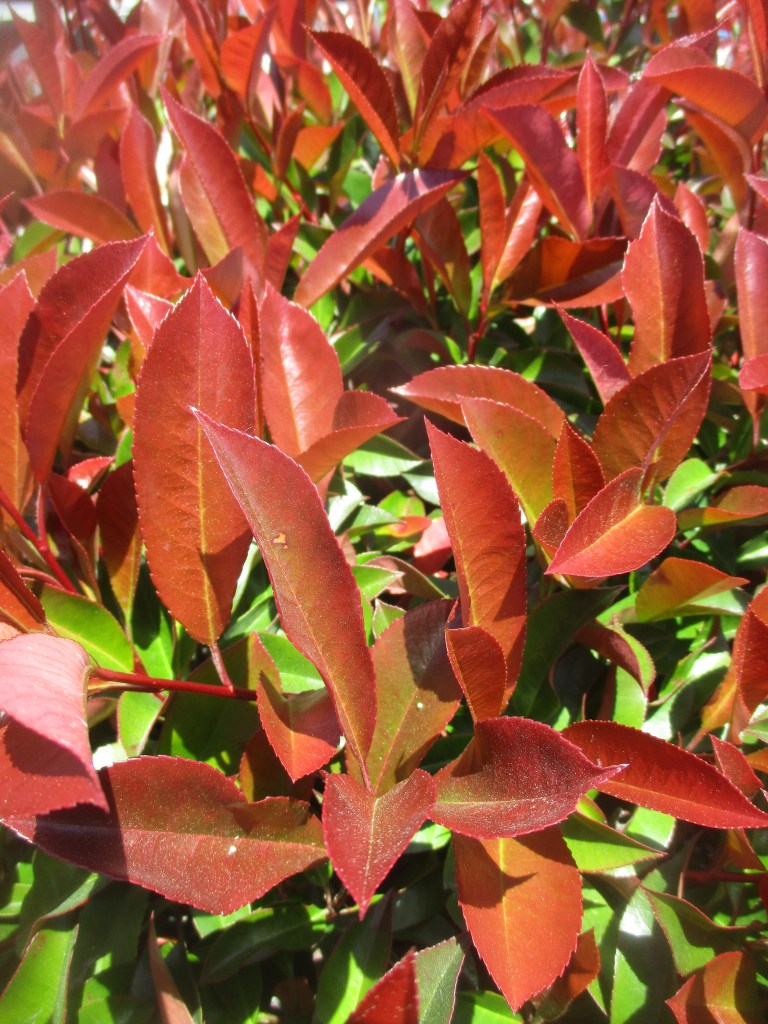
Although evergreen, photinia and pittosporum hedges do not do much between now and next spring. If shorn too late, new growth develops slowly, and may become shabby as a result of cooler and rainier weather later. Late pruning of citrus stimulates vigorous newer growth that may be sensitive to frost through winter. Lemons are particularly susceptible.

Conversely, dormant pruning can begin as deciduous foliage starts to fall. Although most roses and fruit trees supposedly prefer to wait until winter, they may soon be too dormant to notice if pruning is a bit premature. This is partly why autumn is the season of planting. Mostly dormant plants are more resilient to discomforts than they would be while awake.

New Zealand flax, lily of the Nile, African iris and other rugged perennials are conducive to division now. They will soon be about as dormant as they get, but will want to disperse roots for winter anyway. They resume growth before winter ends, so want to be ready for it. Once rainier and cooler weather resumes, they will need no watering until next spring. 

Fertilizer should be passe soon also. Most plants consume less nutrients through cooler weather. Besides, many nutrients are less soluble, and therefore less available to plants while the weather is cool. Turf, cool season vegetables, cool season annuals, and some small palms are a few exceptions that could benefit from minor applications of fertilizers.

Seasonal Changes Keep Gardening Interesting

Oleander continues to bloom into autumn.

Gardening is work. The extent of such work is proportionate to the techniques and scale of the gardening. Substantial gardens likely need substantial work. Fruit trees, roses and vegetables need more specialized work than lawns and wildflowers. Seasonal changes demand a strict schedule. It never ends. It is ironic that so many enjoy gardening to relax. 

In some climates, gardening is less work through the harshest of winter weather. No one wants to be outside in harsh weather anyway. That is no excuse here, where the garden remains active throughout the year. Perhaps that is a disadvantage of such mild climate. Furthermore, seasonal changes, regardless of how mild or slow, are reliably continuous.

Another month of summer remains. That may seem like enough time to stay on schedule for summer gardening, and maybe take some time to relax. However, it is already time to begin preparation for autumn gardening. Gardening should progress as efficiently as the seasons do. Seasonal planning facilitates this process. It will be autumn in only a month. 

Warm season annuals and bedding plants are still in season. Most will remain in season until cool weather in autumn or perhaps the first frost. Nonetheless, cool season annuals for autumn begin to grow from seed about now. If started early enough, they will be ready for planting into the garden at the proper time to replace their warm season counterparts.

The same applies to vegetables. Many warm season vegetables can produce until frost. A last phase of corn should still have time to mature. In the meantime, some cool season vegetables can begin to grow from seed. Broccoli, cabbage and larger types can start in cell packs or flats. For direct sowing, root vegetables may need to wait for garden space.

Some of the many plants that bloom through most of summer bloom less later in summer, even though the weather remains conducive to bloom. Some prefer to divert resources to seed production as the days get shorter. Old fashioned oleander with fragrant bloom can get shabby with seeds. Modern sterile types lack fragrance, but bloom until cool weather. It is a good time to collect seed from formerly seasonal flowers.

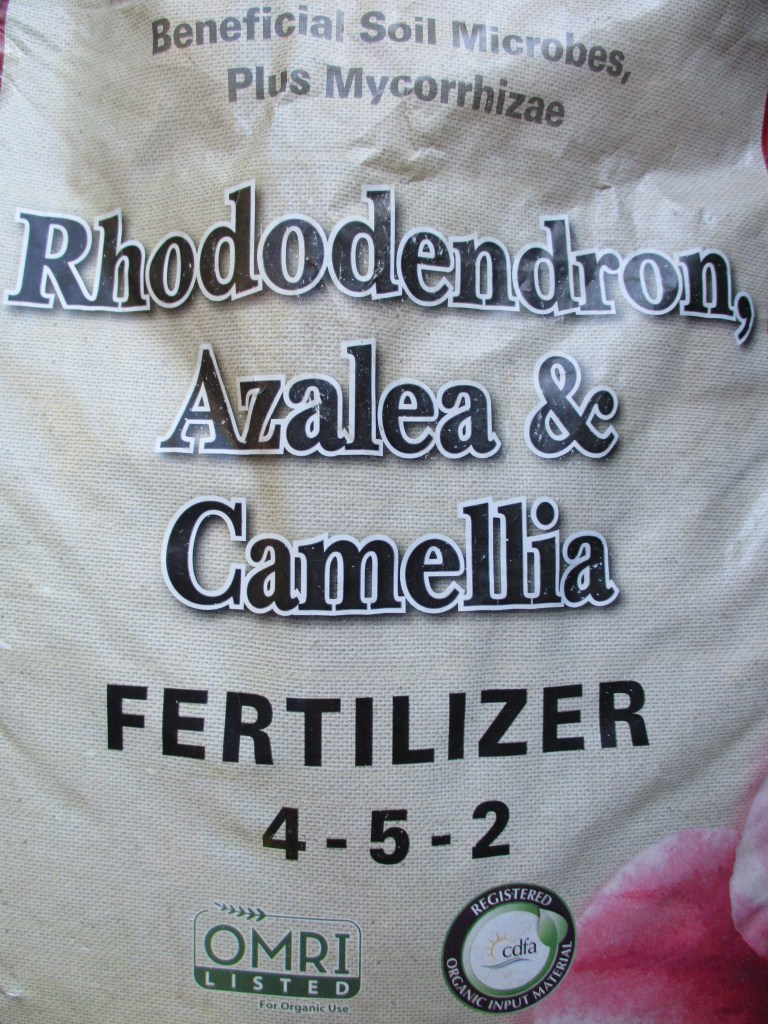
Fertilizer Is A Seasonal Commodity

Fertilizer is about to be passe.

Fertilizer, in simple terms, helps plants grow. It provides a bit more of what growing plants crave. In some situations, it compensates for nutrient deficiencies. Fertilizer can be organic or synthetic. Various formulations serve a variety of purposes. Custom formulations appeal to plants with discriminating taste, such as citrus, orchids and roses. Slow release fertilizer lasts for a month or two.

Of course, proper scheduling of the application of fertilizer is very important. Fertilizer can actually become toxic with excessively frequent application. Fertilizer that provides significant nitrogen to promote vegetative growth after bloom can inhibit floral growth prior to bloom. Fertilizer that promotes root growth for new plants is unnecessary for mature plants. The diets of plants are variable.

Summer lingers later here. Regardless of the weather, it is now autumn. This is when deciduous plants start the process of defoliation for their winter dormancy. Evergreen plants are less obvious about their winter dormancy. Some remain active and even bloom through autumn and winter locally. Nonetheless, cooling weather and shortening days inhibit vascular activity of almost all plants.

Except for cool season vegetables and bedding plants, not many plants benefit from fertilizer applied this late. New plants might appreciate a bit just to help them adjust to their new environment. Some deciduous plants, particularly roses, like a last late application of fertilizer as they get ready for their long winter dormancy. Lawns might want fertilizer this late or perhaps later to stay green.

Otherwise, it is getting late to utilize fertilizer.

Late application of fertilizer can be very detrimental to plants that are sensitive to cool weather. Such plants typically finish growing through summer. By autumn, their mature foliage and stems are either resilient to minor frost, or are dieing back (defoliating) for winter dormancy. Fertilizer can stimulate premature development of new growth that will be much more sensitive to even mild frost.

Daylight Saving Time

Apologies for the lapse of posting articles as typically scheduled at midnight here for this morning and yesterday morning. The article that had been scheduled for yesterday morning posted an hour earlier, at 11:00 p.m. on Sunday night. The article that had been scheduled for this morning posted an hour earlier, at 11:00 p.m. last night. I neglected to adjust the schedule on Sunday for Daylight Saving Time.

HAPPY NEW YEAR!!!

P00101-1January 1, 2020! The first day of the Twenties!
The flora in our gardens north of the Tropics must think we are crazy for making such a fuss about it while they are trying to sleep. Even flora south of the tropics does not understand. All flora everywhere is more concerned with how the seasons change according to the position of the Earth around the Sun. Precise dates, times and numbers are meaningless.

It sort of seems odd to me that within each time zone, it is the same time and date both north and south of the Equator, but the seasons of each side are opposite. Today started in sparsely populated regions of the Pacific Ocean, worked its way through Australia earlier, and is somehow still the same ‘today’ that is here now. Yet it is winter here, and summer to the south.

Now, if January can be in the cool time of year here, and the warm time of year in Australia, it seems to me that winter could be both the cool season here, and the warm season in Australia. If the dates are the same, it seems like the seasons should be too. Alternatively, if the seasons are half a year early or late in opposite Hemispheres, it seems like dates should be too.

According to such logic, it could be either winter or July 1 in Australia and elsewhere south of the Equator right now! . . . But would that be July 1 of 2019 or 2021? Too many technicalities!

Well, it is more than the flora in the garden is concerned about anyway. It is winter here now, and summer south of the Equator. It is the beginning of January everywhere that the Gregorian calendar is used, north and south.

HAPPY NEW YEAR!

Note: ‘Horridculture’ will resume next Wednesday. It did not seem appropriate for the first day of 2020.P00101-2

Seasonal Potted Plants For Christmas

91218thumb‘Tis the season for seasonal potted plants. These are not well established houseplant or potted plants that live out on porches and patios through the year. Seasonal potted plants are those that are purchased at their prime, allowed to live in our homes and offices while they continue to bloom or maintain their foliage, and then most likely get discarded when no longer visually appealing.
Poinsettia epitomizes winter seasonal potted plants. Florists’ cyclamen, azalea, holly, amaryllis, Christmas cactus and small living Christmas trees are other overly popular choices. All are grown in very synthetic environments designed to force optimal performance, with no regard to survival afterward. They are like cut flowers that are not yet dead. They are true aberrations of horticulture.

Technically, any of them can survive as potted plants, or out in the garden after they serve their purpose as appealing seasonal potted plants. Their main difficulty is that it is not so easy for them to recover from their prior cultivation, and adapt to more realistic environmental conditions. For now, it is best to enjoy them at their best, and try to maintain them at their best for as long as possible.

Eventually, they all experience a phase in which their original growth deteriorates to some extent, while they start to generate new growth that is adapted to the situation that they are in at the time. Christmas cactus are probably the most proficient at adapting, and becoming delightful houseplants. They are even likely to bloom occasionally, although not on any particular schedule for winter.

Holly, azalea and cyclamen can eventually get planted out in the garden. Most hollies grow into large evergreen shrubbery, but do not produce as many berries as they originally did. Azaleas are cultivars that were developed to be seasonal potted plants, so are a bit more finicky than those developed more for landscapes. Cyclamen can be added to pots of mixed annuals and perennials.

Living Christmas trees are not so easy to accommodate. Most are pines that need their space.

Not Quite Rain

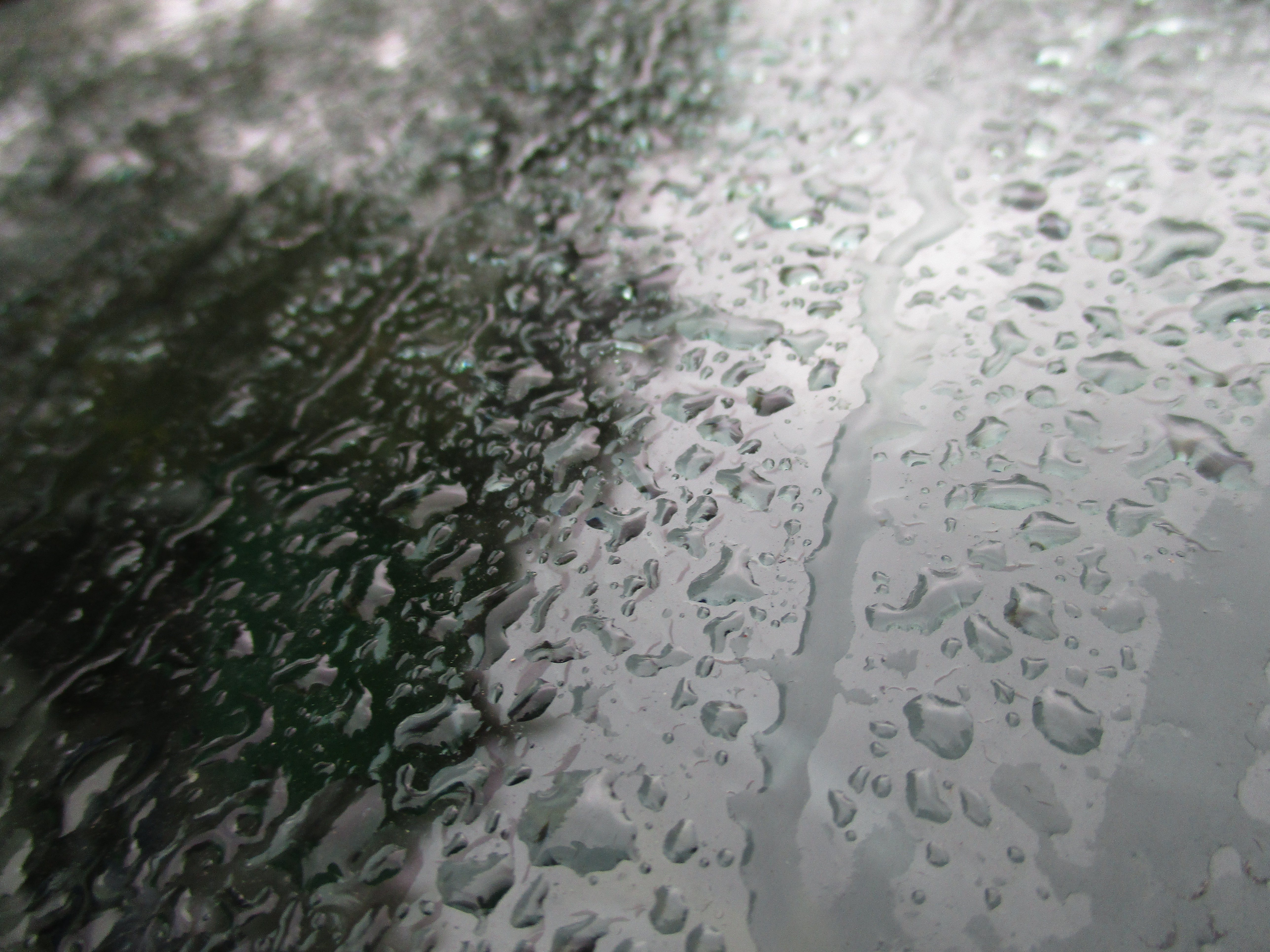
P91116KMost of us here agree that the minimal bit of precipitation that fell from the sky on Thursday was not real rain. There are a few different theories about what it actually was though. It could be considered to have been drizzle. It alternatively could have been heavy fog or mist. Some of us make up silly names for what it was, such as fine rain, dusting, spritzes, sprinkles or mizzle.
Is it just me, or do those last three sound like inane kitten names? ‘Dusting’, sounds dirty and dry, which it was not.

Whatever it was, it was the second occurrence of such precipitation since the rainy season ended last spring. Something similar happened on the last day of September. I wrote about it in my other blog, with a picture of it on the hood of a parked car, rather than the windshield. I think it was more of a surprise then because it was earlier, and the chance of precipitation was slim.

This weather pattern is still within what would be considered normal here. The rainy season typically starts a bit earlier, even if with just a single primary storm passing through, followed by a long pause before more follow. There is no strict schedule though. We know that the rain will eventually start, and that rainy seasons that start late tend to provide significantly more rain.

Rain is likely just as uncomfortable here as it is everywhere else. Perhaps it is even dirtier, because it rinses off dust and crud that has been accumulating since spring. No one wants to work in their garden while it is wet. Nonetheless, because there is no rain for nearly half the year, the first storm of a season is something to be celebrated. The forecast predicts no celebration yet.

Six on Saturday: The Endless Summer


Summer really did end here. There was a minimal frostless frost to prove it more than two weeks ago. This climate just happens to lack the more apparent seasonal changes that others get to show off. Except for a bit of drizzle last Thursday, and a bit at the end of September, there has been no rain since last spring. It may seem to be boring, but such weather is normal here.

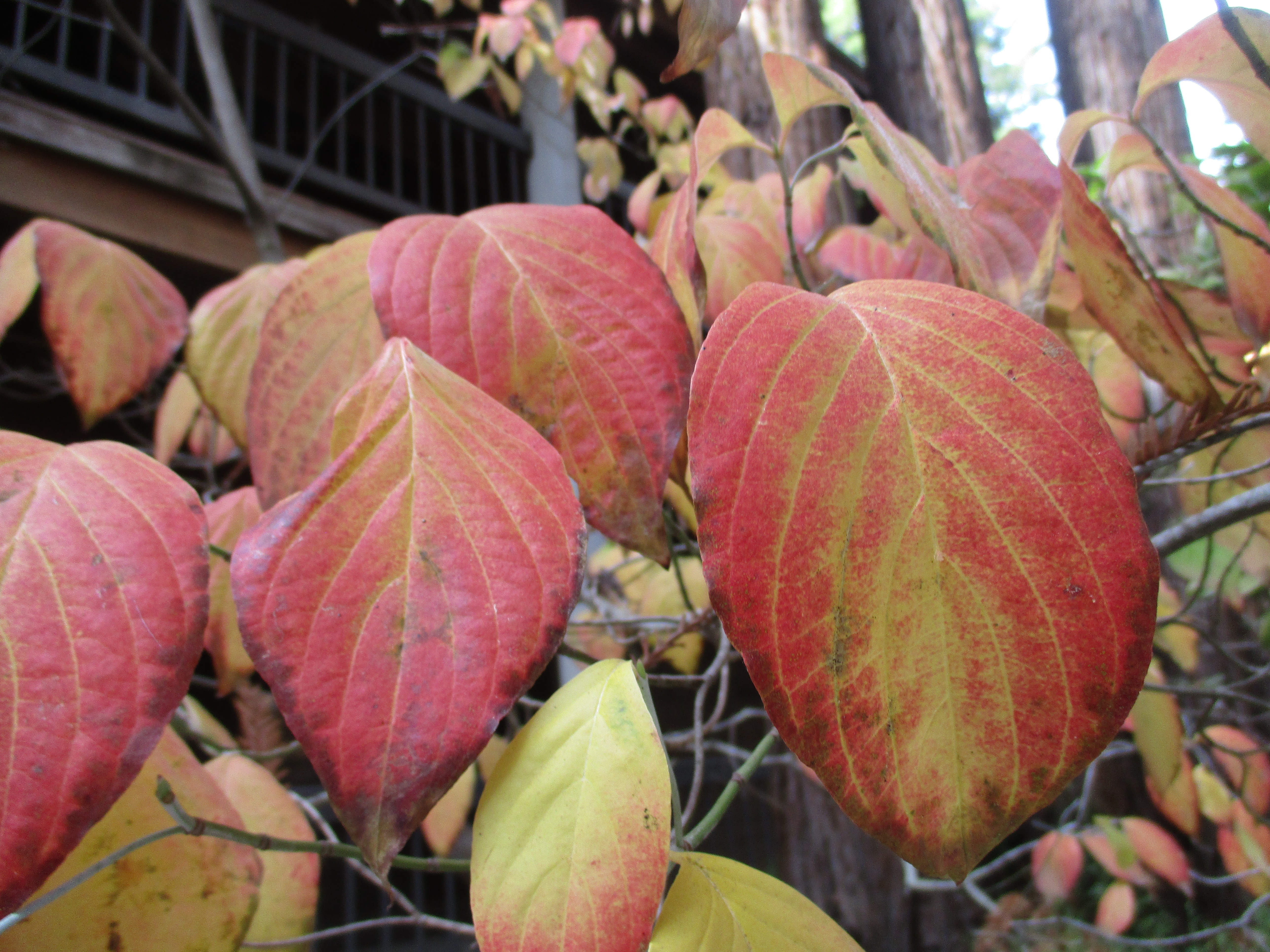
1. There is typically more foliar color by now. Sweetgums are only beginning to yellow. However, these dogwoods started to defoliate early without much color. This is about as good as it got.P91116

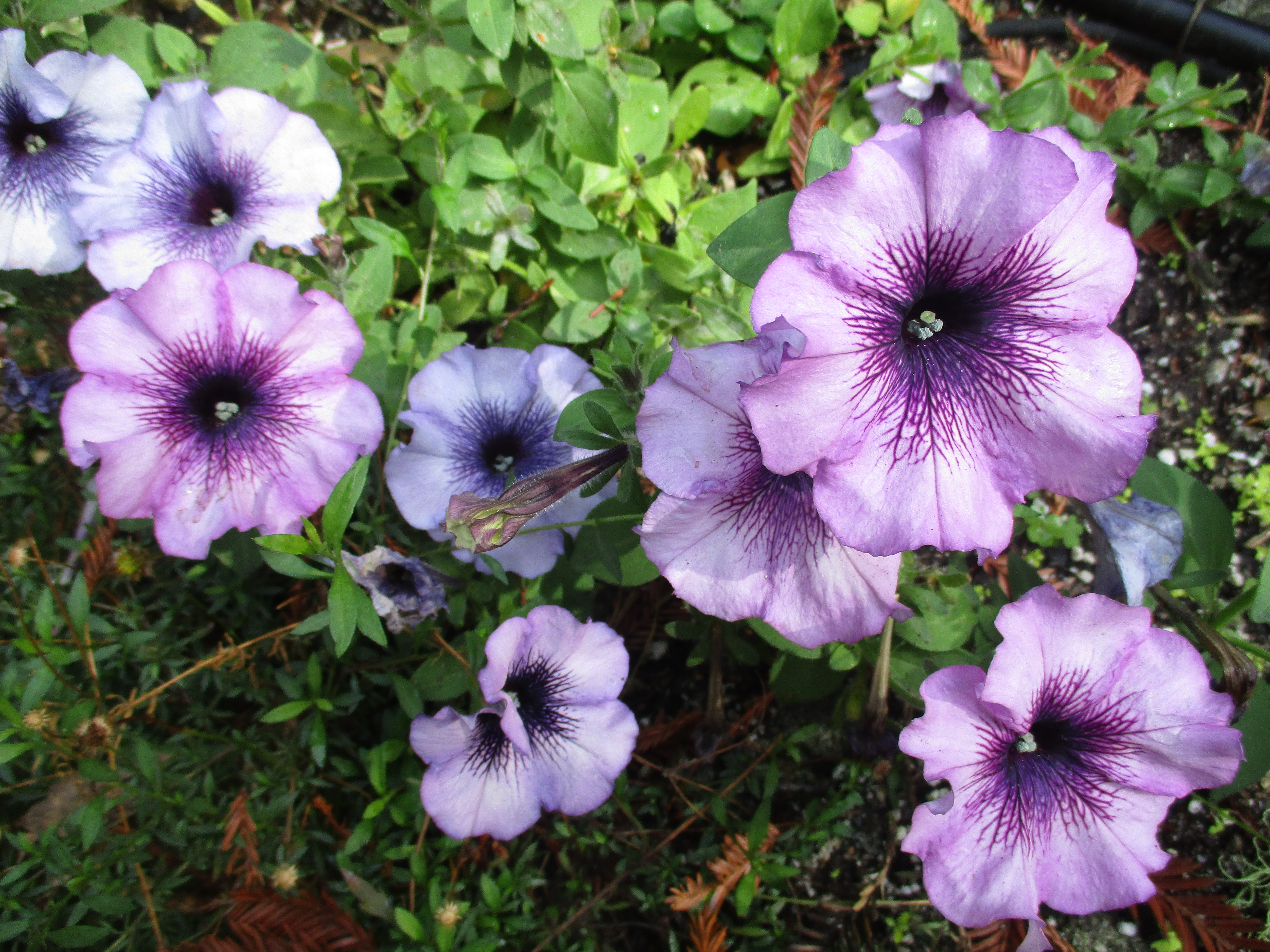
2. Not all of the warm season annuals have been replaced with cool season annuals. These petunias are blooming too happily to be replaced with pansies or violas like we installed elsewhere.P91116+

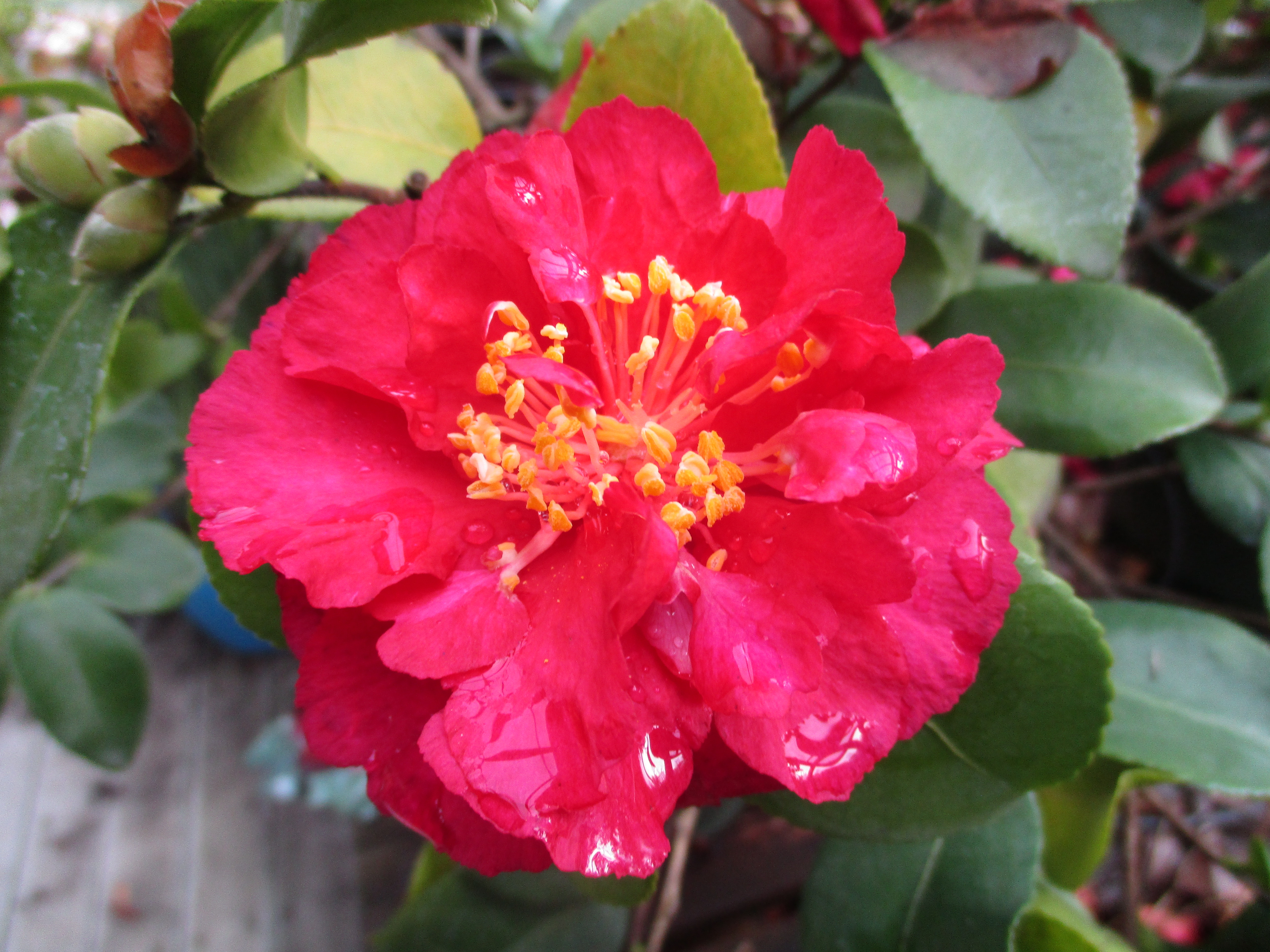
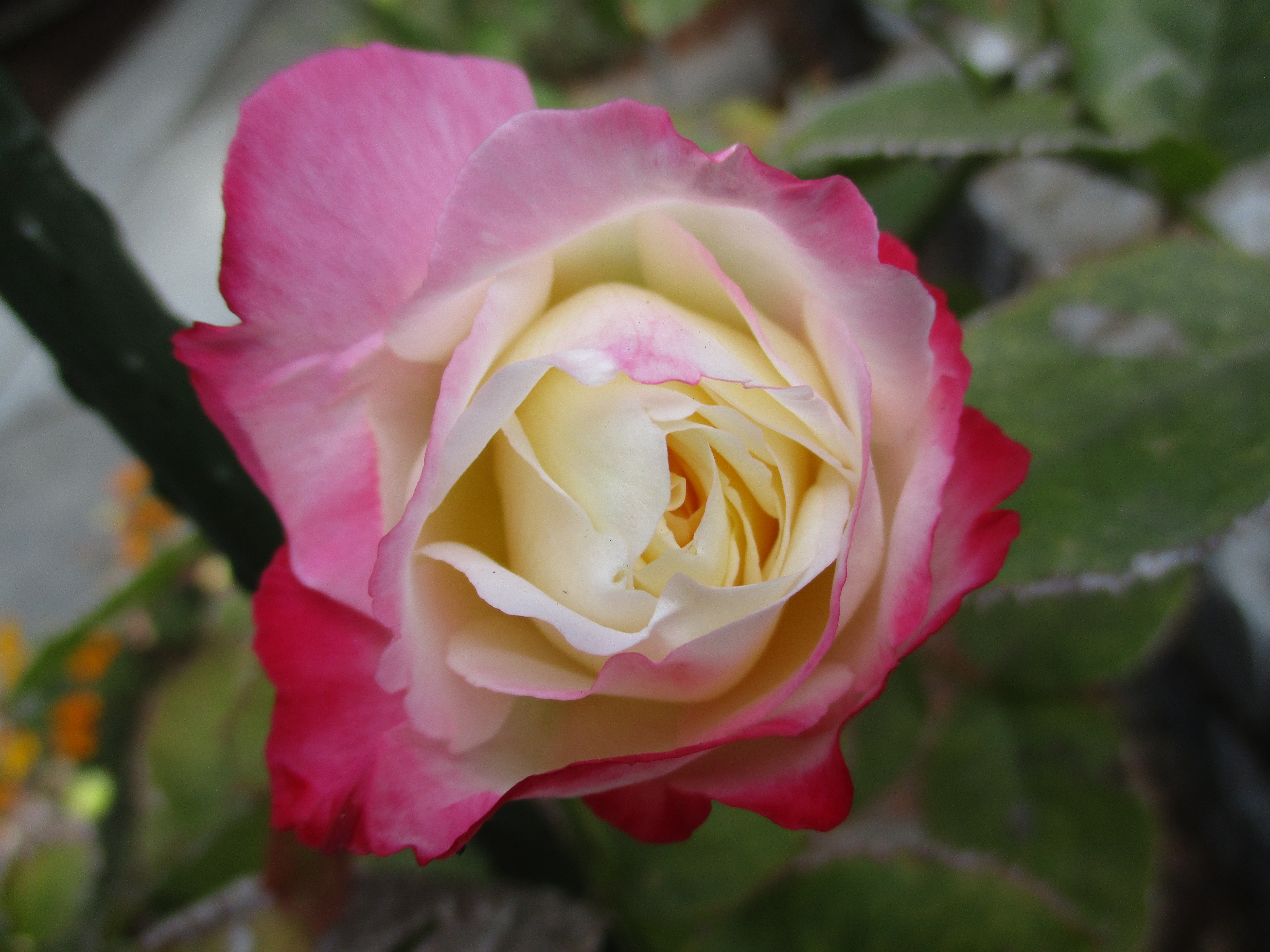
3. Roses continue to bloom. This one looks like ‘Double Delight’ to me. I really do not know what it is. The flowers are rather small, so it must have noticed that nights are longer and cooler.P91116++

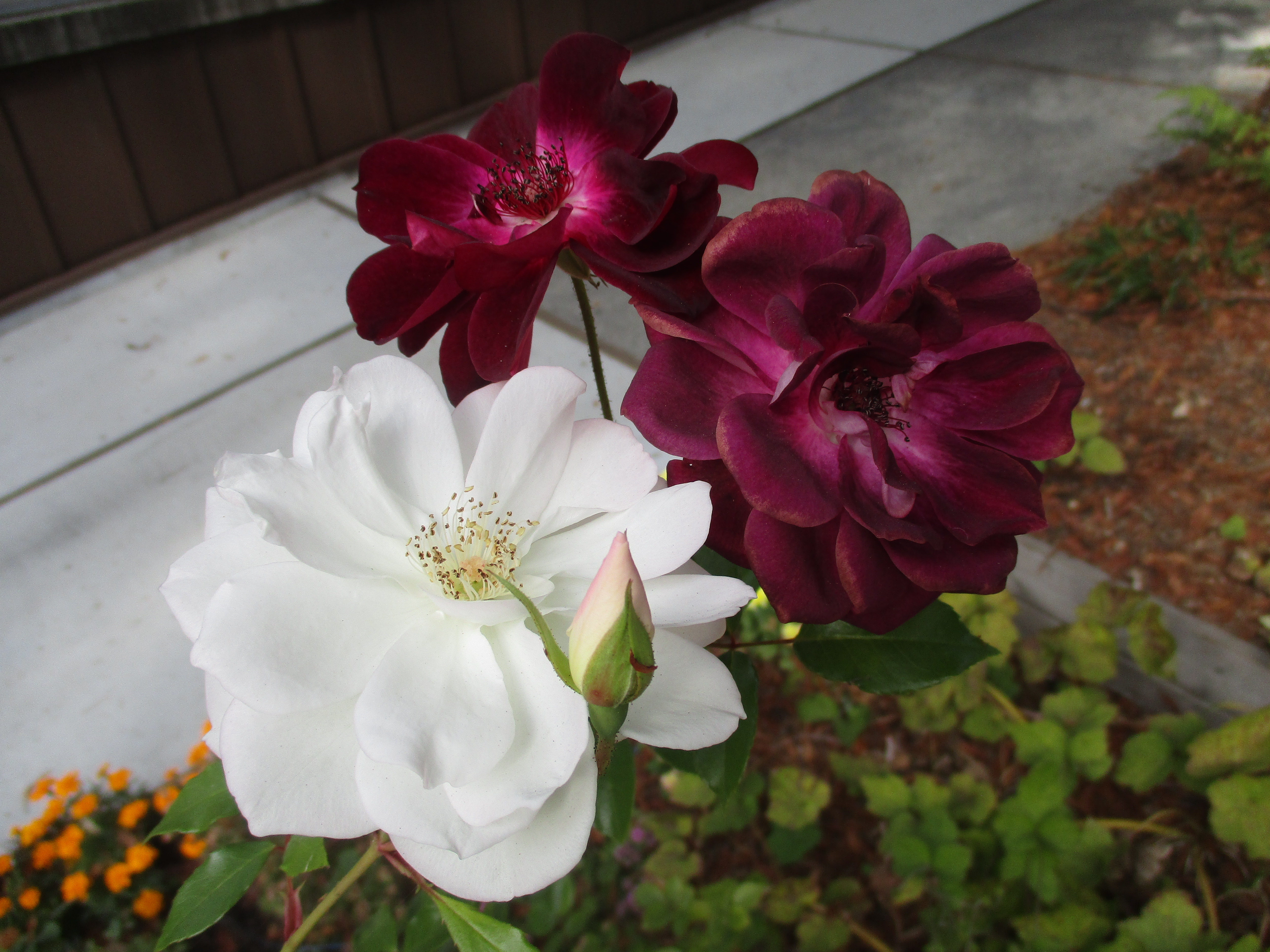
4. These two look silly to me because both are grafted together onto the same standard (tree rose). I believe they are ‘Iceberg’ and ‘Burgundy Iceberg’. I would not mind them individually.P91116+++

5. Even by our local standards, roses should be finishing by now, with only a few that are still blooming when they get pruned in winter. I do not know what this one is, but it still looks great.P91116++++

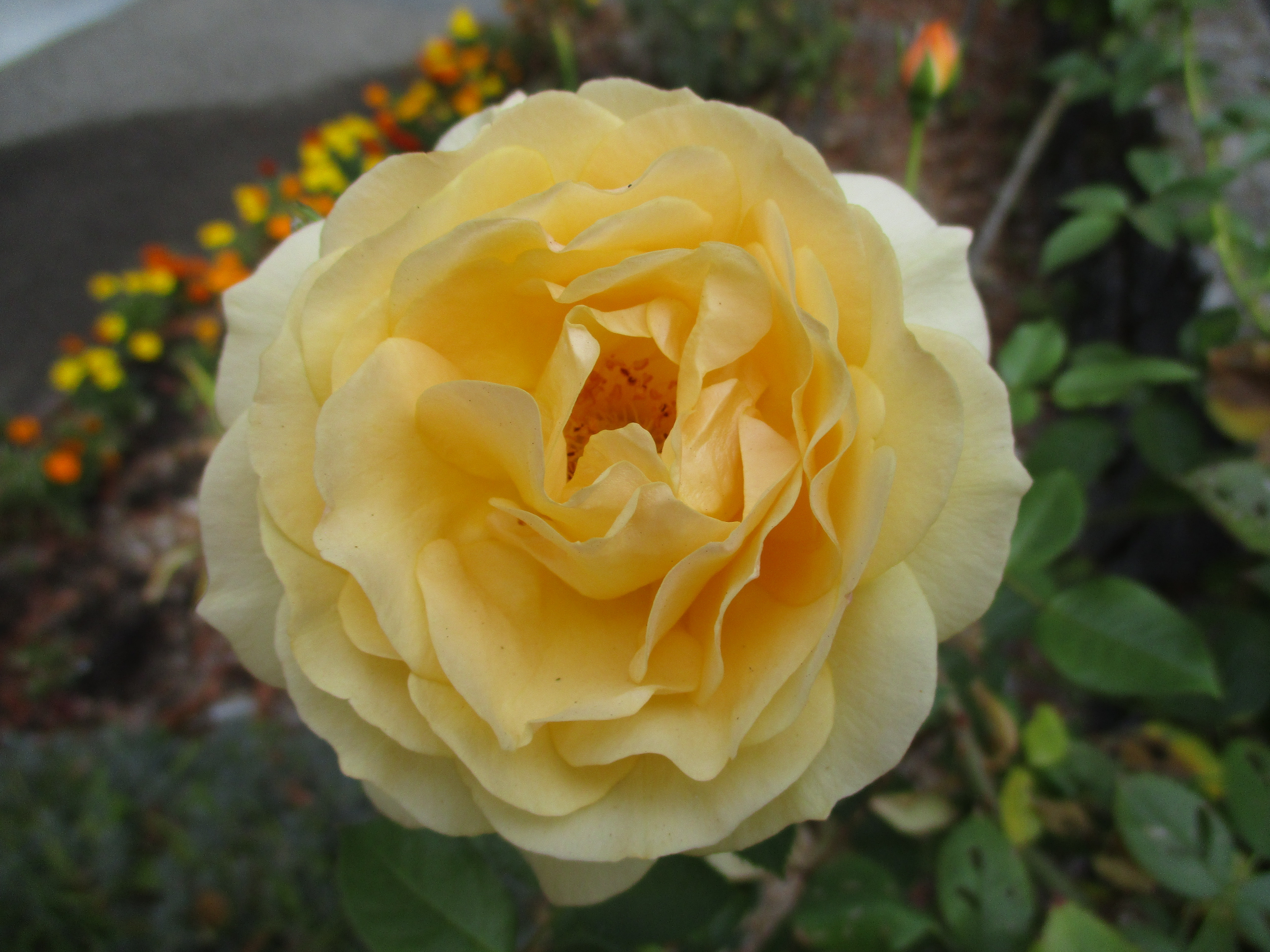
6. This is my favorite of these six pictures. I do not know what this rose is either. It is in a neighbor’s garden. It did not start to bloom until part was through summer, and is now at its best.P91116+++++

This is the link for Six on Saturday, for anyone else who would like to participate:

https://thepropagatorblog.wordpress.com/2017/09/18/six-on-saturday-a-participant-guide/

Horridculture – Halloween

P91009Halloween is a topic that I could rant about for days. Seriously. I loathe it. I dislike any formerly respectable holiday that has been ruined by excessive commercialization. We all know what happened to Christmas. For me, Halloween, in some regards, is even worse. Christmas is at least pretty. Halloween is intended to be morbid and grotesque and creepy and . . . just plain bad.


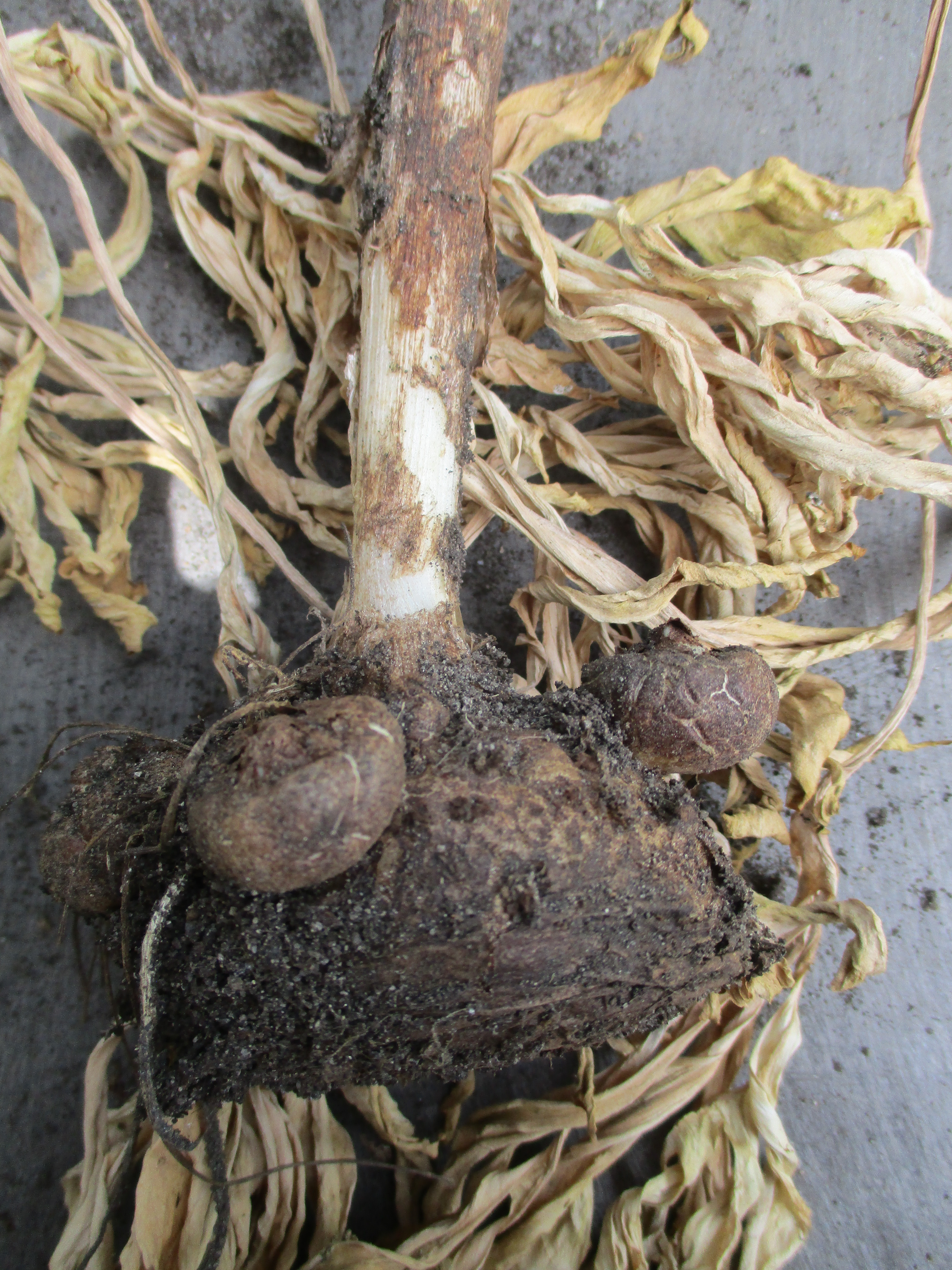
This should be about gardening though. Yes, there is always that guy who gets too drunk at the Halloween party down the road, but manages to stagger just far enough to vomit on my lawn. Then, I need to figure out how to get all the toilet paper out of the redwoods. The nasturtiums that get trampled by hasty brats who are too old for trick-or-treating will eventually recover.

The worst, though, are the Halloween ‘decorations’ in the front yard! We put too much work into maintaining our gardens in good condition to make them look so bad. I do not care if it is just for one day out of the year. Seriously, it is just wrong, on so many levels. Why on Earth should I want my garden to look as cheap and trashy as young ladies dressed up as naughty nurses?!

Pumpkins and even Jack-O’-lanterns are tolerable, and even appealing in a traditional sort of way, but spiderwebs make me think that the witches could put their brooms to better use than frequent flier miles. All those angry black cats should more efficiently control all the spiders and bats. Tombstones?! – Corpses in various degrees of decay?! – There goes the neighborhood!!P91009+

What about the effigies concealed by white sheets, and the other effigies hanging from trees and porches? Whoever thought those were good ideas?! Perhaps Brent can share some insight.

P90330+++++

Summer Dormancy Is No Mystery

90821thumbCalifornia buckeye, Aesculus californica, is an enigma. How does it survive while defoliated for so much of the year? Not all are so mysterious. Those that live in sheltered or forested situations behave like normal deciduous trees, by defoliating in autumn, and refoliating in spring, after a brief winter dormancy. Those that are more exposed in warm and windy situations make us wonder.

After their brief winter dormancy, exposed California buckeye trees refoliate early in spring, as they should. Then, only a few month later, they defoliate through the warmest and most arid part of summer, which might be a few months long! As the weather cools and the rain starts, they refoliate briefly for autumn, only to defoliate in time for their winter dormancy. They are ‘twice deciduous’.

How do they photosynthesize enough to survive? It seems like they would consume more resources in this process that they could generate. They obviously know what they are doing, since they survive quite nicely in the wild. Furthermore, they are not the only species that can do this. Sycamores sometimes do it if the weather is just so, or if they get infested with anthracnose too severely.

Most deciduous plants defoliate only in winter because that is the worst time to try to photosynthesize. There is less sunlight available while the days are shorter, and the weather is cloudier. Frost, wind and snow would cause much more damage if deciduous plants retained their foliage. Defoliation is how they accommodate the weather. It is no different for plants that defoliate in summer.

Much of California is within chaparral or even desert climates. Native plants, as well as plants that are from similar climates, know how to live here. If they happen to be in a hot and dry situation, some may go dormant until the weather improves, even if they do not go dormant through the mild winters. This is why wild arums and some unwatered acanthus have died back to the ground, and why naked lady amaryllis will remain naked until the first rains in autumn.