Berries For Autumn And Winter

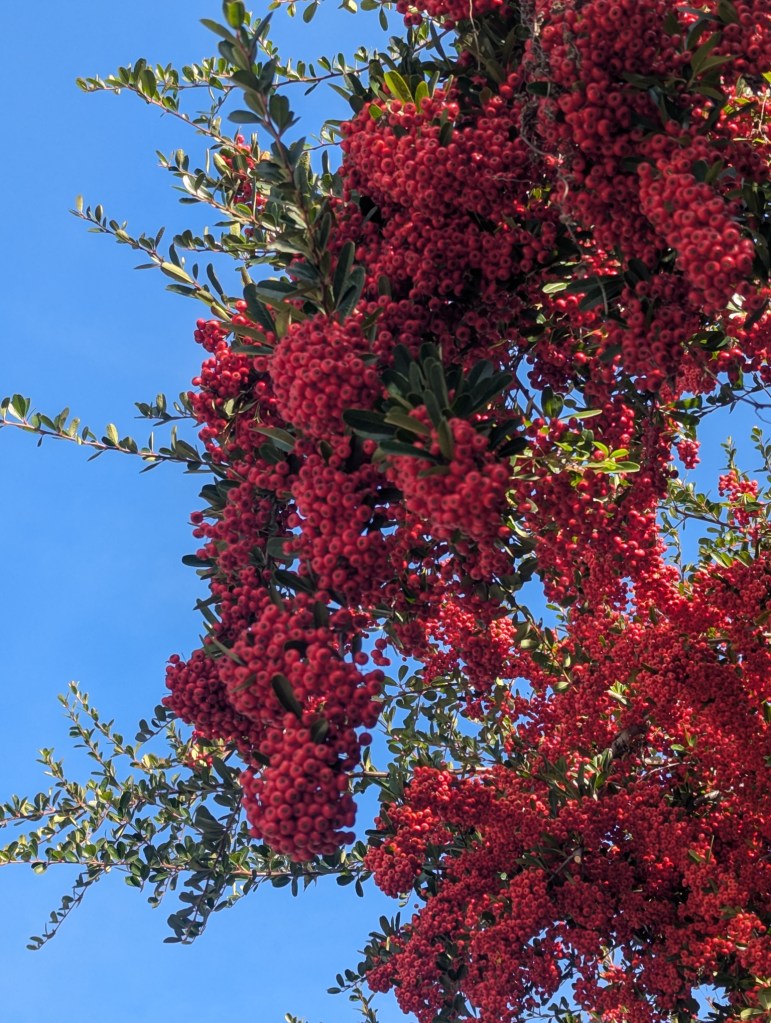
Firethorn berries can be impressively prolific.

Cool season annuals are less diverse than warm season annuals for one simple reason. Flowers prefer to bloom while their favorite pollinators are most active. Most of the better pollinators are insects that are most active during warm weather. Therefore, most flowers want to bloom while the weather is warm. Many colorful berries are similarly exploitative.

For dispersion of their seed, colorful berries rely on birds. Therefore, many ripen and are most colorful as many birds migrate during autumn. Birds consume the berries but do not digest their seed. Instead, as they migrate, they disperse the viable seed. It is a mutually beneficial arrangement. Birds eat all they want. Seed benefits from thorough dispersion.

As they ripen, autumn and winter berries develop bright colors that attract birds. Most are bright red. Some are bright orange. A few are bright yellow. They are substantial enough to satisfy the birds that eat them. Yet, they are compact enough for such birds to eat them whole. Some are impressively abundant, at least until any birds that they feed find them.

That can be a dilemma for home gardening. Many garden enthusiasts grow autumn and winter berries for the color. Many grow them to attract birds, though. More grow them both for their color and to attract birds. The latter is least disappointing. Typically, such berries ripen to display their color faster than birds can eat all of them. Every season is different.

Unfortunately, there are not many options for colorful autumn and winter berries. Some of the species that produce the most colorful fruit are unfortunately thorny. Firethorn notably produces the most abundant, most colorful and most familiar berries. It is horridly thorny, though. So is English hawthorn, which is deciduous and defoliates to expose its red fruit.

Toyon and various cotoneasters are thornless alternatives for colorful berries. Toyon is a native species that grows rather large. Although cotoneasters are not as prolific, cultivars stay proportionate to home gardens. Hollies are dioecious, so female specimens need a male nearby for pollination. Because males are rare, females produce only a few berries.
Mango Seedlings

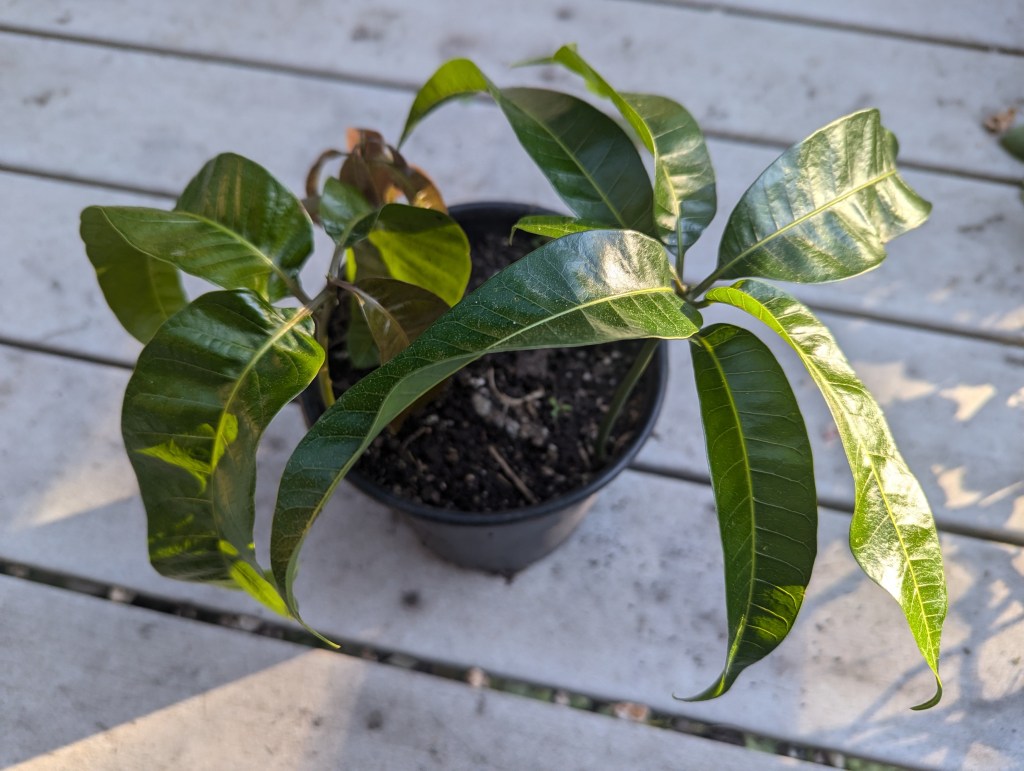
There are a few reasons to not grow avocado trees from seed. Such trees take a few years to produce fruit. Then, their fruit may be very different from the fruit that provided the seed. It is therefore better to purchase a grafted tree, or at least to graft a seedling. However, some of the best and most productive avocado trees have grown from seed. I have been acquainted with many such trees, and have never met even one that produced inferior fruit. (The primary problem that I notice with seed grown avocado trees is that they grow so tall while young that most of their fruit is out of reach, but that is another topic for later.) Anyway, this is my justification for growing mango trees from seed. I am told that they are much more likely than seed grown avocado trees to produce inferior fruit. I suppose that I will find out now. I am willing to try grafting them if their fruit is not good. They can at least become good understock. Yet, I am also wondering why I get into these situations. I should have known better than to grow something that I know nothing about.

Division Can Equate To Multiplication

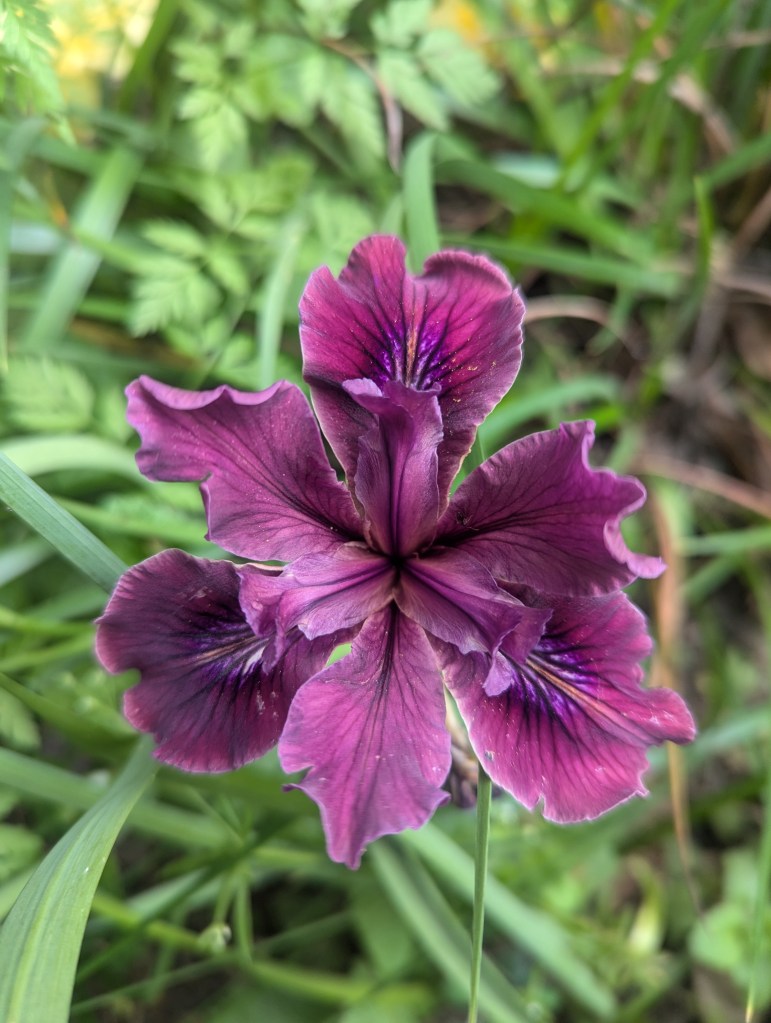
Pacific Coast iris eventually appreciates division.

Propagation produces more plants from minimal and readily available resources. Within home gardens, propagation is practical by seed, cutting, layering or division. Seed which is not available directly from the garden is generally not very expensive. Cutting, layering and division utilize what already lives within the garden. In other words, the stock is free.

Seeding produces genuinely new plants. Other forms of propagation produce genetically identical copies of their parent plants. Cutting compels pieces of stem to grow new roots. Layering does the same, but while pieces of stem remain attached to their parent plants. Division involves separation of portions of stems that already developed their own roots.

Most species that are conducive to division are substantial perennials. Flowering quince and lilac, though, are woody shrubs that produce dividable suckers. Most division should happen during late summer or early autumn. However, several species prefer late winter. Deciduous species, like lilac and flowering quince, prefer it during their winter dormancy.

Shasta daisy, lily of the Nile, daylily and coneflower prefer division during late summer. It is after their bloom and summer warmth, but before cool weather of winter. They disperse their roots through winter to resume growth even before spring. Bearded iris are ready for division a bit earlier, and resume growth by autumn. They are then ready for early spring.

Division of phlox and penstemon should be a bit later, when they get cut back. Bergenia blooms for winter, so should not be disturbed until late winter. Torch lily might bloom late, so also prefers to wait until late winter. New Zealand flax recovers from the process more efficiently after winter. It grows slowly during wintry weather, so is more susceptible to rot.

Daylily is easy to divide by simply digging and separating foliar rosettes from each other. Lily of the Nile is as simple but more work because of tough roots. Shasta daisy involves cutting apart clumps of its matted basal stems. Each clump, which may be cut away with a shovel, contains several such stems. Newly divided plants might bloom better because they are not quite so crowded.

Which Mesquite?

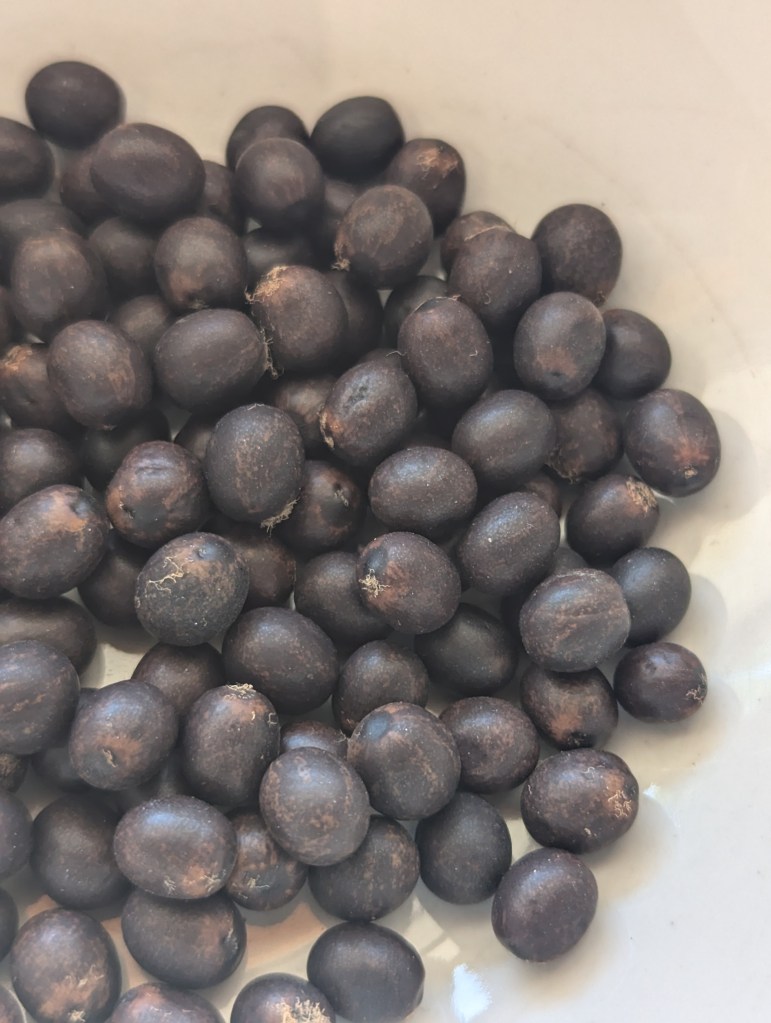
Is this velvet mesquite, Prosopis velutina, or honey mesquite, Prosopis glandulosa? It is still too young to identify. I suspect that it is velvet mesquite because I found its seed in a landscape in Surprise, Arizona, and velvet mesquite is the most common species within landscapes there. Also, the foliage of the trees that provided the seed resembled that of velvet mesquite more than that of honey mesquite, with relatively smaller leaflets. The bark was medium brown, so was not quite as dark brown as I would expect for velvet mesquite, but more brown than tan, as I would expect for honey mesquite. This little seedling may not look like much now, but it is the only survivor of the many seed that I collected. Only a few germinated, and slugs ate them before they extended their first leave beyond their cotyledons. This seedling germinated last, and was promptly canned in a four inch pot that I brought inside at night for protection. I hope that, before the end of summer, it grows large enough to survive winter. It should. Regardless of its identity, I hope to eventually use its stems for smoking and, if it grows large enough, barbecuing.

Propagation Produces More Garden Plants

Many species propagate reliably by seed.

Seed is the most familiar option for producing new garden plants. Division of perennials, especially overgrown colonies, is another familiar technique. More substantial plants are easier to grow from cutting or layering. Propagation is any process of producing plants. It is how nurseries generate such plants. Some techniques are practical for home gardens.

Propagation by seed is the most practical for most annuals. It is also practical for several perennials and woodier plants. However, not all seed is true to type. Some may become progeny that is different from its parents. After a few generations, ‘Jewel Mix’ nasturtiums revert to orange and yellow bloom. Progeny of most variegated plants lacks variegation.

Propagation by division is more practical for many perennials that form distinct colonies. This includes crowded bulbs. It entails separation of portions of such colonies, or merely single rhizomes. Such portions need only enough root to grow as new plants. Progeny of division are genetically identical to their single parent plant. They therefore do not revert.

Propagation by cutting is the most common technique of propagation among nurseries. It involves cutting pieces of stems and compelling them to grow roots in rooting media. For small scale home garden applications, some of such stem pieces can root in water. Such pieces, or cuttings, are genetically identical to their original parents. They can not revert.

Layering is rather similar to propagation by cutting. Stem pieces remain attached to their original parents during the process though. Burying a portion of stem with its tip exposed stimulates root growth where it is buried. Such stems eventually develop enough roots to sustain themselves after separation. Layering is practical for producing just a few copies.

Propagation is certainly more involved than these brief descriptions imply. It may involve other techniques. Grafting involves assembly of two or more distinct cultivars onto single plants. Rootstock grows from seed, division, cutting or layer. Scions are buds or stems of other cultivars. They graft onto the rootstocks to become the upper portions of the plants.

Grooming Deteriorating Bloom Conserves Resources

Daffodil are tidier with timely grooming.

Spring bulbs are now blooming, and some are already done. Summer bulbs will bloom a bit later, and some will continue until autumn. Annuals, perennials, shrubbery, vines and all sorts of other vegetation also bloom. Most simply shed their deteriorating flowers after bloom. Some may benefit from grooming to remove such flowers before they go to seed.

Grooming to remove lingering deteriorated flowers, or deadheading, is obviously neater. Flowers that continue to bloom are more prominent without their decaying predecessors. Camellias may not need such grooming, since their flowers fall away as they deteriorate. However, removal of fading flowers, before or after they fall, eliminates their mess below.

Perhaps more importantly, grooming to remove fading flowers conserves vital resources. Although most bulbs are sterile hybrids, some try to generate fruiting structures for seed. This consumes substantial resources. Removal of fruiting structures before they develop diverts resources to other growth. Canna diverts such resources into subsequent bloom.

For some species, grooming to remove fruiting structures stimulates subsequent blooms. After all, seed production is their priority, and the objective of bloom. If they perceive any deprivation of seed, they are compelled to produce more. Several dahlias bloom initially with single flowers. After grooming, the stems below branch for a few secondary flowers.

For a few potentially invasive species, grooming eliminates unwanted seed. Montbretia, which is famously invasive, is less so if deprived of its seed. African iris might disperse a few unwanted seed and get shabby without grooming. Summer snowflake and common grape hyacinth often disperse their seed. Both are too small and numerous for grooming.

Fortunately, summer snowflake and common grape hyacinth are true to type. Freesia are not. Without grooming, they can produce feral progeny that are similar to their ancestors. Such feral progeny are more prolific with seed for more of the same. Eventually, they can displace the desirable original varieties. Although more fragrant, they are not as colorful.

Warm Season Vegetables Start Early

Tomatoes are the favorite summer vegetable.

Warm season annuals that are becoming more available in nurseries are a clue. As they become seasonal, so do warm season vegetables, or summer vegetables. After all, they also perform as annuals within their respective seasons. It may still be too cool for many to inhabit the garden directly. However, several that grow from seed can start about now.

Many more varieties of warm season vegetables are available from seed than as plants. Vegetable plants are available in cell packs or four inch pots. They occupy more nursery space than racks of many more varieties of seed. Many more varieties are available from online catalogs. Several true to type varieties can provide seed for subsequent seasons.

Furthermore, many warm season vegetables grow better from seed than from transplant. Corn, beans, squash and root vegetables grow very efficiently from seed. However, they do not recover so easily from transplanting. Root vegetables are particularly susceptible to deformity from such handling. Seed for many root vegetables is ready for sowing now.

Seed is also an advantage for warm season vegetables that grow from many plants. For example, one packet of beet seed can provide more than enough beets. One cell pack of beets costs about as much, but provides only six possibly wimpy beets. A solitary tomato plant might provide plenty of tomatoes, though. Besides, tomato plants transplant easily.

Seed for corn, beans and squash should wait for warmer weather for their direct sowing. So should seed for many warm season vegetables that do not really need direct sowing. However, those that do not require direct sowing can start now inside or in greenhouses. They are easy to transplant from flats, cell packs or small pots later with warmer weather.

The season for warm season vegetables is only now beginning. Ideally, such vegetables arrive as cool season vegetables relinquish their space. Successive phases can replace the last of cool season vegetables. Eventually, cool season vegetables will reclaim their garden space. Currently new warm season vegetables should be finished with it by then.

Renee’s Garden Seed

‘Alaska’ is a popular variegated variety of nasturtium that is available from Renee’s Garden Seed.

There is no shame in growing nasturtiums. We all know how easy they are to grow, and that they can even naturalize. Some of us even consider them to be weeds. Some of us even know them as ‘dago pansies’! Yet, they are colorful, have an abundance of appealing foliage and never seem to have a bad day. Anyone who doubts this should look at Renee’s Garden Seed Catalogue online at www.reneesgarden.com.

Renee’s Garden Seed Catalogue is like a wine list of the finest nasturtiums, even though it also includes many of the more traditional types. ‘Buttercream’ is a new nasturtium this year that blooms with semi-double cream colored flowers! Pale yellow ‘Moonlight’ and bright scarlet ‘Spitfire’ are two climbing nasturtiums that get several feet tall.

Even those of us who primarily want to get vegetable and herb seeds will want to try some of the many unusual flowers, as well as some of the more traditional flowers that are available from Renee’s Garden Seed Catalogue. Besides nasturtiums, there are also many different kinds of sweet peas, sunflowers and morning glories. ‘April in Paris’ is an intensely fragrant sweet pea with large pale yellow flowers that become blushed as they mature. ‘Royal Flush’ is a new sunflower with bi-colored flowers in combinations of gold, dark red and brown. ‘Mailbox Mix’ morning glories have both clear blue and white flowers.  

Mixed seeds may not seem like a good idea for those of us who like organized gardens; but Renee’s Garden color coded vegetable seed mixes have a distinct advantage. The seeds of different varieties within a mix are dyed different colors so they can be separated if desired. It is like getting a few packets of different seed within each mix. Individual packets of seed typically contain more seeds than necessary anyway. (Not all mixes are color coded.)

(Outdated information has been omitted from this recycled article.)

Merry Christmas!

This was much more awesome than gold, frankincense or myrrh!

Happy Birthday Jesus!

What is a suitable birthday gift for Someone Who has no use for anything worldly, but lived like He did? Gold, frankincense and myrrh seemed like good ideas in the beginning, although they were presented a year prior to His first birthday. Contrary to modern commercialism, a Lexus or Mercedes Benz might not be so appropriate for Someone Who preferred to come into town on a colt, and not the Dodge sort. Perhaps that is why it is customary to present gifts to others instead. Such gifts are Christmas gifts because so few have the same birthday.

Although overly elaborate or abundant gifts are a tradition that I find to be objectionable, I enjoyed many relatively minor gifts when I was a kid. Within my first few years, although I do not remember exactly when, I received my first tree, which was a seedling of Calocedrus decurrens, California incense cedar, from Amador County. A year or two afterward, I received a ‘Meyer’ lemon tree. During the same time, I received seed for many types of vegetables and a few flowers, as well as a set of child-sized gardening tools of premium quality. They lasted long enough for my mother to use the shovel to clean ash from the woodstove long after I graduated to a real shovel.

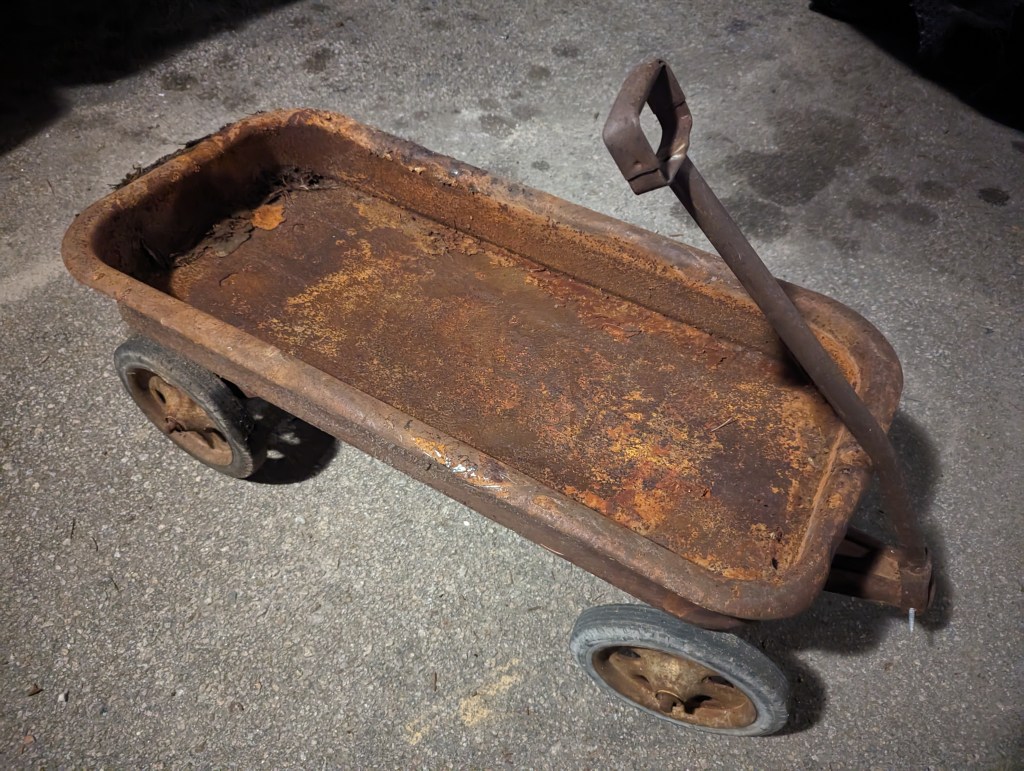
The most awesomely awesome Christmas gift that I received back then was my deluxe Radio Flyer wagon! It was my first luxury sedan that worked like a pickup! It was as durable as the other gardening tools. After I went to college, my mother used it to bring in firewood. It is out back right now, more than half a century after I received it new. It may continue to work in my garden as long as I do.