Simple Species

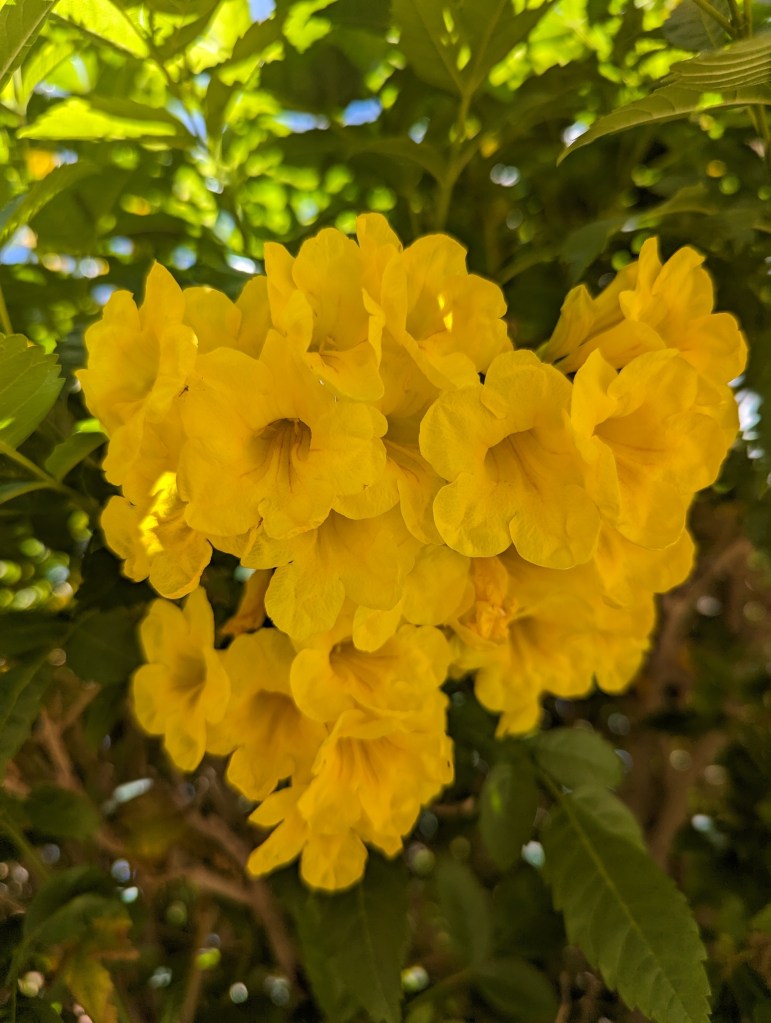
Unidentified cultivar of Tecoma stans

Tecoma stans is somewhat popular within the neighborhood where I stayed while in Arizona. It is available in nurseries also. I suppose that I could have purchased one or more for my garden. I had wanted to grow it for a long time. I refrained. I can explain.

The Tecoma stans that I can get from nurseries is an improved cultivar, or actually, about three cultivars. They are not the simple species, as it would be found growing wild. I realize that improved cultivars are known as ‘improved’ for a reason, but ultimately, I want to grow the simple species.

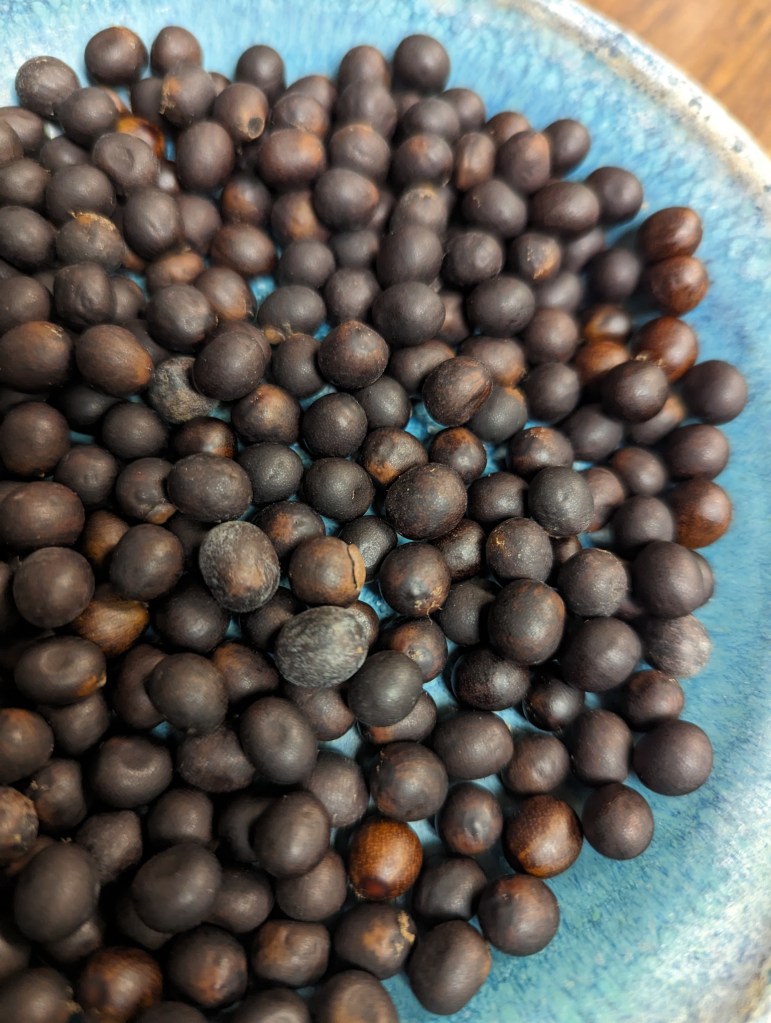
Crazy Green Thumbs sent me the seed for the simple species of Tecoma stans that I want to grow. That is all I need. Other colleagues have sent me seed, seedlings or cuttings for simple species of American beautyberry, American holly, American persimmon, pawpaw, red mulberry, red elderberry and perhaps too many other species to list briefly. In the future, I suppose that I could try cultivars of some of these species. I would like to get acquainted with them first though.

For most species, I suppose that I prefer cultivars. I want to grow the same ‘Moorpark’ and ‘Blenheim’ apricots that I grew up with. Eventually, I want to grow ‘John F. Kennedy’ rose. Cultivars serve a purpose also.

There are a few reasons why I want simple species rather than cultivars of some species. For American beautyberry, American holly and red elderberry, I want to grow what most other garden enthusiasts within the native ranges of these species grow merely because such species appear uninvited in their gardens. For American persimmon, pawpaw and red mulberry, I want to grow a few of the fruits that people enjoyed for culinary application prior to the development of relatively modern cultivars.
Six on Saturday: Double Whammy!

Rhody, Carson and I are back from vacation. Now I see that I did not get many pictures

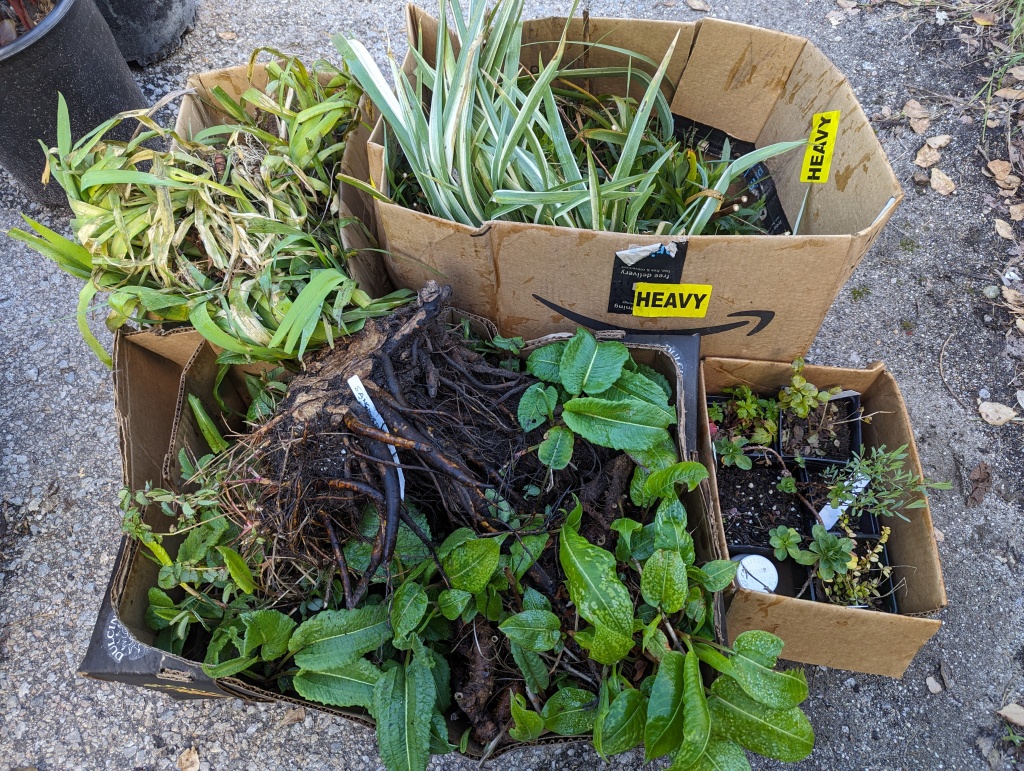
1. If this looks like the same major stockpile of vegetation from Skooter’s Garden (Tangly Cottage Gardening) that I posted a picture of last week, it is because it is. The difference is that it is here at home now. Goodness, it will be a busy week of division and plugging.

2. Cerinthe seed are in the pill bottle to the lower right of the previous picture. So is that obstinate pill to the left. I should have tried cerinthe by now, and this is my justification.

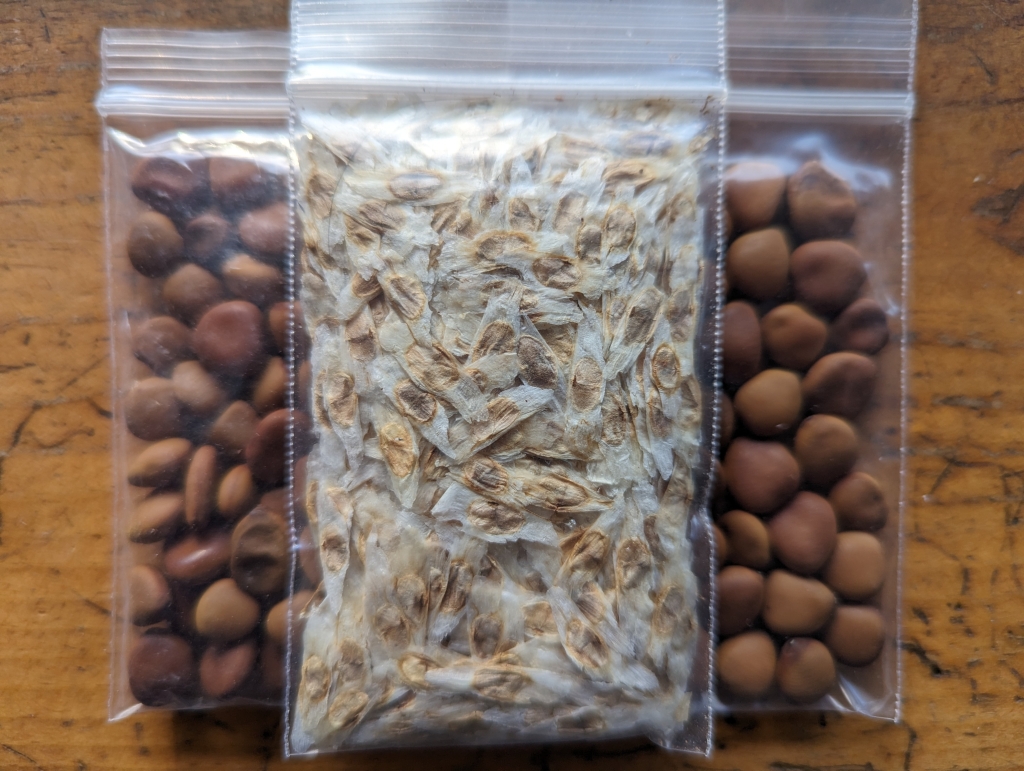
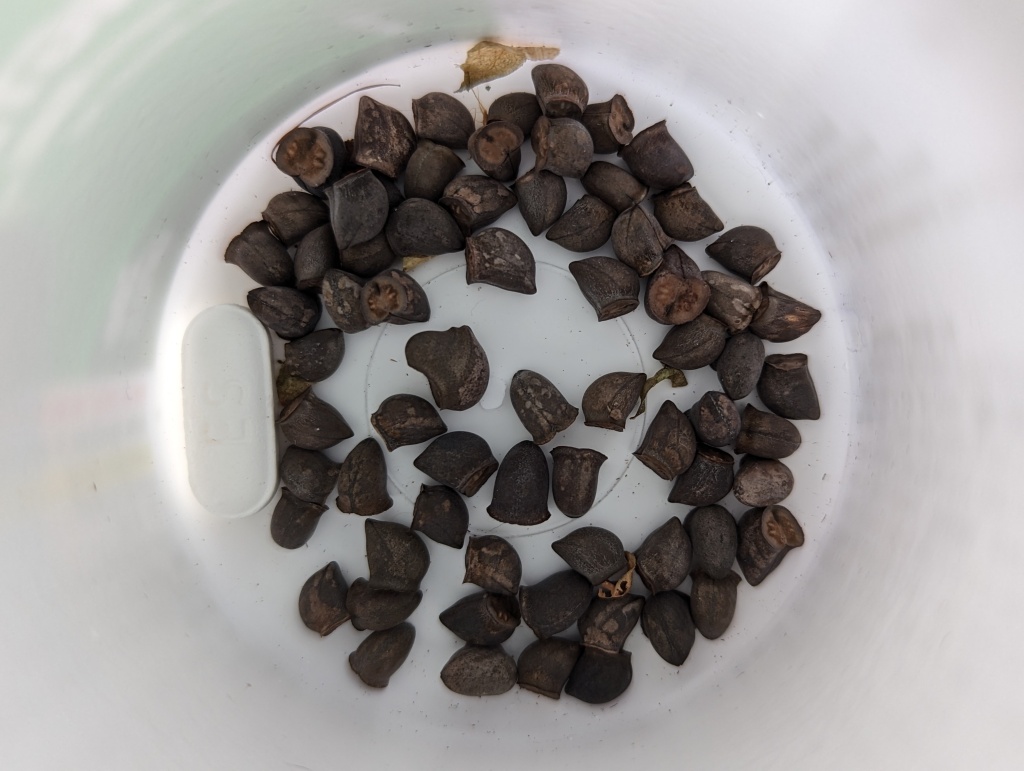
3. Poinciana and esperanza seed from Crazy Green Thumbs are the second of my double whammy! They were likely in my mail before we left on vacation, but we left town before the Post Office was open. Shamefully, they will be my second attempt for both species. It is a long and embarrassing story. This particular poinciana is more commonly known as dwarf poinciana, Caesalpinia pulcherrima. This particular esperanza is more commonly known as yellow bells, Tecoma stans. ‘Esperanza’ means ‘hope’, which I have enough of.

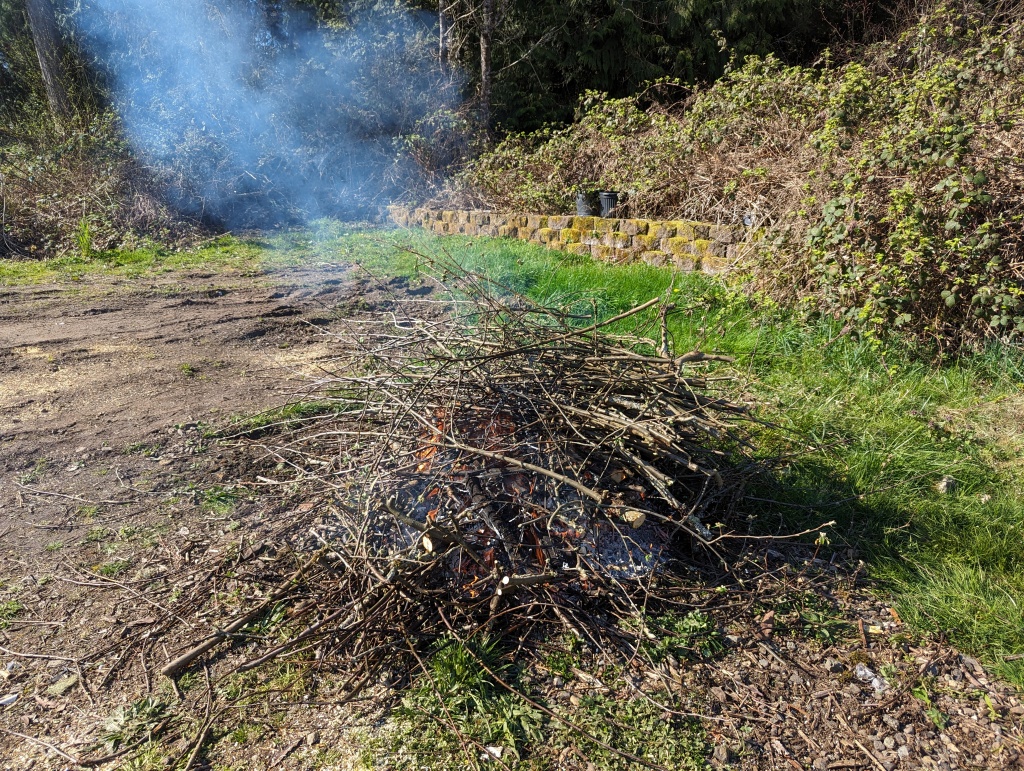
4. My vacation was scheduled to be as late in winter as possible but prior to the bloom of apple trees because I intended to prune eleven apple trees while still dormant. All eleven trees are pruned, and their formerly fresh detritus is gone. Sweet Brown would approve.

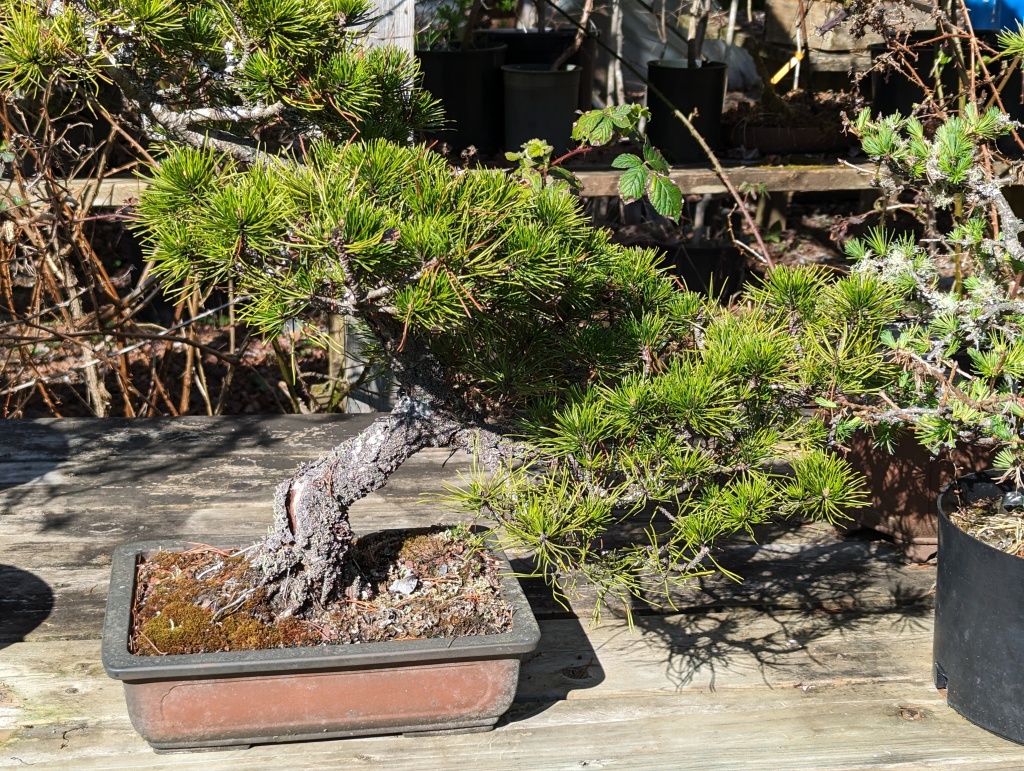
5. Bonsai stock is what my Pa grows on his farm where the pruned apple trees and other old fruit trees live. Goodness, I really should have stayed later, and taken more pictures.

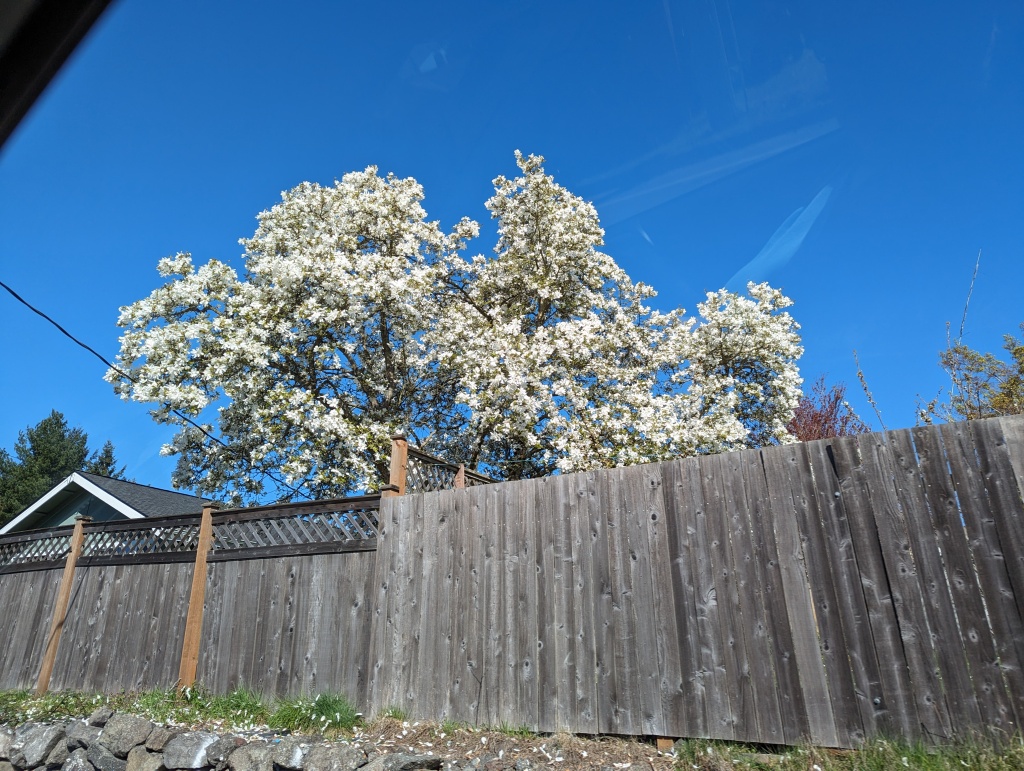
6. Star magnolia performs very well in the Pacific Northwest. I rarely see them any more than five feet tall locally. This is an awkward picture because I took it from a moving car.

This is the link for Six on Saturday, for anyone else who would like to participate: https://thepropagatorblog.wordpress.com/2017/09/18/six-on-saturday-a-participant-guide/

Deadheading Redirects Resources For Growth

Deteriorating flowers lose their appeal fast.

Early spring bulbs that went into their gardens last autumn are now blooming. Some are already done. Some summer bulbs should begin to bloom as the last spring bulbs finish. A few of them might bloom as late as autumn. Ultimately, like the earliest of spring bulbs, all eventually finish. As they do, their deteriorating flowers will necessitate deadheading.

Deadheading is simply the removal of deteriorating blooms. For many species, it diverts resources from fruiting into other growth. Many species can utilize diverted resources for subsequent bloom. Many become more intent on blooming again after deprivation of any prior fruiting. Spring bulbs instead utilize all their diverted resources for new bulb growth.

For spring bulbs, it is the most practical response to deadheading. Most bloom only once annually. Therefore, they can not divert resources directly to subsequent bloom. Instead, they prioritize vegetative growth of bulbs to grow and bloom for the next spring. They are patient. Reproduction remains their priority. They merely regroup before another attempt.

Because of extensive breeding, many spring bulbs can not produce viable seed anyway. Of course, this does not prevent them from trying. Even seeding or fruiting structures that contain no viable seed can be unappealing. For them, deadheading is merely aesthetic. Some complicated hybrids that might produce viable seed are unlikely to be true to type.

Elimination of viable seed that is not true to type is as practical as it is aesthetic. Without deadheading, such seed can grow into feral progeny. Such ferals may be more similar to remote ancestors than to their direct parents. They can be aesthetically inferior, but more prolific. Eventually, less desirable feral bulbs may displace their more desirable parents.

Because they are small but abundant, some freesia avoid deadheading. Resultant ferals are more fragrant but less colorful with pale white bloom. They are more prolific, so might eventually displace their parents. Common grape hyacinth and snowflake are too florific to deadhead, but are true to type. Actually, they can become invasive in some situations. Montbretia are very likely to be invasive.

Weeds Are Prolific And Invasive

Weeds are now growing vigorously everywhere.

Warming spring weather accelerates bloom and growth. Early spring bloom is now much more colorful than the best of winter bloom. Fresh foliage is already replacing defoliated deciduous foliage and faded evergreen foliage. Vegetation will soon be more active than they will be during any other time of year. Such vegetation unfortunately includes weeds.

Weeds are only weeds because they are unwanted. That is their only commonality. Most are exotic, or not native, but a few are native. Most are annuals, but a few are perennials, vines, shrubs or trees. Annuals grow from seed, but several of the others can perpetuate vegetatively. Some are appealing where appropriate, but migrate to where they are not.

Weeds become weeds because they are generally invasive. Many are aggressively so. They grow wherever they can, and compete with any desirable vegetation for resources. The most aggressive annual weeds begin growing before preferable species. They can overwhelm their slower victims. Several have bloomed and are already dispersing seed.

Exotic weeds are here for a variety of reasons. Some arrived inadvertently as seed in fur or digestive systems of livestock. Some were fodder for livestock. Many were originally desirable flowers for home gardens. A few were formerly useful as cover crops or erosion control. Many lack natural pathogens from their native ranges that limit their proliferation.

Regardless of their origins, weeds now necessitate weeding. They grow throughout the year, but most are most active as winter becomes spring. Obviously, they grow like their horticultural designation implies. Those that are not already dispersing seed should not get the opportunity to do so. Less weeding will be necessary later if more happens now.

Besides, weeding is easier while the soil is still evenly damp from winter rain. Roots are more pliable and less dispersed. They toughen and disperse as the season progresses. Rhizomes, stolons and other perennial weed parts are likewise easier to pull or dig now. Tilling might be more efficient for eradication of small but profuse young weed seedlings.

Vegetables Change With The Seasons

Zucchini seed can be sown now.

Annuals are not all that change with the seasons. Vegetables do also. After all, with few exceptions, vegetable plants are also annuals, or perform as such. Most of those that are biennials are edible only during their first year. They bloom and become inedible if they survive for a second year. Most perennial vegetables are easier to replace than recycle.

As with annuals, it seems to be a bit too early to replace cool season vegetables. Some continue to produce, and may do so for a while. The weather still seems to be a bit too cool for warm season or summer vegetables. Technically, it actually is too cool for some. However, some must grow from seed. The weather will be warmer by the time they do.

Most cool season vegetables are actually vegetables. In other words, their edible parts are vegetative rather than fruit. Conversely, most warm season vegetables are actually fruit. In other words, they contain seeds. Tomato, chili, eggplant, cucumber, squash, corn, okra and bean are familiar examples. Some but not all continue to produce until autumn.

For example, zucchini and other summer squash produce until frost. So do pole bean, some cucumbers and indeterminate tomatoes. However, winter squash only grow during summer to ripen all at once for autumn. Okra, eggplant and various chilis should produce throughout summer, but likely will not. Secondary phases can prolong their production.

Determinate tomatoes, bush beans, and corn benefit most from phasing. They produce all their fruit within a brief season and then produce no more. Subsequent phases should start before preceding phases finish. Some can eventually replace lingering cool season vegetables. With good soil, fresh new tomato plants can start below aging tomato plants.

Seed for corn, beans, root vegetables and greens prefers direct sowing into their garden. Seedlings are stressed by transplant, and too many are needed. Cucumber and squash grow as well from seedling as seed, and a few should suffice. Tomato, chili and eggplant prefer to grow from a few seedlings a bit later. Some varieties are available only as seed, though. Such seed should be sown by about now, directly or within cells, outside or in.

Merry Christmas!

This was much more awesome than gold, frankincense or myrrh!

Happy Birthday Jesus!

What is a suitable birthday gift for Someone Who has no use for anything worldly, but lived like He did? Gold, frankincense and myrrh seemed like good ideas in the beginning, although they were presented a year prior to His first birthday. Contrary to modern commercialism, a Lexus or Mercedes Benz might not be so appropriate for Someone Who preferred to come into town on a colt, and not the Dodge sort. Perhaps that is why it is customary to present gifts to others instead. Such gifts are Christmas gifts because so few have the same birthday.

Although overly elaborate or abundant gifts are a tradition that I find to be objectionable, I enjoyed many relatively minor gifts when I was a kid. Within my first few years, although I do not remember exactly when, I received my first tree, which was a seedling of Calocedrus decurrens, California incense cedar, from Amador County. A year or two afterward, I received a ‘Meyer’ lemon tree. During the same time, I received seed for many types of vegetables and a few flowers, as well as a set of child-sized gardening tools of premium quality. They lasted long enough for my mother to use the shovel to clean ash from the woodstove long after I graduated to a real shovel.

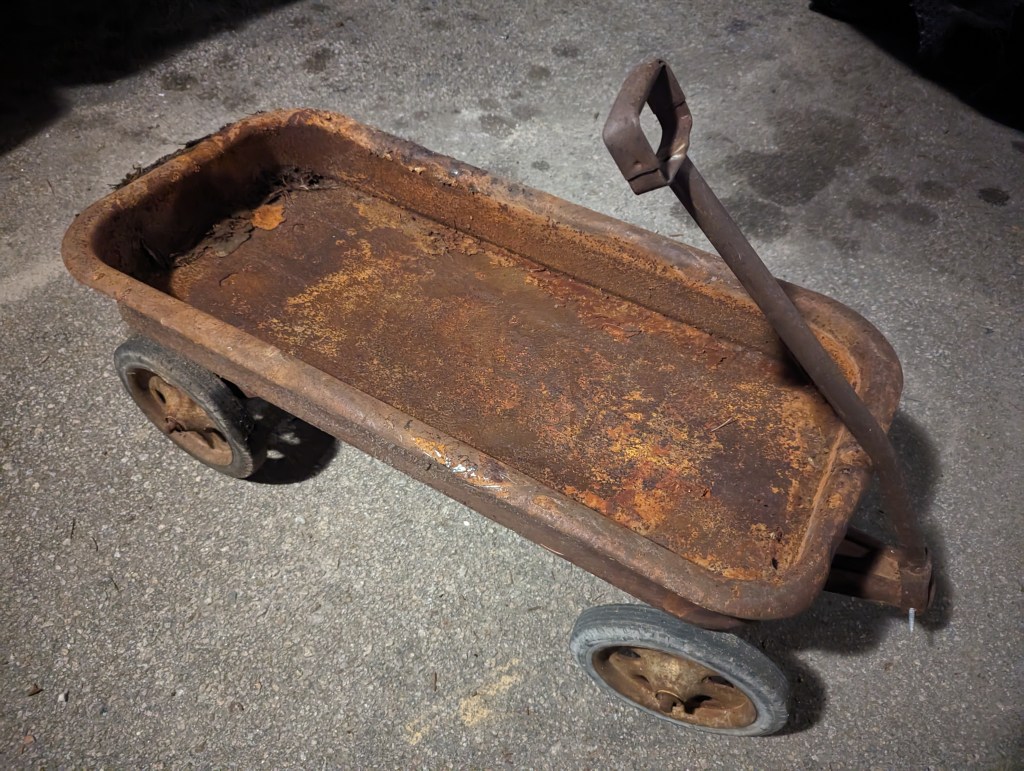
The most awesomely awesome Christmas gift that I received back then was my deluxe Radio Flyer wagon! It was my first luxury sedan that worked like a pickup! It was as durable as the other gardening tools. After I went to college, my mother used it to bring in firewood. It is out back right now, more than half a century after I received it new. It may continue to work in my garden as long as I do.

Berries Get Colorful For Winter

Firethorn berries are very reliably abundant.

Some vegetation excels at exploitation of wildlife. All sorts of flowers use color and floral form to attract pollinators. Many flowers rely on fragrance or flavorful nectar for this same purpose. Many flowers employ a combination of such techniques. After pollination, many species produce fruit to draw wildlife to disperse their seed. This includes winter berries.

Just as flowers appeal to particular pollinators, fruits appeal to particular consumers. Big fruits appeal to animals who eat them, perhaps sloppily, but drop the seed within. Acorns and nuts appeal to squirrels who bury more than they can retrieve. Winter berries appeal to birds who do not digest the seed within. The birds deposit the seed wherever they go.

It is a mutually beneficial arrangement. Birds, whether migratory or overwintering, eat as many berries as they want. Vegetation that provides winter berries benefits from efficient dispersal of its seed. Naturally, such fruits ripen as birds are fattening up for winter. They are brightly colorful to attract hungry birds. They are small enough for birds to eat whole.

This is convenient for home gardening. It provides some color after defoliation of autumn foliar color, and prior to spring bloom. It is actually more appealing where cooler weather accelerates defoliation. Also, such color contrasts more prominently against snow within a stark landscape. Within any climate though, such berries last only until birds find them.

For some, birds and squirrels who come for winter berries are welcome. Some prefer the color of winter berries. Ultimately though, the wildlife determines how long winter berries linger. Anyone can cultivate vegetation that produces winter berries. Very few can protect such fruit from wildlife that craves it. Berries rarely last long enough to rot through winter.

Firethorn produces the most colorful winter berries. Various cotoneasters are similar, but with somewhat subdued rusty red color. Toyon develops larger but looser clusters of fruit. English hawthorn fruit resembles that of cotoneaster, but on bare stems. Hollies produce only a few berries. They are dioecious, so need male pollinators which are rarely nearby.

What Is This?! III

Could it be lychee?

Prior to the identification of Hibbertia scandens last week, another mystery arrived. I probably should have mentioned it earlier, but as with the previous mystery, I thought that I would have identified it before I felt compelled to mention it here. Unlike the previous mystery though, I did not recognize it as something that I had encountered in the past.

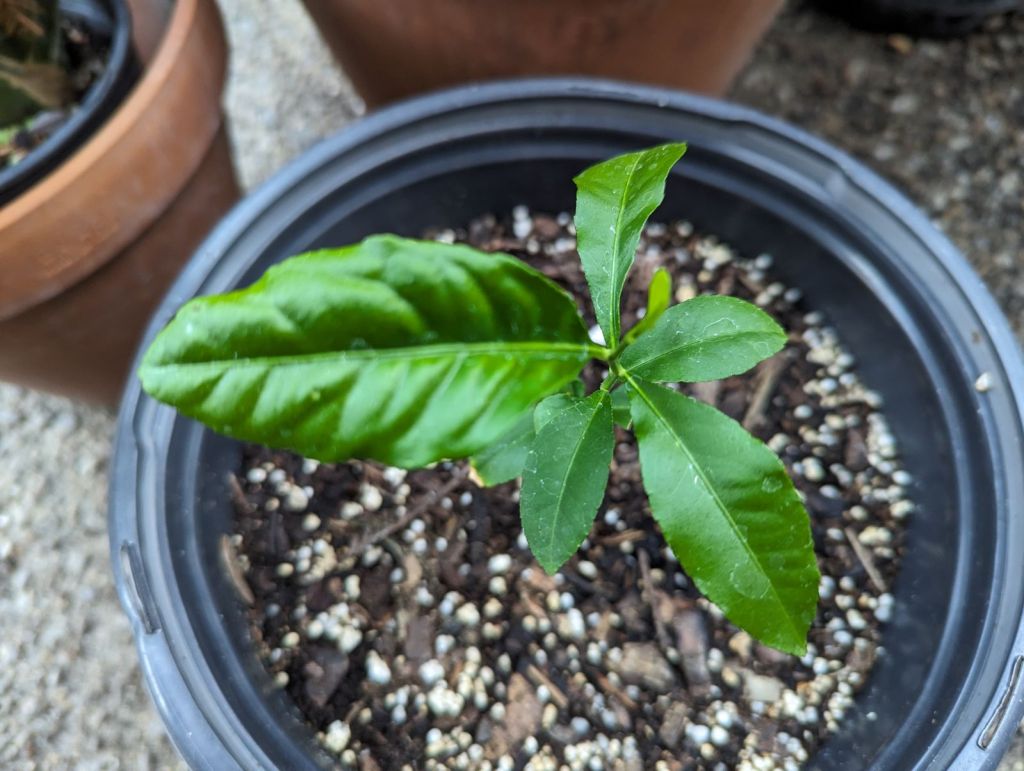
Someone with whom I work, who is not so horticulturally oriented, brought it from one of the homes that he was working at. It had been left by a former tenant. Initially, I thought that it was merely a can of otherwise unused media in which a common bay laurel seed had germinated. However, it is not a bay laurel seedling. Also, contrary to how it appears in the picture, it is remarkably centered within the can, as if intentionally plugged there.

Initially, I thought that it resembled coffee, Coffea arabica. However, coffee exhibits opposite leaf arrangement, and these leaves are alternately arranged. Besides, viable unroasted coffee seed is not exactly common. Now, I sort of suspect that it could be lychee, Litchi chinensis. Although uncommon, seeded lychee fruit are not as rare as unroasted coffee. Although their leaves are so closely paired among mature specimens that they seem to be oppositely arranged, they are technically alternately arranged, and more obviously so among juvenile growth. If this is lychee, it will not produce identifying bloom for a few years.

Realistically, immediate identification of this seedling is unimportant. I could have put less effort into discarding it than I put into writing about it. Therefore, I will merely give it what it needs until it grows enough for identification. I will not mind discarding it if I identify it as something that is useless. Otherwise, I can find it a home.

Seed Collection For Another Season

Less hybridized canna produce more seed.

Deadheading conserves resources that would otherwise sustain production of seed. For species that bloom more than once, it promotes continued bloom. For others, it promotes healthier vegetative growth. Also, it inhibits proliferation of potentially invasive seed. It is neater anyway. However, several species might forego deadheading for seed collection.

Flowers that bloom only once for a brief season generate all their seed at the same time. Flowers that bloom for an extensive season generate seed for a more extensive season. Some seed is obtainable from ripe fruit. Some is obtainable from unharvested vegetable plants that go to seed. Seed collection involves various sources during various seasons.

Regardless of its season and source, most seed is too abundant for complete collection. A single fruiting vegetable, such as a true to type chile, provides more than enough seed. A few stalks of naked lady might provide more seed than one garden can accommodate. Wildflowers are an exception. Their seed collection is rarely too excessive to broadcast.

Many species do not reliably generate viable seed though. Some require pollination by a very specific pollinator that does not live here. Yuccas that are from Central America rely on moths that live only in Central America. Some bamboos generate seed only once in a century or so. Most hybrids are too genetically dysfunctional to produce any viable seed.

Hybrids that can generate viable seed are very unlikely true to type. In other words, their progeny will be very different from them. Such progeny tend to revert to a simpler or more primitive form. The same applies to progeny of cultivars of extensive breeding within one species. Genetic aberration, such as variegation, is likewise unlikely inheritable by seed.

To complicate seed collection, some species begin life with juvenile growth. Some might take several years to mature. Avocado seedlings initially grow very fast, and tall, without blooming. By the time they mature, bloom and produce fruit, such fruit can be too high to harvest. Trees from nurseries are fruitful lower only because of grafting with adult growth.

Cuttings Become Copies Of Originals

Elderberries grow efficiently from hardwood cuttings.

Seed is the most familiar source of much of the vegetation that inhabits home gardens. It is the origin of almost all vegetables and most annual flowers. Some seed grows directly into its gardens. Some grows in nurseries to become saleable young plants. Seed is not the only method of propagation though. Cuttings, division and layering are as productive.

Cuttings, as well as divisions and layers, are genetically identical to their single parents. Unlike seed, which are products of two parents, they lack potential for genetic variation. Division is the separation of stems with roots from perennials or clumping woody plants. Layering is the rooting of stems by partially burying them while attached to their parents.

Cuttings grow simply as pieces of stem within moist rooting medium such as potting soil. They initially lack roots and perhaps foliage. They develop new roots and foliage as they grow. Their medium must remain moist throughout the process. For many plants, rooting hormone accelerates root initiation. Some species can grow roots as they soak in water.

Hardwood cuttings are mostly from deciduous species as they defoliate for winter. Those from last winter are developing now. Evergreen hardwood cuttings retain some foliage through their winter dormancy. Softwood cuttings can be either deciduous or evergreen. They involve fresh new growth, so can begin as soon as such growth is mature enough.

The lower cuts of cuttings should be just below a node. Upper cuts should be just above a node. Terminal cuttings are tips of stems without upper cuts. Each cutting must include at least two good nodes. Some species may need cuttings to be several inches long in pots. Most grow better from small cuttings that fit into flats. Some can go directly into a garden. Cuttings should lack leaves below the level of their rooting medium.

Softwood cuttings generally require humidity to help compensate for their lack of roots. Most also appreciate partial shade. Evergreen hardwood cuttings appreciate the same as weather gets warmer and drier. Warmth from a heating mat below pots or flats might accelerate rooting. Many species are difficult or impossible to grow from cuttings though.