 Flowers do not last forever. Whether they last for only a day, or weeks, they all eventually finish what they were designed to do, and then whither and deteriorate. They only need to stay fresh and appealing to pollinators long enough to get pollinated. After all, that is their only job. The next priority is the development of seed and any associated fruit structures that contain the maturing seed.
After bloom, most flowers are just ignored as they deteriorate and fall. Those in big shrubbery, vines and trees are out of reach anyway. Others are either too numerous or too insignificant to worry about. Of course, fruit and fruiting vegetable plants get to produce the fruits that they are grown to produce. Then there are few flowers that need to be ‘deadheaded’ after they are done blooming.
Deadheading is simply the removal of deteriorating flowers. The remains of sterile flowers might be deadheaded because they are unappealing. Deteriorating flowers that would like to produce undesirable seed or fruit after pollination might get deadheaded for the same reason, and to conserve resources that would otherwise be consumed by the developing seed and associated fruit.
However, there are a few flowers that might be left intentionally to provide seed for later. Different flowers finish at different times, and their seed gets sown in particular seasons, but most of those allowed to produce seed should probably be deadheaded through most of their season, with the last few blooms left to go to seed. The same applies to fruiting vegetable plants like pole beans.
Many flowering plants are genetically stable enough to produce progeny that will bloom mostly like the parents. Most are likely to be more variable, or revert to a more genetically stable form, even if it takes a few generations. Sunflower, cosmos, marigold, calendula, morning glory, columbine, snapdragon, campion and hollyhock are all worth trying.
California poppy, alyssum, nasturtium, money plant (honesty) and a few annuals that do not get deadheaded are often happy to sow their own seed.
 Weeds are weeds because they grow where they are not wanted. They might be desirable plants in the wild within their native ranges, or beyond their native ranges where they are useful, but for one reason or another, are undesirable in other situations. In fact, many of the most invasive exotic (non-native) weeds were imported because they were useful for something, and then escaped.
 California poppies are like no other wildflower. They are so perfectly bright orange, and look almost synthetically uniform in profusion, as if painted onto coastal plains and hillsides. They may be a bit more yellowish in some regions, or a bit deeper orange in others, but they are always bright and strikingly uniform.
 Compared to replacing cool season annuals with warm season annuals, the replacement of cool season or ‘winter’ vegetables with warm season or ‘summer’ vegetables is not quite as traumatic. Most of the cabbage, broccoli and cauliflower plants finish in time to make room for new vegetable plants anyway. Unlike flowering annuals, they make it obvious that they are done for the season.
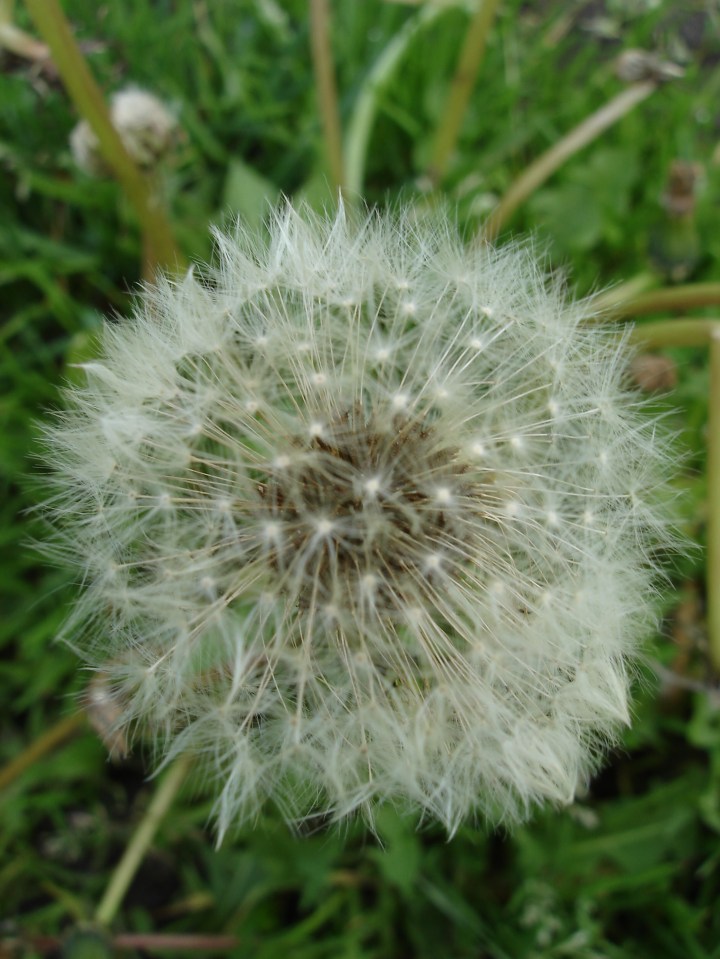 Spring brings out the best and the worst in the garden. While warm season annuals and vegetables are getting established, so are a variety of weeds. Just like other annuals and perennials, they respond to the changing weather. Cool weather and moisture stratified their seed through winter. Warming moist soil prompts germination. Warm and sunny spring weather promts rapid growth.
 Plants are quite ingenious with their technology of exploitation of animals and people. Many get insects, birds, bats, spiders and anyone who is animated within their environment to disperse the plants’ pollen for them. Plants who prefer to not rely on wind, water or gravity to disperse their seed exploit a different range of animals to do so. They know how to compensate for their immobility.
 Right next door to my downtown planter box, (
  Where winters are cooler, the deteriorating stems of flowers that bloomed last year either got pruned away already or got knocked down by the weather, and are now rotting on the ground. Around here, where the weather is milder, and some flowers only recently finished blooming, used up flower stalks still stand in stasis. Most but not necessarily all should get pruned out and raked away.
 You can say what you like about nasturtiums. My landscape designer colleague, Brent Green certainly did when he named them ‘dago pansies’. They are still one of my favorite flowers, and just might be my favorite, even though none are convincingly white. They were my first. I discovered them when I was very young. They were growing near an old English walnut tree in my great grandfather’s garden. He noticed that I liked them, so found some seeds underneath to send home with me.
 Brent and I met in college, when we were assigned to the same dorm room in Fremont Hall at Cal Poly in San Luis Obispo. Our similarities were remarkable. He came two hundred miles north from west of Los Angeles. I came two hundred miles south from west of San Jose. We were both the middle of three children, although I had just acquired an extra younger sister the year before. While the other boys we grew up with were playing with Hot Wheels, Brent and I were busy planting miniature trees around the miniature roadways. His childhood dog was Speckles. Mine was Freckles. We were weirdly similar prior to September of 1986, but have been perfecting our differences since then.
 Tony Tomeo