Poor Man’s Rhododendron

Poor man’s rhododendrons is less colorful but more perennial than the more popular busy Lizzie Impatiens walleriana.

The nursery industry is so innately unsatisfactorily lucrative, that to us nurserymen, a ‘poor man’s rhododendron’ is any rhododendron that we grow. To everyone else, it is Imaptiens sodenii, a tender perennial that gets to six feet tall and wide or even larger on plump, softly succulent stems. It succumbs to even mild frost in winter, but regenerates rapidly by summer. It prefers partial shade, and can roast if too exposed to direct sunlight on warm days. Too much shade is rarely a problem.

The two inch wide flowers are typically very pale shades of pink, lavender or slightly blushed white. At least one modern variety has brighter white flowers with reddish pink centers. Bloom continues as long as weather is warm. The seed capsules are not much to look at, but explode to disperse their seeds when disturbed. The soft, rich green leaves are about three to six inches long.

Azalea

Azalea bloom can almost obscure foliage.

Azaleas, which are species of Rhododendron, have been in cultivation for centuries. At least ten thousand cultivars are documentable. Most are interspecific hybrids. Only a few are selections or breeds of simple species. Most of their ancestral species are native to Asia, Europe or North America. Almost all cultivars that are available here are evergreen.

Azaleas can bloom profusely enough during April or May to almost obscure their foliage. Bloom may last for more than two weeks. Floral color ranges between white and red with many tints of pink, salmon and magenta. The most profuse flowers are as narrow as half an inch. Larger flowers may be three inches wide. Rare deciduous azaleas are fragrant.

Azaleas do not grow fast, but can eventually sprawl more than five feet wide. Some can grow nearly twice as wide. Although most do not grow much taller than three feet, some can grow twice as tall. Azaleas are naturally understory species, so can tolerate a bit of partial shade. They should not crave fertilizer. If they do, they prefer acidifying fertilizer.

Andromeda

Andromeda can be somewhat shade tolerant.

Andromeda might be more familiar by its Latin name of Pieris. A few of its seven species, and a few of their hybrids, are popular for home gardens. All are evergreen shrubs. A few do not grow much taller and wider than three feet. Few can grow a bit more than ten feet tall and wide. In the wild, some might grow as small trees that are almost twenty feet tall.

Andromeda has glossy evergreen foliage. Individual leaves are lanceolate, perhaps with serrated margins. They are between one and three inches long, and half to an inch wide. New growth of most cultivars is as rich cinnamony red as that of photinia. A few cultivars have more pinkish or simple green new growth. A few cultivars are variegated with white.

Andromeda blooms with somewhat pendulous racemes of tiny pendulous flowers. Floral racemes are between two and four inches long. Individual flowers are between a quarter and half an inch long. Most are white. Some are pink. Most have green rachi. Some have pink rachi. Bloom is abundant for the middle of spring. Andromeda prefers partial shade.

Shade Tolerant Species Genuinely Shine

Some species actually prefer partial shade.

Home gardens are getting shadier as bigger modern homes occupy smaller modern lots. Bigger homes make bigger shadows. So do their bigger fences that compensate for their minimal proximity to each other. Less space within their smaller gardens extends beyond their shade. Consequently, shade tolerant species have become more popular than ever.

Also, small trees have become more popular than large trees for small modern gardens. However, more of them are evergreen to partially obscure obtrusively close homes. Their shade lasts throughout the year, and is likely darker than that of deciduous trees. It could be too dark in some situations even for shade tolerant species. Even they need sunlight.

Realistically, shade tolerant species merely require a bit less sunlight than most species. No real vegetation can survive without any sunlight. Like it or not, artificial turf can be the most practical option for the shadiest of lawns. Some potted plants can cycle around the garden, to take turns in shade and sunlight. If so, they may not need to be shade tolerant.

Most shade tolerant species perform differently with shade than with better exposure. For example, some rhododendrons that tolerate shade bloom better with more sunlight. Most species with colorful or variegated foliage are more colorful with more sunlight. Likewise, sunlight enhances autumn color for some deciduous species. Shade is merely tolerable.

Also, some shade may be dynamic. Garden space below deciduous trees can be shady for summer, but sunny for winter. Below high evergreen trees, sunlight might get through at a lower angle through winter. Major pruning or removal of vegetation can improve sun exposure if necessary. Many shade tolerant species are adaptable to such modifications.

Most shade tolerant species are understory species. They naturally live below canopies of higher vegetation. Some have big leaves and dark foliar color to maximize absorption of sunlight. Ferns are famously tolerant of shade, although tree ferns can reach above it. Kaffir lily, cast iron plant and hosta tolerate shade also. Rhododendron, azalea, camellia, andromeda and hydrangea tolerate shade as well, but need a bit of sunlight to bloom.

Mondo Grass

Of course, it is not actually a grass.

The thick clumps of evergreen grass-like foliage of mondo grass, Ophiopogon japonicas, make a nice lumpy ground cover for small spaces. Because it is rather tolerant of shade, and actually prefers partial shade to full sun, it works nicely under Japanese maples or highly branched overgrown rhododendrons. It gets only about half a foot deep. Narrow stems with small pale purplish blue flowers that bloom in summer are not too abundant, and are generally obscured below the foliage, but can actually get taller. ‘Silver Mist’ is variegated with white.

New plants are easily produced by division of large clumps. Overgrown or tired looking clumps can be shorn down at the end of winter, before new growth begins. Slugs and snails can be problematic.

Sword Fern

Sword fern can migrate surprisingly vigorously.

It seems to be related to Boston fern because it is. Sword fern, Nephrolepis cordifolia, is a less refined species of the same genus. It does not want to live as a docile houseplant. Instead, it prefers room to grow and spread in the garden. It has potential to spread a bit vigorously though. Containment protects adjacent smaller perennials or bedding plants.

Sword fern foliage is the same light and slightly yellowish green as that of Boston fern. It generally stands more upright though. Rather than hang softly from planters, like Boston fern does, it leans outwardly. Its pinnately compound fronds can grow almost two and a half feet tall. Pinnae might be about an inch and a half long, with a slightly grainy texture.

Sword fern is not particularly discriminating about exposure, moisture or soil. It can cling to trunks of Canary Island date palms and infest their canopies epiphytically. Sword fern is greenest with regular irrigation and shelter from harsh exposure though. Its evergreen foliage can discolor and partially defoliate when distressed. Grooming might be tedious. Healthy colonies may hide their old foliage.

Kaffir Lily

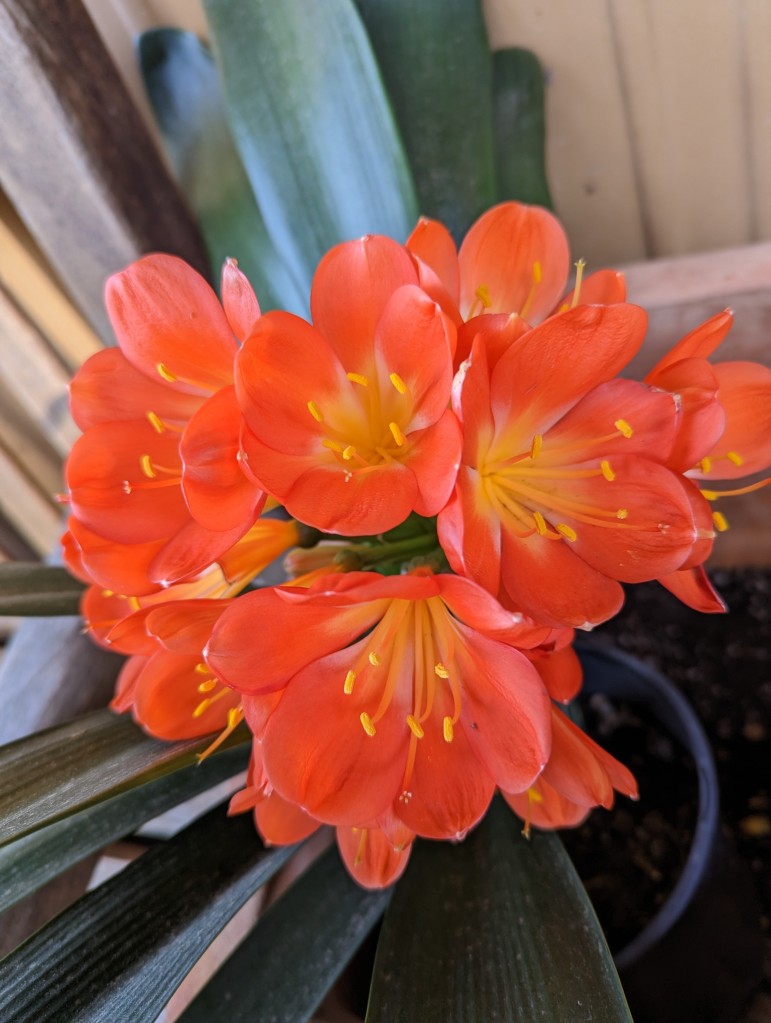
Kaffir lily brightens a shady situation.

Kaffir lily, Clivia miniata, and lily of the Nile seem to be similar but are very different. Both develop densely evergreen mounds of arched strap shaped leaves. Both bloom with many funnel shaped flowers in spherical umbels on upright stems. Even their thick and rubbery rhizomes and roots are similar. However, they are related neither to each other nor to lilies.

Kaffir lily bloom is rich orange, fiery orangish red or yellow. This is opposite of the pastel blue or white floral color range of lily of the Nile. While lily of the Nile requires abundant sunlight, Kaffir lily tolerates significant shade. Kaffir lily leaves and bloom are more stout and less pliable than those of lily of the Nile. Kaffir lily foliage is generally darker green.

Individual leaves of Kaffir lily can be three inches wide and about a foot and a half long. Mounding growth of old colonies can get more than two feet high. Bloom hovers barely above the foliage. A few round and bright red berries can develop after bloom. Individual seeds within each berry may be genetically variable. All parts of Kaffir lily, particularly the rhizomes, are toxic.

Made In The Shade

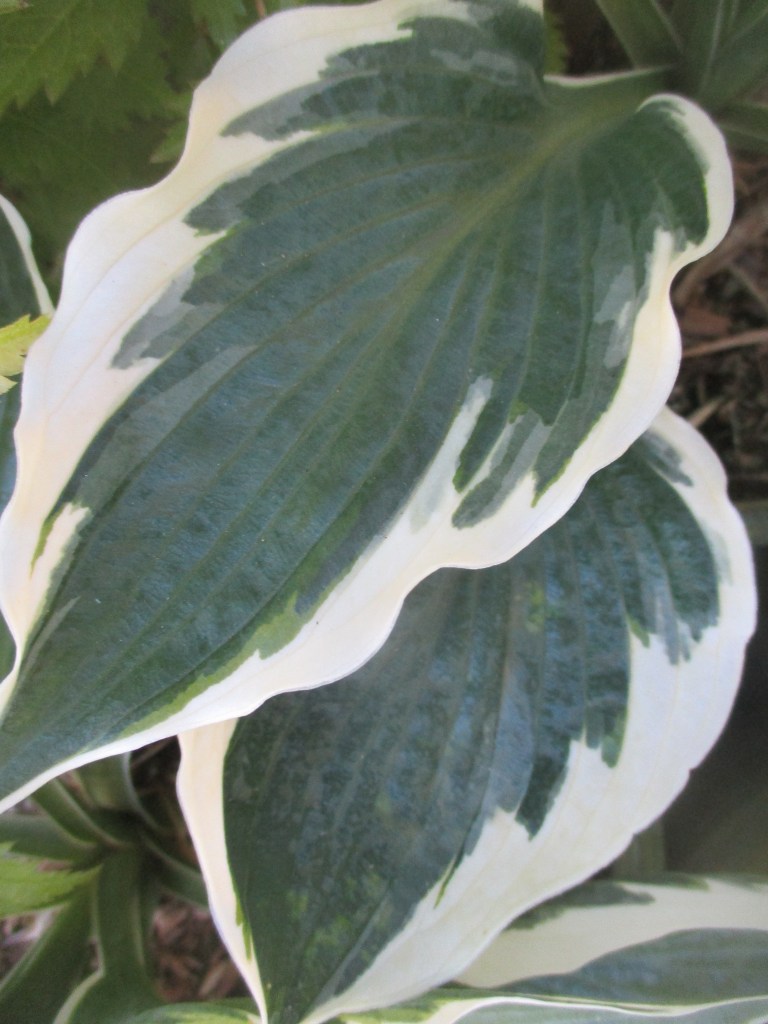
Hosta happen to tolerate a bit of partial shade.

Modern gardens are shadier now than they ever have been. Ranch houses that were popular through the middle of the last century had those classic big eaves that shaded wide margins close to the homes. Prior to that, tall Victorian houses made big shadows. Modern houses though are even bigger. To make matters worse, lots and garden spaces are smaller and surrounded by ominously tall fences; so there is less space that is not shaded by something sometime during the day.

This is why small trees, sometimes known as ‘micro-trees’, are so popular. They are all that fit into some small gardens without creating too much shade for other plants. Large shrubbery, like some of the larger types of pittosporum, and some of the smaller types of podocarpus, often function quite nicely as small scale trees. Where not too shaded, pineapple guava and New Zealand tea tree are just as effective. They only need to be allowed to develop upper canopies with adequate clearance, while their lower limbs get pruned away, instead of getting pruned to stay down low as shrubbery typically does.

Camellia, hydrangea, aucuba, Japanese aralia, Oregon grape and Heavenly bamboo (Nandina spp.) are appealing shrubby plants for shady locations. Camellias and hydrangeas of course provide impressive blooms during their respective bloom seasons. Camellias also have the advantage of excellently glossy dark green foliage all year;  but hydrangeas are bare and need pruning in winter. Oregon grape and Heavenly bamboo, which are actually related, are more subdued but look more woodsy in bloom, and sometimes provide interesting berries afterward. Aucuba and Japanese aralia do not need showy flowers because their foliage is so bold. Japanese aralia has bigger and bolder leaves, but common types of aucuba are spotted with gold.

Balsam (Impatiens spp.), which is already one of the most popular warm season annuals that is beginning to get phased in as the weather gets warmer, is not quite as colorful in the shade as it is with better exposure, but can be impressive nonetheless. Cyclamen takes shade as well, but will actually be getting phased out through late spring and summer. Cyclamen is actually a perennial that can stay in the garden (if it is not in the way of anything else) to regenerate next autumn. As weather gets warmer in spring, caladiums and coleus can provide remarkably colorful foliage for shady spots through summer and early autumn.

Various types of ferns, although devoid of flower color, provide distinctive and often bold form and foliar texture. Australian tree ferns can actually get quite large and eventually function as small trees. Baby tears is a finely textured perennial ground cover that spreads as far as it has moisture. It can actually get to be invasive.

Mexican Orange

Mexican orange does not actually produce any fruit.

Remember when gardening took advantage of the great climate and soil of the Santa Clara Valley? Single story suburban homes with low suburban fences had generous sunny garden space. Now, multiple-storied homes on smaller parcels surrounded by big fences leave only minimal space for shady gardening. Rhododendrons, azaleas, hydrangeas and all sorts of ferns are more popular than the many fruit trees that were so much more common only a few decades ago.

‘Washington’, ‘Robertson’, ‘Valencia’ and ‘Sanguinelli’ oranges that have quite a history in local home gardens are now not much more common than the previously rare Mexican orange, Choisya ternata, which, although related, provides only mildly fragrant flowers without edible fruit. The modest white flowers are only about an inch to an inch and a half wide on loosely arranged trusses, but show up nicely against the rich glossy green foliage. They can bloom anytime, and happen to be blooming now because of the pleasant weather. Otherwise, they prefer to wait until late spring and early summer.

The trifoliate leaves (which are palmately compound with three smaller leaflets in a palmate arrangement) are about two or three inches long and wide. The individual leaflets are about one and a half to three inches long and nearly an inch wide. Foliage can get sparse on big old plants, as they eventually reach lower floor eaves. Occasional pruning of lanky stems can improve foliar density and keep plants as low as three feet. Mexican orange does not actually resemble real orange trees much, but provides nice glossy foliage that is occasionally enhanced by simple softly fragrant flowers.

Tasmanian Tree Fern

Tasmanian tree fern is more tolerant of significant frost than Australian tree fern is.

The trunk of a tree fern is really just tough compressed roots growing downward through dead organic material left behind by earlier growth. The foliage and terminal shoot high on top is just like any other fern that never leaves the ground. Because such a trunk is porous, it is ideal for epiphytic plants that, in the wild, mostly cling onto trees instead of growing on the shadier forest floor. Even though most epiphytic plants are able to cling to just about anything, many prefer tree fern trunks because they can actually root into them.

The shaggy trunks of Tasmanian tree fern, Dicksonia antarctica, take decades to grow tall enough for smaller plants to be visible below the lush foliage, but are plump enough to host a rowdy party of  clinging epiphytes. Most get only about four or five feet tall, with the foliage standing a few feet higher, although some old specimens in Golden Gate Park are more than fifteen feet tall, and very old specimens in their native Tasmania can get nearly fifty feet tall.

The big lacy leaves spread about six feet wide, and can reach twice as wide in shadier spots. Shade also makes the foliage darker rich green. Like almost all ferns, Tasmanian tree fern like relatively rich soil and regular watering. Unlike other tree ferns though, it tolerates frost.