Six on Saturday: Ferns

After the warm and arid summers here, ferns enjoy the beginning of the rainy season in late autumn or early winter, which is about now.

1. Adiantum capillusveneris, Southern maidenhair fern replaces all its tired old foliage for autumn. It resembles native species of maidenhair fern, but with distinct foliar form.

2. Nephrolepis cordifolia, sword fern remains within a big pot because it can be invasive in the ground. It is directly related to Boston fern, but is not quite as soft and pendulous.

3. Dryopteris erythrosora, autumn fern is the only fern here that exhibits autumn foliar color. It is pretty, but quite diminutive. It is no bigger now than it was several years ago.

4. Polystichum munitum, Western sword fern and the next two ferns are native here. All three grow wild within some of our landscapes; and all are remarkably tolerant of shade.

5. Athyrium filixfemina, lady fern is also known locally as ostrich plume fern, but is not related. It has tender leaves with almost succulent rachises that break easily if disturbed.

6. Woodwardia fimbriata, giant chain fern has a similar foliar texture, but is bigger and more resilient than lady fern. We sometimes need to remove big superfluous specimens.

This is the link for Six on Saturday, for anyone else who would like to participate: https://thepropagatorblog.wordpress.com/2017/09/18/six-on-saturday-a-participant-guide/
Six on Saturday: Common Color

As bloom of most other plants decelerates for late autumn and winter, the floral color of common annuals becomes more prominent in the landscapes at work.

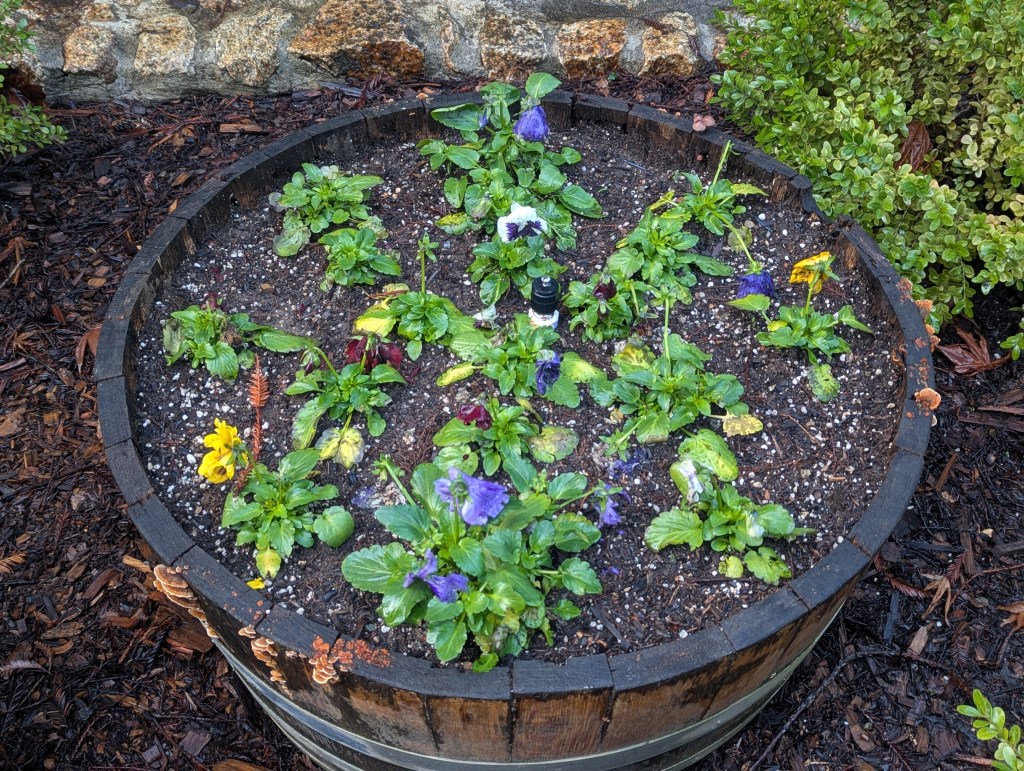
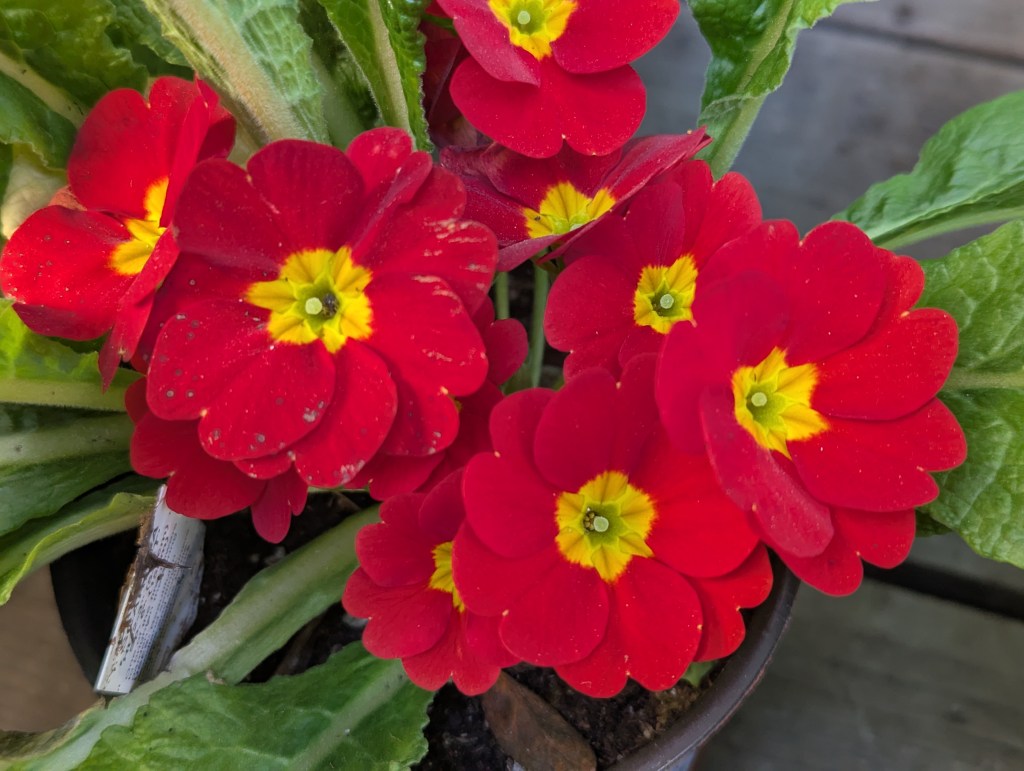
1. Viola X wittrockiana, viola blooms with smaller but more profuse flowers than pansy. I am not certain if they are the same species. Also, most of the flowers face one direction.

2. Viola X wittrockiana, pansy blooms with bigger but less profuse flowers which mostly face random directions. We got only two six packs to add to other flowers in a small bed.

3. Viola X wittrockiana, pansy is redundant to the picture above, but is a different color. The plants are so dinky that they are scarcely visible behind their relatively wide flowers.

4. Bellis perennis, English daisy ranges in color from this rosy red to white like the color scheme of candy canes. I am fond of it because it is not so overly bred like other annuals.

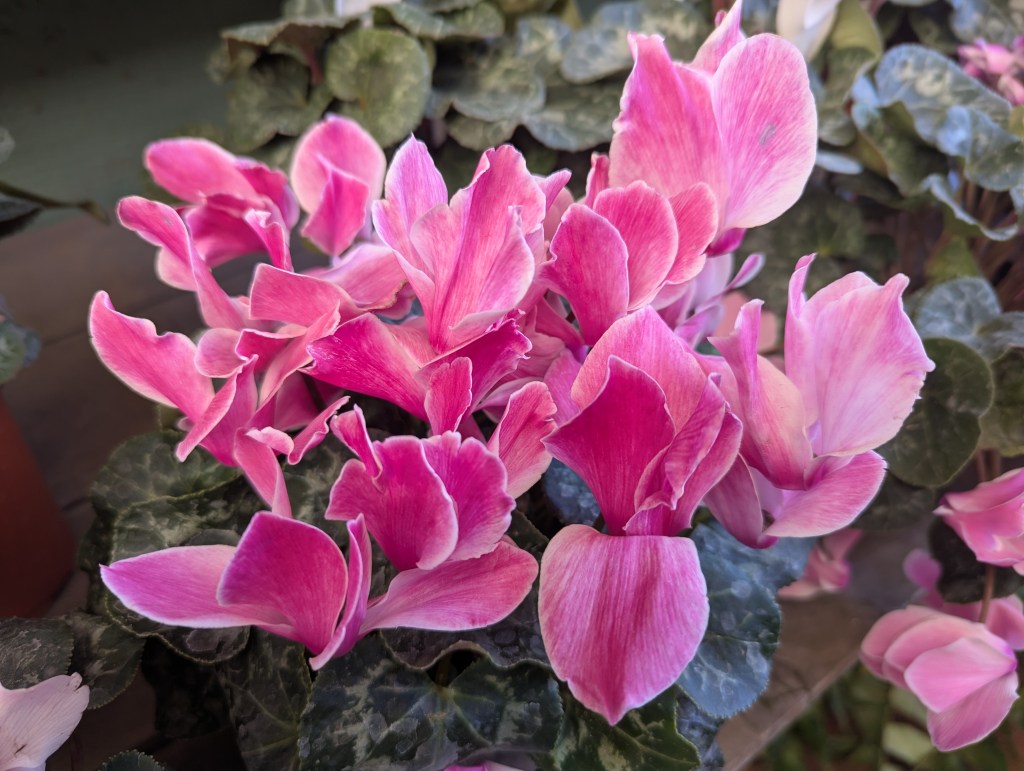
5. Cyclamen persicum, florist’s or Persian cyclamen is cheapened as an annual. I used to grow mine as cool season perennials. I also grew colors other than simple red and white.

6. Rhody was unconcerned with these common annuals as he surveyed his domain early last Monday, while I burned forest green waste. He is not overly horticulturally oriented.

This is the link for Six on Saturday, for anyone else who would like to participate: https://thepropagatorblog.wordpress.com/2017/09/18/six-on-saturday-a-participant-guide/
Six on Saturday: Cooling Weather

It is looking a bit more like autumn as a few more species respond to cooling weather by discoloring or deteriorating before defoliation.

1. Hosta plantaginea, hosta is really looking shabby now. Actually though, it never really looked all that good. The difference is that this shabbiness is because of cooling weather.

2. Plectranthus scutellarioides, coleus, which looked so splendid for Six on Saturday two weeks ago, is beginning to succumb to cooling weather, as is typical for this time of year.

3. Acer palmatum, Japanese maple, which was still green for Six on Saturday two weeks ago, is now beginning to yellow in response to cooling weather, as it should for autumn.

4. Acer palmatum ‘Bloodgood’ Japanese maple was already bronzy red, but is beginning to turn a bit brighter red because of the cooling weather. Its color may linger for a while.

5. Metasequoia glyptostroboides, dawn redwood is likewise beginning to yellow because of cooling weather. It eventually turns brown while all the other redwoods remain green.

6. Rosa, carpet rose is the only one of these six that is not responding to cooling weather as it produces a few rose hips. I did not expect this. Rose hips are rare in our landscapes.

This is the link for Six on Saturday, for anyone else who would like to participate: https://thepropagatorblog.wordpress.com/2017/09/18/six-on-saturday-a-participant-guide/
Six on Saturday: More Late Bloom

Flowers are starting to succumb to cool and rainy weather. So, it is beginning to look like autumn here. Summer is truly over.

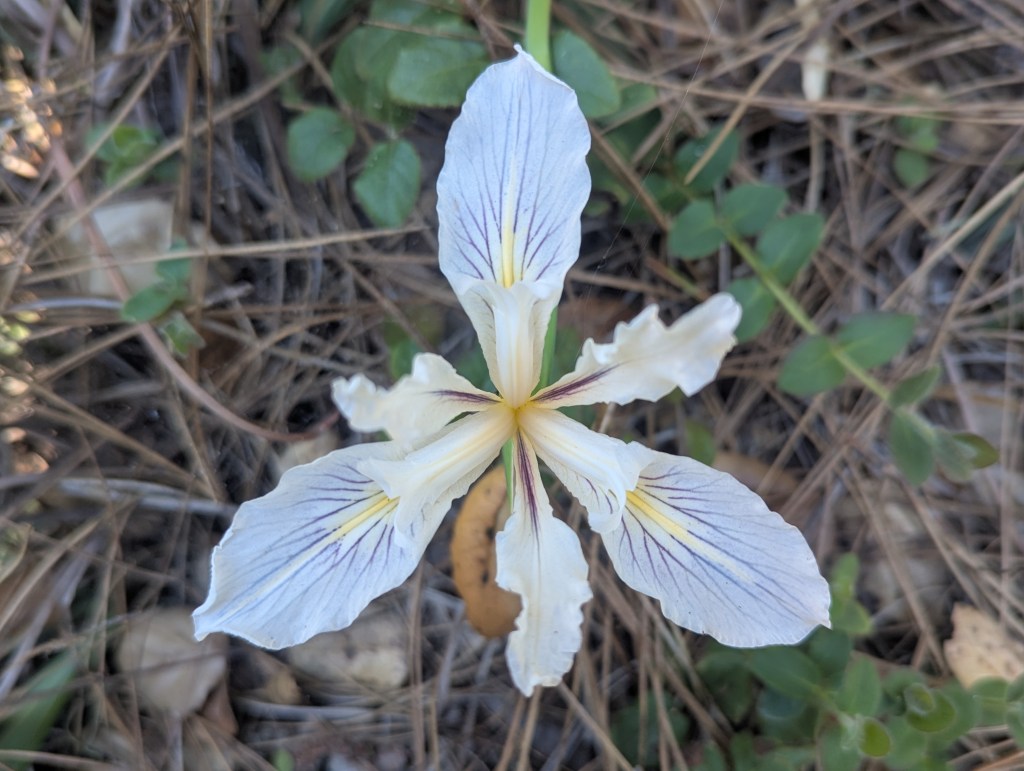
1. Pelargonium X hortorum, zonal geranium is finally starting to look somewhat shabby after the recent rains, although several others continue to bloom as if nothing happened.

2. Rosa spp. ‘Iceberg’ rose is probably the last rose to bloom for the season. A few young floral buds are molding before they bloom. The roses get pruned before New Year’s Day.

3. Tagetes patula, French marigold is more seasonable. It is expected to bloom through autumn, and could continue until replacement with warm season annuals during spring.

4. Abutilon X hybridum, flowering maple does not seem to know when to stop blooming for autumn. Its bloom should probably decelerate now that the weather is getting cooler.

5. Rhododendron spp., azalea is even more confused than the ‘Duc de Rohan’ azalea that bloomed not so long ago. It is blooming more abundantly and even later, or not so early.

6. Rhody curls up somewhat tighter while the weather is cool. His fur should get fuzzier, but does not seem to be doing so. He insists on coming to work with me, out in the cold.

This is the link for Six on Saturday, for anyone else who would like to participate: https://thepropagatorblog.wordpress.com/2017/09/18/six-on-saturday-a-participant-guide/
Six on Saturday: Autumn Or Not?

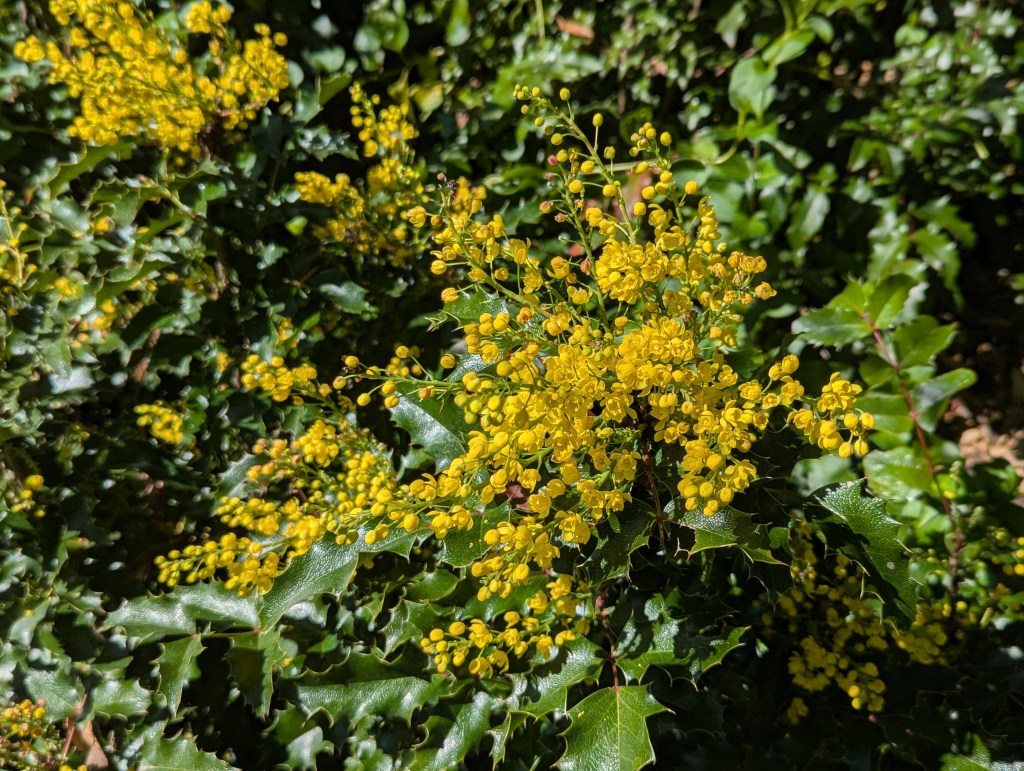
Some vegetation is responding to cooler autumn weather as it should while some refuses to concede. Autumn foliar color is not so spectacular this season.

1. Canna musifolia, canna foliage is beginning to discolor in response to cooling autumn weather. I will groom such foliage out through the season until there is nothing left of it.

2. Plectranthus scutellarioides, coleus is not so easily convinced that it really is autumn. It is as vigorous now as it was for summer. I suspect that it will not last for long like this.

3. Cornus florida, flowering dogwood is already defoliated, and it did so quickly without much color. Others were somewhat more colorful, and were retaining their color better.

4. Acer palmatum, Japanese maple, like coleus, is not convinced that it really is autumn. This particular specimen is as green as it was for summer. Others are beginning to color.

5. Strelitzia nicolai, giant bird of Paradise supposedly blooms randomly. However, ours prefers to bloom through summer and finish about now, so is actually right on schedule.

6. Impatiens hawkeri, New Guinea impatiens, like coleus and Japanese maple, is not yet convinced that it is autumn. It will likely succumb to autumn chill when the coleus does.

This is the link for Six on Saturday, for anyone else who would like to participate: https://thepropagatorblog.wordpress.com/2017/09/18/six-on-saturday-a-participant-guide/
Six on Saturday: Pots

Pots are a bit more common within our landscapes than they should be, but they can be justified.

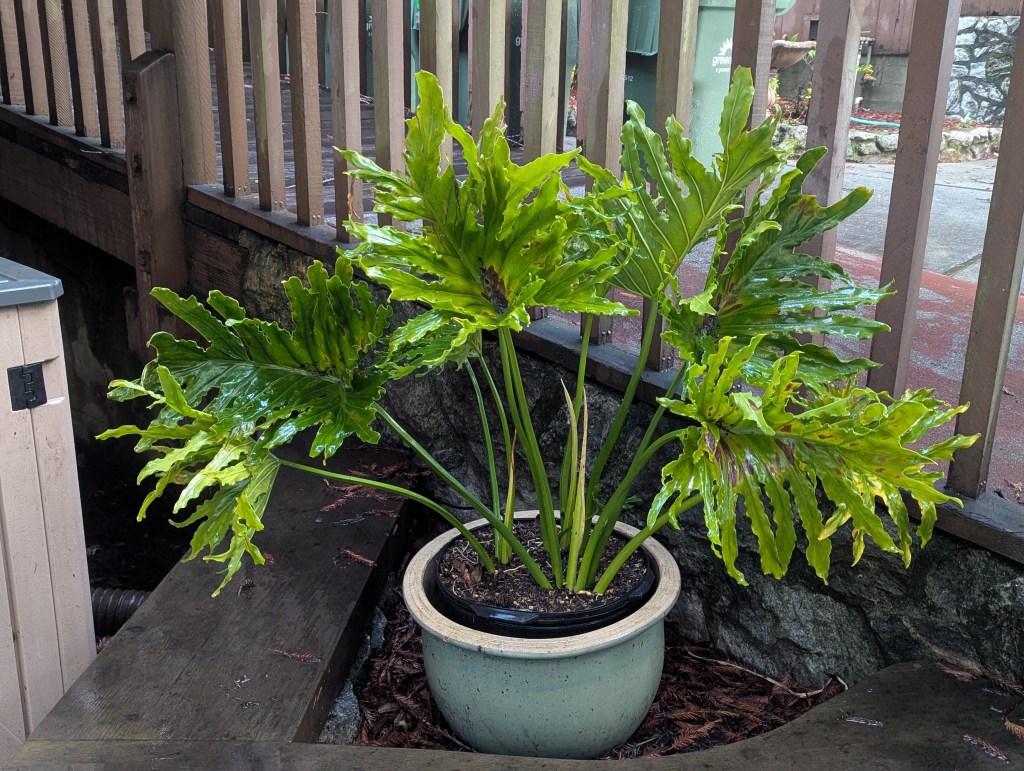
1. Philodendron selloum ‘Lickety Split’ split-leaf philodendron grew efficiently enough to obscure its pretty green pot within a few months, but does not seem to grow much now. It seems to merely replace old foliage with new foliage. The stems do not elongate much.

2. Dianella caerulea, blueberry lily is named Sigmund because it looks like a shabby sea monster. It is in a large terracotta pot that it now completely obscures. It visually softens the blunt end of a low stone retaining wall that separates a few stone steps from a ramp.

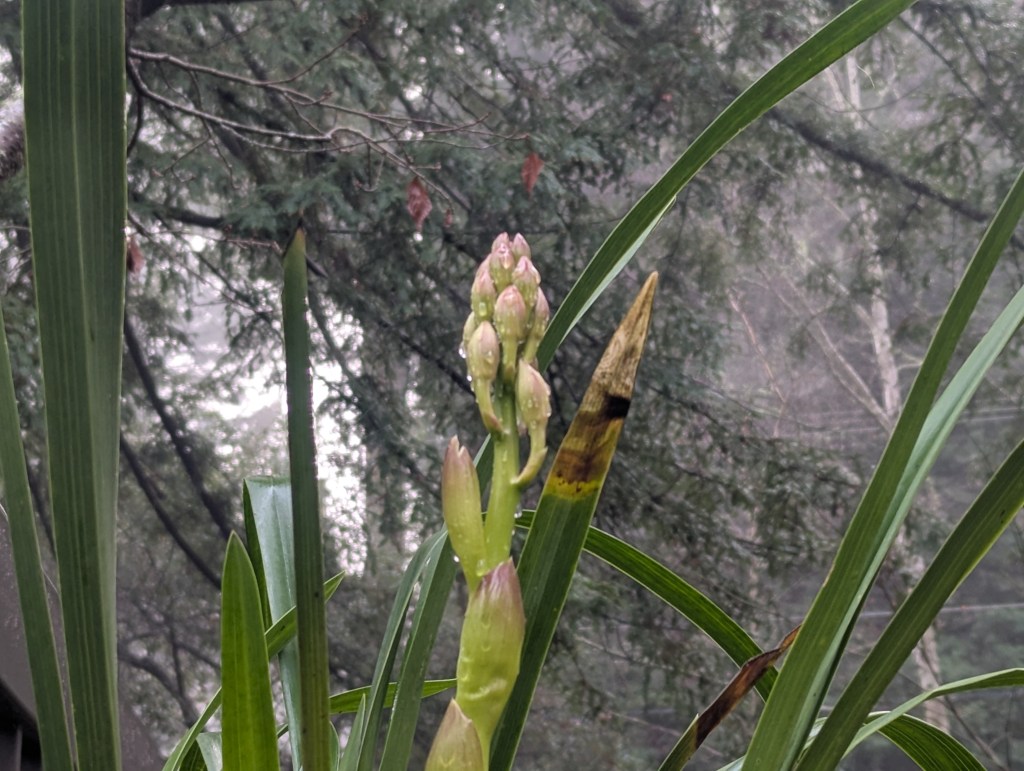
3. Cymbidium, orchid with a few small bits of Vinca minor ‘Alba Variegata’, small white variegated periwinkle are in a cheap plastic urn, with Sigmund in the background to the left. I know neither the species nor the cultivar of the orchid, but it blooms white nicely.

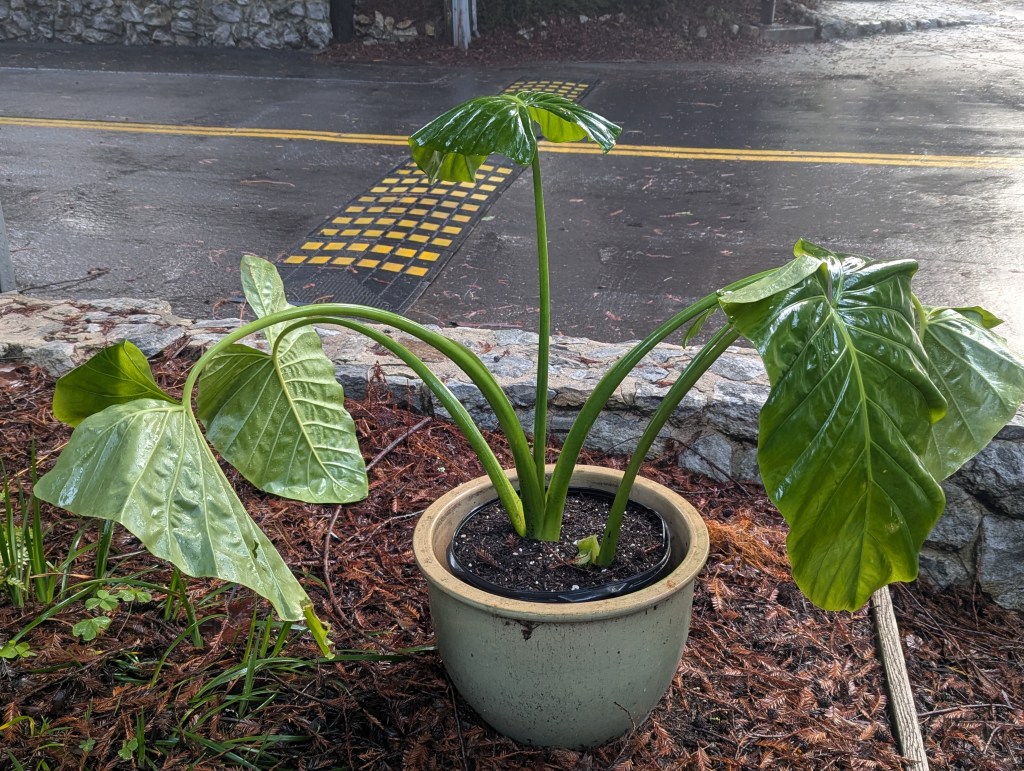
4. Alocasia odora, taro, or whatever species this is, has grown quite nicely to obscure its pot, just like the split-leaf philodendron and Sigmund. It was taken from a vacated home with an Australian tree fern two years ago. Sadly, the old home will soon be demolished.

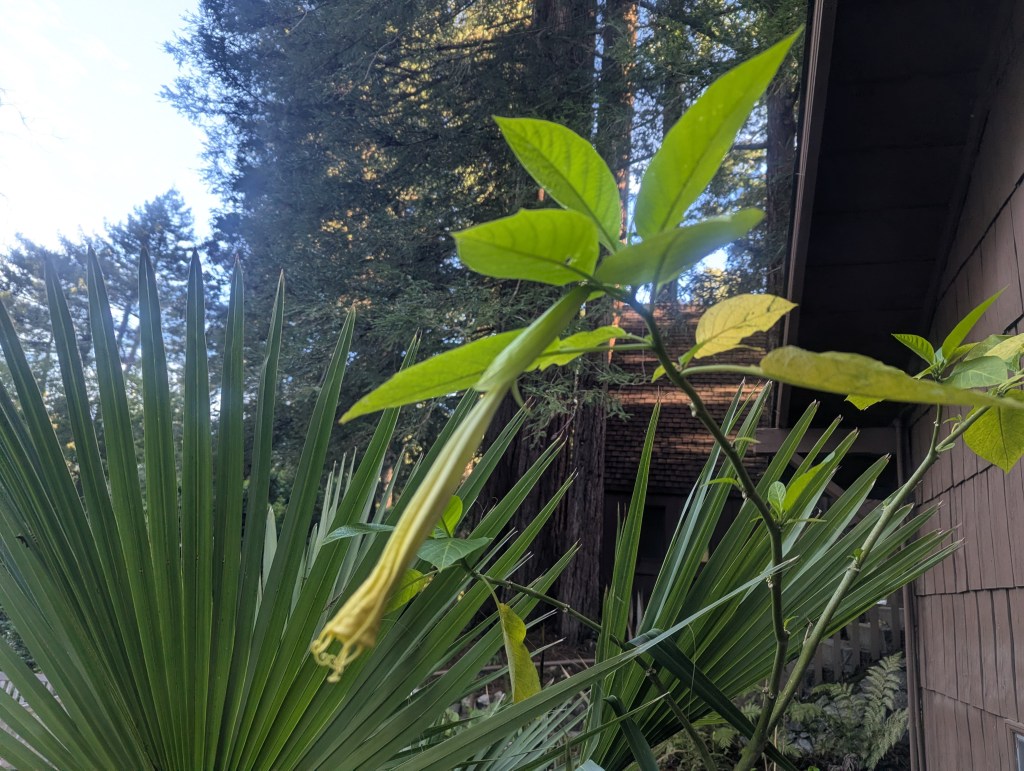
5. Brugmansia, angel’s trumpet really is getting to be redundant, but is also really quite pretty. Like the orchid, both its species and cultivar are unknown. I grew it from a scrap from a green waste pile in East San Jose. Its big terracotta urn was a gift a few years ago.

6. Eucalyptus globulus ‘Compacta’, dwarf blue gum is certainly not a typical houseplant. Yet, here it is within an antique coffee shoppe lounge at work. We do not know how long it can survive here without direct sunlight, but will eventually find out. It is quite grand.

This is the link for Six on Saturday, for anyone else who would like to participate: https://thepropagatorblog.wordpress.com/2017/09/18/six-on-saturday-a-participant-guide/
Six on Saturday: Off Color Angel’s Trumpets

Angel’s trumpet continue to bloom even as the weather cools. Perhaps they will continue until frost. Their floral color is a bit off though, perhaps as a result of the cooler weather. They work out nicely for ‘Six on Saturday’, though. Strangely, not much else is blooming as well as angel’s trumpet is now.

1. Angel’s trumpet probably should not bloom so late, but does not seem to know or care that it is autumn. I was impressed by a previous bloom phase, so will see what this does.

2. This is a more open flower of the same angel’s trumpet as above. Its floral color is the most variable of the cultivars, but has most commonly been more peachy pink than this.

3. This angel’s trumpet flower should be frilly double white. I suppose that it is not so off color. However, it is barely frilly, and lacks double form. I can not complain. It is pretty.

4. This angel’s trumpet flower blooms with the peachy pink color that #2 should exhibit, but should bloom yellow. Again, I can not complain. I just wonder what is going on here.

5. If I remember correctly, this rhododendron is not off color like some angel’s trumpets are but it is very off season. My complaint is that it will not bloom for spring as it should.

6. Rhody might disapprove of all this off color commentary if he were not so thoroughly distracted by someone with goodies. He can not see the same colors as humans anyway.

This is the link for Six on Saturday, for anyone else who would like to participate: https://thepropagatorblog.wordpress.com/2017/09/18/six-on-saturday-a-participant-guide/
Six on Saturday: Miscellaneous

Both work and home gardening were relatively mundane this week. Consequently, these six lack a theme. Irrigation is at that awkward phase when less is necessary, but it is still very necessary. No more rain came after the first storm of the season, but the weather is cooler, and the days are shorter. Autumn is arriving . . . slowly. Maybe I will get pictures of autumn foliar color for next Saturday.

1. Robinia pseudoacacia, black locust is much more out of focus than I was aware of as I took this picture to show how blue the sky is without any rain in the foreseeable forecast.

2. Begonia X semperflorenscultorum, wax begonia succumbed to a major infestation of fungus gnat larvae. These fresh cuttings were made from their unaffected upper growth.

3. Amaryllis belladonna, naked lady seedlings grew from seed from white flowers. They will not bloom for several more years. I am curious to see if they might also bloom white.

4. Saccharum officinarum, sugarcane probably should not have been bothered until the end of winter, but I separated five clumps. This is the traditional Purple Ribbon cultivar.

5. Acer rubrum, red maple is redundant to a picture of the same two Saturdays ago, but is too pretty to not get a last picture of before the end of its season. It is mostly bare now.

6. Rhody was busy with relaxation while I was at work on Thursday. He is commendably proficient with such tasks, while not being late for petting sessions and treats afterward.

This is the link for Six on Saturday, for anyone else who would like to participate: https://thepropagatorblog.wordpress.com/2017/09/18/six-on-saturday-a-participant-guide/
Six on Saturday: Bad Timing

Autumn seems to be a bit early this year. The weather is already cooler with a bit of rain. Although no more rain is in the forecast, neither is warm weather. Besides, even if warm weather resumes, it will not last long. Vegetation really should be getting ready for that. A few species, though, are behaving like it is spring or summer. Some were prompted to do so.

1. Platycerium bifurcatum, staghorn fern has been happy this year, but should not be so active now that the weather is cooling. New growth will be vulnerable to chill this winter.

2. Solandra maxima, cup of gold vine cuttings are developing roots now that it will soon be too cool for them to grow. The pruning scrap just happened to become available now.

3. Prosopis velutina, velvet mesquite seedling had all summer to germinate, but decided to do so now. It is the only one of these ‘six’ that is not tropical, so it should know better.

4. Mangifera indica, honey mango seed was sown after its fruits were eaten. Seasonality was not considered. Several seedlings are now growing just prior to autumn and winter.

5. Hibiscus rosa-sinensis, tropical hibiscus cuttings have been growing slowly but surely since the end of last winter, but just as they should be slowing, they are trying to bloom.

6. Alocasia macrorrhizos, taro is also trying to bloom just as it should be decelerating its growth for autumn and winter. It will be interesting to see how this late bloom proceeds.

This is the link for Six on Saturday, for anyone else who would like to participate: https://thepropagatorblog.wordpress.com/2017/09/18/six-on-saturday-a-participant-guide/
Six on Saturday: Peeping

Autumn foliar color is scarce here, not because the weather is too mild, but because it is not such a priority within landscape design. A few species can develop such color as they do where autumn weather is cooler. Of course, some do not. Native California sycamore is a stately deciduous tree with striking form while bare through winter, but contributes minimal color.

1. Cornus florida, flowering dogwood is just beginning to exhibit foliar color for autumn. It performs surprisingly well in the Santa Cruz Mountains above the Santa Clara Valley.

2. Lagerstroemia indica, crape myrtle is also starting to exhibit foliar color for autumn. It may do so before the weather gets cool, as if it somehow knows what time of year it is.

3. Platanus racemosa, California sycamore does not know or care what time of year it is. It is more likely to yellow in response to hot and dry summer weather than to do so now.

4. Platanus X acerifolia, London plane tree is the sycamore with maple foliage. It is just beginning to yellow, but ultimately, does not do much more than that before defoliation.

5. Acer platanoides, Norway maple is the maple with sycamore foliage. This cultivar has bronze foliage through summer, so develops its yellow foliar color for autumn quite late.

6. Acer rubrum, red maple, like crape myrtle, can develop foliar color for autumn before cool weather, as if it knows what time of year this is. It defoliates relatively early though.

This is the link for Six on Saturday, for anyone else who would like to participate: https://thepropagatorblog.wordpress.com/2017/09/18/six-on-saturday-a-participant-guide/