Six on Saturday: &

Odds & ends. Bits & pieces. Rhythm & blues. That is all I got here. The latter might make sense with #4 below. It makes this no easier for me though. I have difficulty writing with characters such as “&”, and even “#”, although I do use “#” when necessary to describe a caption number or can size as for #6 below. Perhaps I should challenge my comfort zone a bit more, as I did when I tried using contractions a few months ago. Although I did not continue using them afterward, it was not nearly as awkward as I thought it would be. At least I now realize that I could do so if I choose to. I simply choose to not do so. In other simpler words, I could, but I don’t.

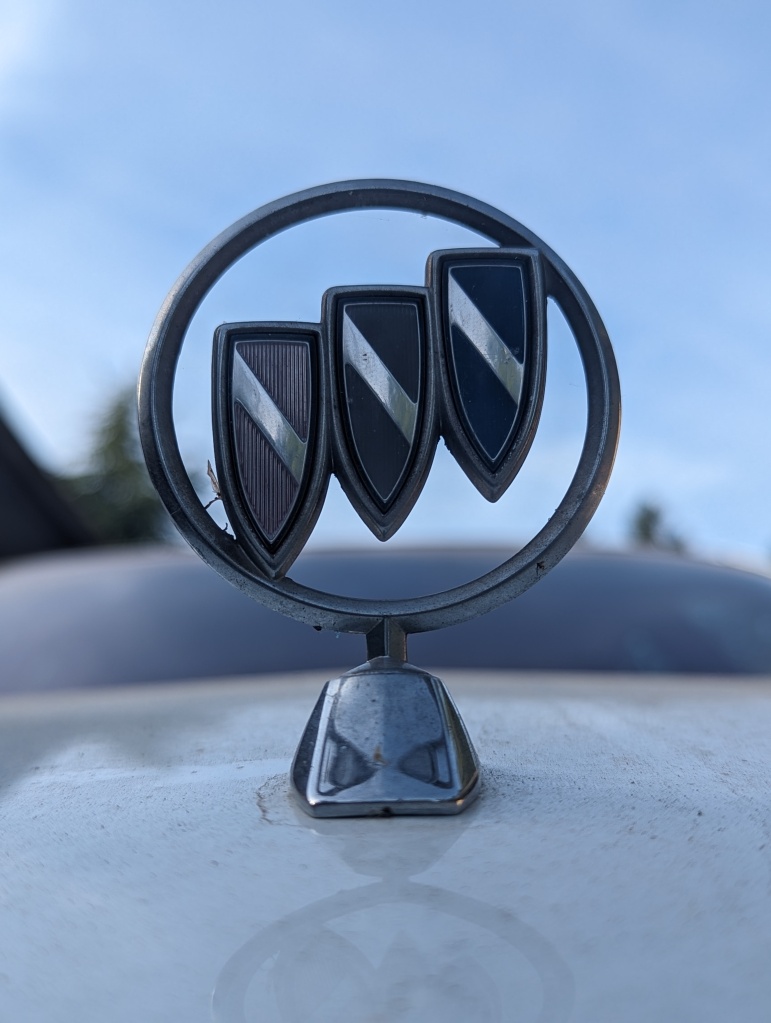
1. Carson, Rhody’s Roady, posed for this thumbnail illustration for a recent article about how similar binomial botanical nomenclature is to traditional automotive nomenclature.

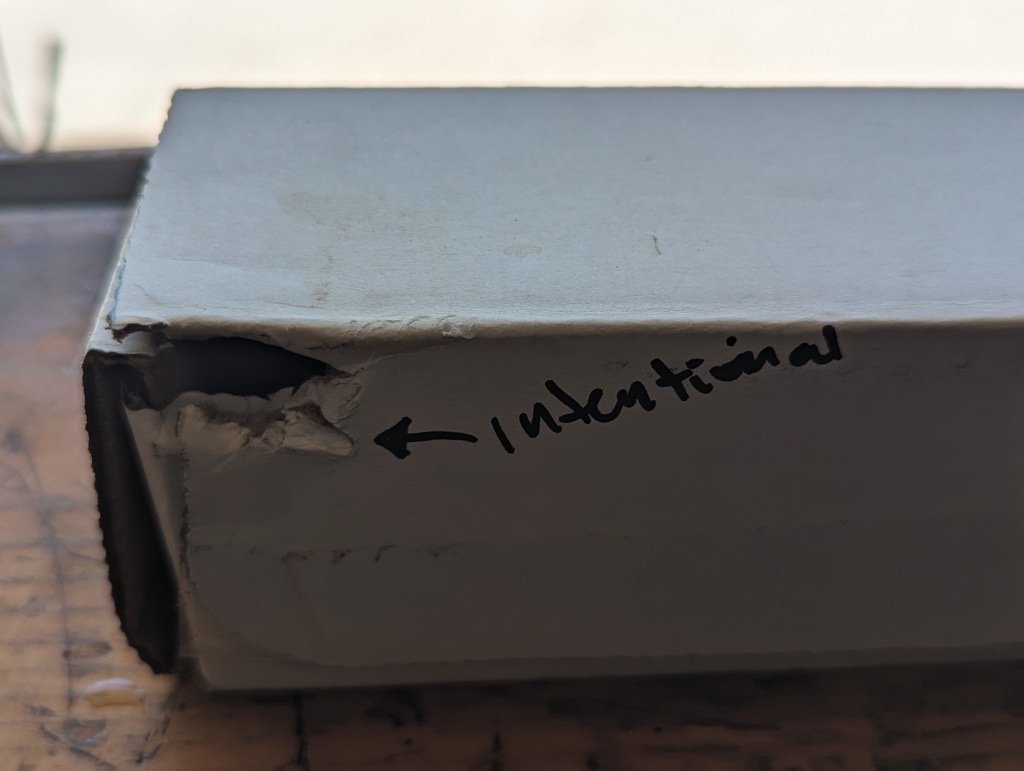
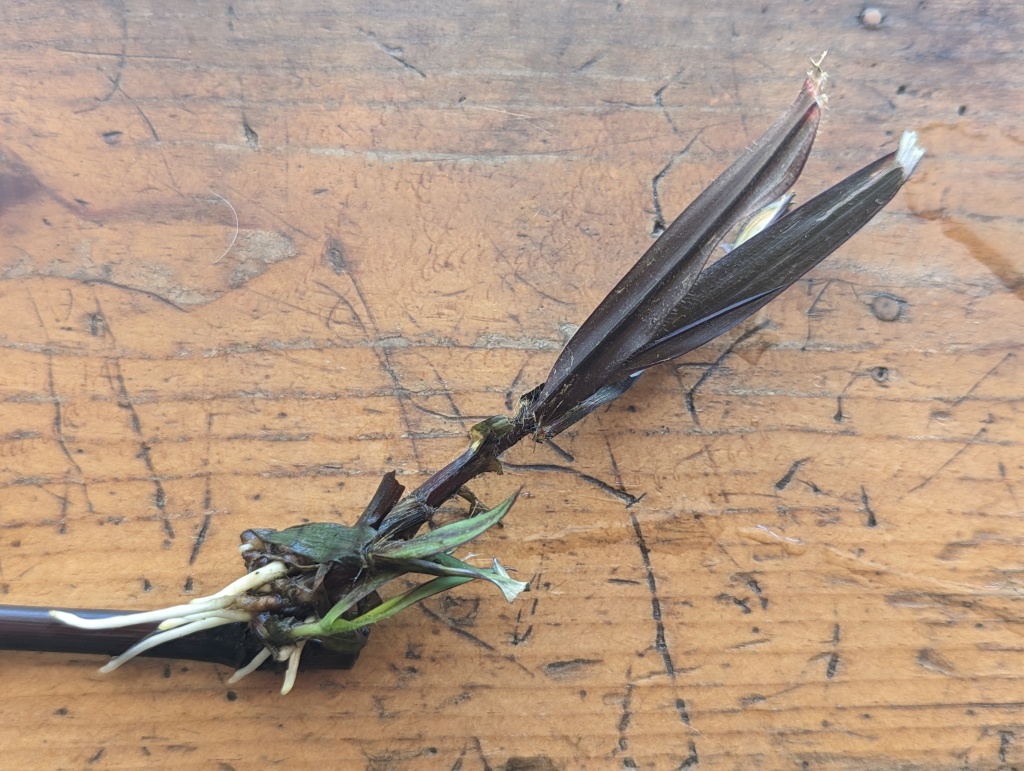
2. Purchases are almost against the rules in my garden. They can only involve items that I lack access to. This purchase that was delivered by mail apparently needed ventilation.

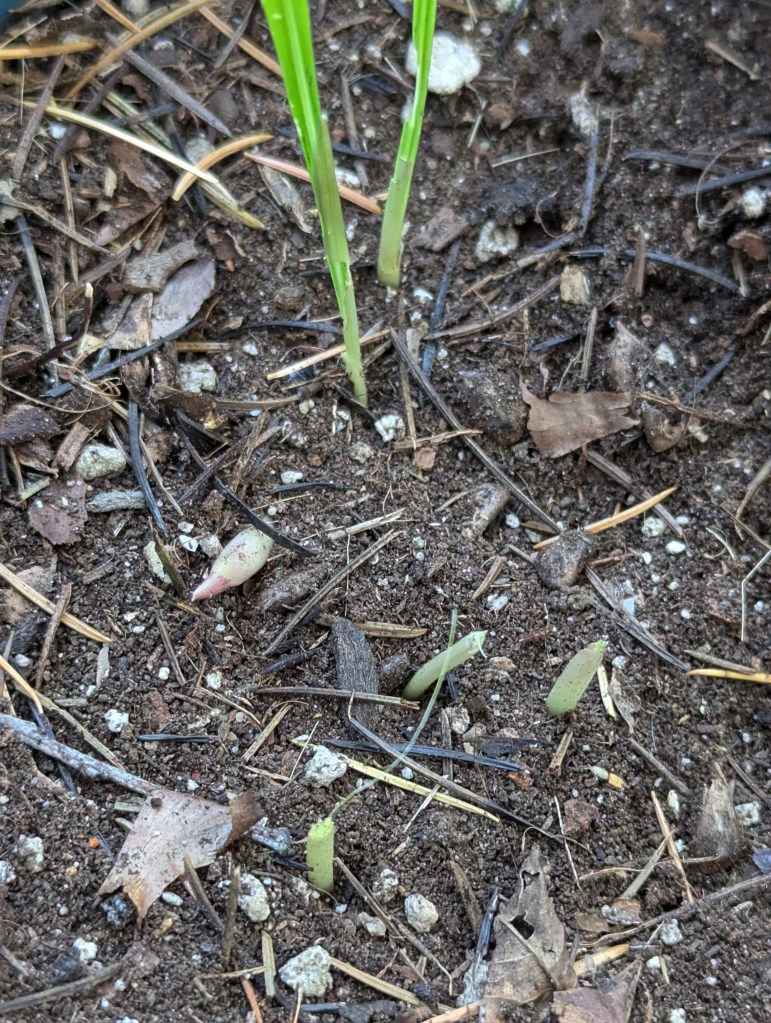
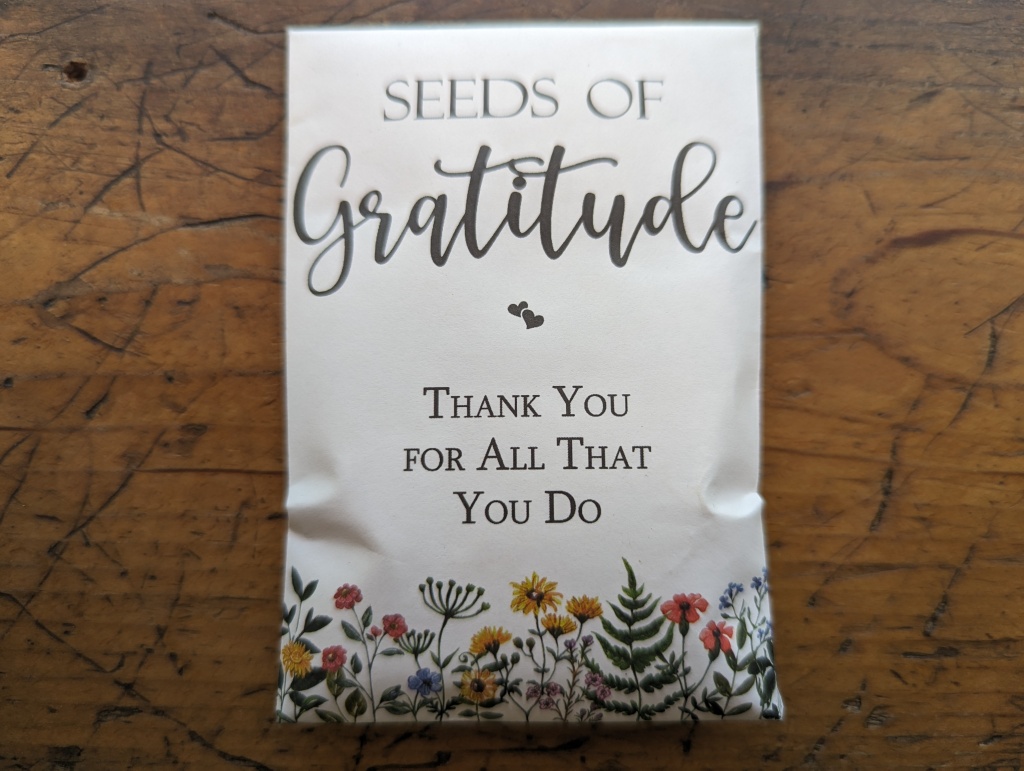
3. Someone who does not take compliments well diverted this one to me. No one knows what seed it contains, but I suppose that we will find out when it grows after next winter.

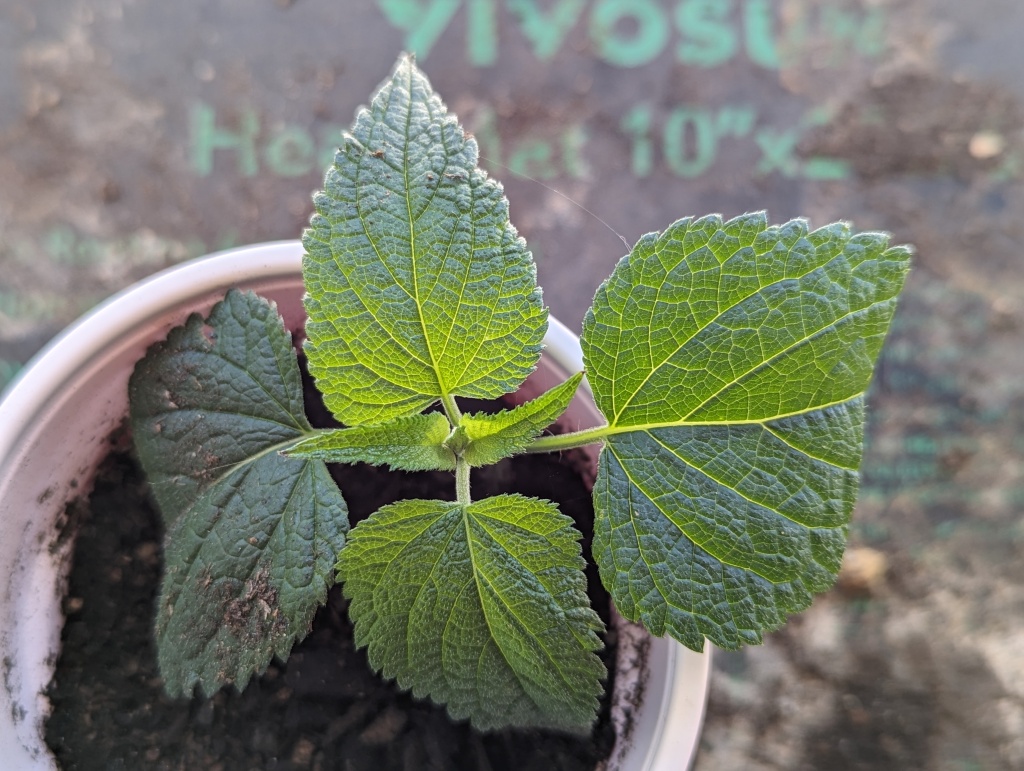
4. Salvia guaranitica ‘Rhythm & Blues’ came as a cutting in a red Solo cup with the pack of unidentified wildflower seed. This is why I abide by my rule that disallows purchases.

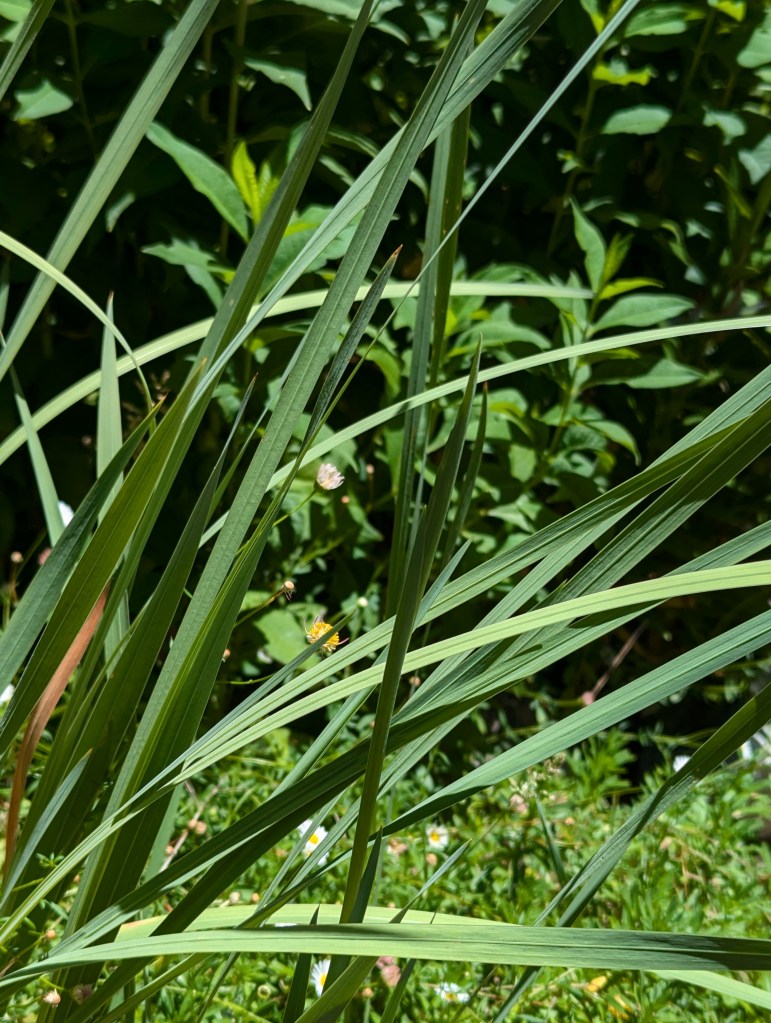
5. Saccharum officinarum ‘Pele’s Smoke’ sugarcane provided more cuttings than I knew what to do with. Fortunately, most succumbed to frost. I can accommodate these fifteen.

6. However, they are merely the fifteen best specimens that were big enough for #1 cans. At least as many smaller cuttings that got separated from them still need four inch pots.

This is the link for Six on Saturday, for anyone else who would like to participate: https://thepropagatorblog.wordpress.com/2017/09/18/six-on-saturday-a-participant-guide/
Six on Saturday: Crosswalk

A crosswalk connects a rose garden at work to a fancy perennial and annual bed across a narrow road. As much as I would like to maintain certain standards within both of these two distinct gardens, neither is perfect. Each is inhabited by something that should be of the other. One stays because of its justification for being there. The other stays because I can not easily separate it from the roots of what moved in over it, and because we sort of like it there now. Anyway, I added another picture from Arizona a month ago, and one of Brent’s useless pictures, just because they are too pretty to discard without sharing here.

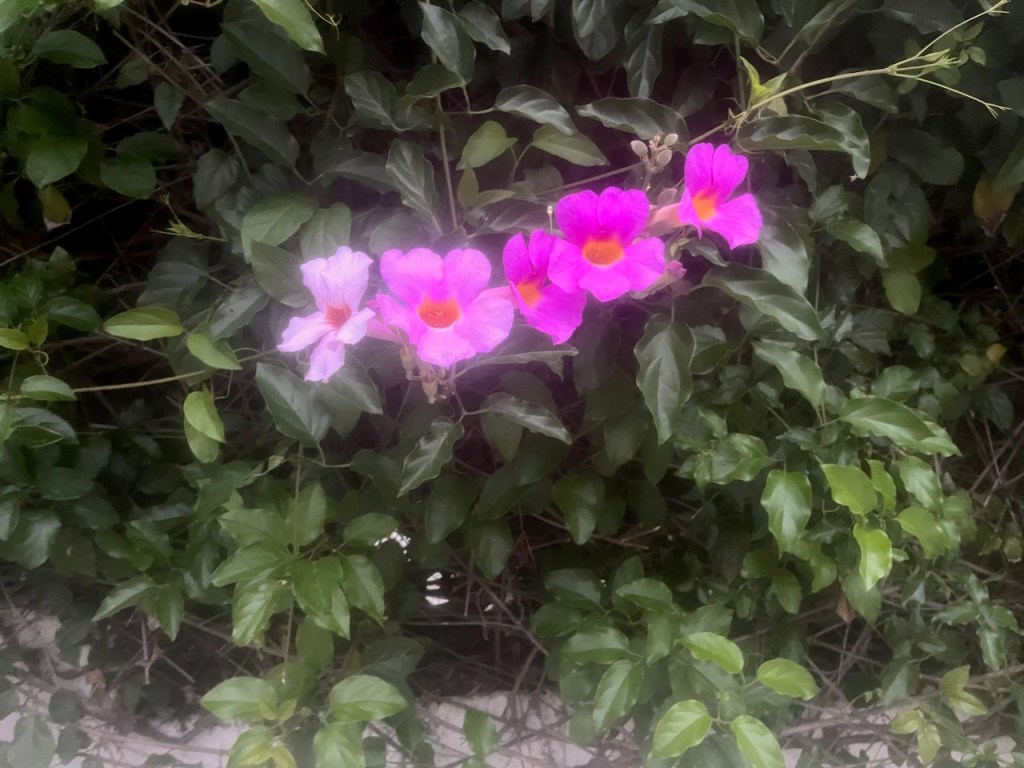
1. Distictis riversii, royal trumpet vine demonstrates that, no matter how much he wants to get one of his pictures into his local Canyon News, Brent does not provide a good one.

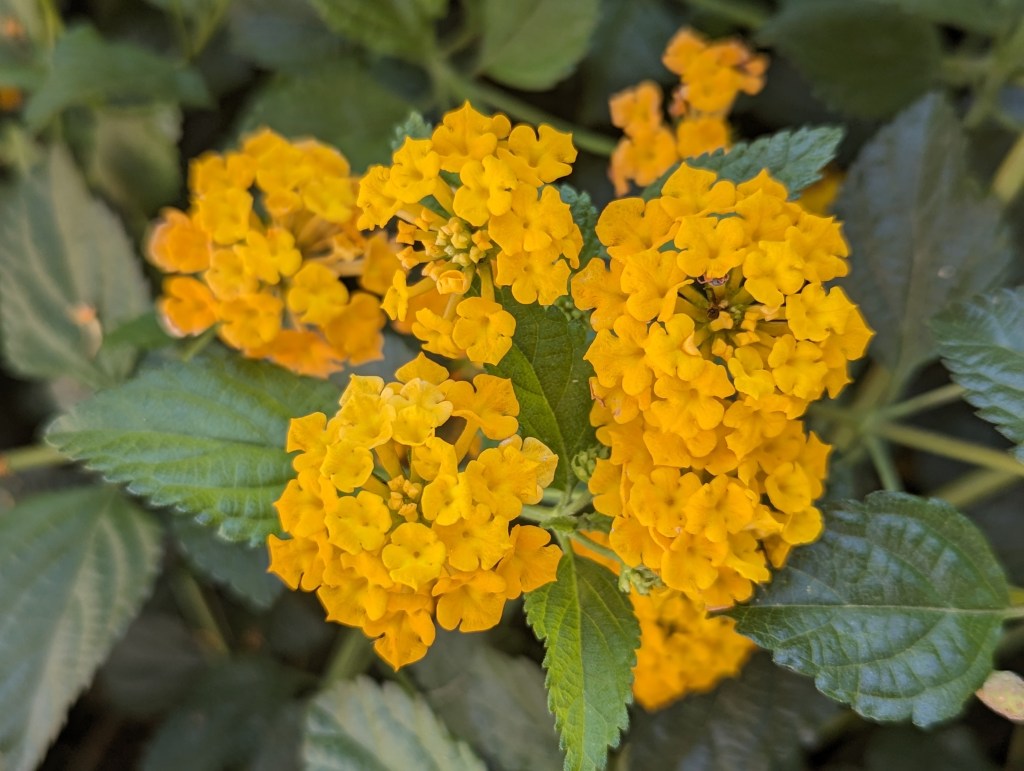
2. Lantana camara, which is known simply as lantana, bloomed within the same garden as the orange cultivar of last Saturday; so this picture is from a month ago near Phoenix.

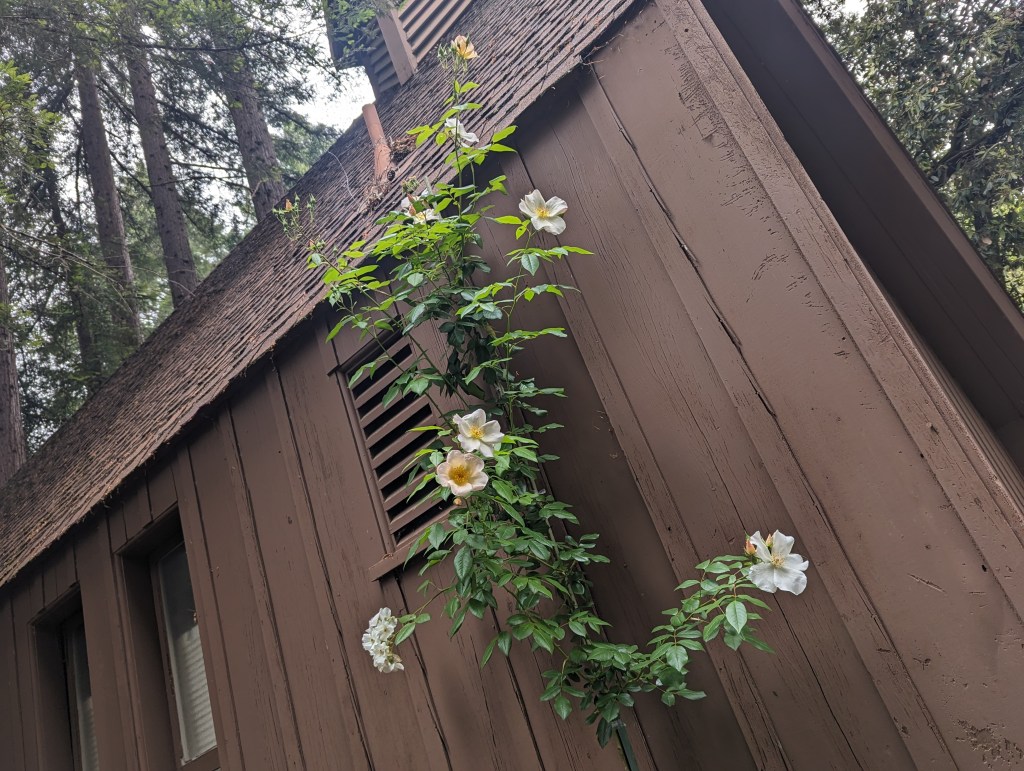
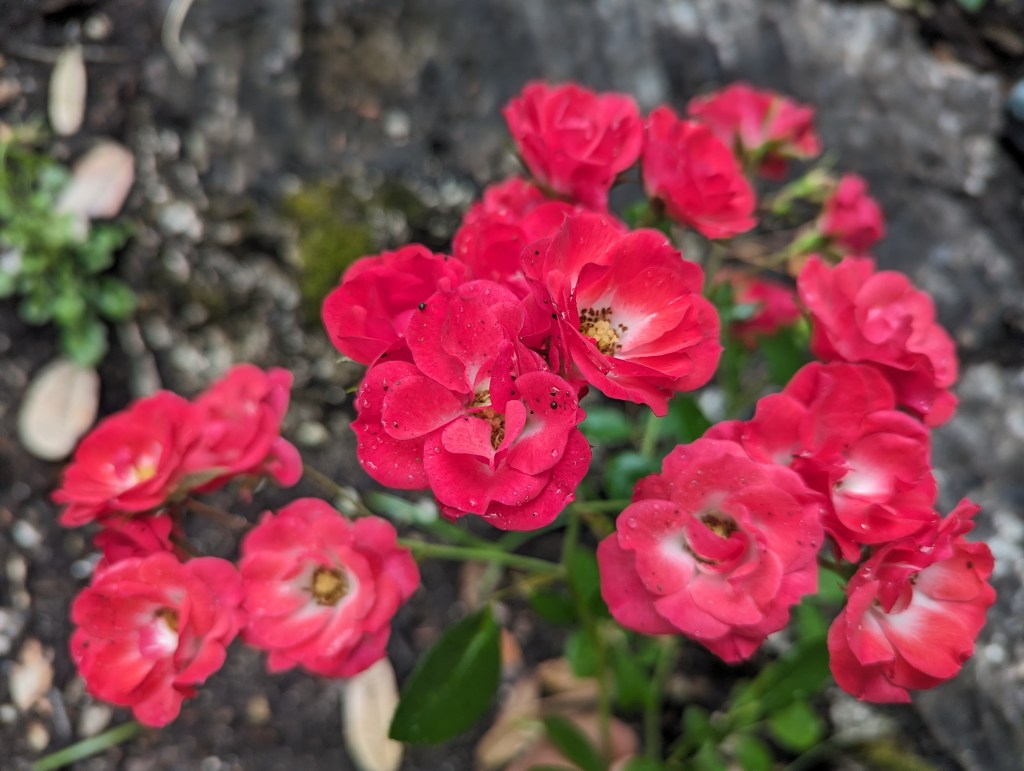
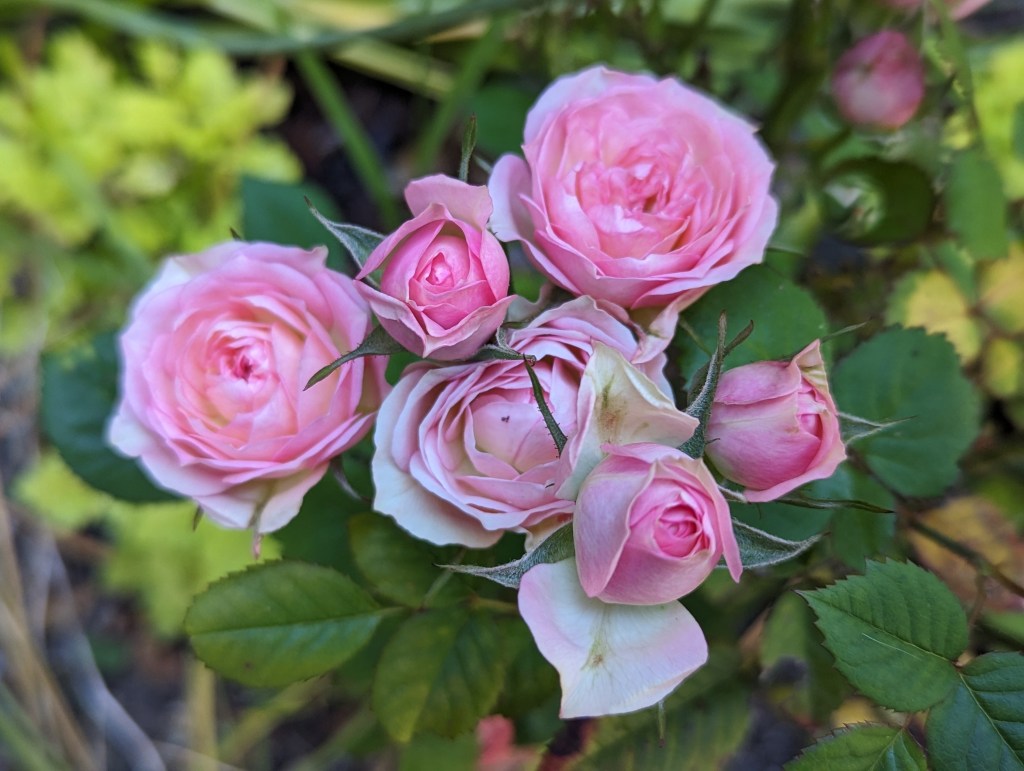
3. Rosa, which is an unidentified miniature rose, is designated as the lily rose because of its stubborn occupancy of a former lily colony within a garish perennial and annual bed.

4. Although pretty, it really should be in the rose garden across the road. I can not move it over there, because of its sentimental significance for the person who installed it here.

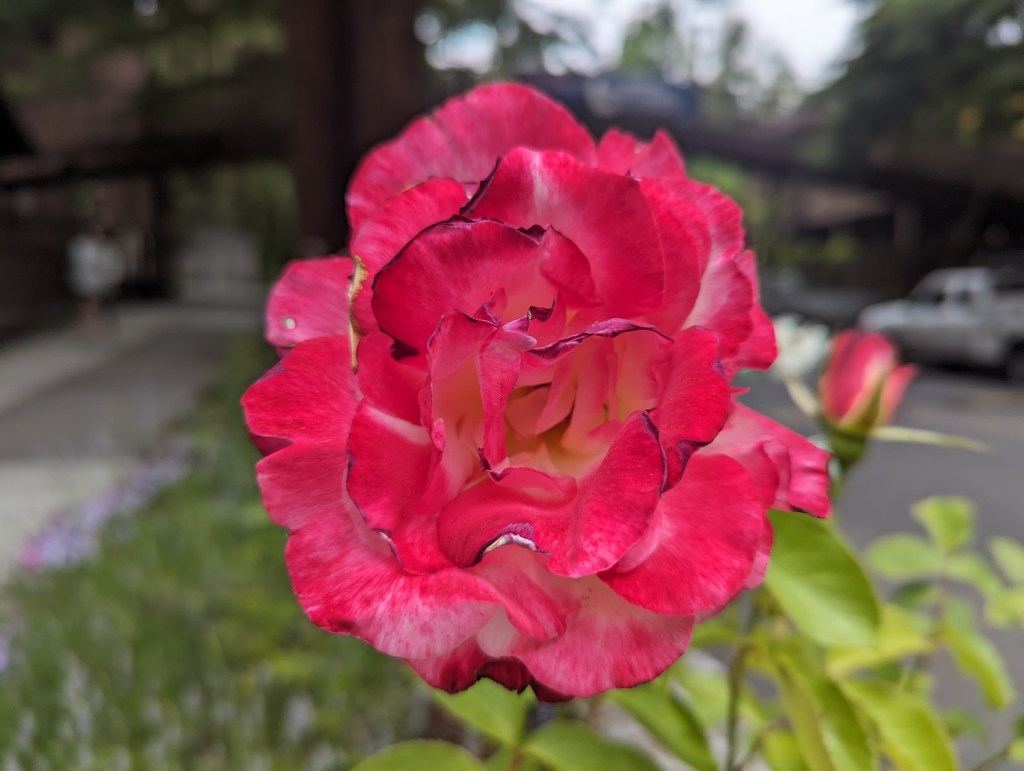
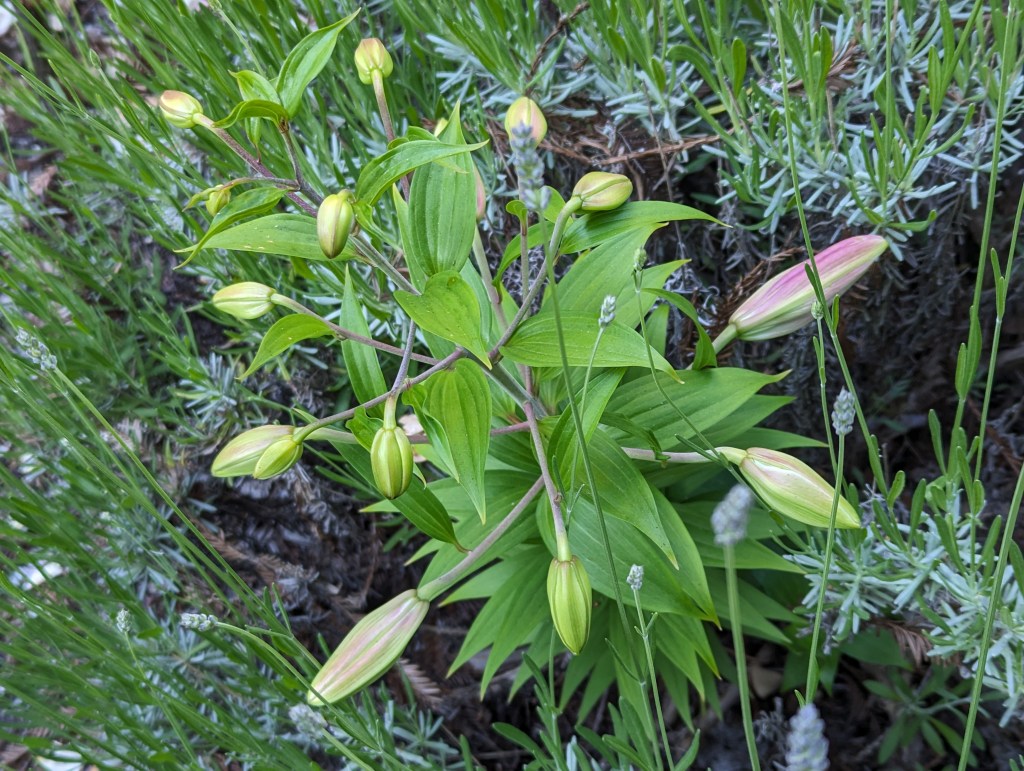
5. Lilium, which is an unidentified Oriental lily, is designated as the rose lily because of its stubborn occupancy of a former perennial and annual bed that is now a rose garden.

6. Although pretty in bloom, it really should be with this colony of abundant lilies, which I shared a picture of last Saturday, in a garish perennial and annual bed across the road.

This is the link for Six on Saturday, for anyone else who would like to participate: https://thepropagatorblog.wordpress.com/2017/09/18/six-on-saturday-a-participant-guide/

Six on Saturday: Mostly Flowers

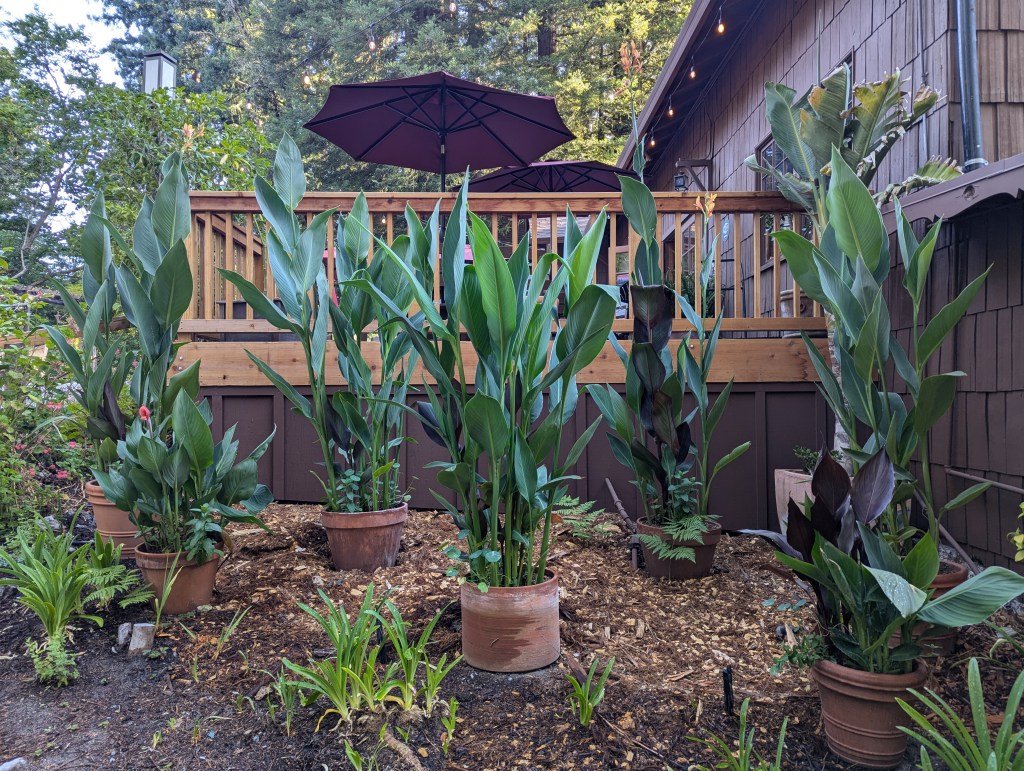
Simply, these are six varieties of flowers. All but one bloomed last week. Half are hybrid cultivars of the same genus with two in the same picture. Six pictures of flowers with two varieties in one picture should include seven varieties of flowers. But of course, “mostly” indicates something that is not exclusive. Anyway, I should have gotten more pictures at work, since it was a rather fun week. Irrigation is getting more demanding, though, now that the weather is getting warmer. Because we need to delay renovation of a prominent landscape, we installed potted Canna onto the site. They are potted to facilitate removal when renovation resumes, but will be rad!

1. Lantana camara, which is known here simply as ‘lantana’, is too colorful to not share. Actually though, it is from three weeks ago, and west of Phoenix. Ours is more yellowish.

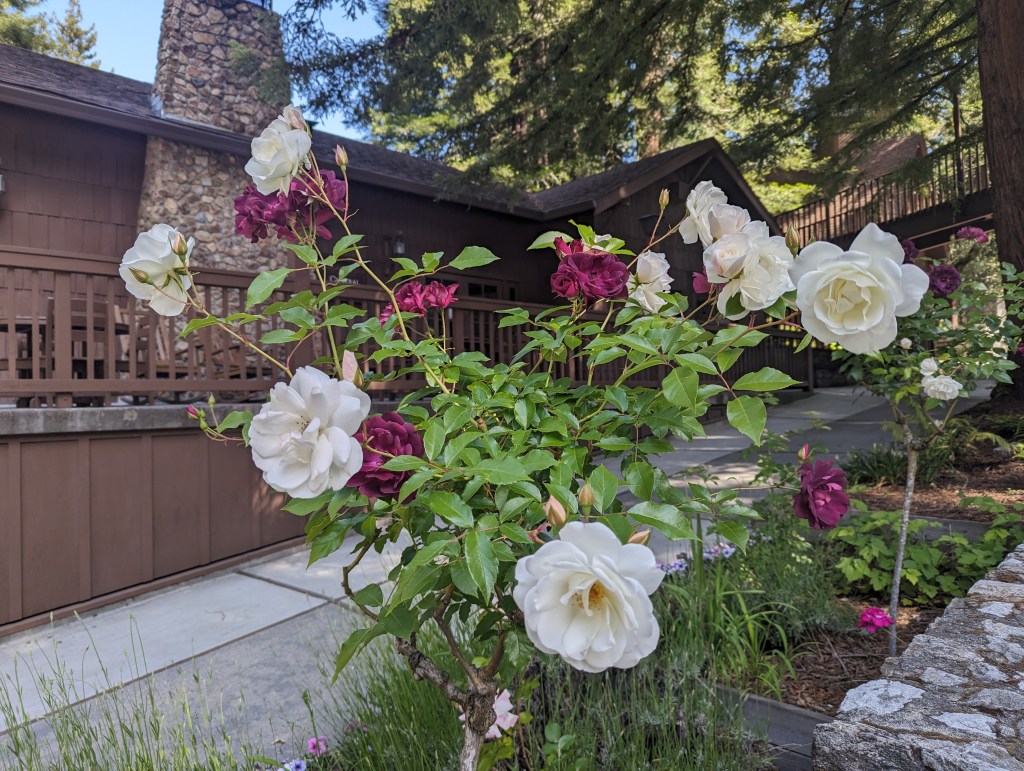
2. Rosa ‘Iceberg’ and ‘Burgundy Iceberg’ are grafted together on two old rose trees in the rose garden. I find multiple grafts to be annoying, but guests find them to be intriguing.

3. Rosa of an unidentified cultivar blooms better with better exposure, and also without the other cultivar that it was originally grafted with, but that was crowded out years ago.

4. Alstroemeria peruviana, Peruvian lily will not die. We removed large colonies at least twice from this location, but some always survive. They are yellow, orange, pink and red.

5. Lilium, which seems to be some sort of fancy Asiatic lily, was a gift from a neighbor. I did not expect them to perform so well, but after only four years, they should be divided.

6. Rhody is the only one of these six who is not a flower, although another type of flower is named after him. Morgan, his F250 who identifies as a Mercury, wants to get washed.

This is the link for Six on Saturday, for anyone else who would like to participate: https://thepropagatorblog.wordpress.com/2017/09/18/six-on-saturday-a-participant-guide/

Six on Saturday: While You Were Out

My vacation was in two halves of two weeks each, with two weeks in between. It seemed to be six weeks collectively. Quite a bit happens within the landscapes during that much time at this time of year. The first of my Six is from Arizona, and happens to be the State Flower of Arizona. The others are some of what I returned to, including the State Flower of Colorado, and a relative of the State Flower of Hawaii. One is German from Monterey. One is Algerian from the Canary Islands. One is European from Washington. Oh, this is all such confusing nonsense and false trivia. California poppy, which is the State Flower of California, is blooming, but I got no pictures of it for this week.

1. Carnegiea gigantea, saguaro was a species that I should have gotten more pictures of before leaving Arizona. This is one of only two pictures. It is the State Flower of Arizona.

2. Persicaria bistorta ‘Superba’ snakeroot came from Tangly Cottage Gardening not too long ago, but is already blooming splendidly among watercress on the edge of the pond.

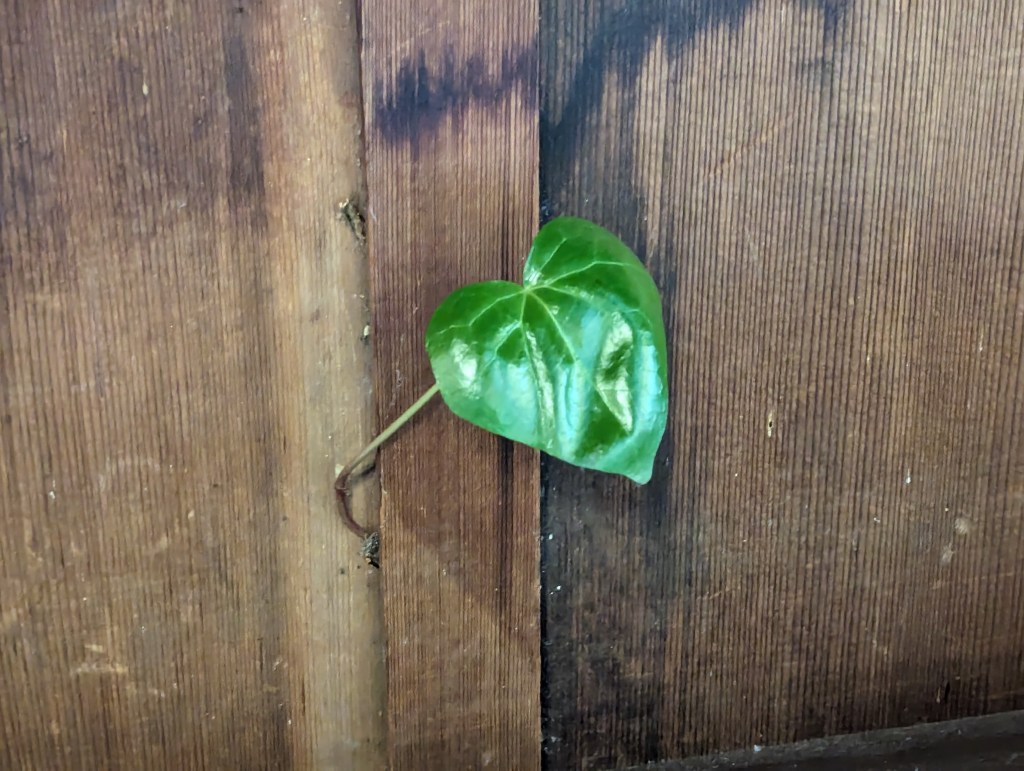
3. Hedera canariensis, Algerian ivy clings to the exteriors of several buildings at work if not pruned back frequently. This vine is getting even more aggressive by coming inside!

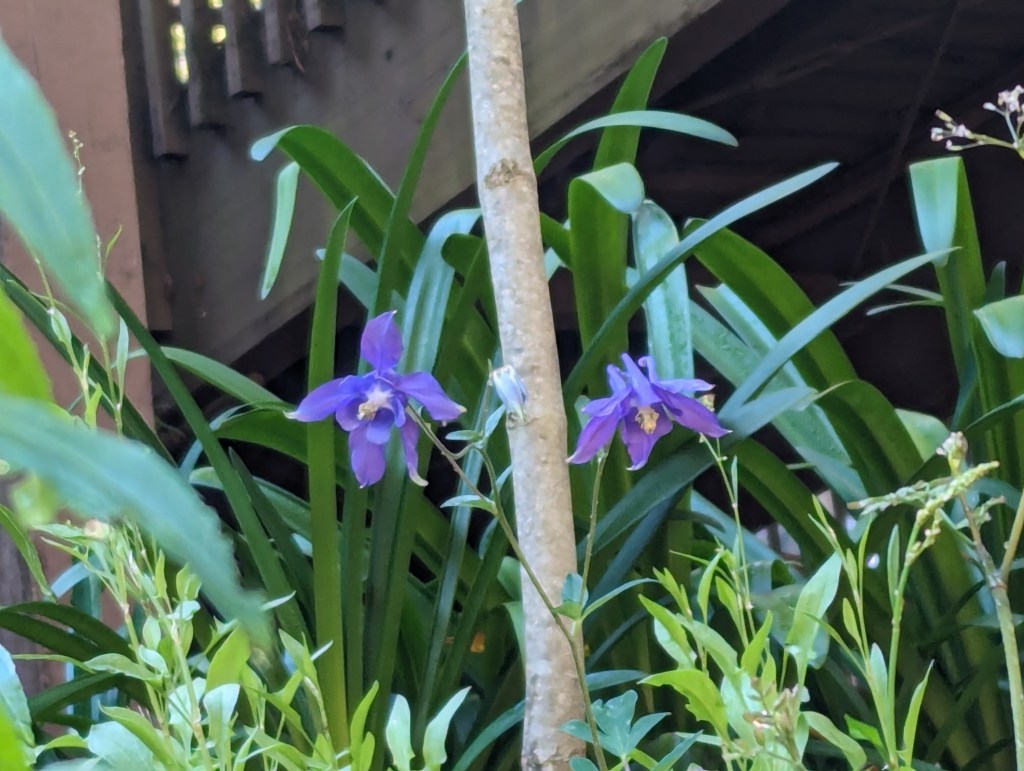
4. Aquilegia X hybrida, columbine refuses to grow where planted, but tosses seed before it dies. Its feral seed then grows in random situations. It is the State Flower of Colorado.

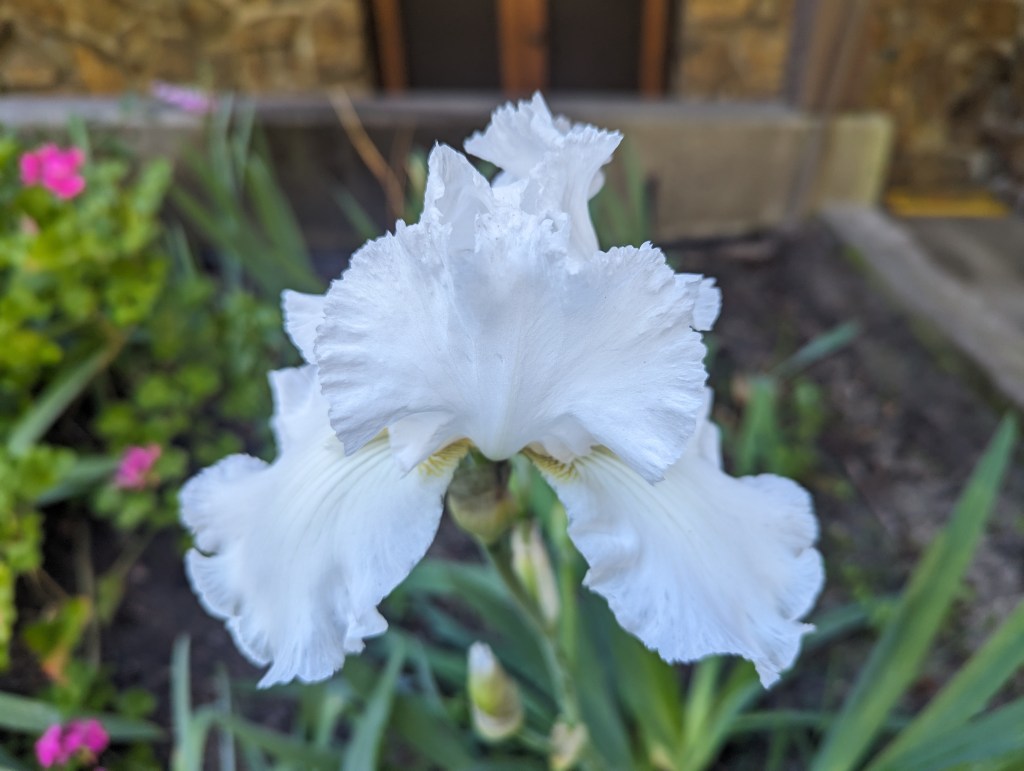
5. Iris X germanica, bearded iris bloom is finishing about now. I earlier mentioned that this cultivar seemed weirdly pale. It might be feral. However, it seems bright white now.

6. Hibiscus rosa-sinensis, tropical hibiscus is blooming as vibrantly here as it was in Los Angeles and Phoenix. It is related to Hibiscus brackenridgei, the State Flower of Hawaii.

This is the link for Six on Saturday, for anyone else who would like to participate: https://thepropagatorblog.wordpress.com/2017/09/18/six-on-saturday-a-participant-guide/
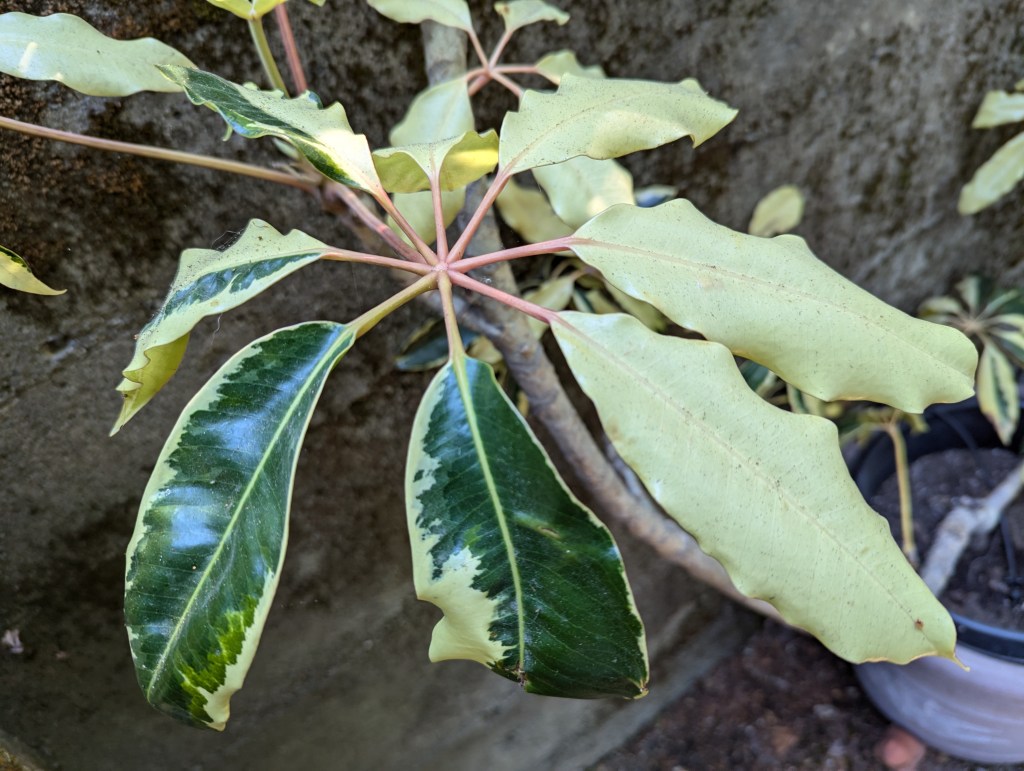
Six on Saturday: Blooms With a View

Blooms With a View Spring Garden Tour of View Park and Ladera Heights happened to be on the day after I arrived late in Los Angeles. That is why I stayed another day late to help exhibit one of Brent’s three landscapes that were featured in the Tour. I did nothing more than answer a few questions, discuss random horticultural trivia, and share copies of a list of some of the other easily visible neighborhood landscapes that Brent designed.

1. Phoenix canariensis, Canary Island date palm is, as its common name indicates, from the Canary Islands, rather than, as its botanical name suggests, from Phoenix in Arizona that I left only last Saturday. Years ago, it was the second most common palm in the Los Angeles regions. Now, in this garden, it was the second most popular topic of questions.

2. Solandra maxima, cup of gold vine was the third most popular topic of questions as a result of this single bloom. It was about six inches wide. I wanted to get a better picture. Eriobotrya japonica, loquat was the most popular topic of questions. I took no pictures.

3. Aeonium arboreum ‘Albovariegatum’, variegated common houseleek is precisely what it sounds like. Most cultivars of common houseleek are as different in form as in foliage.

4. Salvia longispicata X farinacea ‘Mystic Spires’ is like the heftier version of mealycup sage. It provides splendid blue color, and is more reliably perennial than mealycup sage.

5. Bougainvillea X buttiana ‘Barbara Karst’ frames this arched parlor window colorfully. Anigozanthos rufus ‘Big Red’ kangaroo paw below tries to not obscure the outside view.

6. After all, this view is why this is View Park. Los Angeles has certainly grown up since I first saw it in about 1986, and it has grown much more since the old residence was built.

This is the link for Six on Saturday, for anyone else who would like to participate: https://thepropagatorblog.wordpress.com/2017/09/18/six-on-saturday-a-participant-guide/

Six on Saturday: Arizona

Arizona will be in the rear view mirror shortly after this episode of Six on Saturday posts at midnight on Saturday morning. I got a few pictures this time though. They are not too colorful only because I found the diverse cacti to be more compelling than the abundant desert bloom. Palo verde, esperanza, ocotillo, caliandra, oleander, bougainvillea, lantana and a few other flowers that I did not identify were all in bloom. A few others will bloom soon. We should be in Los Angeles by about noon, and at the View Park Garden Tour on Sunday. This is not how I planned this excursion, but it is working out rather splendidly.

1. Wile E. Coyote, of whom I posted a picture last week, may have been requesting a ride to visit his old colleague, the Road Runner, here in Arizona. I neglected to consider that.

2. Cacti are obviously popular in Arizona, likely because they perform so reliably and are so striking. This and the next two are field grown nursery stock. I can not identify them.

3. This cactus developed a rather wide colony. Many impressively big cacti get relocated. However, I doubt that this entire colony can be relocated intact. It will likely be divided.

4. This unidentified lumpy cactus seems to be quite tame. The few that I have noticed in my neighborhood grow less than three feet high. They grow almost twenty feet tall here.

5. Hesperaloe parviflora, red yucca is difficult to get a good picture of. Its grassy texture and grayish color can look shabby. Its pink bloom is nice against a clear blue sky though.

6. Carnegiea gigantea, saguaro is the State Flower of Arizona, and what tourists like me expect to see in Arizona. I pulled over outside of town to take this picture from the road.

This is the link for Six on Saturday, for anyone else who would like to participate: https://thepropagatorblog.wordpress.com/2017/09/18/six-on-saturday-a-participant-guide/

Six on Saturday: Are We There Yet?

As expected, the second half of my vacation was delayed. Then, very unexpectedly, all of our delays worked out. Rhody, Carson and I left exactly on time. Then, as unexpectedly, and just an hour from our first destination at Brent’s Jungalow, we were diverted to our final destination near Buckeye near Phoenix in Arizona. The explanation is as tedious as the additional six hour drive, at night and partially through Los Angeles style traffic. We are here now but got almost no pictures yet. We stopped only briefly in San Luis Obispo, where Brent and I were in school from 1985 to 1990, and where a few of our friends live.

1. From his shelf in back, through the dirty windshield, and through the dirty window of a cafe, Rhody stared impatiently at me as I tried to enjoy a bit of coffee the day before we left. ‘Hot Lips’ Salvia microphylla to the left is the only vegetation visible in this picture.

2. Wile E. Coyote also stared at me impatiently, at the end of the same day, as I finished a last task prior to leaving. I can not identify the vegetation that is visible in this picture. I suspect that the tree to the left and above is a common Pacific willow, Salix lasiandra.

3. The hills have eyes. I have no idea what the pair of shrubs at the center of this picture are. I only know that they have not changed since I arrived at Cal Poly in 1985. I got this picture right outside of my classmate’s office in the Alan A. Erhart Agriculture Building.

4. Also right outside of my classmate’s office, several specimens of unidentified eucalypti were recently installed. I recognize none of them. This specimen exhibits remarkably big leaves for the genus. These trees are very close to where I first met Eucalyptus torquata.

5. Barrel cactus, Echinocactus grusonii, dies ugly. It looks like something out of a horror movie, or like it consumed a horror movie. I suspect that this and several other similarly imploded carcasses decayed because of automated irrigation that is intolerably frequent.

6. Is this good or bad landscape design? I typically prefer uniformity and symmetry, but this seems to be excessive. Several rotting specimens, mostly to the right, are disrupting the symmetry, but also leaving voids. I got this random picture as I left San Luis Obispo.

This is the link for Six on Saturday, for anyone else who would like to participate: https://thepropagatorblog.wordpress.com/2017/09/18/six-on-saturday-a-participant-guide/
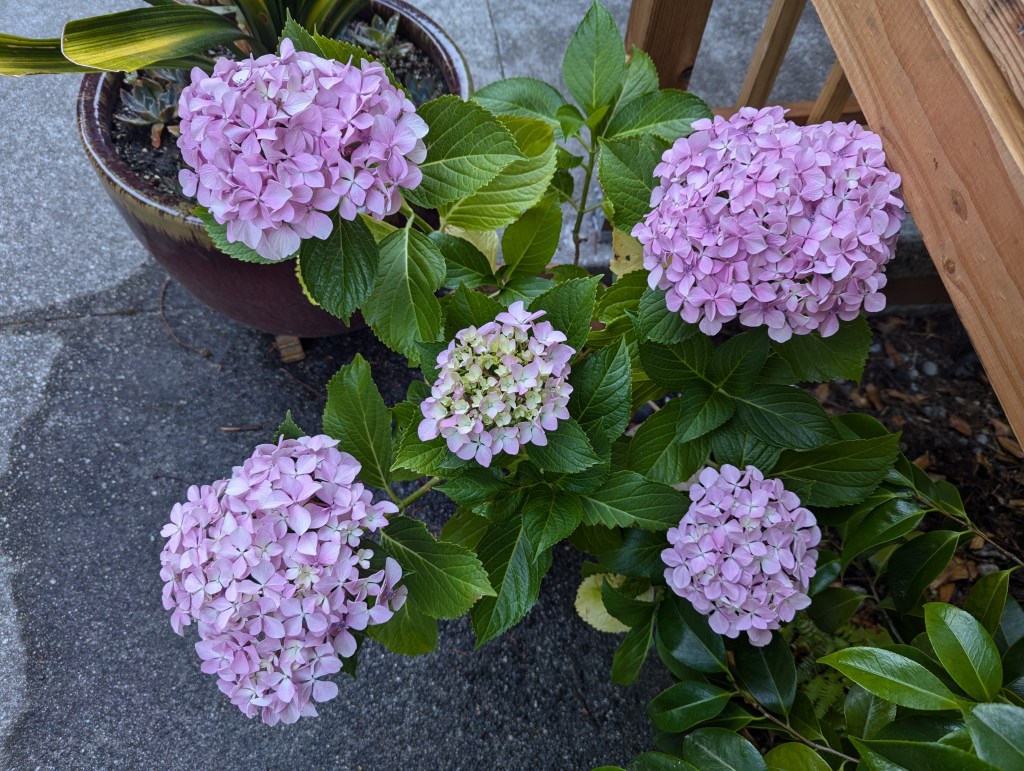
Unused Azalea Pictures

Contractions are awkward for me. I certainly could use them if I want to, I just prefer not to. It is a pointless habit that I should be more comfortable with breaking sometimes.

Another habit that I should indulge in less is the use of six different cultivars of the same species for my ‘Six on Saturday’ posts. I have done it for camellias, rhododendrons, roses, flowering cherries, bearded iris, African daisies and a few other species, including various annuals. I refrained from featuring six azaleas simultaneously for yesterday morning, although I did feature three bearded iris, which comprised half of the ‘Six on Saturday’. I should remember to limit azaleas to three pictures, or preferably two or one, if I feature them on ‘Six on Saturday’ later, as they continue to bloom.

These two pictures of azaleas were omitted from my ‘Six on Saturday’ post yesterday because, as the theme implies, such posts are limited to six pictures. Perhaps I should have used one or both of these pictures instead of one or two pictures of bearded iris. It is too late now.

The first azalea above is variegated. Its leaves resemble those of variegated andromeda. I do not remember what cultivar it is, although the label remains attached to at least one specimen. At least three specimens inhabit the same landscape together. They are blooming better this spring than they have in the past, perhaps because, annually, they are bigger and more established than they were for their previous season.

Relative to the many azaleas here, the second azalea below is nothing special. I like this particular picture because it happens to show a bee visiting the bloom. My pictures tend to be more technical than artistic. Perhaps I should try to include a bit of wildlife sometimes.

Six on Saturday: Mix It Up

Six pictures can not represent all that is blooming now. I did not even try. Nor did I post six pictures of six different cultivars of the same species, as I typically do with camellias, azaleas, rhododendrons, flowering cherries, roses, or other flowers that we grow several cultivars of. I posted three pictures of bearded iris, but I could have procured more than six if I wanted to. I likewise could have posted more than six pictures of different African daisy. I tried to mix it up a bit more than I typically do, as I did with the snakeroot here.

1. Persicaria bistorta, snakeroot and (likely) Iris ensata ‘Variegata’, variegated Japanese iris from Tangly Cottage Gardening are happy on the edge of the pond. The Japanese iris is barely visible at the center. The rest of it is on the edge of another stream. Naturalized exotic Nasturtium officinale, watercress to the upper right shows how close the water is. I thought that there were two cultivars of snakeroot, but found three labels for ‘Superba’, ‘Firetail’ and ‘Dimity’. I can segregate their copies later, but will likely leave these mixed.

2. Clivia miniata ‘Variegata’, variegated Natal lily from Brent’s Jungalow tried to bloom, but this happened before I took a picture. Its cultivar is unidentified, but it is variegated.

3. Osteospermum ecklonis, African daisy blooms too generously for anyone to take all its flowers. About six cultivars inhabit this particular landscape with a few more in another.

4. Iris X germanica, bearded iris are blooming so tall that some should be staked. There are too many cultivars in the Iris Bed to take pictures of, so I will show only these three.

5. All cultivars of the primary Iris Bed are unidentified. At least three that were relocated from the forest are likely feral. One is pale white. This pale yellow looks like Tweety Bird.

6. All of the iris here, like the iris in my garden, have history. This iris is from the former home of an respected colleague. He brought it to me before the garden was demolished.

This is the link for Six on Saturday, for anyone else who would like to participate: https://thepropagatorblog.wordpress.com/2017/09/18/six-on-saturday-a-participant-guide/

Six on Saturday: Surprise!

Even annual bloom can be surprising after a few or many months without it. Perhaps an unexpected bloom is more surprising. Familiar wildlife might be surprising when it does something unexpected. Unexpected or unplanned ‘wildlife’, even if domesticated, is a bit of a surprise. Ultimately though, the major surprise is the fifth of these Six. The first two pictures are from Brent’s garden, not here.

1. Persea americana, avocado fruit ripens in the tree above Brent’s office for quite a few months. The tree rarely lacks fruit completely. These spiral stairs are from the roof deck. This squirrel saw Brent taking a picture of it taking its avocado down, so took it back up.

2. Hippeastrum papilio, butterfly amaryllis was left at Brent’s garden by a neighbor who relocated. It is as perennial here as it is there; so I want a copy. Brent did not know what it was until, after two years or so, it surprised him with bloom. Brent takes bad pictures.

3. Malus X (floribunda?) ‘Prairie Fire’ flowering crabapple bloomed spectacularly. It is a relatively modern cultivar from 1982, but is surprisingly old fashioned. I grew up with a tree that was a decade or so older than I am, but it bloomed with a similar reddish pink.

4. Cymbidium orchid of an unidentified cultivar was left by a colleague who only wanted it off his porch. It gets only watering, but blooms annually, and surprisingly abundantly. I should eventually divide it, but I am hesitant to interfere with such a reliable specimen.

5. Koi met an unfortunate demise two winters ago as someone who was unaware of their presence drained their pond. However, a neighbor inquired about two small fish that he saw in the pond soon afterwards. More recently, the same neighbor inquired about this. It seemed to be about a foot and a half long, with a slightly smaller and darker associate.

6. Koi are supposedly schooling fish. Two do not qualify as a school. So, now they have a few more friends to go to school with. These tiny koi should be able to evade their larger classmates, who might otherwise eat them. Actually, I doubt that the larger koi are large enough to eat them anyway. This is not something that I expected to be contending with.

This is the link for Six on Saturday, for anyone else who would like to participate: https://thepropagatorblog.wordpress.com/2017/09/18/six-on-saturday-a-participant-guide/