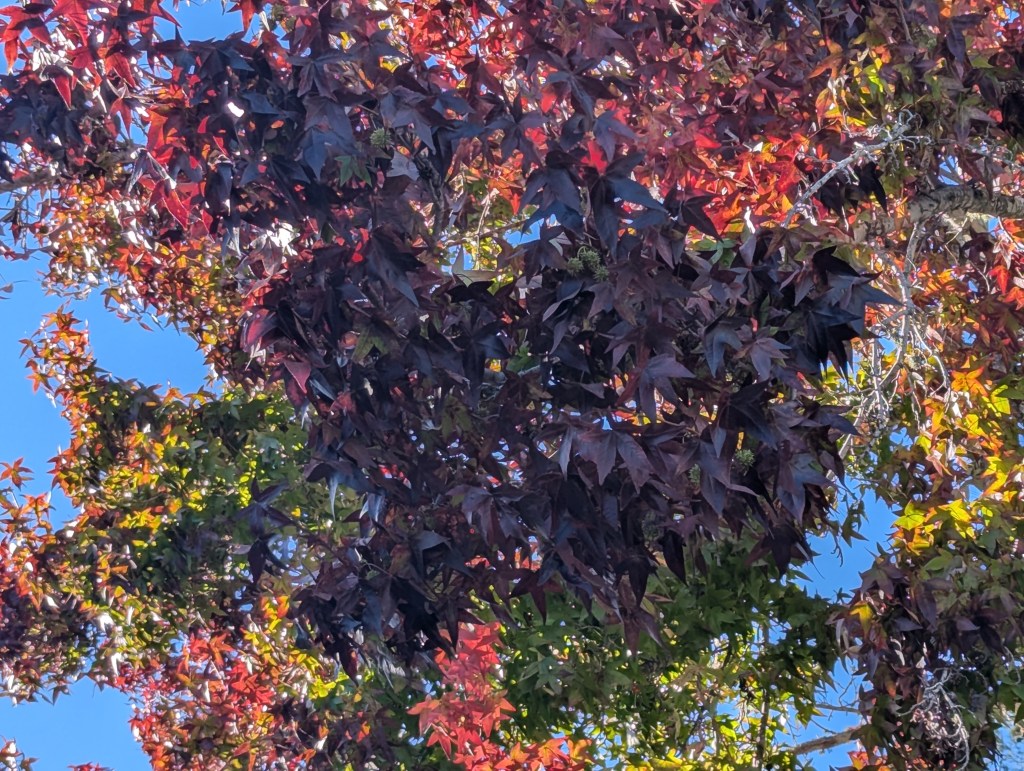
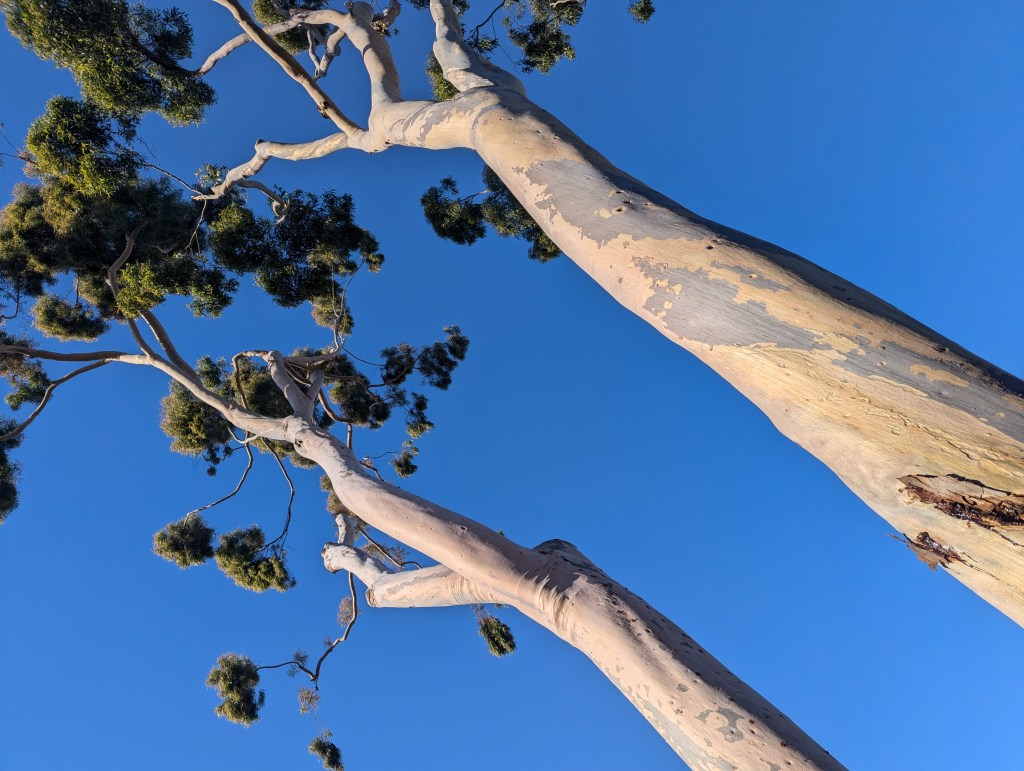
While away from work and home, and tending to errands downtown, I got these pictures from my downtown planter, which inadvertently became something of a Memorial.
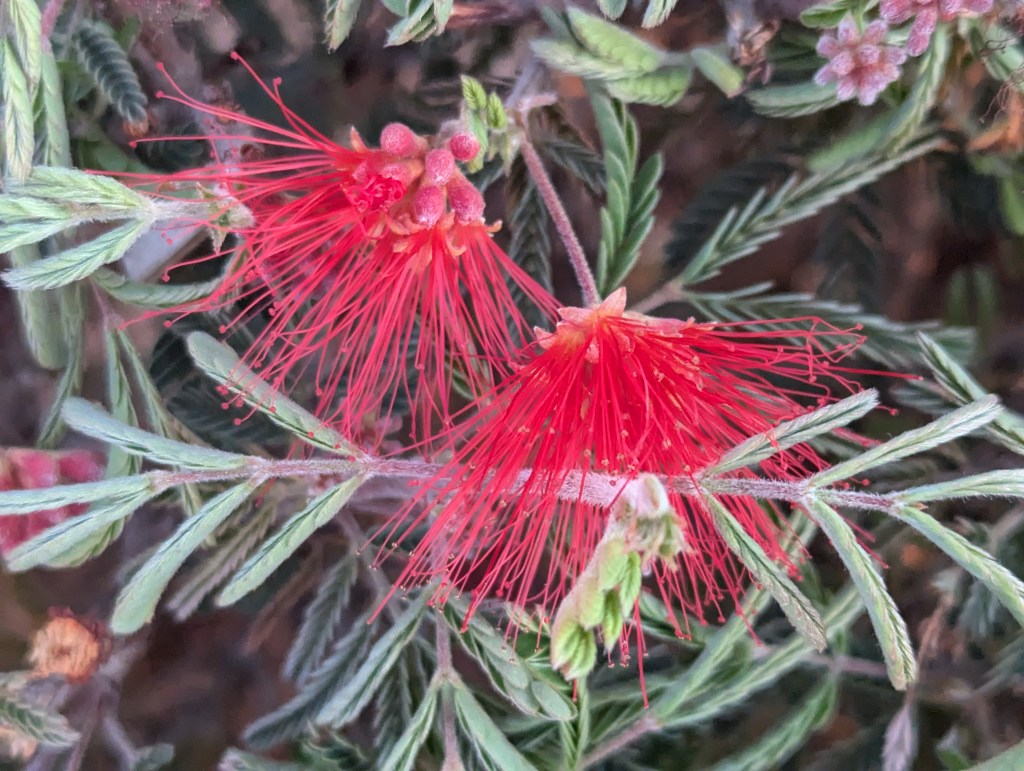
1. Cuphea hyssopifolia, Mexican heather is not my favorite component of the downtown planter, but remains because it was installed by someone who was here prior to my time. A uniquely confined colony of montrebia that I will discuss on Wednesday also remains.

2. Senecio cineraria, dusty miller and the stonecrop below are from the garden of a now deceased client so can only be removed if a bit of it gets established in my home garden. It and the Mexican heather above are the only two of these six which are not succulents.

3. Sedum reflexum ‘Blue Spruce’ stonecrop is being displaced by the unidentified species of Aeonium below, but is also already established in my home garden. I expected it to be displaced eventually when I put it here several years ago. It is gratifying to see remnants.

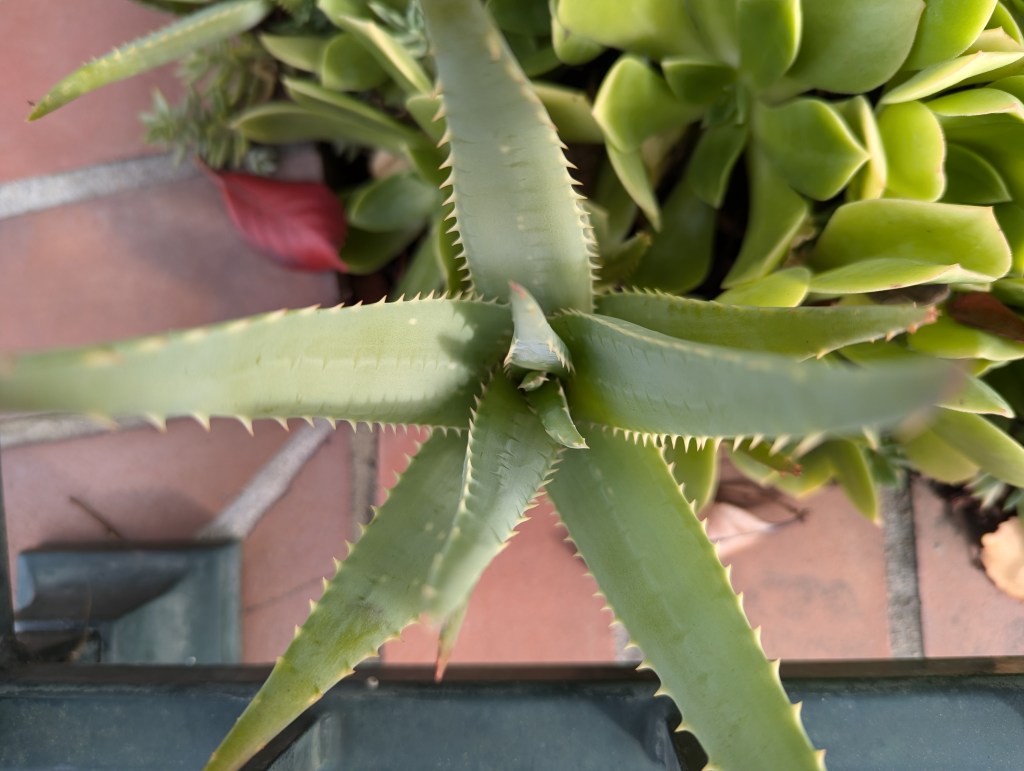
4. Aloe, as the Aeonium at the bottom of this list, is unidentified. It and both of the last six are from the garden of the deceased mother of a deceased friend who happened to be a direct descendant of Spanish explorers who were the first to arrive where Monterey is.
5. Aeonium arboreum, tree houseleek is the most striking vegetation within the planter, but is also occasionally disfigured by theft of its most sculptural stems. A darkly bronzed cultivar from the same special origin was taken piece by piece until none of it remained.
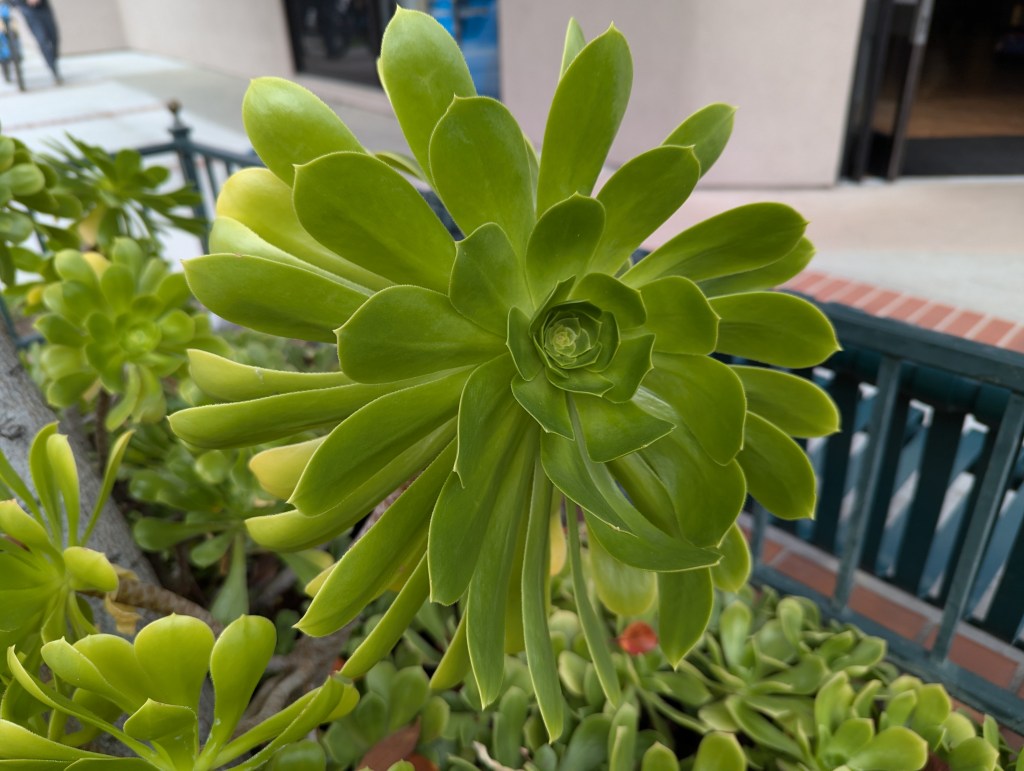
6. Aeonium is as unidentified as the Aloe above. It initially resembles the tree houseleek, also above, but remains low, dense and mounding. It is the most abundant vegetation of the planter, so was the primary culprit of the displacement of the stonecrop, also above.

This is the link for Six on Saturday, for anyone else who would like to participate: https://thepropagatorblog.wordpress.com/2017/09/18/six-on-saturday-a-participant-guide/