Six on Saturday: Self-Replication

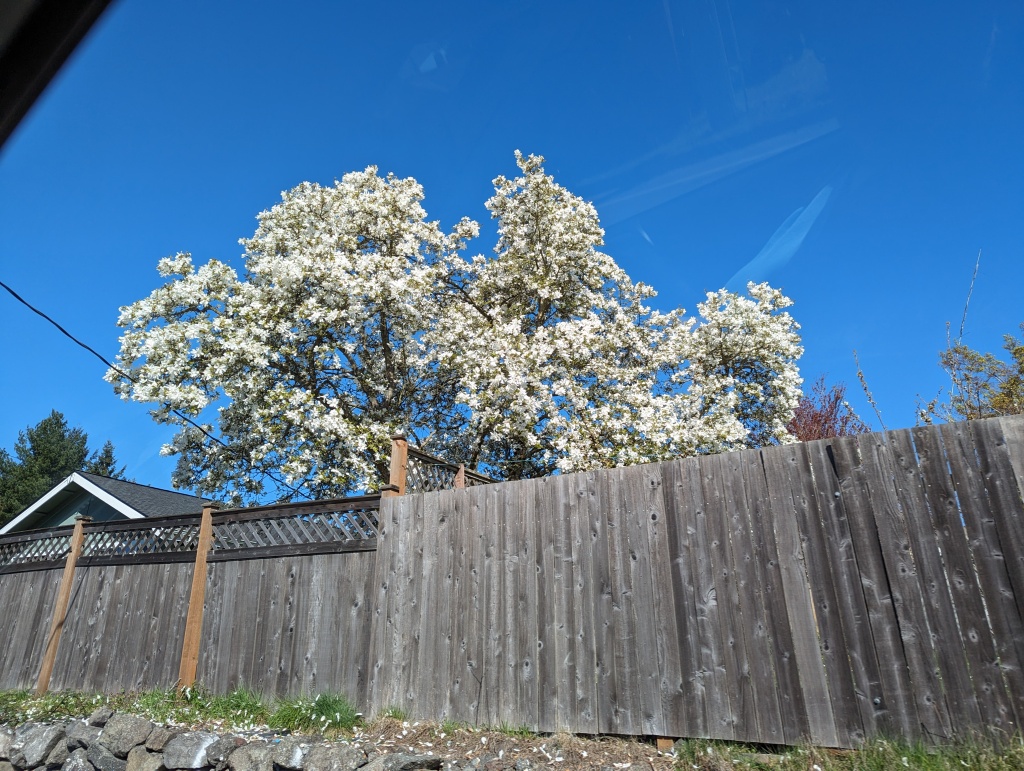
Kwanzan flowering cherry is spectacular as it blooms for early spring. Only one inhabits our landscapes, and of course, it is dormant and defoliated until next spring. I took these six pictures of it anyway, to demonstrate that it is deteriorating fast, but could be able to replace itself before it succumbs to decay completely. Unfortunately though, it will likely be removed before it is able to do so, so that we can install a purple leaf plum within this particular situation instead. I only assist with this self-replication process because of the very unlikely possibility that replacement with another different tree may never actually happen. It has been delayed for years.

1. This flowering cherry tree has been deteriorating for the past several years. Several big limbs have died, leaving its canopy disfigured and lopsided. Its right half is nearly gone.

2. Only shiners remain where some of the major limbs that died were removed from the trunk. If this tree were to survive any longer, these shiners would decay before they heal.

3. Incidentally, this tree is not grafted. Suckers from the roots are indistinguishable from growth of the canopy. Bark of exposed roots is indistinguishable from bark of the trunk.

4. Therefore, this sucker is genetically identical to the original tree. The roots have been generating suckers for several years. All but this one were removed. Instead, it is bound.

5. The binding stake is nailed to one of the major limbs of the original canopy, as well as to a big root below. Damage to the limb is unimportant. It will be removed soon anyway.

6. The bound sucker is now more than six feet tall. It could develop branches to begin to grow as a new tree next year. It could stay as a replacement after removal of the original.

This is the link for Six on Saturday, for anyone else who would like to participate: https://thepropagatorblog.wordpress.com/2017/09/18/six-on-saturday-a-participant-guide/

Six on Saturday: Springtime

Flowers bloom throughout the year here. I featured bloom this week to avoid the topic of minor frost damage that I should have protected vulnerable foliage from. Frost is minor here, and does not occur every year, but it occurred here prior to some other regions this year. However, this bloom can imply that it is springtime.

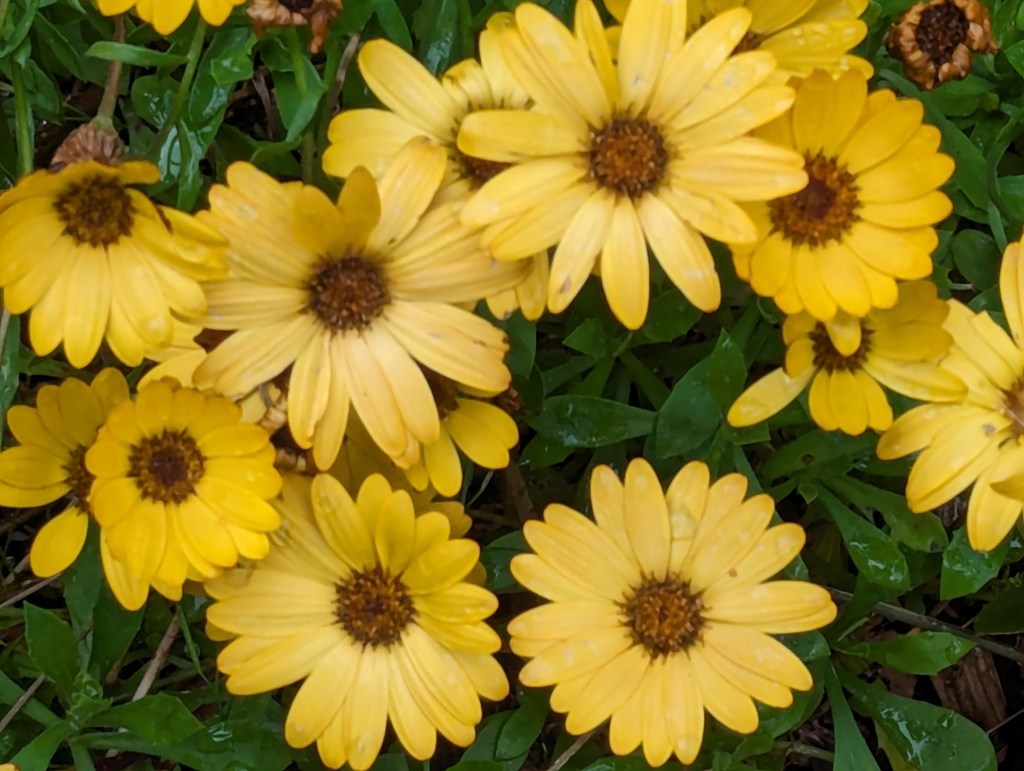
1. Osteospermum X hybrida, African daisy should bloom most for spring, but can bloom randomly whenever it chooses, and often blooms most profusely for summer or autumn.

2. Helichrysum bracteatum, strawflower is my favorite of these six because I remember it as the main cut flower crop to the east of my Pa’s home in Montara through the 1980s.

3. Salvia chiapensis, Chiapas sage is a species that I had never met before last year. They grew well through last summer, and even better with more bloom through this summer.

4. Cestrum fasciculatum ‘Newellii’, bastard jasmine has an interesting name. Of course, it is not really jasmine. It recovered slowly from gopher damage, but blooms nicely now.

5. Rosa, carpet rose is my least favorite of these six because it is so cheap and common. I prefer old fashioned and respectable hybrid tea roses that are such excellent cut flowers.

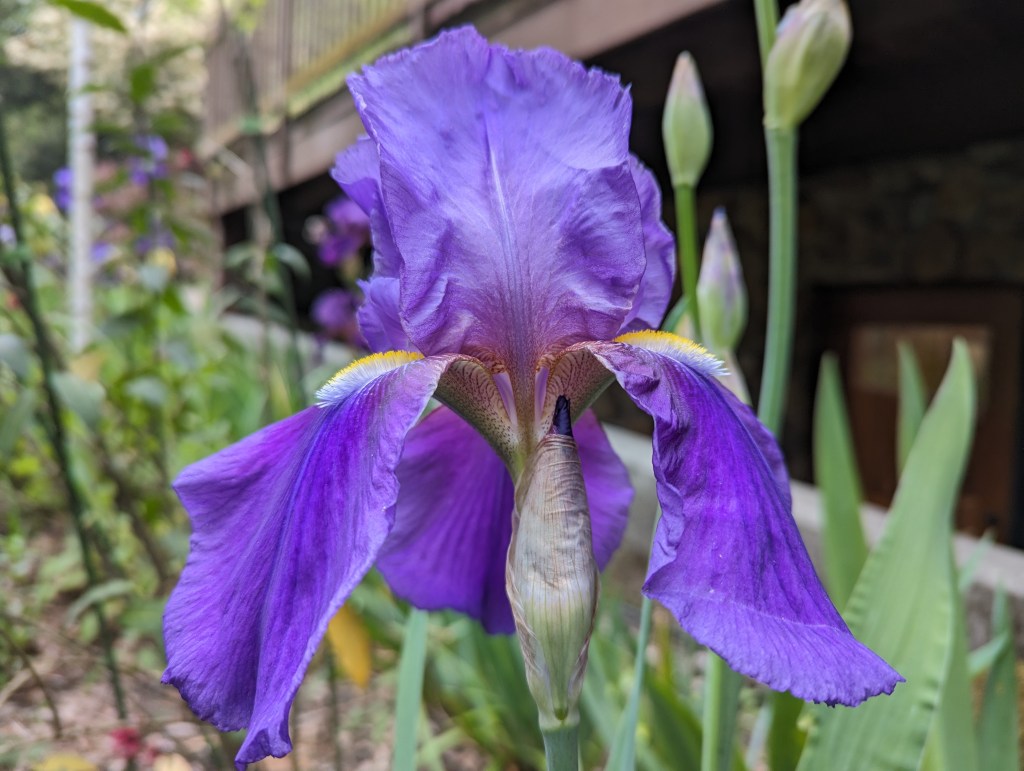
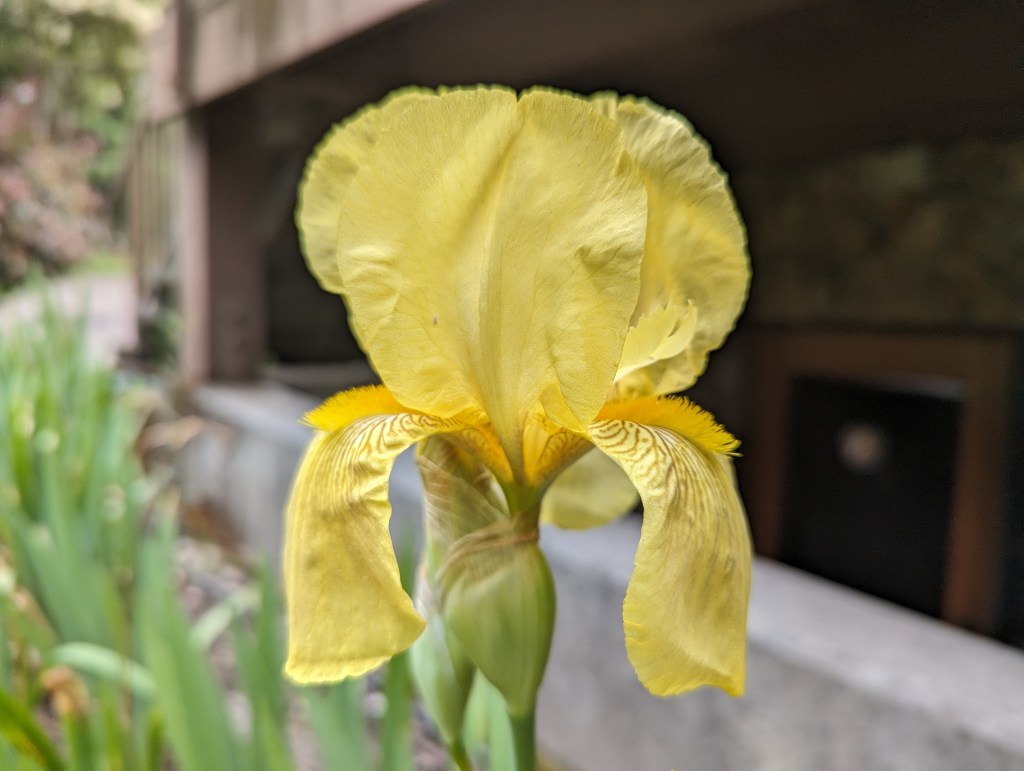
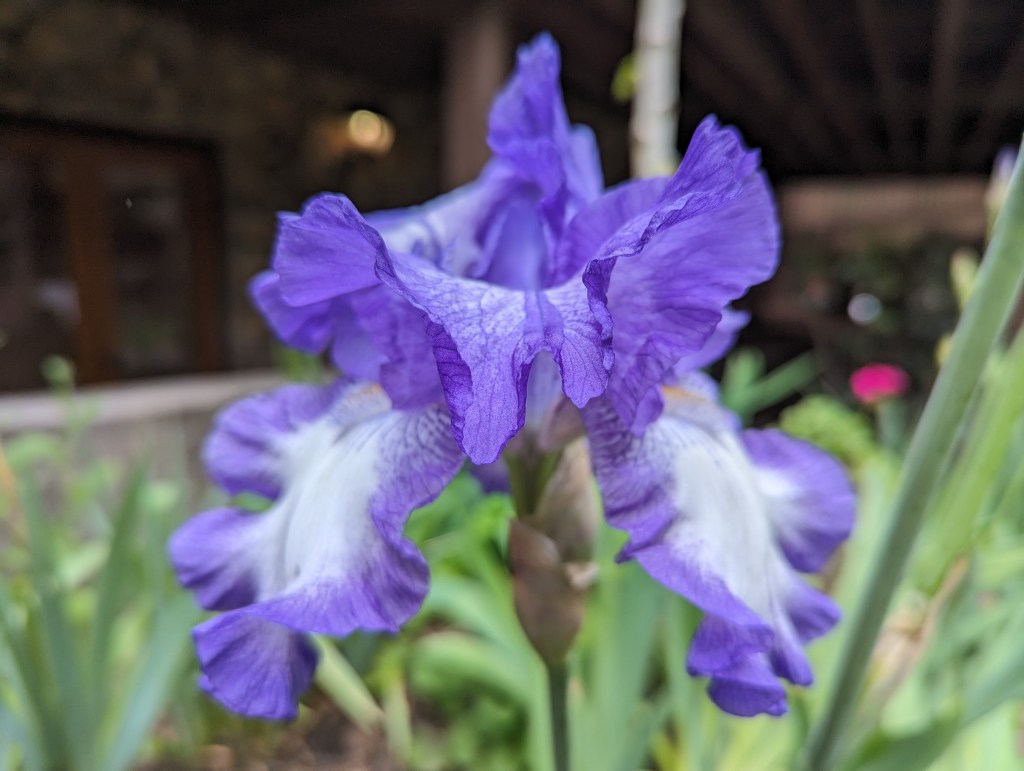
6. Iris X germanica, bearded iris should bloom for spring. Reblooming types also bloom for autumn. I have no idea what this is, but I sort of doubt that it is a reblooming variety. Earlier, it did not bloom much, so now seems to be blooming late for the first phase this year, rather than blooming again for a second phase within the same year. Furthermore, its simple bloom and slim floral stalks suggest that it is not extensively bred. It might be a simple species that is confused about the seasons here, because this climate is so mild.

This is the link for Six on Saturday, for anyone else who would like to participate: https://thepropagatorblog.wordpress.com/2017/09/18/six-on-saturday-a-participant-guide/

Six on Saturday: Unidentifiable

Only Australian tree fern is identifiable. Another is just, well, . . . weird.

1. Alocasia odora, taro was installed by a tenant, into a situation that was too dark for it. Now that the tenant is gone, and before another arrives, I brought it back to the nursery for reassignment. The holes in the leaves are from redwood twigs that fell from very high up. I can not identify its cultivar, and am not ever sure if it is an Alocasia or a Colocasia.

2. Sphaeropteris cooperi, Australian tree fern was next to the taro, so came here with it. Although otherwise healthy, its etiolated leaves were reaching towards limited sunlight.

3. Sphaeropteris cooperi, Australian tree fern that I tried to recycle from the garden of a former neighbor did not survive. It is a saddening loss. It was an excellent tall specimen.

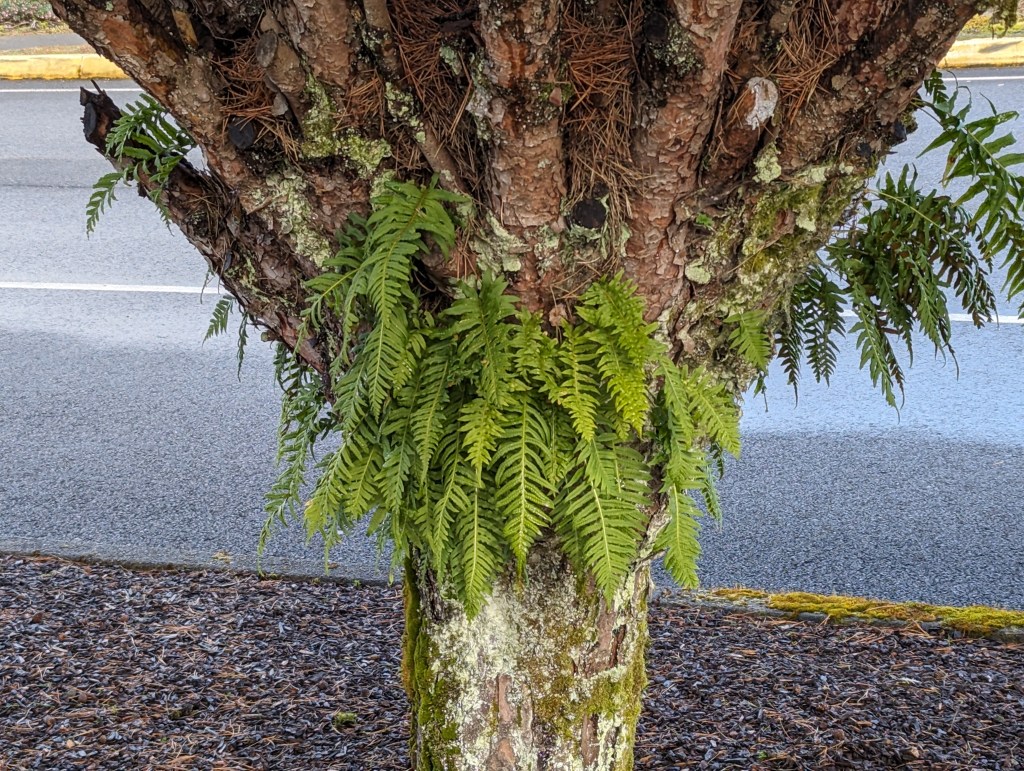
4. Nephrolepis cordifolia, sword fern might make good use of the trunk of this deceased Australian tree fern. Technically, the trunk is not actually a trunk at all; but is merely an accumulation of roots that extended downward through the decayed stem of the original fern. Perhaps the roots of this sword fern can do the same before the dead original roots deteriorate. It seems like a graft, but of course it is not. Nor is it a hybrid. It is just weird.

5. Brugmansia, angel’s trumpet of an unidentified cultivar is blooming for the first time. It has been with me for a few years, but dies back each winter. Before it recovers enough to bloom, it dies back again. I got it as a twig from a greenwaste recycle pile in San Jose.

6. Brugmansia, angel’s trumpet should be pastel orange. I took the original twig because I assumed that it was of a specimen that bloomed pastel orange. Does this look orange?!

This is the link for Six on Saturday, for anyone else who would like to participate: https://thepropagatorblog.wordpress.com/2017/09/18/six-on-saturday-a-participant-guide/
Six on Saturday: Williamsburg II

Woodland Gnome of Our Forest Garden awesomely sent me six seedlings of Ilex opaca, American holly from Williamsburg! I had been wanting to get more acquainted with this species since encountering it in school in about 1986, but never justified doing so before. It is unavailable from nurseries here anyway. As with beautyberry, esperanza, poinciana, red elderberry and several other species that I want to get acquainted with, I specifically wanted their wild form, as it grows from seed, rather than cultivars. This is exactly what these seedlings are. I am already very pleased with them, and we are barely acquainted.

1. Cards and letters written by hand with ink on paper and sent by mail have become an old fashioned courtesy. It is gratifying to know that some still express such graciousness.

2. Camellia sasanqua, sasanqua camellia is the illustration for the other side of the card. It very likely bloomed where the contents of the parcel originated from in Williamsburg.

3. Ilex opaca, American holly was the contents of the parcel. There are six seedlings. For me, this is a remarkable acquisition, like beautyberry, red elderberry and Louisiana iris.

4. Ilex opaca, American holly seedlings were canned and happy shortly after arrival here two weeks ago. They can now disperse roots through winter to sustain growth next year.

5. Hedychium coronarium, white butterfly ginger came from the same source two years ago. Some was planted at the Chapel. This remaining specimen is higher than three feet. It really wants to be in the ground. The mild warmth last summer likely inhibited bloom.

6. Callicarpa americana, American beautyberry was an even more excellent acquisition two years ago. The mild warmth last summer likely inhibited the ripening of the berries. Larger clusters of berries are still green. This yellow foliage will likely be gone after rain.

This is the link for Six on Saturday, for anyone else who would like to participate: https://thepropagatorblog.wordpress.com/2017/09/18/six-on-saturday-a-participant-guide/
Six on Saturday: Los Angeles to Los Gatos II

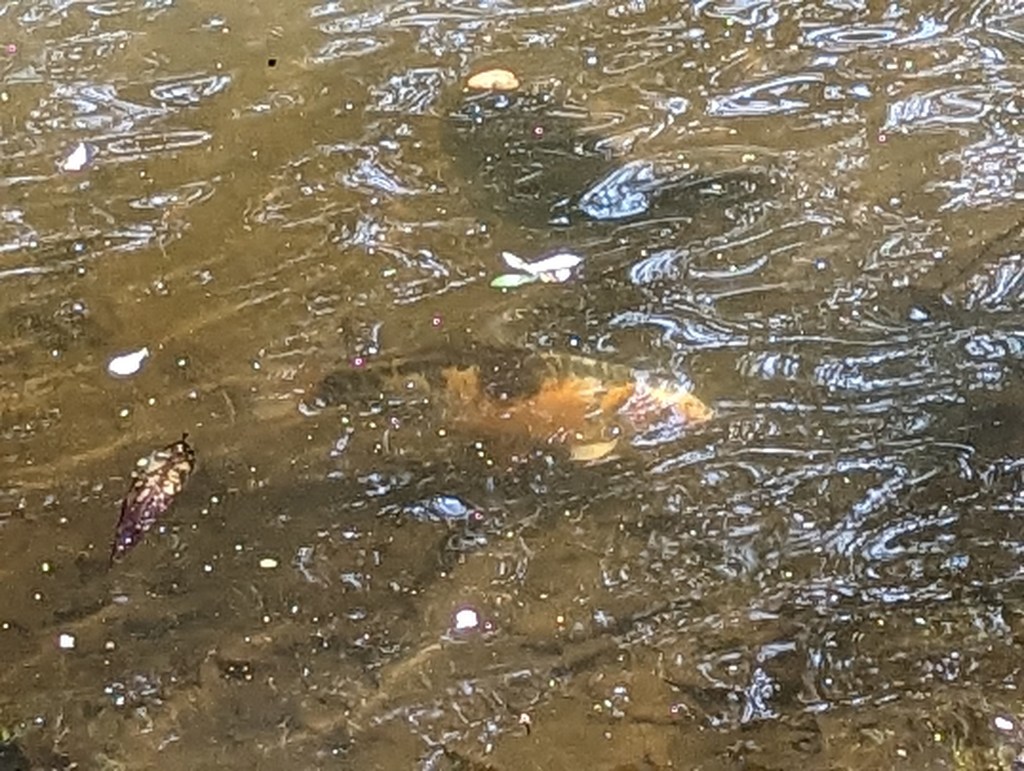
Ilex opaca, American holly would have been a better topic for Six on Saturday this week. Woodland Gnome of Our Forest Garden sent me six seedlings from Williamsburg! They are now happily canned. I will share their pictures next week. For now, these are a few of the many goodies that I brought from Southern California. I sadly needed to go there for a memorial for an old college friend.

1. Carson is a 1994 Buick Roadmaster touring sedan, not a pickup. He diligently brought all this from Southern California anyway. It includes so much more than these six below.

2. Pimenta dioica, allspice is apparently quite rare. Brent had me trim his so that I could process these scraps as cuttings. However, it is dioecious, so requires a mate to set fruit.

3. Solandra maxima ‘Variegata’, variegated cup of gold vine was acquired in accordance with one of our collegiate traditions; theft. I processed these two scraps into six cuttings. Incidentally, I was uninvolved with its initial acquisition. I will merely grow the cuttings.

4. Nephrolepis exaltata ‘Variegata’, variegated Boston fern or tiger fern is a smaller copy of the mature specimen that provided picture #4 of my Six on Saturday of last Saturday.

5. Hedychium coronarium ‘Variegatum’, variegated white butterfly ginger should bloom with white flowers comparable to those of white butterfly ginger from Woodland Gnome of Our Forest Garden. However, I suspect that it is actually ‘Tahitian Flame’ with peachy bloom. To its right, Alpinia galanga, galangal is a culinary ginger with mundane bloom.

6. Canna of an unidentified cultivar is likely the most important of all these acquisitions. It was acquired by the same means as the variegated cup of gold vine #3, but worse. It is from the Baptist Church that hosted the repast for the memorial of our deceased friend.

This is the link for Six on Saturday, for anyone else who would like to participate: https://thepropagatorblog.wordpress.com/2017/09/18/six-on-saturday-a-participant-guide/

Six on Saturday: Los Angeles to Los Gatos

Six on Saturday is hasty for me this Saturday. The last few days have been rather hectic. It is now about midnight on Friday. I am presently in Los Angeles, and will be returning to Los Gatos in a few hours. It is a long story. I did not get many pictures.

1. Washingtonia robusta, Mexican fan palm is the most familiar palm of the Los Angeles skyline. This one is very unique though. It grew under the onramp from the northbound Harbor Freeway to the westbound Santa Monica Freeway, on top of an embankment on northbound Toberman Street. It grew vertically until it encountered the underside of the onramp. It then crept along the underside of a merge lane toward the south. It resumed vertical growth after reaching the edge, and escaping from below. Countless commuters who drive past it, and perhaps also over it, are unaware of its extraordinary contortions.

2. Coleus scutellarioides, coleus is still performing nicely within Brent’s garden. Autumn is a bit later and significantly milder within Los Angeles than within Los Gatos or Felton.

3. Coleus scutellarioides, coleus is familiar among my generation because it was popular as a houseplant through the 1970s. It is likely more popular in home gardens nowadays.

4. Nephrolepis exaltata ‘Variegata’, variegated Boston fern or tiger fern is one of several species that I will bring back from Los Angeles because I can not procure it in Los Gatos.

5. Three little kittens are new residents of Brent’s garden. I doubt that they are related to those that Los Gatos is named after. They will eventually help with rodent management.

6. Rhody is normally terrified of kittens. He does not seem to be aware that they are just small cats. Now that we are about to leave, he is much more tolerant of their playfulness.

This is the link for Six on Saturday, for anyone else who would like to participate: https://thepropagatorblog.wordpress.com/2017/09/18/six-on-saturday-a-participant-guide/
Six on Saturday: No Hunting

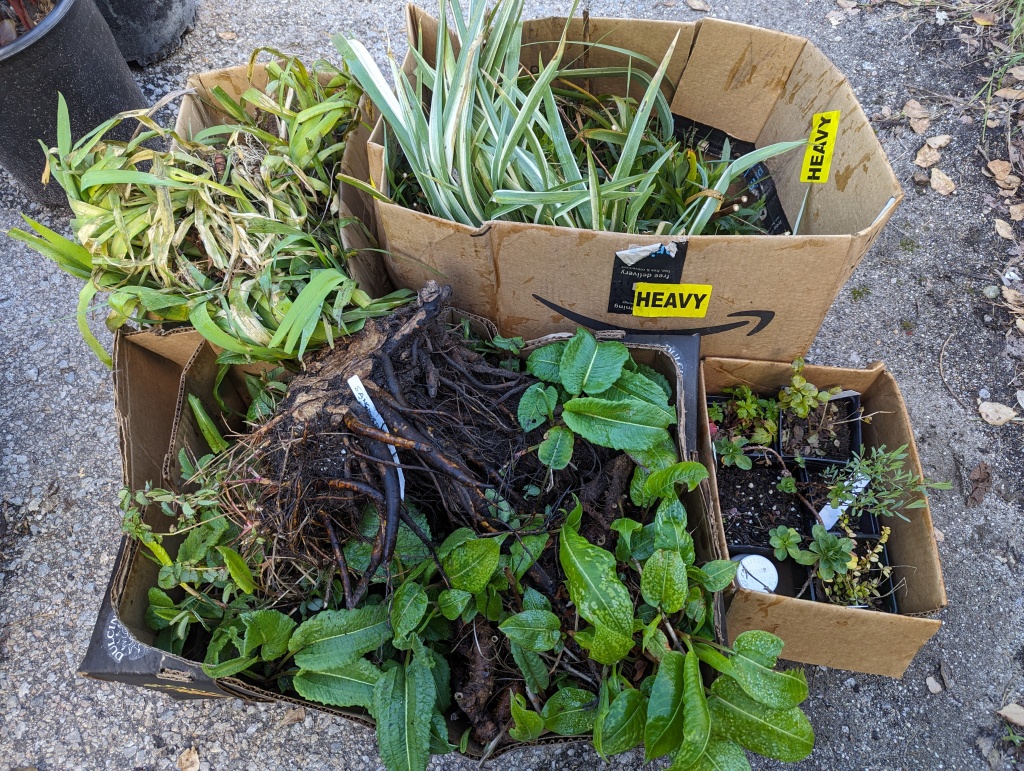
Wildlife is fortunately not too much of a problem within the landscapes here. Deer have complete access but strangely avoid refined landscapes, which includes roses. We would be unable to defend the landscapes otherwise. With so many people in the area, hunting is not possible. Even if it were, I do not like the local options much. Turkeys must know, which is why they are so blatant with their minor but annoying transgressions. Ducks at least try to be helpful by eating snails and the overwhelmingly prolific duckweed in their pond. Actually, I would not mind if they invited some of their friends over to help, since the pond looks more like a lush green lawn than water. Increasingly cooler weather may change that somewhat soon.

1. Single white angel’s trumpet is irrelevant to wildlife, but is blooming too splendidly to ignore. It was #6 last week, while beginning to bloom. It grew from a cutting last spring.

2. Ducks enjoy the pond without becoming too annoyingly numerous. Only this nice pair seems to be permanent residents. Another pair occasionally stops by but lives elsewhere.

3. Duckweed might otherwise be less bothersome if only they invited their friends over a bit more often. Even in this small pond, a single pair of ducks can not control duckweed.

4. Turkeys are the opposite. They are annoyingly numerous, but do not help much. They glean insects, but also thrash colorful flowers and berries, whether they eat them or not.

5. Pyracantha berries should remain colorful while small birds eat them through winter. Instead, turkeys shake most of them from their branches, and leave them on the ground.

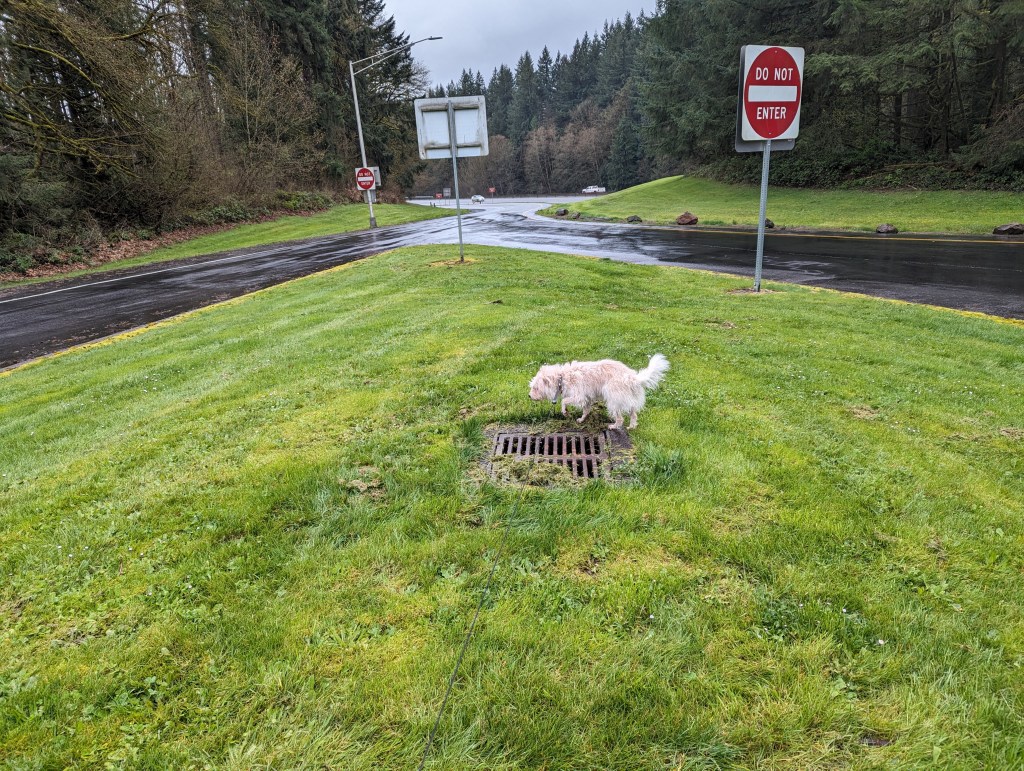
6. Rhody is a terrier of some sort. His ancestors pursued burrowing animals who lived in the ground, or ‘terra’. Fortunately, he is uninterested, and is even less interested in fowl.

This is the link for Six on Saturday, for anyone else who would like to participate: https://thepropagatorblog.wordpress.com/2017/09/18/six-on-saturday-a-participant-guide/
Six on Saturday: Good News

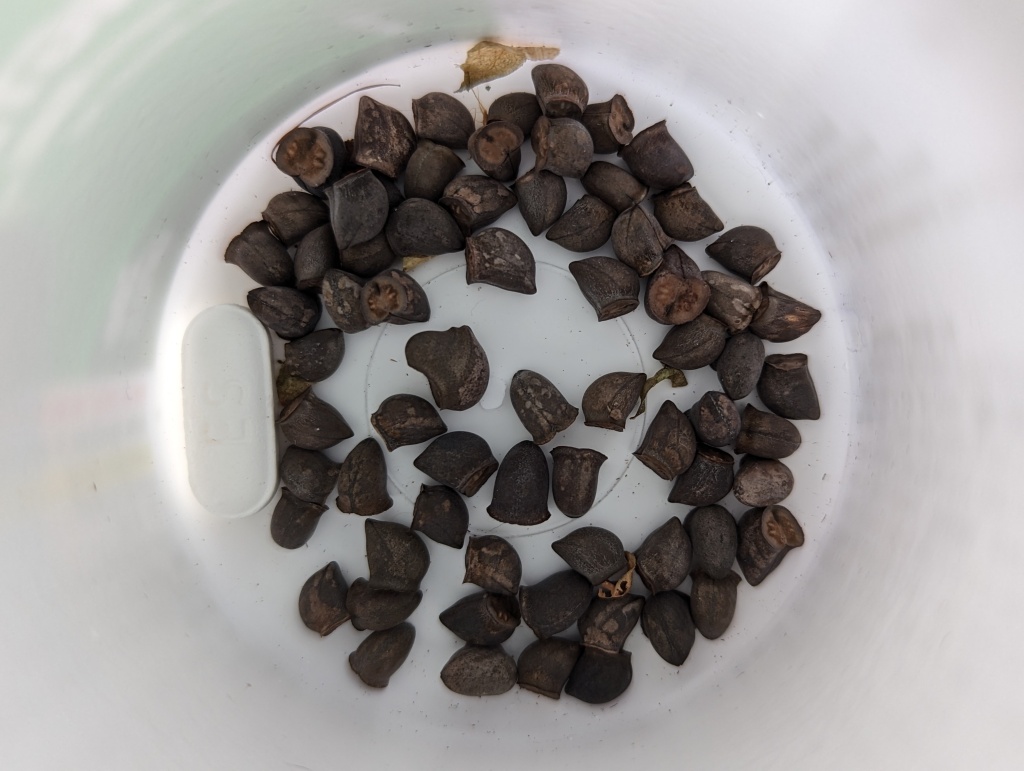
Horticulture occasionally involves some degree of disappointment. However, more than occasionally, it is surprisingly gratifying. After the mysterious disappearance of a colony of Louisiana iris, I remembered how much I enjoyed growing them. Unplanned bananas will be fun to grow in the future. Unseasonable bloom is at least as gratifying as seasonal bloom.

1. ‘Black Gamecock’ Louisiana iris was a gift from Tangly Cottage Gardening. Therefore, they were VERY important to me. I split and plugged them into a thirty foot long row on the edge of a pond at work. Sadly, after growing happily through summer, they suddenly and inexplicably disappeared. I am determined to not be unrealistically saddened about this, though. They were intended to be enjoyed, and I enjoyed growing them all summer. The good news is that Tangly Cottage Gardening offered replacement when I return this winter. Also, I found these four surviving plugs! I canned them here for their protection.

2. Iris unguicularis, Algerian iris was another of several prized gifts from Tangly Cottage Gardening. I split and plugged them into a row that is about twenty feet long last winter.

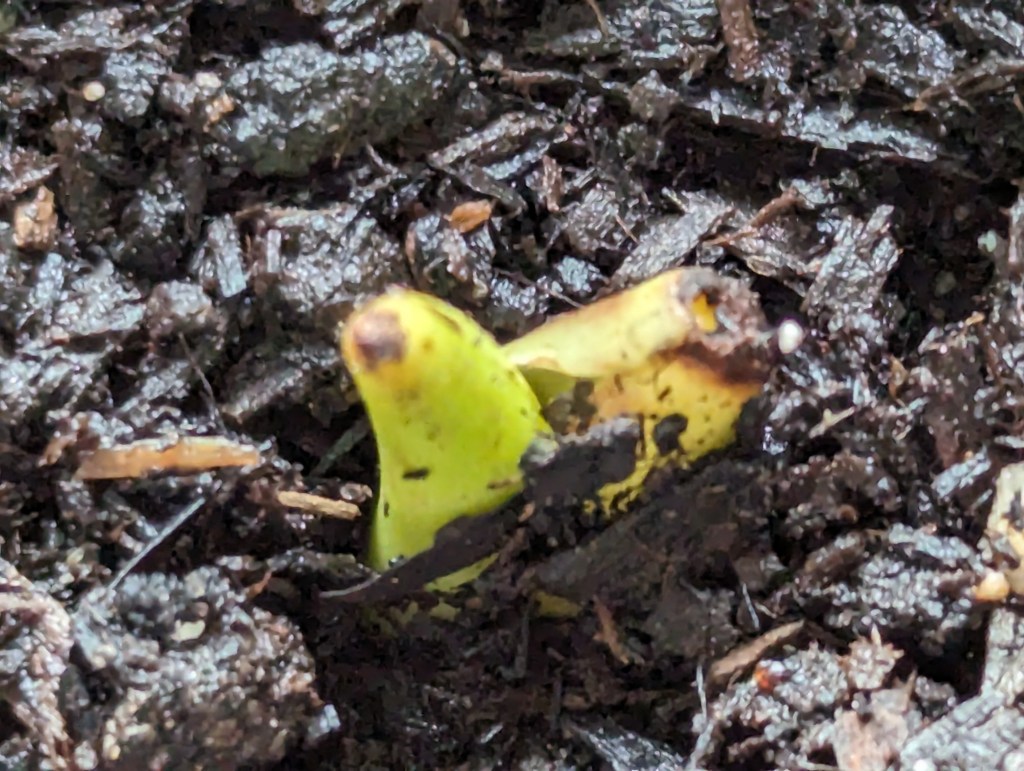
3. Musa acuminata, banana ‘trees’ are getting to be rather excessive. With these pairs of four new cultivars, there are now fourteen cultivars! There are no plans for any of them.

4. Brugmansia candida, double white angel’s trumpet failed to impress this year. Bloom was limited. Now that summer is over, it decided to bloom! I suppose this is good news.

5. Brugmansia X cubensis, ‘Charles Grimaldi’ continues to bloom late, and with this odd peachy color. Although I know that it should be simple yellow, I rather prefer this color.

6. Brugmansia, angel’s trumpet of an unidentified cultivar with single white flowers also decided to bloom late. This is impressive because it grew from a cutting from last spring!

This is the link for Six on Saturday, for anyone else who would like to participate: https://thepropagatorblog.wordpress.com/2017/09/18/six-on-saturday-a-participant-guide/
Six on Saturday: Chuck’s Grandparents

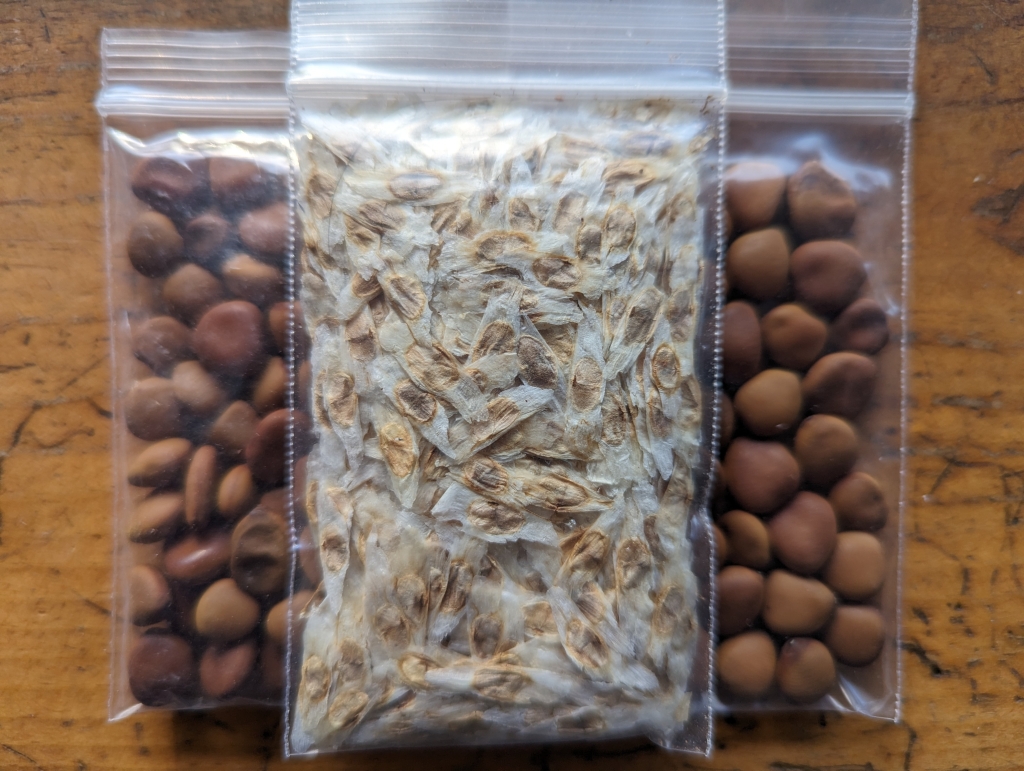
‘Charles Grimaldi’ is likely the most popular angel’s trumpet. It is very vigorous and very fragrant, with cheery yellow bloom. I plugged several cuttings last autumn, but then very unfortunately neglected to protect them from our unexpectedly and unusually cold frost. Of only two survivors, one grew so splendidly that it is now prominently displayed in the landscapes, rather than ignored in the nursery. It has an amusing history. (The first two pictures are not mine.)

1. This pair of ‘Charles Grimaldi’ angel’s trumpet might be familiar to those who watched television in the early 2000s. They were prettier while GreenArt managed the landscape back then. They are gone now. This was the best picture that I could find of them online. The third specimen that was omitted after it was delivered now inhabits Brent’s garden.

2. This omitted third specimen of ‘Charles Grimaldi’ angel’s trumpet is more impressive within Brent’s Dreamscape at the Jungalow. A picture of its bloom represents its species in the Sunset Western Garden Book from several years ago. It is the source of my copies.

3. This copy grew more than six feet tall from a cutting that I plugged last winter. Its can sits on the bottom of its big urn. Its bloom was too pretty to leave unseen in the nursery.

4. Bloom, which began only recently, will not likely continue much longer. The specimen might return to the nursery for winter, and then be installed into a landscape afterward.

5. A comparably tall copy of an unknown cultivar with orange flowers is about to bloom. Unfortunately, the weather will likely become too cool for these buds to finish blooming.

6. Young banana trees are likewise too striking to leave unseen within the nursery. Their cans were placed within more appealing pots within the landscapes at least until winter.

This is the link for Six on Saturday, for anyone else who would like to participate: https://thepropagatorblog.wordpress.com/2017/09/18/six-on-saturday-a-participant-guide/
Six on Saturday: Best or Worst for Last

Indian summer is now doing what it does every few years or so. It was more than ninety degrees for a second day here yesterday, and was even warmer in the Santa Clara Valley. As typical, it happened after cooling weather already started to feel like autumn. It is not a good time to relocate vegetation, which I started to do while the weather was still cool. Also, I must briefly increase irrigation. Not all of these Six are relevant to the weather or any particular theme. Actually, half are irrelevant. The last is open to interpretation. It is not a good picture, but is likely the best.

1. Water from the spigot occasionally gets slightly colorful here. Water from the streams and creek is clearer. It is a consequence of hydrant flushing. It is harmless for irrigation.

2. Unidentified ferns needed to be removed from where an old fence was replaced. I can not simply discard them. I buried them elsewhere so that they can regenerate next year.

3. Unidentified spirea was also in the way. Of course, although I do not expect much of it to survive, I relocated it also. I typically cut this spirea back to the ground during winter.

4. Marah macrocarpa, wild cucumber develops huge tubers that can weigh more than I do. This one is merely about a foot and a half long, so is relatively small, but now what?!

5. Portulaca grandiflora, moss rose is not mine, is not here, and did not give me a good picture. Nevertheless, I feel obligated to share at least some summery floral color today.

6. Rhody did not cooperate for this picture either. I can not explain how he so efficiently hid behind only one yawn. As bad as this picture is, it just might be the best of these Six.

This is the link for Six on Saturday, for anyone else who would like to participate: https://thepropagatorblog.wordpress.com/2017/09/18/six-on-saturday-a-participant-guide/