Six on Saturday: Coming & Going

Although the weather is predicted to be more typical, it was prematurely autumnish last week. It is a reminder that it really is time for Autumny and wintry flowers to come into season while summery flowers go out of season. This “Six on Saturday” is about some of such coming and going. (To comply with guideline #7 of the participant guide for Six on Saturday, I am limiting verbiage.)

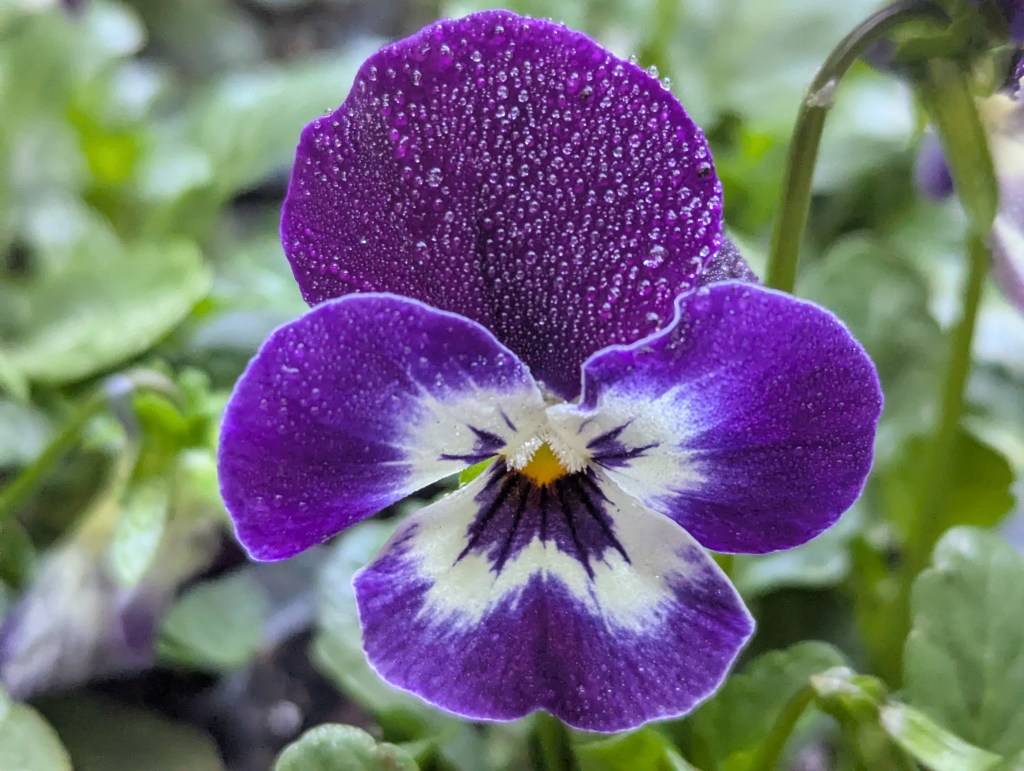
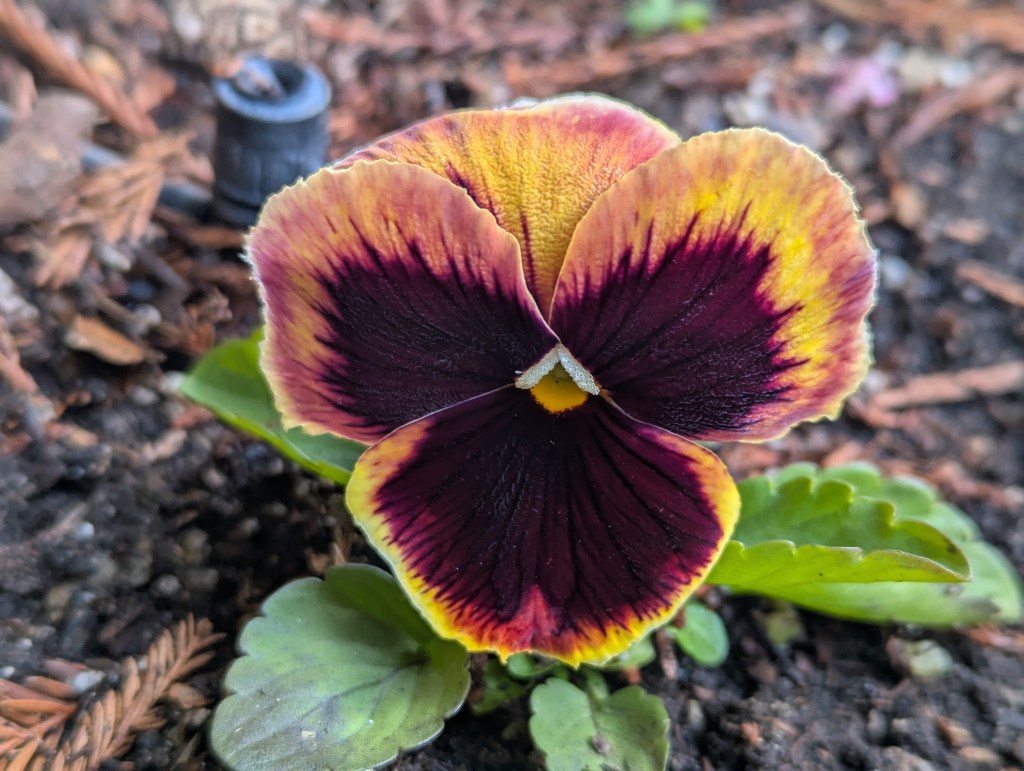
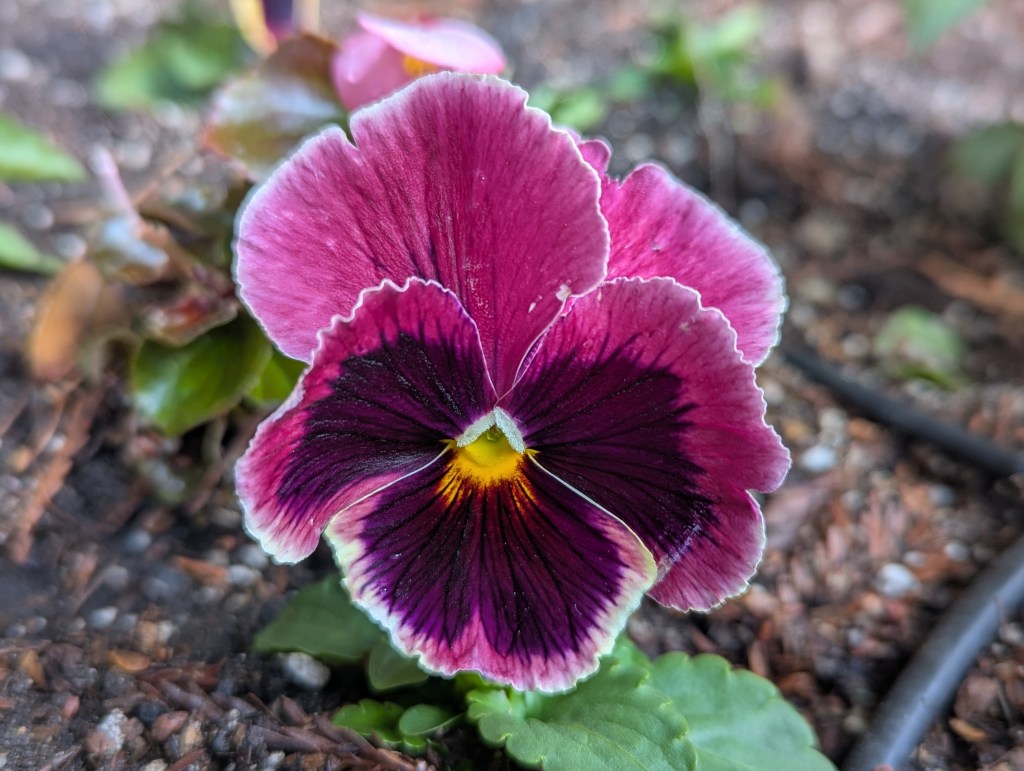
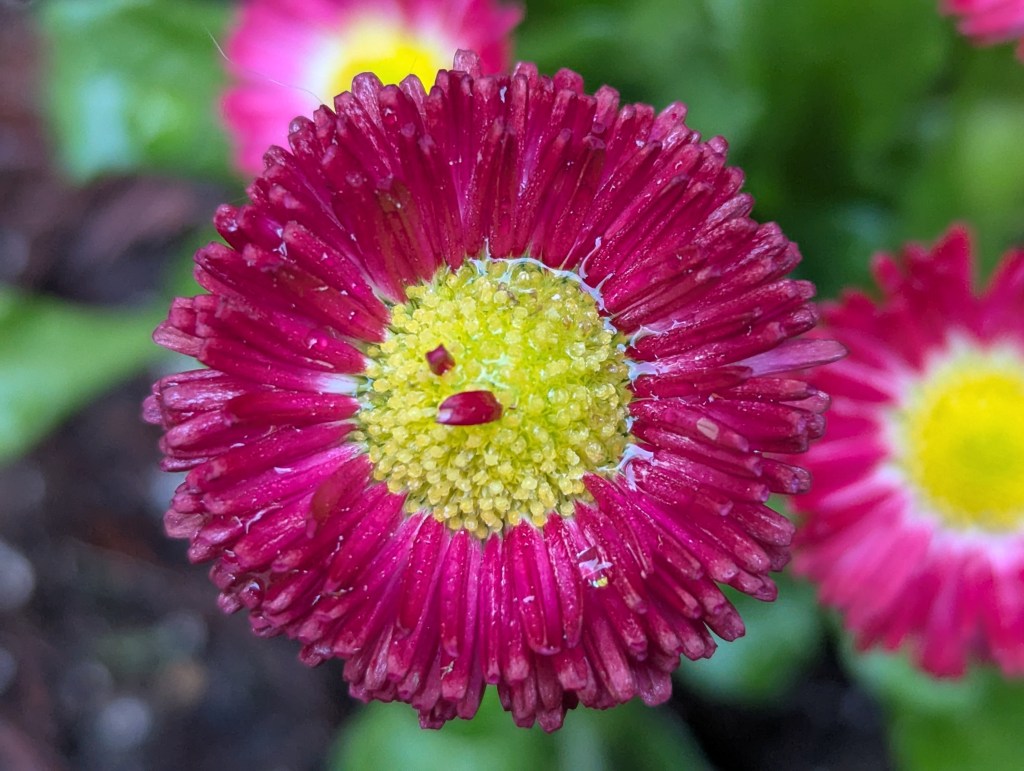
1. Viola wittrockiana, pansy is traditional for winter floral color. It replaces petunia, and should last until petunia becomes seasonable again next spring. It is coming into season.

2. Petunia X hybrida, petunia is traditional for summer floral color. It replaced pansy as pansy finished its season last spring. It is going out of season now. Do you see a pattern?

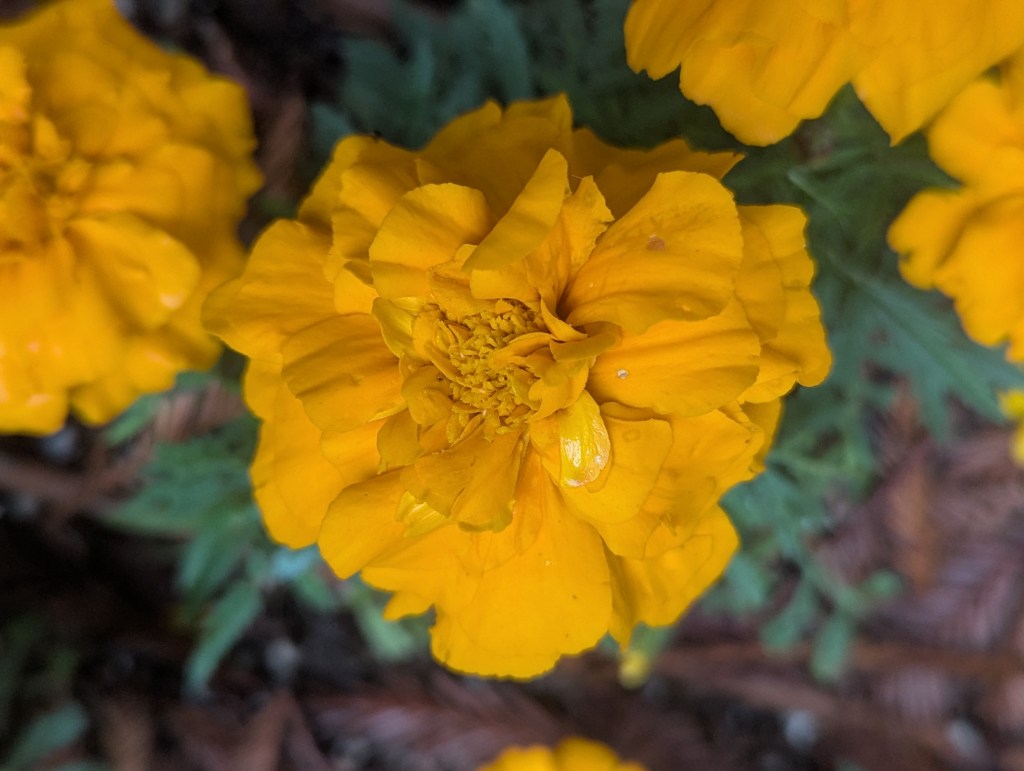
3. Tagetes patula, marigold is traditional for autumn floral color. It was just installed as a narrow border for a small rose garden. For there, it is one of the more reliable annuals.

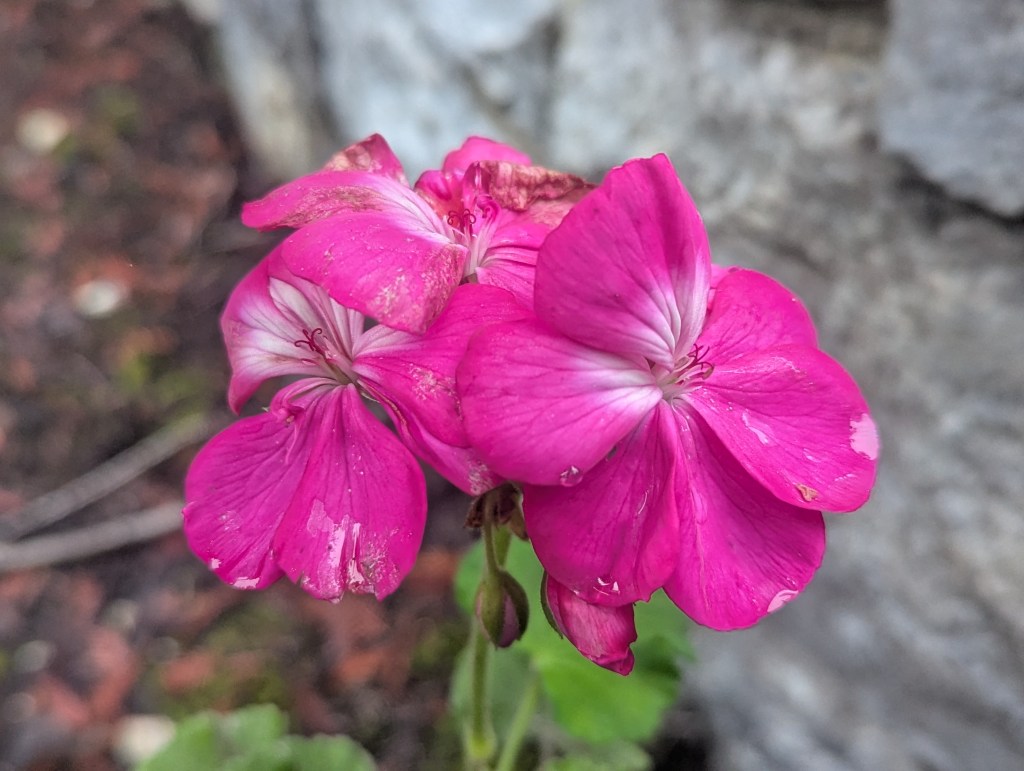
4. Pelargonium peltatum, ivy geranium, in eight or so baskets, hung from the eaves of a prominent building at work, but never flourished. They will be recycled somewhere else.

5. Dianthus caryophyllus, carnation does not do much through summer, but now begins to bloom as nights become cooler. I forget that it is here. I also forget how delightful it is.

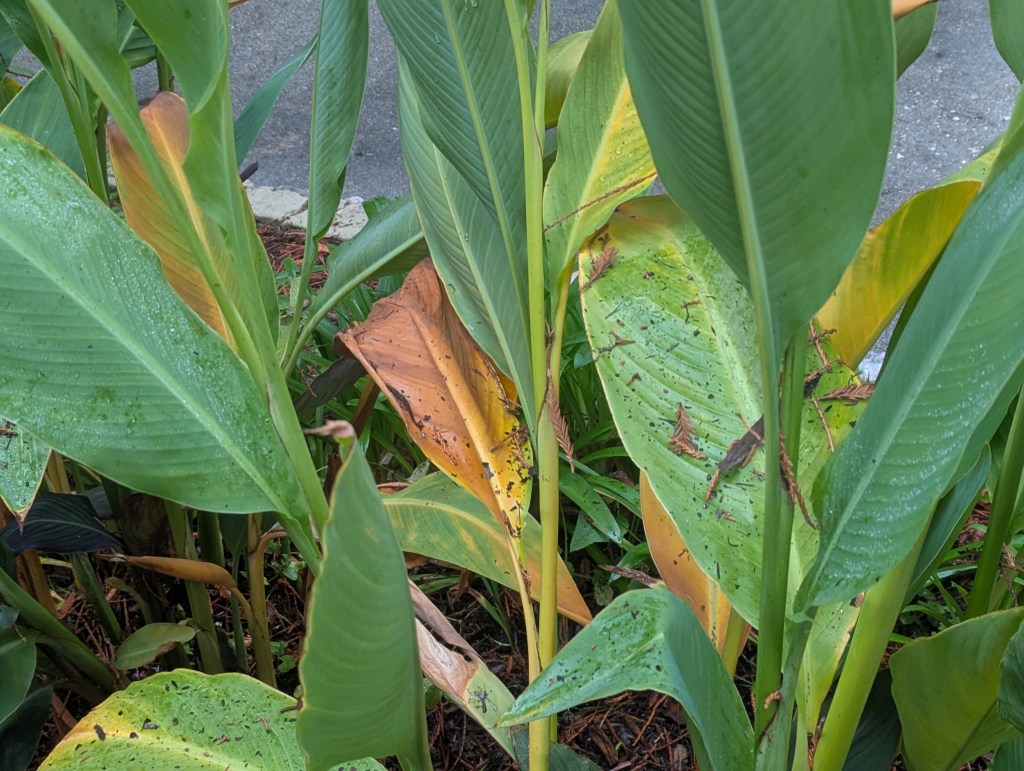
6. Canna, canna blooms a bit less enthusiastically as the weather begins to cool, but can technically bloom until it gets frosted. If it does not get frosted, it can bloom continually.

This is the link for Six on Saturday, for anyone else who would like to participate: https://thepropagatorblog.wordpress.com/2017/09/18/six-on-saturday-a-participant-guide/
Six on Saturday: A Few More Surprises

The unseasonably relocated roses that I had been so concerned about for the past month or so continue to surprise with more growth and bloom. So do a few other species. These first three happen to be from Tangly Cottage Gardening. The following two happen to be white. The last happens to not be of horticultural orientation.

1. Canna ‘Stuttgart’, along with a few other fancy potted Canna, unfortunately needed to be relocated from the deck that they inhabited at work. However, it seems to be happier after relocation, and makes larger and more ornate leaves, which is what it is grown for.

2. Persicaria amplexicaulis ‘Firetail’ bloomed lightly but on time for early summer, and then bloomed again before the original bloom faded completely. The secondary bloom is only now fading, with a backdrop of duckweed and watercress. (This is an older picture.)

3. Hesperantha coccinea, crimson river lily was not expected to bloom because it was so dinky when it arrived late last winter. I thought that its bulbs would need to mature for a year or so before they would be mature enough to bloom. Apparently, it wastes no time.

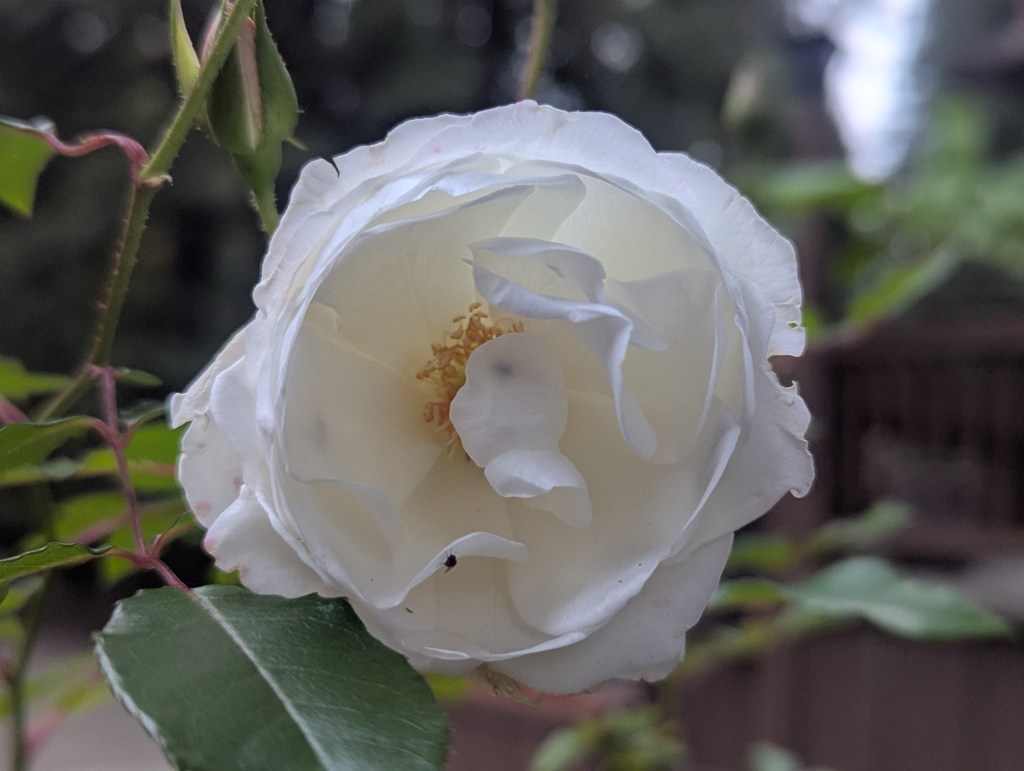
4. Albizia julibrissin, silk tree blooms white instead of pink, although, because it blooms on top of its high canopy, not much of it is visible from the ground. It finished blooming already, but some minor pruning recently revealed a few of these aberrant white flowers.

5. Rosa spp., rose is another of the few roses that were not expected to bloom after their unseasonable relocation. It seems to be a climbing type, with long and limber stems, and trusses of small flowers. I am impressed that it not only survived, but is growing so well.

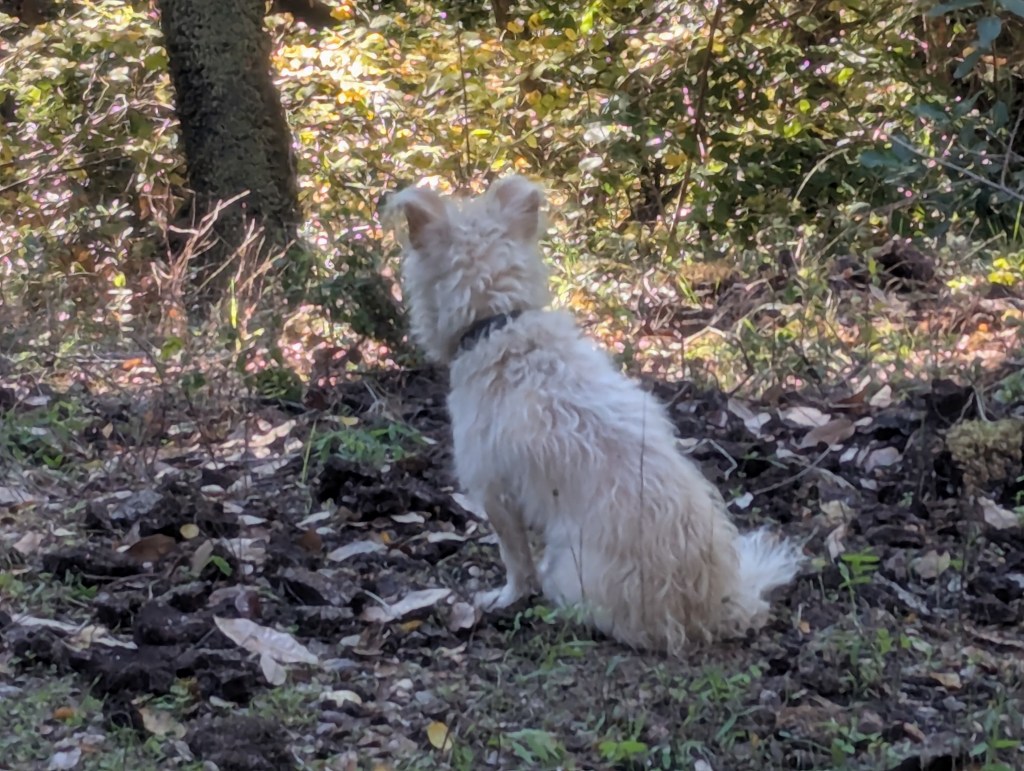
6. Heather fails to be as impressed by these developments that I find to be so surprising.

This is the link for Six on Saturday, for anyone else who would like to participate: https://thepropagatorblog.wordpress.com/2017/09/18/six-on-saturday-a-participant-guide/
Six on Saturday: Bud to Bloom

As mentioned last week, I got pictures of the roses that were in bud at the time, in bloom now. It will be autumn on Monday, though, and cool season annuals are replacing warm season annuals.

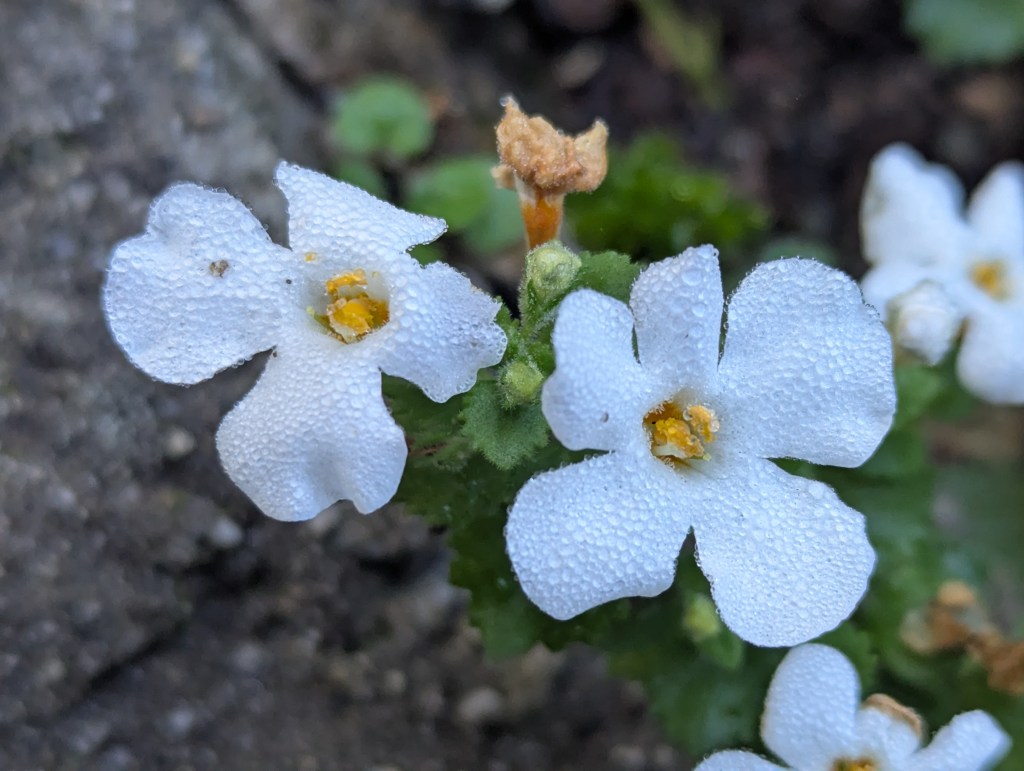
1. Unidentified Salvia was added to one of the landscapes by someone who was here for the summer, just prior to his departure. Now, I have no idea what it is. I could ask, but I feel that I should recognize it, or at least be able to identify it. I like its pure white bloom.

2. Viola is now in season, whether or not it seems as if it should be. We must rely on the date as much as the weather. While the weather suggests that it is still summer, the date insists that Monday will be autumn. These viola will be safe with several days of warmth.

3. Lobularia maritima, alyssum makes the transition from warm season annuals to cool season annuals difficult. It is still too pretty to remove. Technically, it could perform as a short term perennial until individual plants get too old. By that time, it can reseed itself.

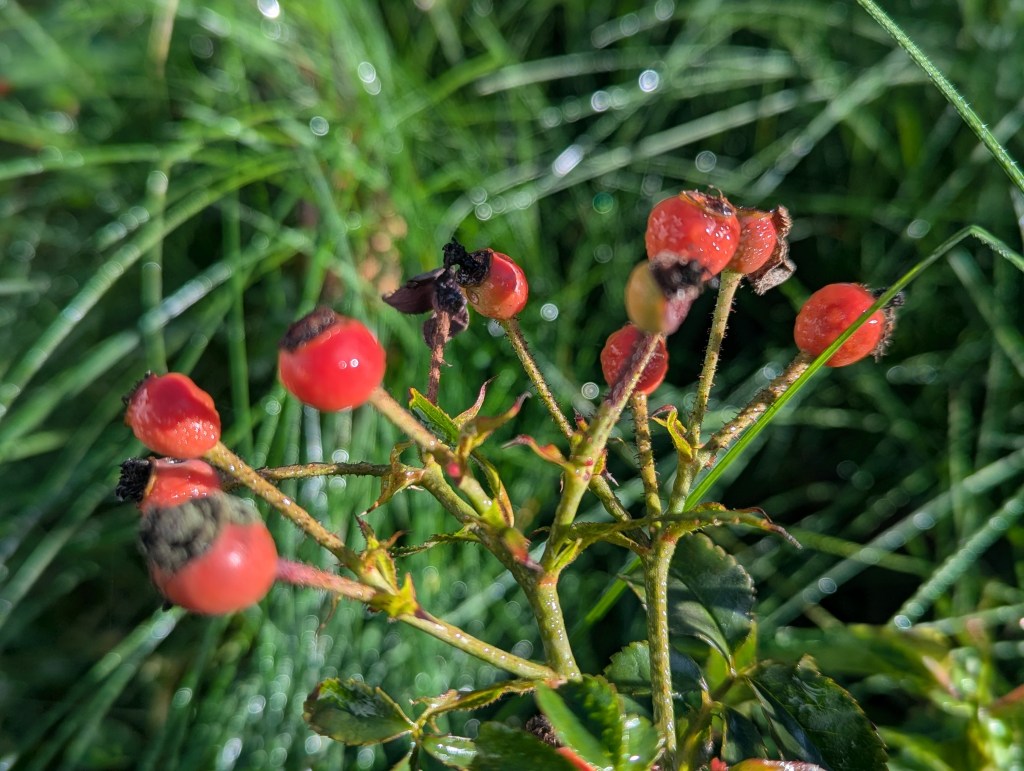
4. Rosa spp. of an unidentified cultivar produced a few notably plump rose hips like this to remind me that I have been negligent with deadheading. Now that subsequent bloom is unlikely, I could leave them to ripen. However, the new roses are continuing to bloom.

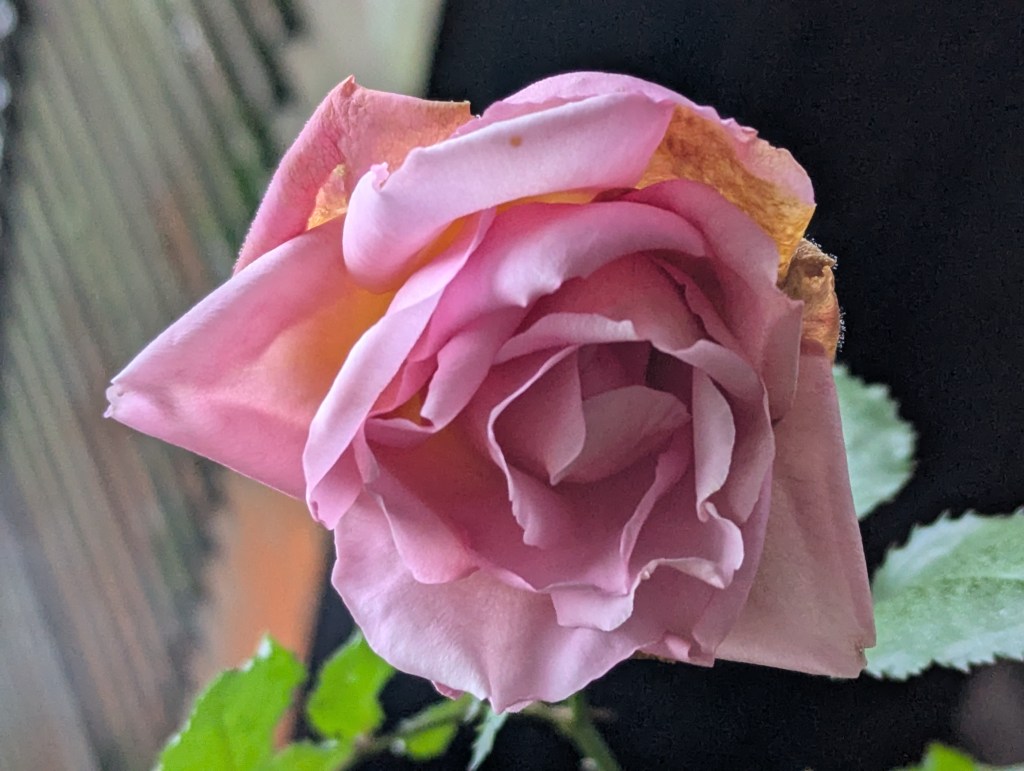
5. Rosa ‘Sheer Magic’ rose is one of the new roses that surprisingly bloomed after brutal and unseasonable relocation. This is the same flower that I posted a picture of while still in bud last week. A few more floral buds continue to develop but will lack time to bloom.

6. Rosa spp. of an unidentified cultivar is another of the new roses. This is also the same flower that I posted a picture of while still in bud last week. I have reason to believe that this rose is ‘Chrysler Imperial’, which should be red, but very often blooms reddish pink.

This is the link for Six on Saturday, for anyone else who would like to participate: https://thepropagatorblog.wordpress.com/2017/09/18/six-on-saturday-a-participant-guide/
Six on Saturday: More Impressive Roses

Again, it makes sense at the end.

1. Rain dampened the landscapes for the first time since last spring. It was not much and did not last for long, but was fun while it lasted. Actually, it was barely more than drizzle and made only a few tiny and grungy puddles. Pavement had not been rinsed in months.

2. Agapanthus orientalis, lily of the Nile confirms the end of summer by finishing bloom and necessitating deadheading. One last bloom looks silly and lonely at the center of this big colony. It may be cheap and common, but lily of the Nile happily blooms for months.

3. Pelargonium X hortorum, zonal geranium has left the building. The Post Office looks better without its shabby planter boxes that were so predictably bashed by parking cars. Some believe that we must replace them with other prominent potted plants. I disagree.

4. Rosa ‘Sheer Magic’ rose was actually labeled as such. I misidentified another rose that was blooming last week as such because I thought that it looked about right. I found the label afterward. This is the only one of four recycled roses that retained its original label.

5. Rosa, rose is one of the other three recycled roses that did not retain its original label. It looks as if it is about to bloom red. Perhaps I will get a picture of it for next week. Any color would be nice from roses that were not expected to survive an untimely relocation.

6. Rosa ‘Proud Land’ rose is not one of the four relocated roses, but is from my own rose garden. It was too pretty to not show off. I planted it with two others in about the winter of 1984 or 1985. Although I did not choose it, ‘Proud Land’ is likely my favorite red rose.

This is the link for Six on Saturday, for anyone else who would like to participate: https://thepropagatorblog.wordpress.com/2017/09/18/six-on-saturday-a-participant-guide/
Six on Saturday: Impressive Roses

It will make more sense at the end.

1. Pelargonium citrosum, citronella, like the scented geranium that I featured last week, is one of three scented geraniums here that technically remains unidentified. This name is merely a guess. It is most aromatic, but its bloom is not as pretty as that of the others.

2. Amaryllis belladonna, naked lady is not so cliche or mundane with white bloom. I am so fond of these that I separated their bulbs for relocation to a distinct colony, as well as my home garden. There are not many, so it will be a while before there are any to share.

3. Passiflora edulis, passion fruit vine blooms nicely, but with perpetually shabby foliage and clingy tendrils. Its flowers are really more purplish than this one seems to be in this picture. I have no idea what cultivar this is or even if I like it, but I want to see if it fruits.

4. Anemone hupehensis, Japanese anemone does not bloom quite as white as it seems to be in this picture. It is not exactly blushed with pink either. It is just dingy. I know that a few happier pups in more favorable conditions will eventually bloom more impressively.

5. Rosa spp., rose might not look like much to brag about, but is blooming like this after getting hacked back and removed from its original garden during the middle of summer. Its survival alone is impressive. Its bloom is even more impressive. It is not the only one.

6. Rosa spp., rose is one of the others. A third has floral buds that will likely bloom prior to next Saturday. There are four altogether, so only one is not trying to bloom yet. One is ‘Sheer Magic’, perhaps the pink one above. The other three lack identification otherwise.

This is the link for Six on Saturday, for anyone else who would like to participate: https://thepropagatorblog.wordpress.com/2017/09/18/six-on-saturday-a-participant-guide/
Six on Saturday: Major, Minor & Unidentified

Two of my six for this week were purchased, which is rare in my garden. Two were gifts. Two were acquired by other questionable means.

1. Sorbus americana, American mountain ash does not conform to my theme. It is about average and identifiable. I merely wanted to show it off because it is the only seedling to grow from several seed. It can be reasonably productive without another pollinator tree.

2. Cerinthe major, honeywort grew from seed from Tangly Cottage Gardening. This is its first bloom here. Because I did not sow all the seed this year, I could sow more next year. If it self sows here, it will likely only do so within gardens which are generously irrigated.

3. Vinca minor ‘Alba Variegata’, small white variegated periwinkle was another gift from Tangly Cottage Gardening. Although white is my favorite color, these little white flowers do not look very impressive against the background of their yellowish variegated foliage.

4. Pelargonium graveolens, scented geranium, like two other scented geraniums here, is unidentified. I think that the other two are lemon and rose scented geraniums. This one has a less distinct or identifiable foliar aroma, but has prettier and more colorful bloom.

5. Dahlia is also unidentified. I know what it is not, though. It is most definitely not any type of assorted dinnerplate dahlia, which I purchased it as. Although pretty, its flowers are only about three inches wide. Foliage stands about as tall as that of a bedding dahlia.

6. Canna is the third unidentified subject of these six; but it is one of the most important of the many Canna here. It is a souvenir from the funeral of an old friend two years ago. It did not bloom last year, so this is the first time that I confirmed that it blooms yellow.

This is the link for Six on Saturday, for anyone else who would like to participate: https://thepropagatorblog.wordpress.com/2017/09/18/six-on-saturday-a-participant-guide/
Six on Saturday: Leave It To Beaver

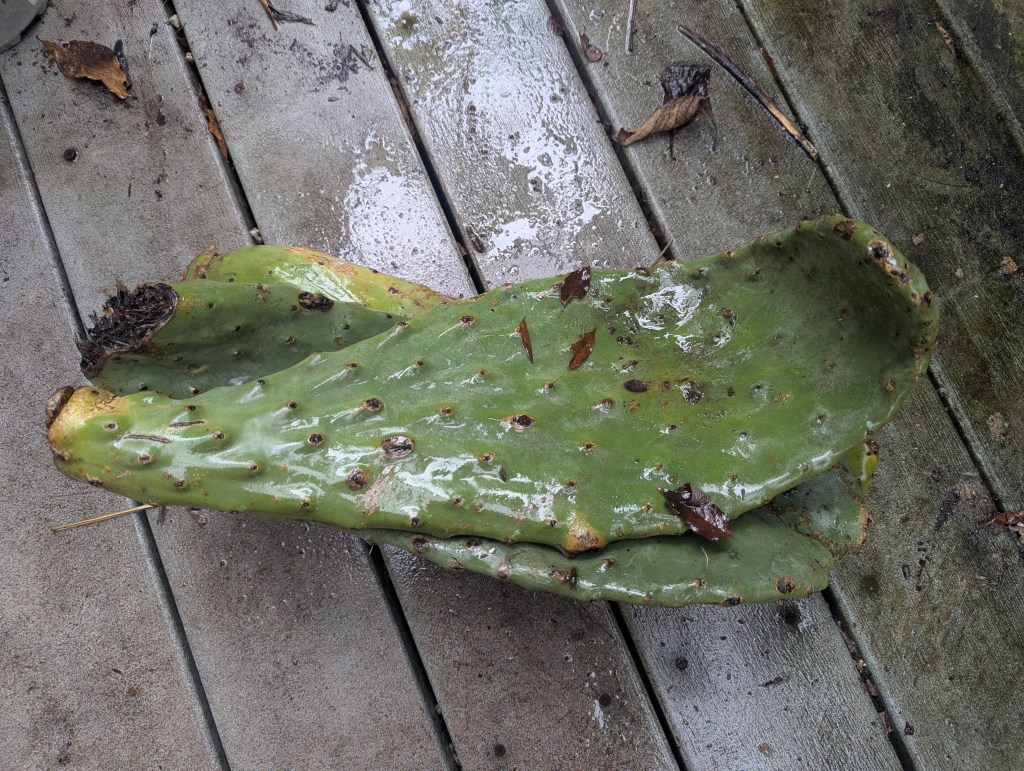
Squirrels have been chewing some of our foliar plants since spring. Now that they found our banana trees, I am more concerned. Their damage is more severe and impossible to ignore.

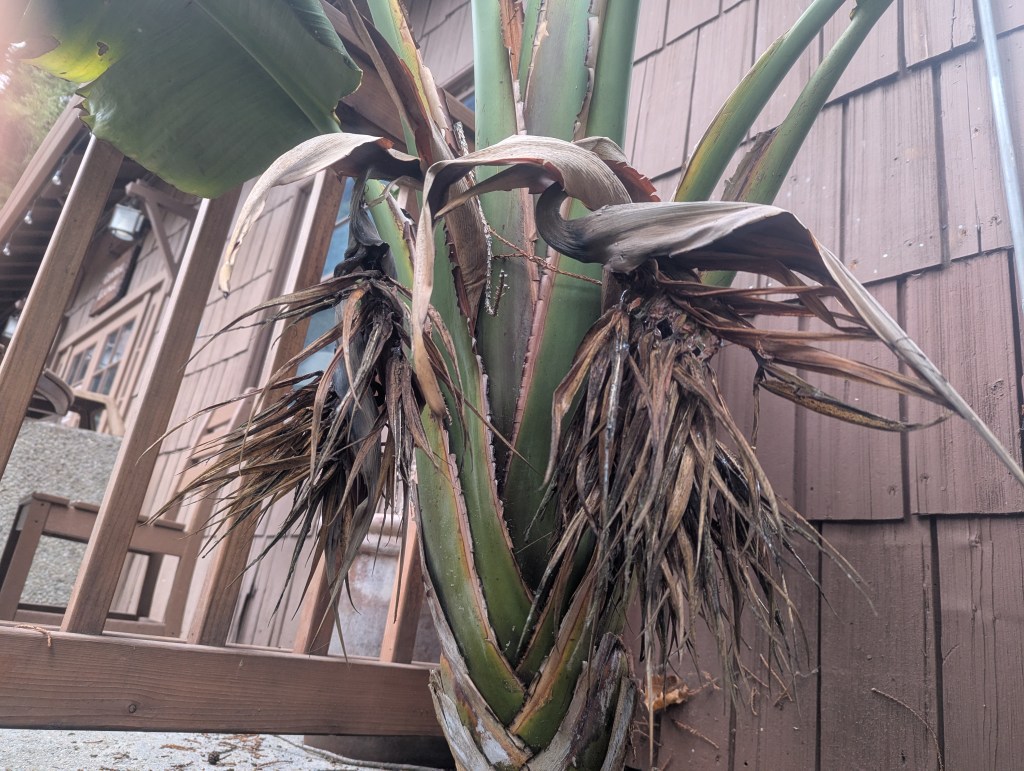
1. Musa acuminata ‘Golden Rhino Horn’ banana got chomped by a squirrel, right where its new leaf is unfurling. A Musa acuminata ‘Ever Red’ banana got chomped at its base! Squirrels are also chomping other cultivars of banana and two species of Chamaedorea.

2. Musa ingens, oem, or giant highland banana demonstrates what a young banana tree should look like without squirrels chomping on them like little arboreal demon beavers. I will be furious if I see any more damage on any of these more prominent banana trees.

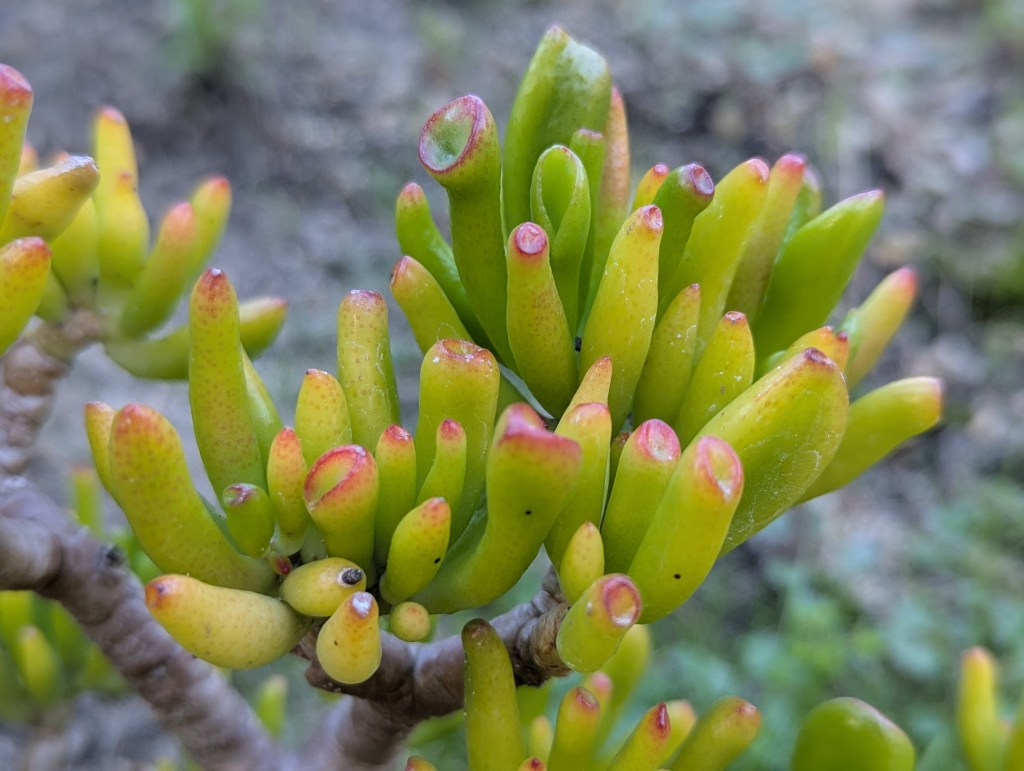
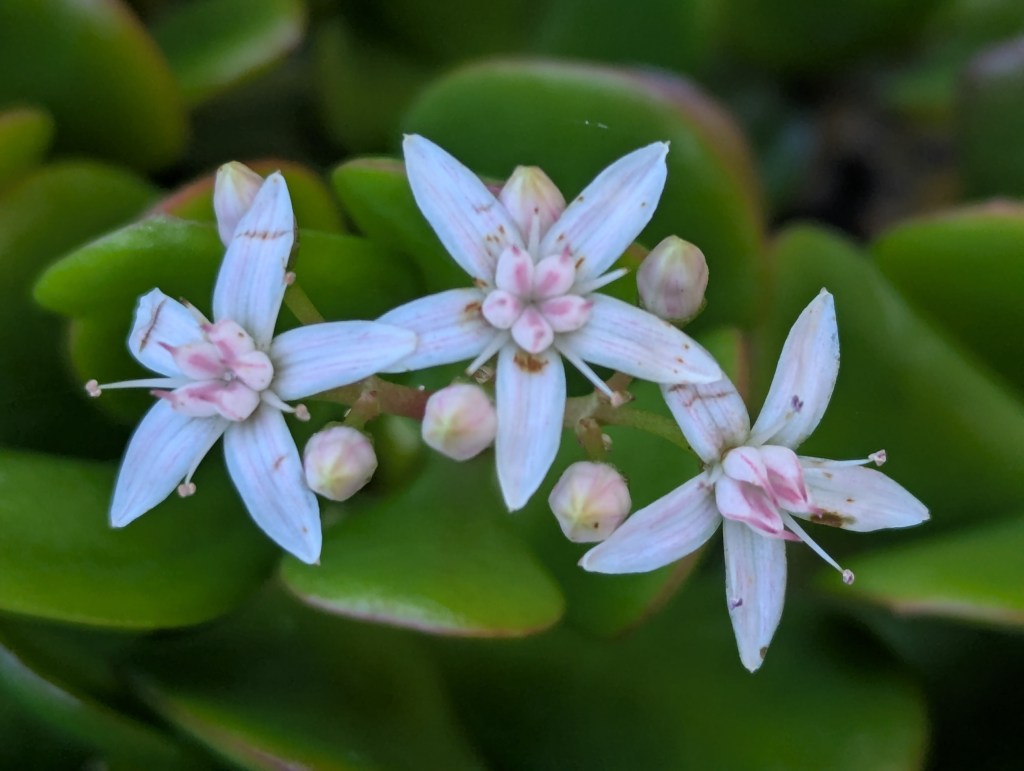
3. Crassula ovata, jade plant is not often considered to be a ‘foliar’ plant, but happens to function splendidly as such by obscuring the otherwise bare bases of several of the small banana trees. It all grew from pruning scraps from one big, old and sculptural specimen.

4. Hedychium coronarium ‘Vanilla Ice’ ginger was chomped by squirrels as soon as new growth began to develop last spring. Fortunately, it recovered. Although it appears to be ‘Vanilla Ice’, and likely is, I was told that its flowers are white rather than vanilla yellow.

5. Alocasia gigantea, elephant ear was also chomped by squirrels as soon as it started to regenerate foliage last spring, and also recovered. It is quite large now. If its foliage were not so simple, it would be as striking as that of the old fashioned Philodendron selloum.

6. Philodendron selloum ‘Lickety Split’ philodendron produces the striking foliage of the species, but not the form. Its multiple trunks are so stout that I have not seen them yet. I suspect that individual leaves do not get very big either. Squirrels have ignored it so far.

This is the link for Six on Saturday, for anyone else who would like to participate: https://thepropagatorblog.wordpress.com/2017/09/18/six-on-saturday-a-participant-guide/

Six on Saturday: Construction Site

An old deck at work is presently being replaced. Potted cannas that resided on it needed to be moved. Camellias below it are in the way, but safe for now. It is quite a big project.

1. Camellia japonica, camellia under the old deck are temporarily getting more sunlight than they are accustomed to. There are about eight. This will not last long, though, until the new deck replaces the old. The disheveled irrigation tubing was for pots on the deck.

2. Camellia japonica, camellia at the far end of this row is somehow undamaged by this accumulation of debris from the dismantled deck above. I am impressed. Some extent of damage is expected from such a project, particularly with so many camellias in the way.

3. Canna indica, canna was looking good on the deck across the road in the background. Not only were they removed, but because of a realistic concern that they promote decay, they will not return to the new deck. For now, they were straightened into position here.

4. Canna indica ‘Australia’ canna is probably the boldest of the five even without bloom. The others are ‘Wyoming’, ‘Cleopatra’, ‘Stuttgart’ with an unidentified cultivar with large red bloom, and ‘Inferno’ with a notably tall but unidentified cultivar of Canna musifolia.

5. Phoenix roebelenii, pygmy date palm paired on another area of the deck will also need to be removed prior to a second phase of reconstruction. Unfortunately, I do not know if these big old pots can be moved intact. Both are deteriorated, fractured, and very heavy.

6. Pelargonium X hortorum, zonal geranium should also be removed, but from another situation. They were originally installed to hold posts for the signs that are now attached to the fence behind them. Now they just get bashed by parking cars. One is already gone.

This is the link for Six on Saturday, for anyone else who would like to participate: https://thepropagatorblog.wordpress.com/2017/09/18/six-on-saturday-a-participant-guide/
Six on Saturday: Pestilence

Molluscs, rodents, insects, virus, fungal pathogens and an identified disease that causes gummosis; we have it all. I know that it is nothing to brag about, but it makes a good six.

1. Tamarindus indica, tamarind seedlings are popular with slugs. Not much else here is. Weirdly, slugs do not seem to consume the foliage. They only coat it with slime that does not rinse off. The foliage eventually deteriorates. What is the point of this odd behavior?

2. Prunus armeniaca, apricot trees sometimes exude gummosis as a symptom of disease or boring insect infestation. I can not see what caused this, and do not care to. I will just prune it out. I know that it will not be the last time. Gummosis is common with apricots.

3. Chamaedorea plumosa, baby queen palm was chewed so badly by some sort of rodent that it will not likely survive. I suspect that a squirrel did this. I have not seen any rats or their damage since Heather arrived. This is one of only two rare baby queen palms here.

4. Ensete ventricosum ‘Maurelii’ red Abyssinian banana was initially infested with aphid and associated mold. The aphid disappeared, as it typically does, but the mold remained and ruined the currently emerging leaf. I hope that the primary bud within does not rot.

5. Passiflora racemosa, red passion flower vine has been defoliated a few times just this year by a few of these unidentified caterpillars. The caterpillars leave after they consume all foliage, but then return shortly after the foliage regenerates, while I am not watching.

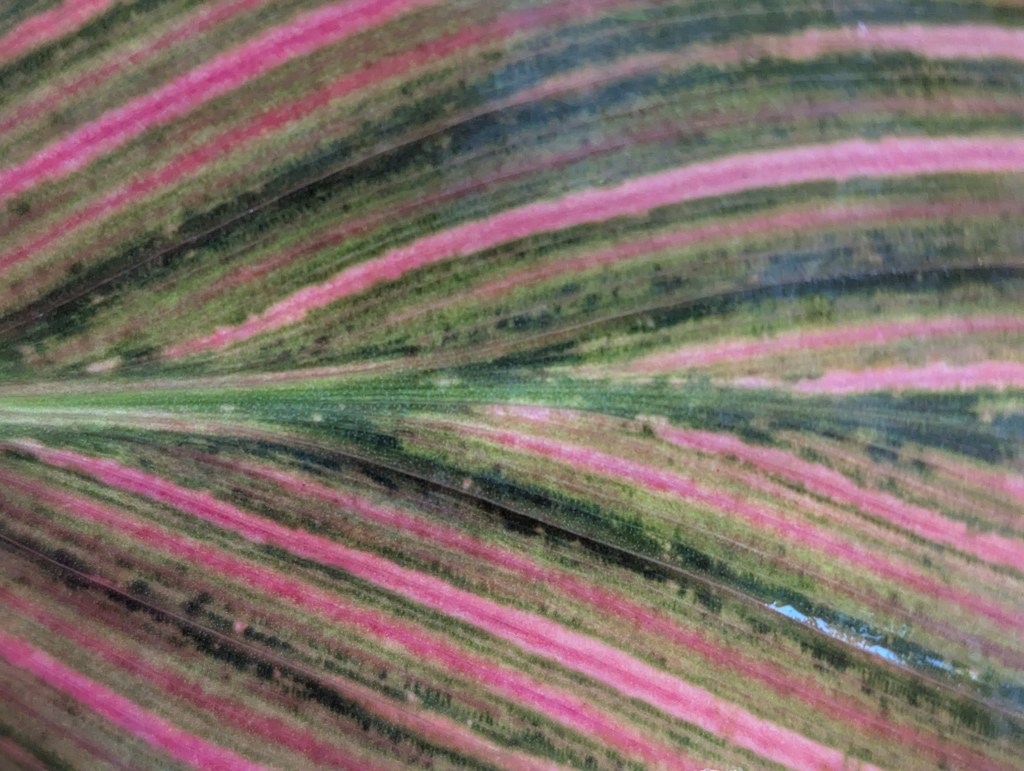
6. Canna indica ‘Australia’ canna is infected with canna mosaic virus. Several others are also, although they do not express symptoms as colorfully as ‘Australia’ does. Most other cannas are isolated from this virus within their landscapes. I am infuriated nonetheless.

This is the link for Six on Saturday, for anyone else who would like to participate: https://thepropagatorblog.wordpress.com/2017/09/18/six-on-saturday-a-participant-guide/
Six on Saturday: 4:00

Four o’clock has been unusually pretty in bloom. It self sows almost enough to become a weed, but I am fond of it.

1. Mirabilis jalapa, four o’clock blooms in various shades of pink, including one that can be fragrant about 4:00 and into evening. It alternatively can bloom white, red, magenta, yellow, or with striped combinations of colors. Different colors may bloom on one plant.

2. Mirabilis jalapa, four o’clock does not exhibit very much variation of floral color here, though. This yellow bloom is one of only three variations. I thought that I noticed simple red bloom through previous summers, but can find none now. I would like to find white.

3. Mirabilis jalapa, four o’clock demonstrates what can occur when the two other colors here combine. It is the third of only three variations that I am aware of. From a distance, it seems to be peachy orange. Some of its flowers are just like the first two pictures here.

4. Nerium oleander, oleander that blooms pink mingles with the oleander which blooms white that I posted a picture of three weeks ago. Oleander is so cheap and common here that, even with oleander scorch, it is still the primary shrubbery for freeway landscapes.

5. Fuchsia magellanica, fuchsia is easy to miss where it is wedged between healthier and prettier hydrangea and canna. I should grow copies of it elsewhere. It would probably be bigger with fuller foliage where it gets more water than the four o’clock and oleander get.

6. Rosa spp., rose is in a rose garden that is nowhere near the four o’clock, oleander and fuchsia, but is too pretty to omit. I believe that it is ‘Double Delight’. It is nicely fragrant. Flowers bloom white with red edges, but fade to mostly pinkish red, just as they should.

This is the link for Six on Saturday, for anyone else who would like to participate: https://thepropagatorblog.wordpress.com/2017/09/18/six-on-saturday-a-participant-guide/