Six on Saturday: Eucalyptus

Eucalyptus has a bad reputation. Regardless, the worst of the genus and its only cultivar that I am aware of inhabit my gardens. Four less offensive species inhabit a landscape at work. Actually, several species of Eucalyptus are not only appropriate for home gardens, but are also naturally very well adapted to local chaparral climates. Their bad reputation is an unfortunate result of the bad behavior of merely one of hundreds of species, which happens to be the second of these Six. Eucalyptus camaldulensis, red gum allegedly also contributed to that reputation, but more so in Southern California than here, as it is rare locally. Half of these six show sessile juvenile foliage, rather than petiolate adult foliage. Pictures of high foliage were taken from significant distances.

1. Eucalyptus globulus ‘Compacta’, bushy blue gum is my least favorite eucalyptus, since it is a contrarily runty cultivar of an otherwise grand species, but here it is in my garden.

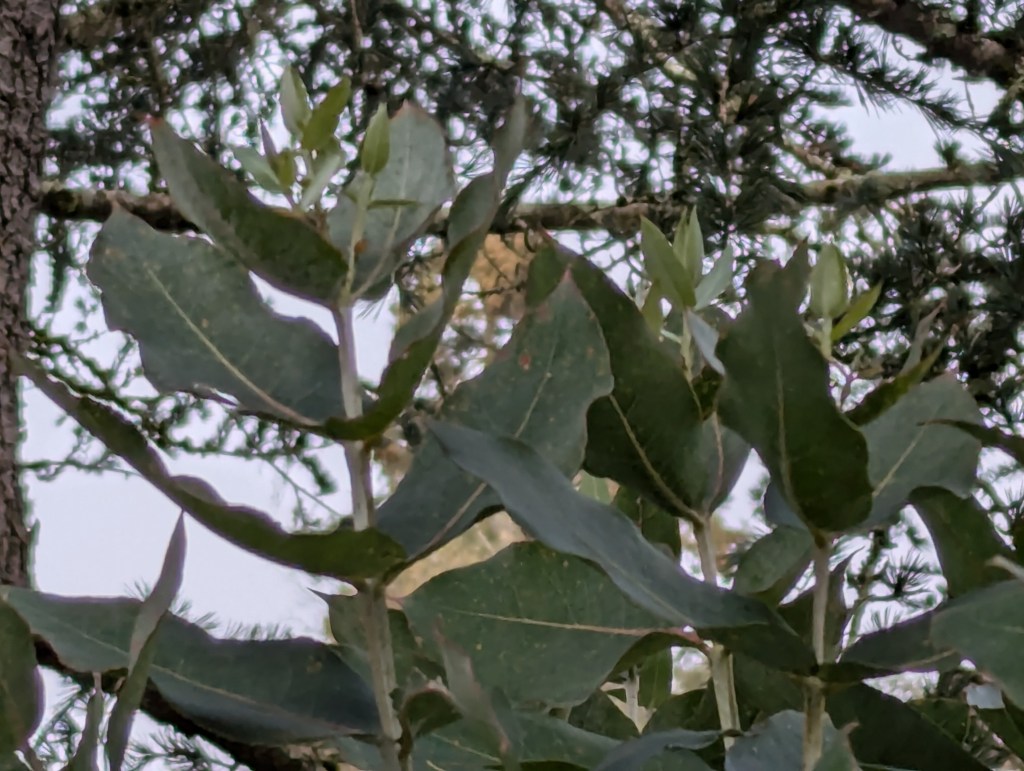
2. Eucalyptus globulus, blue gum is too grand for my garden, though, so can not develop a natural form. It is pollarded for its aromatic juvenile foliage, but has a few adult leaves.

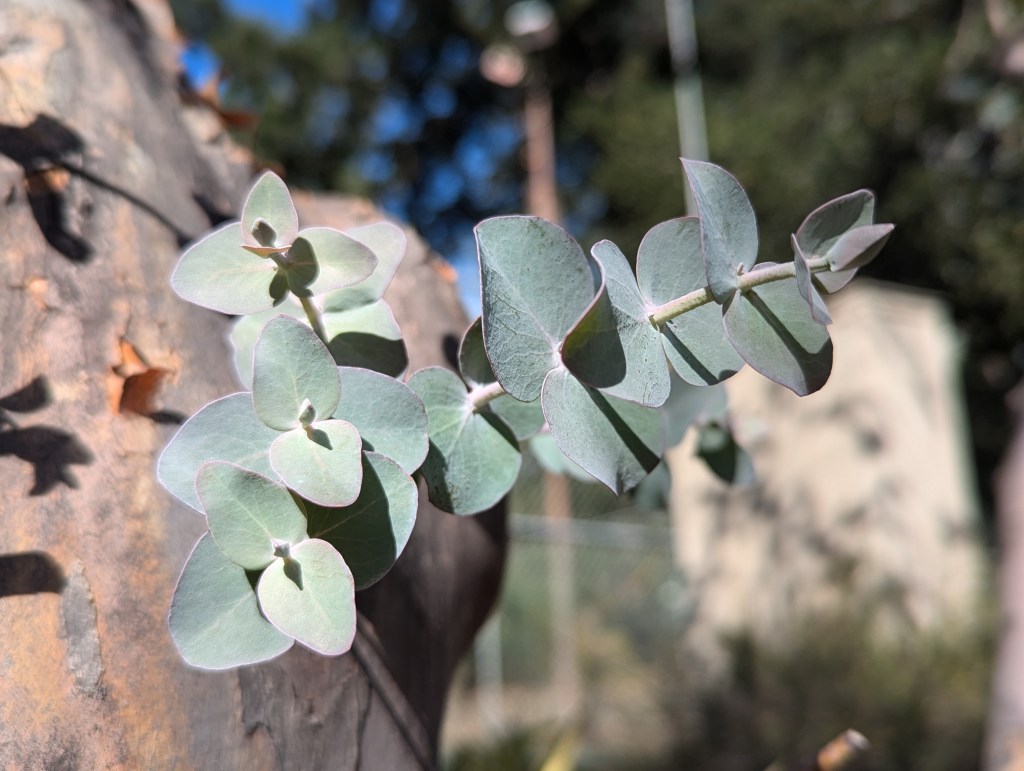
3. Eucalyptus cinerea, silver dollar tree, which is not the same as silver dollar gum, may be confused with silver mountain gum, since their botanical names are interchangeable.

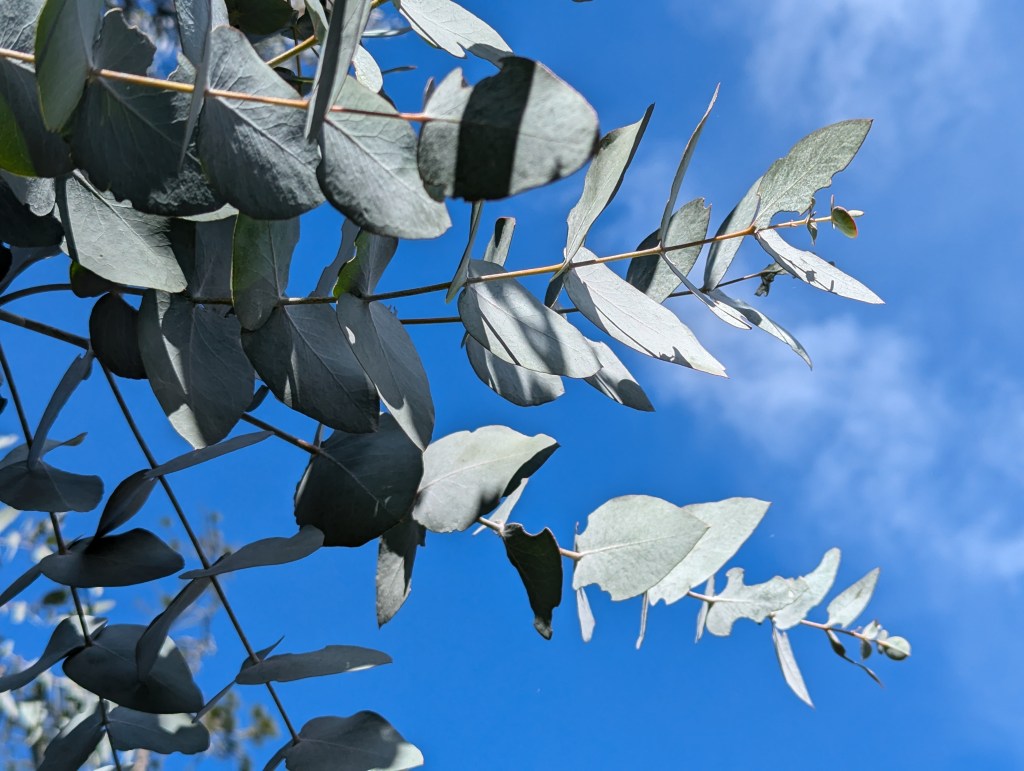
4. Eucalyptus pulverulenta, silver mountain gum is very distinct from silver dollar tree. I find their confusion to be annoying. Botanical nomenclature is designed for simplicity.

5. Eucalyptus sideroxylon, red ironbark grew from a small root sucker with merely a few roots. I got it from a stump in another landscape, and am impressed by its performance.

6. Eucalyptus citriodora, lemon gum is delightfully aromatic, and, as its name suggests, is rather lemony. Its foliage will soon be too high on lanky bare trunks to reach, though.

This is the link for Six on Saturday, for anyone else who would like to participate: https://thepropagatorblog.wordpress.com/2017/09/18/six-on-saturday-a-participant-guide/
Six on Saturday: Bluem

Blue is the rarest floral color. Furthermore, many flowers that appear blue are somewhat purplish, or perhaps more purple than blue. These six all look blue to me, although I can not see blue very well.

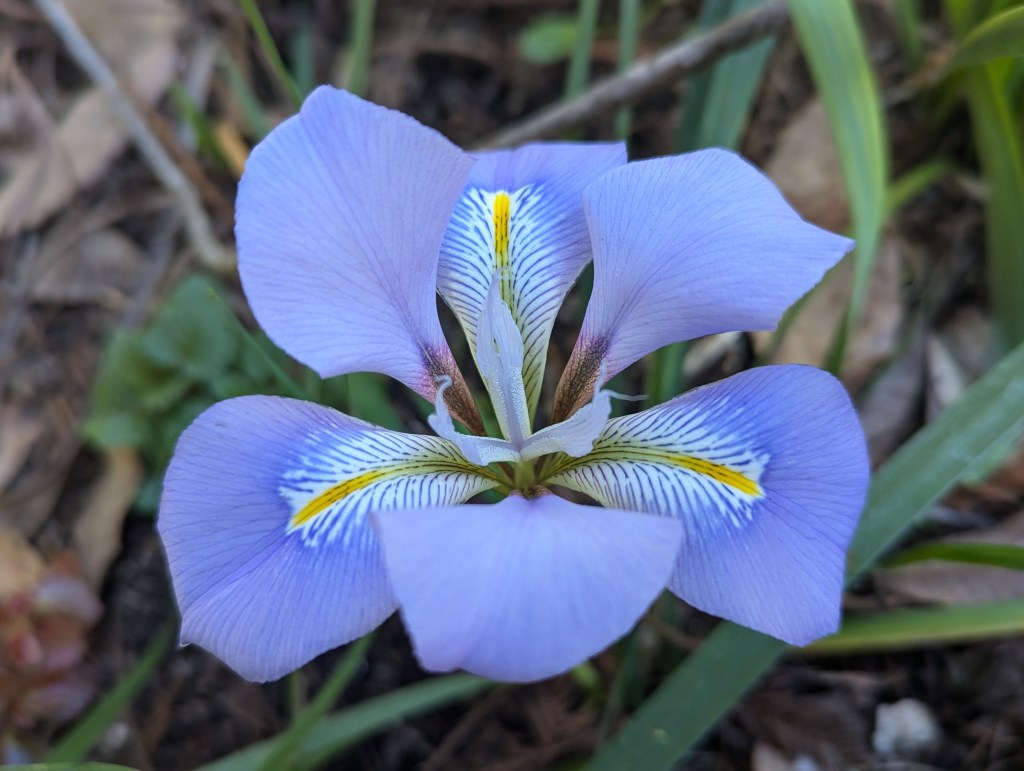
1. Iris unguicularis, Algerian iris has been blooming long enough for a third appearance here in four months. That may seem to be redundant, but it is my favorite for this week. I still do not know when to expect its last blooms. It is from Tangley Cottage Gardening.

2. Viola cornuta, viola exhibits more insect damage than I was aware of when I took this picture. Well, this is embarrassing. I do not select annuals at work, but I do enjoy taking credit for them. These bloom longer here than they would within the Santa Clara Valley.

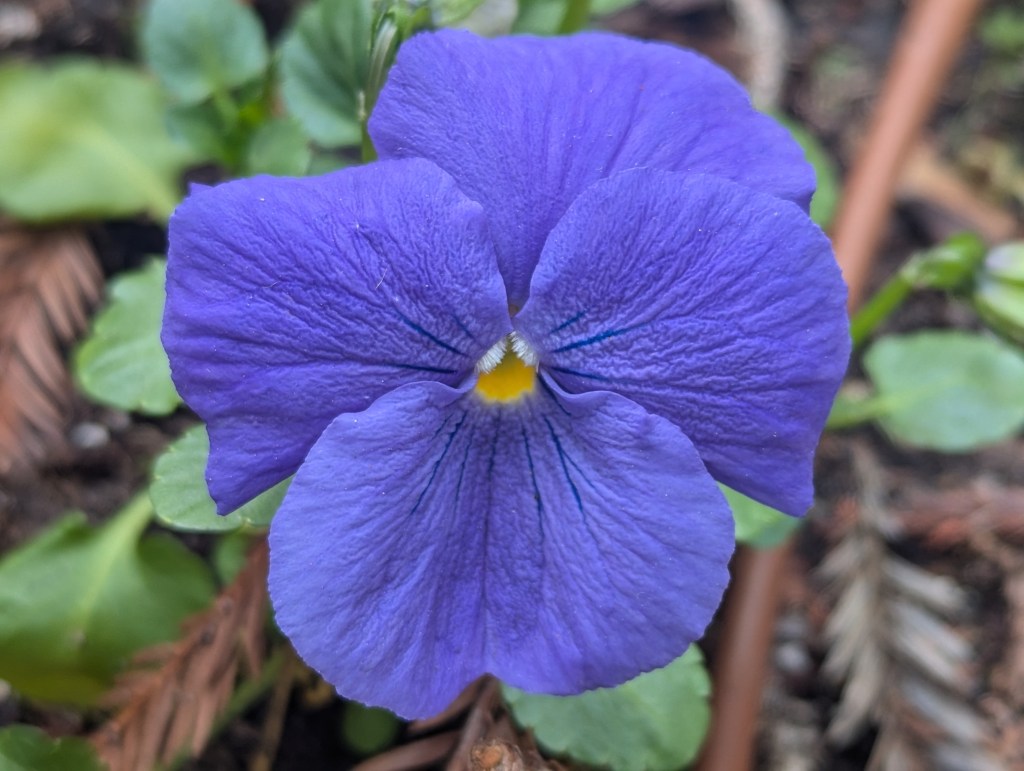
3. Viola X wittrockiana, pansy also performs better here than in the Santa Clara Valley. These blue pansies alternate with white pansies, which I prefer; but I took this picture to conform to the blue theme. We have not yet found any color that is not appropriate here.

4. Hyacinthus orientalis, hyacinth blooms thinly on floppy stems in partial shade, but is impressively reliably perennial. We should probably move the bulbs while dormant, but would prefer to instead remove an unwanted bay laurel tree that shades their landscape.

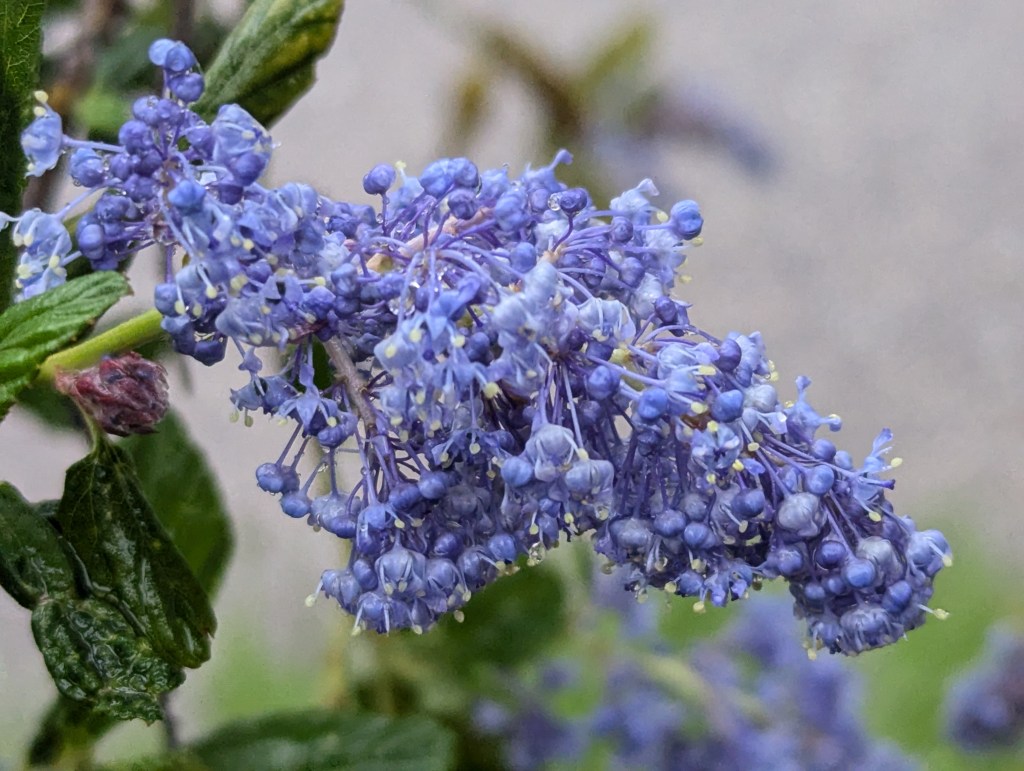
5. Ceanothus thyrsiflorus, California lilac is both locally native and added to at least one of our landscapes. Unfortunately, it is not easy to accommodate. It grew too large for its particular applications, but is difficult to prune properly without removing its best parts.

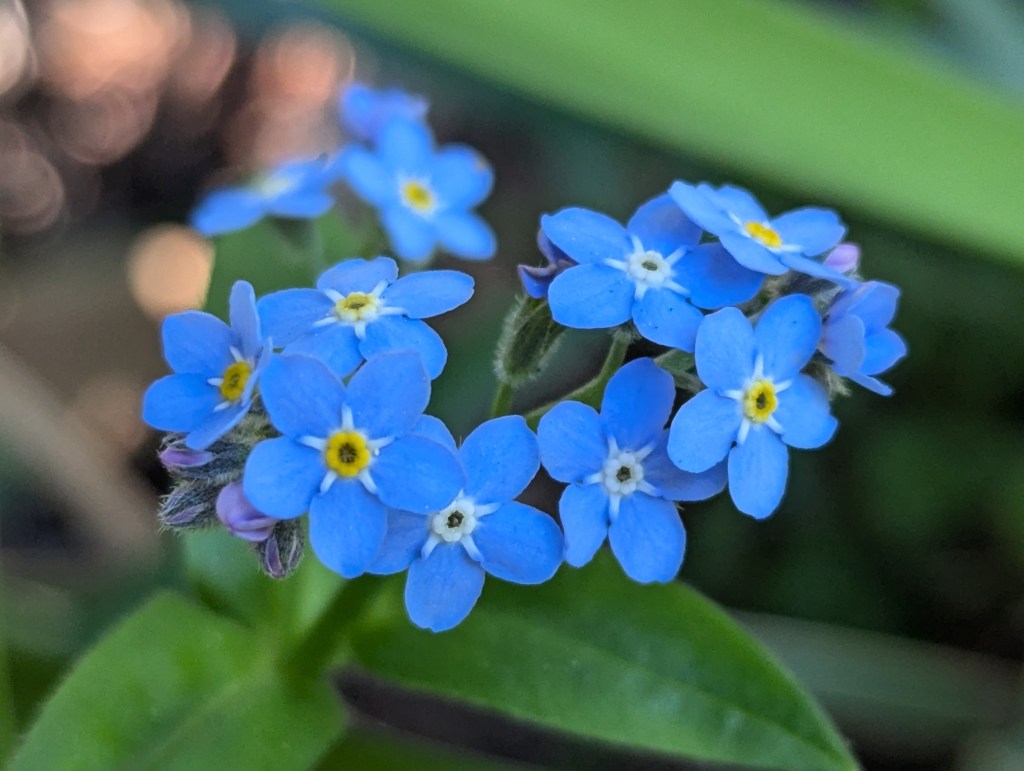
6. Myosotis sylvatica, forget-me-not is naturalized here, but not too aggressively so. It is pretty near but not within cultivated landscapes, where it can benefit from supplemental irrigation without incurring damage from weeding, raking and other gardening activity.

This is the link for Six on Saturday, for anyone else who would like to participate: https://thepropagatorblog.wordpress.com/2017/09/18/six-on-saturday-a-participant-guide/

Six on Saturday: Late Winter Color

Color is relatively scarce as spring bloom is only slowly beginning. A bit of winter bloom remains. Not all flowers bloom earlier here than in other regions. Some could actually be a bit later than expected.

1. Lemna minor, duckweed does not grow much during cool winter weather, but lingers until sloshed by rain. After surviving through a dry January, it finally succumbed to rain during early February. Its monochromatic green revealed this more vibrant color below.

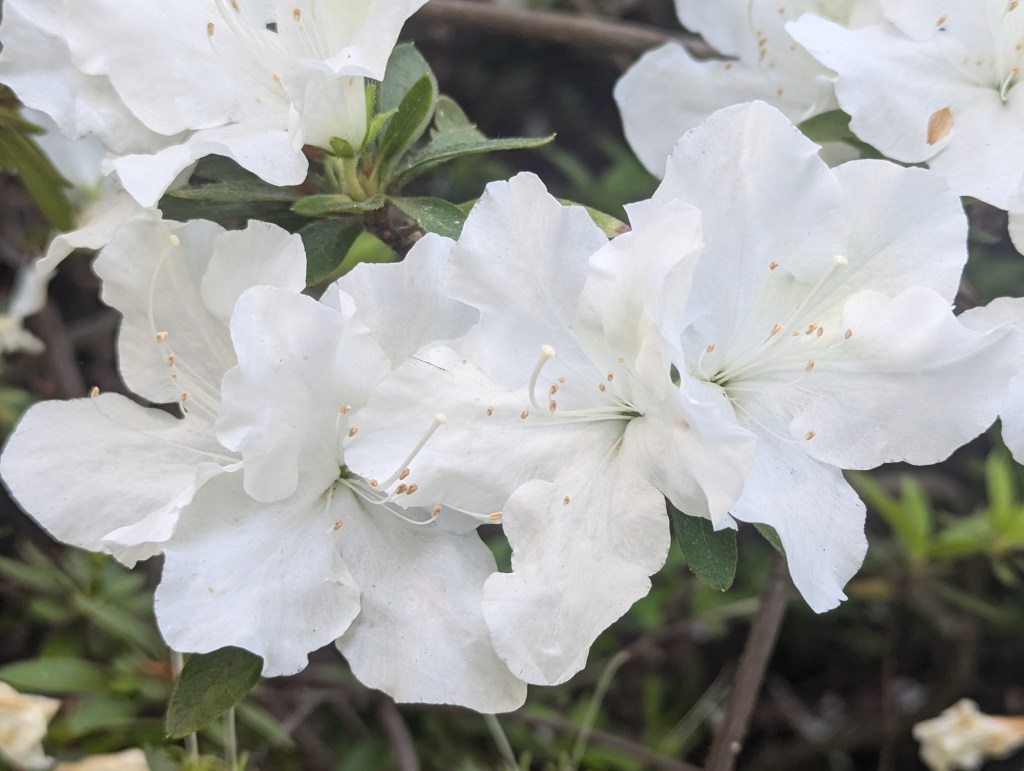
2. Viburnum tinus, laurustinus is not among my favorites. I seriously do not understand why it is as popular as it is. Nonetheless, several feral specimens inhabit some of the less refined landscapes. I do appreciate how the white bloom of this specimen is not blushed.

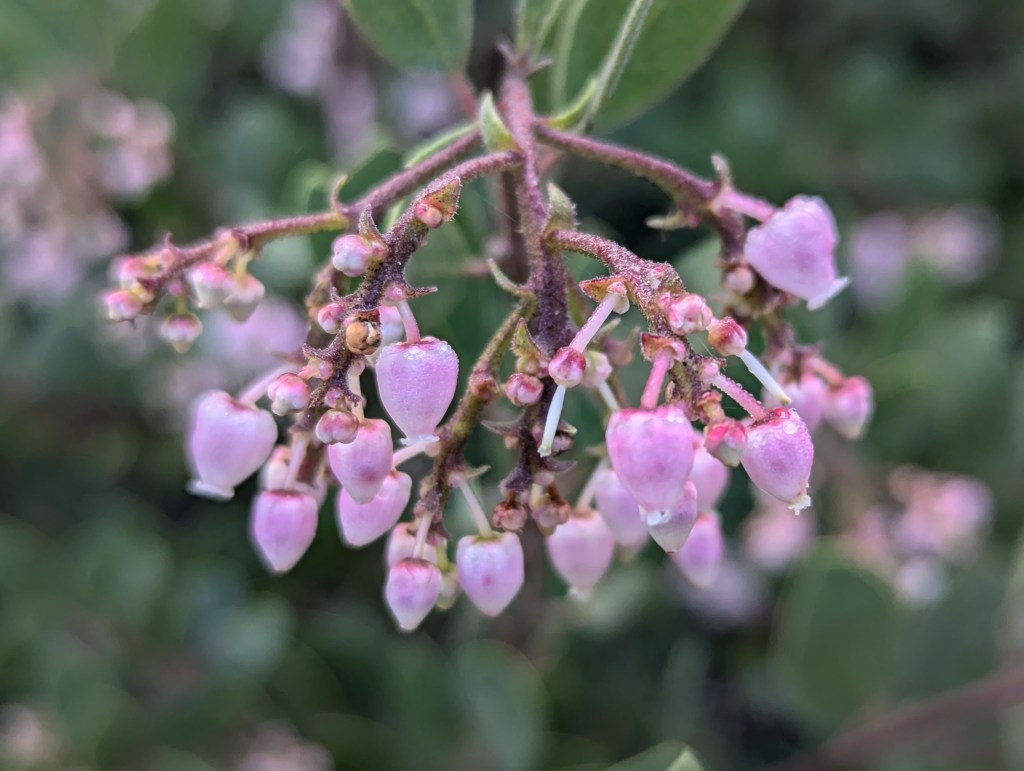
3. Arctostaphylos X densiflora ‘Howard McMinn’ manzanita qualifies as a locally native species, but is actually an unnatural hybrid of two species that, although native close by, are not locally native. I should not be so critical. It performs well within our landscapes.

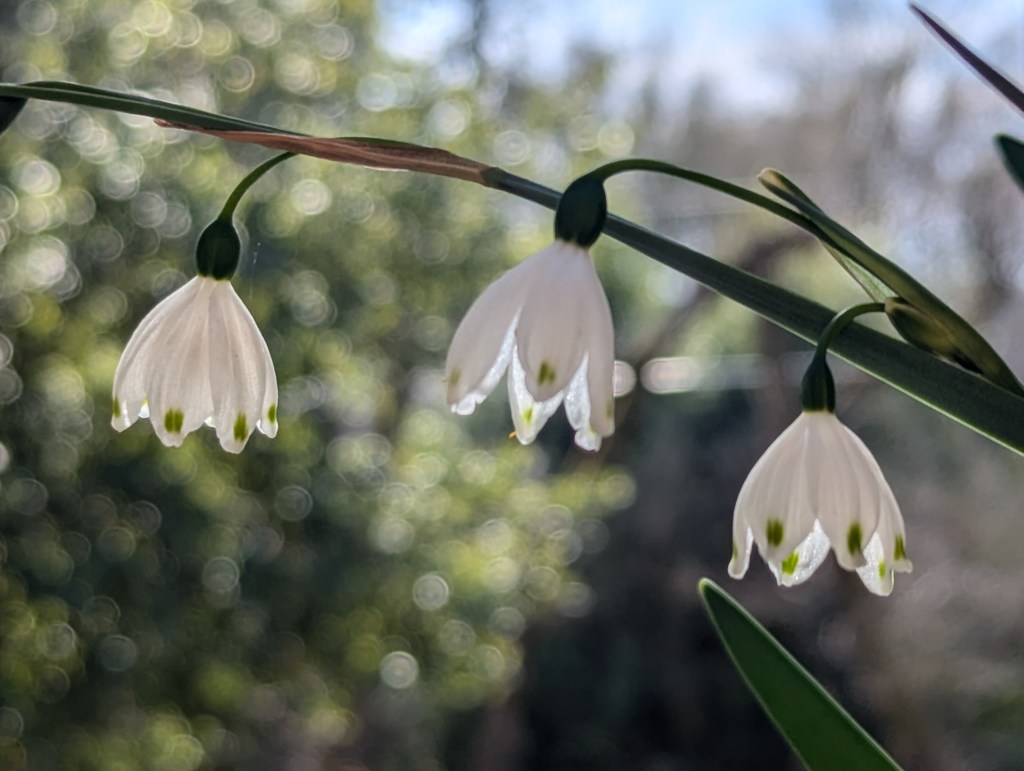
4. Leucojum aestivum, summer snowflake does not wait for summer to bloom. We know it as snowdrop because it blooms when real snowdrop, Galanthus nivalis, would bloom. There is no confusion since real snowdrop is very rare here. I have actually never seen it.

5. Iris X germanica ‘Rosalie Figge’ bearded iris is redundant to a similar picture two and a half months ago, but continues to bloom. I am beginning to wonder if it ever stops now that it has been doing so continually for so long. Fortunately, no one is bored with it yet.

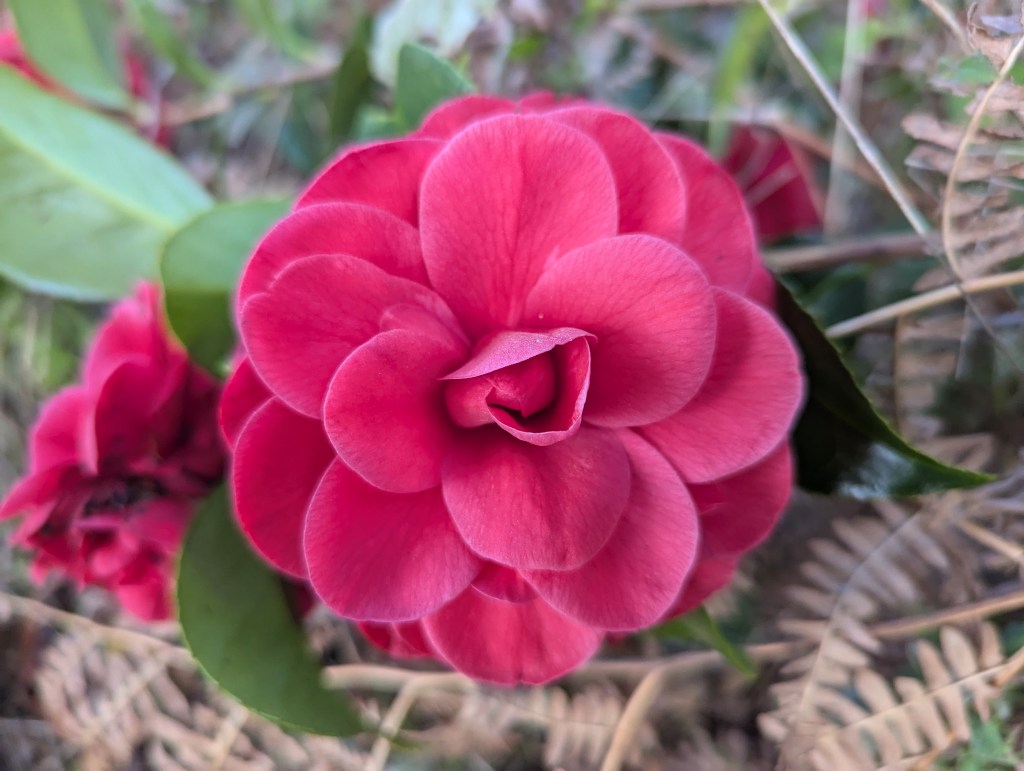
6. Camellia japonica, camellia is a different unidentified cultivar than that which posted with ‘Rosalie Figge’ bearded iris two and a half months ago, so is not so redundant. Most camellias were not blooming then, and even now, many are only beginning their bloom.

This is the link for Six on Saturday, for anyone else who would like to participate: https://thepropagatorblog.wordpress.com/2017/09/18/six-on-saturday-a-participant-guide/
Six on Saturday: Scion Exchange

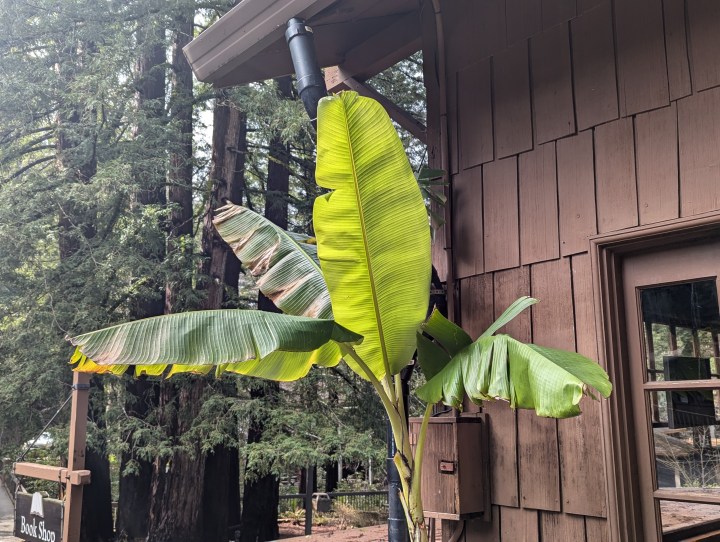
‘Beurre d’Anjou’ pear has been elusive. I visited the Scion Exchange of the Monterey Bay Chapter of the California Rare Fruit Growers to find scions, but none were unavailable. I got the few other scions and cuttings of the first three of these Six instead. That was two weeks ago. Some other deciduous vegetation is beginning to demonstrate that there was not much time to spare. Oddly, one banana tree did not bother with dormancy this year. It seemed to be comfortably sheltered.

1. Pomegranate, persimmon, caprifig, white mulberry and black mulberry cuttings are a bit too numerous to cite with their botanical and cultivar names. Most lack labels since I can identify them as they grow. They are plugged into the same can to occupy less space.

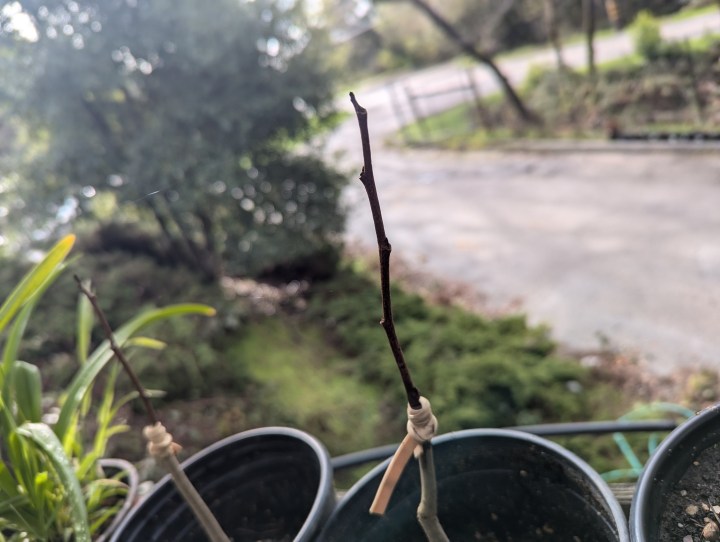
2. ‘Allegheny’ pawpaw scion is hopefully happily grafted onto seed grown understock. It is longer, with more buds than I would have preferred, but is rather thin. ‘Mango’ to the left is even dinkier. Three other small seed grown trees remain ungrafted without scions.

3. ‘Seckel’ and ‘Beurre d’Anjou’ pear were what I came for. I did not find ‘Beurre d’Anjou’ but this is ‘Seckel’. The quince understock is big enough for a pair of cleft grafted scions. Basal scraps from the scions were plugged as cuttings. Redundancy could be useful later.

4. Sambucus racemosa, red elderberry reminds me that winter dormancy will be ending soon for most deciduous plants. Grafting, bare root planting and dormant pruning must therefore be done sooner. Norway maple might be the last deciduous species to refoliate.

5. Musa acuminata, banana trees look so shabby after even minor frost that their foliage gets cut back. This unidentified specimen stayed nicely foliated under the eave and close to those uninsulated walls of the associated building, which happens to be a coffee shop.

6. This happens to be on the menu board of the coffee shop, which happens to be within view from where the banana tree that did not get frozen is situated. Another banana tree that is just a few feet away but unsheltered was deprived of the last of its frosted foliage.

This is the link for Six on Saturday, for anyone else who would like to participate: https://thepropagatorblog.wordpress.com/2017/09/18/six-on-saturday-a-participant-guide/
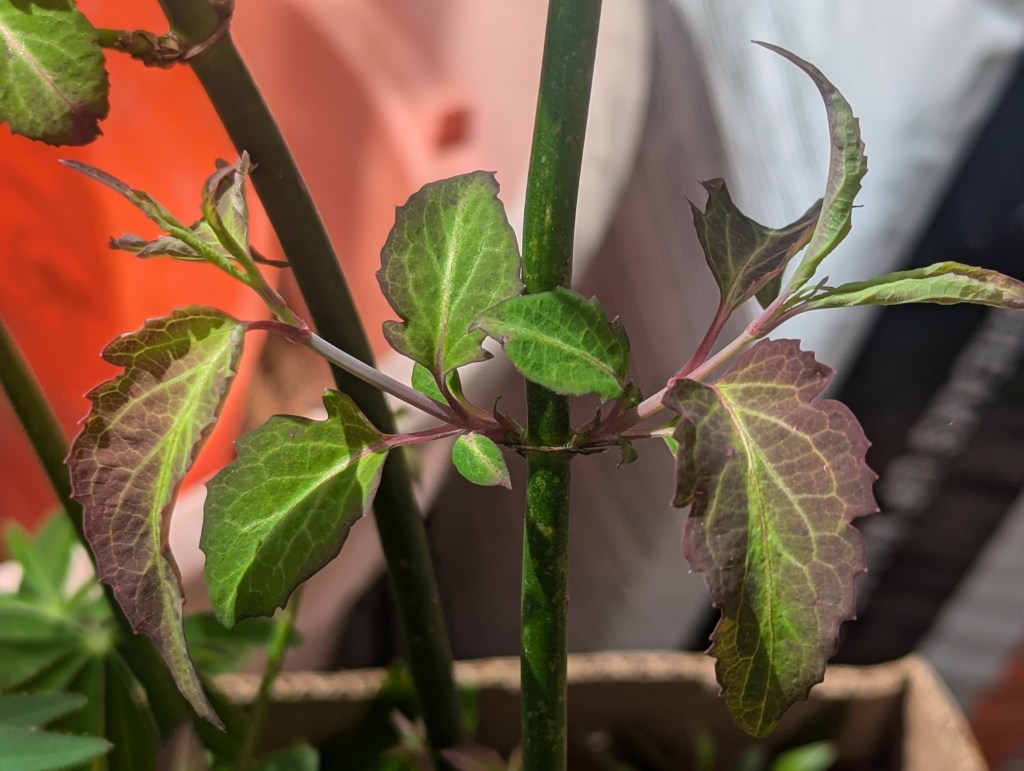
Six on Saturday: Eric

Ericaceae is a prominent family here. Rhododendrons, azaleas and pieris inhabit several of the landscapes. Manzanitas, madrones and, within some situations, huckleberries, are common within the surrounding forests. Even two of my associates, although unrelated to Ericaceae, are named for two members of the family that are popular for landscaping. Half of my Six for this Saturday are azaleas. Just one other is another ericaceous species. Later, I can get better pictures of azaleas as well as rhododendrons. Several impressively large rhododendrons bloom spectacularly in season. Heather would be nice, but is quite rare. I know where abandoned fields of it grew wild, but I have never seen it available in nurseries.

1. Heath is a masculine name. It is of the Erica genus, though; and Erica is the feminine form of Eric. Heather is a similar but feminine name, but is of a different Calluna genus.

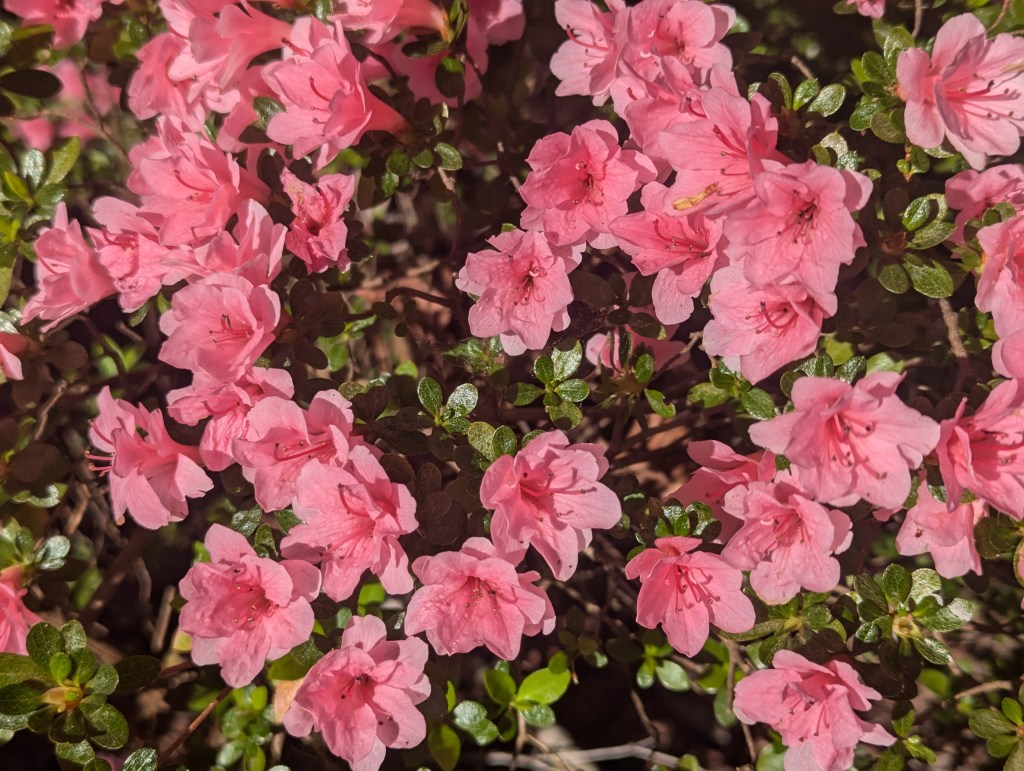
2. ‘Coral Bells’ Azalea, like all azaleas, is of the Rhododendron genus, so like heather and heath, is in the Ericaceae family. All of them are also related to madrone and manzanita.

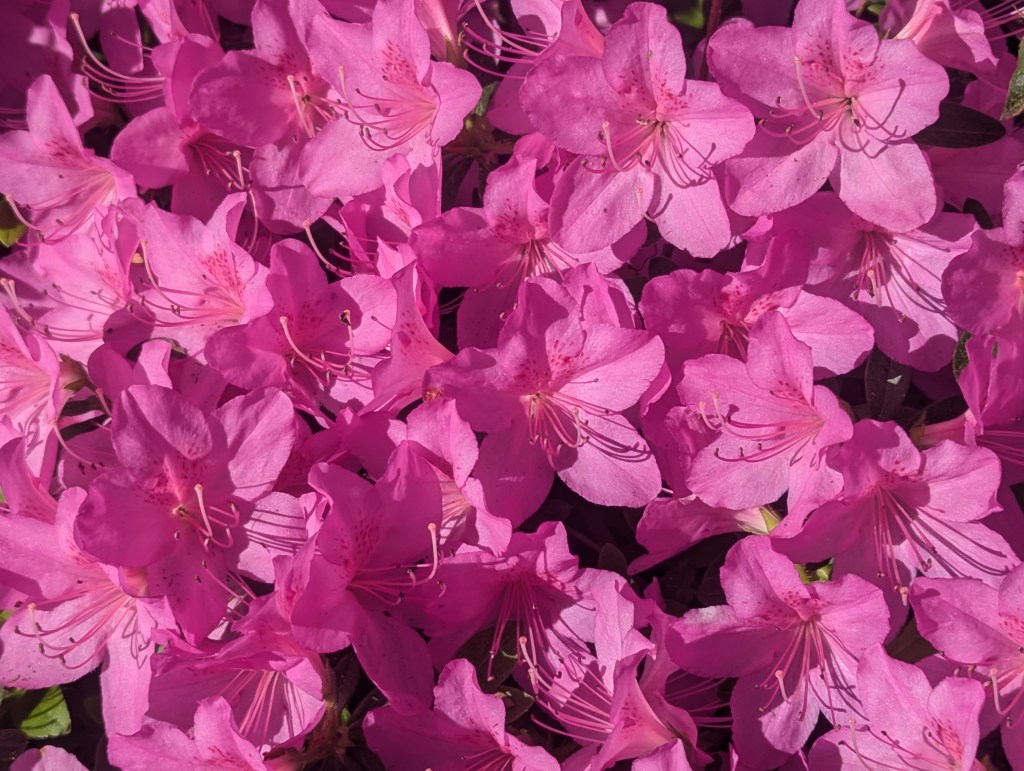
3. Azaleas generally bloom for early spring. These that bloom somewhat too early during the rainy season can get a bit thrashed. They would be prettier if they could delay bloom.

4. Florist azaleas are delightful as fully blooming potted specimens, but generally do not adapt well to landscapes. This specimen is floppy, but otherwise performs impressively.

5. Heather is named for Calluna, which, actually, I have not seen in many years. It grew as a cut flower crop in Montara more than half a century ago. It was abandoned by 1980.

6. Rhody is short, and his name is short for Rhododendron. But of course, he is a terrier, so ignores me regardless of what I call him. He can actually ignore me in four languages!

This is the link for Six on Saturday, for anyone else who would like to participate: https://thepropagatorblog.wordpress.com/2017/09/18/six-on-saturday-a-participant-guide/

Six on Saturday: This

“This” is the first word of each of these six entries for Six on Saturday this week. There is not much variation among the coast live oak, coastal redwood, California bay, California black oak, big leaf maple and whatever else might be visible in these pictures. Half these pictures happen to feature specific coast live oaks. Therefore, I omitted botanical names. I wanted to show some of what is happening at the new home site, but there is not much to show, and there may not be much to show for a while, except for Rhody.

1. This is where the old home was. The forest wasted no time reclaiming its space. I miss the old home very much, but it was too deteriorated to salvage. I knew it was temporary.

2. This is where the new home will be built. It is less than fifty feet to the west, and faces more to the west instead of south. The upstairs office studio will face into the redwoods.

3. This lofty coast live oak stands high over the new home site, but leans to the north and away from where the house will be. It is the biggest of several big oaks in the grove here.

4. This silly coast live oak leans parallel to the driveway. The contrastingly vertical trunk to its right is the same that is on the right border of the first picture of the old home site.

5. This grand coast live oak arches elegantly over the driveway. It can be seen across the upper left corner of the previous picture. It is about perpendicular to the horizontal oak.

6. This is how I manage the overgrown and overly combustible vegetation here. It needs to be planned in accordance with the weather that has been too dry for much too long.

This is the link for Six on Saturday, for anyone else who would like to participate: https://thepropagatorblog.wordpress.com/2017/09/18/six-on-saturday-a-participant-guide/
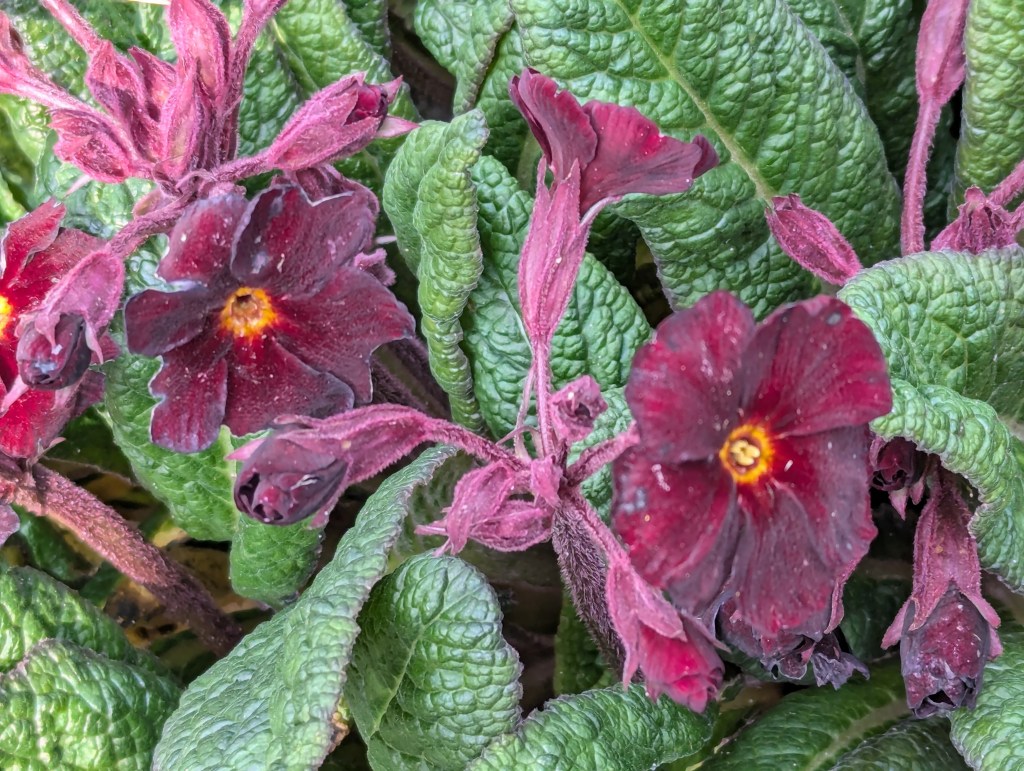
Six on Saturday: el Catedral de Santa Clara de Los Gatos II

El Catedral de Santa Clara de Los Gatos is merely the Mount Hermon Memorial Chapel, which is a more proportionate name that does not trivialize its Memorial status. I prefer it to seem grander than it is. Also, I maintain a strict standard for its minimal landscape. All of its flowers bloom exclusively white. However, most of its flowers have been rather pekid because of aggressive invasion of consumptive redwood roots into irrigated areas. Because I can not stop the encroachment, I removed the soil from four primary planters. Within the front pair of planters, I suspended customized planter boxes. Within the rear pair of planters, I suspended a few nursery cans that contain new plants. Redwood roots can not reach into these planters or cans. The recycled vegetation still looks shabby, but should perform better than ever for this summer.

1. Chlorophytum comosum, spider plant, with Begonia X semperflorenscultorum, wax begonia, are icky through winter, but should perform better than ever by spring without aggressive redwood roots. Their planter within their planter is visible at the front corner.

2. Picea glauca var. albertiana ‘Conica’, dwarf Alberta spruce, and Buxus sempervirens, English boxwood, are within #15 cans within their planters. Crocosmia X crocosmiiflora are in 4″ pots. It is trashy, but is for their own protection from aggressive redwood roots.

3. Pelargonium X hortorum, zonal geranium, within a #5 can that is obscured to the far right of the items described above, is merely cuttings from what was here prior. They, as well as several more within the cans of the other items, should grow to obscure the cans.

4. Pelargonium X hortorum, zonal geranium, that was here prior to this renovation was abundant enough to provide many more cuttings that we could utilize. These few should obscure these bare bases of a pair of lemon cypress, Cupressus macrocarpa ‘Goldcrest’.

5. Collectively, it should look sharp for summer. The Crocosmia X crocosmiiflora is just temporary until the zonal geranium grows to replace it. I do not want their bright orange bloom within this exclusively white garden. Everything in this new landscape is recycled.

6. It only looks puny from across the road because the stone wall is so big and ominous. It will be prettier as the zonal geranium and wax begonia begin to bloom for late spring. The cypress may not conform to a white garden, but their color is foliar instead of floral.

This is the link for Six on Saturday, for anyone else who would like to participate: https://thepropagatorblog.wordpress.com/2017/09/18/six-on-saturday-a-participant-guide/
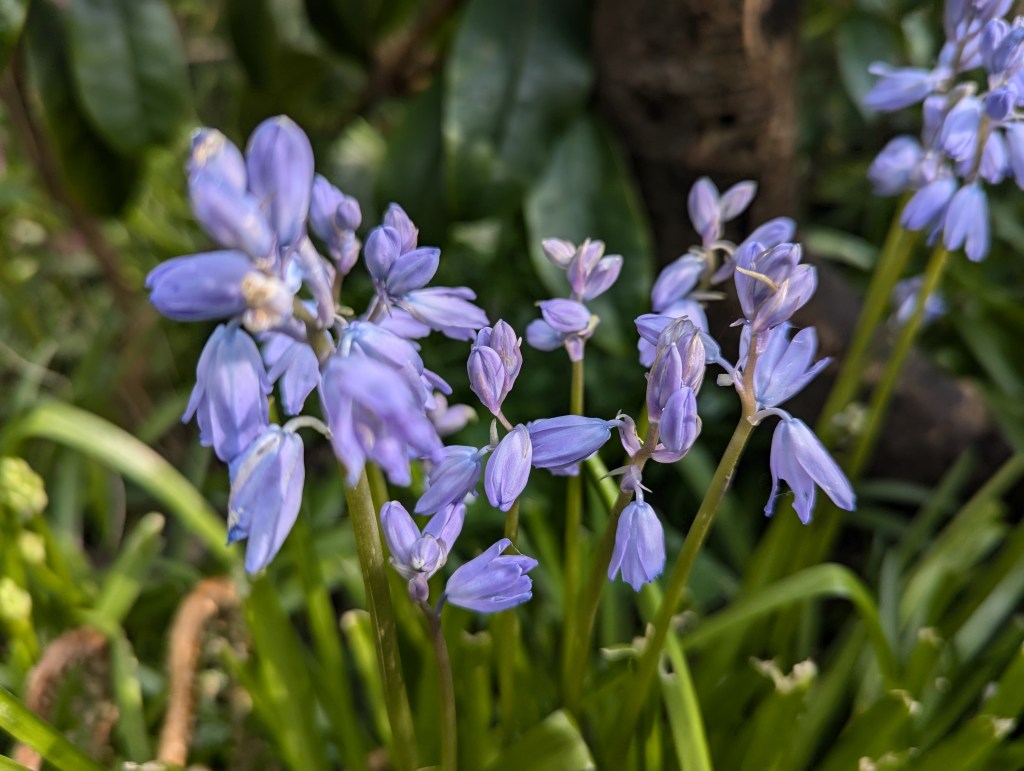
Six on Saturday: Yellow

Only one of these six is as yellow as it should be. Two are not yellow enough. Two are too yellow. One is not yellow at all, but is affiliated with another who is.

1. Yucca X recurvifolia, curve leaf yucca, which is now known by its new botanical name of Yucca gloriosa var. tristis, remains impressively green after transplant, but is related to the rather sickly looking cultivar, ‘Mellow Yellow’, with ghastly chartreuse foliar color.

2. Cycas revoluta, sago palm, which was transplanted with the curve leaf yucca, displays this more predictably yellowish foliar color now. It should develop its more typical richly dark green color and foliar symmetry as it resumes growth with warmer spring weather.

3. Saccharum officinarum ‘Pele’s Smoke’ sugarcane retains its cultivar designation only because I do not know what it is. It is likely a different cultivar, and might be a different species. Its new foliage is yellow because the weather is still too cool for it to be bronze.

4. Citrus X limon ‘Eureka’ lemon should be more yellow than this by now. None seem to be completely ripe. Variation of ripening is an attribute of ‘Eureka’ since, unlike ‘Lisbon’, it provides a few ripe lemons randomly throughout the year. Still, most ripen for winter.

5. Citrus X limon ‘Eureka’ lemon is susceptible to minor damage from citrus bud mite. It may seem to be more than minor, and for this particular lemon, the damage is obviously quite major. However, only a few of the hundreds of lemons of this tree will be damaged.

6. Narcissus pseudonarcissus ‘King Alfred’ daffodil may be a more modern cultivar, but has been naturalized here long enough to be genuine. Although happy to bloom like this annually, bulbs do not multiply, which is why I can not get many flowers in one picture.

This is the link for Six on Saturday, for anyone else who would like to participate: https://thepropagatorblog.wordpress.com/2017/09/18/six-on-saturday-a-participant-guide/

Six on Saturday: Downtown Planter

While away from work and home, and tending to errands downtown, I got these pictures from my downtown planter, which inadvertently became something of a Memorial.

1. Cuphea hyssopifolia, Mexican heather is not my favorite component of the downtown planter, but remains because it was installed by someone who was here prior to my time. A uniquely confined colony of montrebia that I will discuss on Wednesday also remains.

2. Senecio cineraria, dusty miller and the stonecrop below are from the garden of a now deceased client so can only be removed if a bit of it gets established in my home garden. It and the Mexican heather above are the only two of these six which are not succulents.

3. Sedum reflexum ‘Blue Spruce’ stonecrop is being displaced by the unidentified species of Aeonium below, but is also already established in my home garden. I expected it to be displaced eventually when I put it here several years ago. It is gratifying to see remnants.

4. Aloe, as the Aeonium at the bottom of this list, is unidentified. It and both of the last six are from the garden of the deceased mother of a deceased friend who happened to be a direct descendant of Spanish explorers who were the first to arrive where Monterey is.

5. Aeonium arboreum, tree houseleek is the most striking vegetation within the planter, but is also occasionally disfigured by theft of its most sculptural stems. A darkly bronzed cultivar from the same special origin was taken piece by piece until none of it remained.

6. Aeonium is as unidentified as the Aloe above. It initially resembles the tree houseleek, also above, but remains low, dense and mounding. It is the most abundant vegetation of the planter, so was the primary culprit of the displacement of the stonecrop, also above.

This is the link for Six on Saturday, for anyone else who would like to participate: https://thepropagatorblog.wordpress.com/2017/09/18/six-on-saturday-a-participant-guide/

Six on Saturday: No Flowers

The ‘Week of Flowers’ theme was fun for the past several weeks, but the beginning of the rainy season is rather important locally. I suppose I should have gotten more interesting pictures instead of rotting stumps, a leaky gutter and a bare cottonwood tree. Hopefully, they are not as bad as this sounds. If the first five are, the sixth might compensate. There really are no flowers, though.

1. Winter is the rainy season here. It is probably appreciated more than in other climates because it is the only time that significant rain falls. If a thunderstorm passes through in summer, it might start a fire without enough rain to put it out. Anyway, gutters still leak.

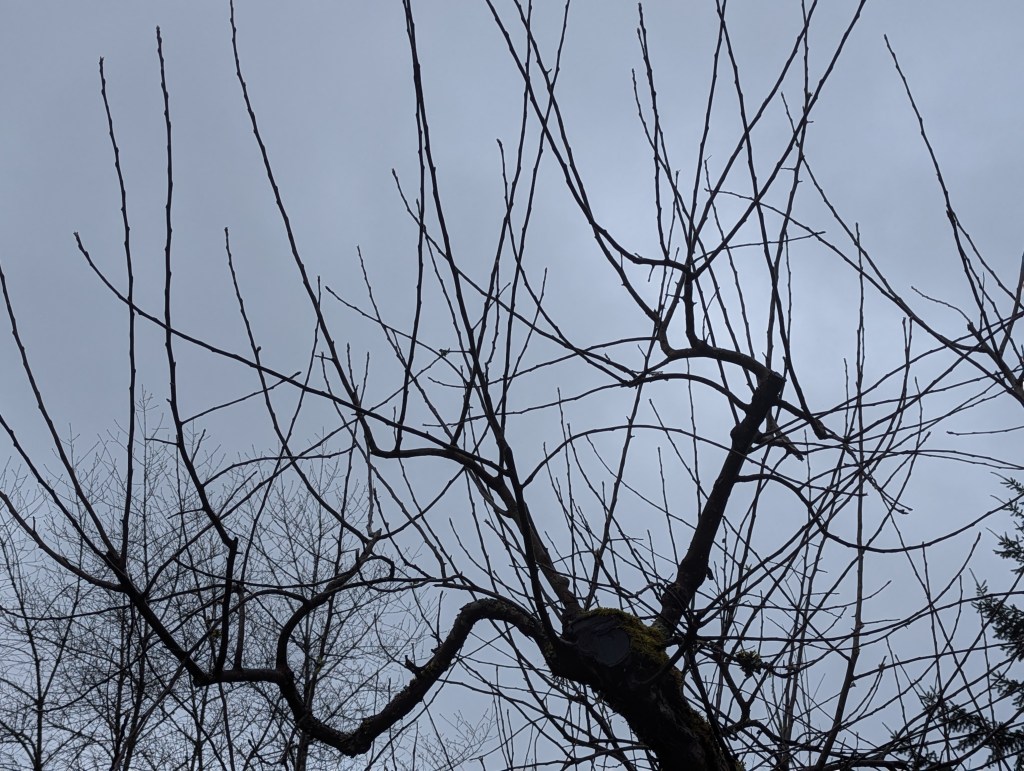
2. Rain was sufficient to finish defoliation of this grand cottonwood out back. The foliage had been bright yellow for quite a while. It does not need much chill to develop splendid color. Windy weather typically dislodges the last of it. This year, rain finished it off first.

3. Mushrooms grow as the forest dampens through the rainy season. These are growing from a coast live oak stump that has been rotting for several years, but is somehow quite sound. I have been unable to dislodge it, even as the roots rot enough for the soil to sink.

4. Mushrooms that are growing from a rotten toyon stump are weirder, but could be the same sort at a more advanced state. I should recognize them since they do this annually. Some hideously big mushrooms grew elsewhere, but are already melting into black goo.

5. The madrone stump that was maintaining the integrity of the top of this embankment has been rotting for many years. Actually, I am impressed that it remained intact as long as it has. It looks worse from the other side. I could post a picture of that on Wednesday.

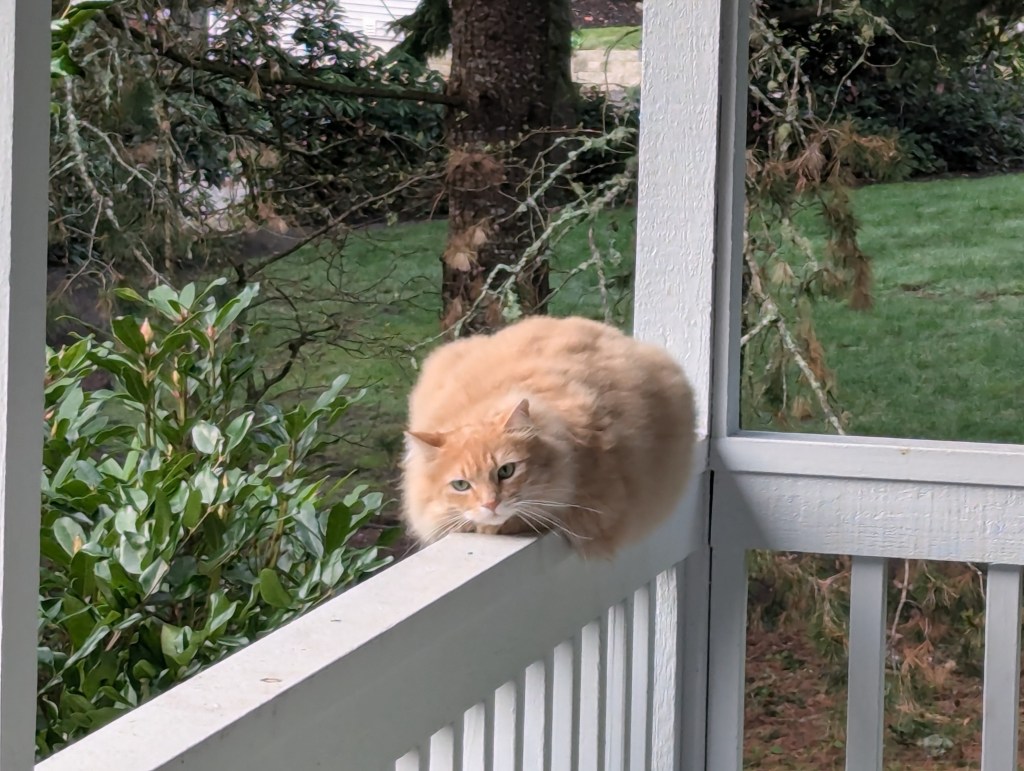
6. Heather would not cooperate for a picture against the clear sky between rainy weather a few days ago. She really just wanted to roll around on the sunny pavement, which was still damp and probably cold. She is impressively tolerant of this sort of embarrassment.

This is the link for Six on Saturday, for anyone else who would like to participate: https://thepropagatorblog.wordpress.com/2017/09/18/six-on-saturday-a-participant-guide/