Six on Saturday: Red Flag Warning

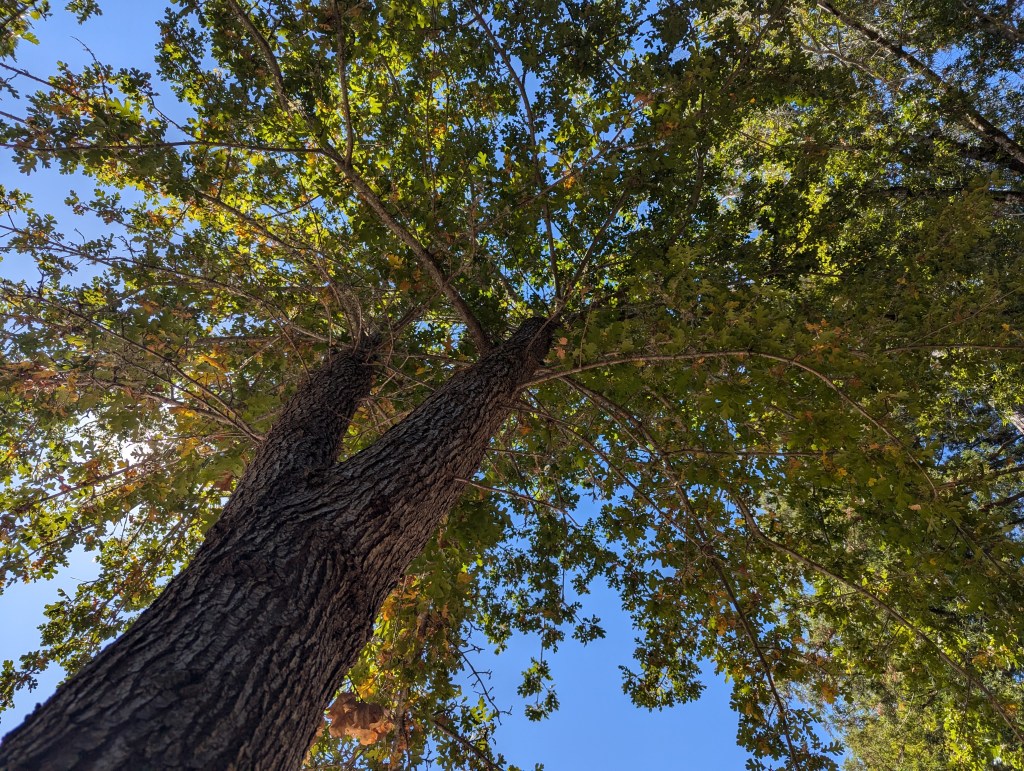
A Red Flag Warning that began Thursday night continues at least until five this evening. Arid wind severely increases the risk of wildfire during this time. The strong wind can be hazardous, even without fire. Big trees become big problems.

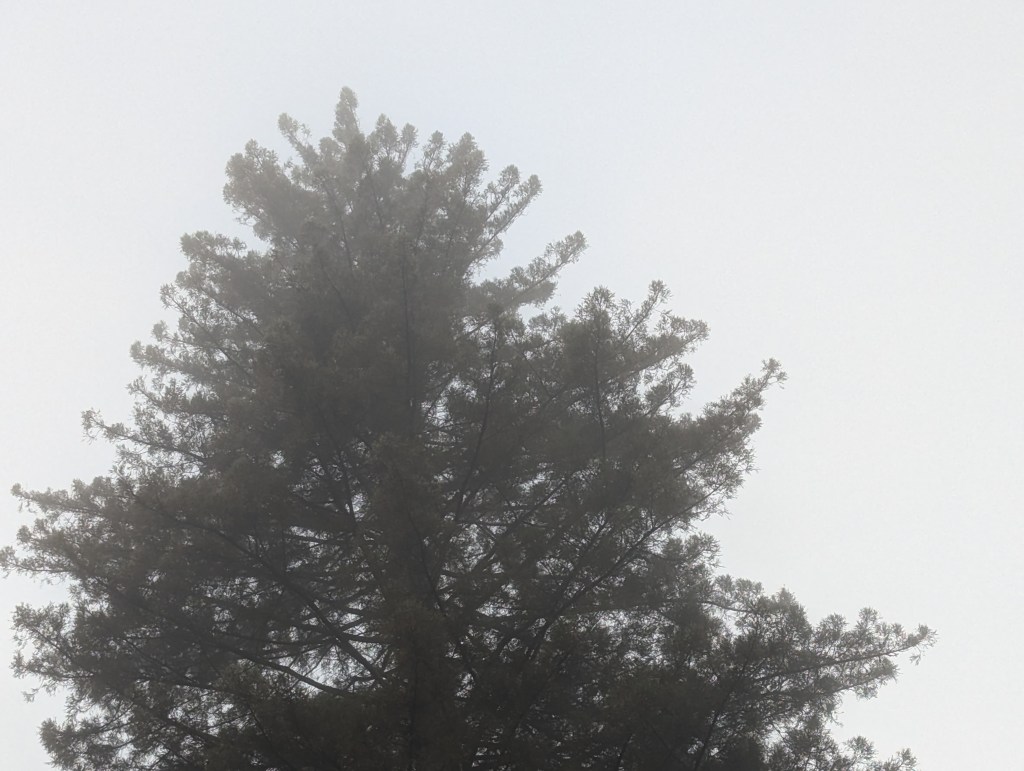
1. Wind developed soon after sunrise yesterday. I tried to get a picture of foliar debris as it fell from the forest canopy, but took only this. Sequoia sempervirens, coastal redwood makes the background, with Quercus agrifolia, coast live oak in the lower left quadrant.

2. Turkeys should hide from such wind. This one was alone and in a hurry, likely to find a sheltered situation with others, and just as likely, after shredding the red berries of the firethorn, Pyracantha coccinea. I saw no others as the wind continued through the day.

3. Sequoia sempervirens, coastal redwood is remarkably stable but structurally deficient where exposed to wind, which is why it grows in dense and mutually sheltering colonies. These big fractured limbs are very heavy, and fell with deadly velocity from very high up.

4. Umbellularia californica, California bay is often destabilized by structural deficiency. In other words, although its trunks and limbs are generally not structurally deficient, rot often compromises the structural integrity of the roots, which then become destabilized.

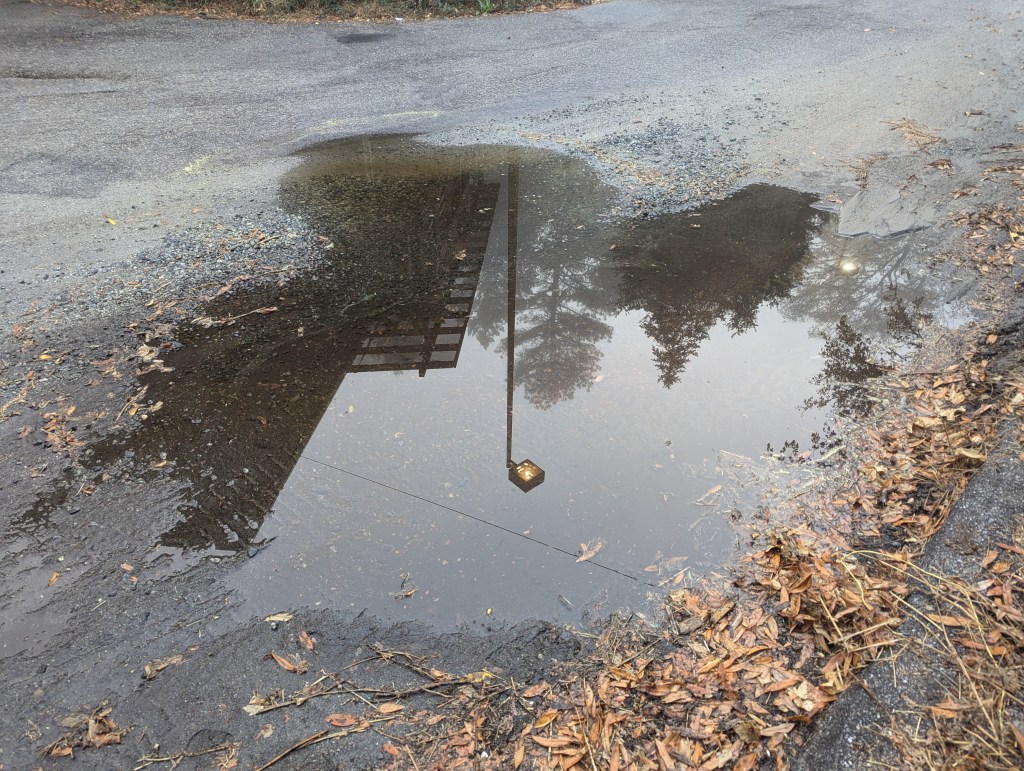
5. Two California bay trunks that destabilized and blocked the road in the picture above are obscured on the ground by their own foliage here. The fractured trunk that is visible was not structurally deficient, but was pulled down by the other two as they destabilized.

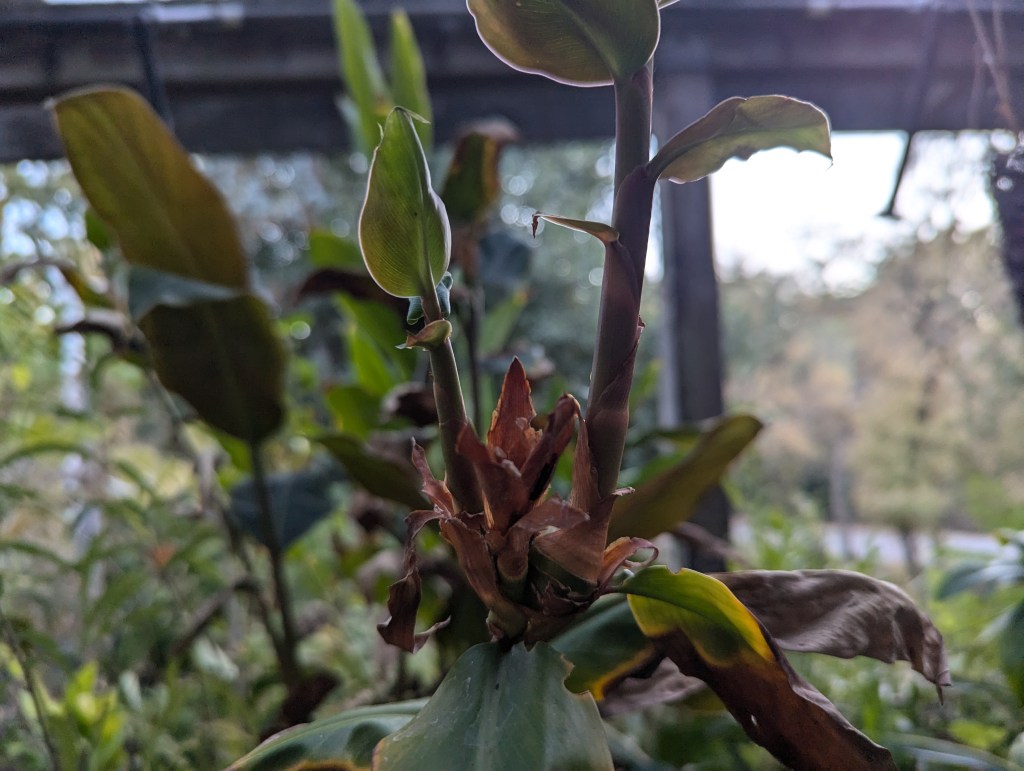
6. Hedychium coccineum X coronarium ‘Peach Delight’ ginger is likely too late to finish blooming. I would like to see it bloom to confirm its identity, but may need to wait until next year. Although irrelevant to the wind, I thought I should feature at least one bloom.

This is the link for Six on Saturday, for anyone else who would like to participate: https://thepropagatorblog.wordpress.com/2017/09/18/six-on-saturday-a-participant-guide/

Seventh on Saturday . . . and Eighth and Ninth – Omissions

Six on Saturday is, as should be obvious, limited to six. Therefore, I omitted a few of the pictures of colorful berries that I took last week. The first of these three of the omissions is likely the most important, but was omitted because its berries are not quite as colorful as they will be as they ripen a bit later. The other two were omitted because they actually justify omission. I mean that they are nothing to brag about. However, I did not want to delete their pictures that they were polite enough to pose for without sharing them here.

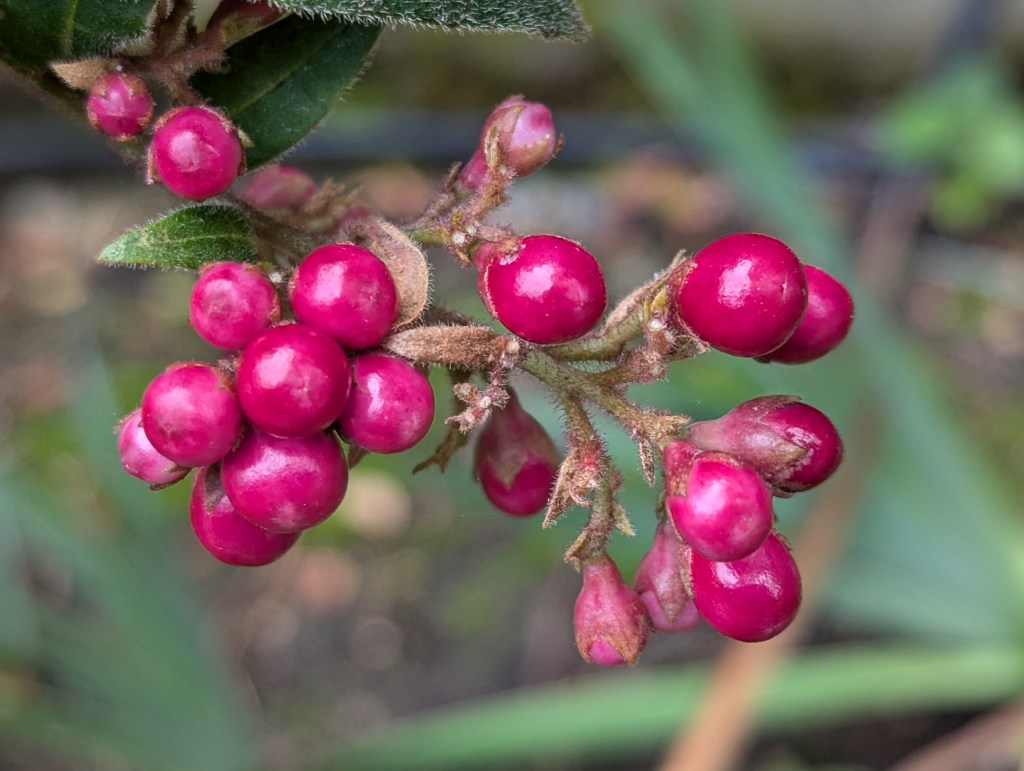
7. Callicarpa americana, American beautyberry was one of several gifts from Woodland Gnome of Our Forest Garden. I had never encountered it prior to its arrival, but wanted to grow it for years! These berries will soon ripen to a slightly purplish but bright bubble gum pink. Although I am typically not so keen on such bright color, I find their oddness to be very appealing. There is a white cultivar, and I do typically prefer white, but I want to grow the typical sort that grows wild within its natural range, rather than any cultivar.

8. Viburnum tinus, laurustinus fails to impress me. I realize that it is popular elsewhere, and that I should learn to appreciate it, but nonetheless, its allure somehow escapes me.

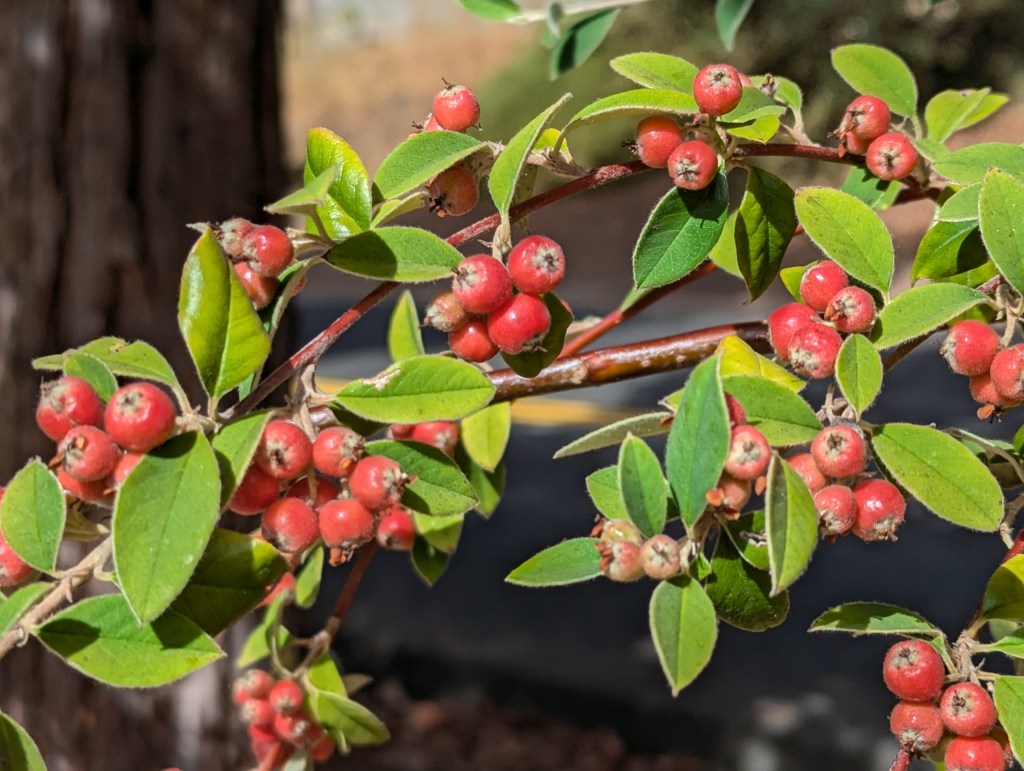
9. Cotoneaster pannosus, silver cotoneaster, to me, is even more unimpressive, perhaps because it is a weed locally. Berries are not colorful for long before turkeys destroy them. What is worse is that turkeys do not seem to eat the berries. They just shake them off the stems, and just leave them to decay on the ground. Berries that manage to ripen are not as vibrant red as firethorn berries, but are a somewhat grungy brownish or orangish red.

This is the link for the original Six on Saturday, for anyone who would like to participate: https://thepropagatorblog.wordpress.com/2017/09/18/six-on-saturday-a-participant-guide/
Six on Saturday: Berries

Brightly colored berries are ripening for both migrating and overwintering birds who are enjoying the abundance.

1. Rosa californica, California wild rose produces nice small hips, but then defends them within a thicket of very thorny canes. Birds have no problem flying in from above to take all they want. I get only what is left when it is time to cut the thicket down during winter.

2. Sambucus cerulea, blue elderberry is one of only two of these six that is designated as a berry by its common name, but is the only one of these six that is not a berry. Its fruits are drupes. Its jelly wins ribbons every time I bring it to compete at the Harvest Festival.

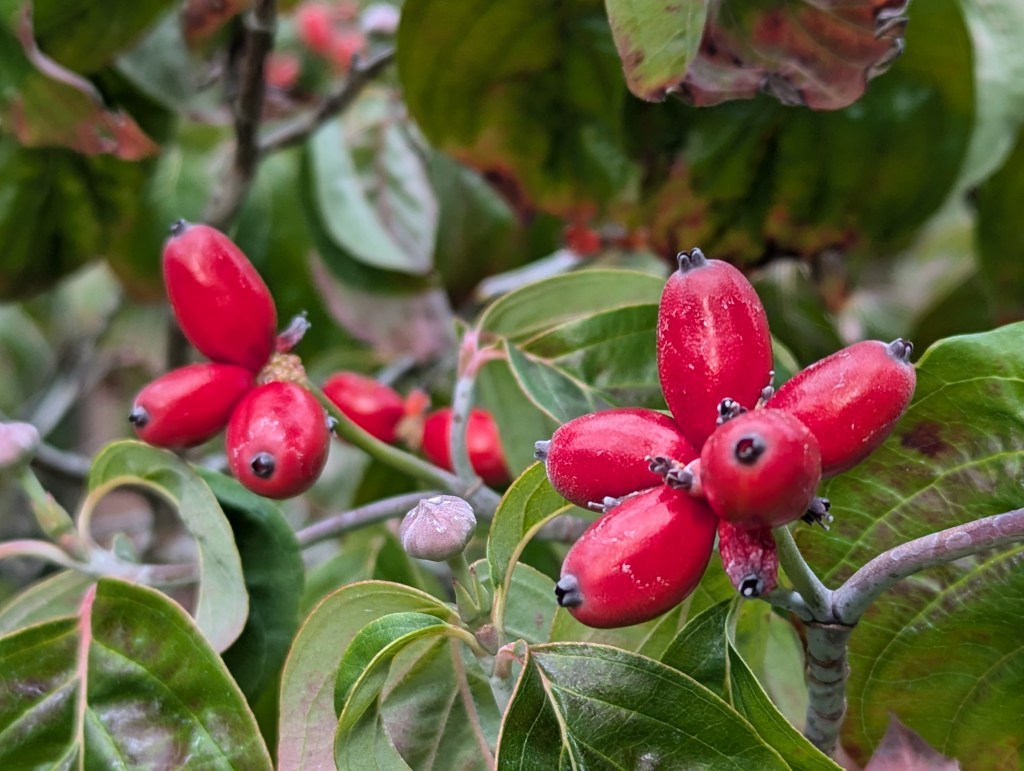
3. Cornus florida, flowering dogwood should stay almost fruitless. Yet, it produces more berries than the red flowering currant produces. It and the red cestrum are the only two of these six that are not native here. Rhody says it is dogwood because the ‘bark’ is ‘ruff’.

4. Ribes sanguineum, red flowering currant should produce more berries than flowering dogwood, but this is about as abundant as it gets. The berries do not even look appealing enough to collect. Their flavor is no more impressive than their oddly grayish blue color.

5. Cestrum fasciculatum ‘Newellii’ red cestrum berries are toxic, like those of snowberry and flowering dogwood. However, they are not toxic to birds who sometimes eat them as soon as they become colorful enough to be pretty. Birds can be pretty in the garden also.

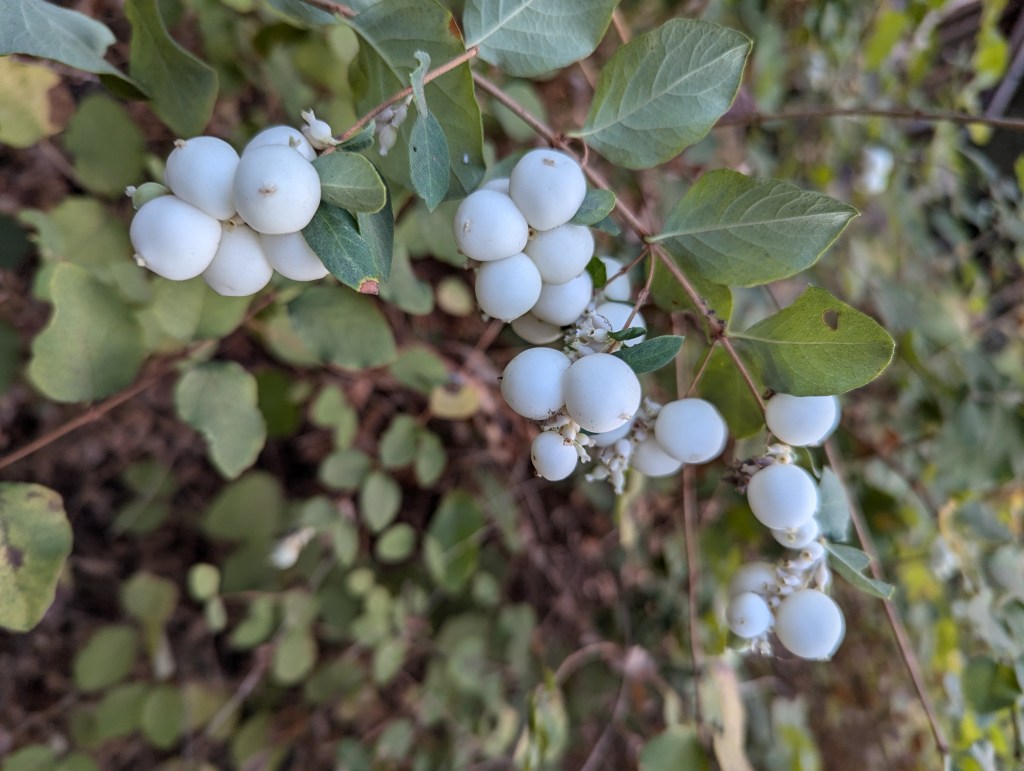
6. Symphoricarpos albus, snowberry is a rather skimpy species. Its thin and wiry stems form low and sparsely foliated thickets. It only stays because it produces these unusually white berries. It might be prettier and more prolific if coppiced during winter dormancy.

This is the link for Six on Saturday, for anyone else who would like to participate: https://thepropagatorblog.wordpress.com/2017/09/18/six-on-saturday-a-participant-guide/

Six on Saturday: Fake Autumn

Daylight does not last quite as long as it had earlier in summer. Shadows stay noticeably longer. Summer actually ended about two weeks ago. For now it is early Indian summer.

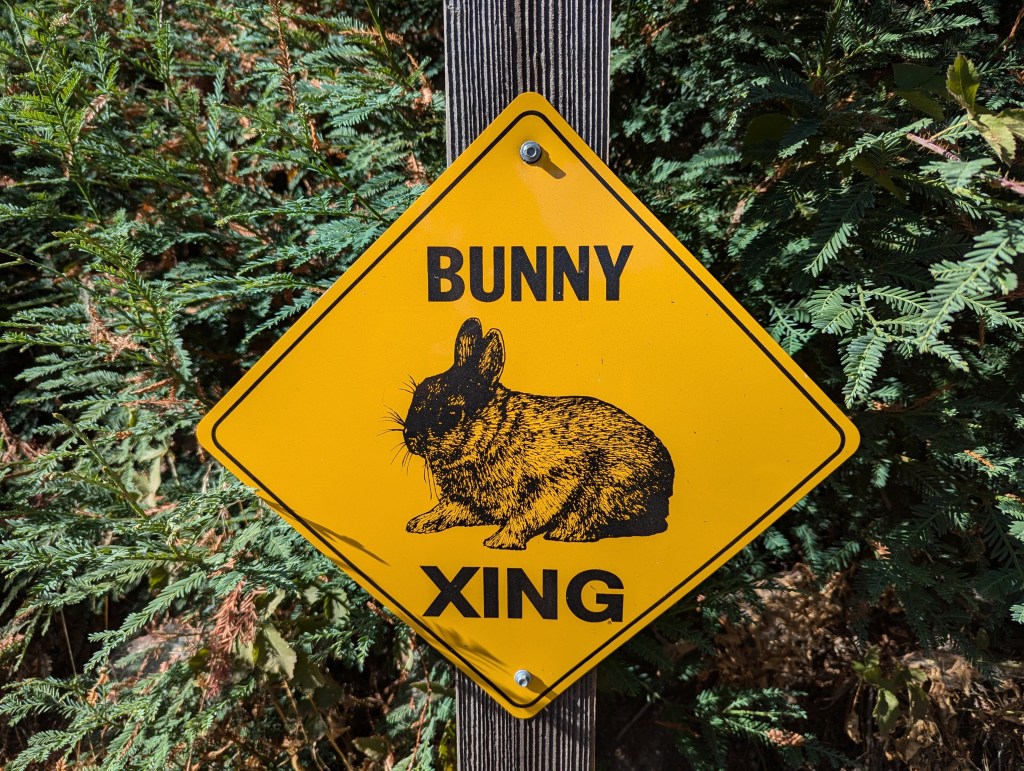
1. “Bunny Xing” is as irrelevant to autumn as it is to Charing Cross Road in Los Angeles. I just found it to be amusingly odd that a neighbor seems to be protective of wildlife that can be so detrimental to some gardens here. Bunnies fortunately do not bother us much.

2. Juglans nigra, Eastern black walnut or Juglans nigra X hindsii, royal walnut, yellows early, more likely because it is tired of summer heat than because it anticipates autumn. Both walnut tree types naturalized from understock that sustained old walnut orchards.

3. Quercus lobata, valley oak typically but not always begins to brown after walnut trees yellow. This yellowish color is likely a result of the weather cooling a bit before warming again. This species is native nearby, but may have naturalized here after getting planted.

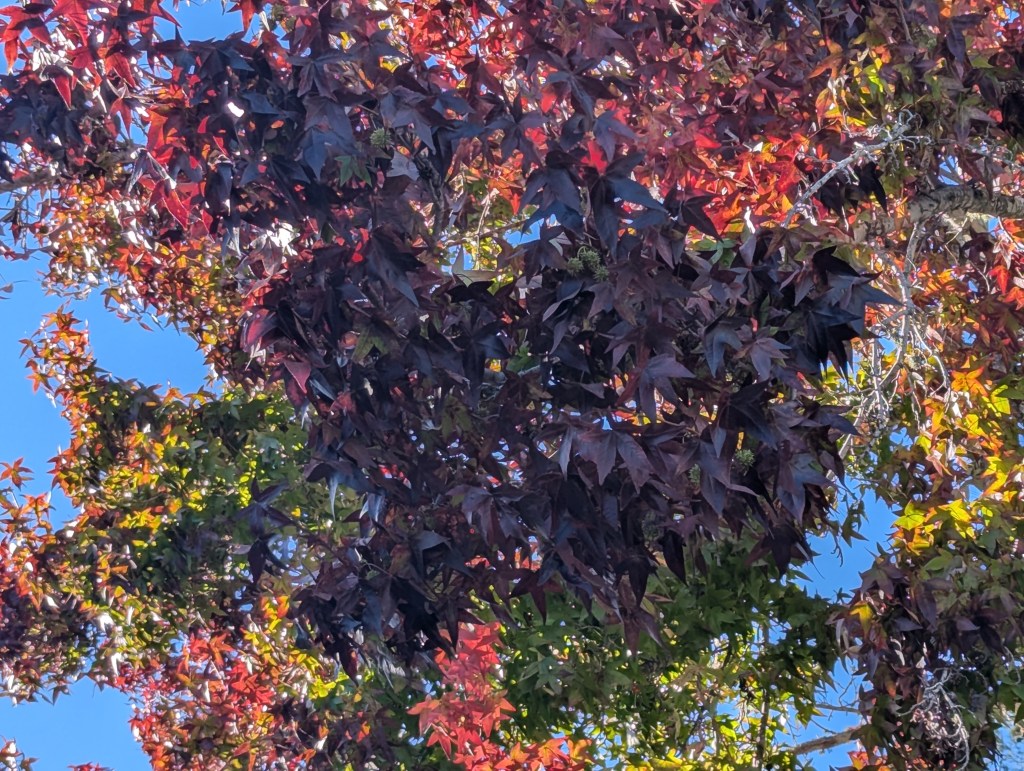
4. Acer rubrum, red maple is likely only coloring because it is distressed by confinement of its roots within its big clay pot. Recent and suddenly warmer weather after seasonably cooler weather may have accelerated the process. I really want these trees in the ground!

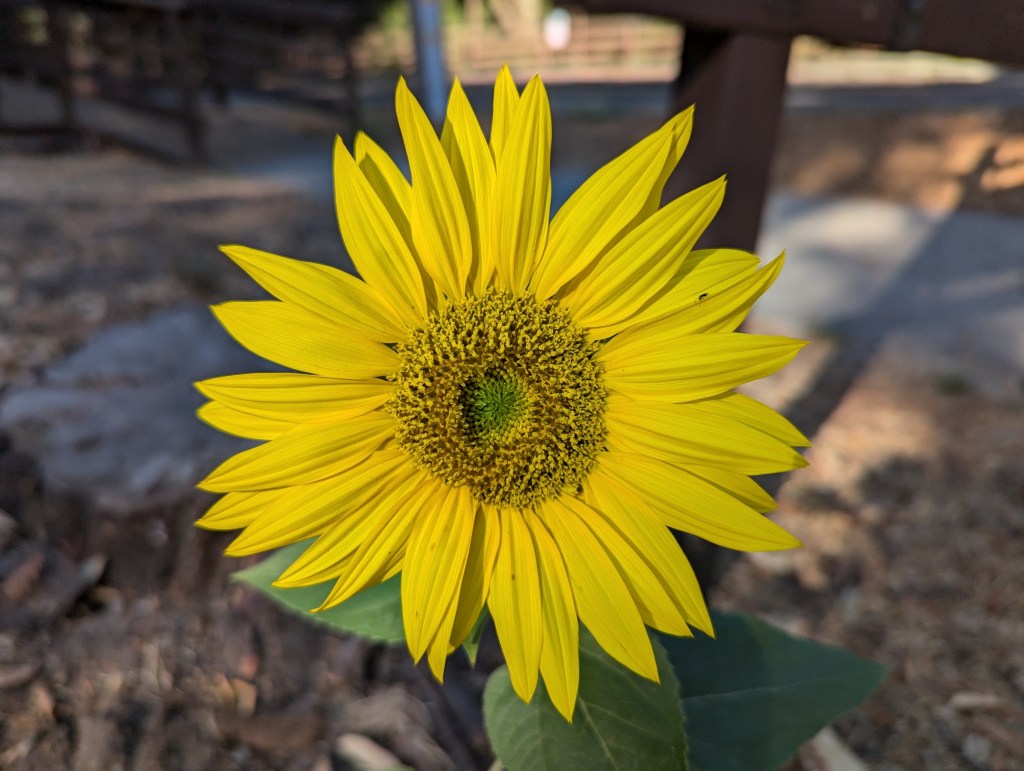
5. Helianthus annuus, sunflower mysteriously appeared precisely where we should have but neglected to grow sunflowers this year. This is the only one, but it is enough to show us what we are missing because of our lack of diligence. It is only a bit early for autumn.

6. Rhody is ready for autumn. More specifically, he is ready for cooler weather. Although it was scarcely more than ninety degrees yesterday, and only for a few hours after noon, it seemed to be unseasonably warm, after earlier weather was already beginning to cool.

This is the link for Six on Saturday, for anyone else who would like to participate: https://thepropagatorblog.wordpress.com/2017/09/18/six-on-saturday-a-participant-guide/
Six on Saturday: Copy Machine

This is not about a machine that makes copies. It is five pictures of copies and a machine that Rhody could make very good use of.

1. Citrus paradisi ‘Marsh’ grapefruit was doing well until some sort of caterpillar that ate much of the foliage off of the passion fruit vines found it. This is an ungrafted cutting, so could eventually grow into a humongous shade tree if it survives this late without leaves.

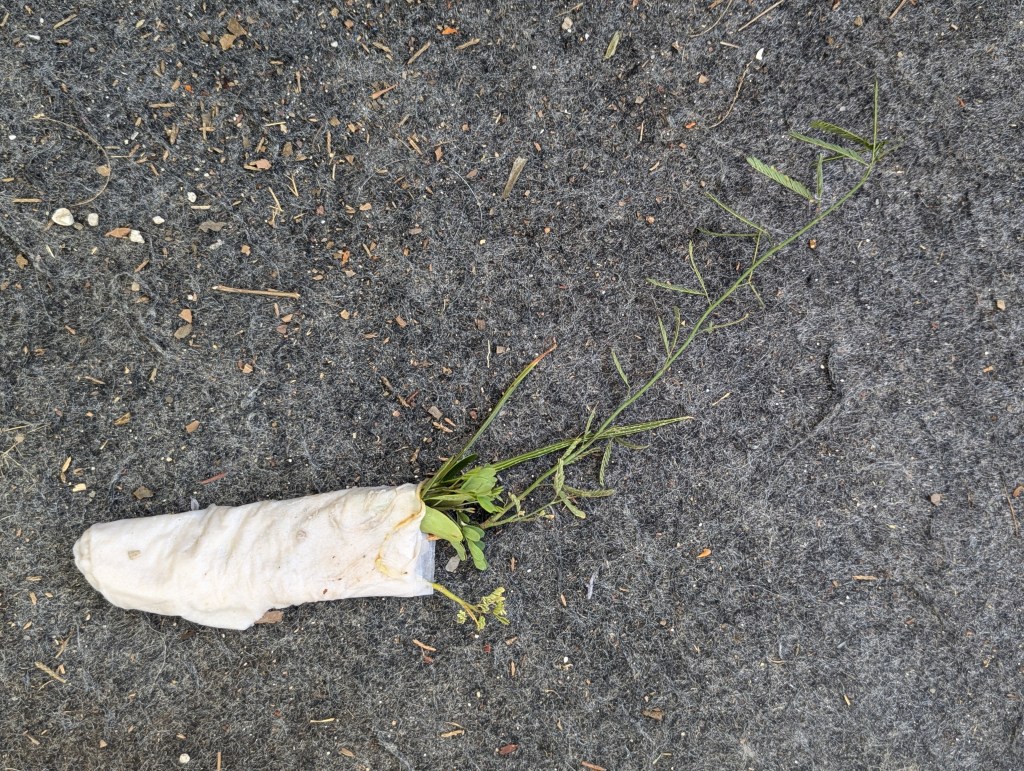
2. Santolina virens, lavender cotton needed to be removed from one of the landscapes. I did not want it all to go completely, but none of it was salvageable, and I had not grown copies of it earlier. Happily, I found that this single dinky copy somehow got left behind.

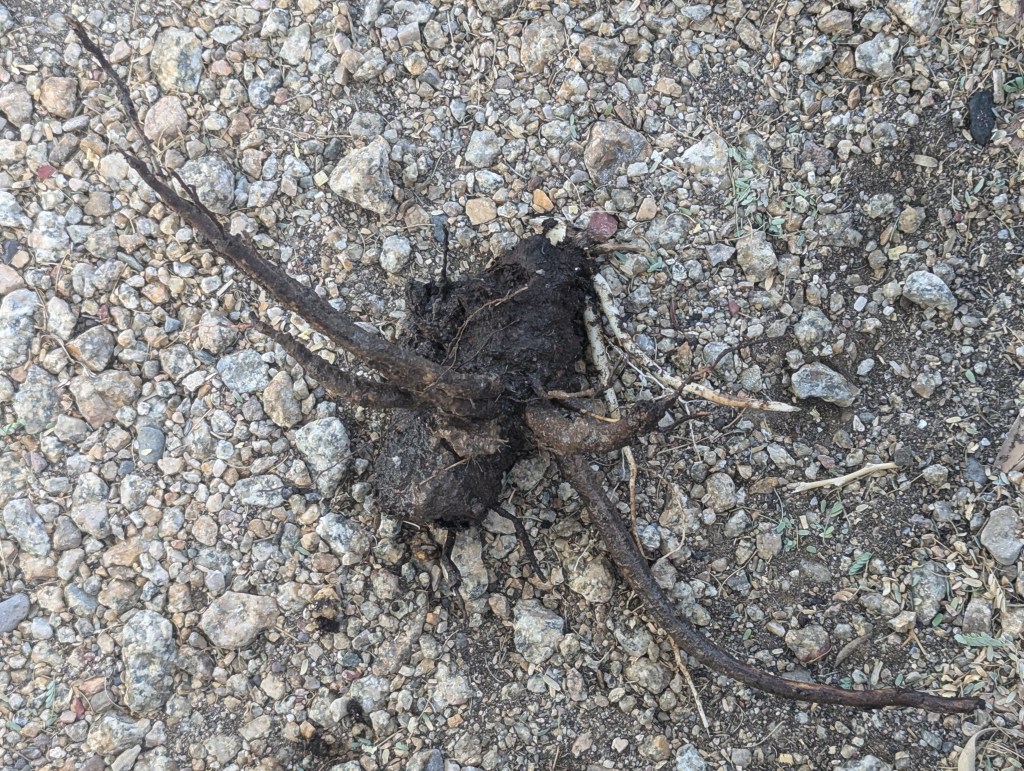
3. Kniphofia uvaria, red hot poker is one of those common perennials that I had wanted to grow, but never did. Fancy cultivars are now more common than the common simple species. Finally, I managed to acquire three pups from an old and abandoned landscape.

4. Archontophoenix cunninghamiana, king palm, or bangalow palm or piccabeen palm, is one of the popular palms of coastal Southern California that I would like to grow here. Naturally, but just as naturally without any plans, I procured about two dozen seedlings.

5. Musa acuminata ‘Golden Rhino Horn’ banana pups have grown like weeds since their arrival last June, and now, one of this pair is generating either another pair of pups very closely together, or a single pup that is already extending its first frond away from its tip.

6. Rhody is a terrier. In other words, he is terrestrial. Instinctively, he wants to dig in the earth. His type was bred for pursuit of terrestrial vermin, such as gophers. They need no excuse to dig, of course. Furthermore, Rhody requires no justification for his technique.

This is the link for Six on Saturday, for anyone else who would like to participate: https://thepropagatorblog.wordpress.com/2017/09/18/six-on-saturday-a-participant-guide/

Six on Saturday: Yoshino

Yoshino is such an elegant name! It is the middle name of one of my nieces. A few of the flowering cherry trees here are very likely cultivars of Yoshino flowering cherry. Another recently arrived. It is a Commemorative Tree from the Japanese Evangelical Missionary Society, which we know simply as ‘JEMS’, for three quarters of a century of involvement with Mount Hermon Christian Conference Center. Its cultivar name is ‘Akebono’. We do not install many trees here, and we are more concerned with cutting trees down, but this tree is very special. It is situated very prominently on the central Mall at Mount Hermon where its spring bloom will be spectacular. It already seems to be a venerable Historical Tree that lacks only age. Now that it is here, it will acquire that eventually.

1. The Japanese Evangelical Missionary Society, or JEMS commemorated three quarters of a century of involvement with Mount Hermon with this gift of a flowering cherry tree.

2. Unfortunately though, the pair of tiny flowering cherry trees that I installed to replace a very deteriorated and elderly pair of the same is already obsolete before it got to grow.

3. This pair of tiny flowering cherry trees grew from suckers from the original ungrafted pair, so are genetically identical, and are installed within the stumps of the original pair.

4. The new Commemorative Flowering Cherry Tree is much more prominent and better situated than the original pair, which was there prior to some of the adjacent pavement.

5. In other news, seedpods from (Hespero)Yucca whipplei, chaparral yucca, supposedly without its specialized pollinator, generated quite a few of what seems to be viable seed.

6. Also, Hedychium gardnerianum, kahili ginger that bloomed prematurely for the first several days of August is blooming again and more appropriately for the end of summer.

This is the link for Six on Saturday, for anyone else who would like to participate: https://thepropagatorblog.wordpress.com/2017/09/18/six-on-saturday-a-participant-guide/
Six on Saturday: Fire Season

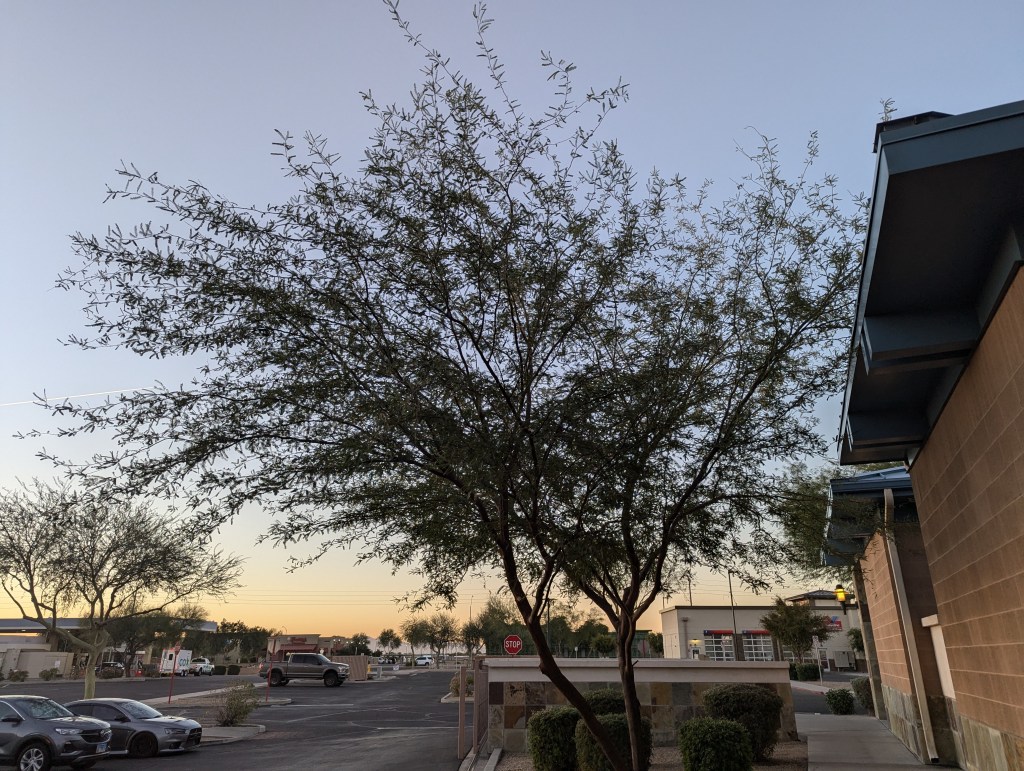
Fire season can begin as early as May and continue as late as November. It is defined by the rainy season. It is a long season because the rainy season is not. Summer is naturally warm and arid. Native vegetation is consequently desiccated. It is no coincidence. Fire is unfortunately a natural component of the ecosystems here, and native vegetation knows it. Many exotic species also react to the meteorological influences that affect fire season. Some are from similar chaparral ecosystems. However, some are from other ecosystems that are likely less adapted to fire. Perhaps their native ecosystems are less relevant than associated meteorological influences, which is what they are actually reacting to. A forty percent chance of rain on Monday morning is the first chance of rain in a long time.

1. Sequoia sempervirens, coastal redwood is always messy and gets even messier when a breeze dislodges foliage which got desiccated by arid warmth. It is a bad combination.

2. Adiantum capillusveneris, maidenhair fern also reacted to arid warmth. In the wild, foliar desiccation through summer is normal. It is not so normal in irrigated landscapes.

3. Musa acuminata X balbisiana ‘Blue Java’ banana would enjoy sustained warmth with more humidity. While humidity is inadequate, wind more easily shreds its flimsy foliage.

4. Musa acuminata ‘Kokopo’ or ‘Patupi’ banana is more sheltered from breezes and more generously irrigated, so can exhibit guttation overnight and into the cool early morning.

5. Amaryllis belladonna, naked lady is generating seed as it typically does by now. Seed is very perishable, but grows in soil that is damp from the first rain that ends fire season.

6. Solidago rugosa ‘Fireworks’ goldenrod is only fiery by name. It was a gift from Tangly Cottage Gardening. It is the only bloom I will brag about today, and our first goldenrod!

This is the link for Six on Saturday, for anyone else who would like to participate: https://thepropagatorblog.wordpress.com/2017/09/18/six-on-saturday-a-participant-guide/
Six on Saturday: Madness

Cool season annuals are beginning to replace warm season annuals not because weather is beginning to cool for late summer, but because warm season annuals are beginning to deteriorate after their long and warm summer. Deterioration of remaining petunias was accelerated by warm weather today. It was warmer than a hundred degrees. Fortunately, marigolds are the first and only cool season annuals that were added into the landscapes already and they tolerate such warmth. I believe that they are varieties of ‘Durango’. I do not know what the petunias that they are replacing are, but they resemble old fashioned red, white and blue varieties of ‘Madness’ that were too popular during the Bicentennial Summer of 1976, although a comparable white variety is notably lacking.

1. ‘Madness – Blue Vein’, if I remember accurately, looks something like this. Its name is not as appealing as its color, and might have been less appealing in the summer of 1976.

2. ‘Madness – Blue’, which looks like this, was one of the three most popular varieties for the summer of 1976, with ‘Madness – Red’ and ‘Madness – White’, but is almost purplish.

3. ‘Madness – Red’ is more convincingly red, very much like this, and just like ‘Madness – Blue’ and ‘Madness – White’, was very popular in profusion through the summer of 1976.

4. ‘Durango – Gold’ is not very different from marigolds that were overly popular during the 1970s, when ‘Madness’ petunias were popular. I do not know when it was developed.

5. ‘Durango – Orange’ is just as familiar as ‘Durango – Gold’ because of its similarity with old fashioned varieties. Only a few specimens of ‘Durango – Flame’ are blooming nearby.

6. ‘Durango – Red’ is the only of these Six that, to me, does not seem to resemble the sort of varieties that were popular in the 1970s likely because red bloom was developed later.

This is the link for Six on Saturday, for anyone else who would like to participate: https://thepropagatorblog.wordpress.com/2017/09/18/six-on-saturday-a-participant-guide/

Six on Saturday: Too Much or Not Enough

Propagation without adequate propagation infrastructure can be disappointing. It might alternatively be a bit too rewarding. I prefer to propagate excessively, to compensate for expected losses. Consequently, I generate surplus much more often than I encounter any disappointment. One of the disappointments this week is actually the result of a surplus that occurred too late within the growing season of that particular species. I managed to find three other disappointments for half of these Six, but they are relatively minor, and should eventually be resolved prior to autumn. Even then, because these three particular species are vulnerable to chill while young, I intend to shelter them through winter. The surplus can eventually be shared with neighbors. It all works out.

1. Passiflora racemosa, red passion flower vine pruning debris was processed into a flat of thirty-six cuttings. I suspected that only a few would survive, but I was wrong. Oh my!

2. Citrus paradisi ‘Marsh’ grapefruit cuttings were initially about as numerous, but very few survived. They defoliated, and are still vulnerably dinky. They are ungrafted anyway.

3. Mentha spicata, mint is still going. There was already too much months ago, but I still plug its trimmings as cuttings. I should stop now. I should have stopped before I started.

4. Vanilla planifolia, vanilla is still doing nothing. Only this one of five cuttings survives. Its single exposed bud has been inactive for months. Perhaps a lower bud is doing more.

5. Borago officinalis, borage grew unexpectedly from expired seed that got tossed. These thirty-six, which are now in a filled flat, are too many at the end of their growing season.

6. Musa acuminata ‘Popo’Ulu’ banana is the eighteenth of twenty cultivars here, but this is its first new leaf since its arrival. It must grow more prior to autumn to survive winter.

This is the link for Six on Saturday, for anyone else who would like to participate: https://thepropagatorblog.wordpress.com/2017/09/18/six-on-saturday-a-participant-guide/
Six on Saturday: Off Color

Perennial pea, lily of the Nile and dahlia displayed aberration of color earlier and started a trend.

1. Eriocapitella hupehensis, Japanese anemone is enviable in other gardens. I neglect to remember that a minor bit of it survives in one of our landscapes. I ignore it because it is such a grungy almost grayish white without enough blush to be pink. I should see how it blooms now and then relocate it to a better situation where it might develop better color.

2. Hypoestes phyllostachya, polka dot plant is typically spotty with either white or pink. Two of seventy-two cell pack plugs exhibited this darker pinkish red. I got copies of it to perhaps grow as houseplants, at least until they will be happy in the garden next spring.

3. Chrysanthemum X morifolium, florist’s chrysanthemum seems to change color like a dahlia that I got a picture of last week. I thought that it bloomed orange last year, which was a surprise after it bloomed rusty red two years ago. I must not remember accurately.

4. Phlox paniculata, garden phlox has bloomed exclusively white since it arrived here by unknown means a few years ago. Although I have been very pleased with its white color, and white happens to be my favorite color, I am also pleased with this new pink variant.

5. Amaryllis belladonna, naked lady did the opposite. It had always bloomed exclusively bright pink. Then, I found and isolated a few bulbs of a white blooming variant last year. An associate found two more in the same location this year. I like it much more in white!

6. Rhody is canine so lacks perception of red, which is the basis of these off colors. Most have more than they should, and one has none. Rhody sees them only as shades of gray.

This is the link for Six on Saturday, for anyone else who would like to participate: https://thepropagatorblog.wordpress.com/2017/09/18/six-on-saturday-a-participant-guide/