Soil Amendment Might Be Overkill

Excessive soil amendment may be unnecessary.

Planting should not be complicated. The primary objective is to settle formerly contained roots into the ground safely. It includes motivating roots to disperse into surrounding soil. This might involve disruption of constricting or congested roots. It may involve addition of fertilizer. Soil amendment such as compost is likely useful to entice root growth outward.

For almost all substantial woody plants and most large perennials, this is only temporary. Their roots disperse faster than their original soil amendment decomposes. They require no more soil amendment incorporated into their soil afterward. Such incorporation would damage their dispersing roots. This could defeat the original purpose of soil amendment.

For such substantial plants, soil amendment only provides a transition into endemic soil. Without it, roots may be tempted to continue to grow within their original potting medium. If endemic soil is less appealing to them, they might lack motivation to disperse outward. Soil amendment mixed with their endemic soil provides them the motivation they require.

Mulching with soil amendment over the surface of the soil is a different procedure. Since it requires no incorporation into the soil, it severs no roots below the surface. Yet, it helps retain moisture and insulates the soil. As it decomposes, mulch adds organic nutrients to the soil. For established plants, mulching is a noninvasive technique with a few benefits.

Vegetable plants and annuals enjoy soil amendment more than more substantial plants. Proportionately, they consume much more of the nutrients that the amendments provide. Yet, they do not inhabit their soil long enough to crave more than they start with. Addition of amendment during their replacement damages no roots. It provides for the next phase.

Soil amendment is available either bagged or in bulk from nurseries and garden centers. Home garden generated compost is less expensive, since it costs nothing but effort. The process of composting is involved, but it utilizes otherwise useless garden detritus. Many home gardens generate more compost than they may use. Neighbors sometimes share.

Soil Saturation Can Drown Roots

Only riparian species tolerate sustained saturation.

Irrigation must adapt to weather. It was unnecessary for exposed vegetation during rainy winter weather. It became necessary through drier spring weather. Now, it must adjust for increasingly warm and dry summer weather. This is not as simple as application of more water more frequently. Excessive irrigation causes soil saturation, which damages roots.

Soil saturation is unfortunately common within landscapes that gardeners maintain. The risk of desiccation is more of a concern to gardeners than wasteful irrigation. Desiccation is certainly more apparent than symptoms of saturation. Besides, gardeners assume the costs of neither water nor damaged vegetation. Chronic damage can become significant.

Soil saturation is less common within gardens that lack gardeners, but is not impossible. Soil within pots can become saturated if vigorous roots clog drainage holes. Water which lingers too long in saucers under pots maintains saturation. Irrigation that is too frequent, too generous or both maintains saturation. Of course, different soil types drain differently.

Soil saturation deprives roots of the aeration that they need to survive. A few species are somewhat tolerant of saturation, but fewer tolerate it for long. With few exceptions, newer roots avoid saturation, so disperse shallowly. For trees, this limits stability and increases their likelihood of displacing pavement. Even shrubbery might develop buttressing roots.

Roots that dispersed prior to saturation are vulnerable to rot as soil saturation increases. This not only destabilizes trees, but also compromises their health. Formerly healthy turf grass and ground cover become chlorotic. Some turf grass becomes infested with fungal pathogens, and perhaps moss. Flowers and fruits might shrivel before they develop fully.

It is impossible to prescribe ideal irrigation schedules and application rates for every site. Climate, soil type, slope, exposure and vegetation types are all considerations. Moisture requirements change seasonally and as vegetation matures. Only direct observation can help determine appropriate irrigation frequencies and rates. It is a very involved process.

Soil Saturation Kills

Use irrigation responsibly.

London plane tree is trendy not because it is all that excellent, but because it is so reliable. It is actually a rather trashy and messy tree that is susceptible to anthracnose and powdery mildew. Landscapers and gardeners like it so much only because the various maples, oaks and other better trees are more sensitive to soil saturation while they get established.

The truth is that most landscapers and gardeners do not want to put any effort into proper watering. While many of us let our lawns die to conserve a bit of water, they waste enough water on lawns and landscapes to sustain rice paddies! This keeps lawns and landscapes superficially green, but eventually causes problems.

Powdery mildew, anthracnose, molds, blights, rots and all sorts of diseases proliferate in damp conditions. Of course, gardeners are happy to apply fungicides and other chemicals to help control diseases; for a price. Also for a price, they are there to replace plants that succumb to any of the many diseases associated with excessive moisture.

Like London plane, several other trees and plants can survive excessive moisture, but only by adapting. If lower soil is regularly saturated, roots are confined to upper soil. This is not a problem for lily-of-the-Nile and many other perennials that can sneak their roots unnoticed into to the upper few inches of soil. However, trees can not get away with this habit for long; since their shallow and buttressing roots eventually expand to displace pavement, other plants and anything else that gets in their way.

Mature and old trees do not adapt. Their deep roots are already set in their ways, so will only rot if they get significantly more water than they are accustomed to. Oaks are particularly susceptible.

Unfortunately, there is no exact formula for determining how much water lawns and gardens should get. There are simply too many variables, such as soil type, drainage, exposure, weather and demand for moisture. Lawns need frequent watering without much volume. Trees prefer more generous watering, but less frequently.

Lawns and trees and everything else in between all need air within the root zone. Watering should therefore not keep soil constantly saturated, but instead allow for adequate drainage and aeration of the soil between watering, without complete desiccation. New plants will of course need more attention until they disperse their roots, but will be happier and healthier with proper watering.

Rotating Vegetables Should Enhance Productivity

Tomato plants are greedy for nutrients.

Warm season vegetables are beginning to replace cool season vegetables. Some types prefer to start earlier than others. A few might displace lingering predecessors before the predecessors finish. Timing is not everything, though. Location may be as relevant. If the garden did not move, some vegetables should. Many or most benefit from rotating crops.

Vegetable plants are innately greedy in regard to particular nutrients. They might deplete such nutrients from their soil within a few years. Some may not take that long, particularly within less than ideal soils. However, different types of vegetables deplete different types of nutrients. Rotating vegetable plants disperses and decelerates this nutrient depletion.

Tomato plants deplete their favorite nutrients. Therefore, new tomato plants should likely avoid soil that tomatoes formerly occupied. Corn can use such soil instead, and may not notice a deficiency of nutrients. After all, each craves something different. Beans can use the same soil afterward for the same reason. Rotating crops shares resources equitably.

Bell peppers are related to tomatoes, so deplete similar nutrients. Therefore, they should also avoid soil that tomatoes formerly occupied. All types of beans should similarly avoid soil that any type of bean utilized. Fortunately, warm season vegetables are unrelated to most cool season vegetables. What grew last summer is now relevant for rotating crops.

Nutrient depletion is not permanent, though. Rotating crops, while accommodating such depletion, also accelerates replenishment. For example, beans should not deplete much of what tomatoes crave. They instead replenish some of what tomatoes crave. Tomatoes, can therefore eventually return to where they grew before. After all, rotation goes around.

Warm season vegetables generally require more nutrients than cool season vegetables. That is because so many warm season vegetables are actually fruits that contain seeds. Most cool season vegetables are vegetative, without seed. Consequently, warm season vegetables are more appreciative of rotating. Cool season vegetables are more passive. Cool season vegetables do not grow long enough locally to deplete much anyway.

Landslide

This is the other side of the landslide that I posted a picture of for Six on Saturday a few days ago. As I mentioned then, it looked worse from this side. I suspect that it came down immediately prior to my arrival. No one else was aware of it, and there was no indication that anyone had tried to get around it or move any of its debris. It was just past my driveway, which is where Carson, the Roadmaster, was parked. However, because there are two households beyond it, the debris needed to be removed promptly. I did not want anyone else to do it, though. I wanted to separate the stone from the soil because I can use the stone to construct low retaining walls. Also, I wanted to use the soil to fill low spots within parking spaces at the top of the driveway. Although these low spots are very close to where the soil and stone was, and it should have been very obvious that soil could have been used to fill them, I know from experience that few put much effort into performing such a tasks in an efficient manner. Actually, they often seem to put significant effort into inefficiency. For example, the mound to the far right of the picture is debris from an landslide that occurred earlier. It is directly adjacent to a low spot that remains low because no one bothered to put any debris into it. So, now, there is a high spot directly adjacent to a low spot. Large stones were pushed over the edge, where they rolled into a portion of my garden below, bashed bark from trees, and are now where I do not want them to be. I hoped to avoid such problems with this landslide.

Horridculture – Pave Paradise

pavement within pavement within pavement

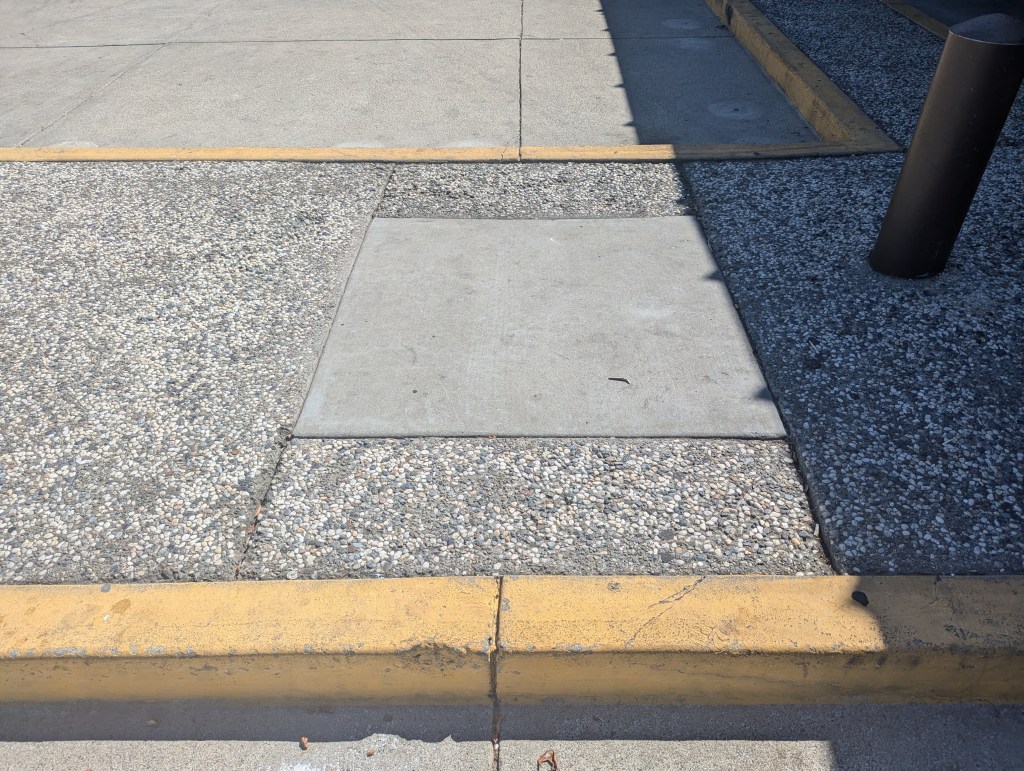
The Santa Clara Valley really is, as it was formerly known, the Valley of Heart’s Delight. A long time ago, it was famous for vast orchards that thrived in its exemplary climate and soil. The climate is still here, but so are nearly two million people who now live where orchards formerly were. Not so much of the formerly productive soil remains exposed, and almost none is appreciated for its potential. Urban development continues to expand to occupy more of it. At a strip mall in the Berryessa District of San Jose, I noticed what appeared to be gravesites of small patches of once exposed soil that died slow deaths after all other soil around them was developed. The concrete pavement outside of and below the yellow curbs was likely the original parking area, walkway and paved patio, which were separated from each other by what was likely small landscaped patches of exposed soil within and at the same level as the yellow curbs. Sometime after the area outside of the curbs were paved, most of what was likely exposed soil within was also paved with exposed aggregate concrete, leaving only what was likely three smaller square patches of exposed soil, perhaps for trees to survive in. Eventually, even these three smaller square patches of exposed soil were also paved with simpler concrete. It is impossible to say why all this concrete pavement was necessary, or why exposed soil was so objectionable. Perhaps the dirt was dirty. Perhaps it was infested with weeds. Perhaps all this concrete is some sort of Brutalistic art. Regardless, the good soil below is now useless. The patio now lacks shade from trees. A little bit more of the Santa Clara Valley can not sustain any vegetation. A little bit more of Paradise is paved.

Brutalism?

Planting Should Not Be Complicated

Soil amendment should not be excessive.

Autumn and winter are generally the best seasons for planting. Most vegetation is either less active than during other seasons, or dormant. It is therefore more complaisant to the distress of planting procedures. Weather is cooler and wetter than during other seasons. It is therefore less stressful to vulnerable vegetation recovering from planting procedures.

Nonetheless, planting continues throughout the year. Seasonal vegetables and annuals are seasonal at various times. Planting after any lingering chill or potential frost of winter is safer for several species. Also, planting commonly happens whenever it is convenient for whomever does it. Many species are most tempting whenever they happen to bloom.

Generally, this is no problem. Planting while vegetation is active during warm weather is riskier but feasible. It should preferably happen after the warmest time of day. Weather is likely cooler after three in the afternoon. Unusually hot weather justifies delay for another day. Once planted, thorough soaking settles comforting wet soil around vulnerable roots.

Realistically, most planting techniques and concerns are the same regardless of season. The processes only have more potential to be more stressful now than during dormancy. A few species are actually dormant during summer or even spring. Several spring bulbs, such as narcissi, are now ready for division or relocation. Bearded iris rhizomes are also.

Soil amendment helps new plants to feel more comfortable within their new situations. It encourages them to extend roots from their original media into surrounding soil. It should not be excessive though. Contrary to overly popular belief, it is unnecessary below roots. New plants can sink detrimentally below grade if amendment or loose soil below settles.

Stakes for trees that need them must extend past roots and into solid soil below. Binding nursery stakes should be loosened or removed if possible. Binding, which initially keeps trunks straight, can later interfere with trunk development. All new plants need systematic watering through dry seasons until they disperse roots. Most appreciate a layer of mulch, to retain moisture and insulate.

Rotation Makes Gardens Go Round

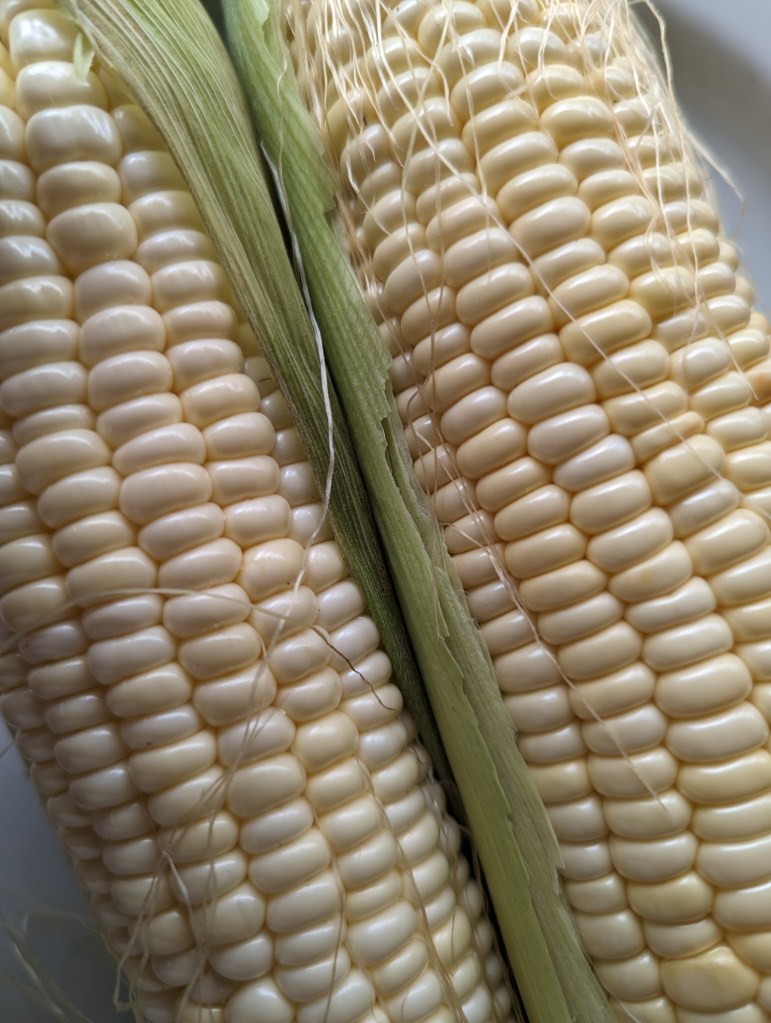
Corn is a consumptive summer vegetable.

Vegetables are greedy as they grow. They crave rich soil. They exploit it and abandon it at the end of their season. Nutrient depletion can be a problem for subsequent phases of similar vegetables. In other words, vegetables of any particular family consume the same nutrients. Each phase leaves a bit less for the next. Crop rotation disrupts this process.

Different types of vegetables deplete different types of nutrients. This is an advantage for a vegetable garden. Tomatoes can deplete soil nutrients for subsequent tomatoes. Corn, however, may not notice such depletion. It craves different nutrients, so may be content with what tomatoes did not consume. This is how and why crop rotation is so effective.

Crop rotation is simply a technique of not growing vegetables where similar types grew. Vegetables grow better where different types grew previously. Their formerly depleted but vacated soil can recuperate in their absence. They can return to the same soil after three years or so. Other vegetables that grow there for that time accelerate recuperation.

Warm season vegetables are generally more consumptive than cool season vegetables. That is because so many of them are actually fruits, such as tomatoes, corn and squash. More cool season vegetables are truly vegetative, such as lettuce, cabbage and carrots. Because they produce no bloom, seed or fruit prior to harvest, they need less resources.

Therefore, warm season vegetables are more responsive to crop rotation. Most are not relatives of the cool season vegetables that they are now replacing. Similar vegetables of the previous few summers are more of a concern. Tomatoes, eggplants and chilis are all of the Solanaceae family. They should avoid soil that their relatives used previously.

Similarly, if possible, corn should not grow where it grew within the past few years. Nor should beans. Fertilizer can compensate somewhat for soil depletion where rotation is impractical. For example, a fence may perpetually be the ideal support for pole beans. Spring lettuce, carrots and other vegetative vegetables may be less reliant on rotation. Although most squash benefit from rotation, zucchini seems to be productive regardless.

Soil Is More Than Dirty

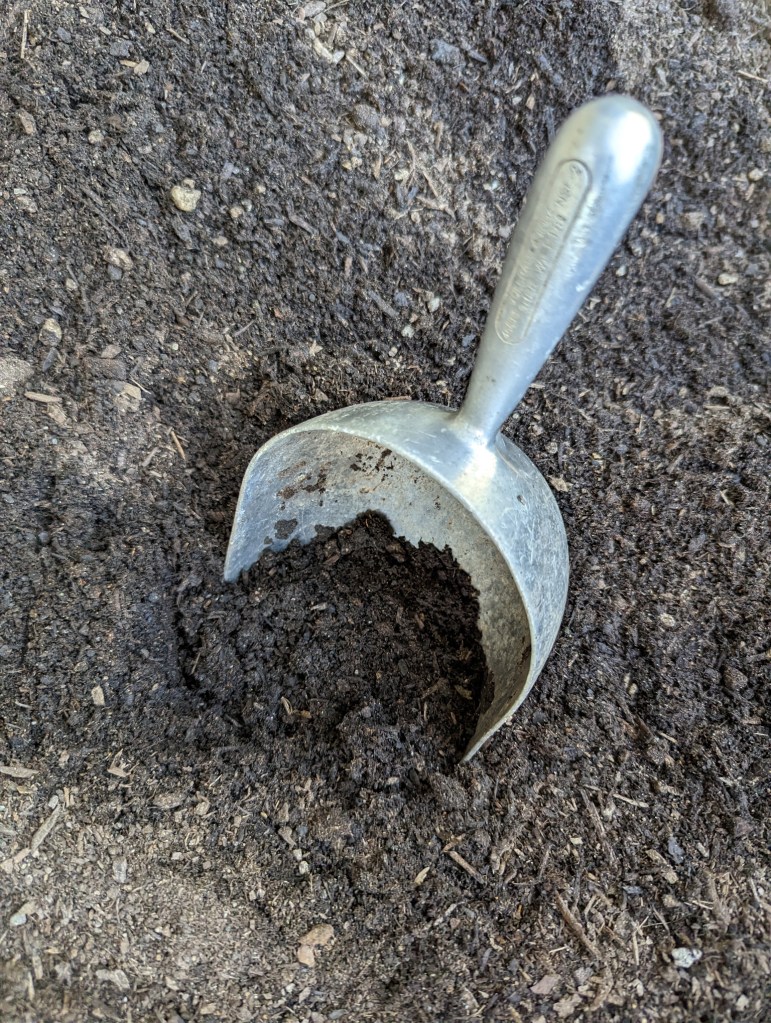
Soil amendments improve percolation of moisture.

All weeds are plants. Not all plants are weeds. Weeds are a specifiable subset of plants. Specifically, weeds are plants that grow wildly where they are undesirable. Similarly, dirt is likely soil, although it could be anything that is dirty. Soil is not merely dirt, though. Dirt is soil or a similar matter, where it is undesirable. Plants and weeds know the difference.

Most simply, soil is the loose material on the surfaces of most land. Obviously, looseness is relative. Some is quite dense and hard. It is not solid rock though. All of it consists of a combination of various inorganic aggregates. Most also includes various organic matter. Inorganic aggregates range in size from microscopic clay particles to substantial stones.

Soil provides stability and nutrients for vegetation that inhabits it. Roots disperse through it for structural support of their associated stems and foliage. Roots also absorb nutrients and water, as well as conduct respiration. Soils are naturally quite diverse. Vegetation is naturally more diverse to exploit various soils. Very few soils can not sustain vegetation.

Lawns are the carpets of a garden. Hedges are the walls. Tree canopies are the ceilings. Soils are the foundations. They support all vegetation that is not self-reliant in containers or epiphytically. Some soils are sandy, so drain very efficiently. Some are denser clay, so may drain slowly. Like climate and exposure, soils can limit what grows within a garden.

Most common and popular vegetation is satisfied with most common types of soil. Some, particularly vegetables and annuals, are more demanding. Even within good quality soil, they appreciate amendments such as compost. Amendments improve aeration, drainage and moisture retention. Organic amendments also provide nutrients as they decompose.

The most demanding vegetation also appreciates fertilizers. Most fertilizers are chemical or synthetic fertilizers of very precise formulation. Organic fertilizers are only slightly less precise. All allow application of specific amounts of specific nutrients for specific results. For example, nitrogen enhances foliar growth. Also, phosphorus enhances floral growth, and fruit growth.

Crop Rotation Promotes Garden Efficiency

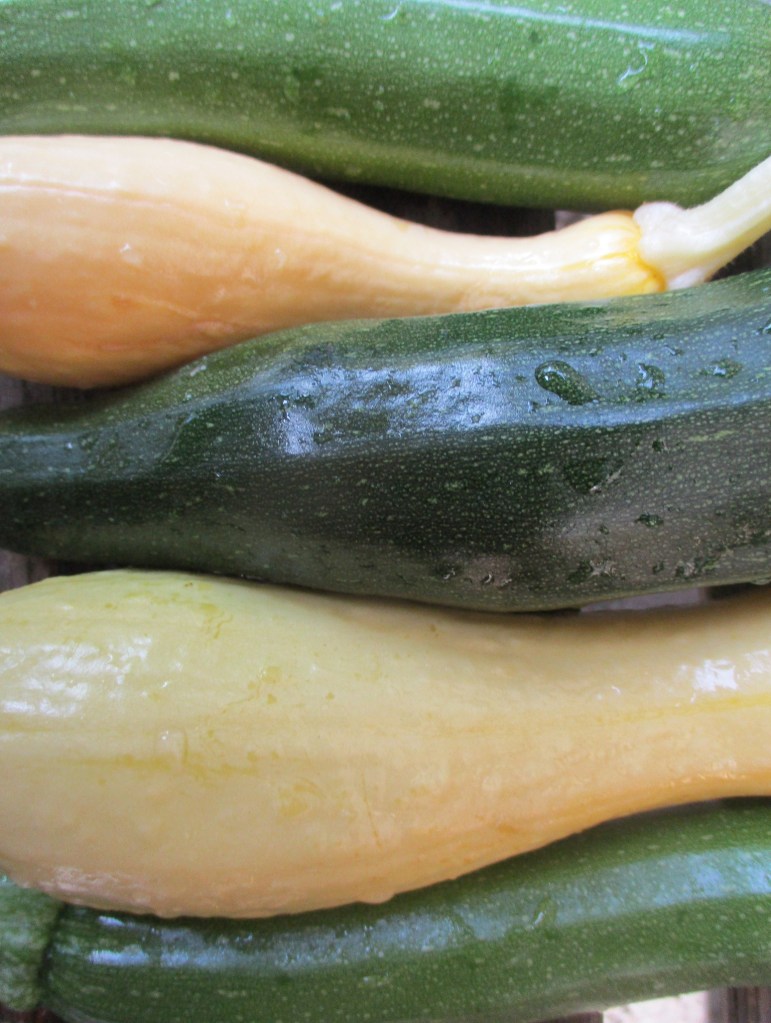
Squash eventually depletes particular soil nutrients.

Maya Angelou likely enjoyed gardening. She said, “In diversity there is beauty and there is strength”. That is how the healthiest of ecosystems, including home gardens, function. Vegetable gardens are generally diverse. However, each group of a particular vegetable is rather homogenous. Crop rotation can compensate with diversity through the seasons.

Crop rotation is growing different vegetables in particular places from season to season. It is the same as growing particular vegetables in different places from season to season. Distinctly consumptive vegetable plants should relocate each season. Less consumptive sorts may perform adequately in the same place for years. Diversity makes it interesting.

Each type of vegetable plant consumes particular nutrients from the soil. Eventually, they can deplete their soil of these particular nutrients. Crop rotation allows them to utilize the nutrients they need from undepleted soil instead. Meanwhile, other vegetable plants can grow in the vacated soil. These different types of plants utilize different types of nutrients.

For example, tomato plants notoriously deplete the soil of particular nutrients. Corn does the same. However, each depletes different nutrients. Therefore, corn can be satisfied in soil vacated by tomato plants. Likewise, tomato plants can be satisfied in soil vacated by corn. Furthermore, each promotes the restoration of the soil nutrients needed by the next.

Crop rotation also disrupts proliferation of several pathogens that infest vegetable plants. Dormant spores of bean rust disease overwinter in the soil beneath infested bean plants. They efficiently infest any receptive bean plants to occupy the soil during the next spring. However, they can not infest plants that are not related to beans, such as pepper or okra.

Summer vegetables should be situated accordingly as they return to vegetable gardens. Tomato, pepper and eggplants are related, so should not grow where any grew last year. The same applies to bean and pea. Squash and cucumber are related also, but are less consumptive. They may perform adequately within the same soil for more than one year. Several summer and winter vegetables are related.