Spring in Guadalupe Gardens

Spring is in the air.

(This article is recycled from many years ago, so contains outdated information.)

Spring in Guadalupe Gardens on April 23 is the big local gardening event of the Santa Clara Valley! Not only will it be within Guadalupe Park, surrounded by the various Guadalupe Gardens, but Spring in Guadalupe Gardens gathers together an impressive variety of local gardening clubs and vendors. There will be workshops, lectures, trail walks and garden tours, as well as fun activities for children, music and entertainment.

The Heritage Rose Garden, which is the most extensive public collection in the United States of America, designed for the preservation of the ancestors of modern roses, will be in full bloom. The Historic Orchard is a tree museum of the many fruit and nut trees that inhabited the vast orchards that once filled the Santa Clara Valley; many of which can be productive in modern suburban gardens.

Representatives of many local gardening clubs will be at Spring in Guadalupe Gardens, with information about their respective expertise, as well as membership. The John E. Stowell Dahlia Society, the American Fuchsia Society and the Master Gardeners of Santa Clara County will all be there, to name a few. I will be at the Gardening Advice Booth throughout the event, to discuss any gardening issues and questions.

When I can get away from the Gardening Advice Booth, I like to see what I can purchase from the many vendors. There will be more than forty. Most of my fuchsias, and some of my aloes and cacti were obtained at Spring in Guadalupe Gardens. It is common to find many uncommon tomato plants and roses.  There will also be garden art and paraphernalia. The Master Composters of Santa Clara County will be giving away free compost. One never knows what to expect at Spring in Guadalupe Gardens.

Earth Care Recycling will again host a free electronic waste drop off at the Visitor and Education Center, to collect all sorts of computer components, televisions, stereos, fax machines and telephones. Proceeds benefit the Guadalupe River Park Conservancy.

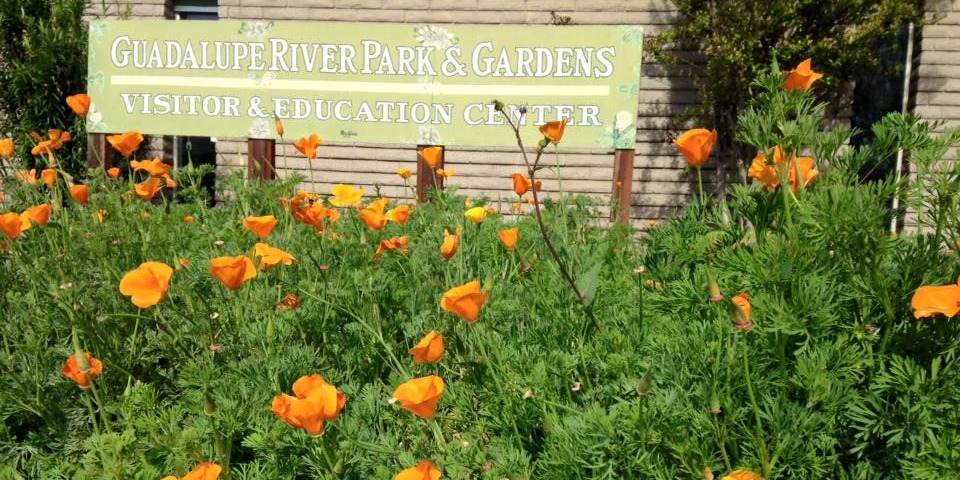
Spring in Guadalupe Gardens will be from 10:00 a.m. to 3:00 p.m. this April 23, just north of the Guadalupe Gardens Visitor and Education Center, which is located at 438 Coleman Avenue in San Jose.  Admission and parking are free. Just follow the signs from Coleman Avenue or East Taylor Street. More information about Spring in Guadalupe Gardens can be found at www.grpg.org or by telephoning 298 7657.

Not All Pruning Happens In Winter

If necessary, Oregon grape can be pruned to the ground now.

Spring has sprung; and winter has wenter . . . or whatever winter does to get out of the way of spring. Plants are more active now than at any other time of year. Deciduous plants that were dormant and bare through winter have already started to bloom and produce new foliage. Evergreen plants are now making new foliage to replace their tired old foliage that lingered through cold, wet and windy winter weather. 

Frost is very unlikely this late. It is safe to sow seeds for all sorts of warm season vegetables and annual flowers, like beans, okra, zucchini, nasturtiums and sunflowers. It is likewise time to plant small plants for certain vegetables and flowers that are too slow to start from seed, like tomatoes, peppers, eggplants, petunias and impatiens.

Winter was the time to prune almost all deciduous plants (which defoliate) and many evergreen plants while they were dormant. However, pruning of plants that are susceptible to frost damage needed to be delayed until about now, even if they had been damaged earlier. Premature pruning would have stimulated new growth, which would have been even more sensitive to subsequent frost.

Any lavender starflower, bougainvillea, marguerite daisy or blue potato bush foliage that was damaged by earlier frost can now be pruned away. New foliage should already be appearing. Also, any mushy frost damaged leaves of giant-bird-of-Paradise and banana can be removed, and should be replaced by new foliage as the weather gets warmer.

The end of winter and beginning of spring is also the best time for any necessary severe restorative pruning of plants that can be damaged by frost, as well as many heartier evergreen plants. It is late enough to avoid frost, while early enough to take advantage of the first new growth phase of the season.

For example, lavender starflower that is both overgrown and damaged by frost can be pruned back to the main stems now, instead of merely shorn to remove damaged foliage. If pruned earlier, it would have not only been more sensitive to frost, but would have remained unsightly as long as weather remained too cool for it to regenerate new foliage.

It likewise can not be pruned much later without wasting most of the new spring growth that is presently developing, which would be very stressful and delay bloom. Pruning severely now will be unsightly for the least amount of time before new growth regenerates and blooms. It would also be less stressful, since it coincides with natural dormancy and regenerative cycles.

Privets, junipers, oleanders, photinias, bottlebrush and pittosporums that need restoration should also get it now, not because they are sensitive to frost, but so that they recover as efficiently as possible as weather gets warmer. Besides, bottlebrush, pittosporum and some other plants are susceptible to disease if pruned during winter, because pruning wounds are easily infected during rainy weather.

Wildflowers On The Wild Side

Some wildflowers bloom in shady forests.

Warm season annuals are more varied than cool season annuals for one simple reason. Spring and early summer are the best time for bloom. Afterward, there is plenty of time for seed to develop, prior to cool winter weather. Obviously, most flowers want to exploit this schedule. This includes wildflowers, particularly in regional chaparral or desert climates.

Wildflowers are in more of a rush to bloom for early spring here because summer is arid. They could be more susceptible to premature desiccation later. They last longer and can bloom later in home gardens with irrigation. Actually though, not all wildflowers bloom for early spring. Some bloom for autumn or winter. A few bloom for summer, generally briefly.

There is no explicit definition for wildflowers. Western redbud and the various ceanothus are technically native wildflowers. Yet, they grow as large shrubbery or even small trees. Most popular wildflowers are annuals. A few are biennials or perennials. Some perennial sorts must mature for more than a year before they bloom well. Some are very persistent.

Technically, wildflowers should be locally native, and observable directly within the wild. Realistically, this expectation is unrealistic. Many of the most colorful, like perennial pea, are naturalized exotic species. Most wildflower seed mixes include random species from elsewhere. Some are regionally specific, but to other regions and very different climates.

California poppy and various lupine are the most popular and familiar native wildflowers. Douglas iris, yarrow and clarkia are about as practical for cultivated home gardens. Bush poppy and monkey flower more appropriate to rustic landscapes beyond home gardens. Many wildflowers need aggressive maintenance, such as cutting back after their season.

Seed of most annual and perennial wildflowers prefers to be in a garden by late autumn. It can then settle in through cool and rainy winter weather to grow and bloom about now. With watering after the winter rainy season, several might start now to bloom for summer. Some of the more sustainable species can disperse seed for another wildflower season.

Spring Bulbs Benefit From Vernalization

Spring bulbs vernalize with winter chill.

Spring bulbs obviously bloom for spring. Less obviously, they vernalize with winter chill. They are seasonable about now because this is when they should get into their gardens. Many prefer to be interred into their shallow graves by Halloween. Many can wait as late as New Year’s Day. If too much later, some may not experience enough chill to vernalize.

Planting spring bulbs can be ungratifying because there is nothing to see afterward. After all, they are dormant at the time. They lack foliage or any other parts to extend above the surface of the soil. They seem to remain inactive until they bloom as winter succumbs to spring. However, between now and then, they will secretly reset before resuming growth.

Vernalization is how many spring bulbs finish their previous season and begin their next. They know that it is winter after they experience a particular duration of a particular chill. By then, they should have finished all growth of the previous season. Afterwards, all new growth and bloom is for the next season. It is how they know to bloom on time for spring.

Dutch iris, freesia, ranunculus, anemone and common narcissus do not need much chill. Tulip, hyacinth, crocus and a few narcissus and daffodil do. Some bulbs that benefit from it get a prechill treatment before coming to nurseries. Prechilled tulip and hyacinth bulbs are sadly unlikely to bloom after their first year. They prefer more chill than they get here.

Otherwise, many spring bulbs are supposedly reliably perennial. Naturally, actual results may vary. Anemone can survive for many years, but might bloom only rarely. Ranunculus may be less perennial, but may also bloom better while it survives. Dutch iris and crocus are unpredictable. Freesia and simple varieties of narcissus are more reliably perennial.

Technically, some spring bulbs are not bulbs. Ranunculus and freesia, for example, grow from corms. Nonetheless, almost all spring bulbs bloom only once annually. Succession planting can prolong bloom. It provides subsequent phases to begin bloom as preceding phases finish. However, phases of reliably perennial bulbs synchronize after first bloom. Summer bulbs and bulb-like plants are seasonable later.

Spring in Guadalupe Gardens & Wildflower Show (2010)

(This article is from 2010, so contains irrelevantly outdated information.)

Now that the world renowned San Francisco Flower and Garden Show is over, it is time for an even more important horticultural event; Spring in Guadalupe Gardens, on April 24, between 10:00 a.m. and 3:00 p.m.. This celebration of Guadalupe Gardens, Earth Day and the Great Outdoors may not be as big and as fancy as some of those ‘other’ shows, but it is so much more important because it is local, centered around the Guadalupe Gardens Visitor and Education Center, which is located at 438 Coleman Avenue in San Jose.

My favorite part of Spring in Guadalupe Gardens is all the vendors of unusual plants. In past years, I found several fuchsias, aloes, cacti and weird tomato plants at Spring in Guadalupe Gardens. I never know what to expect until I get there. I hope to find unusual fig trees this year.

Spring in Guadalupe Gardens is also a great opportunity to meet with representatives of all sorts of gardening clubs. Gardening questions can be brought by the Master Gardeners of Santa Clara County’s Gardening Advice booth, where I will be working throughout the day. There will be workshops and lectures, music and entertainment, as well as fun activities for children.

Spring in Guadalupe Gardens happens to be at the same time as the peak of bloom in the Heritage Rose Garden, which is the largest public garden in the United States of America dedicated to the preservation of old roses. There will be tours in other gardens and trail walks too. If I did not need to work at the Gardening Advice booth, I would want to tour the Historic Orchard, which is literally a tree museum of the many fruit trees that once filled the vast orchards of the Santa Clara Valley.

Earth Care Recycling will host a free electronic waste drop off at the Visitor and Education Center to collect all sorts of computers, keyboards, monitors, televisions, stereos, radios, printers, fax machines, telephones, cell phones, DVD players and VCRs. (I thought mine was the last of the VCRs!) Proceeds benefit the Guadalupe River Park Conservancy.

Admission and parking are free. Just follow the signs from Coleman Avenue or West Taylor Street. More information about Spring in Guadalupe Gardens can be found at www.grpg.org or by telephoning 298 7657.

The unfortunate news about the Wildflower Show organized by the Santa Clara Valley Chapter of the California Native Plant Society and the Mission College Biological Sciences Department is that it will be at the same time (with another hour until 4:00 p.m.). The fortunate news is that it will continue the following day on April 25, so we all can attend both events! The Wildflower Show will be at Mission College in Santa Clara. Parking in lot C and admission are free.

More than four hundred specie of wildflowers and native plants will be displayed and accurately labeled. There will be free classes for native plant identification and wildflower gardening, and nature activities for children. Books, posters, seeds and note cards will be available for purchase. More information can be found at www.cnps-scv.org, or by telephoning 650 – 260 3450.

Spring Blooming Trees

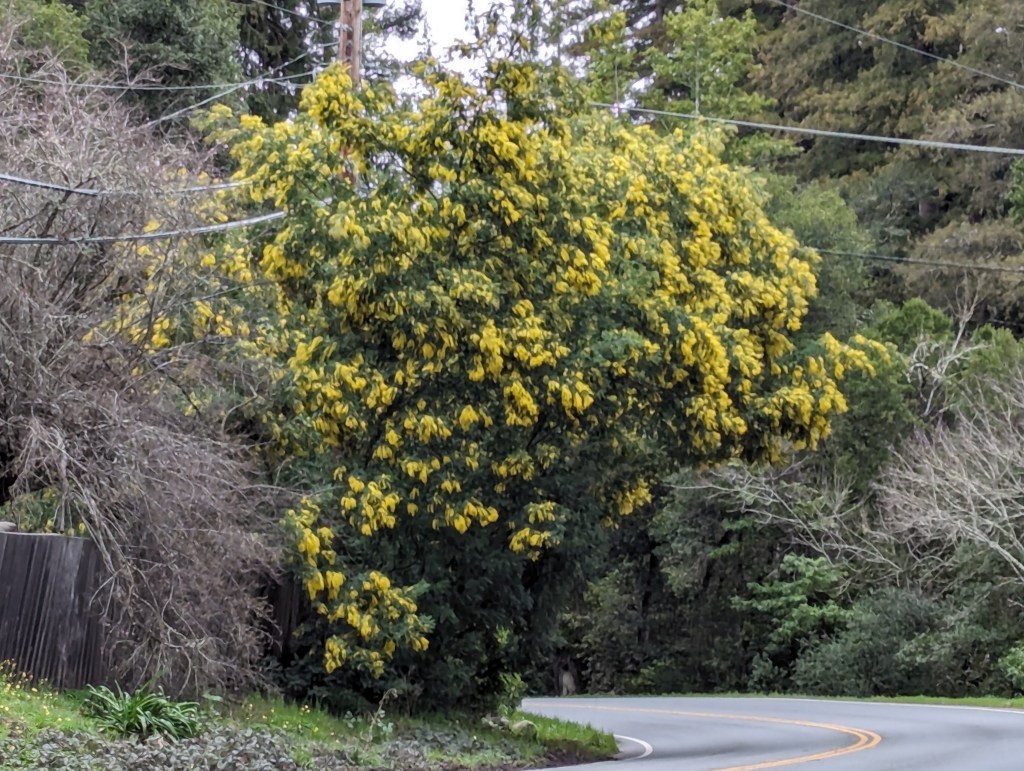
Silver wattle is an aggressively invasive exotic species, but certainly is pretty in bloom!

From my window, I can see across the way to one of my all time favorite weeds in my neighbor’s garden. A healthy acacia tree is nearly in full bloom! Throughout the year, I occasionally remind my neighbor that we really should cut the tree down before its seedlings overwhelm the neighborhood. This time of year though, I am secretly glad that we have not gotten around to it yet.

Even though most people find the fragrance objectionable, I actually find it appealing. It reminds me of Southern California, perhaps because, even on a cool wintry day, it smells like a sun roasted freeway on a hot smoggy day. I suppose that its pollen is a problem for anyone with even mild allergies; and after all, it is still a major weed.

Other trees that are now blooming are not so problematic, or equipped with a petroleum based fragrance. Shrubby forsythia and flowering quince were the first to bloom. Forsythia is the best bright yellow besides acacia. The most popular flowering quince are rich pinkish orange. Apricot, cherry, peach, plum, prune, nectarine, almond and a few other fruit trees, as well as their fruitless ‘flowering’ counterparts, including purple leaf plum, are blooming about now. (Flowering apricot, peach, nectarine and almond are rare.) Fruiting pear and apple trees typically bloom a bit later; but flowering pear and some flowering crabapple are already blooming. Later, redbuds bloom bright purplish pink.

When pruning fruit trees during winter, I sometimes leave a few branches to cut and bring inside while in bloom. Fruitless flowering trees do not need to be pruned like fruiting trees, so can provide even more flowering stems with more flower variation. Stems of forsythia, flowering quince and flowering cherry are often ‘forced’ into bloom by getting cut and brought in just as flower color start to become visible, so that they can finish their bloom inside. Except for redbud, any of the other spring bloomers can also be forced, but are more likely to get desiccated by the dry air inside.

As red maple and red oak begin to break dormancy, they develop delicate pendulous ‘blooms’ that are not very colorful, but might be interesting enough to add to more colorful cut flowers. Of course, pussy willows are always traditional.

Warmth Accelerates Garden Activity.

Spring was mild and started late. Summer if now getting started.

Just like the moon is always either waxing or waning, but is really only full or new for the brief moments in between, the seasons are always flowing from one to the next. Even though it is not yet half way through summer, plants in the garden are already planning for autumn. Summer has been mild, but still warm enough for most plants to do what they need to do by this time of year.

If weeds were not pulled when they should have been in early spring, they really should be pulled now. They have already started to sow their seed for the next generation that will grow at the end of next winter. The ground has dried and hardened since early spring, so pulling weeds will take a bit more effort. That is the punishment for procrastinating.

Weeds that are still somewhat fresh and green may not have dispersed all of their seed yet. If pulled soon enough, their next generation may not be so prolific. Those that have dried have likely dispersed their seed already. Their progeny will be back by next spring.

Pulling out the roots of annual grasses is not as important as getting the roots of perennials like thistles. Heck, they are annuals, so will die at the end of the season anyway. Getting their seed in the priority now. Some people are satisfied with simply pulling the seeded tops off of annual weeds, and leaving the lower portions to die out naturally.

Most fruit trees finish their production sometime during summer. Small fruit like cherries finished some time ago. Larger peaches, although related to cherries, may still be ripening into August. They should be picked as they ripen, not only to get the most use out of them, but also to avoid sharing with unwelcome rodents, birds and other annoying wildlife. The ground under fruit trees should be cleaned of any fallen fruit that might otherwise rot and perpetuate disease. Apples and pears ripen later and into autumn.

Warm season vegetables should be picked as they mature to promote continued production. Leaving extra zucchini on the plants inhibits production of new zucchini, while the old zucchini grow into tough and insipid baseball bats. Leaving extra tomatoes both inhibits new tomatoes and also makes a mess of rotting fruit.

Bloom Is Bountiful For Spring

Many flowers bloom only for spring.

Bloom that was delayed by the unusually wintry winter is making up for lost time. Spring bulbs, flowering cherries and deciduous magnolias were amazing. Wisterias and lilacs continue their pastel display within some climates. More flowers bloom during springtime than at any other time of year. Even roses of summer will begin their performance soon.

Pollination is the priority of all flowers. The majority of flowers exploit wind for pollination. Because they need not attract pollinators, they are neither very colorful nor very fragrant. Colorful and fragrant flowers are the minority that compete for the attention of pollinators. This includes the same colorful and fragrant flowers that are desirable for home gardens.

Whether reliant on wind or pollinators for pollination, flowers adhere to a strict schedule. Some colorful and fragrant flowers want to be receptive while their pollinators are active. However, pollinators are more likely to adjust their schedules to exploit favorite flowers. After all, there is another major incentive for spring bloom. Seed needs time to develop.

Pollination is the priority of all flowers because it is how they generate seed. Some seed develops fast enough to grow into new plants within the same year. Some annuals can actually procreate for a few fast generations annually. Most seed develop slower though. They mature during summer, overwinter, and ultimately grow during the following spring.

For now, garden enthusiasts should enjoy the most abundant bloom of the year. That will not require too much exertion. Fresh fruit of summer will develop later. Some flowers that deteriorate without producing fruit may justify deadheading. This redirects resources for vegetative growth, and eliminates any unwanted seed. Besides, it might be a bit neater.

The most profuse spring flowers generally bloom only once annually. They will not do so again until next spring. Some less profuse bloomers may repeat with later bloom phases through summer. Of course, some flowers bloom within other seasons between summer and even winter. Their individual schedules are appropriate to the climates that they are originally native to.

Six on Saturday: Return To Work

Much has changed during the previous two weeks while Rhody, Carson and I were in the Pacific Northwest on vacation. The previously incessant rain suddenly stopped when we left. Canned and potted plants were consequently in need of irrigation after we returned. The weather is splendid now. Delayed bloom is now making up for lost time. Vegetation is growing like weeds, and much of it is, particularly beyond refined landscapes. Work is about as behind schedule as it always is. I got all but the last of these six pictures at work this week. Pictures of vacation are not transmitting from the telephone to the computer. Perhaps I will share some next Saturday. I did not take many.

1. Iris X louisiana ‘Black Gamecock’, Louisiana iris is a gift from Skooter’s Family. There is enough for this closely spaced row on fifty linear feet of the edge of the drainage pond.

2. Rumex occidentalis, dock is a prolific native that inhabits another portion of the edge of the drainage pond. It is pretty but may later be replaced by multiplying Louisiana iris.

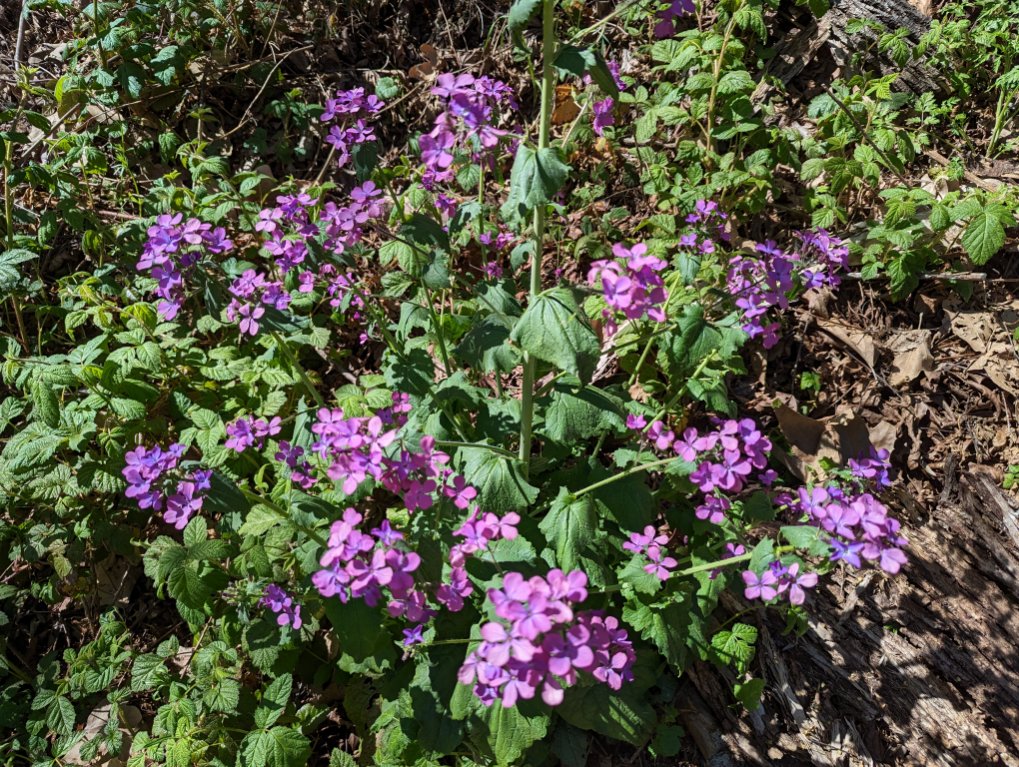
3. Lunaria annua, money plant seems to be naturalized, but only because someone who retired from here used to collect and disperse its seed. We try to continue this tradition.

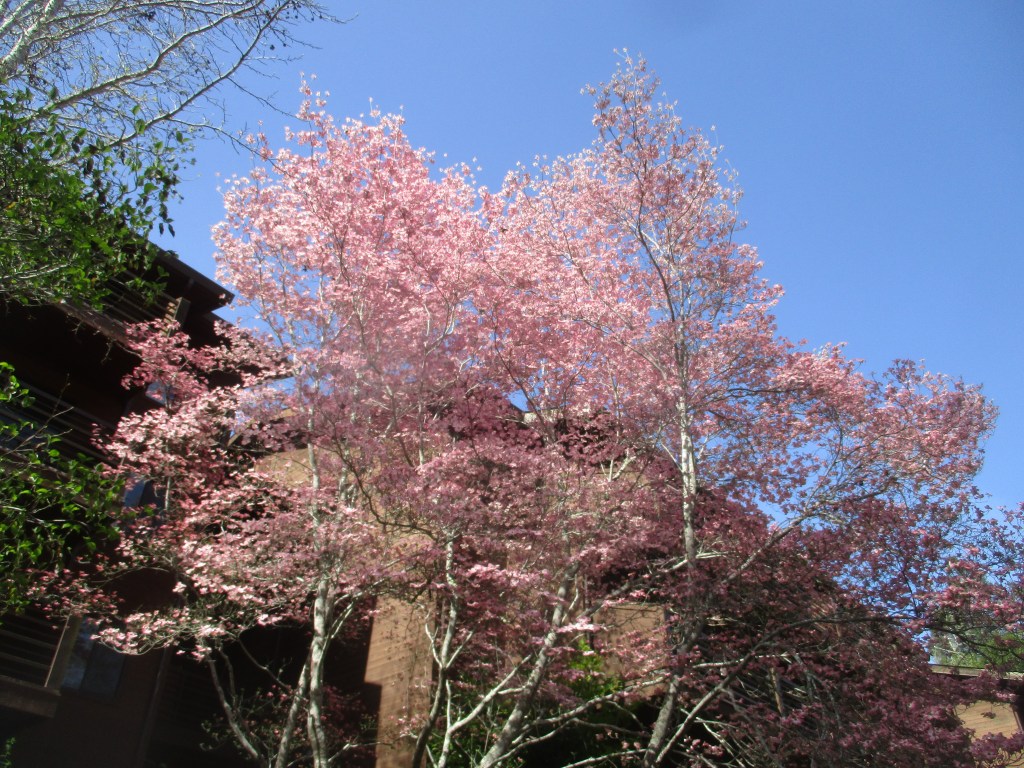
4. Cornus florida, flowering dogwood is late but spectacular. It does not perform as well within the arid chaparral climate of the Santa Clara Valley, just a few miles to the North.

5. Malus ‘Prairiefire’, flowering dogwood is about as spectacular. I believe that it blooms about now naturally though. I do not know what its species is, which is why it is omitted.

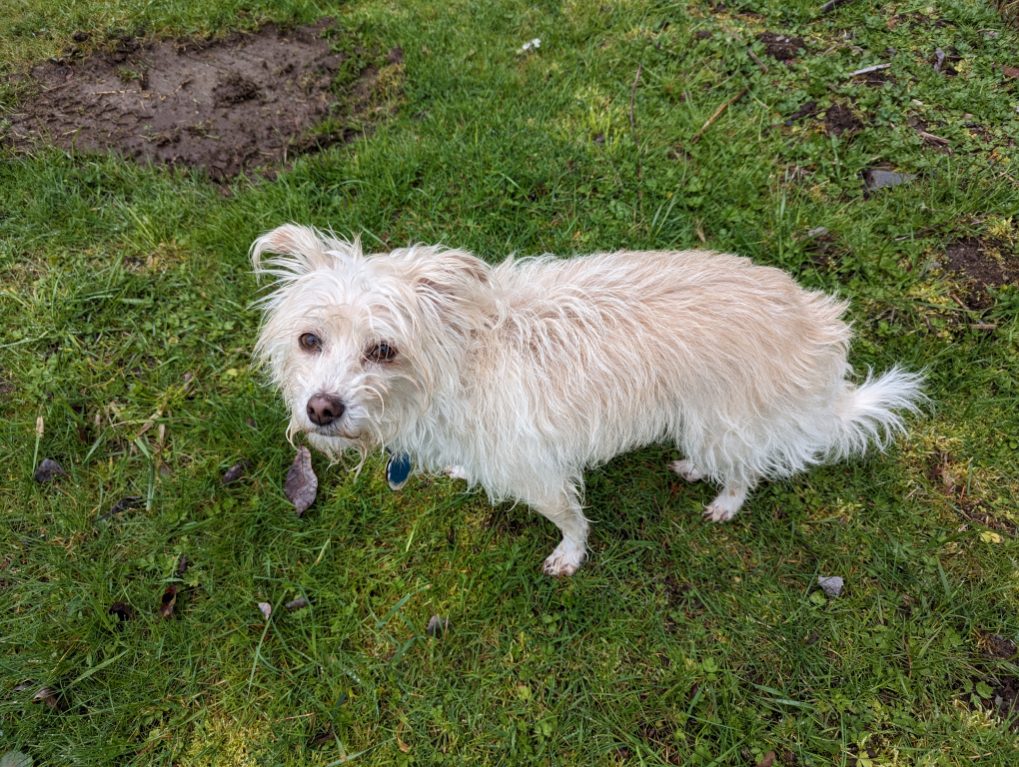
6. Rhody enjoyed the Pacific Northwest but not getting his picture taken. This was taken just before we left the farm near Poulsbo where I pruned several abandoned apple trees.

This is the link for Six on Saturday, for anyone else who would like to participate: https://thepropagatorblog.wordpress.com/2017/09/18/six-on-saturday-a-participant-guide/

Winter Weather Lingers Into Spring

Late wintry weather delays early bloom.

Winter was epic! Snow was more abundant than since 1976. Rain was more continuous than since 1982. Frost was colder than since 1990. All of this happened within this same winter! Californians generally appreciate rain and snow, and tolerate typically minor chill. Chaparral and desert climates here rarely get much. However, this weather is excessive!

Furthermore, such excessively cold or wet weather was unconducive to gardening. Most of us wanted to stay inside. Home gardens consequently endured neglect in conjunction with extreme weather. Regardless of the current weather conditions, winter is technically done. Now that it is spring, gardens should begin their systematic processes of recovery.

This may entail more effort for those who enjoy gardening than for the associated plants. Most plants are resilient to harsher winter weather than they endured here recently. That is how they survive other less temperate climates. Some may respond favorably to more thorough than typical grooming. Some might prefer later grooming while they regenerate.

Chill can actually enhance performance of some plants that prefer cooler winter weather. For example, some cultivars of apple are barely satisfied with the more typical local chill. They may perform better this year, after a cooler chill. Flowering cherry, purple leaf plum, lilac, wisteria, and many others may do the same. Stone fruits might be more productive.

Several plants do succumb to frost though. Some that typically die back but then recover may not recover this year. For some, the unusually cold frost was lethal. Others rotted as a result of lingering cool dampness. Kaffir lily that is blooming well now may succumb to rot later. Canna that grew early only to succumb to later frost should recover well though.

Some plants that endured frost and saturation last winter might delay their spring bloom. Roses could bloom better but also later, both as a result of cooler than typical chill. Some early spring bulbs that bloomed when they should suffered for it. Rain and wind knocked them into the mud. Later bulbs might avoid a similar fate by delaying their bloom slightly. Fewer conform to a comparably strict schedule.