Spring Bulbs Begin In Autumn

Daffodil bloom is not in season, but their dormant bulbs will be soon.

Even before winter begins, it is time to plan for it to end. Bulbs (including corms, tubers, rhizomes and tuberous roots) of many of the earliest spring flowers that bloom while the weather is still cool late in winter should begin to get planted about now. They are still dormant and not all that impressive yet, but have already stored everything they need to be ready to bloom as soon as they think it is time. Since the weather will be getting cooler through autumn before it gets warmer at the end of winter, even the earliest blooming of spring bulbs will stay dormant for a while, and have quite a bit of time to slowly disperse roots before their foliage eventually peeks through the soil.

Bulbs planted later will likely bloom later, which is actually an advantage for ‘phasing’ bulbs. Like vegetables, bulbs can be planted in phases every two or three weeks, depending on the duration of the bloom cycle of the particular bulbs involved. As one group finishes blooming, the next group starts blooming. Bulbs become available when it is time for them to be planted, and generally remain available long enough for a few phases to get added later when convenient, although there is always the threat of particular varieties getting sold out later in the season.

Phasing is only effective in the first season, since bulbs get established after their first bloom cycle, and will subsequently be on the same schedule as all their friends of the same variety. Bearded iris, calla, anemone and rananculus are not conducive to phasing, but instead bloom at a particular time, regardless of when they were planted.

Narcissus, daffodil, grape hyacinth, bearded iris and classic white callas are the most reliable of spring bulbs, and the most likely to naturalize, although bearded iris and callas will probably bloom quite late in their first year. Crocus, freesia and harlequin flower are almost as easy to grow. Anemone, rananculus, hyacinth, lily, tulip and the small colorful callas are tempting, but are not as reliable after their first year because the seasons are so mild here.

Hyacinth

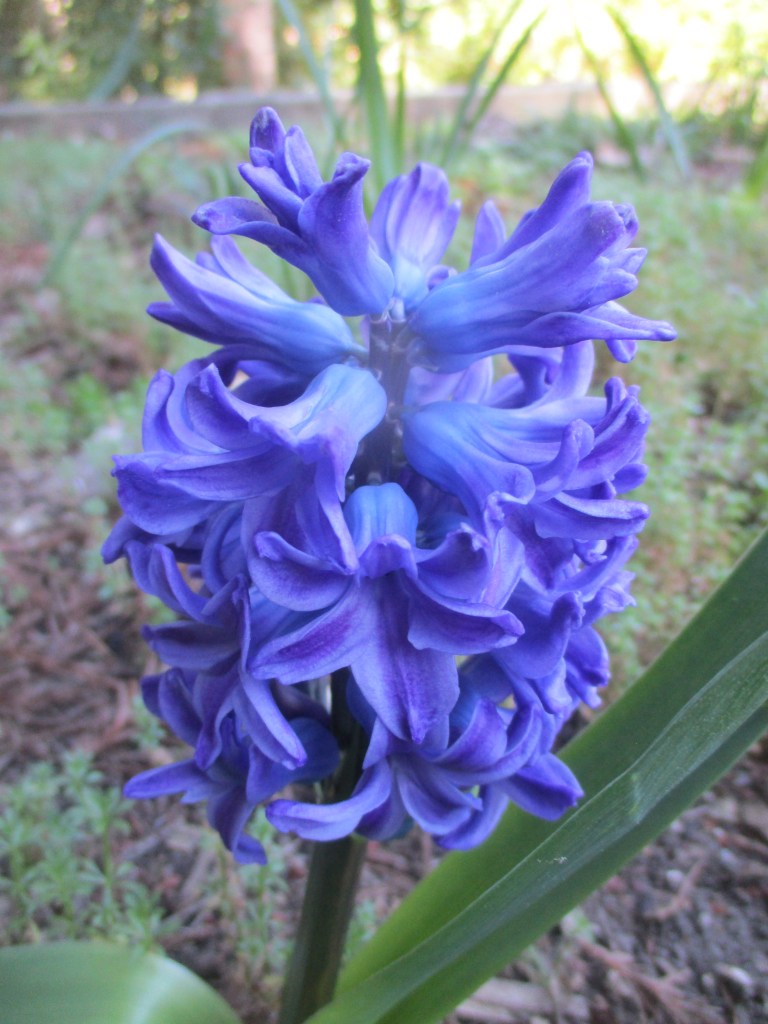
Hyacinth is both colorful and fragrant.

The most fragrant of flowers generally lack color. The most colorful of flowers generally lack fragrance. Most flowers employ either fragrance or color to attract pollinators, but not both. Hyacinth is an exception that is as colorful as it is fragrant. Bloom can be rich hues and tints of most colors except for green. The captivating fragrance is sweet and intense. 

Hyacinth are spring bulbs that are now finishing bloom, but are ready for planting during autumn. They require a bit of chill through winter, so must be dug and refrigerated for two months or so while dormant in milder climates. Dormant bulbs are plump and round, like small but toxic onions. They appreciate rich soil, regular irrigation, and a sunny situation. 

Bulbs generate only a few strap shaped and somewhat rubbery leaves during late winter prior to early spring bloom. These leaves resemble lily of the Nile leaves, but stay rather short, and may not flop. Hyacinth blooms with one or two short, stout and neatly cylindric trusses of several small flowers. Foliage lingers for only two or three months after bloom. Bulbs may not be reliably perennial.

Ranunculus

Ranunculus enjoys mild weather through spring.

If their strange tubers got into the garden last autumn, ranunculus should be blooming by now. Although their schedule suggests that they crave winter chill like other spring bulbs, they merely want to disperse their roots early. Then, they can bloom as winter ends, and continue until spring weather gets too warm for them. They mostly finish prior to summer. 

If tubers did not get into the garden earlier last autumn, young ranunculus plants become available from nurseries late in winter. Although generally a spring annual, tubers, which go dormant by summer, have potential to regenerate perennially for subsequent springs. Digging and storing tubers through most of their dormancy might improve their potential.

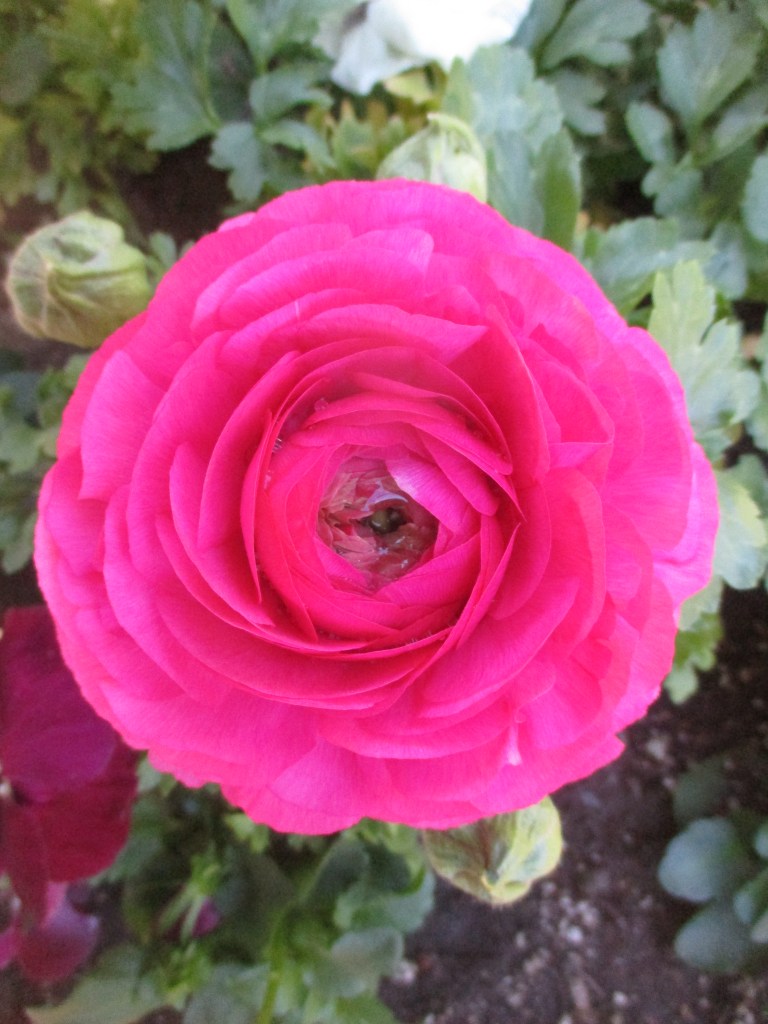
Ranunculus bloom can be pink, red, orange, yellow, purple, cream or white. Flowers are plump and neatly dense with many papery petals, like little peony flowers. They stand on sturdy stems about half a foot to a foot high. Their finely textured basal foliage resembles parsley, but with a lighter color. Dormant tubers are tufts of short, plump and woody roots.

Ranunculus

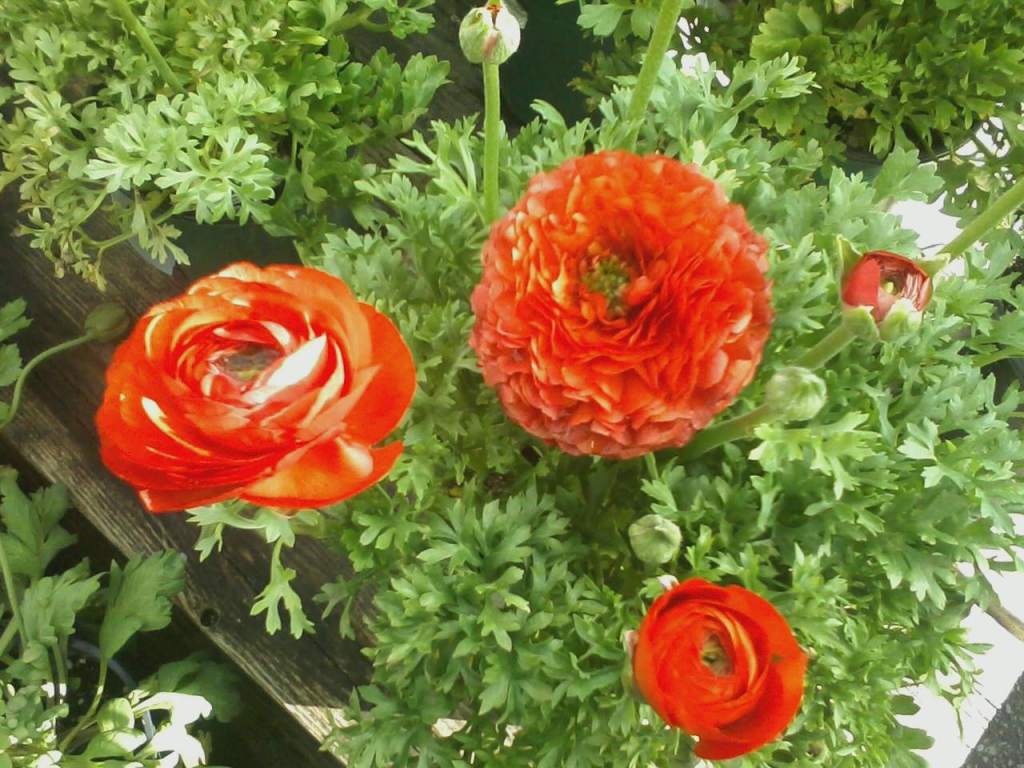
These potted ranunculus in a nursery are already blooming. Those planted while dormant last autumn may not have started yet.

If their dormant bulbs were planted back in October or November, ranunculus will soon be blooming. Those of us who missed the bulbs last autumn can already find blooming plants in nurseries. The bright yellow, orange, red, pink or white flowers are about three inches wide and seem to be outfitted with too many petals. They stand about a foot to a foot and a half tall, a few inches above the basal foliage that can get half a foot to a foot deep. The light green leaves resemble parsley, but are not as finely textured. Although perennial, ranunculus are most popularly grown as annuals because they tend to rot soon after bloom. They perform best with no more than a bit of shade, and rich but very well drained soil. They are more likely to survive as perennials if allowed to get rather dry as their foliage deteriorates after bloom.

Early Bulbs Start Even Earlier

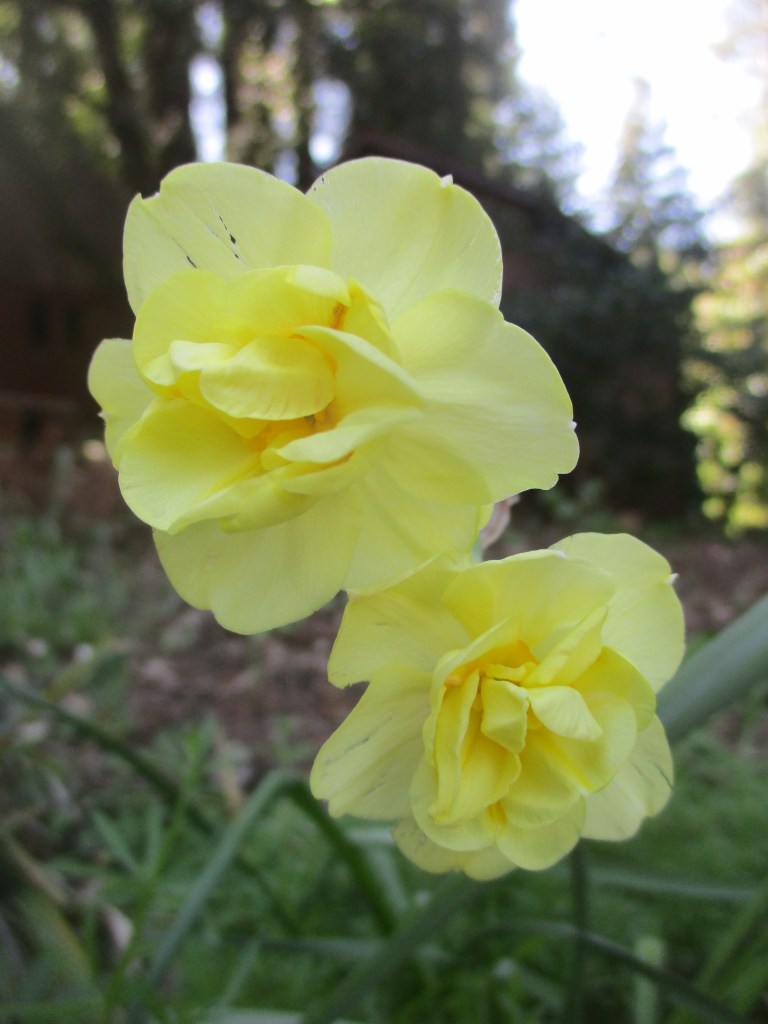
Daffodils for next spring start now.

Crocus, daffodil and narcissus are among the earliest of the popular early bulbs to bloom at the end of winter. Hyacinth, tulip, freesia, anemone, ranunculus and some types of iris bloom shortly afterward. That process should begin in February or so, about five months from now. Early bulbs are seasonable now though. This is when they go into the garden.

Early bulbs, or spring bulbs, take commitment. While dormant, they are not much to look at. There is less to look at after their internment into shallow graves, where they disperse their roots secretly through winter. They will not make an appearance until they bloom in spring. Fortunately, their performance is more than adequate compensation for the effort.

Early bulbs go into the garden now because they take time to get ready for spring bloom. While dispersing roots, they also begin to develop foliage and floral stems. Such growth remains safe and invisible below the surface of the soil until the weather is warm enough for it to emerge. Until then, chilly and rainy weather helps bulbs adhere to their schedule. 

Whether they are true ‘bulbs’, or they are corms, rhizomes, tubers or tuberous roots, early bulbs are specialized storage structures. They contain what the particular plants need to grow to maturity and bloom within their preferred season. They should resume dormancy afterward, to repeat the process as perennials. However, few modern cultivars will do so. 

Realistically, extensive breeding for the development of the more extravagant of modern early bulbs has compromised their vigor. Consequently, some are not reliably perennial. Some simpler crocus, daffodils and narcissus can naturalize as perennial in comfortable situations. Otherwise, more of the later bulbs, like canna, cala and dahlia, are perennial.

Whether they naturalize or not, most early bulbs bloom just once annually. Planting them in phases prolongs bloom. Ideally, a subsequent phase begins to bloom as its preceding phase finishes. The length of bloom determines the frequency of phases. For example, if tulips bloom for a week, phases can be weekly. Winter annuals cover nicely when done.

Grape Hyacinth

Grape hyacinth is very reliably perennial.

Are they reliably perennial or invasive? In ideal situations, old fashioned grape hyacinth, Muscari armeniacum, can get a bit too eager to proliferate and migrate. Not only do their bulbs divide efficiently, but their seed disperse beyond bulb colonies. However, bulbs do not migrate too rapidly for containment. Thorough deadheading inhibits seed dispersion.

Grape hyacinth provides some of the earliest spring bloom. Floral spikes of tiny rounded flowers do not get much more than six inches tall, but are delightfully abundant. The rich blue color is exquisite. Hybrids and other species can bloom with pale pink, pale purple, white, yellow, or various shades or tints of blue. The grassy foliage is somewhat rubbery.

If they do not migrate efficiently enough, established colonies of grape hyacinth are easy to divide in autumn. Of course, it will be necessary to mark their locations as their foliage dies back at the end of spring. Division is easier and faster than growing new plants from seed. If hybrids produce seed at all, it may not be viable. If it is, it may not be true to type.

Deadheading Spring Bulbs Conserves Resources

What happens when daffodils finish blooming?

Now that the various spring bulbs have finished blooming, or will soon, many will benefit from deadheading. The techniques are simple, and actually benefit many plants besides spring bulbs. In the most basic terms, deadheading is merely the removal of deteriorating flowers after bloom. Ideally, it should happen prior to the development of seed structures.

A most obvious advantage of deadheading is that it eliminates unappealing carcasses of finished flowers. This neatens the appearance of remaining foliage. The foliage of some spring bulbs shrivels soon after bloom, but remains intact through the process, to sustain development of new bulbs. It is easier to ignore without prominently shabby floral stalks.

Deadheading also conserves and redirects resources that would otherwise sustain seed production. Such resources can instead promote vegetative growth, including production of new bulbs to replace the old. Furthermore, depriving bulbs of seed provides an added incentive for vegetative regeneration. If unable to survive by one means, they try another.

Some bulbs are more reliant on deadheading than others. Grape hyacinth and snowdrop are too profuse with bloom for minor seed production to inhibit their performance. In fact, they produce viable and genetically stable seed, which could be an advantage if more of the same are desirable. Although seed production is limited, seed disperses extensively.

Dutch crocus are an example of sterile hybrids that are unable to produce viable seed, or waste associated resources on such efforts. Other extensively bred bulbs that are not so sterile may not be true to type. Consequently, their progeny are likely to be very different. Freesia do not require deadheading, but can produce feral seedlings with insipid bloom.

Lily, narcissus, daffodil, tulip and hyacinth are some of the popular spring bulbs that now are ready for deadheading. Summer bulbs and perennials will get their turn later. Canna, dahlia and perennials that continue to bloom through summer will be tidier, and perhaps bloom more abundantly with efficient deadheading. They need not wait until next year to express their gratitude.

Snowflake

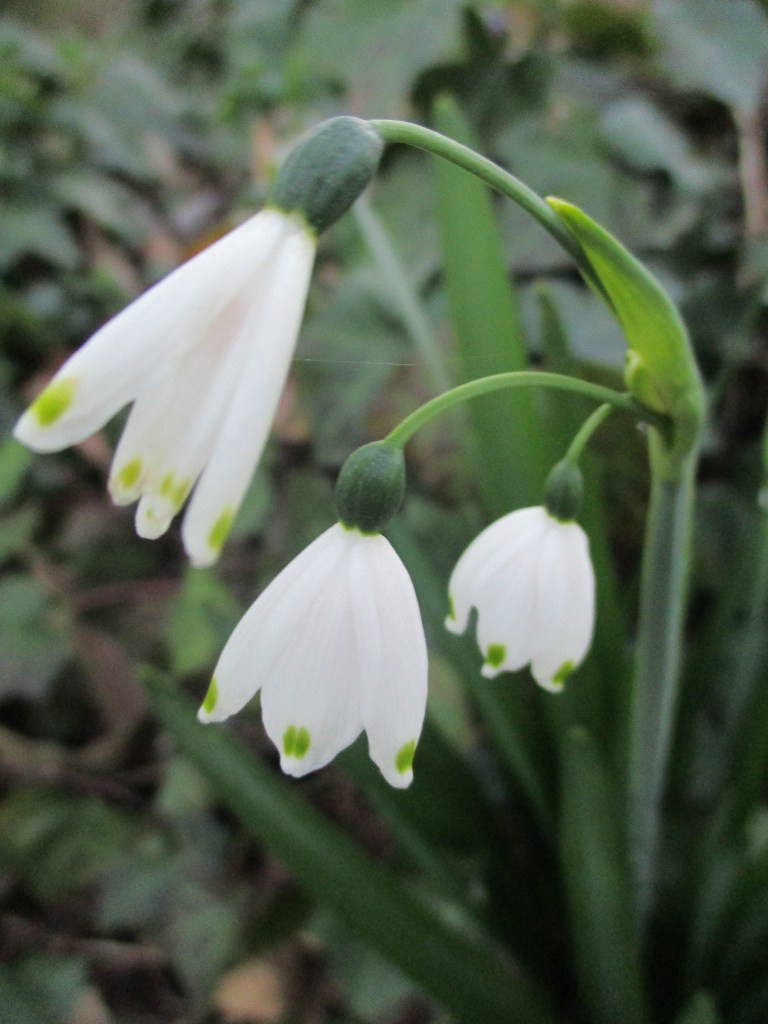
Snowflake might be mistaken for snowdrop.

Some of us here on the West Coast know it incorrectly as ‘snowdrop’. That is actually the common name of the many cultivars of Galanthus that are so very popular in other regions. ‘Snowflake’ is the correct common name for Leucojum aestivum. Of course, most of us accept either name. The real snowdrop is not so popular here anyway. It blooms better with more chill than it gets locally.

Snowflake does not seem to need much chill at all. It performs so reliably here that it can slowly spread. A few may even self sow in damp situations. Leucojum vernum is another snowflake, with single or paired flowers instead of three or more on each arching stem. Leucojum vernum blooms before Leucojum aestivum. Both are supposed to bloom later in spring, but are in bloom now.

The somewhat rubbery foliage of snowflake resembles that of daffodil, but is a bit darker green. Individual leaves are about a foot tall and an inch wide, and stand rather vertically. Floral stems do not get much higher, but lean slightly outward with the weight of bloom. Their individual flowers are quite small and pendulous, with single yellowish or green dots near the tips of each of six tepals.

Daffodil

Bright yellow daffodil is still classic.

What is the difference between narcissus and daffodil? That is very open to interpretation. Daffodil is really only a particular type of narcissus that tends to bloom with larger and more colorful flowers that lack the rich fragrance of the smaller and commonly white flowers of other narcissus. Most daffodil bloom singly. Only a few bloom with a few flowers together. Other narcissus are outfitted with more individual flowers to each stem.

When they were buried in sunny spots last autumn, bare daffodil bulbs looked like pointed onions. They rested through much of winter so that they could be among the first flowers to bloom late in winter. The rather short and narrow bluish leaves stand vertically. The flaring flowers face outward with a bit of a downward or upward tilt. After bloom, deteriorating flowers should be plucked, but foliage should remain until it yellows and gets shed naturally.

The most familiar daffodil are bright yellow. Others can be white, various shades of orange or yellow, or a combination of these colors. Six outer petals (which are actually three petals and three sepals) radiate around a central trumpet.

Summer Bulbs After Spring Bulbs

Summer bulbs start late in winter.

It was easy to bury spring bulbs so discourteously in shallow graves last autumn. None of them got proper funerals. Perhaps cool season annuals obscured their interment sites. No one needed to know they were there. It seemed like a perfect crime, until now. They are back like the undead. After all, they were not dead when interred. They were merely dormant, and likely plump and healthy.

Crocus, snowdrop, narcissus and some of the other related daffodil might already be blooming. Otherwise, their foliage is emerging above the soil. They do not necessarily wait for the soil to get warmer later in winter. Hyacinth and tulip will bloom a bit later. Delayed planting delays bloom, but only for the first season. Established spring bulbs from previous seasons will bloom as they like.

Spring bulbs, including corms, rhizomes, tubers and tuberous roots, prefer early interment for a reason. They appreciate a good chill through winter. Although most get refrigerated artificially prior to sale, they certainly do not mind a bit more chill. Besides, they also appreciate early root dispersion, even while still dormant. They prefer to bloom early, but unfortunately, also finish bloom early.

Summer bulbs are very different. They go into the garden later because they do not require chill. Furthermore, many types are sensitive to minor frost if they begin to grow too early in winter. Since they start growth later than spring bulbs, summer bulbs generally bloom later. However, some bloom for extensive seasons. A few summer bulbs bloom from early summer until frost in late autumn.

Dahlia, canna and old fashioned white calla are the more reliable of summer bulbs to plant now. Old fashioned white calla may be rare in nurseries. Smaller, more colorful, but less vigorous callas are more popular. Such summer bulbs are more sustainable than spring bulbs, and can perform for many years. Gladiolus and various lily are spectacular summer bulbs, but bloom once annually.

Incidentally, unlike the spring bulbs, most summer bulbs are actually corms, rhizomes, tubers or tuberous roots.