Protecting Fruit From Birds and Squirrels

Squirrels can be quite destructive.

Ecological balance should be an asset to the garden. Good insects eat bad insects. Certain birds eat more bad insects. The problem is that some visitors to the garden are not so beneficial.

Besides the bad insects that can damage various plants in the garden, there are several types of birds and squirrels that compete for nuts and fruit. Birds and squirrels are much more aggressive in their tactics than insects are, and are often more difficult to control.

Some people like to provide alternate sources of food for hungry birds. However, birds that crave fresh berries are not so likely to be distracted by dry birdseed in a bird feeder.

Flash tape (which is strips of silver Mylar) or unwanted CDs hung prominently in fruit trees repels birds for a while, but  eventually fail to impress. Such bling should be put out in the garden only as fruit starts to become attractive to birds. If hung out too early, birds become accustomed to them and will not be deterred by the time the fruit ripens.

Flash tape or CDs should be placed where they will flutter in the breeze and can be seen from most perspectives, and may be more effective if moved every few days. Scarecrows are much more work to move about, but are no more effective. Besides, they can be unpopular with neighbors.

Bird netting is more effective to keep birds away. It can be installed over fruit trees a week or more before the fruit ripens. It should be tied around the trunk below lower branches or extend to the ground if birds are persistent enough to look for access through it. Netting should be removed when the fruit is harvested, so that stems to not grow through it.

Squirrels are more of a challenge. They have no problem getting through netting, and do not mind flashy bling. Squirrels may temporarily avoid dummy owls that repel pigeons and rats, but eventually realize that they are not a threat. Poison baits are dangerous to cats or dogs or anyone else that may be interested in poisoned squirrels, particularly since squirrels are so easy to catch as they succumb to poison!

Plastic rodent guards (or even sheet metal) wrapped around the trunks of fruit trees block access to squirrels because they are too smooth for rodents to get a grip into. Some types flare out too far for rodents to reach around. Others are too wide (from top to bottom) for squirrels to reach over. They should be located at least six feet above the ground so that squirrels do not simply jump past them from the ground.

However, rodent guards are only effective if all other access is also blocked. Lower limbs should be pruned about six feet above the ground, as well as six feet from roofs, fences, other trees or anything else that squirrels can jump from. This can be somewhat of a hassle when it is time to harvest ripe fruit that is out of reach.
Six on Saturday: Leave It To Beaver

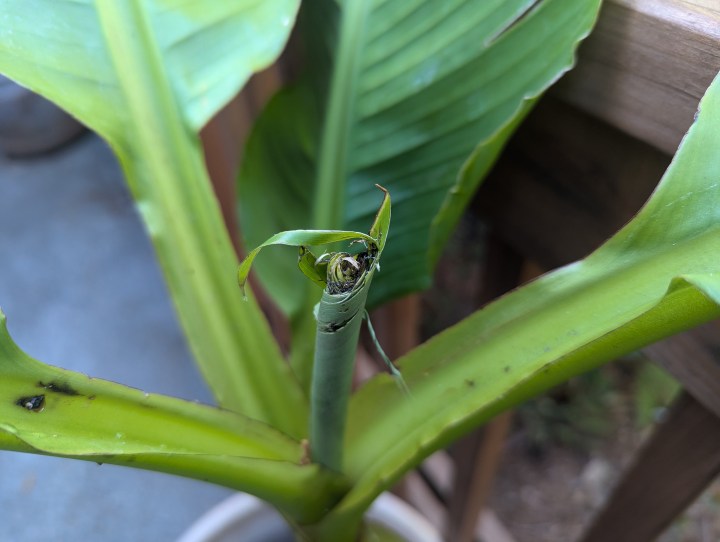
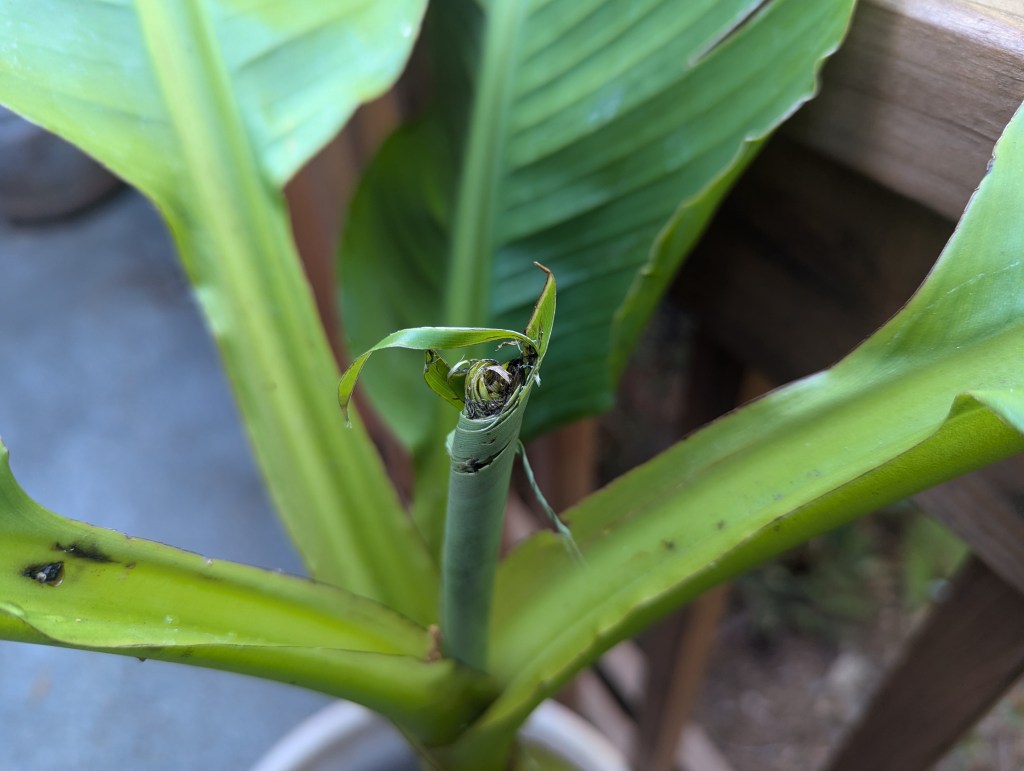
Squirrels have been chewing some of our foliar plants since spring. Now that they found our banana trees, I am more concerned. Their damage is more severe and impossible to ignore.

1. Musa acuminata ‘Golden Rhino Horn’ banana got chomped by a squirrel, right where its new leaf is unfurling. A Musa acuminata ‘Ever Red’ banana got chomped at its base! Squirrels are also chomping other cultivars of banana and two species of Chamaedorea.

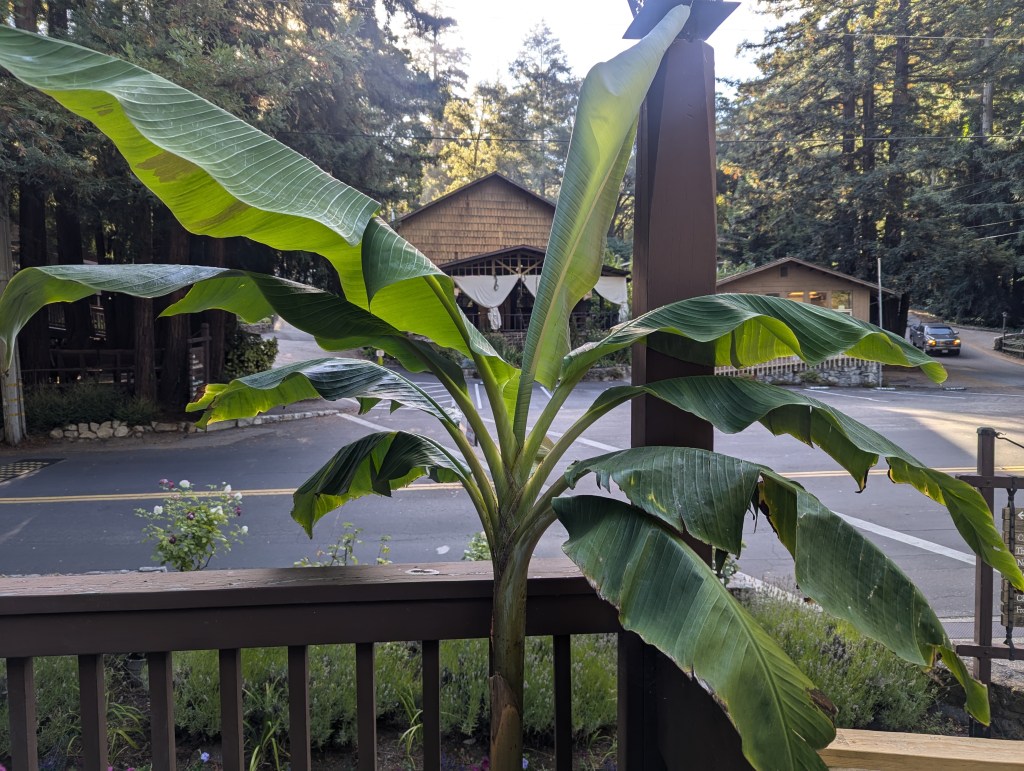
2. Musa ingens, oem, or giant highland banana demonstrates what a young banana tree should look like without squirrels chomping on them like little arboreal demon beavers. I will be furious if I see any more damage on any of these more prominent banana trees.

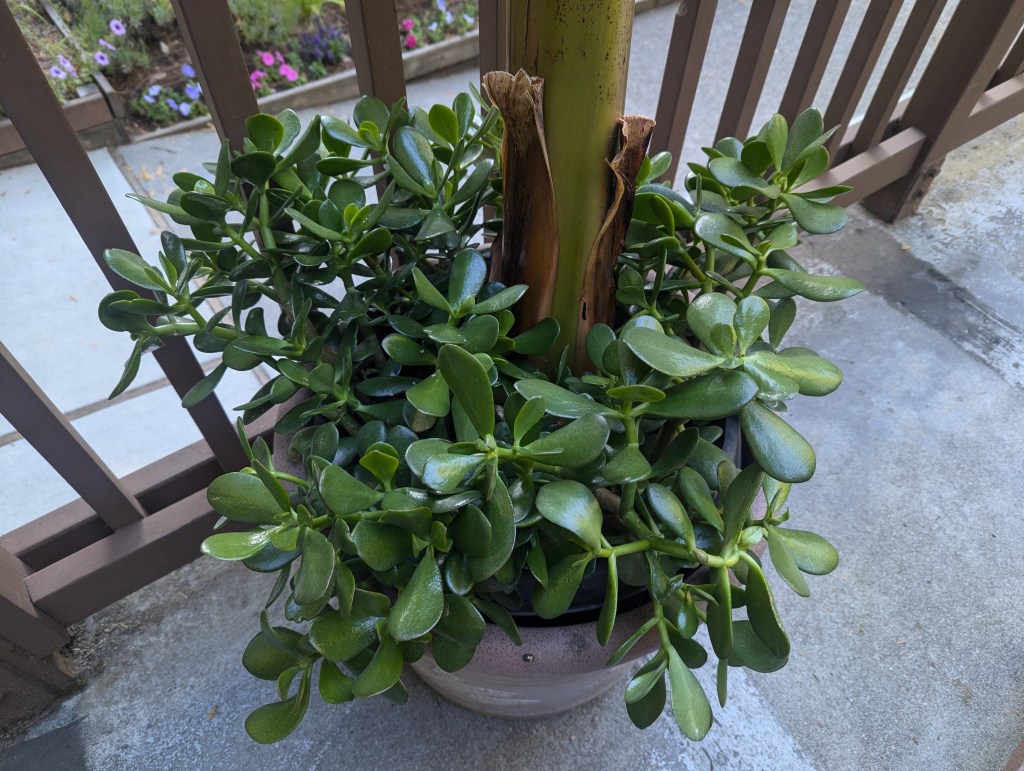
3. Crassula ovata, jade plant is not often considered to be a ‘foliar’ plant, but happens to function splendidly as such by obscuring the otherwise bare bases of several of the small banana trees. It all grew from pruning scraps from one big, old and sculptural specimen.

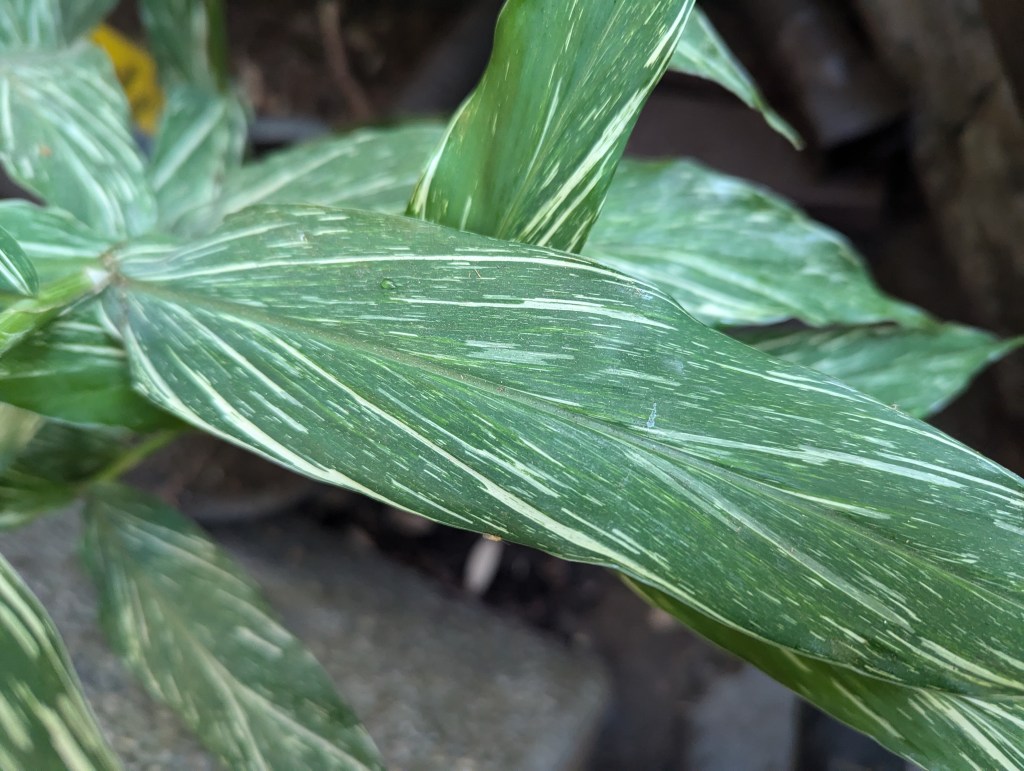
4. Hedychium coronarium ‘Vanilla Ice’ ginger was chomped by squirrels as soon as new growth began to develop last spring. Fortunately, it recovered. Although it appears to be ‘Vanilla Ice’, and likely is, I was told that its flowers are white rather than vanilla yellow.

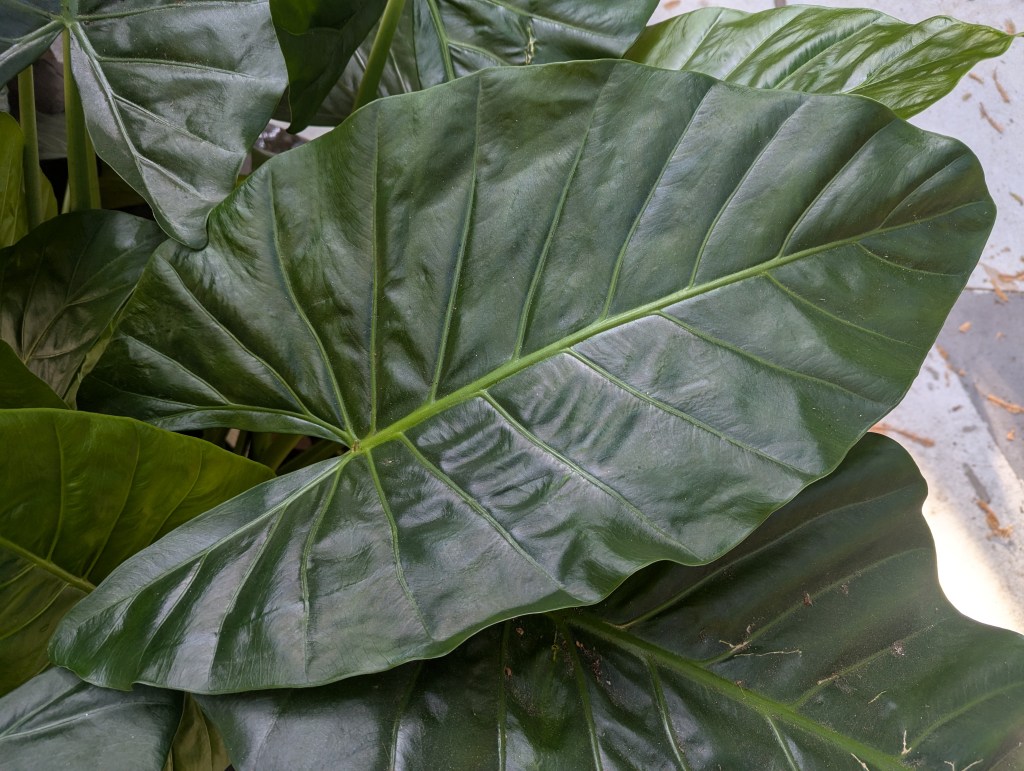
5. Alocasia gigantea, elephant ear was also chomped by squirrels as soon as it started to regenerate foliage last spring, and also recovered. It is quite large now. If its foliage were not so simple, it would be as striking as that of the old fashioned Philodendron selloum.

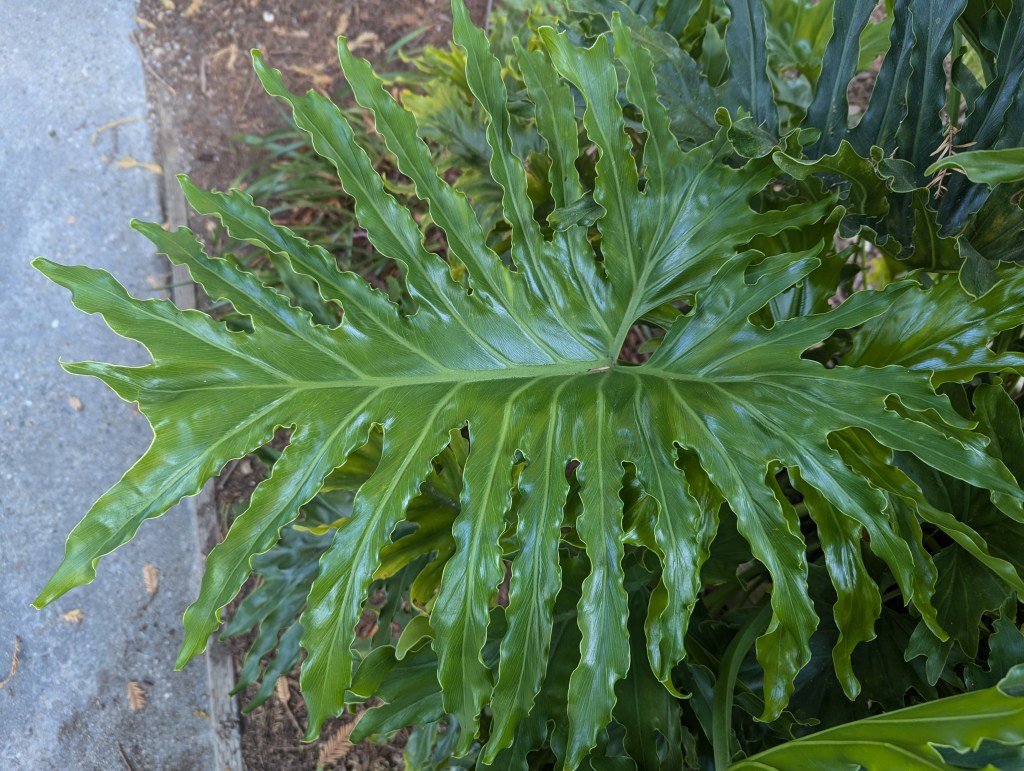
6. Philodendron selloum ‘Lickety Split’ philodendron produces the striking foliage of the species, but not the form. Its multiple trunks are so stout that I have not seen them yet. I suspect that individual leaves do not get very big either. Squirrels have ignored it so far.

This is the link for Six on Saturday, for anyone else who would like to participate: https://thepropagatorblog.wordpress.com/2017/09/18/six-on-saturday-a-participant-guide/

SQUIRREL!

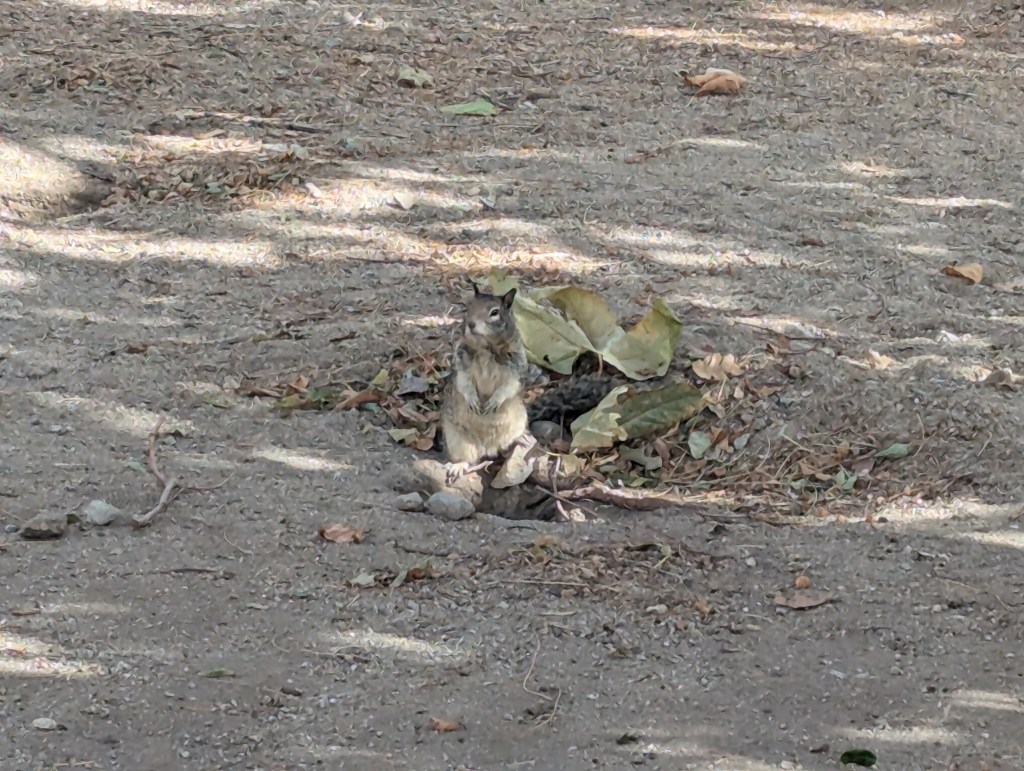
This is no ordinary squirrel. It is likely a ground squirrel, since, as such a designation and its presence on the ground suggest, it likely lives in the ground. That divot on the ground in front of it seems to be a burrow, presumably where it lives. It seems to be rather plump for a ground squirrel. Perhaps it could be a common squirrel who lives on or under the ground because it is too plump to live in trees. I have no idea. We did not get any more acquainted than necessary for me to get this picture from a significant and what I considered to be safe distance. Although a squirrel like this could inflict major injuries, I doubt that it can move very fast. It reminds me how fortunate that we do not contend with such large rodents at work. Gophers are small but very destructive to the vegetation within our landscapes. I do not want to know how much damage this squirrel or whatever it is is capable of. It must consume a considerable volume of roots, foliage or whatever it wants to eat. Supposedly, such squirrels, whether in trees or in the ground, are not as destructive as gophers, but I do not know what to believe. I suppose that some wildlife is more obviously worse. Fortunately for us, deer avoid our landscapes, though we could do nothing to exclude them. No one knows why. Much larger herbivorous wildlife that inhabit other regions, such as the Pacific Northwest are more voracious than deer. I can not imagine the extent of damage that just a single moose is capable of. Nor do I know how such wildlife can be excluded from landscapes. It seems to me that a moose can probably go wherever it wants to.

No Shame

Nature still does what it wants to.

Squirrels are annoying. I do not care that gray squirrels are native, or that their ancestors were here before mine. They are still annoying. They ruin bulbs, seedlings, fruits, nuts and vegetables. Although I do nothing to exclude them from my garden, I do not want them there.

Some native vegetation is also annoying. It grows like weeds where I want other vegetation to grow. Like for squirrels, I do not care if it is native. It is still annoying, and I do not want it trying to infest my garden where I grow vegetation that I want to grow.

I have been told that native species can not be invasive merely because it was here before I was. That is completely false. If it aggressively invades my garden, then it is invasive. Claiming otherwise is comparable to claiming that I can move into any home here that I choose simply because I am native.

Everyone who lives here inhabits space that was formerly occupied by native flora and fauna. So does all the infrastructure. Anyone who disapproves should leave, and relocate to where they do not occupy space that was formerly occupied by native species. I do not know where that is, but perhaps they do.

Realistically, I do my part. I live very simply, in compact and minimally consumptive homes. Although I enjoy gardening, I do not use much more space than is necessary to sustain my simple lifestyle. I do not live so simply because I would feel guilty about living more lavishly. I do so because it appeals to me, and allows me to feel less sheltered from the same sort of nature that some might accuse me of being inadequately protective of. Ultimately, nature does what it wants to here, with or without my assistance.

Six on Saturday: Surprise!

Even annual bloom can be surprising after a few or many months without it. Perhaps an unexpected bloom is more surprising. Familiar wildlife might be surprising when it does something unexpected. Unexpected or unplanned ‘wildlife’, even if domesticated, is a bit of a surprise. Ultimately though, the major surprise is the fifth of these Six. The first two pictures are from Brent’s garden, not here.

1. Persea americana, avocado fruit ripens in the tree above Brent’s office for quite a few months. The tree rarely lacks fruit completely. These spiral stairs are from the roof deck. This squirrel saw Brent taking a picture of it taking its avocado down, so took it back up.

2. Hippeastrum papilio, butterfly amaryllis was left at Brent’s garden by a neighbor who relocated. It is as perennial here as it is there; so I want a copy. Brent did not know what it was until, after two years or so, it surprised him with bloom. Brent takes bad pictures.

3. Malus X (floribunda?) ‘Prairie Fire’ flowering crabapple bloomed spectacularly. It is a relatively modern cultivar from 1982, but is surprisingly old fashioned. I grew up with a tree that was a decade or so older than I am, but it bloomed with a similar reddish pink.

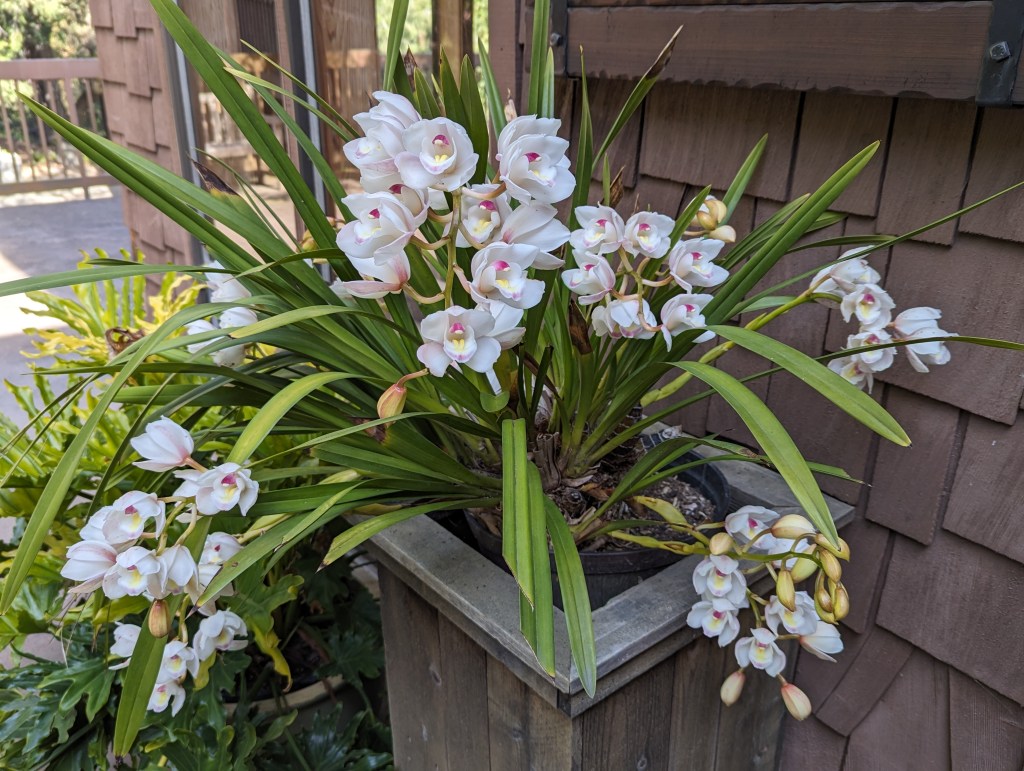
4. Cymbidium orchid of an unidentified cultivar was left by a colleague who only wanted it off his porch. It gets only watering, but blooms annually, and surprisingly abundantly. I should eventually divide it, but I am hesitant to interfere with such a reliable specimen.

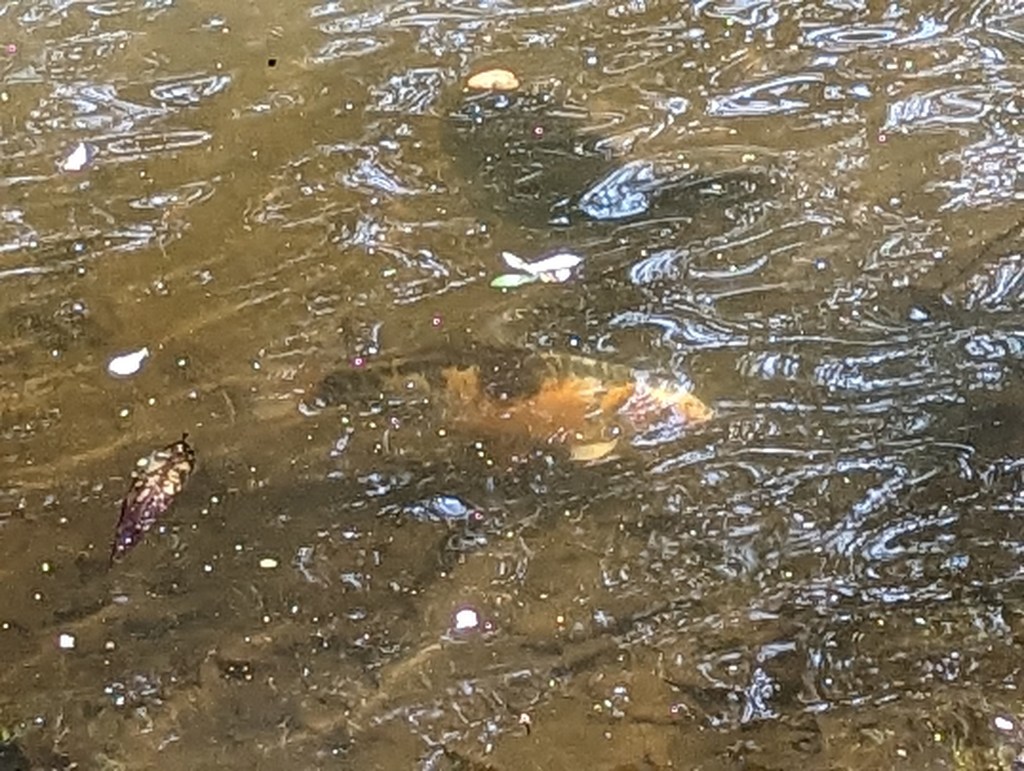
5. Koi met an unfortunate demise two winters ago as someone who was unaware of their presence drained their pond. However, a neighbor inquired about two small fish that he saw in the pond soon afterwards. More recently, the same neighbor inquired about this. It seemed to be about a foot and a half long, with a slightly smaller and darker associate.

6. Koi are supposedly schooling fish. Two do not qualify as a school. So, now they have a few more friends to go to school with. These tiny koi should be able to evade their larger classmates, who might otherwise eat them. Actually, I doubt that the larger koi are large enough to eat them anyway. This is not something that I expected to be contending with.

This is the link for Six on Saturday, for anyone else who would like to participate: https://thepropagatorblog.wordpress.com/2017/09/18/six-on-saturday-a-participant-guide/

Rodents Also Enjoy Home Gardens

Cats can not exterminate all rodents.

Spring is when most rodents are most active. Although they do not hibernate locally, they are a bit less active through winter. Their activity increases with warming spring weather. Their progeny increases their population. Assorted fresh vegetation that sustains them is most abundant. Their activity decelerates slightly through summer because of predation.

Although they may be no more active now than they had been, their activity is changing. Rodents are aware that it is now autumn, and that they must prepare for winter. They eat seeds and fruits that are naturally available at this time of year. Some rodents store food. It is no coincidence that vegetation naturally provides what they need, when they need it.

For example, oaks exploit the natural activity of squirrels for the dispersion of their seed. Annually, they produce acorns to sustain a particular population of squirrels. Then, every several years, they produce too many for the squirrels to eat. The squirrels naturally bury more acorns than they can retrieve later. The surplus acorns remain buried to germinate.

Similarly, rodents consume autumn fruit, such as apples and pears, and store their seed. They are likely less numerous than they were earlier in the year, but consume more now. They naturally fatten up so they may eat less while food is less abundant through winter. Also, they naturally migrate from gardens into warmer and drier home interiors for winter.

This is one of several reasons why sanitation within the garden is so important. Removal of unharvested fruit makes gardens less attractive to rodents. They may find sustenance on compost piles, but may not dig too deeply into them. Deteriorating pruning scraps can provide them with shelter from weather and predators. Cleanliness is a deterrent to them.

Deterrent is safer than eradication. Traps and poisons are potentially dangerous for pets and people. Poisoned rats and mice may poison predators or scavengers who eat them. Cats are very efficient at both deterrent and eradication of rodents. However, they require major commitment for many years. They can do nothing outside if confined to their home.

Feline Ecology

No one can build a better mousetrap.

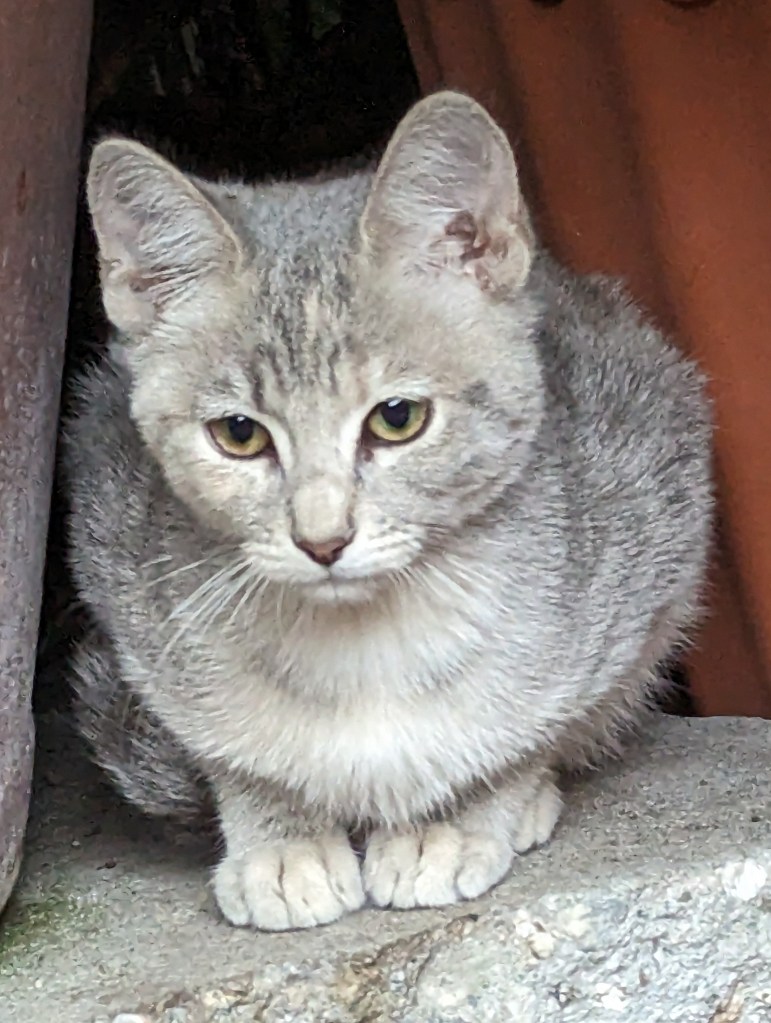
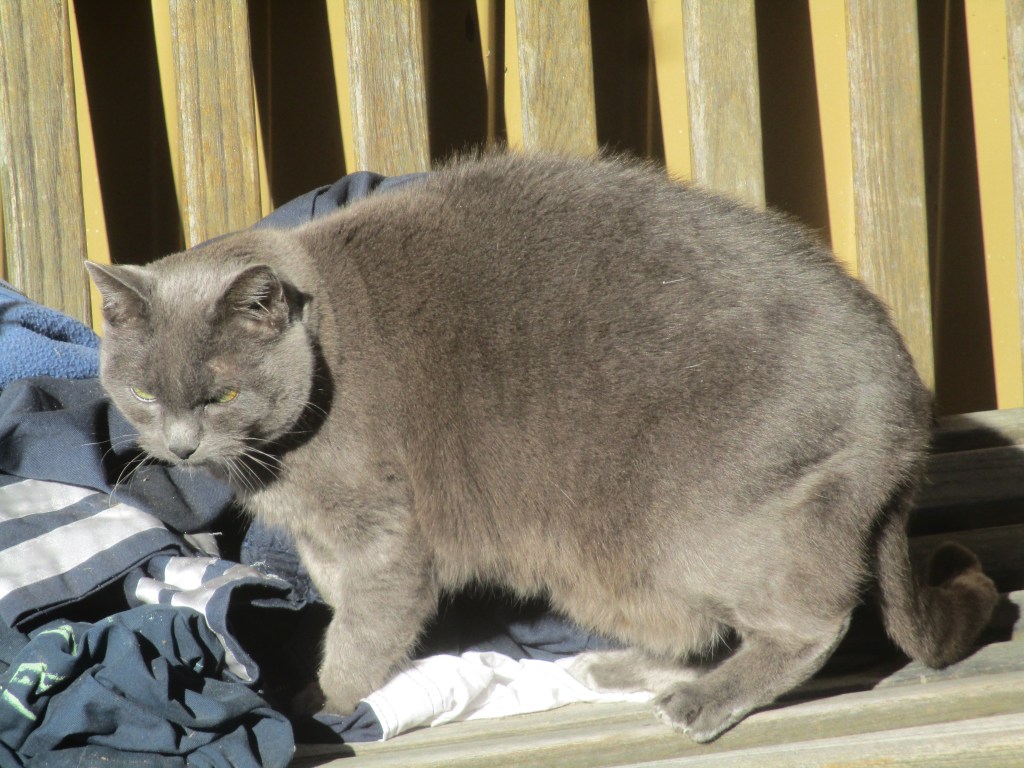
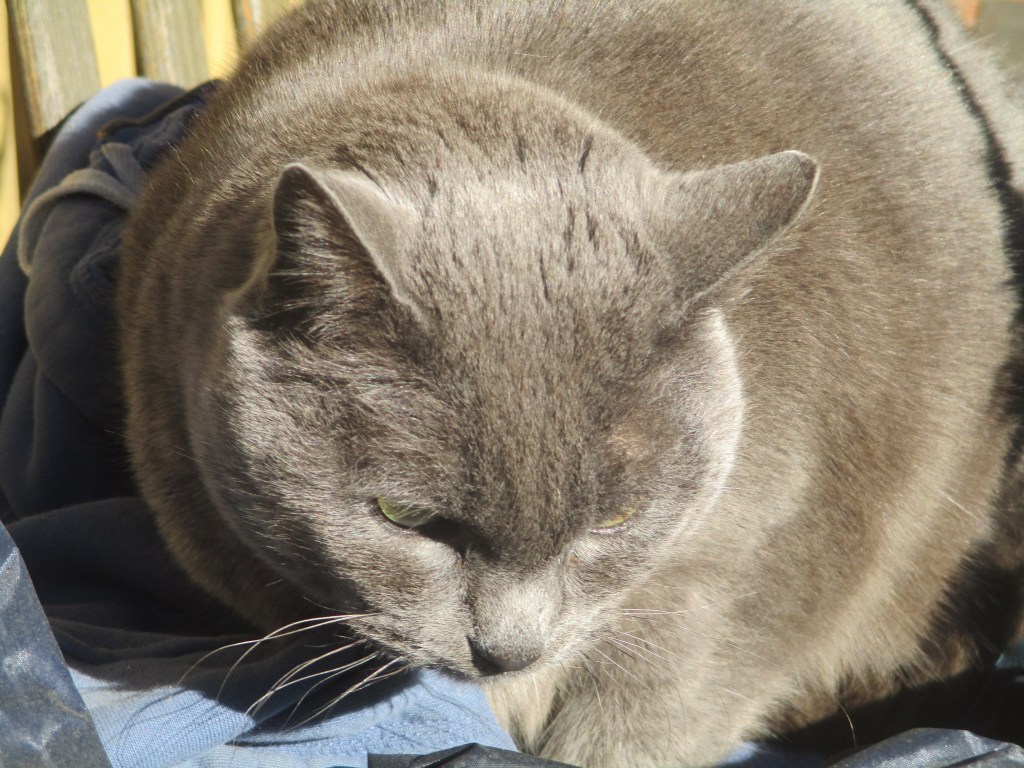
Darla is a feral kitty who used to live here. I believe that she is why no rodents lived here. I never actually saw her do anything to dissuade rodent infestation. Actually, I rarely saw her do anything. She was quite reclusive and disliked almost everyone except Rhody.

Unfortunately, someone else here insisted that fleas were a problem because of Darla. He also insisted that Darla came inside to share her fleas with the carpet and furniture. No one else, including Rhody, ever noticed a flea. Darla never came inside.

While the weather was getting nastier than it had since 1982 last winter, Darla went to live at a home in Santa Clara. After her initial disapproval, she efficiently adapted, and learned to appreciate it. Apparently, she is now happy with her more domestic lifestyle. She is quite elderly, so really deserves safer and more comfortable accommodations.

Rodents are everywhere now! Rats and mice come inside for any scraps of food that the crew leaves out. Ground squirrels have burrowed into much of the exposed soil downstairs. They as well as the rabbits and perhaps tree squirrels eat some of the plant material that is stored in the yard until it goes into the landscapes. The ground squirrels are already digging after the soft buds of the pups my giant bird of Paradise that were heeled in only yesterday! I need to put blood or bone meal out there in an attempt to repel them. I had not considered how horticulturally beneficial a kitty could be.

Of course, with so many rodents here, the fleas have also become a major annoyance, particularly for Rhody!

Now, others at work want me to hire another feral kitty. I do not know how to take care of a kitty, especially a feral kitty!

While the cat is away, the mice and all the other rodents will play.

Squirrels Fear The Unknown Too

Pierre Francois dutifully protects ripening fruit.

It is embarrassing when my mother teaches me a practical gardening technique that I should have known about, especially if the particular technique is as simple and downright silly as what my mother does to protect ripening fruit from squirrels. A friend of hers suggested it; and it seems to be significantly more effective than the few fancier ideas that I recommended.

I should first mention that there is nothing new about repelling animal pests with effigies of other animals that they are afraid of. Scarecrows and stuffed snakes and owls have been around for centuries. As the name implies, scarecrows scare crows who perceive them to be potentially troublesome people. Rats and terrestrial rodents avoid snakes. Squirrels and some birds are afraid of owls.

When I was in about the fourth grade, I remember that National Geographic World magazine (which is now National Geographic Kids) featured a silhouette of a predatory bird that could be cut out and taped to windows to deter birds that might otherwise break their necks as they tried to fly through the clear glass. The associated article explained that the cut-out silhouette was effective because birds instinctively knew what to fear. A silhouette of a harmless seagull would not have been as effective.

However, some deterrents are not so specific, but instead rely on the fear of the unknown. Beach balls outfitted with decals of huge eyes look weird in the garden, but work because so many birds have bird brains that think such contraptions are big, scary and possibly predatory animals. Flash tape and old compact discs work simply because birds do not know what the reflected flashes are.

Scarecrows and other inanimate effigies should be relocated occasionally so they seem to be alive. They should stay near what they are in the garden to protect, and not loiter when it is gone. For example, if protecting ripening fruit, they should leave after the last of the fruit is gone. Otherwise, the target pest animals realize that they are fake or dead. Beach balls, flash tape and compact discs are more animated, so need not be moved so much, if at all, but are too tacky to stay all year.

All this may seem complicated, but can be simple enough for my mother to master with . . . well, allow me to explain.

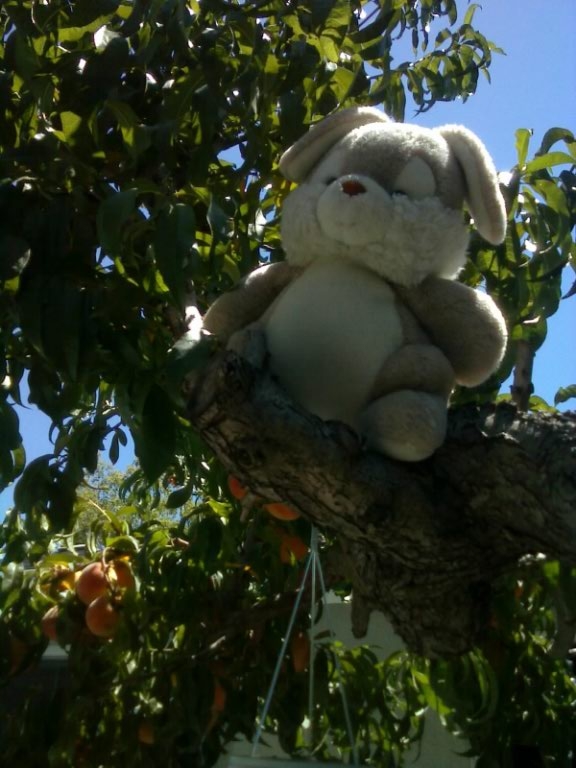
Pierre Francois is a cute, fuzzy and seemingly French plush toy bunny made in China, who knows all about protecting ripening fruit from squirrels. (‘Stuffed animal’ is no longer politically correct.) After seeing how expensive a fake owl would be, my mother put Mr. Francois in the peach tree. He and his sort are free if borrowed (stolen) from the grandchildren, or very cheap at garage sales or thrift stores. Although cute and soft to us, Mr. Francois is big, intimidating and unfamiliar to squirrels. Before the squirrels get acquainted with him, the peaches will have been harvested, and Pierre Francois will have been reassigned to an apple tree.

Vermin Run Amok In Spring

Gophers are busy with homemaking projects.

No one really hibernates here. Well, ground squirrels might, but they are unlikely to be a problem in refined home gardens. Winter weather is sufficiently mild for most of the most troublesome vermin to remain active, even if somewhat subdued. Some are more active in autumn before food gets scarce. They store food for later, and eat more to gain weight.

Now that it is spring, vermin are more active than they are at any other time of year, even autumn. Gophers, squirrels, rats and mice want to party like it is 1999; well, like spring of 1999. Although they all fattened up last autumn, and stored plenty of food for winter, they now want to exploit abundant spring vegetation. So do raccoons, skunks and opossums.

Generally most vermin, which most prefer to describe more politely as ‘wildlife’, are not a problem for home gardens. Some might be beneficial. Skunks may trench into lawns, but only because they want the grubs that would otherwise cause more damage from below. They also eat snails and slugs. Opossums eat snails and slugs too, as well as baby rats!

However, skunks and opossums can do more harm than good. They eat vegetables and fruits as they ripen, and pet food. Raccoons cause more significant damage, and can be very dangerous to pets. These three types of vermin are nocturnal, and therefore difficult to dissuade or confront directly. Fortunately, they are not very common in urban gardens.

Conversely, squirrels are everywhere except the harshest desert climates. Although they cause significant damage to new spring growth, and will later damage developing fruits, they are more tolerable than other vermin. Some people actually feed them to draw them to their gardens! Rats and mice are less tolerable, probably because they lack fluffy tails.

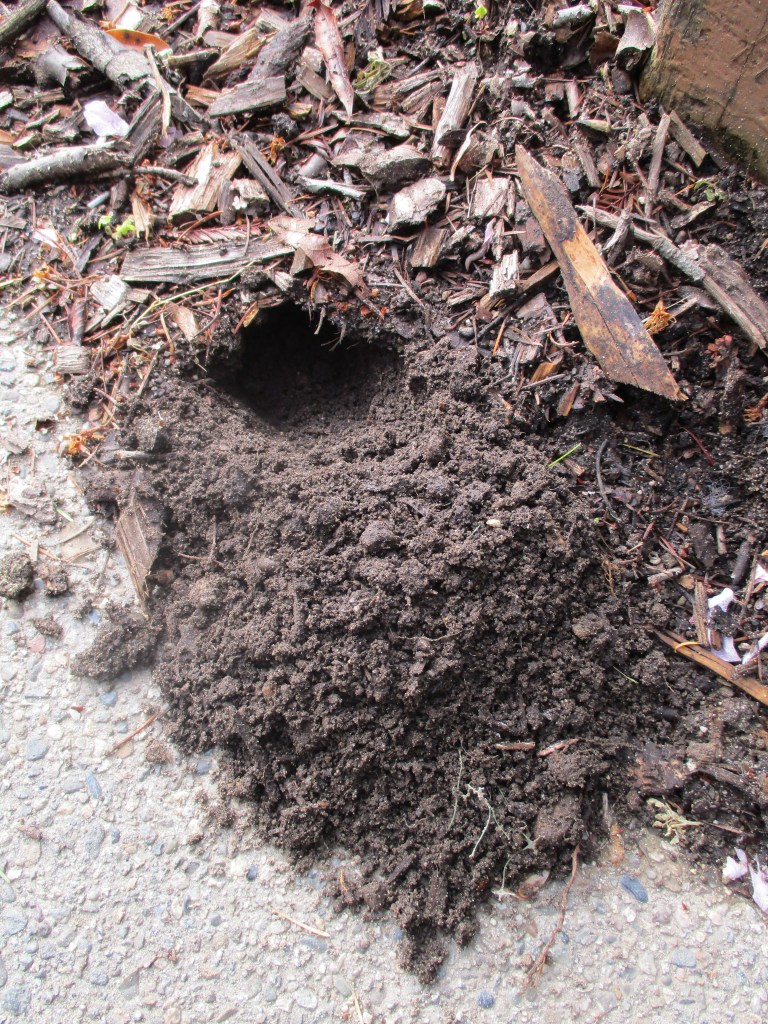
Gophers are likely causing more damage than other vermin now. Their growing families voraciously devour many of the fresh roots that disperse in spring. Now that their tunnels are not too muddy, gophers are remodeling to expand accommodations. Young gophers do not live with their parents for very long, so will eventually infest new adjacent territory. Lawns and vegetable gardens are most preferable.

Rodents Will Never Give Up

00401thumb
Warming weather brings out the gophers.

None of the most problematic rodents here hibernate completely. Only ground squirrels hibernate, but they are rare, and tend to avoid home gardens and refined landscapes. Some other rodents are less active through the cooler parts of winter, but never completely stop eating, chewing and digging up what they want from our gardens. Many will become more active with warming weather.

Gophers are the most destructive rodents right now. They might still be excavating the mud of last winter from their tunnels. They will find plenty to eat as warming weather stimulates root growth of their favorite plants. Young gophers are growing up and leaving home, to excavate more tunnels and consume more vegetation elsewhere. They are more numerous now than they will be all year.

Squirrels are not so industrious. For now, they are destructive only if they dig out recently planted seedlings and bedding plants, or eat flowers and freshly emerging foliage. They should otherwise be temporarily satisfied with acorns that they hid late last year. They will become more of a problem as they eat ripening fruit, nuts and maybe vegetables later in summer. Some might chew bark.

Rats are sneakier than squirrels. They are not as destructive to ripening nuts and stone fruits, but do eat some of what falls to the ground. Although not a problem for the garden, well fed rats infest adjacent homes, where they cause serious damage. At this time of year, rats sometimes ruin citrus fruit. They eat the pulp out from the rinds of oranges and tangerines, and the rind off of lemons.

Rodents are nearly impossible to exclude completely and safely from gardens. Poisons are too dangerous to be practical around the home, particularly if there are dogs or cats anywhere nearby. Traps are safer and effective, but require diligence. Also, some traps are difficult to set. Each type of rodent exhibits distinct characteristics. That which controls one type is ineffective for another.

Sanitation and vegetation management deters some rodents by depriving them of sustenance and nesting sites.