Almond

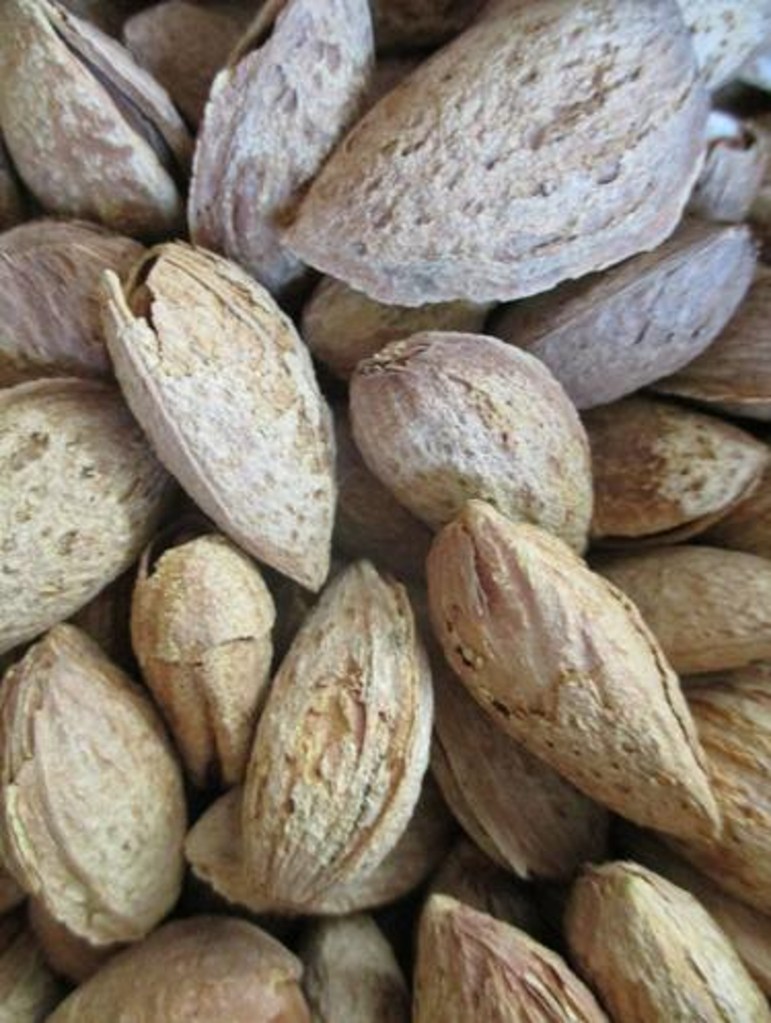
Almonds are stone fruit without fruit.

Is the pronunciation of the “al” of almond comparable to that of “salmon” or “palm”? That is about as controversial as the pronunciation of pecan. While pecan is related to walnut, almond, Prunus dulcis, is a stone fruit. That can be controversial also. Unlike other stone fruit, its mesocarp develops as leathery hulls instead of edible flesh. It is fruitless stones.

Like other stone fruit trees, almond trees need maintenance while dormant during winter. Bare root trees that are now available should be in the ground before their spring growth. Established trees need winter pruning before warming spring weather stimulates bloom. Almonds ripen for late summer though, after plums, apricots, peaches or other stone fruit.

Almonds are not as heavy as other stone fruits, and need no gentle handling. Therefore, winter pruning of almond trees may not need to be very aggressive. Such trees can grow as small shade trees with splendid white spring bloom. It is easier to shake unreachable nuts from tall trees than to pick them anyway. A few old fashioned cultivars need compatible pollinator cultivars.

Nectarine

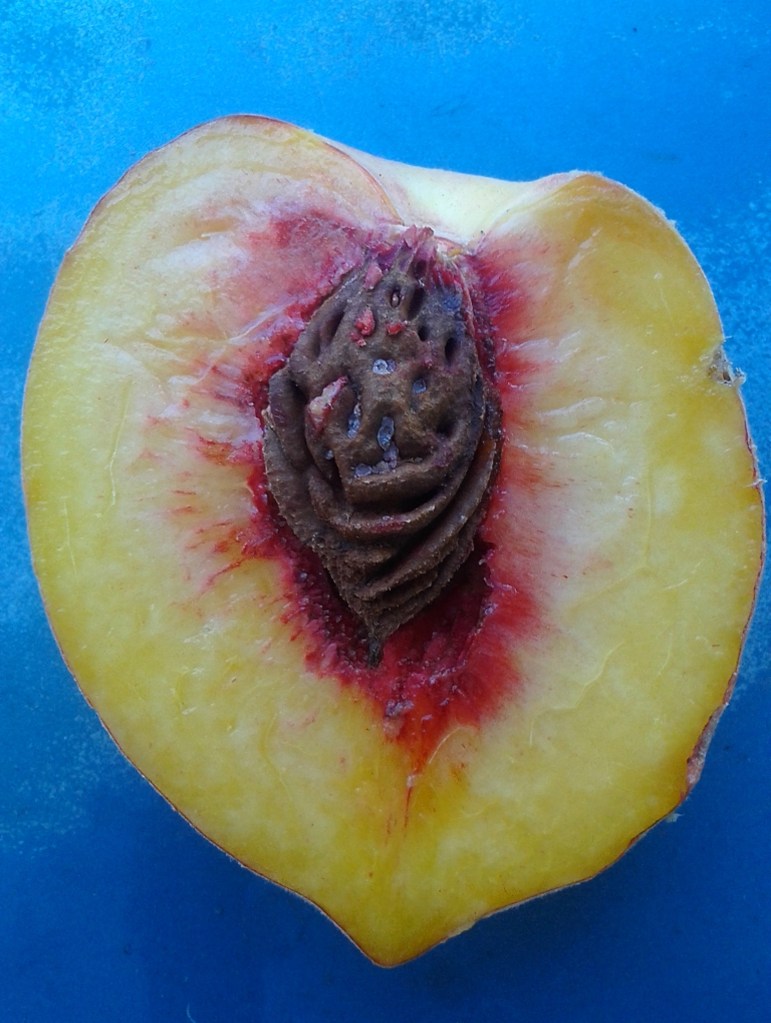
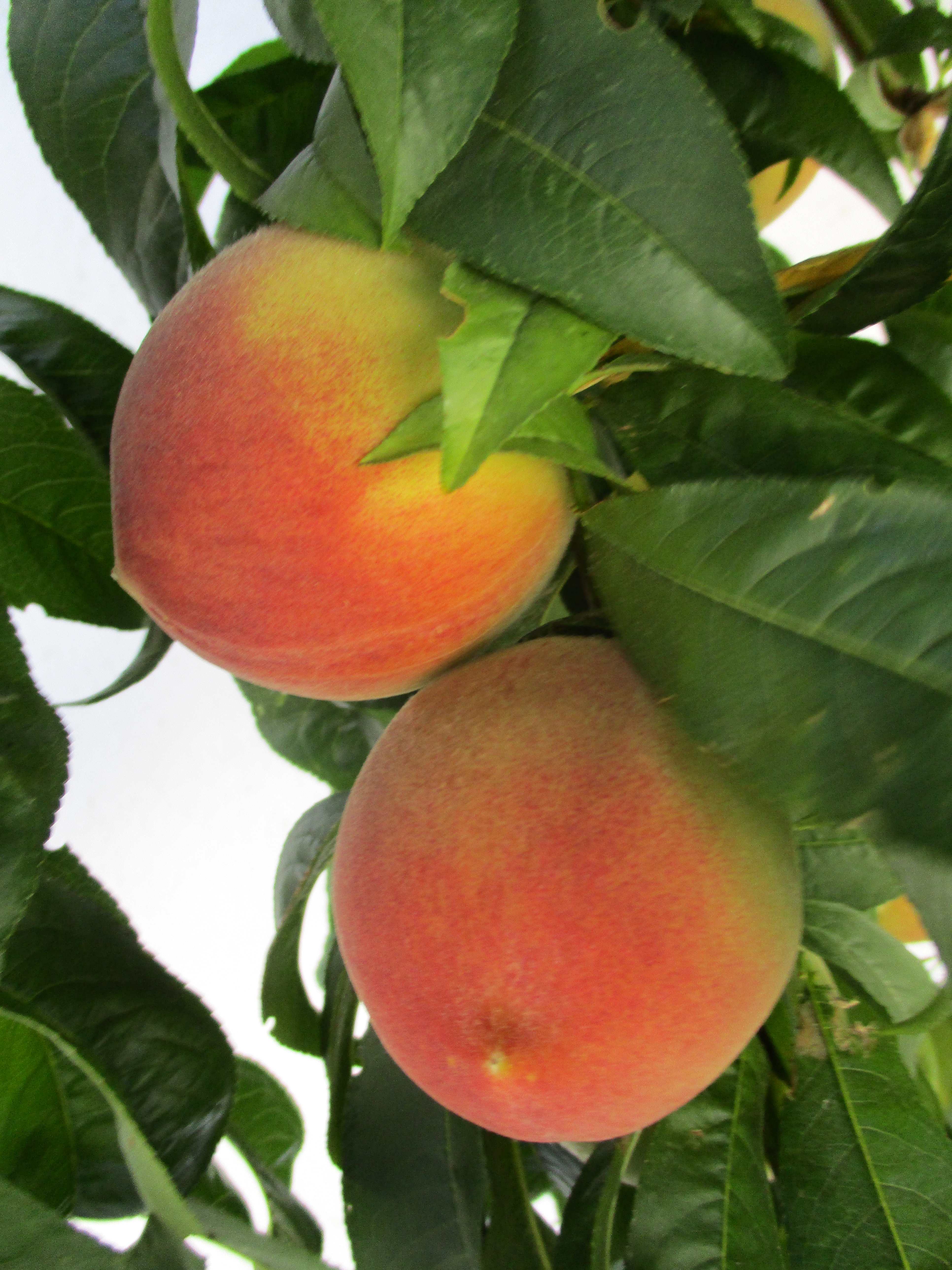
Nectarines are merely peaches without fuzz.

Stone fruit classification can get confusing. All stone fruit are of the same genus, Prunus. This includes almonds, which are stones or seeds of inedible fruit. Prunes are European fruits that are conducive to juicing and drying. Plums are similar Japanese fruits for fresh consumption, but not for drying. The two are more different than peaches and nectarines.

Nectarines, Prunus persicaria var. nucipersica, are simply peaches without fuzz. Cultural requirements are about the same for both. They need only very minor chill through winter to vernalize, and enjoy summery warmth. Trees are not very productive for their first year or two. Then, they may produce for only about twenty years. Thirty year old trees are old.

Both nectarine and peach trees require aggressive pruning while dormant during winter. Otherwise, they can not support the weight of their big and abundant fruit during summer. Semidwarf trees, which are the most popular, can potentially grow twenty feet high. They should stay half as high with adequate pruning. Most of their fruit should be within reach. Bare root trees initially disperse roots more readily than canned trees.

Village Harvest redirects surplus from home gardens to those who can use it.

Surplus need not go to waste.

(This article is several years old, so some of the information within is likely outdated.)

Those who witnessed the event know that it actually happened. During citrus season a few years ago, a crew of volunteers descended upon, or should I say, ascended ladders into the legendary and monstrously large King Grapefruit Tree in a gallant but hopeless attempt to harvest the fruit. Our caravan of an assortment of smaller pickups and my full sized Ford that we drove out to confront this aberration of nature where it resided was completely full by the time we had harvested only about a third of the fruit. We left happy with our plunder, but unexpectedly defeated by the abundance left behind. I have seen many fruit trees throughout my career, but have never seen so much fruit in a single tree! 

It may have watched us leave exasperated with our mud-flaps dragging, but the King Grapefruit Tree was not solely victorious. We Village Harvest volunteers and the many beneficiaries of Village Harvest enjoyed its fruit for weeks! Village Harvest arranges for community fruit harvesting events to collect fruit that might otherwise go to waste so that it can instead be distributed to people in the community who can use it. The fruit of the King Grapefruit Tree was donated, and more was harvested later, so that it would not become an unwanted mess for the residents of the nearby home.

This is just one of many examples of how Village Harvest community fruit harvesting events benefit everyone involved. Those who donate their surplus fruit get it harvested and taken away before it becomes messy. Village Harvest volunteers get to take a bag or so of the fruit that gets harvested during the event. The clientele of the local food agencies that distribute the produce get fresh home grown fruit from the Santa Clara Valley; which is, as we all know, the best in the world.

Although citrus season is still several months away, five community fruit harvesting events are scheduled to collect summer fruit through July. On July 18 and again on August 1, two Mountain View community harvesting events will be from 9:00 a.m. to 12:30 p.m.. Two Central San Jose community harvesting events will be from 8:30 a.m. to 12:30 p.m. on both July 20 and July 27. The Sunnyvale community harvesting event will be from 8:00 a.m. to noon on July 26. Locations to meet for each event can be determined when making reservations.

Information about volunteering for any of these and other events, or how to arrange for donation of fruit, can be found at the website, www.villageharvest.org, or by telephoning 888 – 378 4841. Because admission is limited, it is advisable to make reservations for any event early, either online or by telephone. (It may be too late for the July 18 event.) Parking is also limited, so participants should carpool if possible. Pickups and station wagons to help transport fruit are very helpful. So is a grocery bag to share in the harvest afterward. Covered shoes (not sandals) are important. Layered clothing is more comfortable for cool mornings that get warmer closer to noon.  

Cherry

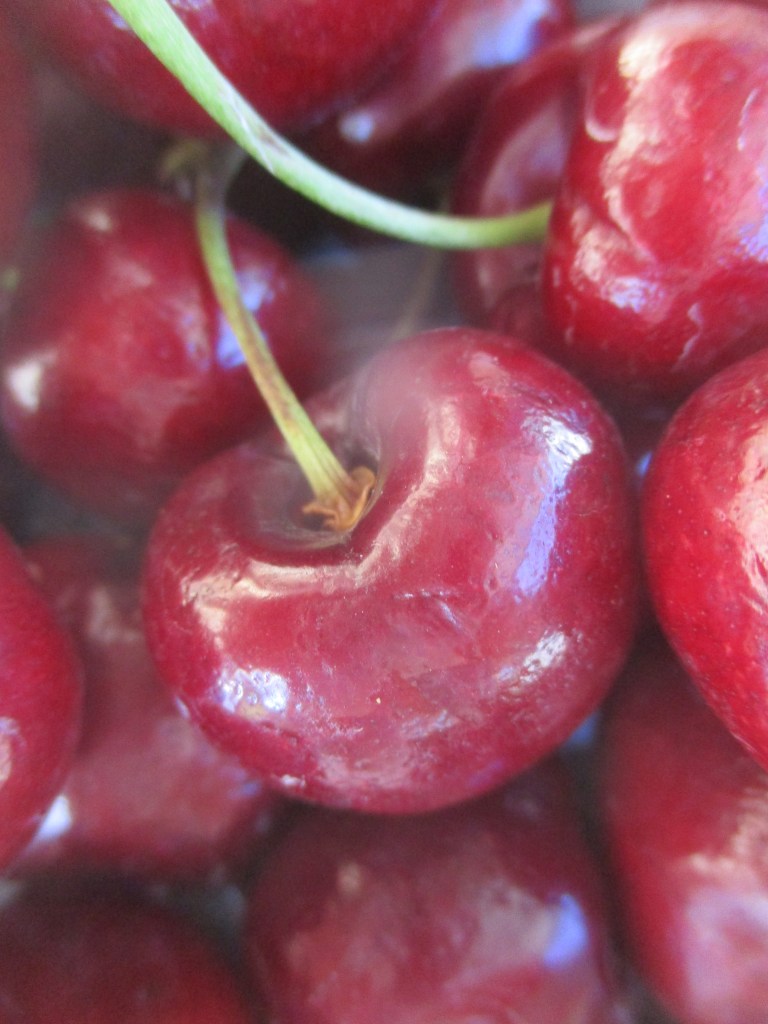
Cherries are fruit of early summer.

Cherry, Prunus avium, is one of the more popular fruits of summer. However, winter is the season for planting new trees and pruning mature trees. Pruning is comparable to that of other stone fruits, but to a lesser degree. Their sweet fruits are typically less than an inch and a half wide, so are relatively lightweight. Docile trees may not need annual pruning.

Home garden trees with dwarfing rootstocks should grow no taller than about fifteen feet. Some stay less than ten feet tall. Orchard trees with standard rootstock grow significantly taller. Wild or feral trees can grow forty feet tall, with their fruit beyond reach. Old cultivars mostly require another compatible cultivar for pollination. Some modern cultivars do not.

Cherry fruits are mostly rich deep red, but can be dark blackish red or pale orangish pink. Early spring bloom is brief but profuse and splendidly clear white. Three to four inch long leaves that are deep green through summer become bright yellow or golden yellow prior to defoliation during autumn. Even the silvery young bark of some cultivars is appealing.

Apricot

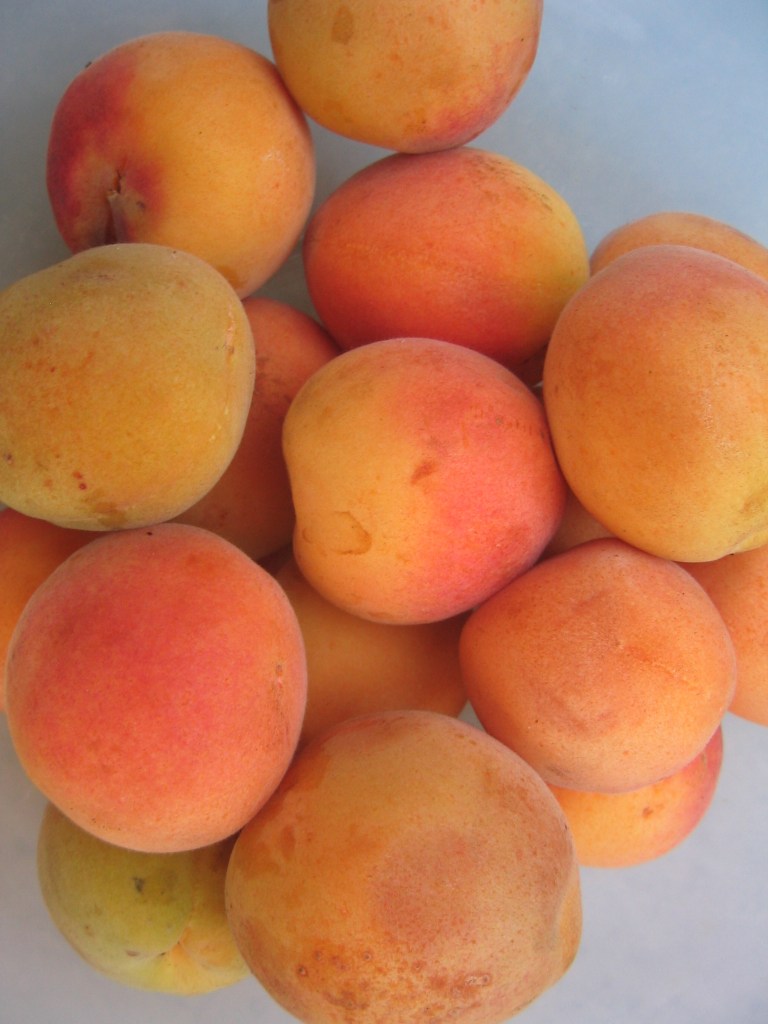
Apricot trees get planted in winter.

Apricot has major history in California. For a very long time, it was the main agricultural commodity is several regions, particularly the Santa Clara Valley. It remains a significant commodity within portions of the San Joaquin Valley. Urban sprawl replaced orchards in other regions. However, apricot trees now inhabit some urban gardens. The climate here is as ideal for them as it ever was.

Garden variety apricot trees are not quite like orchard trees. Dwarfing rootstock keeps them somewhat more compact. They might otherwise grow taller that twenty feet. Production is best during the first three decades or so, before they begin to slowly deteriorate. Orchard trees are already due for replacement by then. Many more cultivars are practical for home gardens than for orchards.

Apricot trees, which are mostly of the species Prunus armeniaca, are certainly not ‘low maintenance’. They require specialized pruning annually, while dormant for winter. Otherwise, they produce more fruit than they can support. New trees are unlikely to produce any fruit during their first season. The deciduous foliage falls neatly in autumn. White or slightly blushed spring bloom is striking.

Prune

00115
Prune trees get planted bare root.

Does anyone remember when champagne produced in California was formally classified as ‘sparkling wine’? ‘Champagne’ is a technical classification for that which originates from the region of France for which it is named. That makes sense. The technical classifications of prune and plum formerly made sense also, even if not universally understood. Reclassification in 2001 ruined that.

Prune, Prunus domestica, is primarily a European freestone fruit. (The pits of freestone fruits separate from the ripening flesh.) They have firmer flesh than plum, so are more practical for canning and drying. They also have higher sugar content, so might be dried without sulfuring (which prevents molding). Darkly purple and rather oblong fresh prunes are less popular than dried prunes are.

Plum is primarily a Japanese cling fruit. (The pits of cling fruits remain firmly adhered to ripening flesh.) They are softer and juicier than prune, and contain less sugar, so are not as efficiently pitted and dried without sulfuring, or canned. Larger, rounder, more colorful and more richly flavored plums are instead best fresh. They might be bluish purple, purple, red, ruddy orange, yellow or green.

Nowadays, all prunes and plums are known collectively as plums. Dried prunes are just dried plums.

Almond

90206It is no more in season now than the other stone fruits like apricot, cherry, plum and such, but this is the time of year that almond, Prunus dulcis, needs work. Established trees get pruned while bare and dormant. New trees, preferably bare root, get planted. The most popular modern cultivars available are self pollinating, and labeled as such. Old traditional cultivars require pollinators.

Almond is the ‘other’ stone fruit. Because it is a nut, it does not resemble the rest of the juicy and fleshy stone fruits like nectarine and peach. However, the resemblance to the stones of the stone fruits is obvious. It is, after all, a big seed. The fruity parts form tough hulls that spit open to reveal the dry nuts within. Almonds do not get picked, but instead get shaken or knocked from the trees.

Because the nuts are lightweight, almond trees do not need to be pruned as aggressively as other stone fruit trees. Because the nuts are not hand picked, the trees can be pruned upward as deciduous shade trees with spectacularly white spring bloom. Some cultivars can get more than twenty feet tall. Squirrels and crows take most of the nuts, but do not bother to clean up the hulls.

Peach

70726thumbJust like roses and camellias, the innocent peach, Prunus persica, has been developed into too many distinct cultivars to write about in just a few brief paragraphs. It had been in cultivation for thousands of years before arriving in North America. Peach is a classic summer fruit, but trees should be planted while dormant, preferably as bare root stock, about now, in the middle of winter.

Peaches certainly do not grow everywhere in North America. They need just enough chill to be reminded that it is winter; but too much chill too late in the season will ruin bloom. Too much late rain will rot developing fruit. Peaches are therefore right at home in chaparral climates of California, where freestone cultivars are grown for fresh fruit, and clingstone cultivars are grown for canning.

Healthy peach trees can get up to second story eaves, but if properly pruned, should be only half as tall. They should not get too wide either, since the weight of fruit can break limbs. Aggressive winter pruning keeps trees vigorous and resistant to disease. Orchard trees last less than twenty years, although home garden trees are often kept longer. Nectarines are just fuzzless peaches.

Enjoy The Fruits Of Summer

70726thumbIs a prune really just a dried plum? No! A plum is really a prune. In fact, all ‘stone fruit’ are of the same prune genus known as Prunus. This means that apricot, cherry, peach, nectarine, prune, plum and even almond are all related. So are all their weird and trendy hybrids, such as aprium, pluots, plumcots and so on. (Almonds are the pits or ‘stones’ of dry leathery fruits that fall away as hulls.)

The main difference between prunes and plums is that prunes contain enough sugar to inhibit mold while they dry, . . . if they dry efficiently enough. Plums are juicier and contain less sugar, so are more likely to mold before they dry. If dried in a dehydrator, plums get squishy, and are likely to develop an odd flavor. Most prunes are European. Most popular plums are of Japanese descent.

The wrinkly and leathery fruit that most of us know as prunes are actually ‘dried’ prunes. Fresh prunes can be eaten just like plums, but are firmer, and have milder flavor. They are better for juicing, canning (whole, while firm) and cooking, although plums make better jam. Plums have richer flavor for eating fresh. Because they are so soft, they do not juice as well, but make nice plum nectar.

Apricots are not quite as easy to dry as prunes are. They must either be dried quickly in a dehydrator of some sort, or sulfured; and sulfuring is probably too much work for most of us. Most of the apriums, pluots, plumcots and other weird apricot hybrids that have become so trendy in the past many years are too soft for drying or canning. Like plums, peaches and nectarines, fresh is best.

Fruit that ripens evenly throughout the tree is best for canning, freezing, drying or any technique that takes large volumes of fruit at once. Uneven ripening is better for fruit eaten fresh. It allows later fruit to continue ripening while the earliest fruit is being consumed. The problem is that the best stone fruits ripen very evenly, all at the same time. If not shared with neighbors, some is sure to rot.

If some of the fruit ripens later than the rest, it will be inside the shadiest part of the canopy. The most exposed fruit on the exterior of the canopy ripens first, and for most types of fruit, has the best flavor. After all fruit is harvested from a tree, any remaining bad fruit should be removed from the tree, and from the ground around the tree. Diseases proliferate, and later overwinter in rotting fruit.