
Lily is such a generic classification. Kaffir lily, water lily, calla lily, canna lily and many other lilies are not lilies at all. These examples are not even remote relatives. Real lilies are of the genus Lilium. However, even the most familiar of these are hybrids of various species. Asiatic lilies are a group of such hybrids that classify as Lilium asiaticum.
Asiatic lilies go into the garden as dormant bulbs during late autumn or winter. They grow through spring to bloom for early summer. Bulbs require vernalization to bloom, so may not bloom annually within mild climates. Asiatic lilies that are now popular as spring cut flowers grow in greenhouses. Mature bulbs can grow large enough for propagation by division while dormant. Bulbs like rich and evenly moist soil.
Asiatic lily bloom can be white, yellow, orange, red, reddish purple or pink. Many are delightfully monochromatic. Some display spots, stripes or darker centers. Each bulb extends a single stem with a few flowers on top. Each flower extends six flaring tepals in familiar lily form. Unlike most other lilies, Asiatic lilies do not produce enough pollen to be messy. All lilies are toxic to cats.

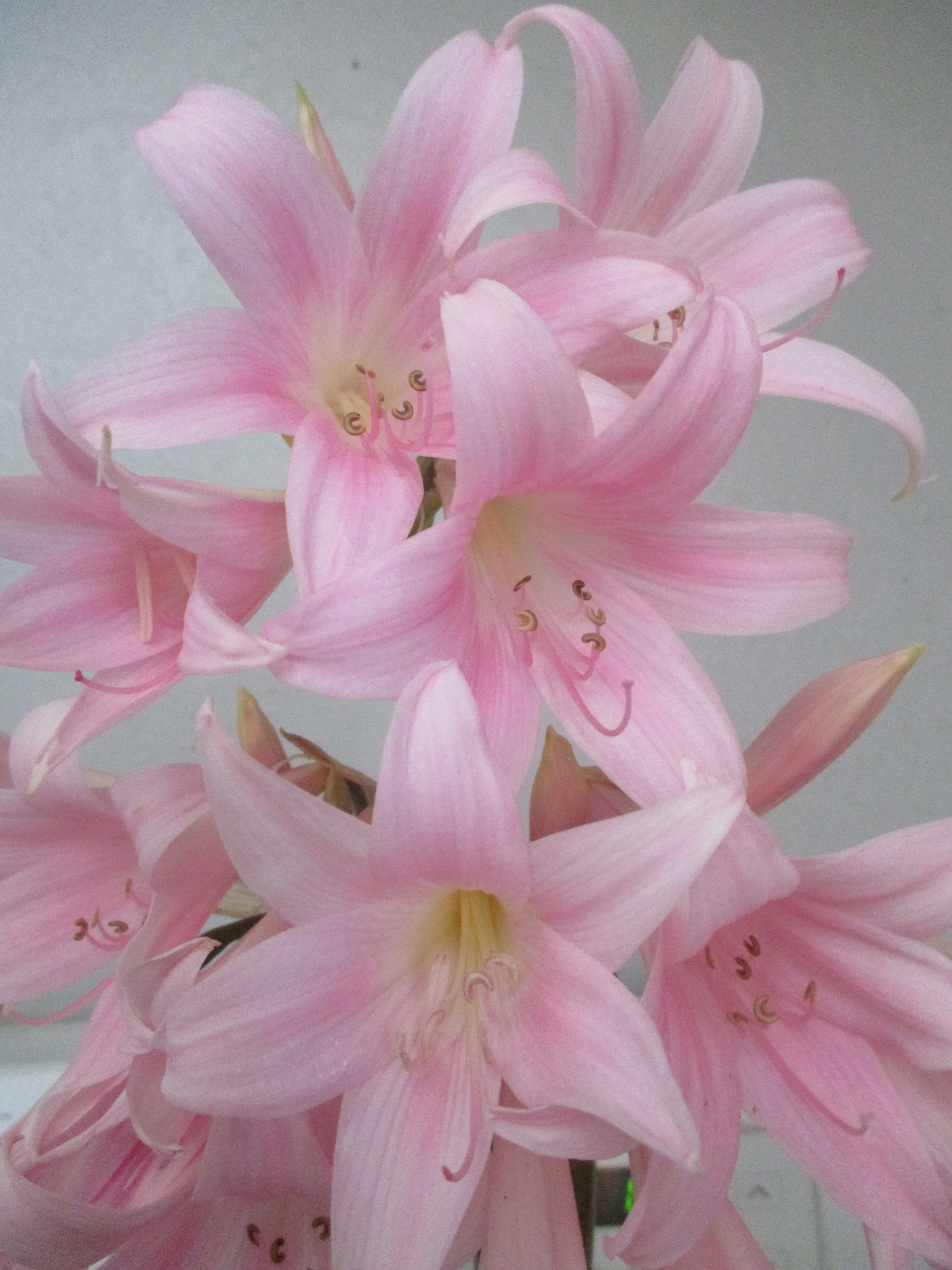 From formerly dormant bulbs just below where their foliage shriveled in the warmth of last spring, the naked brown floral stalks of naked lady, Amaryllis belladonna, grow fast to about two feet tall. They bloom suddenly with a few or several garish pink lily flowers about three inches long. They are sneaky about it too. Without foliage, and prior to flashy bloom, the bare stalks are easy to miss.
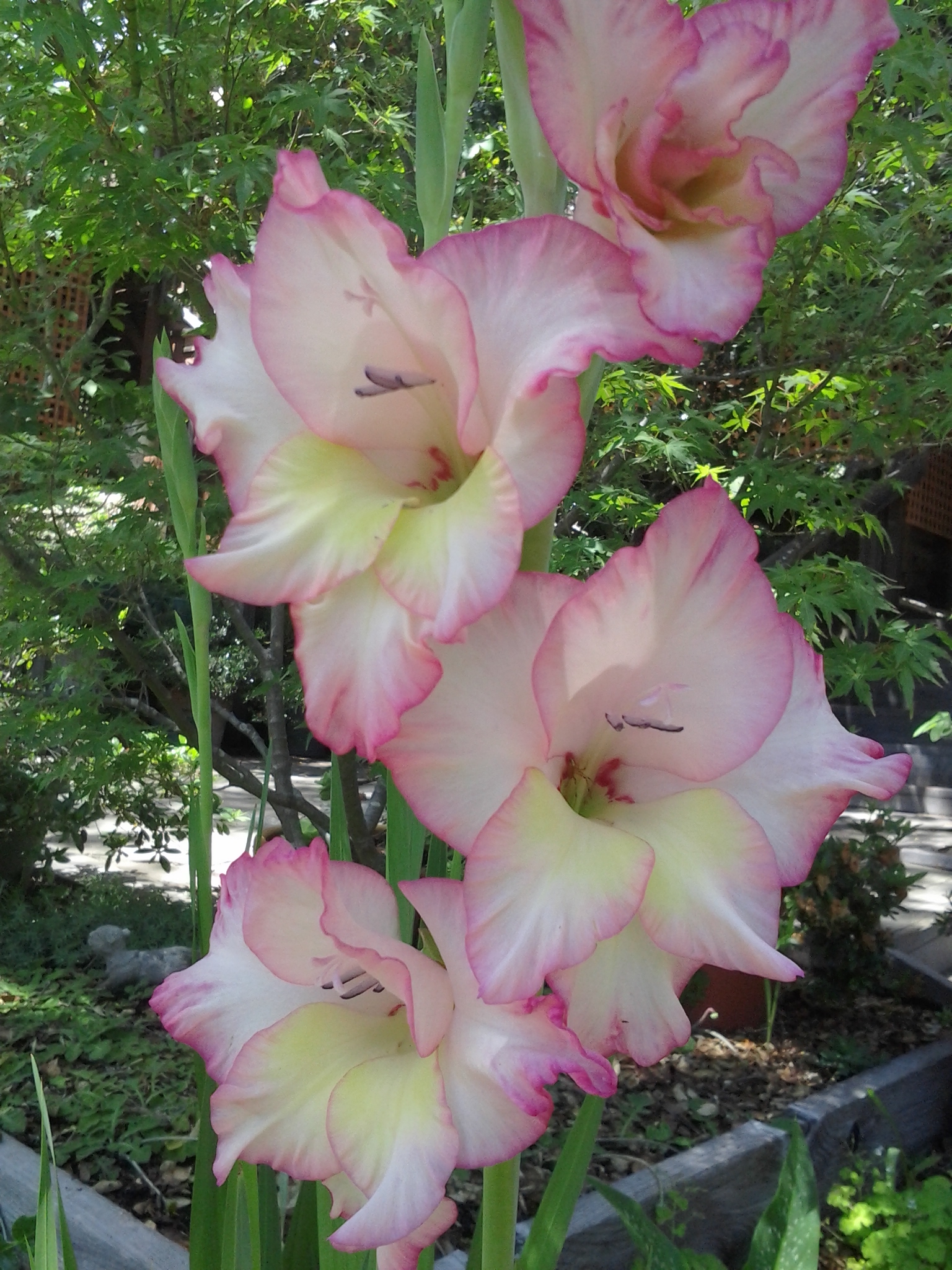 The sword of a gladiator was known as a gladio, and it probably resembled the leaves or floral spikes of gladiolus. These narrow and pointed leaves stand nearly vertical, angling only slightly to the left and right of a single flower stalk that can get as tall as six feet. The floral spike supports several very colorful florets that are arranged to the left and right, but tend to lean toward the front.
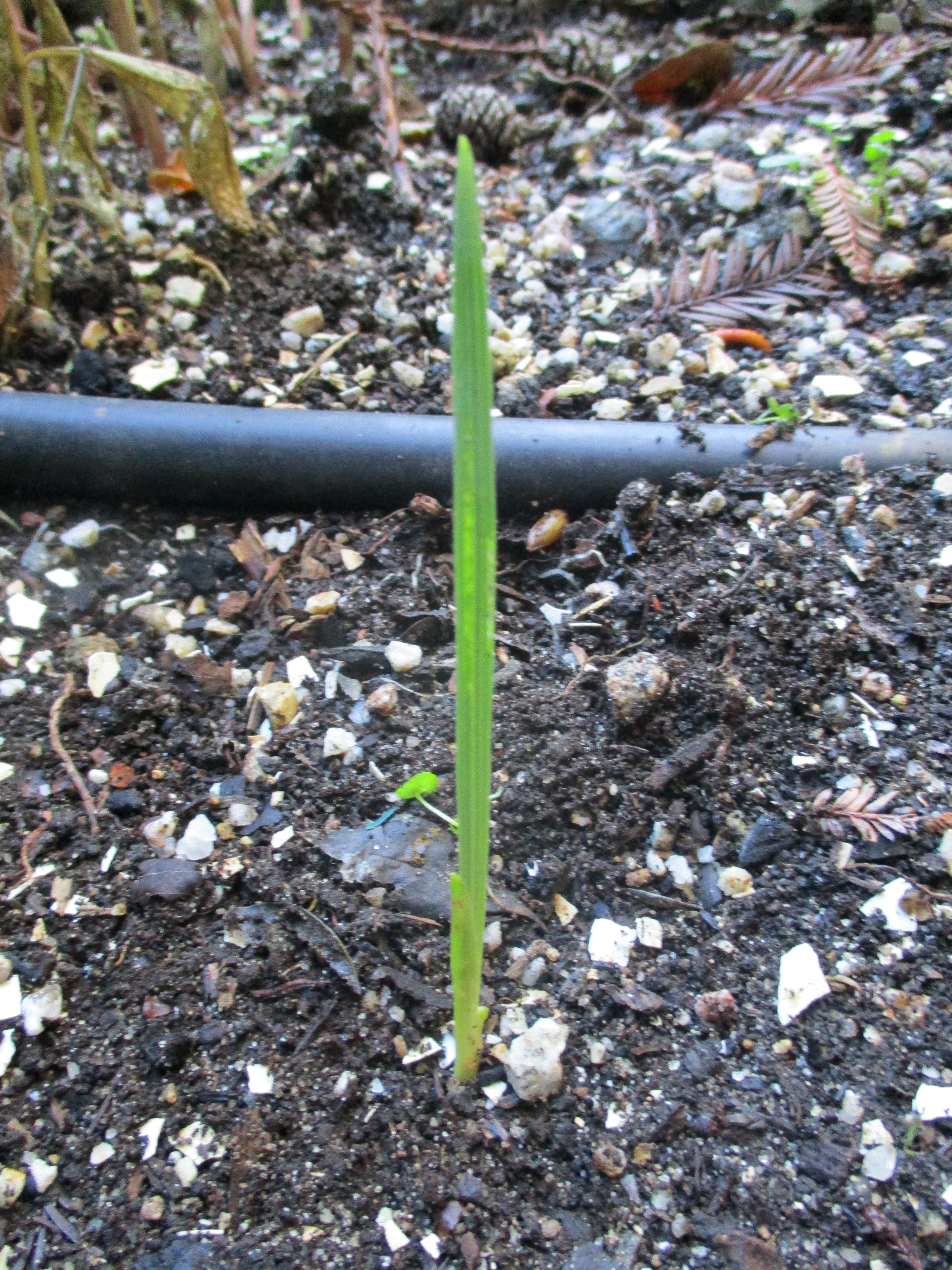
 Like a timely sequel, bulbs are back. Spring blooming bulbs were available in nurseries earlier, so that they could get planted and disperse their roots through winter, and get ready for their early bloom. Since then, Christmas trees came and went as they were replaced by bare root stock. Now that bare root stock is selling, summer blooming bulbs are arriving for late winter planting.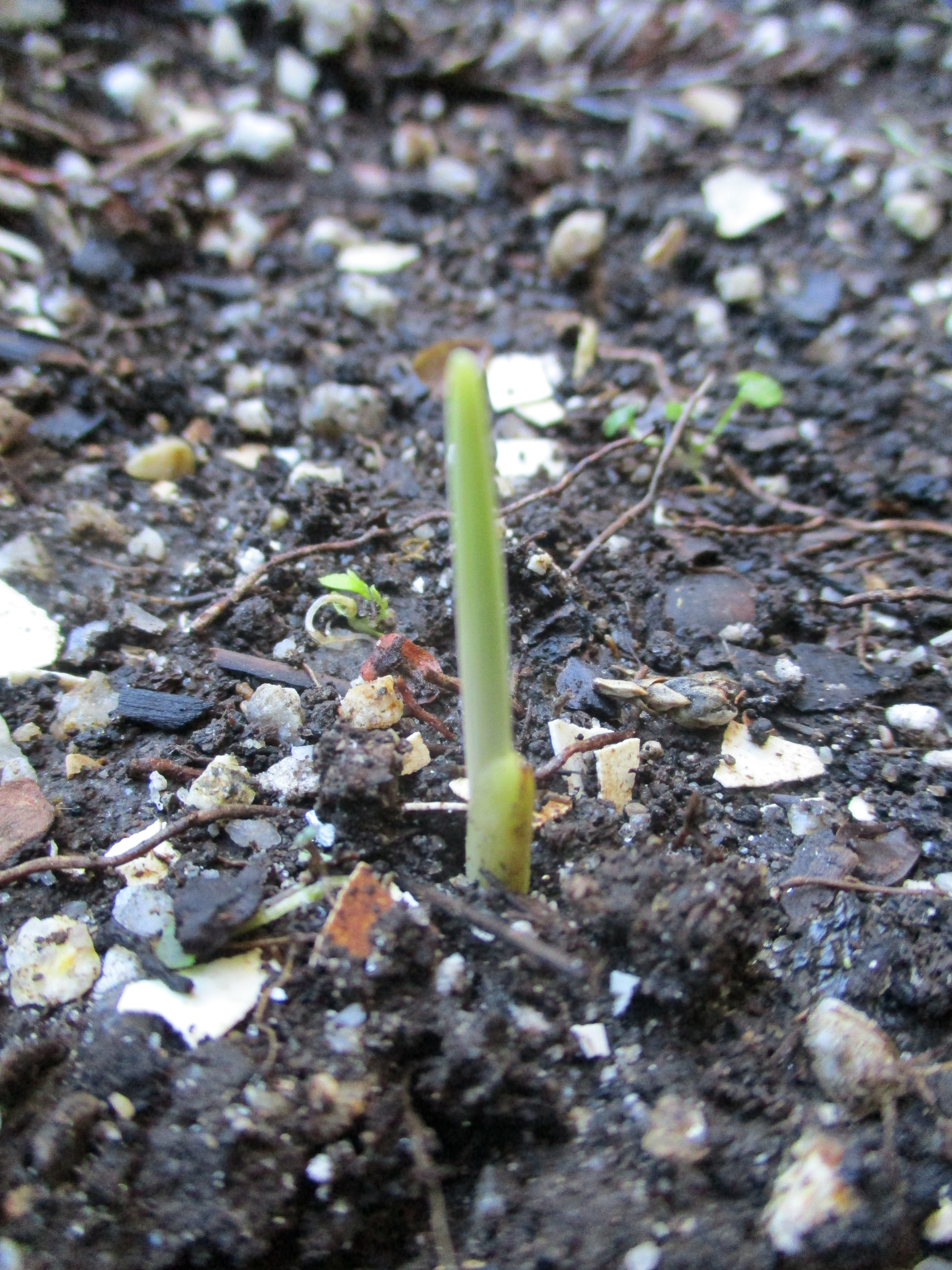
 Tony Tomeo