Sun Scald

Vegetation needs sunlight, but sunlight can be excessive.

It was sad to see the removal of a rather mature but unstable Italian stone pine from the neighborhood. Fortunately, the arborist who removed it was careful to avoid damaging the garden below. Yet, after all the effort, the garden did not remain undamaged for long. The healthy bear’s breech (acanthus) and young Australian tree ferns that had been shaded by the dense canopy of the pine got roasted by the first warm weather.

These perennials got roasted because they were adapted to shade, but could not adapt soon enough to exposure to direct sunlight. This illustrates one of the main problems of topping trees and exposing the interiors of formerly shaded canopies. (‘Topping’ is the disfiguring removal of major portions of the upper canopies of trees.) Like perennials on the ground, foliage as well as stems and main limbs within the canopies of topped trees gets damaged by increased exposure. Although most perennials eventually adapt and recover, topped trees are often damaged too severely to recover.

Foliage can be replaced, but stems and limbs are not so expendable. Deciduous trees and most evergreen trees will replace damaged foliage within the first year. Deciduous trees that get topped while dormant in winter actually do not exhibit foliar damage, since foliage that emerges in spring will be adapted to the exposure that they grow into. However, formerly shaded stems that suddenly become exposed by topping are easily damaged by sun scald, which is like sunburn of the bark.

Sun scald deteriorates into open wounds which leave inner wood susceptible to decay. Minor sun scald of small limbs can eventually be compartmentalized (healed over) before it becomes too much of a problem. Major sun scald can destroy main limbs and even trunks, causing additional disfigurement to trees that were already disfigured by topping! Even if sun scald does not develop, the open wounds left from topping are often too large to be compartmentalized, so remain open to decay.

Regardless of sun scald, topping is more directly disfiguring, by removing well structured limbs and trunks, and causing the development of disfigured and structurally unsound limbs. Secondary growth that emerges in response to topping or severe pruning is weakly attached to the mature limbs that it emerges from because it did not grow together with the mature limbs. It breaks away easily in wind, or simply because it grows too vigorously and soon gets too heavy for weak unions.

Topping actually causes more problems than it is thought to remedy. In some situations, it is actually more practical to remove potentially hazardous trees than to make them more hazardous by topping them.

Sun Exposure Relative To Orientation

Sun exposure changes with the seasons.

Understory plants, which tolerate various degrees of shade, are more popular than ever. Basically, smaller modern gardens amongst larger modern homes are shadier than ever. Densely evergreen trees that provide privacy for such gardens also provide more shade. Sunlight can be scarce. It may be helpful to know where to locate optimal sun exposure.

The sun moves from east to west as each day gets warmer. It does so more or less to the south of vertical. It is a bit farther to the south for winter than for summer. Such orientation and motion determine sun exposure within home gardens. Each side of a house, garage or fence faces one of such exposure or another. Eaves might provide shade from above.

Eastern exposure is good for plants that crave some direct sun exposure but not warmth. Azalea, rhododendron, andromeda and hydrangea prefer such exposures. They receive enough sunlight to bloom, but not so much that their foliage scorches. They enjoy partial shade before sunshine gets uncomfortably warm. Eastern exposures are sunny but cool.

Northern exposure is good for plants that do not require much sun exposure. Hydrangea may be somewhat lanky within such situations. Clivia, elephant ears, philodendrons and ferns may be better options. Upper floors and eaves significantly enlarge the shadows of northern exposure. Shadows are also larger in winter while the sun is lower to the south.

Western exposure is good for plants that crave both direct sun exposure and warmth. It is the opposite of eastern exposures, but is certainly no less sunny. It is merely warmer. Lily of the Nile, lavender, oleander and bougainvillea enjoy such sunny warmth. Some types of ferns and elephant ears may scorch with such exposure. Eaves delay direct exposure.

Southern exposure is good for plants that crave full sun exposure, but tolerate heat. Most plants that enjoy western exposure can also enjoy southern exposure. Many vegetables, with regular watering, are more productive with such exposure. Eaves provide shade for the warmest summer weather. They provide less shade while the sun is lower for winter.

Understory Is Made For Shade

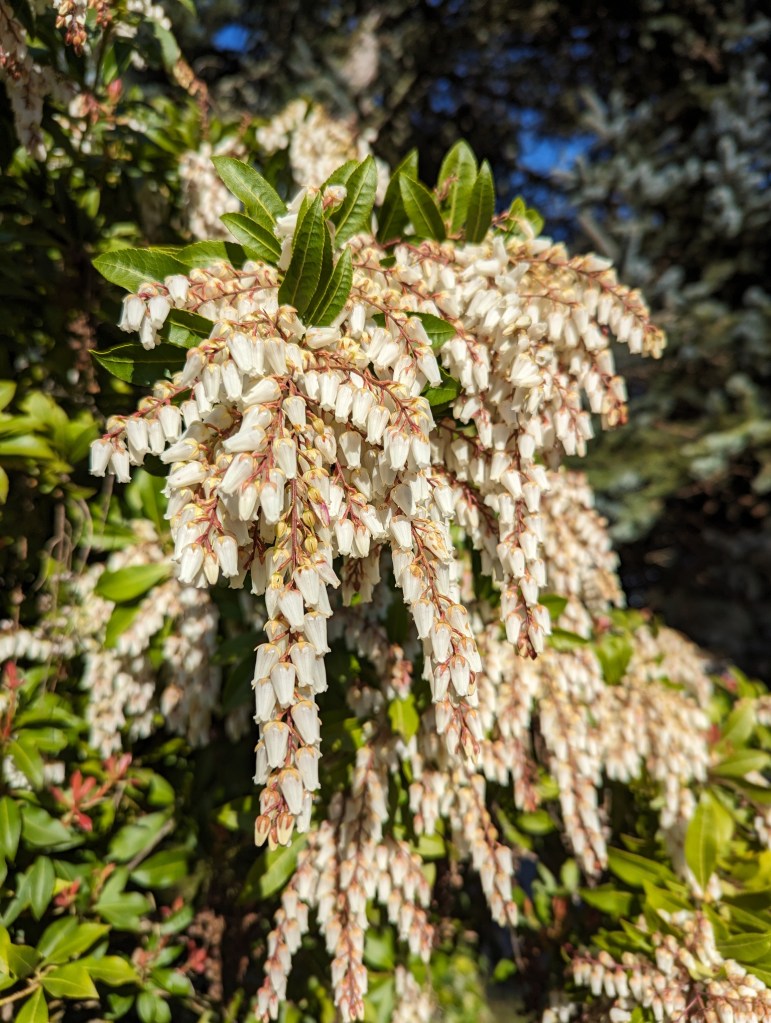
Andromeda tolerates a bit of shade.

Shade influences every ecosystem. Where it is scarce, some vegetation adapts to harsh exposure to sunlight. Some develops glaucous foliar color to reflect some of the sunlight. Some develops tomentum, or foliar fuzz, to shade its foliar surfaces below. Where shade is abundant, understory vegetation adapts as efficiently. Essentially, it is made for shade.

Understory vegetation naturally grows beneath larger trees and shrubbery. It is therefore more tolerant of partial shade. Some tolerates significant shade. Ferns that inhabit forest floors beneath shady redwood trees are notable examples. So are most houseplants that originated from tropical rainforest. Naturally, most live in the shade of bigger forest trees.

Not all understory vegetation is diminutive. Some Japanese maple trees can grow rather large. However, they naturally inhabit forests of trees that grow larger. Some palms begin as understory vegetation to become the tallest trees of their gardens. Their foliage simply adapts as it becomes more exposed. Banana and tree fern foliage might adapt similarly.

Such adaptation is an advantage now that home gardens are becoming shadier. Modern homes are taller, so produce bigger shadows than older homes. They are closer to other tall homes with comparable shadows. Fences are higher to compensate for the proximity of homes. Garden spaces are more compact, with less space that is not partially shaded.

No vegetation survives without sunlight. Understory vegetation is simply more tolerant of partial shade than most other sorts. It is adapted to it, just as some vegetation is adapted to extreme exposure. Generally, understory vegetation is deep green, to absorb as much sunlight as possible. For the same reason, individual leaves are typically large and lush.

Cast iron plant seems to tolerate more shade than any other understory vegetation. Kaffir lily and hosta tolerate almost as much shade as some ferns. Rhododendron, azalea and andromeda prefer only partial shade. Excessive shade inhibits bloom. The same applies to camellia and hydrangea. Realistically, all species of understory vegetation are unique. Each tolerates a particular degree of shade that it is adapted to.

Shade Tolerant Species

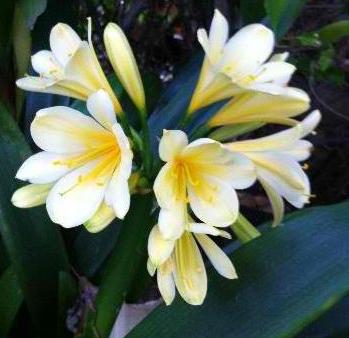
Kaffir lily is famously resilient to shade.

Most gardens have some sort of shade. Those that are not shaded by substantial trees likely have shadows from houses or fences. Big eaves of ranch architecture make big shadows. So do tall Victorian houses. Yet, the disproportionately small gardens of bulky modern homes with high fences are shadiest.

There are not many trees that do well in shade. Most of those that do are rather small ‘understory’ trees that naturally prefer to be in the partial shade of taller trees. The many different Japanese maples are perhaps the most familiar. Vine maple is a similar maple from North America. Many dogwoods are likewise understory trees.

Eastern redbud, parrotia, strawberry tree, sweet bay and various podocarpus are not necessarily understory trees, but are quite tolerant of partial shade. However, stems that reach beyond the shade are likely to thrive at the expense of shaded parts if not pruned for confinement. For example, a fern pine (podocarpus) can be happy on the north side of a house, but can develop such a thick canopy where it gets good sun exposure on top, that lower growth gets shaded out. All palms tolerate significant shade while young, but most eventually grow beyond it.

There is more shade tolerant shrubbery to choose from, since shrubbery is naturally lower and more likely to be shaded by trees. Rhododendron, azalea, camellia, hydrangea, pieris, fuchsia, aucuba and Japanese aralia are about as familiar as Japanese maple is. Heavenly bamboo (Nandina spp.), Oregon grape, mountain laurel, flowering maple and various hollies are also worth investigating. 

Because low growing perennials are naturally lower than both trees and shrubbery, many are naturally more tolerant to shade. Bear’s breech, cast iron plant, perwinkle, tradescantia, arum and forget-me-not can be so happy in shade that they can actually be invasive. Kaffir lily, bergenia, hosta, lily turf, ginger lily, coral bells and various ferns are much better behaved.

Foxglove, cyclamen and balsam (Impatiens spp.) are good annuals for shady spots. Cyclamen is actually a perennial that deteriorates during warm summer weather, but can regenerate as weather gets cool in autumn, to bloom through winter and early spring. Balsam does just the opposite, thriving through warm weather, but deteriorating with frost. Caladium and coleus can provide remarkably colorful foliage until frost. (Foxglove is actually biennial. Caladium grows from bulbs, but is rarely perennial.)

Despite their reputation as being aggressively invasive, both Algerian and English ivies can be resilient ground covers in significant shade. Baby’s tears likewise spreads as far as it gets water. Star jasmine is more complaisant, but only tolerant of moderate shade, and will not bloom as well as it does with better exposure.

Shady Characters

Hellebore may not tolerate much arid warmth, but is impressively tolerant of partial shade.

Suburban gardens are becoming shadier. More modern homes are taller than a single story, so make larger shadows. Taller and more fortified fences likewise create more shade. Smaller garden spaces of modern homes, or of older homes that have been added onto, have less sunny area away from the shadows of the associated homes and fences. Even large gardens of low profile homes lose sunlight as shade trees grow.

Most plants that prefer or at least tolerate shade are ‘understory’ plants; which means that they naturally live in the shade of larger plants. Consequently, most of the few trees that tolerate shade do not get very tall. Vine maple, dogwood, Japanese maple, Eastern redbud and many podocarpus are small to medium sized trees. All palms tolerate some shade, although most grow tall enough to eventually get above it.  

Aucuba, boxwood, euonymus, Japanese aralia, holly, Heavenly bamboo and some pittosporums are among the evergreen shrubs that provide foliage in partial shade. Andromeda and Oregon grape have both appealing foliage and flowers. Sarcococca, daphne and gardenia flowers are not quite as showy, but are remarkably fragrant.

Rhododendron, camellia and mountain laurel provide some of the most colorful flowers in partial shade, and have good evergreen foliage while not blooming. Fuchsia and abutilon are rather lanky shrubs, but do have interesting flowers. Hydrangeas are deciduous, so can have good fall color after providing nice foliage and big billowy blooms through summer.

Both Algerian and English ivies, as well as star jasmine, are climbing vines that enjoy partial shade. (Although the ivies cling to whatever they climb, so should be confined to where they will not ruin paint or siding). Star jasmine does not bloom as well or nearly as fragrantly in shade as it does in sunny areas, but has good foliage nonetheless. Any of these vines, as well as periwinkle, is good ground cover for shady spots.

Cast iron plant and arum are not only tough perennials that produce rich deep green foliage in the shade, but can actually become invasive and are difficult to eradicate once established. Bear’s breech is comparable, with the advantage of striking flowers, but the disadvantage that it defoliates through warm summer weather. Various ferns are perhaps the most familiar and complaisant foliar perennials for shade. Lily turf is an evergreen flowering perennial, but realistically, has better foliage than flowers.

Clivia miniata, bergenia and hardier begonias are grown for their colorful flowers as much as for their rich foliage. Clivia miniata is like lily-of-the-Nile for the shade, but blooms with shorter bright reddish orange, red or yellow flowers instead of soft blue and white on tall stems. Some of the various campanulas are delicate shade tolerant perennials with pale blue or white flowers.

Cyclamen, primrose, viola, pansy, forget-me-not, foxglove and impatiens are seasonal annuals that do not mind partial shade. Cyclamen and primrose are actually perennials that can survive through summer to resume bloom the following autumn. Impatiens is actually a warm season annual for summertime that can survive as a perennial through winter.  

Physics of Exposure

Pavement reflects glare and enhances harsh exposure, which can roast small plants.

How can so many colorful annuals and perennials be so surprisingly happy in the many large pots on the sidewalks in front of downtown shops? Downtown does not seem like it should be so comfortable to them, with all the concrete, glass, stucco and all sorts of other reflective surfaces to enhance the harsh exposure. Yet, the buildings and street trees instead provide a bit of shade to soften exposure and hold in a bit of ambient humidity. Some areas are even too dark for many plants.

Exposure is as important to selection of appropriate plants as climate and soil (or potting media) are. Plants that need full sun exposure will not perform like they should in partial shade. Those that want partial shade may get roasted by too much sunlight.

Walls, fences, and windows to the north can enhance the harshness of exposure by reflecting glare. To the south, they can conversely limit exposure with shade. Such structures to the west increase morning warmth but provide shelter from afternoon heat. To the east, these features are not so advantageous, since they shade morning sun, but enhance afternoon heat. Pavement adds to glare without providing any shade.

As if this is not confusing enough, there are  many more factors to consider. Coarsely textured or darkly colored surfaces do not reflect glare as severely as smooth or lightly colored surfaces do. Broad eaves, like those that adorn classic ranch style architecture, not only add more shade, but also limit reflected glare from walls below. Taller buildings, like two story Victorian houses, create more shade than single story Spanish colonial houses with flat roofs. Even shade trees are variable, ranging from the dark evergreen shade of Southern magnolia, to the light deciduous (absent through winter) shade of silk tree.

Most plants do well within a significant range of exposure, between full sun and partial shade. A few, like agaves, yuccas, oleanders and most eucalyptus, are resilient to harsh exposure, but would not survive significant shade, and would look tired in even partial shade. Even fewer, like ferns, fuchsias, impatiens and Japanese aralia, tolerate darker shade (although none survive in complete shade), but would get roasted if too exposed. Shade, reflected glare, and anything that might affect exposure must be considered in the selection of appropriate plants for each particular application.

Shade Imposes Limitations On Gardening

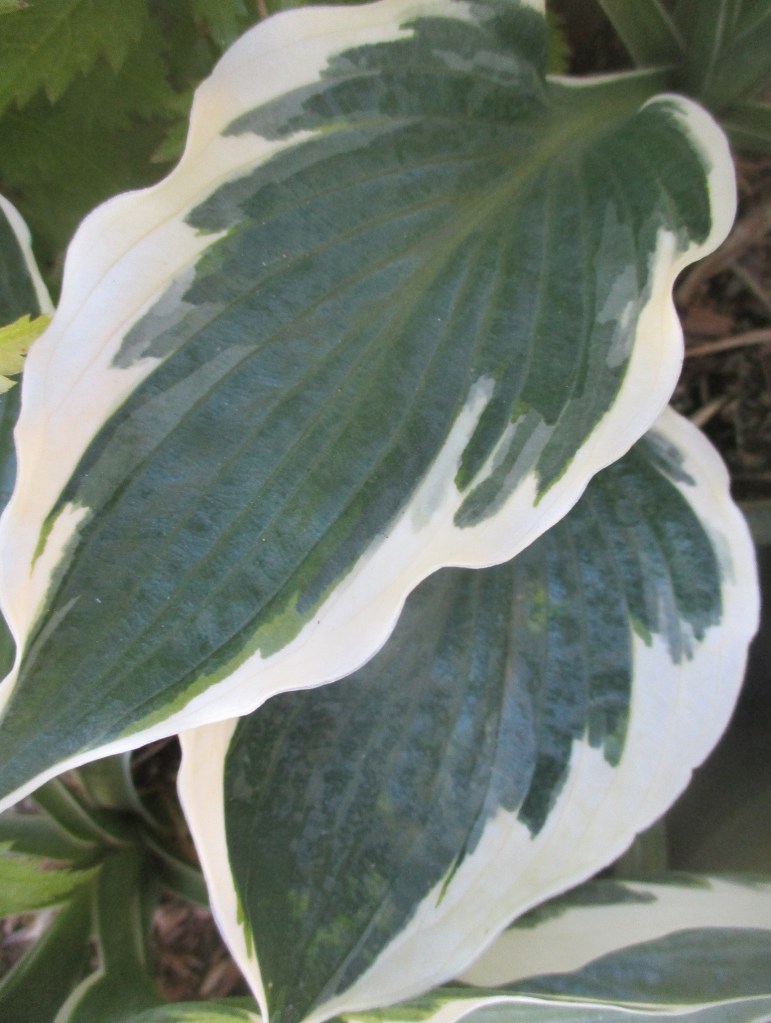
Hosta is tolerant of moderate shade.

Home gardens are becoming shadier. Modern homes are taller to fit closer together. Modern fences are taller to compensate. Densely evergreen trees and large shrubbery compensate more. Taller homes and fences, and denser vegetation, shade more of their smaller modern parcels. Not much sunlight can reach the soil of modern home gardens.

Portions of a garden that are too shady for gardening are not necessarily useless. During warm weather, patios, sheds and workspaces are cooler with shade. Koi generally prefer shade to sun exposure most of the time. Compost piles and woodpiles need no sunlight. Such utilization of shady areas leaves more sunny areas available for actual gardening.

Deciduous trees that let warming sunlight through for winter are less practical nowadays. They do not always obscure undesirable scenery as trees in modern landscapes should. Warming winter sunlight is not so useful to energy efficient modern homes anyway. It is useful for gardening though. That is why smaller evergreen trees are now more practical.

Such trees or large shrubbery can do what they must without creating too much shade. If they get only high enough to hide nearby windows, they should not shade solar panels. Nor should they fill eavestroughs with debris. Perhaps more importantly, they allow more sunlight through than larger trees would. Lower vegetation appreciates what it can get.

Some plants tolerate more shade than others. Some of the most tolerant are understory species. They naturally live within the partial shade of larger plants. Many have big dark green leaves to maximize sunlight absorption. Fern are familiar shade tolerant plants, but have finely textured foliage. Coleus and hosta have exquisitely colorful variegation.

Because most plants enjoy sunlight, the selection of plants for shade is limited. Rhododendron and azalea have a reputation for tolerance of shade. However, too much shade inhibits their blooms. Camellia and hydrangea tolerate a bit more shade, with less inhibition. Cast iron plant is a famously shade tolerant foliar perennial. Kaffir lily tolerates almost as much shade, and blooms splendidly.

Houseplants Naturally Live Outside Somewhere.

Kalanchoe is a popular houseplant here, but grows wild in Madagascar.

The plants grown as houseplants may have serious disadvantages that prevent them from being happy in the garden, but have other advantages that help them survive indoors. They tolerate the lack of direct sunlight, the lack of humidity, the minimal fluctuations of temperature and the confinement to pots that they must endure for a domestic lifestyle. Their main difficulty in the garden is most are from tropical climates, so can not tolerate cold winter weather.

However, even happy houseplants like to get out once in a while. Even though most can not survive the coldest winter weather, the mildest winter weather is actually the best for them to get supervised outings. During clear and warm summer weather, sunlight can easily roast foliage.

Houseplants with glossy tropical foliage occasionally like to be rinsed of dust and whatever residue that they accumulate in the home. (African violets and plants with fuzzy leaves do not want water of their foliage!) Foliage can be rinsed in a shower or with a hose, but are more gently rinsed by very light drizzly rain.

Timing is important. Unusually cold or heavy rain should be avoided. Plants should be brought in before the sun comes out. It is probably best to not leave plants out overnight when it gets colder and they are not likely to be monitored. While the plants are outside, mineral deposits can be scrubbed from the bases of the pots.

The rain needs to fall this time of year anyway, so it may as well go to good use in as many practical ways as possible. It may be a while before it flows into the aquifer and gets pumped out to come back later for use around the home and garden.

So much of the water that gets used around the home has the potential to be used again. With modifications to plumbing and the sorts of soaps and detergents used around the home, used water, politely known as ‘greywater’, can be redirected, collected and distributed to the garden. Water may not be so important in the garden this time of year, but a Greywater Workshop happens to be coming up next week; and advance registration is required.

The Guadalupe River Park Conservancy’s Adult Greywater Workshop (for ages eighteen and up), ‘Greywater Basics: Reusing Household Water in your Landscape’, will be from 9:00 a.m. to noon on February 18th. The Workshop will be at the Guadalupe River Park and Gardens Visitor and Education Center at 438 Coleman Avenue in San Jose. Admission is $15, or $10 for members. More information is available, and reservations can be made, at www.grpg.org  or by telephoning 298 7657.

Humidity And Wind Affect Heat

Heat is more than mere temperature.

Gardening is not so much fun when the weather gets as warm as it has been recently. It is more comfortable to stay inside with air conditioning, or at least where it is shadier. The plants out in the garden are on their own. Except only for those that are potted, they do not have the option of coming in out of the heat.

Most plants actually do not mind the sort of heat that is uncomfortable for us. Some actually enjoy it. The problem is that heat often occurs in conjunction with other weather conditions that can collectively become really unpleasant for plants.

Minimal humidity makes otherwise unpleasantly warm weather more comfortable for us, but can desiccate foliage that prefers more humidity. Japanese aralia, fuchsia, rhododendron, split-leaf philodendron and many other plants that should not mind warmth can get roasted if warm weather is also too dry. Because sunlight enhances the process, exposed foliage is much more susceptible to damage. To make matters worse, sunlight is more penetrating through clear dry air.

Wind that makes us feel a bit cooler in warm temperatures can likewise cause desiccation as it draws more moisture from foliage. Finely textured plants like Japanese maple, many ferns and some grasses, are particularly susceptible. Offshore wind, like the famous Santa Anna Winds of Southern California, are the worst, because they come in both hot and dry from more arid inland areas, combining all three factors of minimal humidity, heat and wind.

Many of the plants that are susceptible to damage from heat happen to be tropical or subtropical plants that typically enjoy heat as long as the air is humid and still. Others are ‘understory’ plants that naturally live in the shelter of higher trees, so do not like direct sun exposure or wind. Yet, even substantial trees, like fern pine (Podocarpus spp.) and even redwood, can get a bit roasted if the weather gets hot, dry and windy enough.

Conservation of water makes warm weather even more uncomfortable for sensitive plants. They really want more water to keep their foliage and stems well hydrated. Hosing ferns and grasses when things get really hot helps to cool the foliage, and briefly increase the ambient humidity. Because thin young bark is more susceptible to sun-scald in hot weather, pruning that would expose more bark should be delayed until the weather turns cool again.

Sunlight Is Becoming A Commodity

Sunlight has not changed. Architecture did.

Shade trees are no longer appreciated like they had been. Only half a century ago, they were important components of suburban landscapes. Big deciduous trees shaded broad lawns and sprawling roofs during the warmth of summer. They defoliated to let warming sunlight through during winter. Now, modern architecture would not accommodate them.

Sunlight has not changed. Human interaction with it has. Modern homes are significantly taller, so create bigger shadows. They are closer together, with less garden space that is not within their bigger shadows, or shadows of adjacent homes. Higher fences intended to compensate for the minimal proximity of adjacent homes contribute even more shade.

Gardening can be difficult within the limited space and abundant shade of modern home gardens. Small evergreen trees or big shrubs that obscure unwanted scenery above the fences can also obscure much of the sunlight that manages to get past the infrastructure. Substantial vegetation in neighboring gardens can get close enough to be influential too. 

The primary part of modern homes that is not excessively shaded is the roof, which is not used for gardening. Trees that are proportionate to modern home gardens are not much taller than associated modern roofs. Modern attics are fortunately insulated so efficiently that shade is not important. Besides, many modern homes are outfitted with solar panels. 

Walls and windows of modern homes are efficiently insulated as well. Warming sunlight during winter is therefore not as much of an advantage as it is for older homes, although it is appealing within sunnier homes. Ironically, the utility cables of many modern homes are subterranean, so will not interfere with trees that get too big for their confined spaces. 

Regardless of their functions within their landscapes, even small trees can develop roots that are sufficiently aggressive to displace pavement and deck suspensions, particularly since they are likely to be close to them where space is limited. Turf grass that is thin and wimpy because of insufficient sunlight is more susceptible to lumpiness of surface roots. Because of proximity, neighboring gardens must be considered too.