Only Australian tree fern is identifiable. Another is just, well, . . . weird.
1. Alocasia odora, taro was installed by a tenant, into a situation that was too dark for it. Now that the tenant is gone, and before another arrives, I brought it back to the nursery for reassignment. The holes in the leaves are from redwood twigs that fell from very high up. I can not identify its cultivar, and am not ever sure if it is an Alocasia or a Colocasia.

2. Sphaeropteris cooperi, Australian tree fern was next to the taro, so came here with it. Although otherwise healthy, its etiolated leaves were reaching towards limited sunlight.
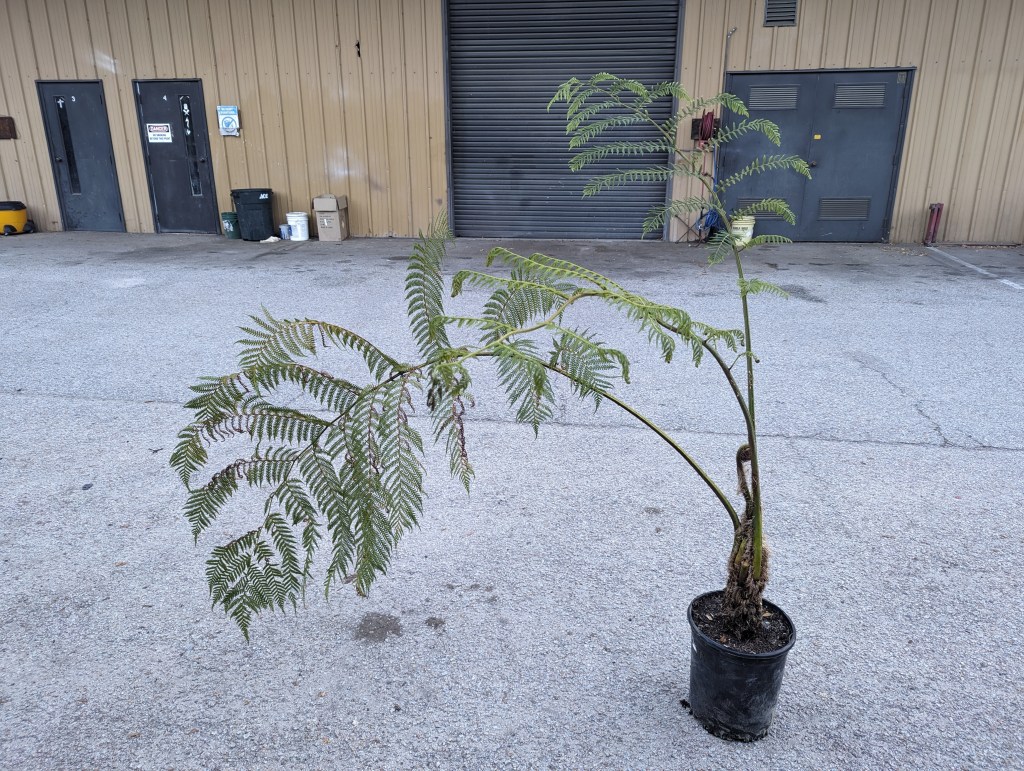
3. Sphaeropteris cooperi, Australian tree fern that I tried to recycle from the garden of a former neighbor did not survive. It is a saddening loss. It was an excellent tall specimen.
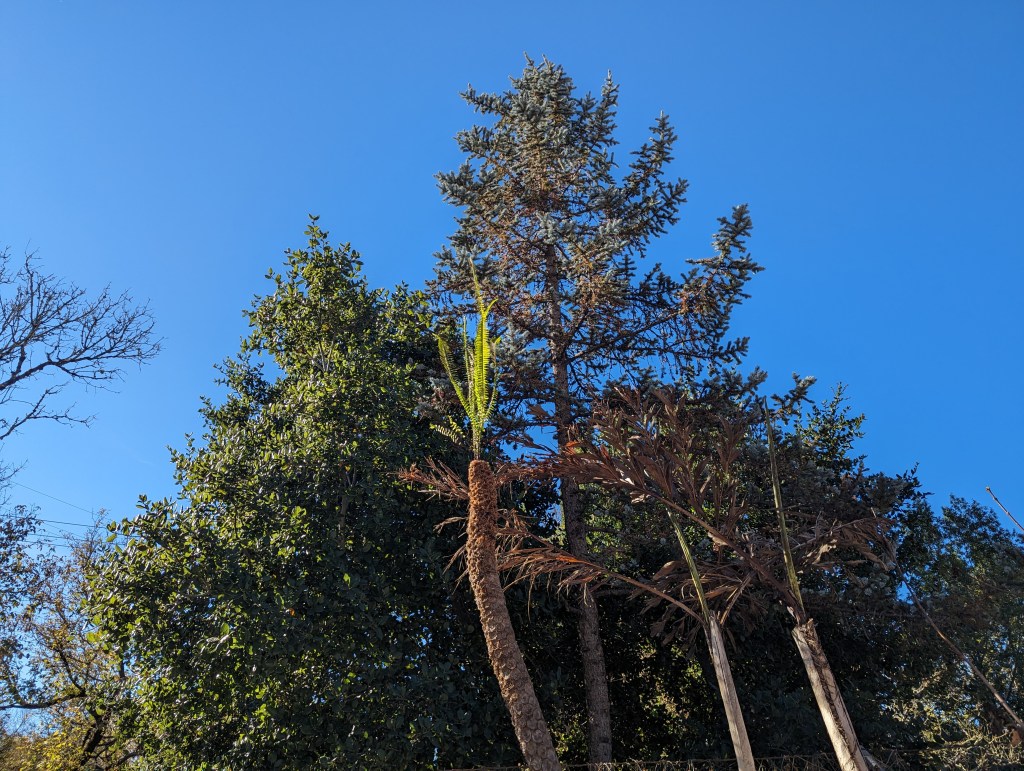
4. Nephrolepis cordifolia, sword fern might make good use of the trunk of this deceased Australian tree fern. Technically, the trunk is not actually a trunk at all; but is merely an accumulation of roots that extended downward through the decayed stem of the original fern. Perhaps the roots of this sword fern can do the same before the dead original roots deteriorate. It seems like a graft, but of course it is not. Nor is it a hybrid. It is just weird.

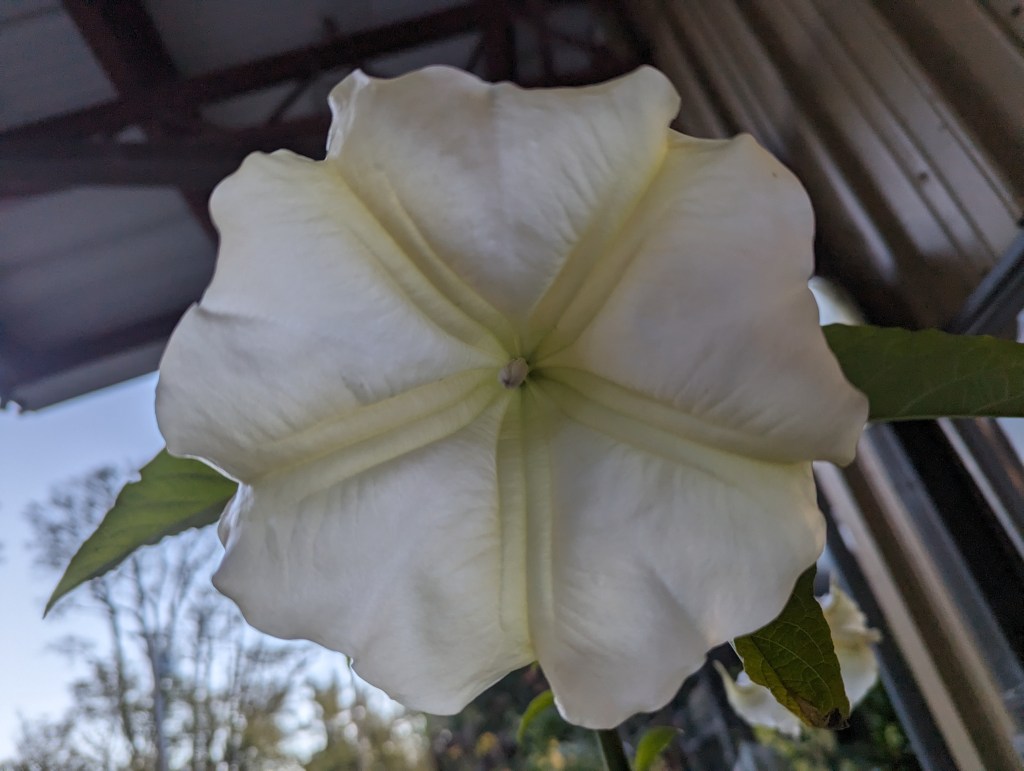
5. Brugmansia, angel’s trumpet of an unidentified cultivar is blooming for the first time. It has been with me for a few years, but dies back each winter. Before it recovers enough to bloom, it dies back again. I got it as a twig from a greenwaste recycle pile in San Jose.

6. Brugmansia, angel’s trumpet should be pastel orange. I took the original twig because I assumed that it was of a specimen that bloomed pastel orange. Does this look orange?!
This is the link for Six on Saturday, for anyone else who would like to participate: https://thepropagatorblog.wordpress.com/2017/09/18/six-on-saturday-a-participant-guide/
 Tony Tomeo