Hard Hat

This is a harsh reminder.

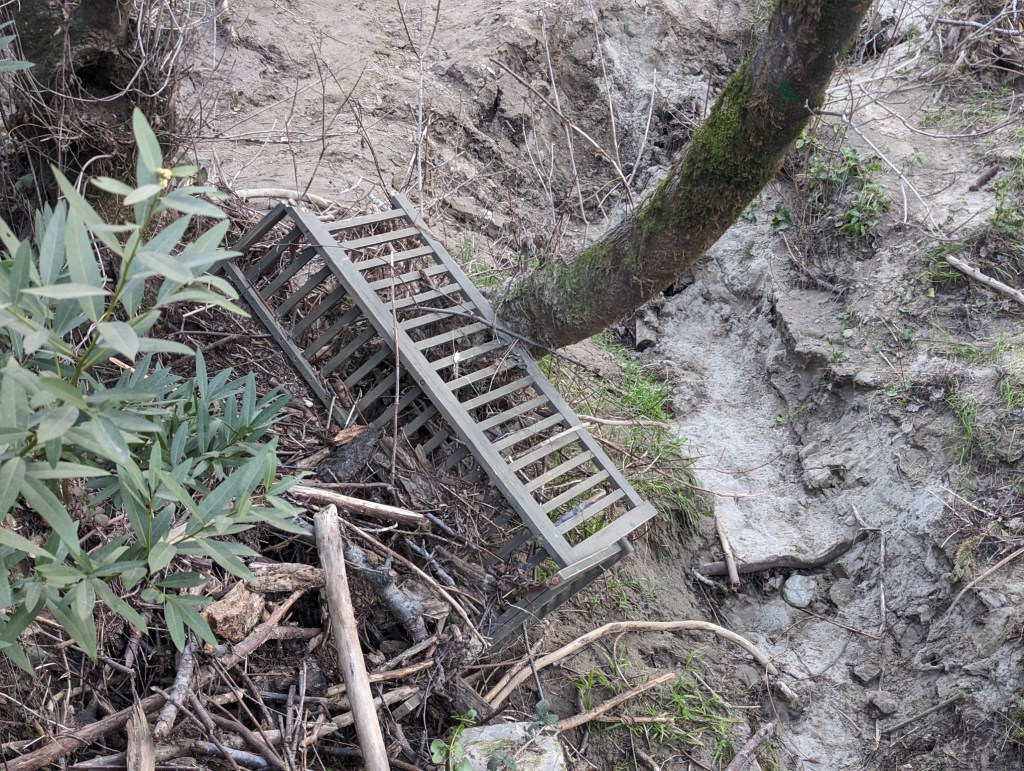
This is why arborists wear hard hats. It is more than eight feet tall. I do not know how much of it extends into the wet sand. Nor do I know how much it weighs. It might have fallen from about twenty-five feet up. I do not know how far the pole saw that it was plucked down with was extended. Even with a hard hat, this would have been potentially very dangerous. I am glad that it is now on the ground, or will be when it falls over.

Nature is naturally hazardous. We try to make some of it safer. We can not eliminate all hazards though. Some, like this one before it fell, are not obviously hazardous. Some are not visible from the ground. As frequently as some hazards are eliminated, others are developing. Trees are always growing and shedding limbs that get shaded out. Old trees are always dying and deteriorating. It never ends.

The alder that dropped this necrotic limb took quite a beating when the creek flooded last winter. Water was higher than this broken limb now stands. Massive trunks of trees that fell upstream floated through here, battering any tree trunks that they encountered, including the trunk of the tree that dropped this limb, which is now at the edge of the water at its current depth. Such pummelling should have dislodged such decayed limbs. Perhaps this limb was not so decayed last winter, and therefore more firmly attached.

The intention of the minor tree work that was done in this area was merely to neaten the scenery a bit. Hazards such as this were not a consideration, since the trees appeared to be reasonably safe, and because they are located on the bank of a creek where no one else goes.
Tree Stumps May Put Up A Fight

Some stumps die immediately. Some do not.

Trees of all sorts are among the most important features of most gardens, and are also the most substantial. Yet, in the end, whether they get too big, too crowded, too hazardous or simply succumb to old age, they eventually need to be removed.

Getting rid of the brush (foliage and smaller limbs) of smaller trees is generally not much of a problem, especially where greenwaste can be left at the curb for recycling. Larger limbs and trunks can be cut and split into firewood. The brush and wood of trees that are so large that they need to be removed by professionals typically gets taken away be the same professionals. The most difficult parts to remove though, are the stumps.

Professional tree services typically offer the option of stump grinding. This works well for the most obtrusive stumps that are accessible. Other stumps get left either because they are inaccessible, or because of the expense of grinding.

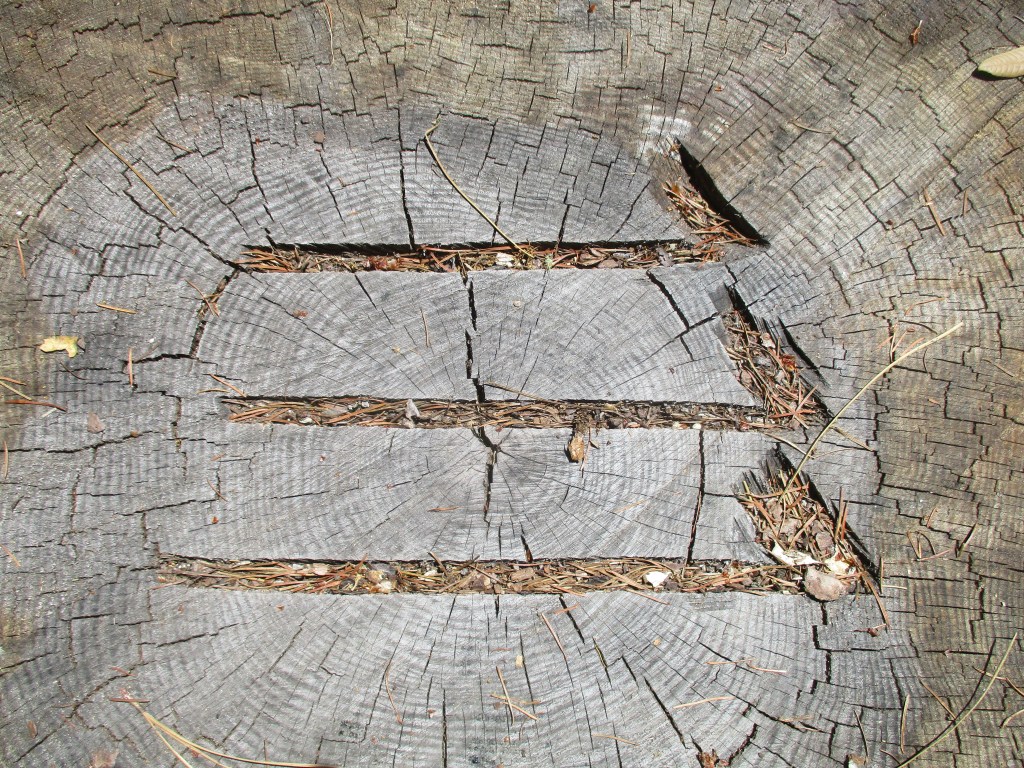
Stumps that are within ground cover or shrubbery often get obscured by the surrounding vegetation, and are never seen again. Others are not so easy to hide. Many refuse to die for several years, and may even try to grow back as new trees.

Coastal redwoods (but not giant redwoods), poplars, willows, privets, sycamores and camphors are notoriously difficult to kill. Their stumps can continue to sprout for years. Shoots that emerge away from the stump can certainly be left to grow into new trees if they happen to be where they will not soon become problematic. (Shoots that emerge directly from cut stumps will likely lack structural integrity.)

To kill stubborn stumps, shoots must be removed as they appear. Eventually, the stumps and roots below the ground exhaust all resources and die. Of course this sounds simple, but may take years to kill redwood stumps. Leaving shoots to grow prolongs the process by allowing replenishment of resources. A stump from a camphor tree that I cut down in about 1988 but did not regularly remove the shoots from lingered for about twenty years before finally succumbing in about 2008!

Once stumps die, they rot faster if buried or at least covered with other plant material. Less stubborn stumps that are not likely to sprout again, like those of pines, cypresses, cedars, birches and (solitary trunked) palms, can be buried or concealed immediately. Stumps that are not cut low to the ground are not so easy to conceal, but should still rot faster if covered with ivy. I prefer to plant either freshly divided lily-of-the-Nile shoots or geranium cuttings around the bases of stumps, because they obscure the stumps and also promote rot as they get watered and disperse roots into the decaying wood. They can be removed, if desired, as the stumps deteriorate.

Six on Saturday: After The Storm

Rain is expected for today and Sunday. It rained a bit yesterday morning. This is normal for winter here. It will not prevent us from resuming seasonal work that was interrupted by the not so normal and epically torrential rain and associated flooding earlier. A bit of the mess associated with that earlier extreme weather remains, but is not so much of an encumbrance. Spring flowers such as daffodil have been blooming for a while. Flowering cherry buds are plumpening. One flowering cherry and the only flowering apricot are in full bloom. Meanwhile, other crews work to keep the power on.

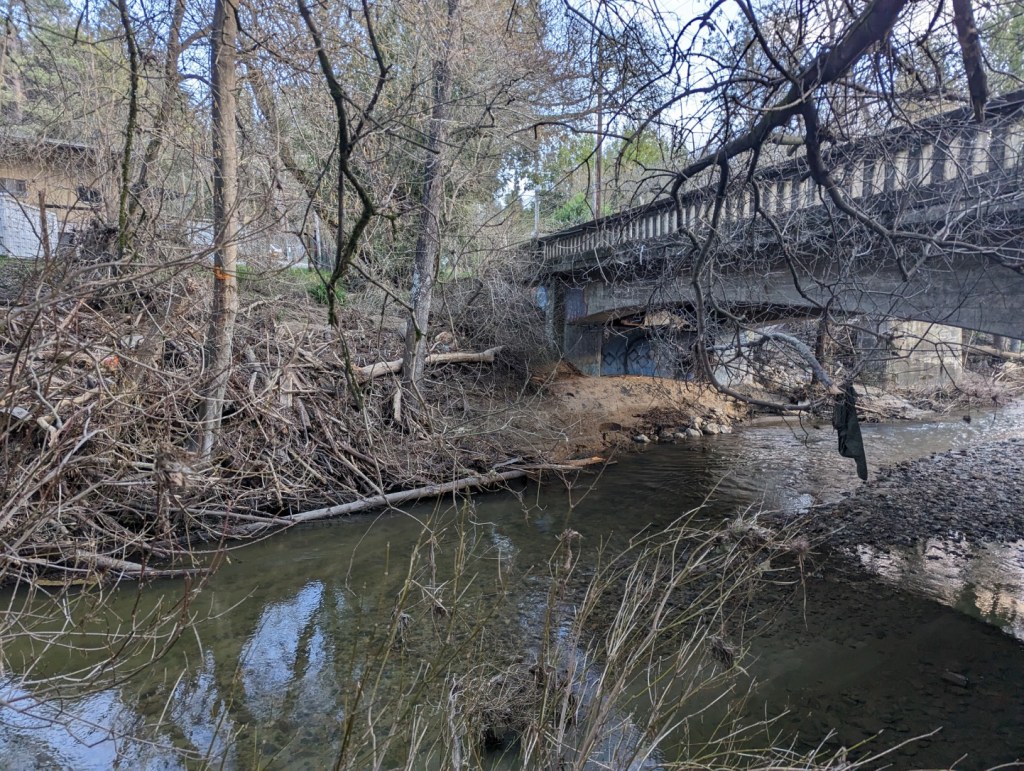
1. Debris of all sorts remains on the banks of Zayante Creek downstairs. This might be a futon. I hope that it came from an exterior patio, and not from within a home upstream.

2. Zayante Creek is right where it should be now. It was slightly above the arch just prior to midnight of New Year’s Eve. The crew’s galley is inside the windows to the upper left.

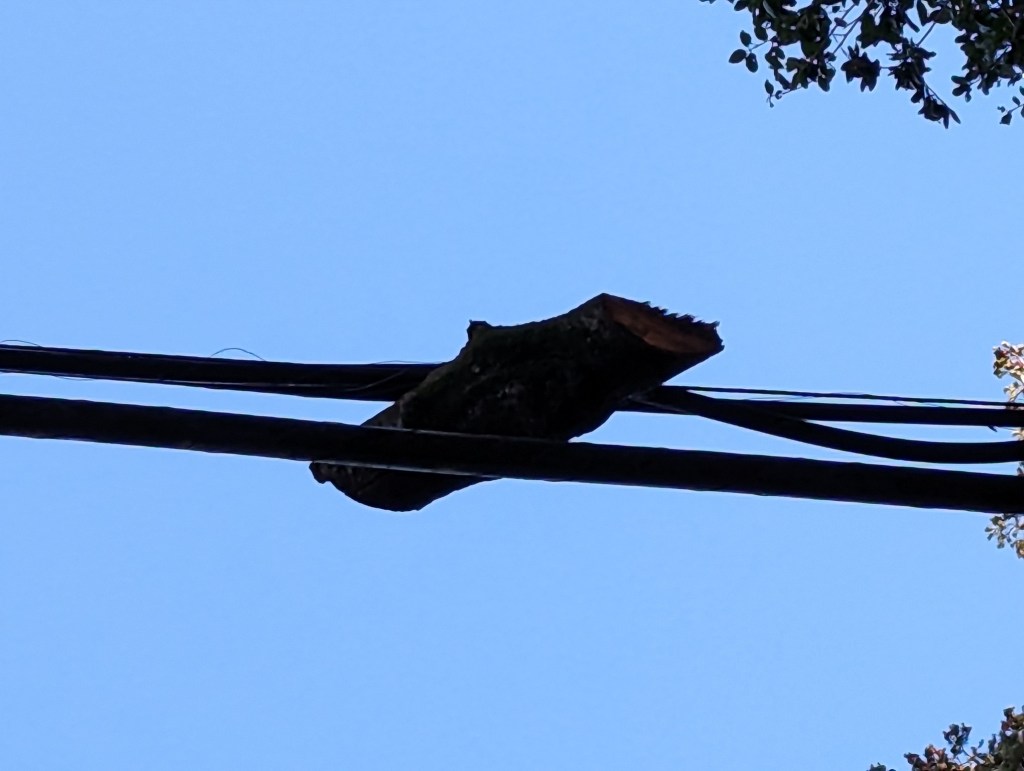
3. After all that torrential rain, another crew came to prune trees for clearance from new utility cables. The work was not bad, but they could not remove this log from the cables.

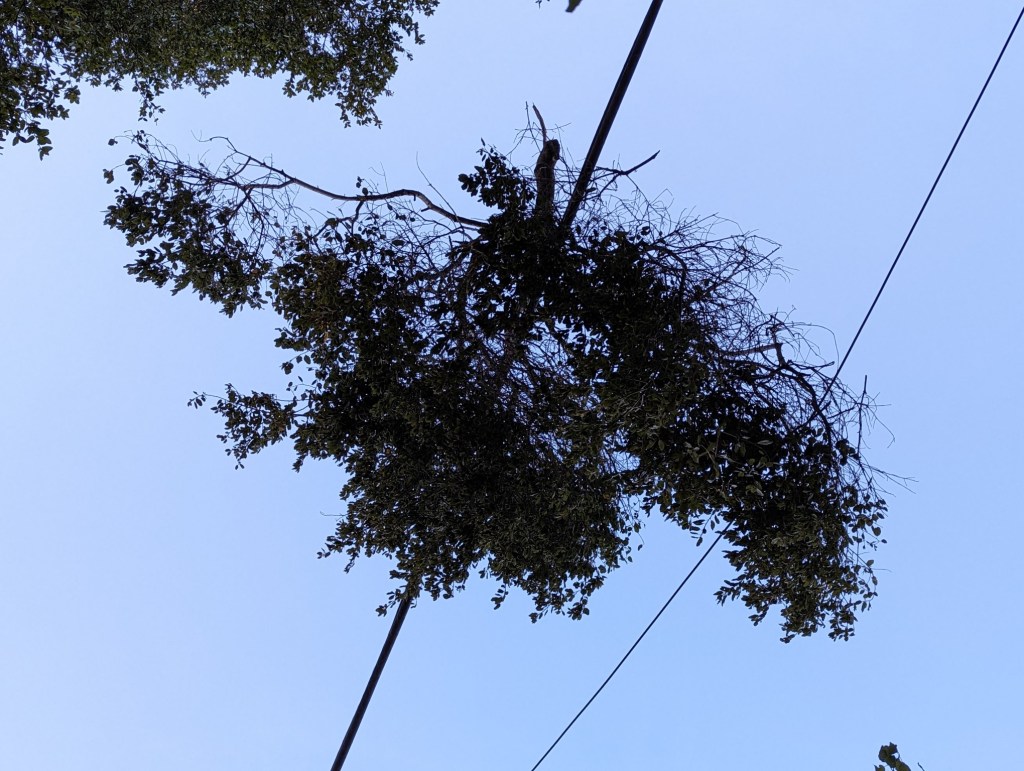
4. After the crew finished pruning a particularly large coast live oak that survived all that torrential rain, the big oak fell. Yes, it fell AFTER the storms, and AFTER it was pruned.

5. As if that were not bad enough, it left this big limb hung precariously on the new cable that they installed immediately prior to the rain! It is heavy and hooked by a small stub.

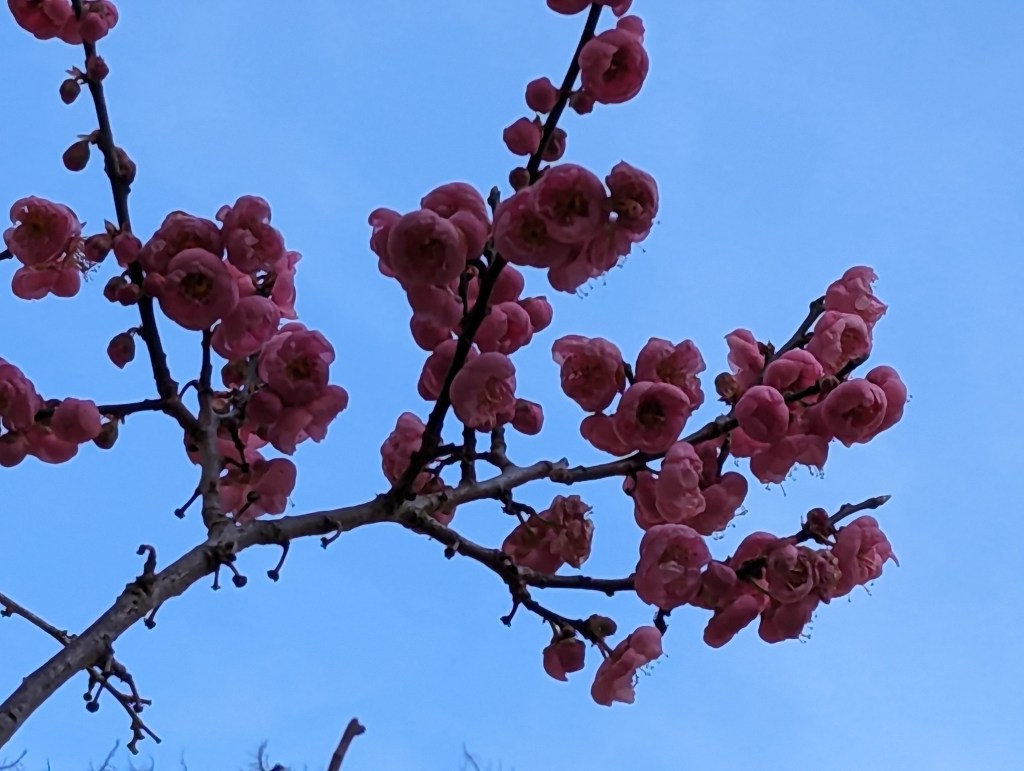
6. Landon’s Tree blooms as if none of this drama ever happened. It is a flowering apricot that grew from the understock of a purple leaf plum that was cut down several years ago.

This is the link for Six on Saturday, for anyone else who would like to participate: https://thepropagatorblog.wordpress.com/2017/09/18/six-on-saturday-a-participant-guide/

Sculpture

This article from three years ago definitely conforms to the ‘Horridculture’ meme for Wednesday.

tonytomeo's avatarTony Tomeo

P71206

I use the term loosely. Okay, so maybe I use it mockingly in this context. This sort of thing really should have no connection to the works of Calder, Rodin or Brancusi. It might be worthy of a few fancy adjectives, such as ‘severe’, ‘unusual’, ‘dramatic’ and ‘bold’. Horticulturally though, we might be thinking more like ‘disgraceful’, ‘abhorrent’, ‘ridiculous’ or ‘just plain sad’.

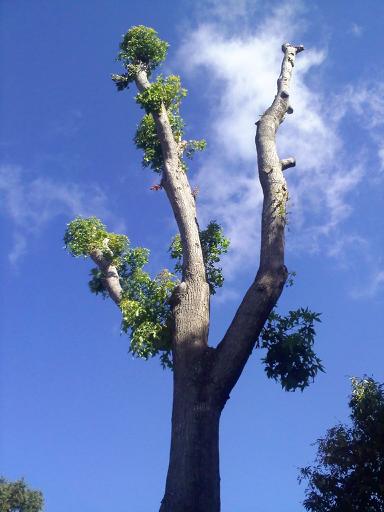
There is nothing wrong with pollarding, that severe sort of pruning that almost all other arborists will tell you is wrong. It involves pruning trees back to the same distended terminal knuckles every winter. Only a few trees are adaptable to the technique, and technically, sweetgum happens to be one of those few trees.

The stipulation is that once pollarded, they MUST be cut back to the same knuckles EVERY winter. A small stub or maybe two can be left on knuckles to allow them to elongate…

View original post 470 more words

Green Roof

This artice is from three years ago too, and the picture is a bit older. I sort of wonder if this tree is still there.

tonytomeo's avatarTony Tomeo

P71125Is this a bad idea for a green roof?

Is it a houseplant that got too big?

Is it a wheelchair accessible tree-house?

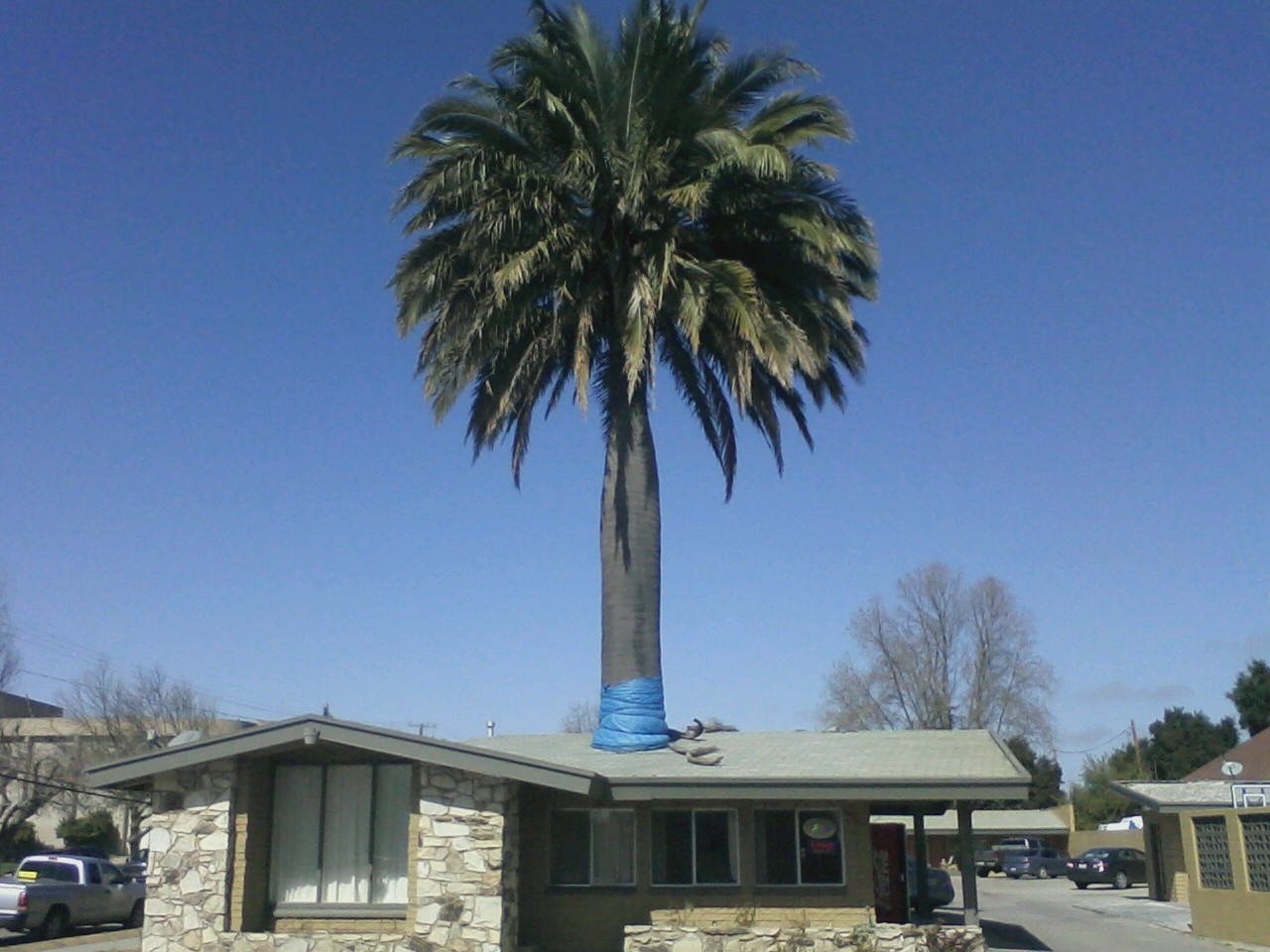
None of the above. It is just weird architecture, designed to preserve a rare Chilean wine palm. The tree was probably planted in the front garden of a Victorian home that was on this site before the site was redeveloped. Chilean wine palms were more popular back then; and this one seems to be about that age. Although it seems to be healthy now, the constriction in the trunk indicates that it had been stressed by the redevelopment, which undoubtedly covered much of the established root system. The time it took for the length of trunk above the constriction to grow coincides with the estimated age of the building below. The tree very likely had better access to rainwater before.

Because it is a palm, the trunk…

View original post 156 more words

Arborists Specialize In Tree Horticulture

0

Why is it so difficult to believe that there are so many different kinds of horticultural professionals? No one is ever surprised that surgeons, cardiologists, dermatologists, ophthalmologists and pulmonologists are all physicians. Yet, those who do not know better consider all horticultural professionals to be ‘gardeners’. This is actually more insulting to real professionals than outsiders can imagine, because the gardening industry is more dominated by non-professionals than any other horticultural industry.

Nurserymen, landscapers and florists are also horticultural professionals. Each of these basic categories can be divided into more specialized professions. For example, production nurserymen grow nursery stock or other horticultural commodities, while retail nurserymen maintain plant material only long enough to sell it. Maintenance gardeners are probably the most familiar of horticultural professionals because so many of us use their services around our home gardens.

Arborists are the horticulturists who specialize in trees, and really should be more familiar than they are. The only landscapes that have no possible use for their services are those that are devoid of trees. Even the most proficient of maintenance gardeners should not be expected to maintain large trees or diagnose potential arboricultural problems, not only because arboriculture is so specialized, but also because maintenance gardeners have their own specialties to be concerned with.

Because trees are the most substantial features of a landscape, and they have the potential to cause proportionate problems if not maintained properly, it is very important to have them maintained by qualified arborists. Those who are certified by the International Society of Arboriculture, or ISA, have passed an exam of their expertise, and maintain their certification with regular involvement with the ISA. Such involvement includes attendance to arboricultural seminars and classes.

It is ironic that some of the least familiar of horticultural professionals need to stay so dedicated to the maintenance of their credentials. Certified arborists can be found at the website of the ISA at isa-arbor.com.

The Davey Tree

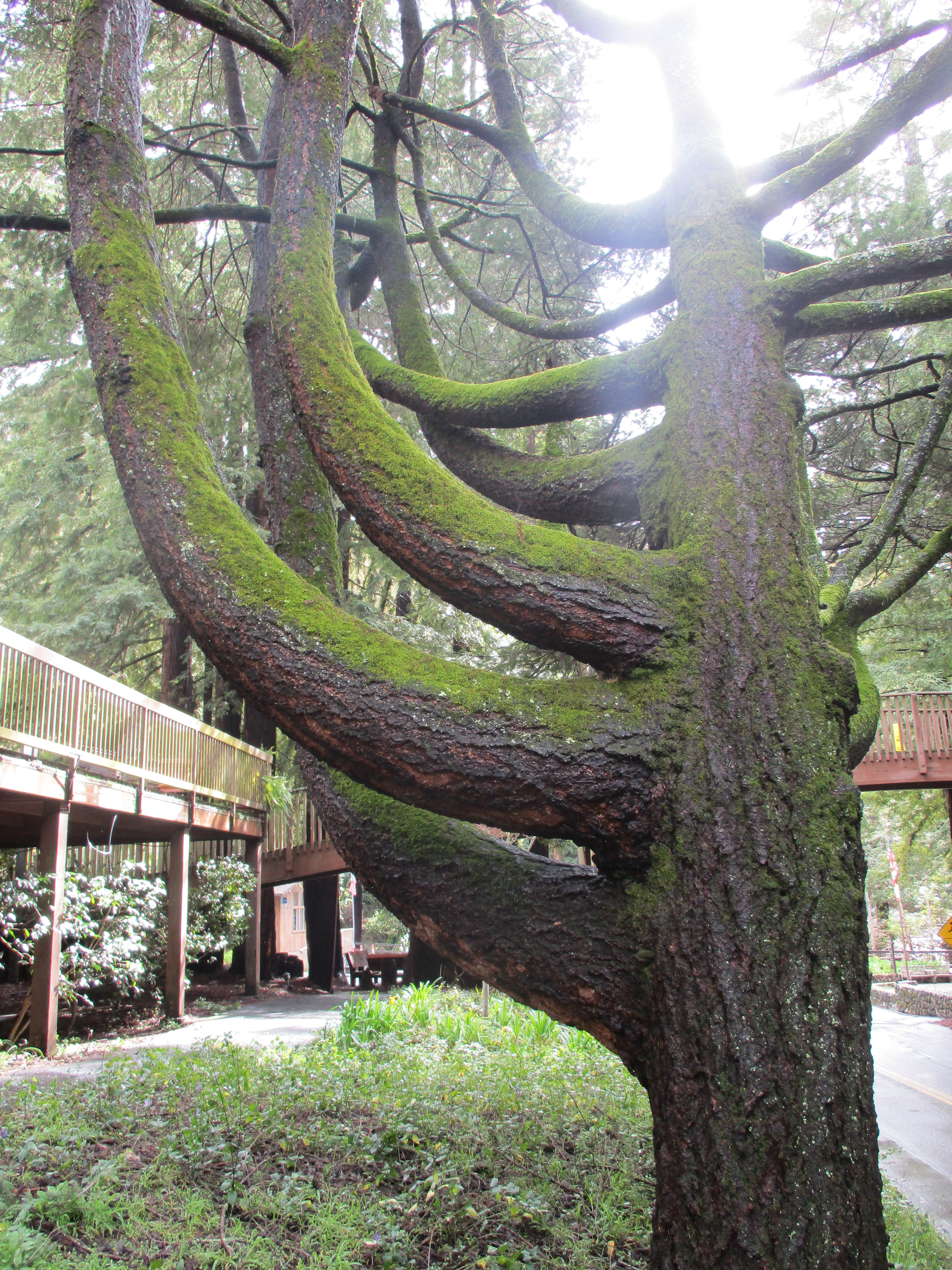
P90317This is no common Douglas fir. It is the ‘Davey Tree’, named after the tree service that so diligently prunes it for clearance from the utility cables above. Yes, I can see as easily as you can how disfigured it is. The plan is to cut it down before it falls apart. At least that is the excuse for cutting it down. It is relatively short an stout, so is likely quite able to support its own weight, regardless of this disfigurement. We really just want it gone because it is so unsightly.
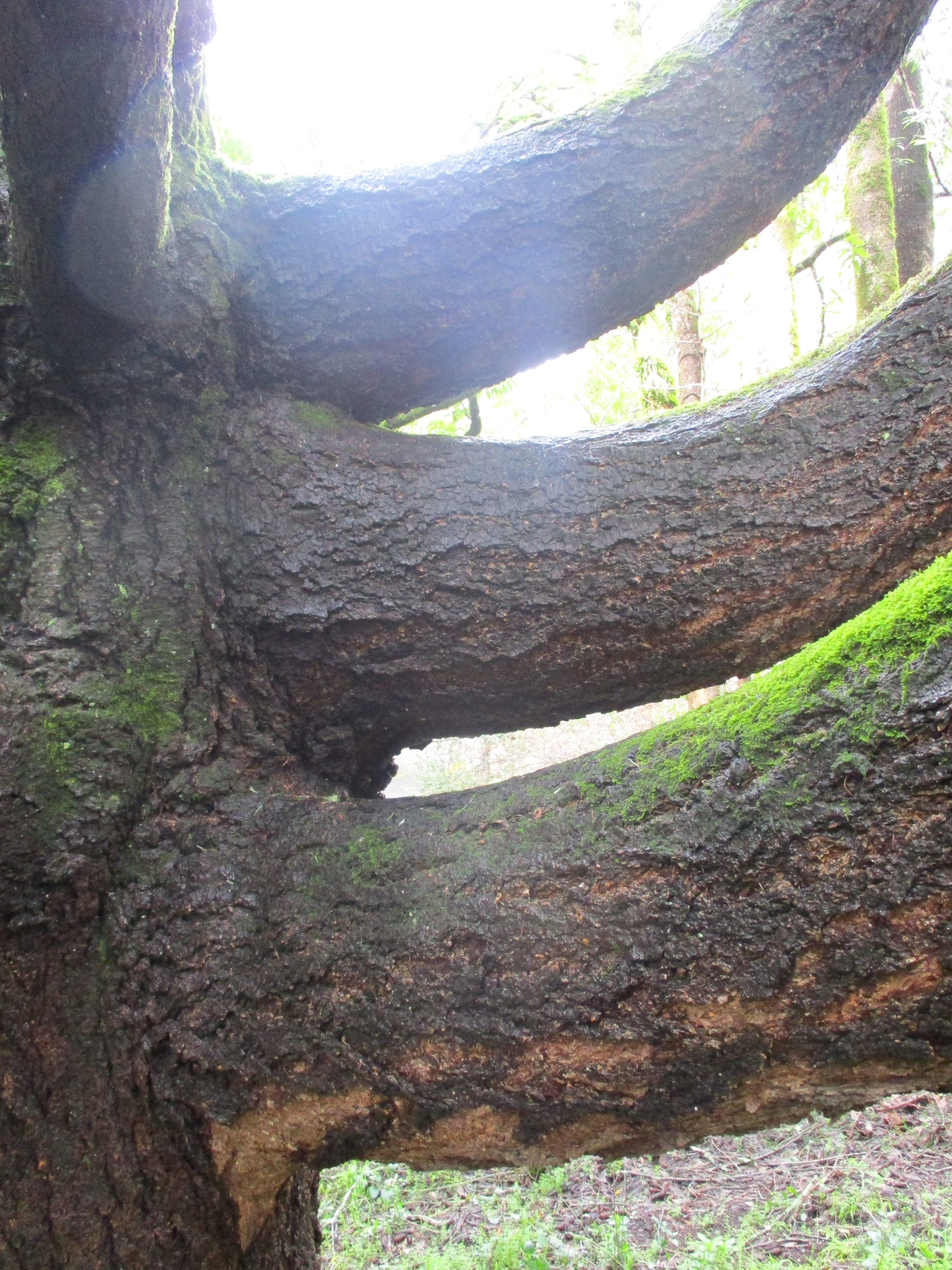
Most who see the Davey Tree are quick to blame the disfigurement on those who prune it for clearance. They do not consider that without such pruning, the utility cables would eventually be ruined and unable to deliver the electricity that so many of us use. Those who prune the trees do what they must to keep the electricity and other utility cables operational. Unfortunately, such work sometimes ruins trees.
As an arborist who sometimes works with other arborists who must perform clearance pruning, I am more likely to blame other landscape professionals. Some landscape designers design landscapes with trees that get too tall or broad within utility easements. Heck, many designers do not even designate where such easements are on the drafts of their landscape plans. Some so-called ‘gardeners’ plant such trees in utility easements with no plan at all. For what they all charge for their services, landscape professionals should know better than to put inappropriate trees into situations where they will eventually need to be mutilated or removed. Not many think that far ahead, or even care.
Anyway, the inappropriate location and disfigurement of the Davey Tree really can not be blamed on anyone. It is a wild tree that grew there from seed.P90317+

Trees Need Clearance From Utilities

30320thumbPalm trunks grow in only one direction; upward, toward sunlight and away from gravity. Each trunk is equipped with only a single terminal bud. If that bud encounters an obstacle, it can not be pruned around it. Palm trunks that get get too close to high voltage cables, or that might sway too close with a breeze, must therefore be removed to maintain minimal clearance from the cables.
Queen palms are notorious for getting planted under high voltage cables because they are so often impulse purchases that get planted without much planning. They are popularly planted along rear fences, exactly where high voltage cables are often located. Mexican fan palms often grow along rear fences as well because that is where birds and rodents are likely to drop the seeds.

Trees with single central leaders, like redwoods, spruces and certain pines, will be disfigured if their main trunks need to be topped for clearance from cables. Removal of such trees is often more practical than this sort of disfigurement. More extensively branched trees like sycamores, ashes, oaks and elms, are more adaptable to clearance pruning if it is not too severely disfiguring.

It is much simpler to not plant trees that get too large under high voltage cables. Elsewhere in the garden, where there is enough lateral (side) clearance, vertical clearance is not such a problem for larger trees. Small trees like redbud, purple leaf plum, photinia and various pittosporums, either do not get tall enough to reach upper cables, or will require only minimal pruning for clearance.

Below high voltage cables, the lower cables are for lower voltage, telephone and television. ‘House-drops’ are the cables that extend from utility poles to houses and other buildings. Although clearance is not so important for these lower risk cables, limbs that lean on them and blow around in wind can be abrasive. Sagging limbs can cause utility cables to sag more than they should.

Unfortunately, those who prune trees for utility clearance are efficient, but rarely arboriculturally correct.

Arborists Really Know Their Trees

7bd6It is no surprise that there are many different types of physicians within the medical industries. Pediatricians, surgeons, cardiologists, dermatologists, and all sorts of ‘doctors’ are all recognized for their particular medical specialty. Yet, almost all horticultural professionals are known simply as gardeners or landscapers, even though many never work directly in gardens or landscapes.

Production nurserymen grow horticultural commodities (plants). Other nurserymen maintain these commodities while they are marketed. Landscape designers develop the landscapes that many plants inhabit. Only after the involvement of various less familiar horticultural professionals, landscapers install the landscapes, and gardeners maintain them. Somehow, they get too much credit.

Arborists really deserve more credit. They are the physicians of trees, who specialize in arboriculture, which is the horticulture of trees. Much of their work is out of reach to gardeners, and is very distinct from the sort of work that gardeners should be expected to perform. Trees are the most substantial features of a landscape, so really should get the proper attention that they deserve.

The International Society of Arboriculture, or ISA, certifies professional arborists who have passed an examination of their arboricultural expertise, and continue to demonstrate proficiency with discriminating arboricultural standards. Continued involvement with ISA classes, educational seminars and workshops is required to maintain arborist certification. It demands serious dedication.

Besides assessing the health, stability and structural integrity of trees, ISA certified arborists are the most qualified to prescribe any necessary arboricultural procedures, and to direct those who perform these necessary procedures. Most local municipalities require a report from an ISA certified arborist to accompany an application for a permit to remove any protected ‘heritage’ tree.

The website of the ISA, at www.isa-arbor.com, Is an excellent resource for finding certified arborists, and the tree service businesses with which they are affiliated. Arborists can be found by name directly, or regionally by ZIP code or city. The website is also a great resource for information about proper arboriculture and trees, and can help those who are not arborists with selection of trees.

Fireplaces Are A Rare Luxury

51028thumbThere are fewer fireplaces after every significant earthquake. Removal of a damaged chimney is probably more practical than repair, particularly if the fireplace does not get much use anyway. Wood stoves sometimes get removed simply because they are in the way. Modern building codes forbid their return once they are gone, and also forbid them in new construction.

The few surviving fireplaces and wood stoves do not get used as regularly as they used to. It seems that no one is around the home long enough to tend to a fire. Orchards that provided so much affordable firewood as they were being removed for urban development are gone now. The outskirts of town, where trees and woodlots might be found, are now more than a short drive away.

Firewood can still be purchased from tree service businesses that must dispose of the wood that their work generates. Because such firewood is a byproduct of urban forestry, it is an unpredictable mix of all sorts of urban trees, and must be procured early in the year to be seasoned by autumn and winter. It is now much too late to purchase green firewood for this winter.

Almost all types of urban firewood are comparable to more traditional types. A few types deposit more residue in chimneys, so that chimneys need to be cleaned more frequently. Firewood from woodlots can be surprisingly more expensive; but it burns cleaner, and is already seasoned. Many woodlots would be pleased to deliver firewood that is ready to burn now.

Firewood is perishable, so only slightly more than enough for one year should be procured annually. Any leftovers can rot if left out in the weather too long. Firewood last longer in a shed or garage, but takes up too much space, and can be attractive to rodents.

Synthetic logs from the supermarket happen to be more efficient than real wood, and do not need to be seasoned. A single log burns longer and cleaner than a few real logs, and produces as much heat. However, they are individually very expensive, and are just not the same as real firewood.