 Pink, red or white are the only choices. There happens to be a darker shade of red. Yellow throats are more conspicuous in white flowers. Otherwise, there is not much variation of color amongst the various mandevillas. The flowers are very similar in both color and form to those of related oleander, but are larger. Some are as wide as three inches. Small flowers can have pointed petals.
Mandevilla vines are surprisingly vigorous and sneaky. The lower portion of a mature plant may seem to be rather tame while it extends aggressively twining vines into trees above. Vines on small trellises can get congested on top. Pruning upper growth helps to even out growth and bloom. Exposed vines are likely to get killed back by frost in winter, but should regenerate efficiently.
The evergreen foliage is quite glossy. Some varieties have interestingly rippled leaves. Partial shade is best for rich green foliar color. Full sun can scorch leaves. Dipladenias are very similar to mandevillas, but are shrubbier and more compact, with smaller flowers and leaves. They are probably a better option for large pots. Sap of both mandevillas and dipladenias is caustic and toxic.
 Like Ginger and MaryAnn, choosing between the flashier hybrids of clematis and the anemone clematis, Clematis montana, might not be so easy. The fancier hybrids have the bigger, bolder and richly colored flowers that the genus is known for. Anemone clematis has smaller and more subdued flowers in soft pastel hues, but is more prolific, more vigorous, and blooms for nearly a month.
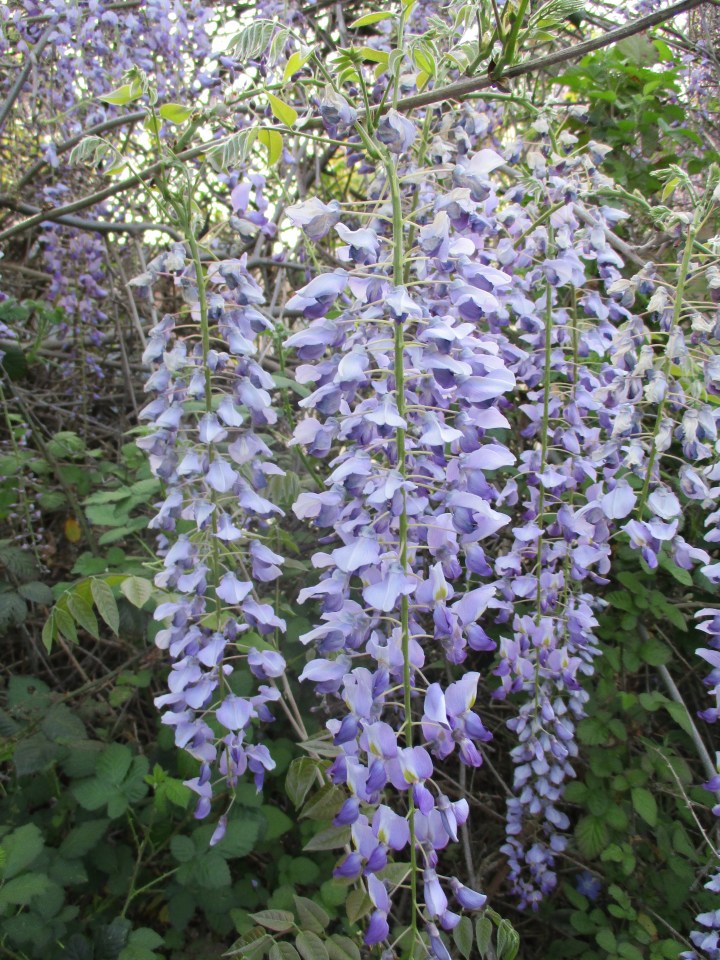 Anyone can plant a grapevine. With a bit of work, almost anyone can make a grapevine grow. Most who put forth the effort can figure out how to prune and cultivate a grapevine. Yet, grapevines so often get very out of control. They easily escape confinement, overwhelm nearby plants, climb into trees and overburden their trellises or arbors. It is easy to forget how aggressive they can be.
 There are so many different specie involved with the extensive breeding of the modern cultivars of clematis that they are not even assigned full Latin names. They are simply known as ‘clematis’ (without a specie name), with a respective cultivar name. Clematis X jackmanii is the oldest known hybrid, so the name is often applied to other hybrids, whether or not they are actually related.
 Tony Tomeo