Gardening With Succulents

(This article is recycled from many years ago, so contains very outdated information.)

Many succulents are remarkably easy to propagate from cuttings.

Succulent plants that were so trendy during the 1970’s seem to be gaining popularity again. This is actually one of the few trends that I like to see, since succulents are such useful and practical plants in modern urban gardens. Although some cacti, agave and larger succulents become quite imposing, most other succulents are quite compact and proportionate to small garden spaces. Some can by happy in the partial shade of atriums and under eaves. Succulents generally do not need much attention, are remarkably easy to grow, and are even easier to propagate. Most do not need much water. 

‘Gardening with Succulents’, with master gardener Laura Balaoro and the Guadalupe River Park Conservancy, is a great program for experiencing the potential for succulents in containers and the garden. There will be several samples of container gardens to demonstrate some of the many possibilities for succulents, as well as their variety of textures and colors. Common pathogens, propagation methods, succulent that grow through winter, and succulents that are adaptable to partial shade will all be discussed. After a planting demonstration, there will be free cuttings for those who can not wait to add new succulents to their gardens.

‘Gardening with Succulents’ is only in a few days, from 10:00 a.m. to noon on September 11, so it is important to register right away by telephoning 298 7657 or online at www.grpg.org. If this program gets full to capacity first, there are many other interesting classes and programs described at the website for later. Admission is $15, or $10 for members of Friends of Guadalupe River Park and Gardens. ‘Gardening with Succulents’ will be at the Guadalupe River Park and Gardens Visitor and Education Center, which is located at 438 Coleman Avenue in San Jose.

Nearby in the San Jose Heritage Rose Garden, the last of the Rose Deadheading Blitzes will be from 5:00 to 7:30 p.m. on September 14, in order to remove spent blooms and promote more blooms before autumn. Volunteers should bring pruning shears and gloves, and wear closed-toe shoes; and of course, stay for ice cream afterward. (Loaner shears are available if necessary.) The San Jose Heritage Rose Garden is located on Taylor Street at Spring Street, just east of Coleman Avenue. Visit www.grpg.org or telephone 298 7657 for more information or to register.
Santa Cruz

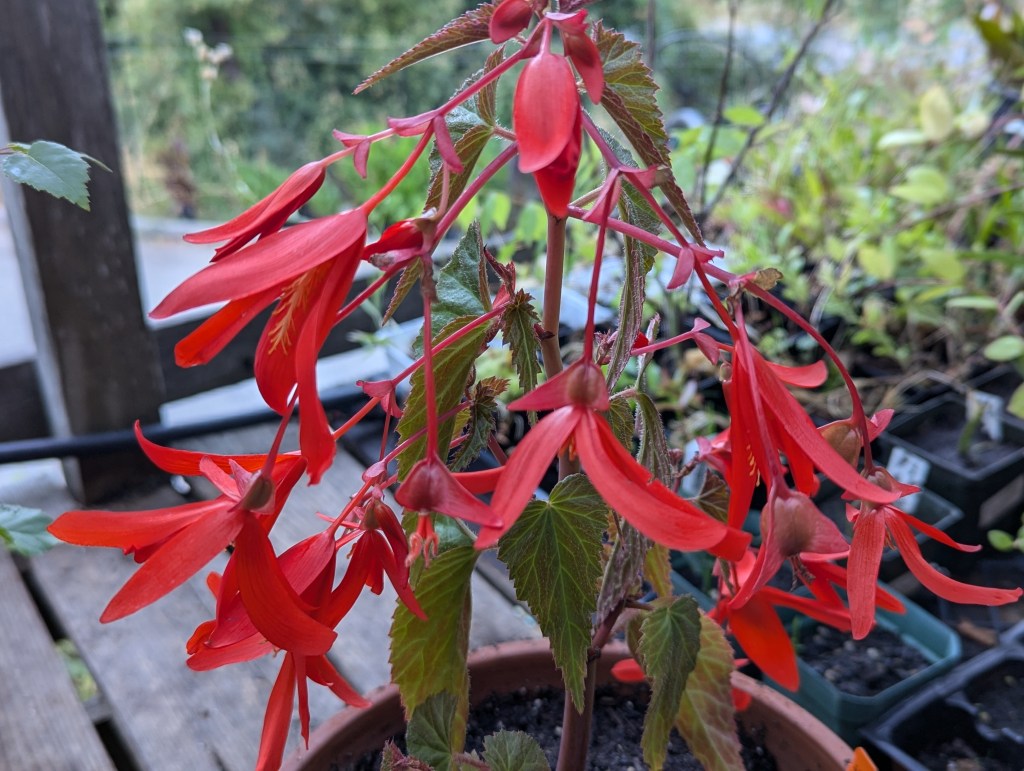
Begonia boliviensis ‘Santa Cruz’

Begonia boliviensis ‘Santa Cruz’ is one of those modern cultivars that I am typically not so keen on. It grows vigorously with abundant red bloom. ‘San Francisco’ is similar but with abundant pink bloom. ‘Santa Barbara’ is similarly similar but with abundant white bloom. All perform splendidly, like so many formerly modern cultivars that were trendy before them. I am not so keen on them merely because they are both modern and trendy. Their names do not help either. My colleague purchased ‘Santa Cruz’ from a nursery in Santa Cruz. It now lives here in Mount Hermon, which is a few miles away from Santa Cruz, but still in Santa Cruz County. I suspect that it is more popular locally because of its name. For the same reason, I suspect that ‘Santa Barbara’ is more popular in Santa Barbara, and ‘San Francisco’ is more popular in San Francisco. I also suspect that I would be less resistant to these modern cultivars if they had more appealing names, such as ‘Los Gatos’, ‘San Jose’ or ‘Palo Alto’. Perhaps the names are for the counties rather than the cities within the counties. All three of my recommendations are within Santa Clara County.

Horridculture – Pseudo-Sustainability

This would not survive for long in the wild.

Sustainability is a good idea gone bad. Theoretically, it is commendable. Horticulturally, it involves growing species and cultivars that require minimal intervention or resources that they can not obtain naturally from their environment. In more extreme application, it can involve growing only native species, but not their cultivars that would not be naturally occurring, in order to limit interference with natural and endemic ecosystems.

Capitalism is a good idea too. Unfortunately though, it too often compromises other good ideas. It is how sustainability became a cheap fad, which now involves all sorts of artificial but marketable products and interventions that are contrary to its original intention. Regardless of their sources, water, fertilizers and amendments that are not provided by nature are unnatural. Container gardening infrastructure, irrigation systems, artificial illumination and really anything that is made of unnatural material are violations of sustainability that should be more obvious than they are.

‘Sustainability’ has become a buzzword for marketing.

There is certainly nothing wrong with appealing exotic vegetation with the garden or home. Almost all of the best and most popular vegetation is not native, and most of it relies on unnatural intervention and resources to perform as desired. However, it should be recognized for what it is, and not marketed as ‘sustainable’ if it is not.

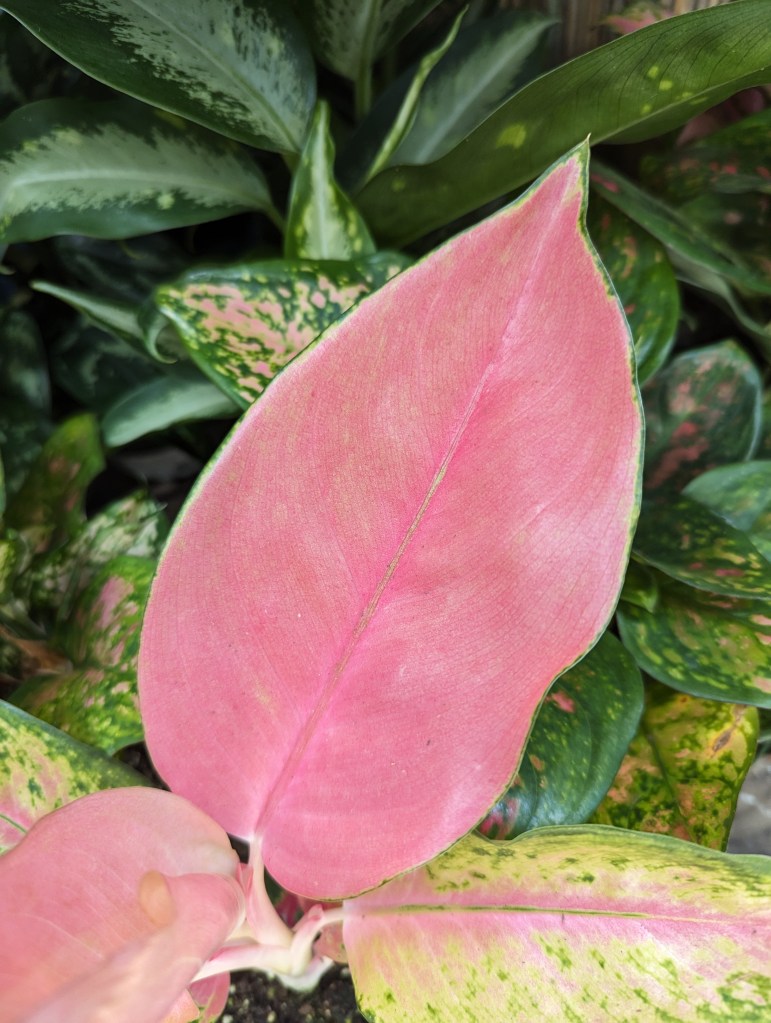
This unusual cultivar of Aglaonema was unnaturally selected or developed from species that are native to tropical or subtropical climates of southeastern Asia. it grows primarily as a houseplant here because it is vulnerable to even very mild frost. It grew in artificial potting medium, within a plastic pot. It will always be reliant on artificial irrigation, and will perform better with unnatural application of fertilizer. It will always be less vigorous than greener cultivars because it lacks chlorophyll. Yet, it is marketed as ‘sustainable’.

Fads Influence Contemporary Garden Design

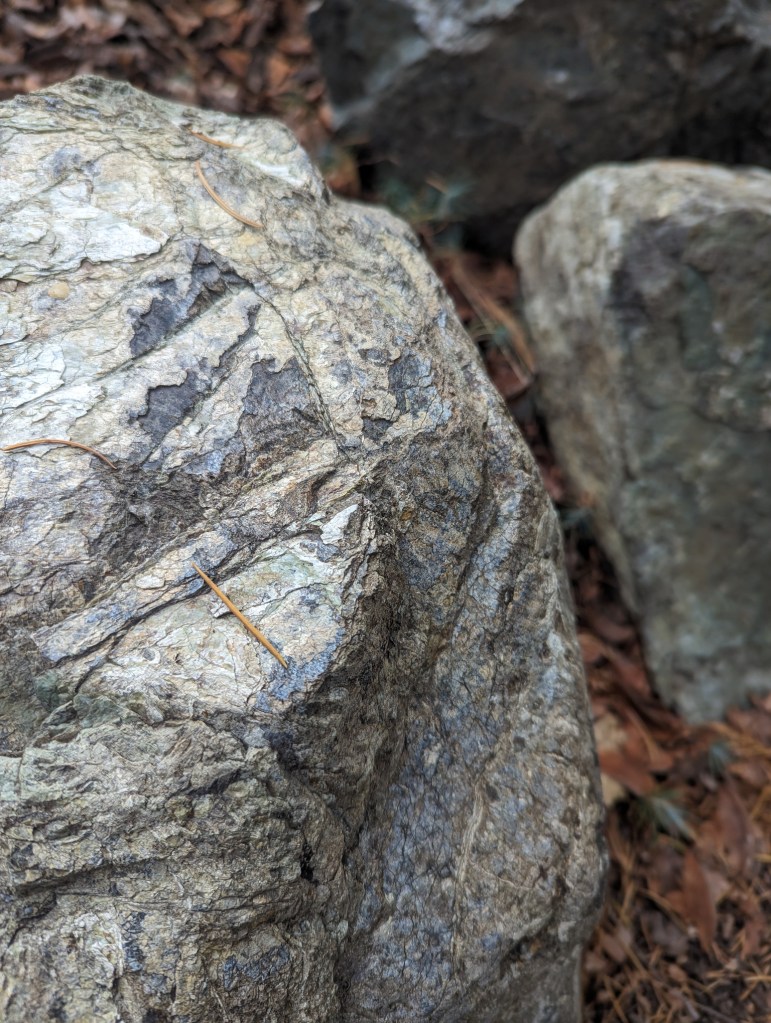
Even boulders can become a fad.

Landscape design and gardening trends change like every other sort of fashion. Several fads of the past were quite practical and justifiable. Many were not. Whether justifiable or not, many merely became old fashioned. Some evolved into a more contemporary style. Others were not so adaptable. Planning for a landscape is easier than planning for fads.

For example, plants seem to be disproportionately small within a new landscape. That is because someone planned for them to have sufficient room to grow. Shade trees should eventually mature to be proportionate to their respective spaces. In fact, all plants should mature accordingly. However, overly trendy queen palms can become passe at any time.

Many home gardens contend with fads from the past that are awkward to accommodate. Strict symmetry that was very common long ago has become more than old fashioned. It is now considered to be unappealing. Relaxed asymmetry is now common and popular. Of course, this is an advantage as aged trees of symmetrical rows begin to die randomly.

Queen palms that became popular in the 1990s are getting more expensive to maintain. Only professional arborists can groom them as they get too tall to reach from the ground. Queen palms at rear fences of backyards were a fad. Sadly, most utility cable easements are above such rear fences. Palms that encroach too closely necessitate costly removal.

Living Christmas trees was another fad that caused serious problems later. Most of such trees were either Italian stone pine or Canary Island pine. Many found permanent homes within confined home gardens after Christmas. They seemed to be so docile while small and potted. The problem was that both species grow too big for compact home gardens.

Sustainability is presently a fad that actually has potential to be beneficial in the future. It only needs proper execution. The results of fads may linger long after the fads are gone. Many trees that are fads now could survive for centuries. No fad demonstrates that more accurately than sustainability. That which is truly sustainable can evolve with future fads.

Horridculture – Pale Clivia Syndrome

P90417Back in the good old days, Kaffir lily, Clivia miniata, which is probably most popularly known simply as ‘clivia’, bloomed with big round trusses of exclusively bright reddish orange flowers. It was such an excellent color that no one thought to change it. Flowers of feral plants that sometimes grew from seed were potentially more orange and less red, but were flashy nonetheless. There was no need, and minimal potential, for ‘improvement’.
Then the allure of the ‘rare’ happened. Yellow Kaffir lilies had previously been so rare that very few had seen them. Once the rest of us became aware of their existence, many of us wanted them, only because they were so rare. However, after seeing them, some of us came to the conclusion that they were rare because no one wanted them when the species was first introduced, and cultivars with the best color were selected and perpetuated.

Regardless, yellow Kaffir lily suddenly became a fad. Traditional bright reddish orange Kaffir lilies became passe. All the while, those subscribing to the fad seriously believed that yellow was better and more desirable than reddish orange simply because it was so very rare. All the while, yellow became increasingly popular, increasingly available . . . and no longer rare. All the while, reddish orange became unpopular, uncommon . . . and rare.

So now what? Why is yellow more popular than reddish orange now? Yellow is insipid and pale. Reddish orange is vibrant and bright. Furthermore, yellow is so dreadfully common. Reddish orange is quite rare. According to the previous justification for the popularity of insipid pale yellow Kaffir lily, bright reddish orange Kaffir lily should be popular now, not because they are so much more colorful and appealing, but because they are RARE!P90406++++

These are in Brent’s garden.

Real Deal

P80203Stereotypes can be such a bother. For the past almost twenty years that I have been writing my gardening column, many of those who read the column have been making assumptions about who I am and how I behave. I actually find much of the behavior that I should conform to be rather objectionable. Even the lingo would be awkward for me. I am a horticulturist, and if you must know, an arborist as well. It is my profession. I did not take an interest in horticulture because I retired or got bored with my primary career. Nor did I flunk out at everything else. I am not a garden guru, flower floozy or hortisexual. I do not crowd my garden with garden fairies, repurposed junk or rare and unusual plants. There is nothing eclectic or quaint. There is no whimsy or magic, and most certainly NO riot of color! Brent does not even flinch at my offensive racial comments.

Does anyone remember the yellow clivia fad? Everyone wanted yellow clivias in their own gardens because they were so rare, and so different from the typical orange. Does anyone even know what ‘rare’ means? When we all get them growing in our own garden, they are NOT rare! Has anyone tried to find an orange clivia lately? Yellow clivias had been rare back when orange was the more popular color, but only because orange clivias were the previous fad, and nurseries did not bother to grow the undesirable yellow clivias. Both yellow and orange are nice, but only if they happen to be the right perennial for a particular situation. They work nicely in spots that are too shady for other plants, and the bright colors are striking against the richly dark green foliage. However, they are not better than lily-of- the-Nile for sunny spots. I have grown more lily-of-the-Nile than I can write about, but have grown only one orange clivia.

The same goes for dawn redwood, or like landscapers with something to prove say, ‘Metasequoia glyptroboides’. They are nice trees in the right situation, particularly where redwoods would be nice, but a bit of sunlight is preferred through winter. However, that certainly does not make the right tree for every situation. I have worked with a few, but have never grown one in my own garden.

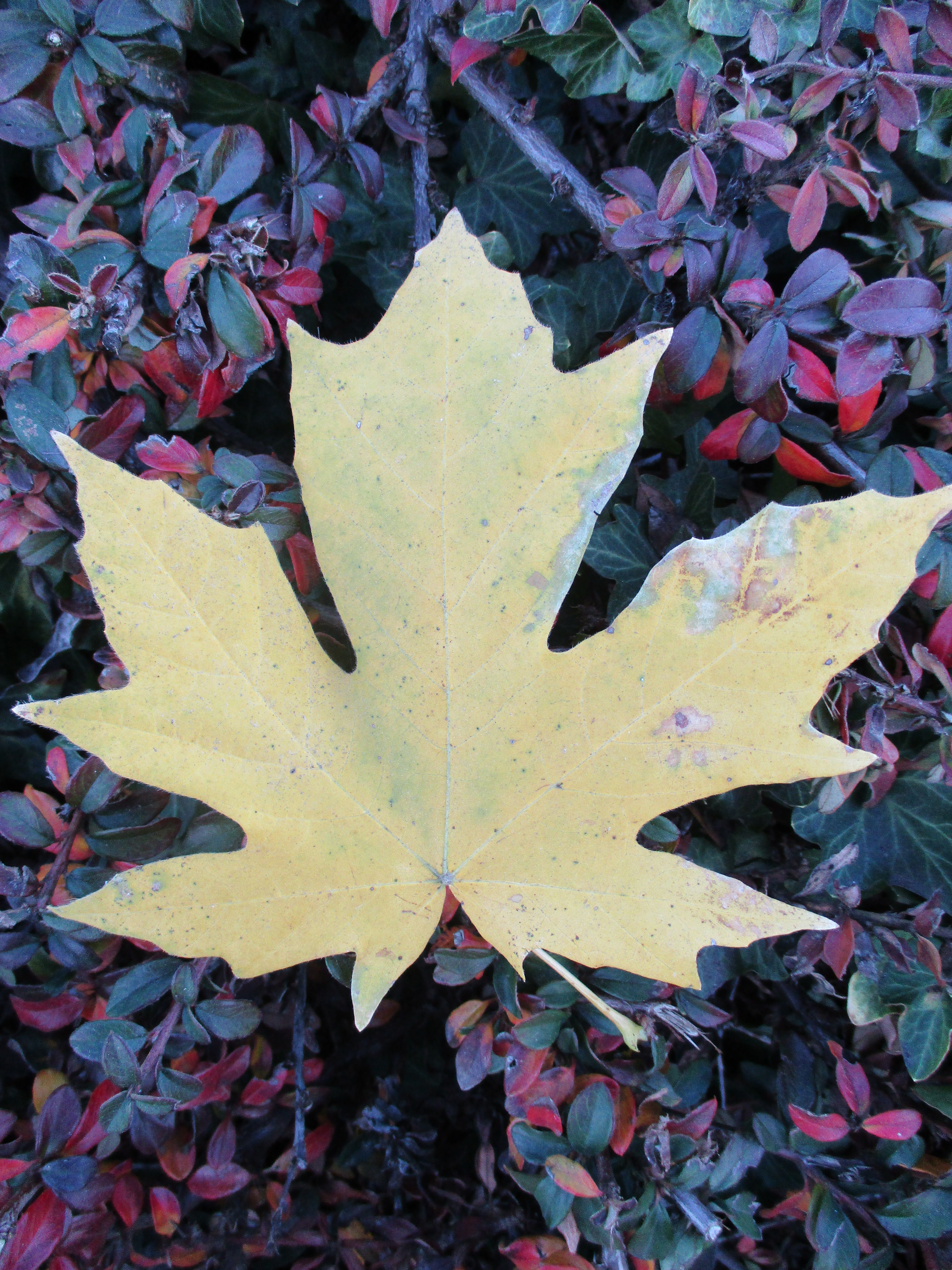
I loath Japanese maples! I do not mind growing them in the nursery, but I do not want to waste garden space on something so trendy. There are plenty of other more useful or prettier trees and shrubs. When I say that maples are some of my favorite trees, I mean ‘real’ maples, such as sugar maples and red maples. I know that silver and bigleaf maples are not very desirable trees, but they happen to be two of my favorites.

Being a good horticulturist is about knowing the many plant specie that we work with. Although silver maple happens to be one of my favorites, I have only been able to recommend it for just one application in my entire career. Just because it would be nice in my home garden, and I am willing to deal with the problems, does not mean that I can recommend it for other landscapes where others would need to contend with the problems. As much as I dislike Japanese maples, I have recommended them a few times for small spaces like atriums, particularly for clients who happen to like them. Unfortunately, they are more useful than silver maple. It is all a matter of knowing what specie are most appropriate for every application.