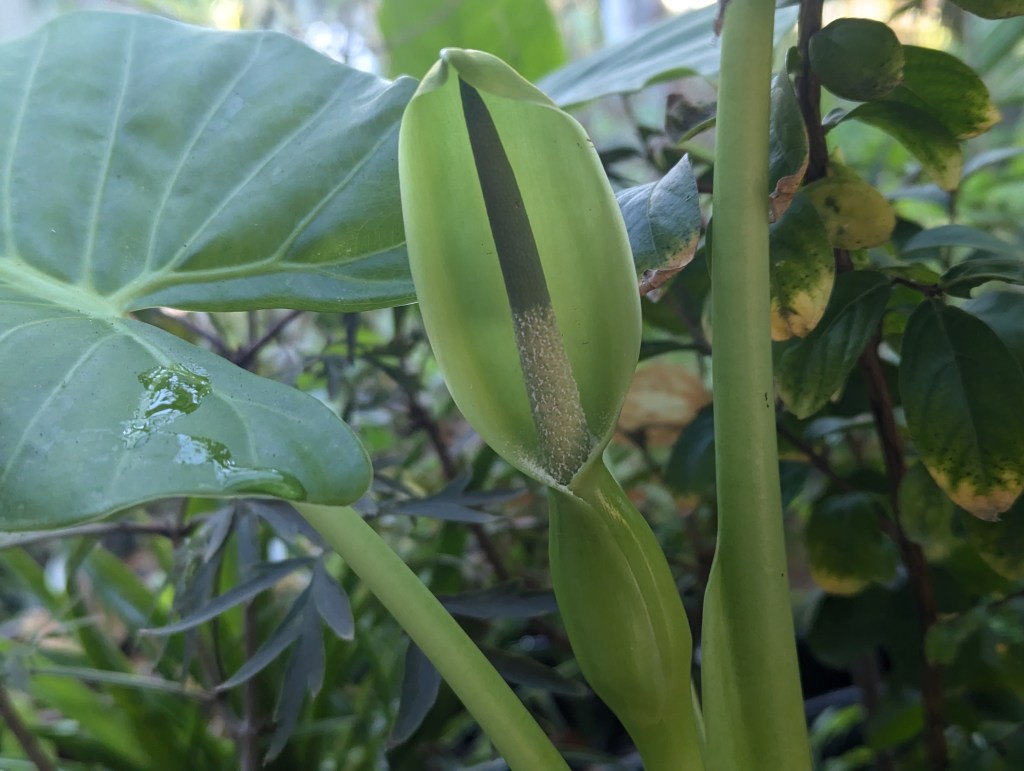
Sunday Best – Taro Flower

The popularity of Japanese aralia, Fatsia japonica, has spanned more than just a few decades. The big, glossy leaves of this lush foliar plant adorned the home of the Flintstones in Bedrock many thousands of years ago, as well as the office of Mr. Spacely of Spacely Sprockets, where George Jetson works, some time in the future! It is just as happy in most types of soil as it was in the front yard at the Flintstone Residence, and is just as happy in large containers as in Mr. Spacely’s office. As long as it is protected from harsh exposure or reflected glare (like it might get from large lightly colored walls or tinted windows), Japanese aralia does well in full sun, or can be just as happy in the shade of larger trees.
Although it does not grow too rapidly, Japanese aralia eventually gets nearly eight feet high and wide, and commands a bold presence. Their deeply and symmetrically lobed leaves can get as broad as a foot and a half, on long petioles (stalks). The foliage of ‘Vairegata’ emerges with a yellow border that turns pale white. ‘Moseri’ stays quite compact.
Plants grown for their foliage can be maintained by cutting oldest stems to the ground as they deteriorate, so that newer stems can replace them. Excessive basal watersprouts can be cut or ‘peeled’ off if they get too crowded. Alternatively, lower growth can be pruned away as it develops to elevate the canopy and expose interior stems. However, individual stems do not last indefinitely, and will eventually need to be replaced by any convenient watersprout. The most deteriorated plants can be rejuvenated by getting cut to the ground just before spring.

This is not banana territory. The soil is good, and water is readily available; but the climate is a limiting factor. The weather does not get very warm for very long. When it rarely gets almost unpleasantly warm during the day, it generally gets tolerably cooler overnight. Bananas are none too keen on such comfortable weather. They want sustained warmth, with less fluctuation of temperature between night and day.
This is precisely why I should not have acquired as many as fourteen cultivars of banana. Some may never do more than generate appealingly lush foliage here. Those that produce fruit will unlikely produce fruit that is much more than marginally palatable. One of the cultivars is the oem, which is the largest banana ‘tree’ in the World. I have NO idea of how to manage it. ‘Mekong Giant’ also grows quite large and heavy. Two cultivars are unidentified, so could possibly be copies of others. ‘Kokopo Patupi’ may not have survived last winter, as it has not begun to regenerate yet. Four other cultivars were given away, but then generated pups that are now returning! I do not remember how many cultivars are here now, but I know that there are too many.
Oem is resuming growth faster than the others, but with small leaves from within pseudostems that produced larger leaves last year. ‘Double Mahoi’ is likewise regenerating dinky and pale leaves that are actually dinkier than those that emerged earlier from a shriveled carcass of a dinky pup that got frosted last winter.
I want all of the cultivars of banana to survive and thrive, but I should have planned for them better. Now, I should plan to find homes for most of them instead. Even if I could manage them all, I can not justify doing so.


The White Raven Coffee Shop, the best little pourhouse in Felton, has an interesting but old fashioned houseplant on the counter. This group of four small but rapidly growing coffee trees, Coffea arabica, was a gift from a loyal customer.
Mature plants can get to thirty feet tall in the wild. Fortunately, coffee trees are easy to prune to fit interior spaces. Pruning for confinement is actually better than relocating big plants outside, since they do not like cold weather and are sensitive to frost.
Like various species of Ficus, coffee is appreciated more for lush foliage that happens to grow on a tree that can be trained by pruning to stay out of the way, overhead or in other unused spaces or corners. The simple remarkably glossy leaves are about two and half inches long or a bit longer. The very fragrant small white flowers are almost never seen among well groomed houseplants, and only rarely and sporadically bloom among less frequently pruned larger trees in greenhouses and conservatories.
The half inch wide coffee fruit, which is known as a ‘cherry’, is even more rare than flowers among houseplants because of the scarcity of both pollinators and pollen (from so few flowers). Those fortunate enough to get flowers sometimes pollinate them with tiny paintbrushes or clean make-up brushes to compensate for a lack of insects about the house. The resulting bright red or somewhat purplish cherries barely taste like cherries and only make two coffee ‘beans’ each; not enough to bother roasting and grinding for coffee, but great for bragging rights.
Bananas are getting to be a bit too abundant here nowadays. I certainly do not mind. All will go to good homes after winter. Coincidentally, to obtain one copy of ‘Golden African’ banana, I was about to violate my rule against purchasing any plants, when four pups of an unidentified banana became available. Because I expect fruit to be of inferior quality, I am not at all discriminating about cultivar. I can try ‘Golden African’ later if these four pups are somehow unsatisfactory. The smaller fruitless bananas that are producing pups were already here. So were the cannas, which are incidentally related to bananas. Ginger should have been included. Two species live here. (Links for 1, 2 and 3 are the same.)
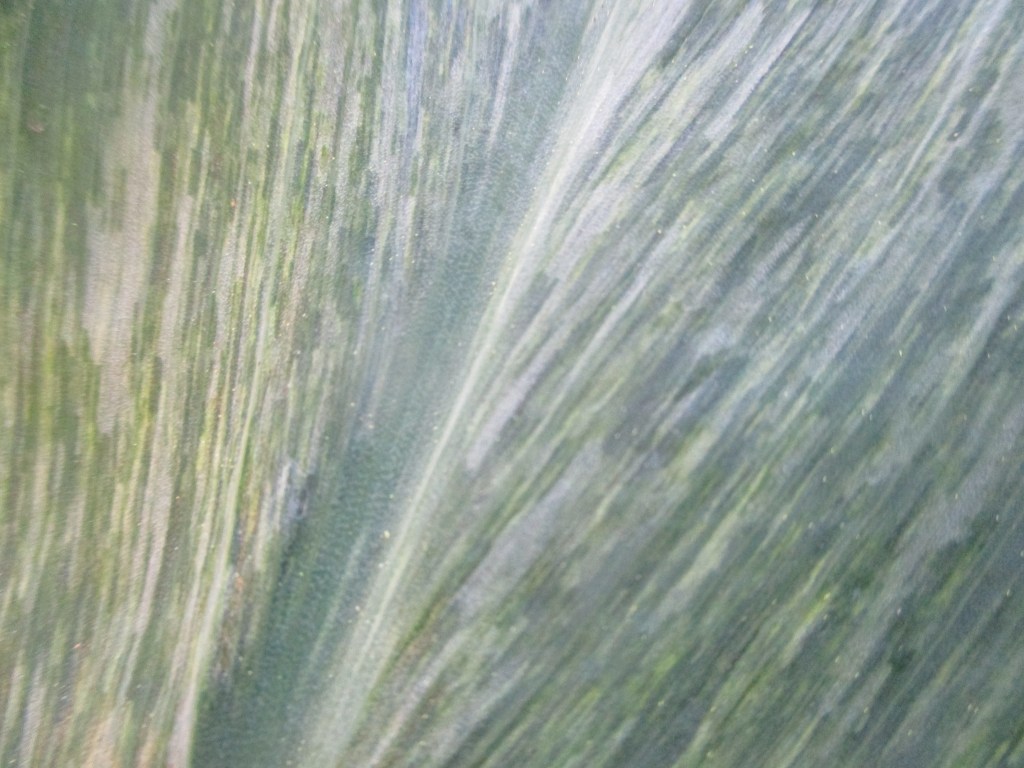
1. Canna musifolia, which is one of three that grew from runty seed, produces this oddly striated foliage. It was too small in August to show with other foliage on Six on Saturday.
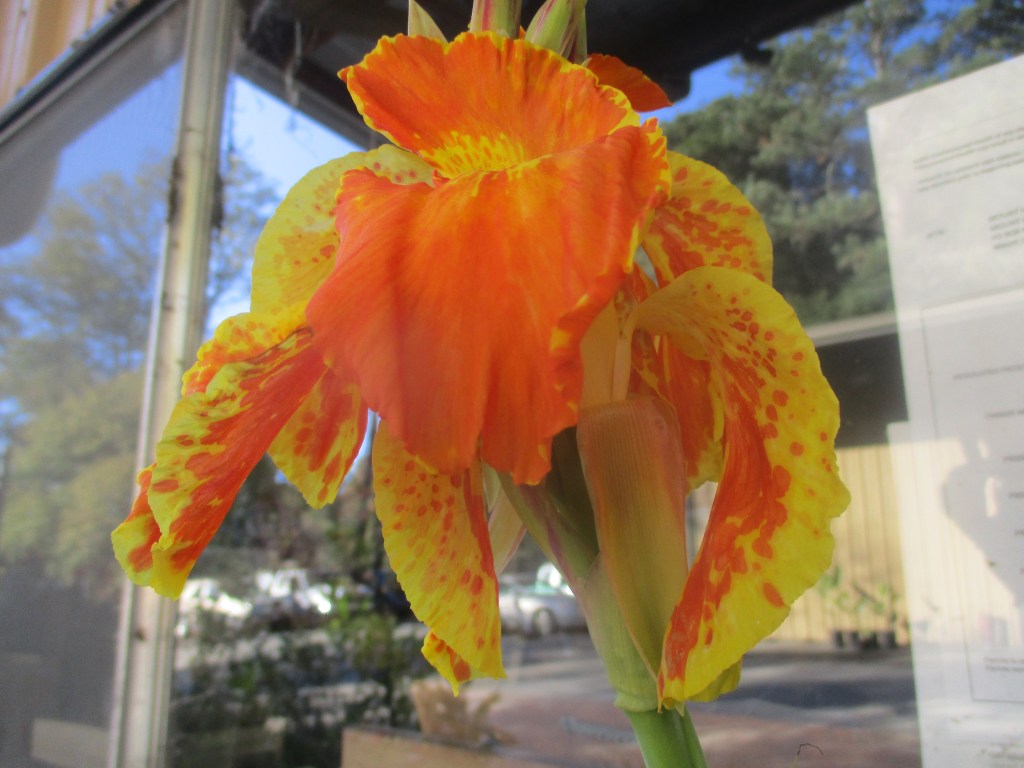
2. Canna musifolia, with scrawny pastel orange bloom and bronzed foliage, produces an abundance of seed, including one that grew into the seedling with striated green foliage.

3. Canna flaccida is not really Canna flaccida as I had hoped. Otherwise, it would be too genetically stable for this defiant specimen to add orange to its exclusively yellow bloom.
4. Musa basjoo may not be Musa basjoo either. Its identity is merely a guess. Of the two that stayed here, this one had three pups, shed one, but continues to fatten up these two.

5. Musa basjoo that initially lacked pups is more than compensating for the other’s loss, by producing two more pups. We could get six of these technically unidentified bananas!

6. Musa acuminata pups of unidentified cultivar arrived only recently. The smallest pup in front lacks rhizome, so is unlikely to survive. The other four are large and exemplary!

This is the link for Six on Saturday, for anyone else who would like to participate: https://thepropagatorblog.wordpress.com/2017/09/18/six-on-saturday-a-participant-guide/
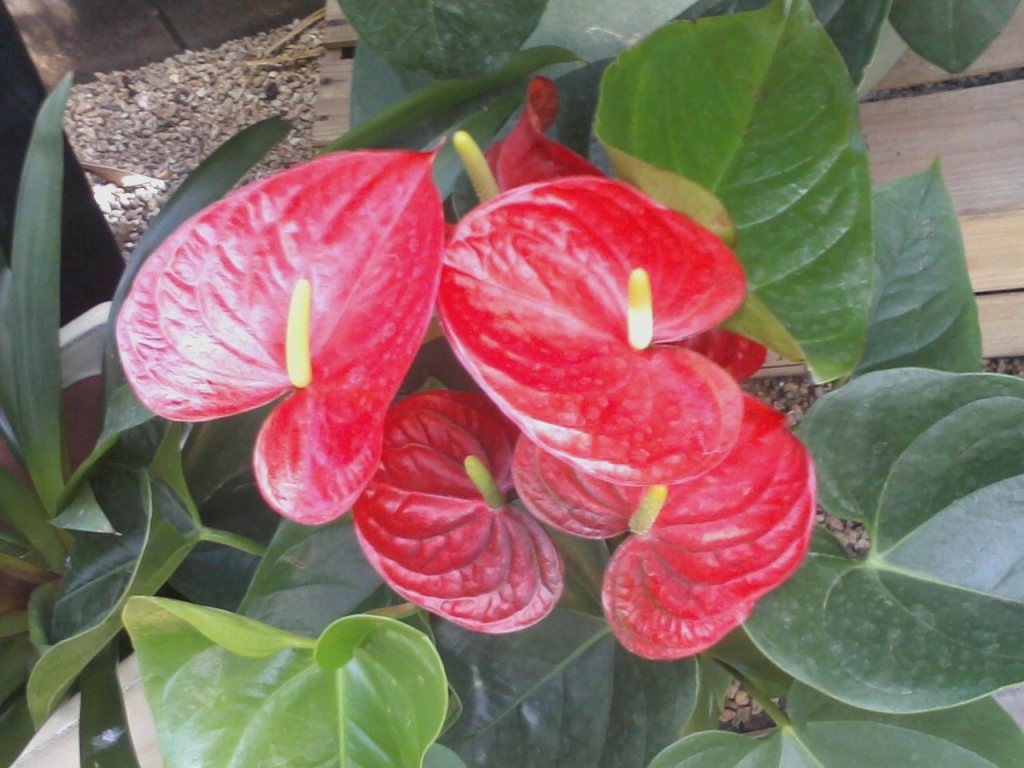
The diminutive and indistinguishably dense flowers of Anthurium are surprisingly pathetic relative to the flashiness of the ‘spathe and spadix’ structures that accompany them. The spadix is the generally conical structure that supports and is covered with the flowers. It is most often pale shades of white, yellow or green, but can be pink or purplish. The spathe is the solitary, colorful bract that surrounds the spadix. It is most often white, red or burgundy, but can be orange, pink or pale shades of yellow or green.
There are nearly a thousand known specie of Anthurium. Most but certainly not all have glossy foliage. Leaf shape and size is as variable as flower color. Most Anthurium are terrestrial understory plants that grow below higher canopies of tropical mountain forests of Central and South America. Others are epiphytes that cling to trees, or lithophytes that cling to rock outcroppings.
Around the home, they are mostly grown as houseplants as much for their rich green foliage as for their colorful blooms. In the garden they need shelter from direct sunlight and frost. Blooms, and perhaps other parts, are toxic.
Los Angeles is commonly abbreviated as ‘L. A.’ or simply ‘LA’, which is not only insolent, but can be mistaken for Louisiana. I must spell it out. Anyway, I am in Los Angeles now. After postponing this trip for months, I left hastily without much of a plan. I am camped out in the backyard at Brent’s home, not only because it is the best place to stay here, but also because I did not bother to make reservations at the eccentric Hotel del Flores. I did not do much of what I wanted to do, and will not before I leave, but I do not mind. It has been good to simply relax and grab a few oddities from Brent’s garden, including #1, #2 and #5. Some of these shared earlier.
1. Platycerium bifurcatum, staghorn fern grew into a suspended colony that is about six feet wide. I may have mentioned earlier in Six on Saturday that it looks like coronavirus.

2. Platycerium grande, giant staghorn fern, which Brent and I refer to as moose antlers, flares out too much on top to form more spherical colonies like Platycerium bifurcatum.

3. Monstera Deliciosa ‘Albo Variegata’, variegated split leaf philodendrons is supposedly rather rare. I thought that it was more common years ago, but no one else remembers it.

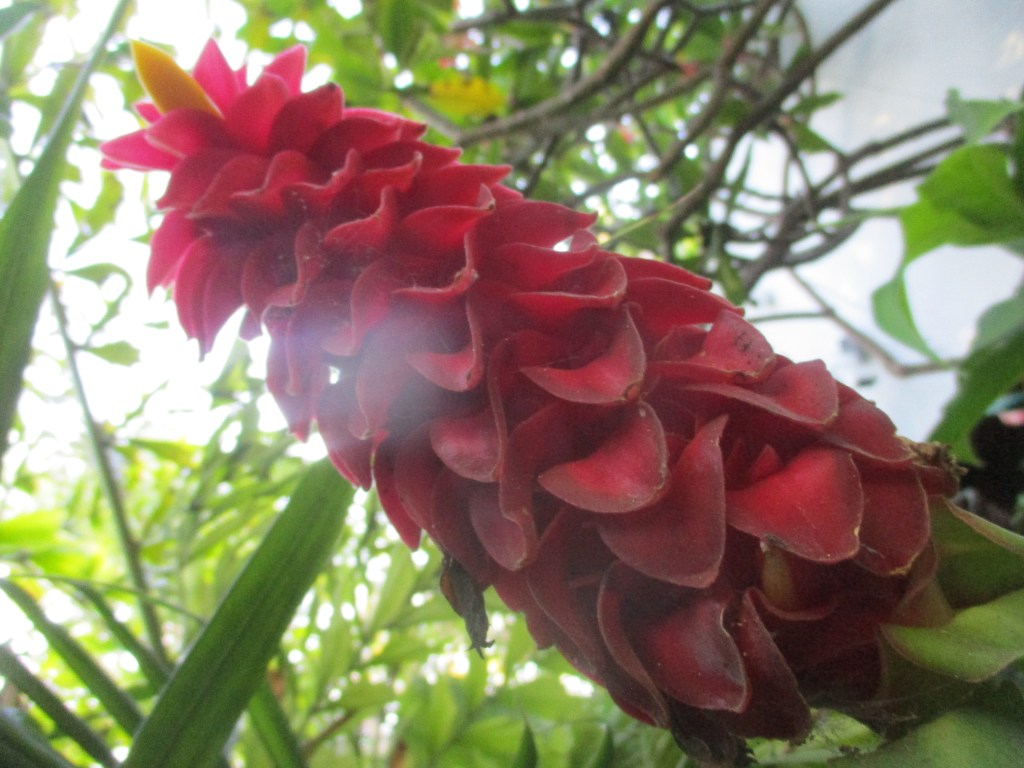
4. Costus comosus, red tower ginger should bloom between late winter and early spring, rather than between later summer and early autumn. Maybe its bloom lasts for months.
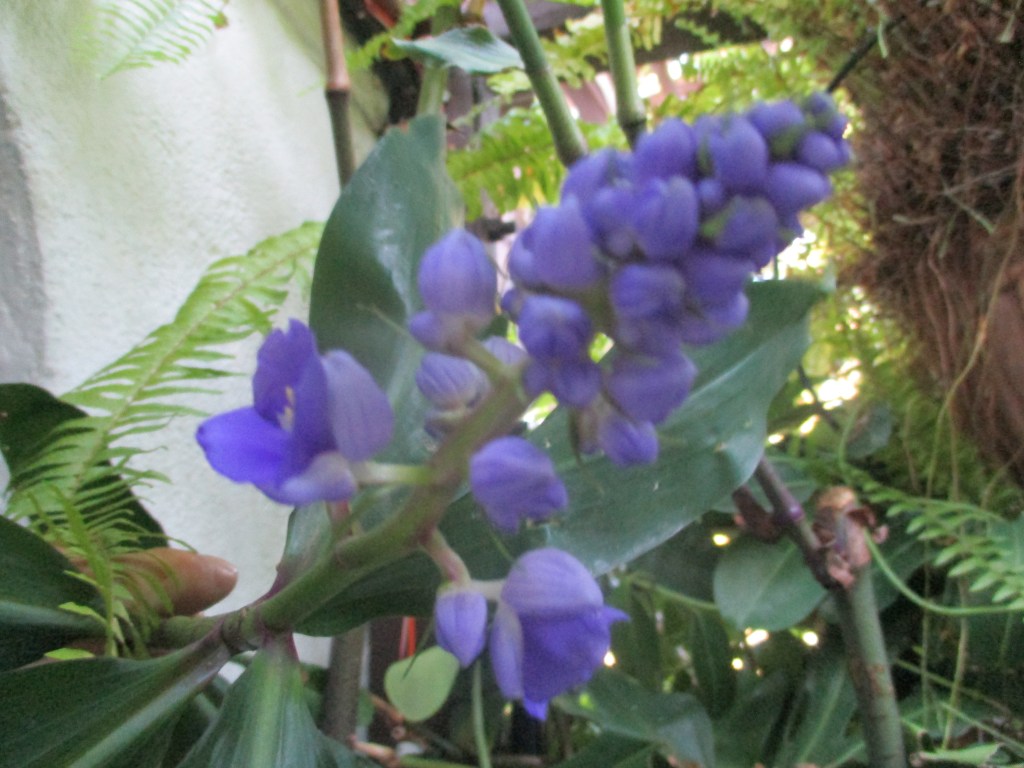
5. Dichorisandra thyrsiflora, blue ginger, which is not actually related to ginger, should bloom about now, but is not blooming as spectacularly now as it did several months ago.
6. Aechmea fasciata, silver vase bromeliad should have bloomed half a year ago like red tower ginger. Likewise, bloom can last for a long time. However, this bloom looks young.

This is the link for Six on Saturday, for anyone else who would like to participate: https://thepropagatorblog.wordpress.com/2017/09/18/six-on-saturday-a-participant-guide/

The mostly white and blue common passion flower likely remains the most popular. After all, it is the weirdest. Elaborate and disproportionate floral parts imply that it is of another planet. Red passion flower, Passiflora racemosa, although less peculiar, is perhaps a bit more colorful. Its brick red flowers bloom randomly for as long as weather remains warm.
Flowers are about three or four inches wide. They develop in open racemes that seem to spread out somewhat evenly over the exterior of their foliage. Bloom is not profuse, but is somewhat continuous until autumn. Newer flowers replace older flowers within the same racemes. Leaves are as wide as their flowers, with three blunt lobes and axillary tendrils.
The lushly evergreen foliage can get shabby through winter, or completely ruined by just mild frost. It regenerates vigorously though. Aggressive pruning as winter finishes delays bloom, but promotes vigorous growth. Vines can potentially reach more than twenty feet. Fruit is rare without manual pollination. Fruit flavor can be bland without tropical warmth.

Pruning a rubber tree, Ficus elastica, in the home takes a bit of acrobatics, since any wound immediately bleeds staining white latex. While pruning with one hand, the other hand must catch the latex with a rag. A third hand is needed to catch the bleeding piece of stem that gets pruned away. To make things more complicated, all three hands should avoid the potentially caustic latex. Even if it is harmless to the skin, it is a painful irritant if it gets into the eyes.
Young trees have larger glossy leaves that may be as long as a foot and half as broad, although most are about half as long and broad. Many modern cultivars have variegated or bronzy foliage. Where it gets enough sunlight as a houseplant, rubber tree will eventually need to be pruned for confinement. After all, in the wild, it can get more than a hundred feet tall and almost two hundred feet tall, with trunks more than six feet wide! In the garden, it needs shelter from frost. Aerial roots can develop in humid environments.
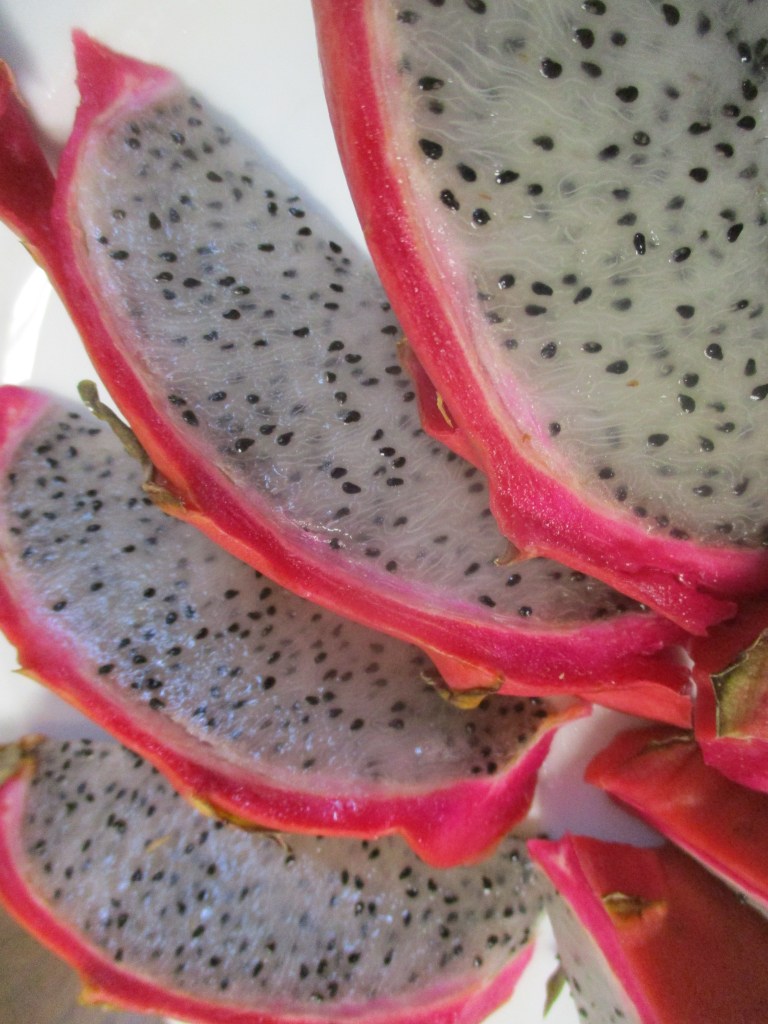
This weird tropical cactus gets mixed reviews. Pitahaya fruit, or dragon fruit, is abundant in favorable conditions, but develops potentially bland flavor. The green succulent stems may be vigorous, but develop distinctly pendulous form that resembles Sigmund the sea monster. Bloom lasts from summer to autumn, but individual flowers open for just a night.
Selenicereus undatas is the most popular pitahaya. Its fruit weighs between half a pound and a pound, and has white flesh. Selenicereus costaricensis fruit is similar, but with red flesh, and perhaps slightly more flavor. Selenicereus megalanthus fruit is smaller, thorny and yellow, with white flesh and richer flavor. Home grown fruit is superior to market fruit.
Pitahaya grows very easily from cuttings or pruning scraps. Young stems climb with wiry aerial roots, so need substantial support. Fruiting stems hang downward from the tops of such support. Most modern cultivars need no pollinator. Some old cultivars need another of its same species for pollination. Pitahaya is vulnerable to frost where winters are cool.
 Tony Tomeo