Gathering Seed To Grow Later

Variegation is generally nontransferable by seed.

Deadheading, or the removal of deteriorating bloom, is contrary to the purpose of bloom. It conserves resources for subsequent bloom or vegetative growth. It neatens associated vegetation. Deadheading is certainly justifiable. However, it eliminates most seed before it can develop. Seed is the priority of bloom. Gathering seed can be a good compromise.

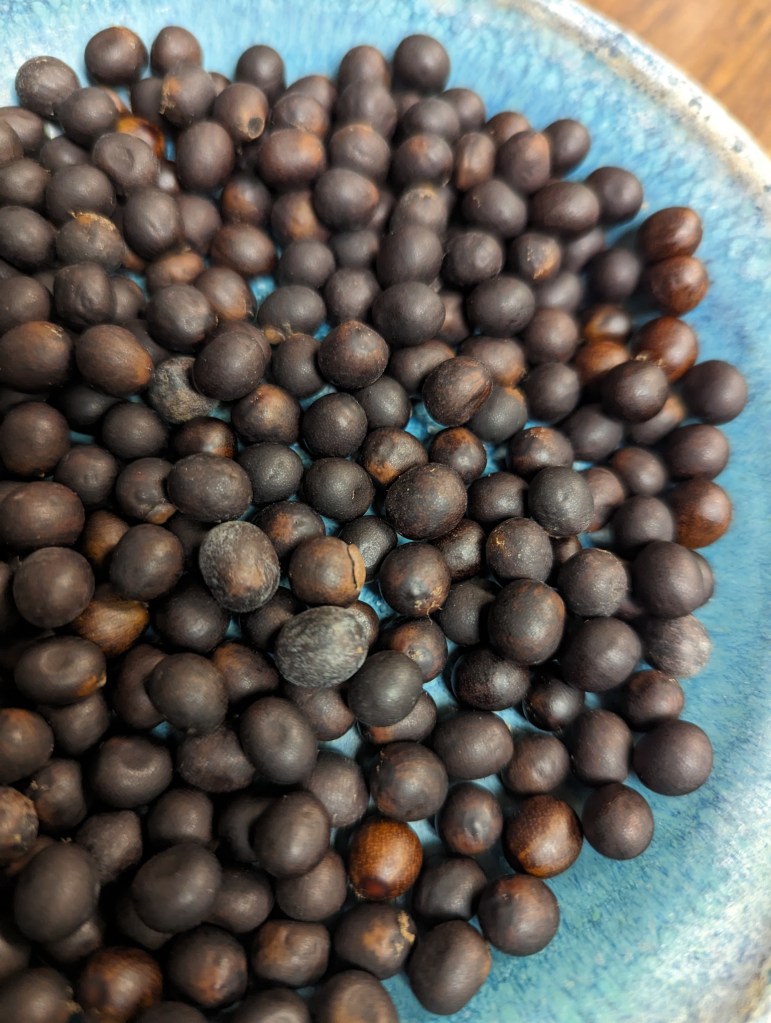
Techniques for gathering seed are as variable as bloom and subsequent seed. For some popular annuals and perennials, it is as simple as deadheading. Their seed develops as fast as their bloom deteriorates. Seed is easy to shake from dried stems of rose campion, campanula and columbine. Cut stalks of lily of the Nile must dry for their seed to mature.

Gathering seed from vegetable fruits can be a bit more complicated. Some are mature as soon as their containing fruits ripen. For example, seed from ripe chile peppers are ready for drying and storing immediately. However, zucchini must mature too much to be edible for its seed to finish developing. Furthermore, squash seed is likely to not be true to type.

This is often a consequence of cross pollination from other varieties of the same species. Progeny of very different parents inherit genetic qualities of both parents. Similarly, many extensively bred varieties exhibit reversion. Their progeny can be more similar to distant ancestors than direct parents. Reversion may be progressive through a few generations.

Reversion is less likely among hybrids only because most hybrids are sterile. Gathering seed from them is generally either futile or impossible. Some hybrid canna develop seed capsules that contain no viable seed. Seedlessness is an advantage of seedless hybrid watermelon. Viable seed of the few hybrids that could produce it is wildly unpredictable.

Most mutations, such as variegation or dwarfism, are not inheritable. Seed of variegated Kaffir lily therefore grows into unvariegated specimens. Some seedlings mature through a juvenile phase prior to bloom. This is why avocado seedlings grow so lean without fruit in their first few years. Ultimately, gathering seed is most practical for simple wildflowers, annuals, perennials and some vegetables.

Feral Vegetation Inherits Natural Advantages

Feral alyssum is limited to white.

Most vegetation within home gardens is better than it was naturally in the wild. For many, systematic selection isolated the best from average populations. Selective breeding and hybridization improved many others. Some are too genetically compromised by breeding to produce viable seed. Feral progeny of those that are not demonstrate the divergences.

Such feral progeny are generally not true to type. They are, to varying degrees, more like their ancestors than their direct parents. Some can revert directly to a natural state in the first generation. Some do so slower through a few generations. Feral progeny of hybrids are still hybrids but may be more primitive. Many hybrids produce no viable seed though.

‘Jewel Mix’ nasturtium, for example, blooms with many shades of yellow, orange and red. Several are pastels. Some are dark enough to be almost brown. A few are bicolors. Their progeny though, blooms with less light, dark and red colors. Bloom becomes exclusively bright yellow and orange as feral plants replace originals. It reverts to more natural color.

That is because nature is efficient. By human standards, innately unnatural breeding and selection improve plant life. They produce better fruits, vegetables, flowers and anything that grows on plants. However, they interfere with natural function such as reproduction. Seedless limes, which are preferable within home gardens, would go extinct in the wild.

Plants that revert to more natural feral states are merely trying to survive. Sterile pampas grass is only sterile because it is exclusively female. Naturalized Andean pampas grass can pollinate it from a distance, though. Their hybrid but nonsterile feral progeny may be as invasive as their Andean parent. They are detrimental to their ecosystem, but survive.

Not all feral flora grows from seed. Seedless and thornless honeylocust are grafted onto wild honeylocust understock. Seedy and thorny suckers can grow from such understock below its grafts. They commonly develop after removal of original grafted trees. By some standards, they become aggressively invasive. By other standards, they are sustainable.

Seed Collection For Another Season

Less hybridized canna produce more seed.

Deadheading conserves resources that would otherwise sustain production of seed. For species that bloom more than once, it promotes continued bloom. For others, it promotes healthier vegetative growth. Also, it inhibits proliferation of potentially invasive seed. It is neater anyway. However, several species might forego deadheading for seed collection.

Flowers that bloom only once for a brief season generate all their seed at the same time. Flowers that bloom for an extensive season generate seed for a more extensive season. Some seed is obtainable from ripe fruit. Some is obtainable from unharvested vegetable plants that go to seed. Seed collection involves various sources during various seasons.

Regardless of its season and source, most seed is too abundant for complete collection. A single fruiting vegetable, such as a true to type chile, provides more than enough seed. A few stalks of naked lady might provide more seed than one garden can accommodate. Wildflowers are an exception. Their seed collection is rarely too excessive to broadcast.

Many species do not reliably generate viable seed though. Some require pollination by a very specific pollinator that does not live here. Yuccas that are from Central America rely on moths that live only in Central America. Some bamboos generate seed only once in a century or so. Most hybrids are too genetically dysfunctional to produce any viable seed.

Hybrids that can generate viable seed are very unlikely true to type. In other words, their progeny will be very different from them. Such progeny tend to revert to a simpler or more primitive form. The same applies to progeny of cultivars of extensive breeding within one species. Genetic aberration, such as variegation, is likewise unlikely inheritable by seed.

To complicate seed collection, some species begin life with juvenile growth. Some might take several years to mature. Avocado seedlings initially grow very fast, and tall, without blooming. By the time they mature, bloom and produce fruit, such fruit can be too high to harvest. Trees from nurseries are fruitful lower only because of grafting with adult growth.