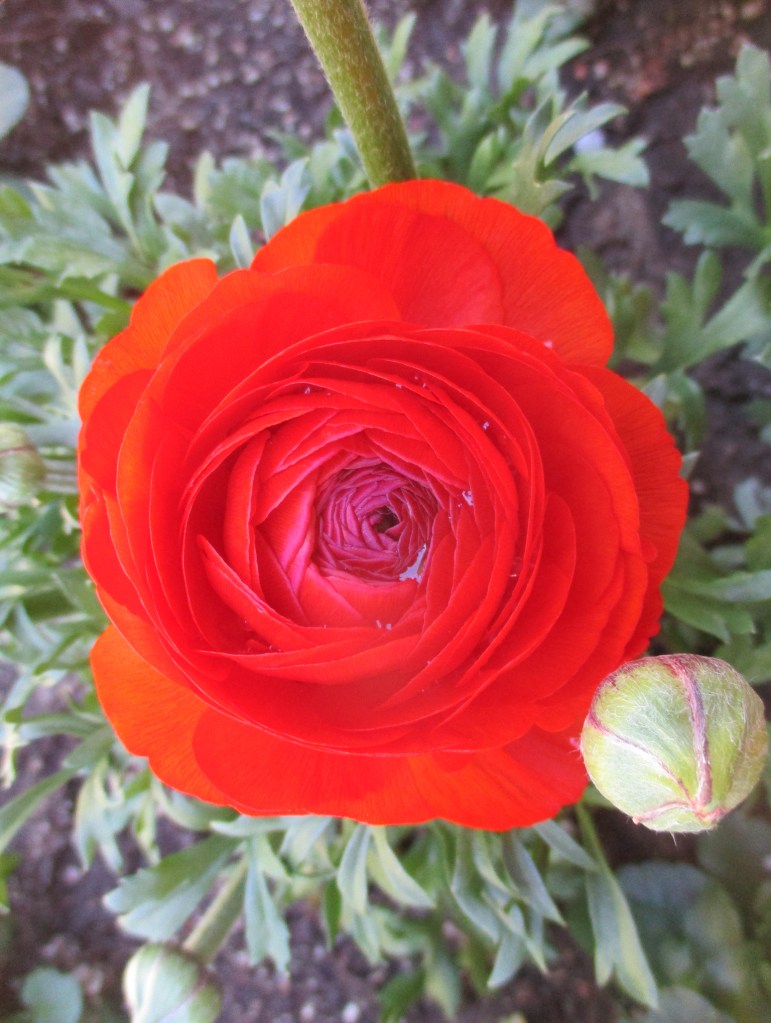
Ranunculus

Ranunculus blooms several months from now.

The shriveled and dried tuberous roots of Ranunculus are not much to brag about. They look more like dehydrated mini calamari than dormant and viable spring bulbs. Yet, they somehow bloom as soon as the weather warms enough after winter. Although they need no vernalization, they need time to grow. Bulbs should be into their garden by December.

Alternatively, small budding plants will be available from nurseries after winter. They are too big for cell packs, so are mostly in four inch pots. Larger one gallon plants often have shabby foliage. Although popular as annuals, Ranunculus can be reliably perennial like other bulbs. They are less susceptible to rot if dug and stored while dormant for summer.

Ranunculus bloom is white, yellow, orange, red, pink or purple. The plump flowers have many papery and densely set petals, like small peonies. They typically stand less than a foot high, and may be only half a foot high. Their finely textured basal foliage stays even lower. It resembles parsley, but is a bit more substantial. It shrivels during warm weather.

Ranunculus

These grew from formerly small and shriveled clumps of tuberous roots.

It is hard to imagine how the small shriveled clumps of tuberous roots of ranunculus, Ranunculus asiaticus, planted last autumn can produce such bright pink, red, orange, yellow and white flowers between late winter and early spring. The two or three inch wide, semidouble or double flowers stand about a foot high, just above their soft deeply lobed foliage. Those of us who did not get ranunculus in the ground last autumn can find blooming plants now. Ranunculus want to be in full sun, in rich, well draining soil.

Deadheading (removal of fading flowers) promotes subsequent bloom; but the season is rather short. Foliage will soon be turning yellow, and will eventually die back. If not watered too much, dormant ranunculus can survive through summer, but should be dug and stored in a cool dry place until next autumn if they are in pots or areas that will get watered regularly.

Autumn Is For Planting – Especially Bulbs

81024thumbAutumn is for planting. Cliche? Yes; but true. Autumn is when most plants are beginning dormancy, and are therefore not so bothered by the discomforts associated with transplant. The weather is cooler and wetter, so that even if they are bothered, such discomforts are not as discomforting as they would be in summer. Once in the ground, plants have a few months to recover before spring.

The two main exceptions to the rule that ‘autumn is for planting’ are plants that are sensitive to frost, and bare root plants. Plants that are sensitive to frost should obviously be planted after the last frost date, at the far end of winter. Bare roots plants do not wait that long, but should wait until they are completely dormant in mid winter before being dug, separated from their soil, and relocated.

Dormant bulbs and bulb like plants, including corms, rhizomes, tubers and tuberous roots, epitomize the autumn planting rule. They must be planted while dormant in autumn or winter. They arrive in nurseries about the same time that they should be planted into the garden. Spring blooming bulbs become available and should be planted earliest. Summer bulbs become available a bit later.

Daffodil, narcissus, tulip, crocus, hyacinth, grape hyacinth, freesia, anemone, ranunculus, montbretia, crocosmia, most lily and some types of iris will all want to get into the ground when the rain starts. Rain leaching through the soil around them, as well as cooler temperatures through winter, tell them what time of year it is, so that they will be ready to bloom when weather warms in spring.

Each type of bulb prefers to be planted at a particular depth. Bearded iris rhizomes want to be buried horizontally, just below the soil surface. As long as the latest get planted within their respective planting season, some types of bulbs can be planted in phases every week or two, so that a later phase starts to bloom as an earlier phase finishes. Daffodil, narcissus and especially grape hyacinth have the potential to naturalize and bloom annually. Montbretia and crocosmia can be downright invasive.