Tabasco

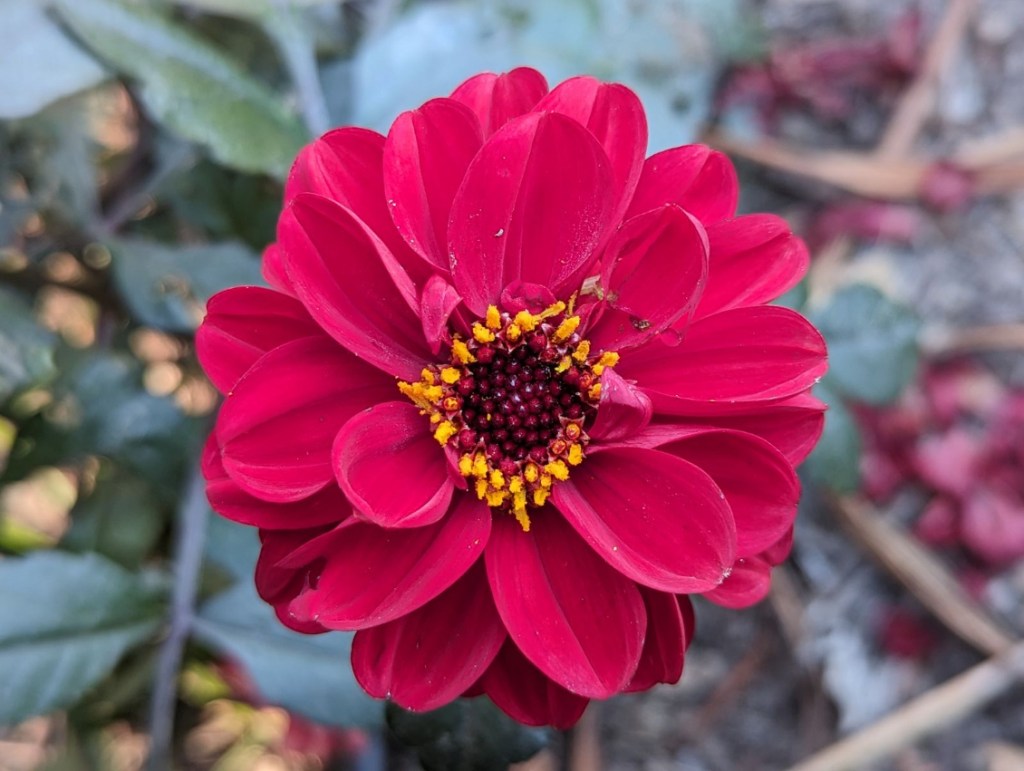
Dahlia ‘Tabasco’

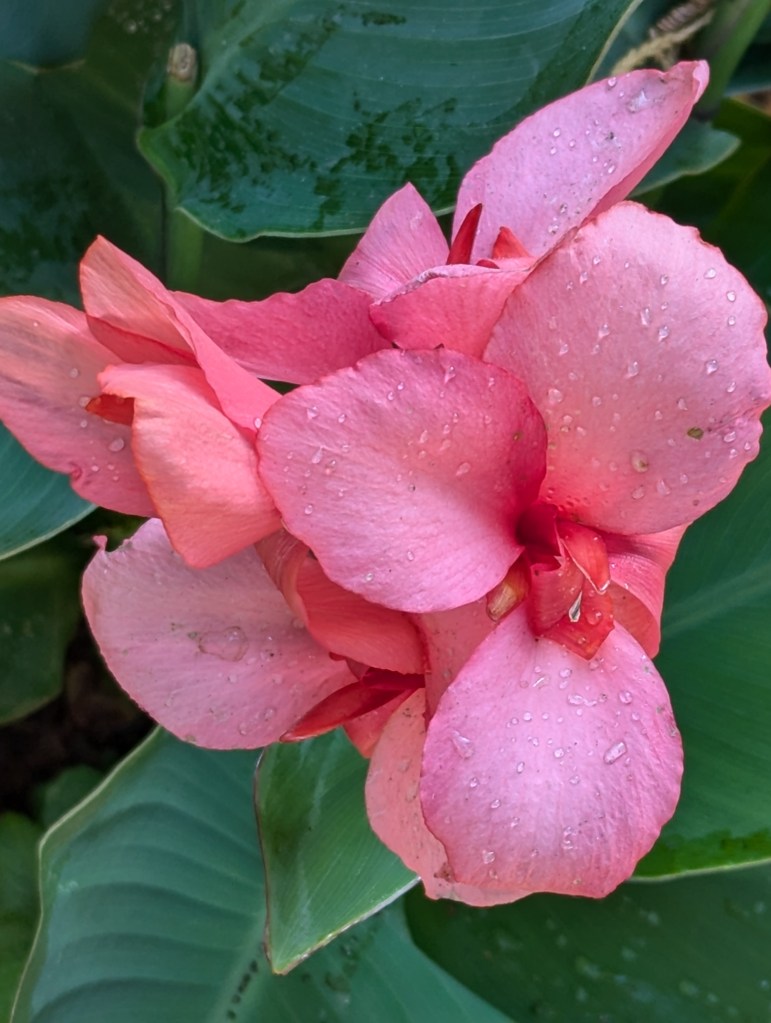
Annuals, as their designation implies, complete their respective life cycles within one year. Perennials, as their designation implies, can survive perennially, for more than one year. However, some bedding plants that are enjoyed as annuals actually have potential to be perennials. They are only as disposable as annuals because they are less appealing during dormancy or whatever season in which they do not perform so exemplarily. Most who enjoy gardening do not mind. Perennials that are designated as perennials but do not perform for more than a year are more disappointing. Of a few dahlias that the other horticulturist here purchased a few years ago, four were two pairs of bedding dahlias, which typically function as annuals, and one was a rather expensive perennial ‘Cafe au Lait’ dahlia. ‘Cafe au Lait’ rotted within its first season of minimal bloom. I was not at all keen on it anyway, and was even less keen on its lack of perennial performance. One pair of bedding dahlia, which I do not remember the name of, bloomed for two years, with bright yellow flowers against light green foliage. They would have bloomed again this year if I had stored them better and put them back into the landscape sooner. I forget about the stored dahlia tubers because we typically do not dig and store them here. The other pair of bedding dahlia was ‘Tabasco’. It originally bloomed with red flowers striped with orange, against dark green foliage. For the following year, it blooms with yellow flowers blotched with orange, against simpler green foliage. Now, for its third year, it blooms more like it appears in pictures, with simpler red flowers against bronzed foliage. I do not mind its variability, and actually find it to be interesting. I am more impressed by its perennial performance.

Horridculture – Inexhaustible Resources

Wild cucumber is not a particularly substantial vine. Except for its tubers, it is quite delicate.

Wild cucumber, Marah fabacea, is also known as manroot because it develops massive tubers that can weigh as much as a man. Such tubers can supposedly weigh more than two hundred pounds, and some sources claim that they can weigh twice as much. That is a lot of storage.

Their thin leaves, slender vines, tiny flowers and fleshy fruit are not very substantial, and can not be very consumptive. They are quite watery, and leave minimal debris when cut and dried, or when they die back after frost.

So, why does wild cucumber store so much resources within their massive tubers? I have no idea. I realize that it is a survival technique, but this is major overkill. No winter is long enough to justify such extreme storage. No summer is dry enough. No wildlife is voracious enough. No forest fire burns the same place more than once in a season. Furthermore, no gardener is diligent enough.

Seriously, these things are impossible to kill. The vines pull up quite easily, with no resistance. The tuber simply makes more. Secondary vines pull up as easily as the first. The tuber simply makes more. No matter how many times the vines get pulled up, the tuber simply makes more. It never exhausts its resources. Removal of the vines deprives it of its ability to accumulate more resources, or replenish what is used to generate the vines, but it has enough to generate vines for many years.

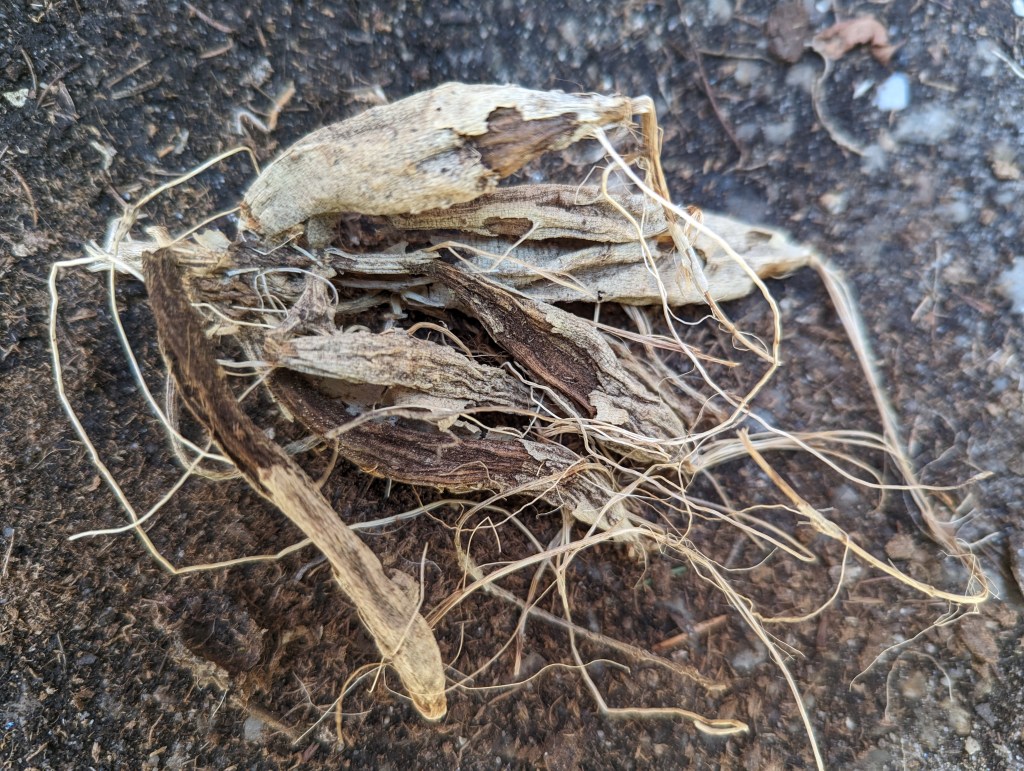
The only way to eliminate these weeds is to dig up their massive tubers, which are fortunately not very deep underground. Even then, the tubers do not die. This one sat around through last summer, and is still viable. I suppose that we should dispose of it with the trash, since we can not compost it.

This wild cucumber tuber is bigger and much heavier than Rhody, but is smaller than average.

Bulbs For Next Spring

Hyacinth will not bloom for a few months, but goes into the garden about now.

Some of the most familiar flowers to bloom in the earliest of spring get planted now as bulbs. They sit and wait in the garden to finish their dormancy, perhaps get a bit of a chill through winter, and get an early start to their bloom cycles as soon as weather permits. Because winters are so mild here in the Santa Clara Valley, some do not even bother to wait for spring, but are instead happy to start bloom before winter ends.

Bulbs become available in nurseries when they can be planted. Those that are not available yet will become available when it is time to plant them for later spring or summer bloom. The first to become available are generally the first to bloom; although bearded iris seem to know when they want to bloom, regardless of when they get planted.

As long as they do not get stored too long or get planted too late, bulbs do not need to be planted immediately, and actually extend their performance if planted in phases. The earliest phases to get planted will bloom earliest. Phases of the same bulbs planted a few or many days later should bloom about the same amount of time later.

With proper planning, later phases bloom as earlier phases finish. For example, because crocus flowers do not last very long, different phases of bulbs can be planted only a few days or a week apart, so that more flowers start to bloom in time for earlier flowers to fade. Freesia flowers last a bit longer, so different phases can be planted two weeks or so apart.

Narcissus and daffodil bulbs are not so discriminating about how deeply they get planted, so various phases can be put in the same spots. As long as they do not get planted too deep, the earliest phases can be planted deep and covered with only a bit of soil, so that later phases can be planted above. If similarly covered with only a shallow bit of soil, later phases of the same bulbs can be stacked, as long as the last and shallowest phase still gets planted deep enough.

Not many bulbs are actually real bulbs. Most are corms, tubers, rhizomes or tuberous roots. They all do the same thing though; store resources through dormancy to sustain quick bloom as weather allows. Although many bloom reliably only once in their first season, some naturalize to bloom at about the same time each year. Tulips are capable of naturalizing, but rarely get enough chill in winter to bloom after their first season.

Anemone (windflower), hyacinth, lily, rananculus, tulip and small colorful callas are the less reliable of spring bulbs after their first year. Crocus, freesia, hymenocallis and harlequin flower can be more reliable if they get what they want. Grape hyacinth, narcissus, daffodil, watsonia, bearded iris and the old fashioned white callas are the most reliable of bulbs that get planted about now.

Perennial Annual Dahlias

Annual dahlias are expected to be, as their designation implies, annual. In other words, they grow in the spring, perhaps from seed, bloom through summer, and then succumb to frost during their first winter. Some are likely grown from cuttings or division of nursery stock tubers, in order to be ready for spring earlier than seedlings. Regardless, they are not expected to survive for more than one year.

Most other dahlias are expected to be perennial. That is how their expense is justified. Most are sold while they are merely dormant tubers, and are generally more expensive than annual dahlias. Some, especially the trendy sorts, are significantly more expensive.

‘Cafe au Lait’ was a trendy dahlia a few years ago, and is still trendy. We procured one at work. It performed somewhat well for the first season, and was then dug and stored for winter. It did not perform well for the second season, and was then dug and stored again, but did not survive through winter.

Four smaller annual dahlias were procured in conjunction with the single ‘Cafe au Lait’ dahlia. They were relatively inexpensive, but delightfully colorful. They bloomed nicely around the larger ‘Cafe au Lait’ dahlia. They were also dug and stored for winter after their first season, although we knew that we should likely merely discard them. One had actually divided into two. These annual dahlias bloomed better than ‘Cafe au Lait’ for their second season, and then again, were dug and stored for winter. Unfortunately, three, including one that divided during the previous winter, did not grow for long after last spring. However, two of the original four annual dahlias continue to bloom, and will be dug and stored as they succumb to frost this winter. These annuals have been more perennial than the perennials.

2 / 3

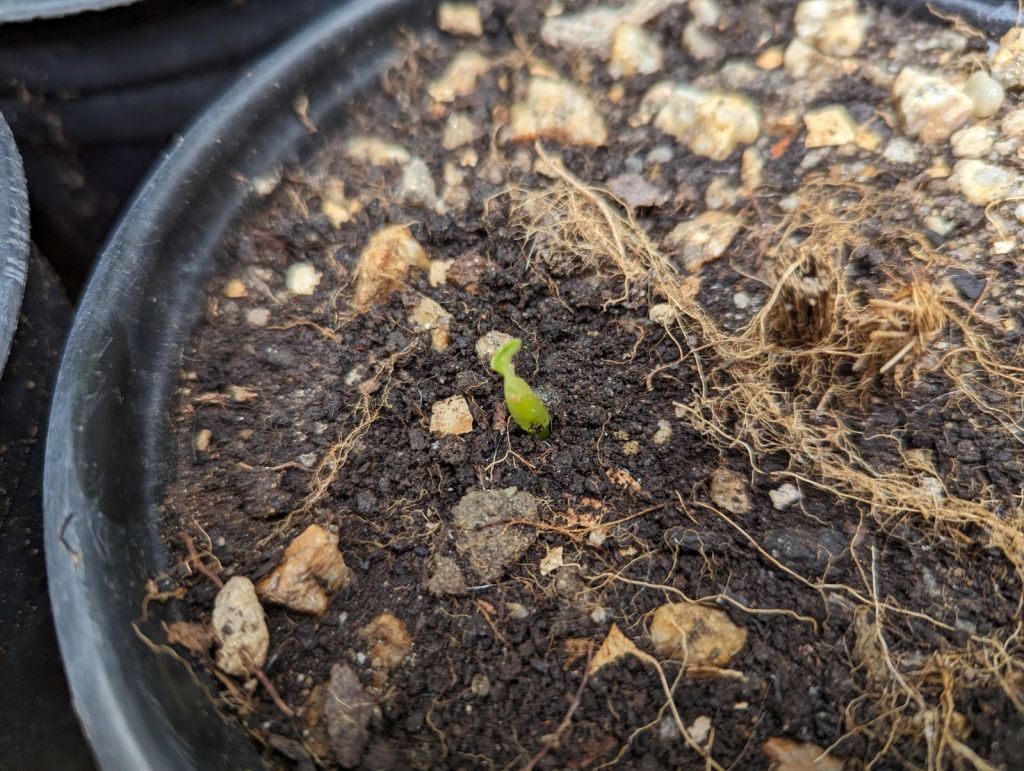
This is the wimpiest of the sixteen survivors.

Sixteen of the twenty-four mixed dinnerplate dahlias that I did not expect favorable performance from have survived! Only eight have failed to exhibit any indication of viability. Two thirds are growing. Only one third is not.

I am impressed. I expected less than half to survive. They arrived in embarrassingly shabby condition. I canned all of them regardless, including several that were obviously completely necrotic. I wanted to give all a chance to survive before discarding any. Those that were obviously completely necrotic are among those that have not exhibited any indication of viability. However, I am not ready to discard any yet. Although I still believe that some are completely necrotic, a few others may not be. As I dump any that do not at least try to grow prior to winter, I will inspect their tubers for any indication of viability, no matter how minor.

The survivors will be pampered. I want them to generate as much vegetative growth prior to frost as possible. That should sustain the regeneration of their wimpy tubers so that they will be ready to grow next spring. I am aware that even the healthiest may not survive winter if their tubers are inadequate.

Those that survive through winter are likely to grow and bloom as if they were always healthy. In a few years, they could be ready for division. Perhaps after a few more years, I will regret the procurement of so many.

In this mild climate, it is not necessary to dig dahlia tubers for winter. We only do so because it has become a habit, and perhaps to relocate the dahlias.

Dinnerplate dahlias are certainly not my favorite type, but they are more appropriate to the landscapes that they will inhabit than they types that I would prefer.

This is the most vigorous of the sixteen survivors.

Six on Saturday: You Get What You Pay For

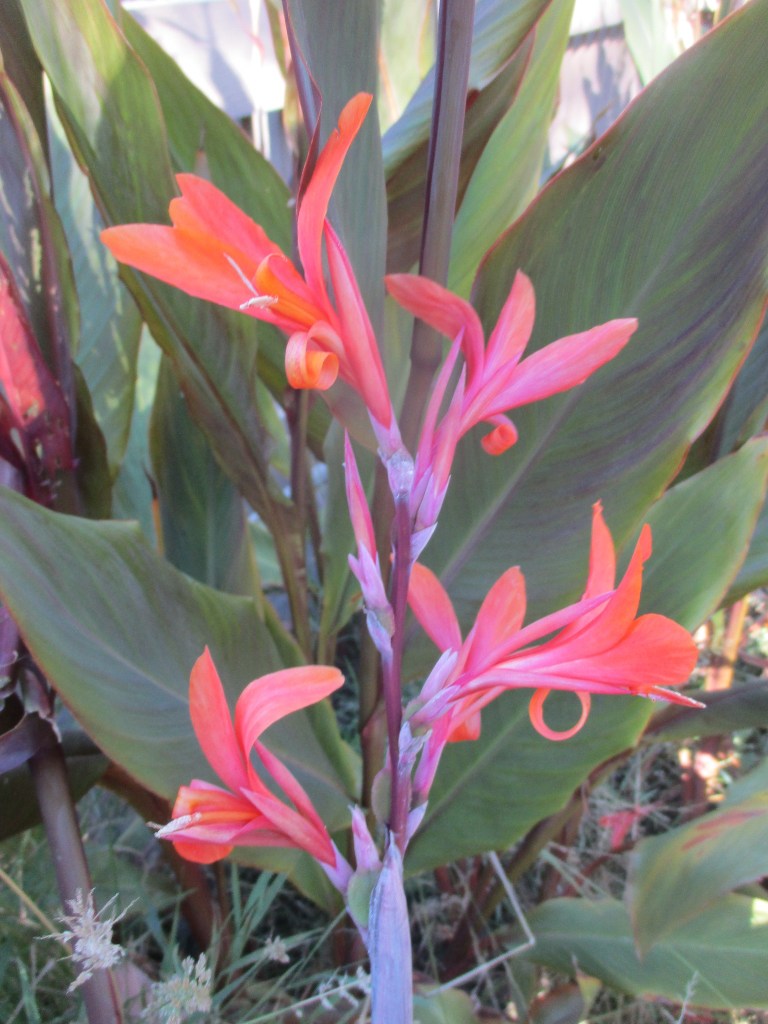
It all started when I succumbed to the temptation of cheap but out of season bulbs. They were actually canna rhizomes that did not work out so well. The supplier gave me credit, which I used to purchase cheap but out of season dahlia tubers. I suppose that I can not blame the supplier twice. I should have known better from the beginning than to violate my most basic rule against purchasing plant material, even if I try to justify doing so for work. Contrary to the title of these Six, ginger, elderberry and a dinky lime tree that cost nothing are working out quite nicely.

1. Dahlia X pinnata, mixed dinnerplate dahlias were purchased with the credit that I got for the ‘Red King Humbert’ Canna that were both virused and not ‘Red King Humbert’. I again fail to be impressed. I canned any that were not completely desiccated, but do not expect any survivors. I should have requested a total refund after the primary purchase.

2. Dahlia X pinnata, mixed dinnerplate dahlias grow through spring for summer bloom. I figured that, even without enough time to bloom, they could grow enough to replenish their resources before winter dormancy, and then grow and bloom next year. I assumed that tubers that are available this late had been refrigerated to maintain their dormancy. Instead, a few diligently tried to grow earlier, but could not escape from their packaging.

3. Zingiber officinale, ginger is not so limited by seasons. It grows whenever it wants to.

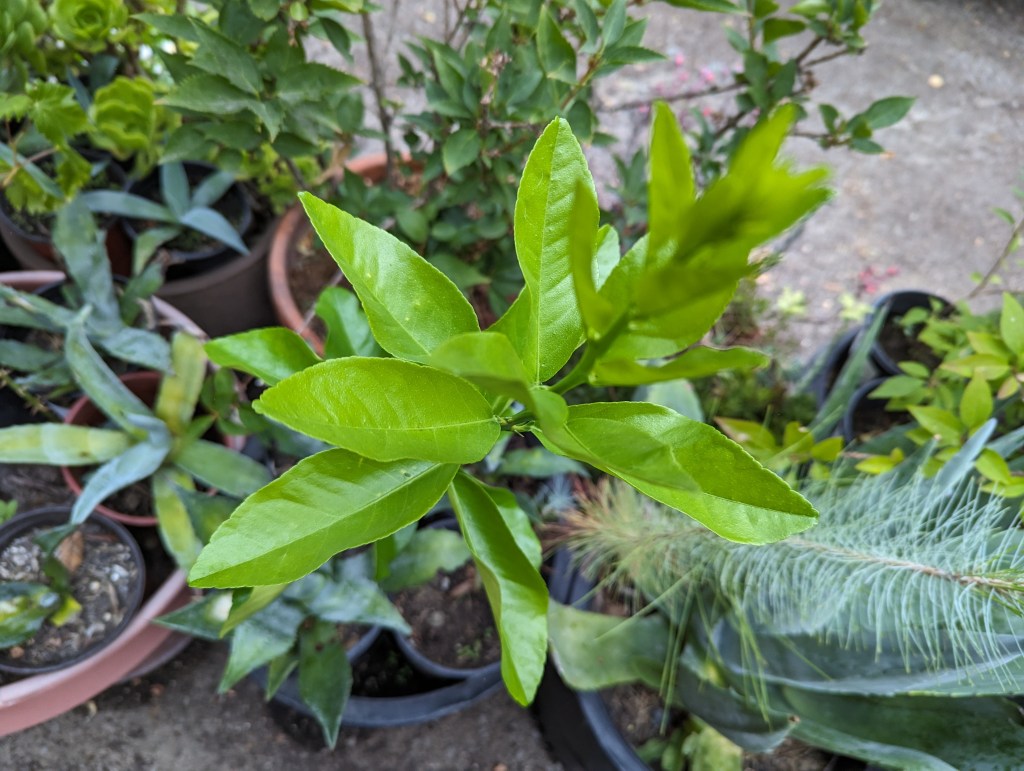
4. Citrus X latifolia ‘Bearss’, Persian lime grew from the stump of a tree that I pulled out of a neighbor’s yard. It cost nothing, but will eventually be worth more than I paid for it.

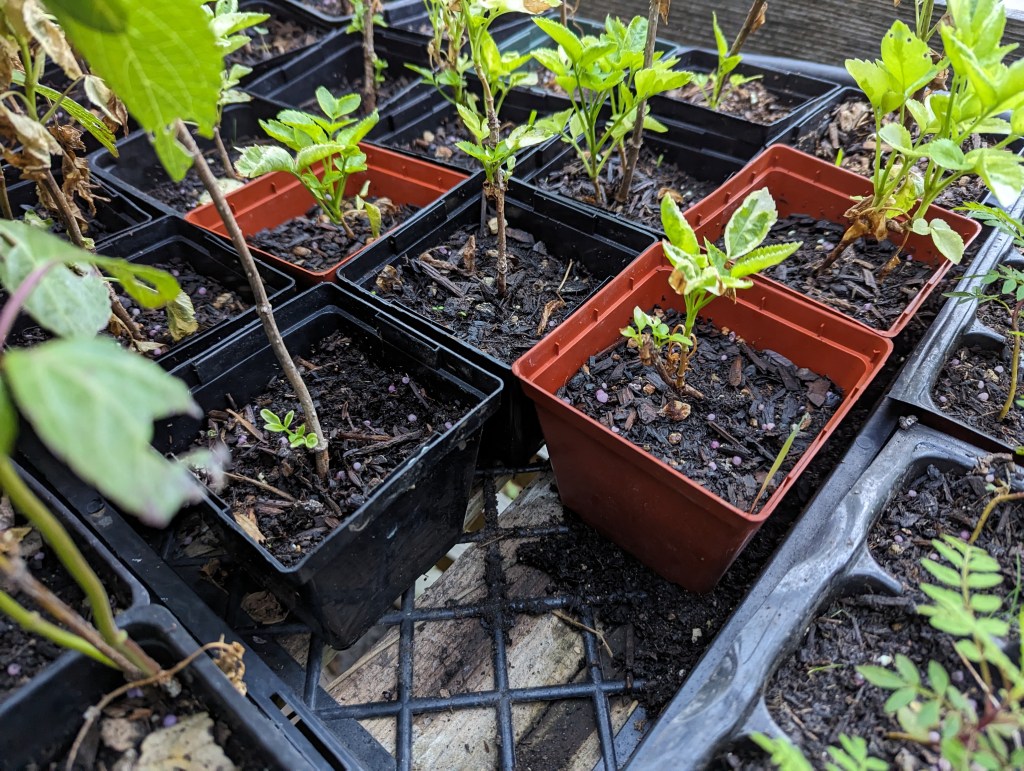
5. Sambucus nigra ‘Madonna’, European black elderberry likewise cost nothing, and for a while, it looked as such. It provided sixteen copies though, and the first found a home.

6. Rhody is irrelevant to the previous five of these six, but everyone wants to see Rhody.

This is the link for Six on Saturday, for anyone else who would like to participate: https://thepropagatorblog.wordpress.com/2017/09/18/six-on-saturday-a-participant-guide/

Summer Bulbs Require No Chill

Many bulbs are not actually bulbs.

Narcissus, including daffodil, started to bloom during all that earlier torrential rain. Those that bloomed after the rain stood up a bit better than those that started earlier. Crocus are stouter so are more resilient. Hyacinth are both relatively stouter and slightly later. While such spring bulbs contend with late wintry weather, it is about time to add summer bulbs.

Unlike spring bulbs that like to be in the garden early enough to benefit from winter chill, summer bulbs do not benefit from chill. Some actually dislike it. Also unlike spring bulbs, very few summer bulbs, or late bulbs, are actually bulbs. Almost all are rhizomes, tubers, tuberous roots, corms or other types of dormant but reliably perennial storage structures.

Summer bulbs do not grow through early winter to bloom later in winter or early in spring like spring bulbs do. They instead grow through late winter and early spring to bloom for late spring or summer. A few bloom for autumn. Several are more reliably perennial than the majority of spring bulbs. However, some bloom splendidly only for their first seasons.

Gladiolus is one of the most popular summer bulbs, but like many spring bulbs, it blooms only once annually, and is not reliably perennial. Planting in phases every two weeks or so through their planting season prolongs bloom. However, most corms do not survive to bloom for a second season. Those that do will synchronize for their subsequent blooms.

Dahlia blooms for a longer season from the middle of summer until the middle of autumn. Also, it is more reliably perennial. Tubers remain dormant through winter after stems and foliage die back. They generate new stems and foliage through warming spring weather. Overgrown or crowded tubers propagate efficiently and easily by division while dormant.

Summer bulbs are not quite as diverse as spring bulbs, but some types are too vigorous for much diversity. A few rhizomes of canna can become overwhelming within a year. Old fashioned white calla forms broad colonies that might exclude other perennials. Smaller and more colorful modern cultivars are fortunately docile. Crocosmia might get invasive, and is difficult to mitigate.

Spring Bulbs Begin In Autumn

Spring bulbs are dormant through winter.

Crocus, daffodil, hyacinth, tulip, freesia, anemone and ranunculus will not bloom until the end of winter and early spring. They are spring bulbs or early bulbs. Crocus and daffodil, including the various narcissus, will be among the first to bloom. The others as well as a few types of iris will bloom a bit later. After they finish, summer bulbs will begin to bloom.

Although they will not bloom for a few months, spring bulbs go into the garden now while they are dormant. Visually, they are still unimpressive. They are even more uninteresting when hidden from view by interment. Their planting season appropriately begins prior to Halloween, and continues as long as they remain dormant and available from nurseries.

Spring bulbs generally bloom earlier within their bloom season after early planting within their planting season. Similarly, later planting delays bloom. Therefore, periodic planting of groups of the same bulbs throughout their planting seasons prolongs their subsequent bloom season. They begin to disperse roots and grow as soon as they are in the ground.

However, growth through the cool and rainy weather of winter remains subdued. Foliage should remain safely below the surface of the soil until warmer weather during the end of winter or beginning of spring. Like so many other plants in the garden, bulbs rely on chill to adjust their respective schedules after dormancy, but do not want to be vulnerable to it.

Winter is so mild here though that some spring bulbs do not experience sufficient chill to perform reliably as perennials. Daffodil, for example, can naturalize where it experiences more chill. Here, it may bloom best for its first spring, with less bloom annually afterward. Extensive breeding has also compromised the reliability of many perennial spring bulbs.

Some spring bulbs are actually corms, rhizomes, tubers or tuberous roots, which function much like bulbs. All are specialized storage structures that contain all that they require to survive through dormancy and then start growth for another season. They replenish their resources through subsequent active seasons to repeat the process perhaps indefinitely.

Late Bulbs Require No Chill

Cannas grow after spring bulbs bloom.

Spring bulbs are making a comeback from their unceremonious internments last autumn. Some of the earlier sorts are visibly extending foliage above the surface of the soil. A few narcissus, daffodil and crocus are already blooming! Now it is time to plant late bulbs, or summer bulbs, which start to grow through warm spring weather, and bloom for summer.

Spring bulbs are generally the same as hardy bulbs of climates with cold winter weather. They are hardy to frost while dormant. Since chill is relatively mild locally, their hardiness is irrelevant. Conversely, some prefer more chill than they experience locally. Inadequate chill can compromise performance. Autumn planting maximizes their brief chill exposure. 

Late bulbs are completely different from spring bulbs. Not only do they not require chill to perform, but some dislike it. Many of the most popular late bulbs that can naturalize here succumb to frost elsewhere. Instead of early planting for chill, as spring bulbs prefer, late bulbs prefer late planting to avoid chill. Their foliage emerges after the last threat of frost.

However, although they do not need or even appreciate chill, most popular late bulbs are resilient to the minor chill of local climates. Once established, they simply die back to the ground in response to the first frost of autumn. They maintain dormancy through winter to regenerate for spring. Some repeat this process for years, since the soil does not freeze.

Not all late bulbs are actually bulbs. Most are corms, rhizomes, tubers, tuberous roots, or other bulb-like perennials. Some, such as dahlia and canna, bloom through an extensive season. Some, such as lily and gladiolus, bloom only once. Planting in phases for a few weeks prolongs their bloom. Of course, they will synchronize for any subsequent bloom.

Canna and common white calla are two of the most reliable late bulbs. Crocosmia is too reliable, and since it can be invasive, it is rarely available. Common gladioli and various lilies are spectacular in bloom, but not reliably perennial. Dahlia is a very rewarding and reasonably reliably perennial summer bulb. It is spectacularly variable in color, form and texture.

Four O’Clock

Four o’clock is not obsessively punctual.

Most who enjoy four o’clock, Miribilis jalapa, do not grow it intentionally. It tends to sneak into gardens from outside, and then bloom too delightfully to be unwanted. It naturalizes, but not aggressively enough to be a weed. New seedlings develop tuberous roots during their first year. They regenerate to produce abundant seed as early as their second year.

Flowers are supposed to open at 4 o’clock. They may open earlier during warm or humid weather. They remain open through the night, and perhaps for part of the morning. Floral color ranges through white, yellow, orange, red, and many tints of pink. Flowers might be striped or spotted with the other colors. Individual plants might bloom with various colors. 

Mature four o’clock plants do not get much taller than three feet. They might sprawl twice as broad. Rich light green foliage is quite full, and obscures unexpectedly soft and lanky stems with knobby nodes. Bloom continues through most of summer, but decreases with increased seed development late in summer. All growth above ground succumbs to frost.