Sugarless

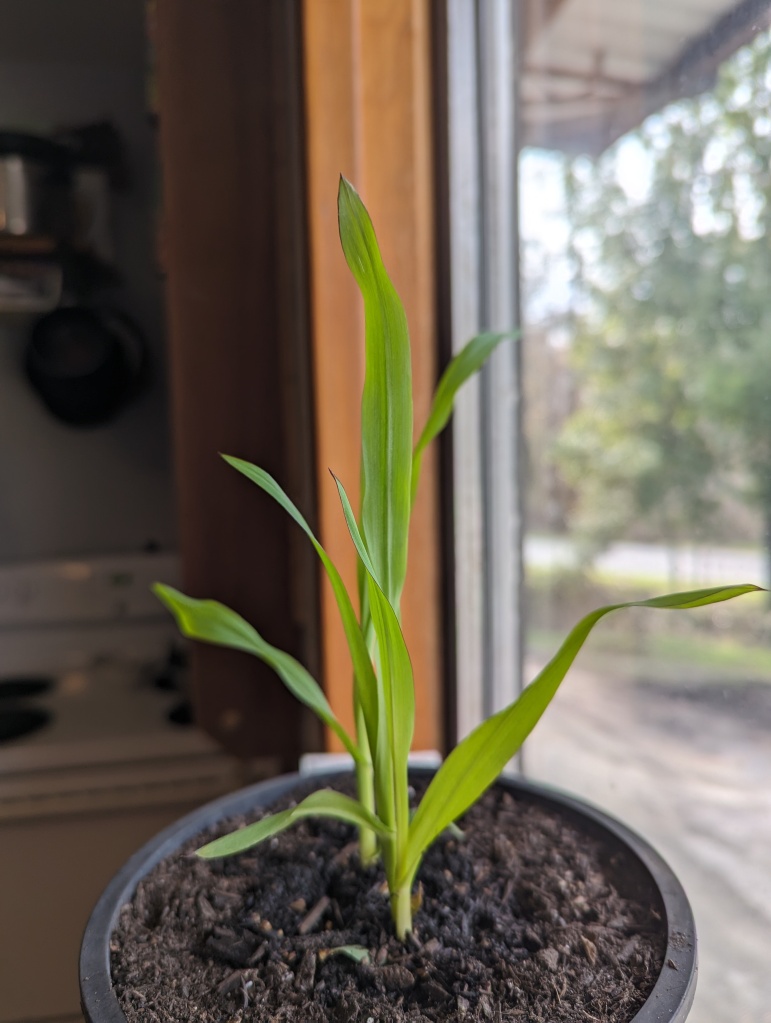
‘Pele’s Smoke’ is an ornamental sugarcane that should bronze with better exposure.

The internet is surprisingly deficient. It contains an amazing abundance of information, including a majority of information that most of us should not want. No one can filter out all the previews to disturbingly violent cinema, disturbingly idiotic political scandal, disturbingly aberrative sexual content, and so on. Yet, some of the simplest information remains mysteriously elusive.

I grow ‘Pele’s Smoke’ sugarcane only because it is what I obtained first. I grew it from scraps that I pruned from a specimen in the garden of a colleague in the Los Angeles region. It grows like a weed. I happen to enjoy growing it. It is primarily an ornamental cultivar though. With its bronze foliage, it is intended to be prettier than it is functional. Although it is considered to be productive, the canes are small and relatively tough.

I would like to grow a variety of sugarcane that is more utilitarian than ornamental. There are many varieties within three types of sugarcane that I should be able to choose from. Chewing cane is the sort that develops a soft and chewable pulp within its canes that can be chewed like a confection, leaving less inedible fibrous pith than other varieties. I do not want to bother growing chewing cane. Syrup cane may produce a bit more fibrous pith, but generates an abundance of sugar syrup, which unfortunately does not crystalize as readily as that of other varieties. I do not want to bother growing syrup cane. Crystal cane is the sort that produces the most sucrose, which should crystalize more readily than the combinations of sugars that other varieties produce. That is what I am still trying to find! Several varieties of sugarcane are available online, but very few are classified as chewing, syrup or crystal canes! I am still searching!

Utilitarian Garden Features Became Aesthetic

Nasturtium used to be more utilitarian.

Gardening is fun. Furthermore, gardens are pretty. Some gardens also produce fruits and vegetables. Not very long ago, production of fruits and vegetables was more of a priority for more gardens. Some big gardens generated firewood and a bit of forage for livestock. Contemporary abundances allowed gardening to become more aesthetic than utilitarian.

Such abundance may not seem so apparent while so many of society could benefit from a bit more. People work more than ever to earn resources to purchase produce that they can not grow in their gardens while working so much. It has become more feasible to do so. Landscape maintenance is just another expense that many would prefer to eliminate.

Nonetheless, some popular features within modern home gardens evolved from formerly utilitarian features. Many such utilitarian features were common within the infrastructures of home gardens prior to the development of any modern technology that replaced them. Some were popular only because such technology was either expensive or uncommon.

Shade trees are among the most traditional and perhaps more recognizably utilitarian of landscape features. Although, even they have evolved. With modern air conditioning and insulation, their shade is less important than their aesthetic appeal. Window screens and rain gutters are also modern technologies that made particular garden features obsolete.

Window boxes, which are now mere ornamental features, were originally popularized for aromatic vegetation, to repel insects from windows. Rosemary, nasturtium, ivy geranium and petunia had always been some of the more popular repellent plants for this purpose. They do not obscure much sunlight as they cascade delightfully outward and downward.

Foundation plantings, which now merely soften the perpendicularity of vertical walls and horizontal garden spaces, were also utilitarian features. Compact and resilient shrubbery or perennials inhibited erosion caused by rain falling from eaves above. They obstructed splattering mud from below also. Indian hawthorn and lily of the Nile were quite effective. They could survive through summer without much irrigation, but then survive excessive moisture through winter.