Advice From reneesgarden.com

When is the best time to pick the perfect tomato?

My colleagues and I are rather proficient with communicating with the plants in the garden. Plants let us know when they want a particular nutrient, or are getting hassled by a particular pest. Those that produce fruit and vegetables also tell us when it is time to harvest. The only problem is that some horticulturists are not quite as receptive to information about ripening produce as we are to problems.

As my tomatoes ripen, I eat them whenever I want to, even if they are warm from hanging out in the sun. Any fruits or vegetables are fair game as soon as they are ready to get eaten. Although I will grow just about anything in my garden, I never bothered to learn how cook or even handle fruits and vegetables properly. For me, the best time to harvest is when I am hungry.

Those of us with more discriminating taste eventually become acquainted with the produce that we grow, so that we know when and how to harvest it to achieve the best quality. We learn how to translate the fragrance of a ripening melon, and to tap to determine density and consistency. Maturity of corn can be determined by their drying tassels, and confirmed by puncturing a few kernels. Color and texture of pea pods let us know when the peas within have achieved their optimum plumpness.

Renee of Renee’s Garden, which is perhaps my favorite supplier of vegetable and flower seed, describes some less obvious recommendations for harvesting produce at the website http://www.reneesgarden.com. While the weather is so pleasant through summer, it is best to harvest vegetables in the morning, while it is still cool in the garden. If harvested later in the day, vegetables can wilt because of evaporation of moisture and absorption of warmth. If  harvesting in the morning is not possible, harvesting in the evening is the next best option.

Leafy vegetables like lettuce, chard, collard, basil and parsley, as well as pea, are particularly sensitive to getting harvested during warm weather. Green beans grow like weeds during warm days, but are slightly crisper if picked while cool. Vegetables in the cabbage family that are grown later in the year or early in the following year, such as cauliflower and broccoli, can likewise get limp.

Root vegetables like carrot, radish and turnip are not nearly as sensitive to warmth because they are so well insulated underground. They should be brought in out of the warmth and refrigerated (if preferred) quickly nonetheless. However, turnip greens and any other greens that are grown  as root vegetables are just as likely to wilt as other leafy vegetables are.

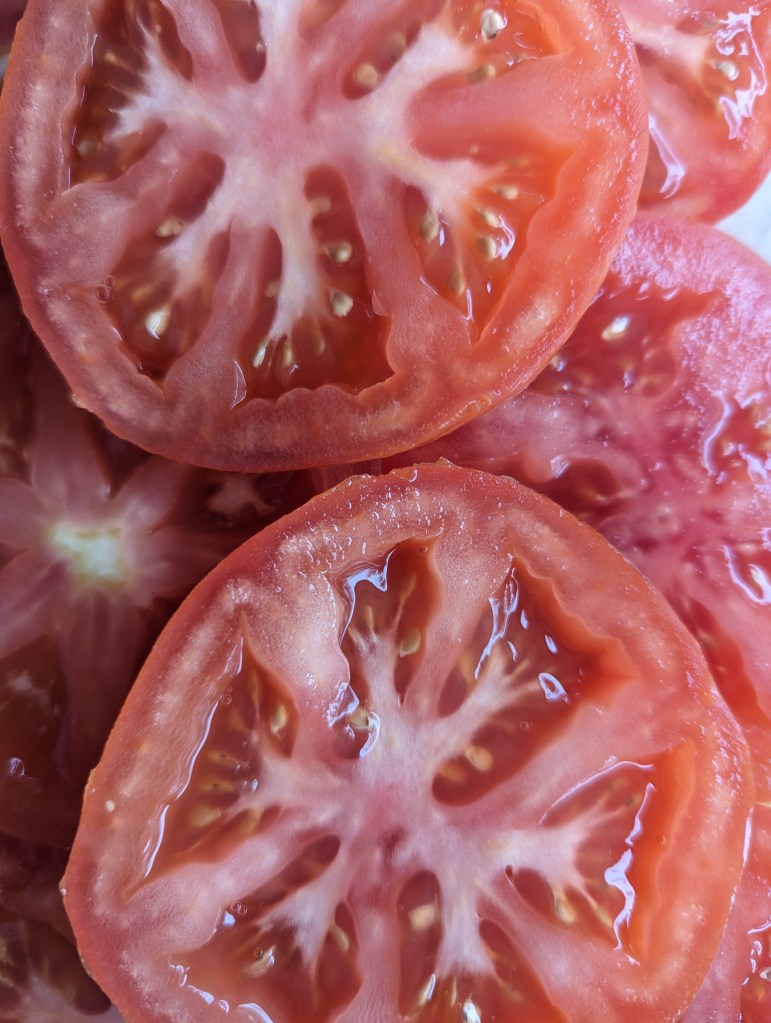
Eggplant, pepper and zucchini are more resilient, but can potentially get limp if harvested a few days before getting eaten and left to linger in a warm and dry (minimal humidity) kitchen. Many varieties of tomato are best directly out of the garden; but many others actually get better flavor if harvested a bit early and left to finish ‘off the vine’. In autumn, when tomato plants stop producing, the last but nearly mature green tomatoes that run out of warm weather can finish ripening on the kitchen windowsill.

Sustainable Vegetable Gardening

It will be time to add warm season vegetables to the garden soon.

This article is recycled from several years ago, so the information about the class is no longer relevant.

            Just as we are getting accustomed to winter, it is already time to begin to get ready for spring. The first of the six sessions of the Sustainable Vegetable Gardening class with Master Gardener Ann Northrup at Guadalupe River Park and Gardens will be from 7:00 to 9:00 p.m. on February 10. Subsequent sessions continue weekly at the same time until the sixth session on March 17, in time for warm season vegetables to replace cool season vegetables.  

            Topics include: soil preparation, amendments and fertilizers; irrigation methods and systems; working with both seeds and seedlings; cultural requirements of specific warm and cool season crops and varieties that do well locally; and how to identify and manage common pests, weeds and diseases of vegetable crops in the Santa Clara Valley. Sustainable Vegetable Gardening emphasizes sustainable gardening techniques, such as mulching, efficient watering techniques, composting, integrated pest management and organic fertilizers and soil amendments. Participants will learn how to manage a successful and environmentally responsible food garden that will produce vegetables and herbs throughout the year.  

            Sustainable Vegetable Gardening will be at the Guadalupe River Park and Gardens Visitor and Education Center at 438 Coleman Avenue in San Jose. Admission is $72. Pre-registration is required and can be arranged by telephoning 298 7657. More information about this and other classes can be found at www.grpg.org.  

            Another reminder of the distant but eventual spring is that seed catalogues start to arrive. Some arrive by email as links to online catalogues. It seems that the best still arrive by mail though. I have yet to receive two of my favorite catalogues from Baker Creek Heirloom Seed and Park Seed. Baker Creek not only has some of the oldest heirloom seeds, including Early American seeds, but also some of the weirdest vegetable, herb and flower seeds from all over the world. Park Seed supplies the more contemporary traditional seeds that I grew up with, as well as all sorts of bulbs and plants.

            It may be too late by the time their catalogues arrive, because the Renee’s Garden Seed Catalogue is already here! The online catalogue can be found at www.reneesgarden.com. Even though I typically do not like mixed seeds, I do like Renee’s Garden color coded mixes with the different types within the mixes dyed different colors. I simply separate the different seeds as I plant them. It is like getting two or three packets of seed in one.

            I think I like Renee’s flowers as much as the vegetables. There is an entire page of sweet peas to choose from! I also like the selection of sunflowers, nasturtiums and morning glories. This last year, the delicate blue stars in the centers of the big white flowers of ‘Glacier Star’ morning glory were my favorite.

Thanksgiving

Thanksgiving is a celebration of gratitude. It was created by early American settlers who were grateful for their harvest at a time when the exotic fruits, vegetables and grains that they brought with them from Europe were only beginning to get established in unfamiliar climates and soils. They were also grateful for the generosity of the indigenous people, as well as the native fruits, vegetables and game that they introduced them to. Regardless of how meager their resources now seem to be by modern American standards, early American settlers were very grateful for what they had.

Nowadays, for most Americans, sustenance from all over the World is so reliably available and in such abundance that many neglect to appreciate it. As in the past, those who lack such abundance are more grateful for what is available to them. Perhaps that is why Thanksgiving is still so relevant, and such an excellent Holiday. It is a reminder of the importance of gratitude.

Gardening to grow fruits and vegetables, even on a scale that is very minor relative to how early American settlers did so, facilitates gratitude for the sustenance and any surplus that it generates. Produce from the garden is so much more satisfying than produce from a supermarket. A pantry of canned surplus from the garden is so much more gratifying than a pantry of food that was purchased from a supermarket. Perhaps there should be no difference, since food from a supermarket is purchased with money that is earned from other work, which should be comparatively gratifying.

Realistically, there is so much to be grateful for, and so much gratitude to celebrate. In fact, there is enough to justify a specific Holiday for it. Work and gardening can be resumed tomorrow or later, after this celebration of gratitude, Thanksgiving.

Warm Season Vegetable Plants Begin

Tomato seed should already be sown.

Warm season vegetables, or summer vegetables, can occupy a garden systematically. A few lingering cool season vegetables may continue production for a while. Warm season vegetable plants can replace them as they finish. Several warm season vegetable plants should start as early as possible. Others grow in a few later phases through their season.

For example, indeterminate tomato plants are productive throughout their entire season. They can start as soon as convenient. However, determinate tomato plants produce only for two weeks or so. After their initial phase of a single plant or a few, subsequent phases can start about every two weeks. Each phase continues production after its predecessor.

Bush bean and several varieties of eggplant and pepper also produce for brief seasons. Okra and cucumber might produce for most of summer. Secondary phases may increase their production as well though. Of all warm season vegetable plants, corn benefits most from phasing. Each phase tends to mature so uniformly that it finishes within a few days.

Pole bean, squash, some cucumber and Indeterminate tomatoes need no phasing. Such warm season vegetable plants perform from spring planting until frost. Winter squash are warm season vegetable plants, but their fruit finishes for autumn. Indeterminate tomatoes are less profuse than determinate types. Cumulatively though, they are more productive.

It will soon be time to sow seed for corn, beans, root vegetables and most greens directly into garden soil. Seedlings for these warm season vegetable plants are not conducive to transplant. Besides, too many are needed. Cucumber and squash grow either from seed or small nursery seedlings. Only a few plants are needed, and they transplant efficiently.

For the same reasons, tomato, pepper and eggplant can grow from seedlings rather than seed. Moreover, since they are so vulnerable as they germinate and begin to grow, seed is less practical than seedlings. Varieties that are unavailable at nurseries can grow from seed in flats inside or in a greenhouse. Ideally, they should have started early enough for transplant into a garden during appropriate weather.

Warm Season Vegetables Will Soon Replace Cool Season Vegetables.

Radishes grow nicely while the weather is still cool, but will eventually bolt and bloom as weather eventually warms through spring.

Suburban landscapes must seem like an incredible waste of space to those of us who enjoy growing vegetables. The climate and soil of the Santa Clara Valley are just as excellent for vegetables now as they as they were for the vast fruit and nut orchards that were here earlier. Not only are summers just warm enough for warm season vegetables without being too unpleasantly hot, but winters are so mild that cool season vegetables can be productive from autumn until spring.

While cool season vegetables are still productive, a few types that grow quickly can still be sown. Radishes, carrots and even small beets still have time to grow before the weather gets too warm. Peas sown now will get an early start for spring. If leafy lettuces are being exhausted, more can be sown to replace them. Only large vegetable plants, like broccoli, cauliflower and cabbage, need to wait until autumn so that they have a whole cool season to grow through.

It is still a bit early to sow seeds for warm season vegetables directly into the garden. However, seed for some vegetables can be sown in greenhouses or cold frames, to produce seedlings for the garden later. Although beans, corn, most squash and other fast growing vegetables should be sown directly into the garden during warm spring weather, tomatoes, peppers and eggplants prefer to get an early start as seedlings.

(Outdated information regarding gardening classes has been omitted from this recycled article.)

Gardening Up A Wall

These succulent tapestries exemplify artistic vertical gardening.

Like so many fads often do, the vertical gardening fad has become trendier than it really should be. It certainly has practical applications, and is very appealing in the right situations. However, in the wrong situations, it can be more problematic than it is worth.

Vertical gardens can shade and insulate exposed walls, but really do little more than strategically placed shade trees, large shrubbery or even trellised vines can do in that regard. The disadvantage of vertical gardening is that it can hold moisture against the affected walls, and can promote rot if the planters are not installed properly. Planters over windows or decks drip just like any other planters do, staining or dirtying whatever is below. Only free standing vertical gardens (that are not attached to a wall) or those on concrete walls that are not susceptible to rot will not cause such problems.

Water borne pathogens (diseases that disperse in water) can proliferate more in vertical gardens because they get carried with the natural flow of water from top to bottom. Wherever any such disease gets established on a vertical garden, it will likely get carried to everything below. In the ground, such diseases spread slower since they only travel as far as water flows or gets splashed.

The obvious advantage to vertical gardening is that it makes it possible to grow many more plants in very limited space, which is excellent if there is no open ground for vegetable gardening. It can also be a great way to display plants like orchids and certain bromeliads that are more appealing if they hang from above. Staghorn ferns cling to walls naturally.

Another advantage is that vertical gardening can be so aesthetically appealing and unique. Vertical gardens of small, densely foliated succulents hung like tapestries to adorn exterior walls are so much more interesting than simple vines or shrubbery used to obscure such walls. Northern exposures that are too dark for most plants can be adorned with ferns.

Vegetable gardening is still cool.

If leafy lettuces are running out, there is still a bit of time to sow some more seed before spring.

Last autumn, it was unpleasant to remove warm season vegetable plants to relinquish space for cool season vegetables, particularly since some still seemed to be productive. Now the cool weather that the cool season vegetables crave will soon be getting warmer. It is still too early for warm season vegetables, but it is time to get ready for them.

If space allows, seed for a quick last phase of certain fast growing cool season vegetables can be sown. Radishes, carrots and beets still have time to mature before the weather gets too warm, although the beets will be the small tender sort. There probably is not enough time to grow big beets for canning. Leafy lettuces can still be sown to replace what might be running out early. Large vegetable plants like broccoli, cauliflower and cabbage grow too slowly to mature before spring weather gets too warm, so will need to wait until next autumn.

Peas are odd vegetables that like to grow in autumn and spring, in between warm and cool (or cool and warm) season vegetables. The first phase of peas can be sown now, and followed by subsequent phases every two weeks or so until the weather gets too warm for them.

Even though it will soon be getting too warm for cool season vegetables, it is not yet warm enough to sow seed for warm season vegetables directly into the garden. Fast growing vegetable plants that get sown directly, such as beans, corn and most squash, will need to wait until the weather is warm enough for them to grow efficiently, and the cool season vegetables finish and get out of their way. However, seed for vegetable plants that can get planted as seedlings, such as tomatoes, peppers and eggplants, can be sown into flats or cell packs in greenhouses or cold frames.

Tomato, pepper and eggplant seed sown directly into the garden when the weather gets warmer will be more likely to get eaten by snails or succumb to rot as they germinate than seedlings that got an early start in a greenhouse or cold frame (although snails and rot are not problems in every garden). For those who do not want to start growing seedlings at home now, seedlings will certainly be available in nurseries when it is time to put them out into the garden. However, the advantage to growing them at home is that there are many more varieties of seed available from catalogs and online than any nursery could stock with seedlings.

Vegetables Can Grow All Year

Cucumbers fill in between warm and season vegetables and cool season vegetables, so will finish prior to frost.

Tropical plants are clueless. They do not understand that autumn is just prior to winter, when the weather may get uncomfortably cool. Philodendron selloum continues to develop fresh new leaves that mature slowly in cool autumn weather, and may consequently lack resiliency to frost in winter. Vegetable plants and flowering annuals are not so ignorant, which is why so many that were productive through summer are nearly finished, and some are ready to relinquish their space to cool season counterparts.

Like the many warm season vegetables, most of the cool season vegetables should be grown from seed sown directly into the garden. Only those that produce efficiently from fewer but substantial plants, like broccoli, cauliflower, cabbage, Brussels sprout and some of the heading lettuces, can be grown practically from seedlings purchased in cell packs. Because individual plants produce only once, more can be added to the garden in phases every two to four weeks through the season to prolong production.

Chard, kale and collard greens can likewise be grown from cell pack seedlings if only a few plants to harvest as intact heads or large leaf greens are desired. However, a package of seed costs about as much as a single cell pack of only six seedlings, but contains enough seed for many more mature heads, as well as for abundant production of ‘baby’ greens plucked from many juvenile plants through the entire season. Those to be harvested as heads should be planted in phases with enough space to mature. Those that will get plucked through the season can be sown or planted once early in the season, and perhaps followed by a second phase if productions starts to diminish.

Root vegetables, such as beet, carrot, turnip and radish, really do not recover well from transplanting from cell packs. Individual cells are sometimes crowded with too many seedlings that must push away from each other as they mature. Otherwise, if not crowded, each cell contains only a few seedlings that are not nearly as practical as simply sown seed would be.

Although each individual root vegetable plant produces only once, they all mature at different rates, so most types can be sown in only one or two phases instead of several phases every two to four weeks. If the biggest get pulled first, the smaller ones continue to mature. They are less perishable than other vegetables, so any abundance is not likely to be wasted.

There are three practical ways to grow onions. They are most popularly grown from seed or from ‘baby’ onions known as onion sets. The third and sneakier way to grow them is from separated cell pack seedlings. Cell packs typically contain too many onion seedlings that would develop into crowded clumps anyway. There are often as many seedlings as could be grown from a package of seed!

Peas get sown as seed early in autumn to grow and produce before winter gets too cold. Another phase can be sown as winter ends for spring production.

Late Summer Merges Closer To Autumn

Late summer flowers are still blooming.

It always seems that by the time the garden gets as productive as it can, it is already time to get ready for the next season. Pretty soon, cool season annuals will be arriving in nurseries to replace warm season annuals that had been so colorful all summer. If seeds are to be collected from summer flowers for next year, this would be a good time to do it.

Seed for certain cool season vegetables like broccoli, cauliflower, cabbage and kale, can be sown in flats or cell packs now to have seedlings ready to put out into the garden as warm season vegetables finish in autumn. If there is space available in the garden, turnips, turnip greens and beets can be sown directly. Carrots should probably wait a few weeks or so to get sown directly.

Although corn of a single variety sown in a single phase tends to ripen at the same time, different varieties planted in different phases can extend the season significantly. Those that continue to produce until autumn are greedy for nutrients and water. Squash and tomatoes likewise appreciate a bit of fertilizer and regular watering, even as the weather starts to fluctuate this late in summer. However, fertilizer does not need to be applied in the last month of expected production.

Zucchini should be harvested when they get about six inches long, not only because they are best when immature, but also because the plants are more productive if regularly deprived of their fruit. If plants have the choice, they prefer to concentrate resources into fewer large fruit instead of more small fruit. The problem is that the larger fruit is tough and lacks flavor.

Hubbard, butternut, acorn and other winter squash get the opposite treatment. Each vine should produce only a few fruits. Those that produce smaller fruits can sustain more than those that produce larger fruits. Yet, excessive fruit exhausts resources, which compromises fruit quality. The fruit that will continue to grow and ripen through autumn should already be somewhat developed. The smallest of excessive fruit, or underdeveloped fruit should be removed.

Garden Rotation Shares The Goodies

Beans produce better in new territory.

Certain parts of the vegetable garden are ideal for certain types of vegetables. Wire fences are perfect for pole beans to climb. Corn belongs at the northern edge where it will not shade lower plants. Vegetable gardening would be simpler if it were like permanent landscaping. Instead, vegetable plants are seasonal and very consumptive. They prefer fresh resources. Garden rotation gives them more of what they crave.

Garden rotation, or crop rotation, is growing vegetables where they have not grown recently. For the most efficiently planned gardens, it happens seasonally. Alternatively, some types of vegetables might be happy to grow repeatedly in the same soil for a few years. Some vegetable plants are more consumptive than others. Some soils are more susceptible to nutrient depletion than others. A few variables are involved.

Furthermore, the various vegetable plants deplete distinct sets of nutrients. Conversely, they allow other nutrients to replenish. That is why garden rotation is so effective. For example, if beans grow in the same location for too long, they deplete their favorite nutrients. The nutrients that they use less of secretly replenish. Tomatoes or corn might appreciate the replenishment, without craving so much of what is deficient.

Eventually, vegetable plants can return to a location where they grew a few years earlier. Again, a few variables are involved. Some might return after an absence of only a single year. Consumptive plants, such as tomatoes and beans, should avoid a previously used location for three or more years. So should related vegetables. Peppers and eggplants are related to tomatoes, so should avoid the same used locations.

Garden rotation can also inhibit proliferation of some soil borne pathogens. In other regions, this is a more serious concern. Soil borne pathogens that infest mildly during their first year might flourish with the same host material during a second year. Garden rotation deprives them of that.