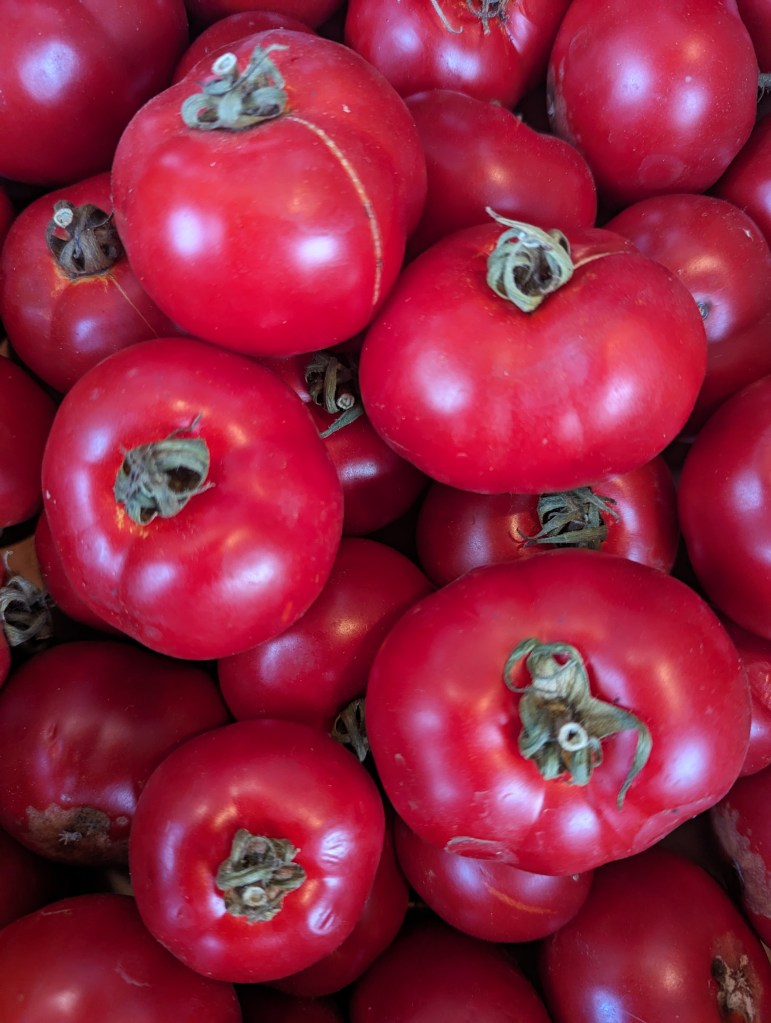
Like most warm season vegetables, tomatoes, Solanum lycopersicum, are actually fruits. They contain seed, whereas actual vegetables are vegetative plant parts that lack seed. Although mostly red, some are orange, yellow, green, pink, brown, purple or pallid white. Some are smaller than small grapes, while ‘Beefsteak’ may grow wider than five inches.
For home gardens, the most popular varieties of tomato are indeterminate. They produce their fruit sporadically throughout their season, on lanky irregular stems. They are neater with the support of tomato cages or stakes. Determinate varieties are shrubbier and more productive, but only for a brief season. They are quite conducive to succession planting.
It is still a bit too early for small tomato plants to go into their gardens. However, seed can start inside or in a greenhouse now. It is possible to sow seed directly into a garden later, but they are vulnerable to mollusks. Nurseries can stock several varieties of tomatoes as small plants. Countless more varieties are available from mail order or online purchases. Many heirloom varieties truly are strange and unique.
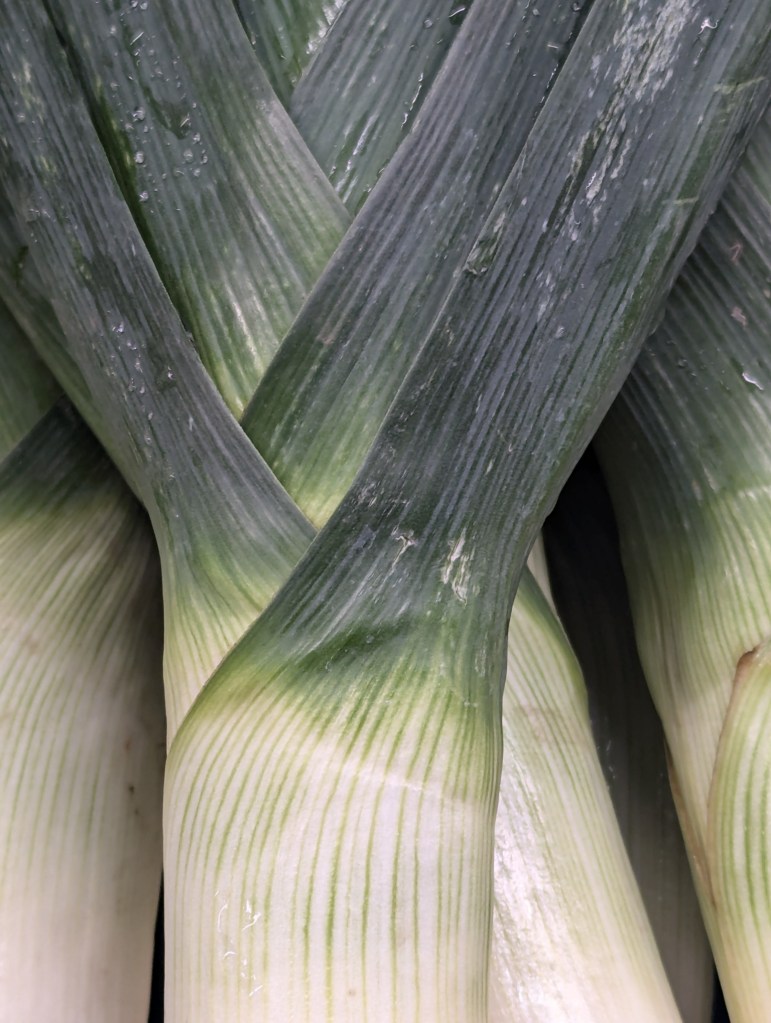
Leek, Allium ampeloprasum, is an old fashioned but traditional cool season vegetable. It is rare among home gardens, but has been in cultivation for thousands of years. It is one of the floral emblems of Wales, in conjunction with daffodil. In cooler climates, leeks may grow through summer for autumn harvest. They are only a cool season vegetable locally.
Leeks grow easily from directly sown seed, but are alternatively conducive to transplant. Therefore, they can start in flats while warm season vegetables are still producing. Then, they can transition to the garden early enough to mature before frost. Later phases which grow through winter are quite tolerant of mild frost. They might even be bigger and better.
Like several cool season vegetables, leeks are in no rush for harvest. Once mature, they can linger in their gardens for weeks without deteriorating or bolting. Like related onions, they prefer somewhat rich and loose soil. Until the winter rainy season begins, they need regular watering. Thrips can be more of a problem in other regions during warm weather.
My colleagues and I are rather proficient with communicating with the plants in the garden. Plants let us know when they want a particular nutrient, or are getting hassled by a particular pest. Those that produce fruit and vegetables also tell us when it is time to harvest. The only problem is that some horticulturists are not quite as receptive to information about ripening produce as we are to problems.
As my tomatoes ripen, I eat them whenever I want to, even if they are warm from hanging out in the sun. Any fruits or vegetables are fair game as soon as they are ready to get eaten. Although I will grow just about anything in my garden, I never bothered to learn how cook or even handle fruits and vegetables properly. For me, the best time to harvest is when I am hungry.
Those of us with more discriminating taste eventually become acquainted with the produce that we grow, so that we know when and how to harvest it to achieve the best quality. We learn how to translate the fragrance of a ripening melon, and to tap to determine density and consistency. Maturity of corn can be determined by their drying tassels, and confirmed by puncturing a few kernels. Color and texture of pea pods let us know when the peas within have achieved their optimum plumpness.
Renee of Renee’s Garden, which is perhaps my favorite supplier of vegetable and flower seed, describes some less obvious recommendations for harvesting produce at the website http://www.reneesgarden.com. While the weather is so pleasant through summer, it is best to harvest vegetables in the morning, while it is still cool in the garden. If harvested later in the day, vegetables can wilt because of evaporation of moisture and absorption of warmth. If harvesting in the morning is not possible, harvesting in the evening is the next best option.
Leafy vegetables like lettuce, chard, collard, basil and parsley, as well as pea, are particularly sensitive to getting harvested during warm weather. Green beans grow like weeds during warm days, but are slightly crisper if picked while cool. Vegetables in the cabbage family that are grown later in the year or early in the following year, such as cauliflower and broccoli, can likewise get limp.
Root vegetables like carrot, radish and turnip are not nearly as sensitive to warmth because they are so well insulated underground. They should be brought in out of the warmth and refrigerated (if preferred) quickly nonetheless. However, turnip greens and any other greens that are grown as root vegetables are just as likely to wilt as other leafy vegetables are.
Eggplant, pepper and zucchini are more resilient, but can potentially get limp if harvested a few days before getting eaten and left to linger in a warm and dry (minimal humidity) kitchen. Many varieties of tomato are best directly out of the garden; but many others actually get better flavor if harvested a bit early and left to finish ‘off the vine’. In autumn, when tomato plants stop producing, the last but nearly mature green tomatoes that run out of warm weather can finish ripening on the kitchen windowsill.
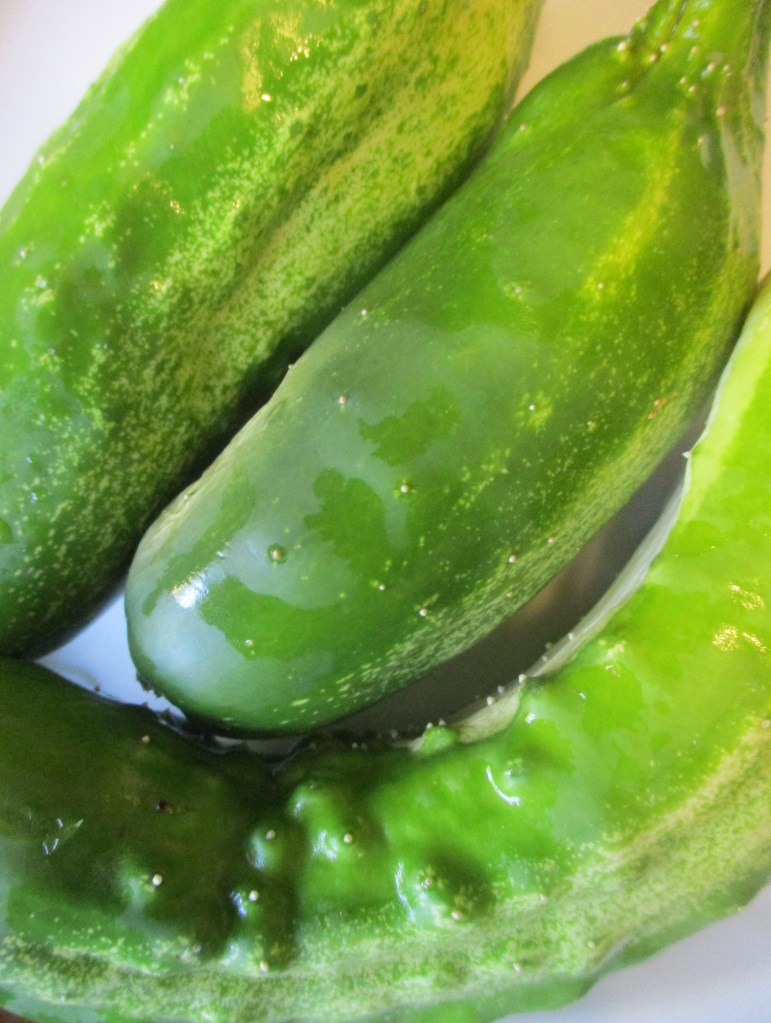
Cucumber, Cucumis sativus, technically qualifies as a summer vegetable. Several types can be productive through the warmest of summer weather. However, locally arid warmth can cause fruit of many varieties to be bitter. Such varieties perform better through spring or autumn instead of summer. Their seed should start a month or so before their season.
Individual cucumber vines are productive for less than a month anyway. Those that grow through summer will need occasional replacement to stay productive. Even within a brief spring or autumn season, more than a single phase is possible. Summer aridity does not limit performance for all varieties, but winter frost does. Consistent irrigation is important.
Most of the many cucumber varieties classify as slicing, pickling or seedless cucumbers. The biggest can potentially grow two feet long or four inches wide. The most popular are best before they mature, though. They are ready for harvest when just a few inches long. Regular harvesting promotes continuous production. Vines can climb about six feet high.
It will be time to add warm season vegetables to the garden soon.
This article is recycled from several years ago, so the information about the class is no longer relevant.
Just as we are getting accustomed to winter, it is already time to begin to get ready for spring. The first of the six sessions of the Sustainable Vegetable Gardening class with Master Gardener Ann Northrup at Guadalupe River Park and Gardens will be from 7:00 to 9:00 p.m. on February 10. Subsequent sessions continue weekly at the same time until the sixth session on March 17, in time for warm season vegetables to replace cool season vegetables.
Topics include: soil preparation, amendments and fertilizers; irrigation methods and systems; working with both seeds and seedlings; cultural requirements of specific warm and cool season crops and varieties that do well locally; and how to identify and manage common pests, weeds and diseases of vegetable crops in the Santa Clara Valley. Sustainable Vegetable Gardening emphasizes sustainable gardening techniques, such as mulching, efficient watering techniques, composting, integrated pest management and organic fertilizers and soil amendments. Participants will learn how to manage a successful and environmentally responsible food garden that will produce vegetables and herbs throughout the year.
Sustainable Vegetable Gardening will be at the Guadalupe River Park and Gardens Visitor and Education Center at 438 Coleman Avenue in San Jose. Admission is $72. Pre-registration is required and can be arranged by telephoning 298 7657. More information about this and other classes can be found at www.grpg.org.
Another reminder of the distant but eventual spring is that seed catalogues start to arrive. Some arrive by email as links to online catalogues. It seems that the best still arrive by mail though. I have yet to receive two of my favorite catalogues from Baker Creek Heirloom Seed and Park Seed. Baker Creek not only has some of the oldest heirloom seeds, including Early American seeds, but also some of the weirdest vegetable, herb and flower seeds from all over the world. Park Seed supplies the more contemporary traditional seeds that I grew up with, as well as all sorts of bulbs and plants.
It may be too late by the time their catalogues arrive, because the Renee’s Garden Seed Catalogue is already here! The online catalogue can be found at www.reneesgarden.com. Even though I typically do not like mixed seeds, I do like Renee’s Garden color coded mixes with the different types within the mixes dyed different colors. I simply separate the different seeds as I plant them. It is like getting two or three packets of seed in one.
I think I like Renee’s flowers as much as the vegetables. There is an entire page of sweet peas to choose from! I also like the selection of sunflowers, nasturtiums and morning glories. This last year, the delicate blue stars in the centers of the big white flowers of ‘Glacier Star’ morning glory were my favorite.
If leafy lettuces are running out, there is still a bit of time to sow some more seed before spring.
Last autumn, it was unpleasant to remove warm season vegetable plants to relinquish space for cool season vegetables, particularly since some still seemed to be productive. Now the cool weather that the cool season vegetables crave will soon be getting warmer. It is still too early for warm season vegetables, but it is time to get ready for them.
If space allows, seed for a quick last phase of certain fast growing cool season vegetables can be sown. Radishes, carrots and beets still have time to mature before the weather gets too warm, although the beets will be the small tender sort. There probably is not enough time to grow big beets for canning. Leafy lettuces can still be sown to replace what might be running out early. Large vegetable plants like broccoli, cauliflower and cabbage grow too slowly to mature before spring weather gets too warm, so will need to wait until next autumn.
Peas are odd vegetables that like to grow in autumn and spring, in between warm and cool (or cool and warm) season vegetables. The first phase of peas can be sown now, and followed by subsequent phases every two weeks or so until the weather gets too warm for them.
Even though it will soon be getting too warm for cool season vegetables, it is not yet warm enough to sow seed for warm season vegetables directly into the garden. Fast growing vegetable plants that get sown directly, such as beans, corn and most squash, will need to wait until the weather is warm enough for them to grow efficiently, and the cool season vegetables finish and get out of their way. However, seed for vegetable plants that can get planted as seedlings, such as tomatoes, peppers and eggplants, can be sown into flats or cell packs in greenhouses or cold frames.
Tomato, pepper and eggplant seed sown directly into the garden when the weather gets warmer will be more likely to get eaten by snails or succumb to rot as they germinate than seedlings that got an early start in a greenhouse or cold frame (although snails and rot are not problems in every garden). For those who do not want to start growing seedlings at home now, seedlings will certainly be available in nurseries when it is time to put them out into the garden. However, the advantage to growing them at home is that there are many more varieties of seed available from catalogs and online than any nursery could stock with seedlings.
We don’t put much effort into our compost piles. In the first pile, we dump horse manure, green waste from two cafeteria type kitchens, and a bit of the finer textured green waste from the landscapes. It eventually gets turned over into the second pile. By the time the second pile gets turned over into the third pile, it is almost ready for use. The third pile really does not last long. Neighbors take it as fast as we can.
We turn the piles when it is convenient for us and the tractor. There is no schedule. We incorporate the material as it becomes available. There is no recipe. Somehow, we get remarkably good compost from the process.
Besides the usual weeds that grow around the compost piles, there are all sort of vegetable plants that grow in the compost, from vegetable scraps and seed that were in the green waste from the kitchens. There are onions, potatoes, carrot tops and celery bottoms. For a while, there was even a pineapple top. Melons, cucumbers, peppers and squash sometimes grow from seed. Tomatoes are the most common vegetable plants out there.
All this random mix of vegetable plants started growing like weeds after all the rain last winter, but then slowed down after the rain stopped. That is why the tomatoes have not been ripening for long. Of course, we get no tomatoes. The raccoons an whatever other wildlife wants them tends to get them first. I am not so sure that I want tomatoes that seem to grow directly from horse manure anyway.
They sure look impressive though. It would be nice if tomato plants that were intentionally planted into vegetable gardens looked this good. There are actually a few just like this one scattered about where the compost gets turned. They sprawl over the ground, but are able to stand up enough to hold their developing fruit above the compost.



 We don’t put much effort into our compost piles. In the first pile, we dump horse manure, green waste from two cafeteria type kitchens, and a bit of the finer textured green waste from the landscapes. It eventually gets turned over into the second pile. By the time the second pile gets turned over into the third pile, it is almost ready for use. The third pile really does not last long. Neighbors take it as fast as we can.
 Tony Tomeo