Warm Season Vegetables Start Early

Tomatoes are the favorite summer vegetable.

Warm season annuals that are becoming more available in nurseries are a clue. As they become seasonal, so do warm season vegetables, or summer vegetables. After all, they also perform as annuals within their respective seasons. It may still be too cool for many to inhabit the garden directly. However, several that grow from seed can start about now.

Many more varieties of warm season vegetables are available from seed than as plants. Vegetable plants are available in cell packs or four inch pots. They occupy more nursery space than racks of many more varieties of seed. Many more varieties are available from online catalogs. Several true to type varieties can provide seed for subsequent seasons.

Furthermore, many warm season vegetables grow better from seed than from transplant. Corn, beans, squash and root vegetables grow very efficiently from seed. However, they do not recover so easily from transplanting. Root vegetables are particularly susceptible to deformity from such handling. Seed for many root vegetables is ready for sowing now.

Seed is also an advantage for warm season vegetables that grow from many plants. For example, one packet of beet seed can provide more than enough beets. One cell pack of beets costs about as much, but provides only six possibly wimpy beets. A solitary tomato plant might provide plenty of tomatoes, though. Besides, tomato plants transplant easily.

Seed for corn, beans and squash should wait for warmer weather for their direct sowing. So should seed for many warm season vegetables that do not really need direct sowing. However, those that do not require direct sowing can start now inside or in greenhouses. They are easy to transplant from flats, cell packs or small pots later with warmer weather.

The season for warm season vegetables is only now beginning. Ideally, such vegetables arrive as cool season vegetables relinquish their space. Successive phases can replace the last of cool season vegetables. Eventually, cool season vegetables will reclaim their garden space. Currently new warm season vegetables should be finished with it by then.

Off Color

Borage can bloom pink, although it should fade to blue.

Borago officinalis, borage blooms almost exclusively with blue flowers. Those that bloom with white flowers are a naturally rare variant, although a slightly less than natural white blooming variety is available. Although white is my favorite color, I wanted to grow the more common sort that blooms with blue flowers merely because, to me, blue seems like the more natural color for the species. Besides, white borage flowers look rather bland. Actually, I am not much more impressed with blue borage flowers, but wanted to grow borage just to see what all the fuss was about. Though they were not expected to be viable, I was pleased that someone shared some expired seed with me. Because I expected none of them to grow, and expected that even less than none would grow if I delayed sowing them until after winter, I tossed the seed into the cans of other plants in the recovery nursery. I figured that if one or a few grew, I could pull them up and can them separately. Only a few days later, they all seemed to be germinated and growing! I extracted and plugged them into one more six-pack than a full flat of cells, which is forty-two seedlings! The problem is that summer is over, and borage does not overwinter well, even here. I am pleased with them nonetheless, and am confident that some can survive with shelter. I figured that with so many seedlings, that one or more might possibly bloom with white flowers. I noticed floral buds a while ago, so was watching for my first borage bloom. I was not expecting this! What is weirder is that all are blooming like this. Apparently, it is normal for borage to bloom with pink flowers that fade to blue during autumn.

Mustard

Mustard can be a weed also.

Mustard is not easy to classify. It is a cool season vegetable here, although it grows until summer gets too hot. In cooler climates, it is a warm season vegetable. Whether warm or cool season, it provides more than greens. For agricultural applications, it is also a cover crop and livestock fodder. Its seed and seed oil have culinary and medicinal application.

Also, some consider mustard to be a wildflower, and some consider it to be a weed. Most but not all species that naturalized here are of the genus Brassica. None are native. Wild turnip and wild radish are similar and are also naturalized, but not as aggressively. Their bloom may be pink or creamy white. Most mustard varieties display bright yellow bloom.

Garden varieties of mustard have milder flavor and finer texture than wild sorts. They are sometimes available as cell pack seedlings, but grow like weeds from seed. Varieties for mustard seed might only be available online or from mail order catalogs. Mustard greens develop bitter flavor with age or bloom. Bigger lower leaves can develop coarser texture.

Succession Planting Prolongs Vegetable Harvest

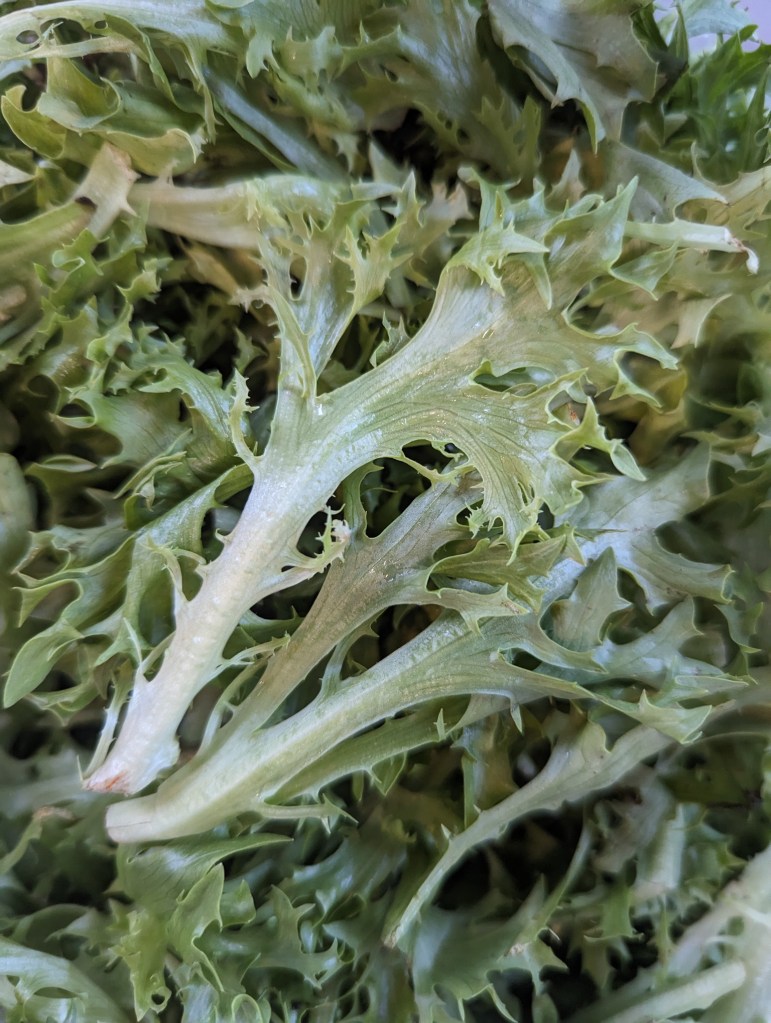
Frisee is for autumn and spring.

Winter vegetables might inspire both enthusiasm and trepidation as their season begins. Sowing their seed and plugging their seedlings into a fresh garden is delightful. Concern for their performance while summery warmth continues is not. It may take a while, but the weather will eventually cool. Later phases of succession planting will enjoy it even more.

Succession planting, which is the same as phasing, looks simpler than it is. Most simply, it is cultivation of small groups of any vegetable throughout its season. First groups might seem premature, but then seem less so as their season evolves. Subsequent groups are likely to seem more appropriate to their season. They can be one to several weeks later.

Planning is important for efficient use of space. The first groups of winter vegetables can use space as summer vegetables relinquish it. Later groups can use space as these first groups of winter vegetables relinquish it. However, with good crop rotation, any one type should not grow twice on the same sites. They prefer former sites of different vegetables.

So, succession planting is more complicated than growing one big group for the season. It is practical, though, for extending the harvests of individual varieties. The first groups of each variety are ready for harvest first. Each subsequent group should become ready as the preceding group finishes. The last group should finish at about the end of its season.

Different types of vegetables obviously respond differently to succession planting. Those that grow in autumn and spring but not winter need no other succession planting. Radish grows so fast that several phases can fit into one season. Cabbage can linger for so long that only two or three phases might be sufficient. Besides, they develop at different rates.

Succession planting is also effective for several spring bulbs that will soon be available. Although less obviously, and later next spring, prolonged planting should prolong bloom. However, reliably perennial bulbs synchronize for subsequent spring bloom. Succession planting is less effective for summer bulbs later. It only delays prolonged bloom for some that bloom for a recurrent bloom cycle.

Cucumber

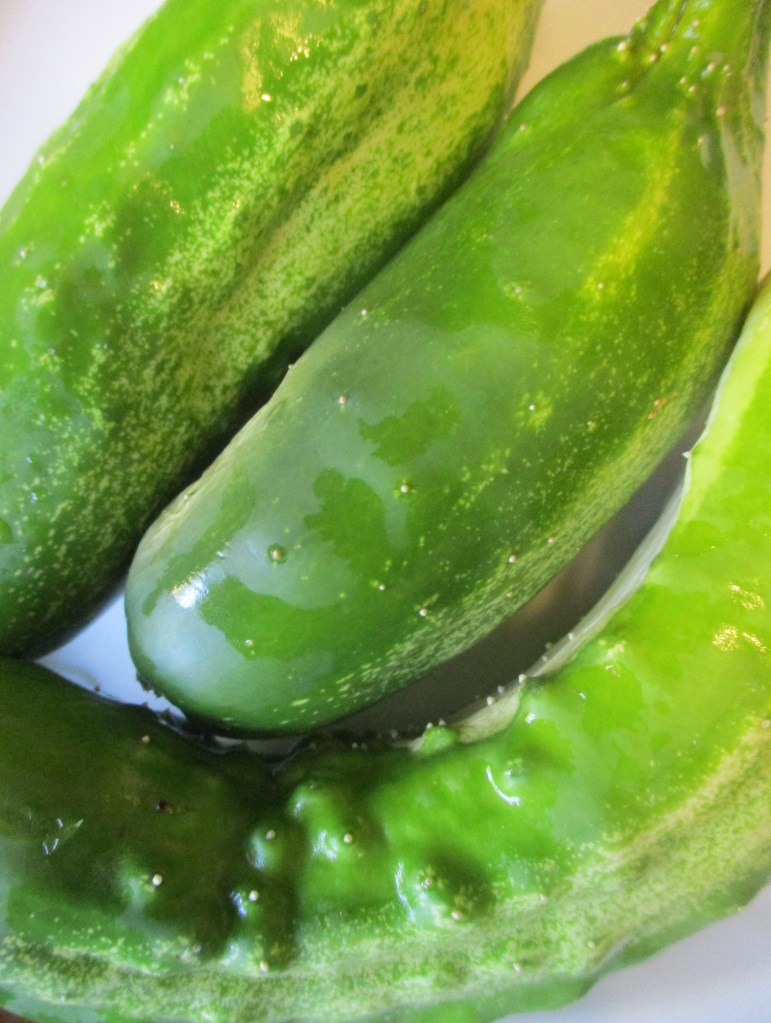
Cucumbers dislike the warmth of summer.

Cucumber, Cucumis sativus, technically qualifies as a summer vegetable. Several types can be productive through the warmest of summer weather. However, locally arid warmth can cause fruit of many varieties to be bitter. Such varieties perform better through spring or autumn instead of summer. Their seed should start a month or so before their season.

Individual cucumber vines are productive for less than a month anyway. Those that grow through summer will need occasional replacement to stay productive. Even within a brief spring or autumn season, more than a single phase is possible. Summer aridity does not limit performance for all varieties, but winter frost does. Consistent irrigation is important.

Most of the many cucumber varieties classify as slicing, pickling or seedless cucumbers. The biggest can potentially grow two feet long or four inches wide. The most popular are best before they mature, though. They are ready for harvest when just a few inches long. Regular harvesting promotes continuous production. Vines can climb about six feet high.

Winter Vegetables Are Starting Now

Several cool season vegetables are roots.

Winter bedding plants are a reminder. They become in season at about the same time as winter vegetables. Therefore, as pansies replace petunias, turnips may begin to replace okra. As for bedding plants, it is a slow process that can continue until frost. Some winter vegetables start earlier than others. Some summer vegetables produce later than others.

For example, young okra plants that started late can continue to be productive until frost. There is no need to replace them until then. Instead, older okra plants that started earlier also finish and vacate their space earlier. Early phases of turnip seed can use this space as it becomes vacant. Then, later phases of turnip seed can replace later phases of okra.

Winter vegetables, or cool season vegetables, do grow slower than summer vegetables. In that regard, spring and summer warmth is an advantage. Consequently, recovery from delays is not as easy for them. More winter vegetables than summer vegetables are true vegetables. In other words, they are not fruit that contain seed. Many are distended roots.

This is why most winter vegetables should grow directly from seed. Root vegetables are susceptible to disfigurement from transplanting. Also, most usually grow in quantities that are impractical for transplanting. Most winter vegetables that are practical for transplants grow big above ground. This includes small groups of broccoli, cauliflower and cabbage.

Because broccoli, cauliflower and cabbage are so big, only a few of each are necessary. One or two cell packs of seedlings may be sufficient. They may not cost much more than packets of seed. Also, they are immediately ready for transplant. Seed must start growing earlier, in cells, flats or in their gardens. However, more varieties are available from seed.

Beet, carrot, radish, turnip and parsnip are roots that must grow from seed. Baby lettuces grow from seed because they are so numerous. Hedding lettuces can grow from seed or seedlings. So can peas and cucumbers, but they are more likely to grow best from seed. Successive sowing or planting prolongs production time of almost all winter vegetables. Subsequent phases begin production as their preceding phases finish.

Cabbage

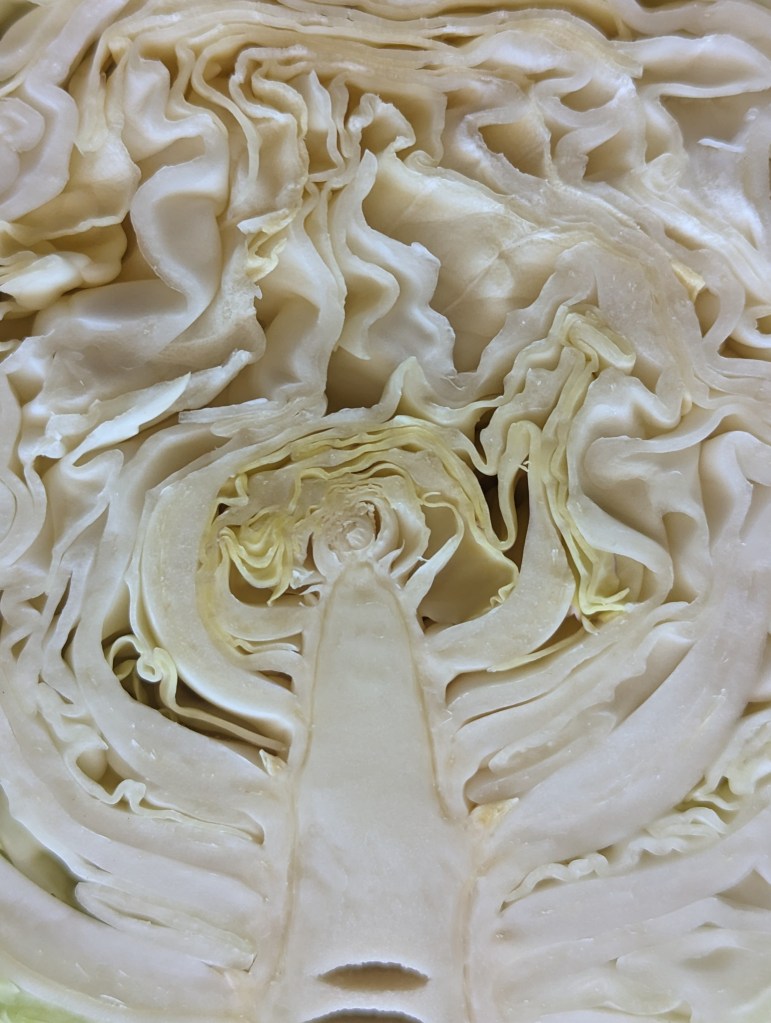
Cabbage is a cool season vegetable.

Resemblance to lettuce is merely coincidental. Cabbage, Brassica oleracea, is instead a close relative of very dissimilar vegetables. Brussels sprout, broccoli and cauliflower are different varieties of the same species. So are collard, kale and kohlrabi. All are winter cole crops. (Cabbage comprises the varieties of capitata, tuba, sabauda or acephala.)

Cabbage became seasonable last autumn. Its last phase is now maturing. It grows most easily from cell pack seedlings. Alternatively, it can grow from seed, which starts about a month and half earlier. Cabbage is biennial, so will go to seed if it stays in the garden too late. Warm weather initiates and accelerates the process, which ruins flavor and texture.

Green cabbage is the most popular type. Red cabbage is the second most popular type. Dutch white cabbage often classifies simply as a pale type of green cabbage. A mature cabbage weighs about a pound or two. Its loose outer foliage can be a foot to nearly two feet wide. Within more ideal climates, some varieties grow slower but significantly larger. With rain through winter, irrigation is probably unnecessary. Soil should be organically rich.

Lettuce

Lettuce prefers spring and autumn weather.

Warm season vegetables are replacing cool season vegetables about now. Technically, lettuce, Lactuca sativa, is a cool season vegetable. It grows through spring and autumn though. The last of it can continue almost until May. Within the mildest coastal climates, it can continue later. By the time it finishes there, it is almost time to plant more for autumn.

After thousands of years of cultivation and breeding, lettuce is now remarkably diverse. Most popular varieties are leaf, head or romaine types. Leaf lettuce is mostly green, but can be bronze, reddish or irregularly blotched. Most varieties develop loosely ruffly foliar texture. Romaine and head lettuce is denser but larger. Some grow a foot high and wide.

One commonality among lettuce varieties is that they tolerate neither frost nor arid heat. Some are a bit more tolerant of one or the other, which can prolong their season. Some of the larger romaine and head types need nearly four months to mature, though. Only a single phase matures within each season. Smaller types might mature in about a month.

Rotation Makes Gardens Go Round

Corn is a consumptive summer vegetable.

Vegetables are greedy as they grow. They crave rich soil. They exploit it and abandon it at the end of their season. Nutrient depletion can be a problem for subsequent phases of similar vegetables. In other words, vegetables of any particular family consume the same nutrients. Each phase leaves a bit less for the next. Crop rotation disrupts this process.

Different types of vegetables deplete different types of nutrients. This is an advantage for a vegetable garden. Tomatoes can deplete soil nutrients for subsequent tomatoes. Corn, however, may not notice such depletion. It craves different nutrients, so may be content with what tomatoes did not consume. This is how and why crop rotation is so effective.

Crop rotation is simply a technique of not growing vegetables where similar types grew. Vegetables grow better where different types grew previously. Their formerly depleted but vacated soil can recuperate in their absence. They can return to the same soil after three years or so. Other vegetables that grow there for that time accelerate recuperation.

Warm season vegetables are generally more consumptive than cool season vegetables. That is because so many of them are actually fruits, such as tomatoes, corn and squash. More cool season vegetables are truly vegetative, such as lettuce, cabbage and carrots. Because they produce no bloom, seed or fruit prior to harvest, they need less resources.

Therefore, warm season vegetables are more responsive to crop rotation. Most are not relatives of the cool season vegetables that they are now replacing. Similar vegetables of the previous few summers are more of a concern. Tomatoes, eggplants and chilis are all of the Solanaceae family. They should avoid soil that their relatives used previously.

Similarly, if possible, corn should not grow where it grew within the past few years. Nor should beans. Fertilizer can compensate somewhat for soil depletion where rotation is impractical. For example, a fence may perpetually be the ideal support for pole beans. Spring lettuce, carrots and other vegetative vegetables may be less reliant on rotation. Although most squash benefit from rotation, zucchini seems to be productive regardless.

Celery

Celery season conforms to local climate.

It could be either a warm season vegetable or a cool season vegetable. Celery, Apium graveolens variety dulce, dislikes both frost and arid heat. It is a warm season vegetable where summer is mild but winter is not. It is a cool season vegetable where winter is mild but summer is not. Where winter is cold and summer is hot, it prefers spring and autumn.

Celery is a biennial, which grows vegetatively for its first year, and blooms for its second. Because it is ready for harvest in less than half a year, bloom is not a concern. Any that mature enough to bloom are too tough to eat. Celery appreciates organically rich soil. It needs regular watering. Growth is irregular if its soil becomes too dry, even temporarily.

Celery naturally grows as densely vertical foliar rosettes, or bunches. Its distended and elongated petioles are its primary edible parts. Its disproportionately small leaflets are also edible though. Mature celery grows about a foot and a half to two feet tall. It grows well from cell packs if only a few bunches are necessary. It also grows well from seed.