Gophers

Do not underestimate the destructive potential of gophers!

Many of the yuccas that naturally live in deserts where forage may be scarce are equipped with an efficient defense system. Each leaf terminates with a nasty spine. Leaves are so abundant that the spines are impossible to avoid. It is amazing that these yuccas are as vulnerable as they are to gophers, who simple burrow below all the advanced defense technology to eat the starchy roots and any subterranean portions of stems.

Some of the techniques sometimes used to get rid of gophers are too dangerous to even discuss. Rodent poison (for rats and mice for example) is not only dangerous to other animals that may dig it up, but not often effective since gophers prefer to eat fleshy roots and stems. The only practical poisons can only be applied by licensed pesticide applicators.

New plants can be installed within ‘gopher cages’ that should exclude gophers from the root system at least long enough for the plants to get established. Gopher cages can be purchased ready-made, or can be constructed easily from chicken wire. They only need to be as deep as the planting hole, but can be wider for perennials that spread.

Gopher cages do not protect all roots, since some extend through the cage to disperse; but should protect enough roots to keep plants alive if outer roots get damaged. By the time the cages deteriorate, the plants within should be established enough to survive gopher infestation for a while; although even large plants can be killed by unrestrained gophers.

Properly used traps are the most practical means of controlling gophers. Traps should be installed in pairs, even though each pair typically catches only a single gopher. If possible, traps should be installed away from any gopher cages that may be present, since cages are difficult to work around, and nearly impossible to release from a sprung trap.

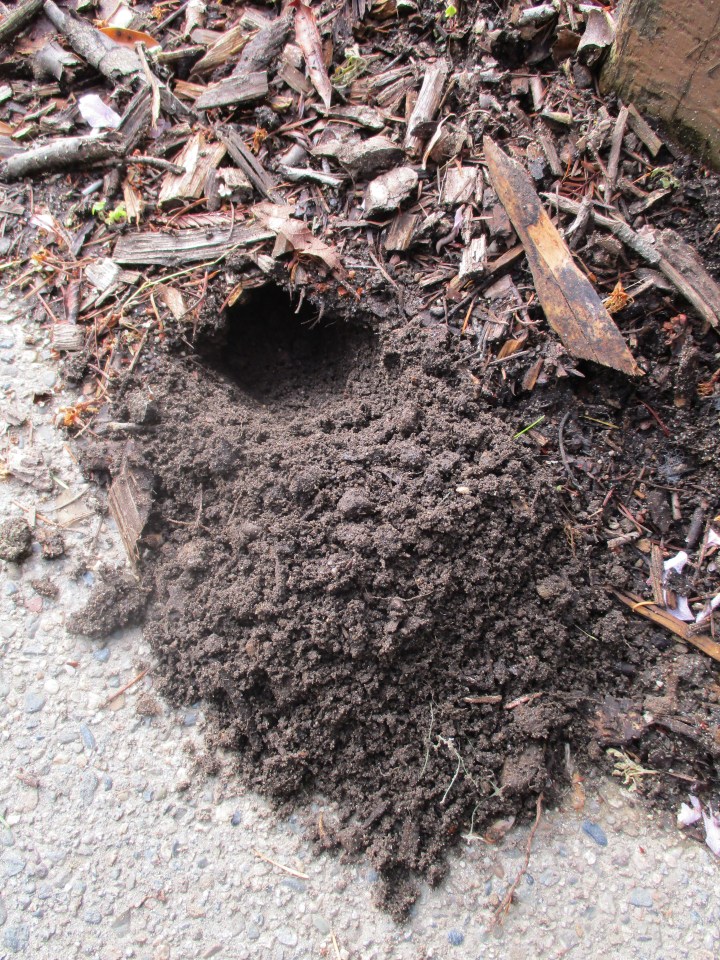
Once the entrance to a gopher run is found under a mound of freshly excavated soil, the entrance, which is typically filled with loose soil, should be excavated back as far as the main run, which extends perpendicularly to the right and left. The main run should be cleared of loose soil.

Each of the two traps can then be set and gently placed within the main run in each direction. A trap should be held by the spring end so that the claws and lever extend into the run. Wires attached to the spring end of the traps are easier and safer to pull the traps out with later, instead of digging the traps out. These wires can be attached to a stake to make them easy to find later.

The entrance hole should then be buried. Air circulation from outside will prompt the gopher to collect loose soil to plug the hole, and push the loose soil ahead, springing the trap prematurely.

The gopher within may not be interested in using the same entrance to expel soil, but will likely use the same run. Two traps are used because there is no way of knowing which direction the gopher will approach from. The unfortunate gopher can be removed in a day or so; so that the traps can be set into another run where fresh excavation has been observed.
SQUIRREL!

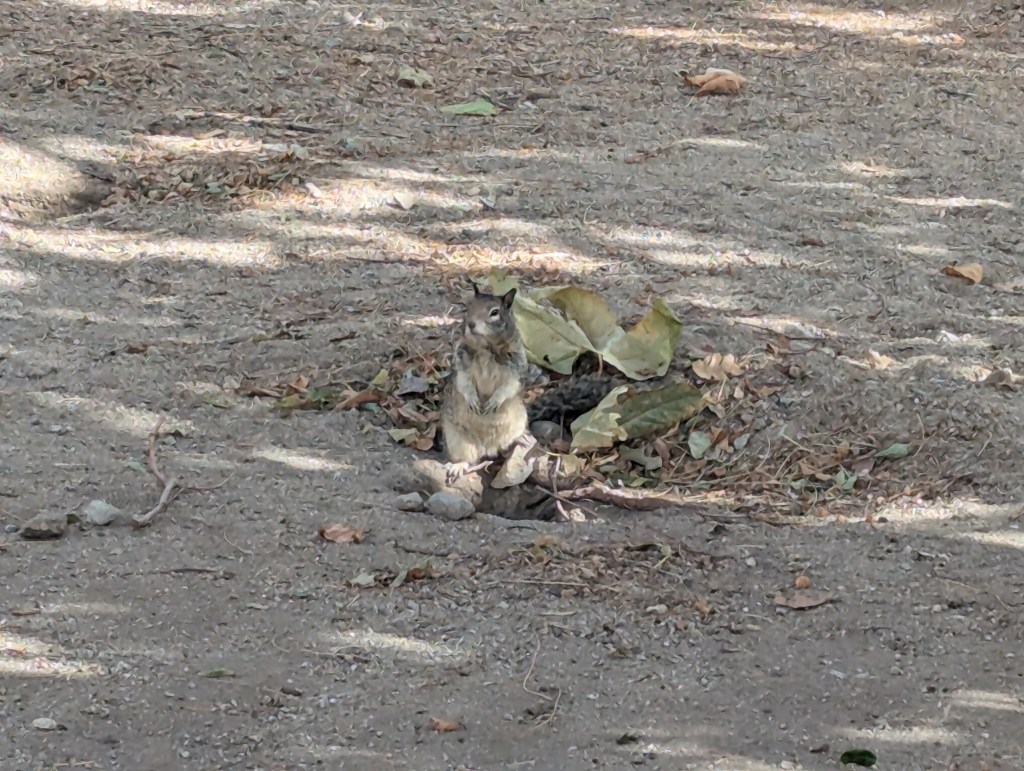
This is no ordinary squirrel. It is likely a ground squirrel, since, as such a designation and its presence on the ground suggest, it likely lives in the ground. That divot on the ground in front of it seems to be a burrow, presumably where it lives. It seems to be rather plump for a ground squirrel. Perhaps it could be a common squirrel who lives on or under the ground because it is too plump to live in trees. I have no idea. We did not get any more acquainted than necessary for me to get this picture from a significant and what I considered to be safe distance. Although a squirrel like this could inflict major injuries, I doubt that it can move very fast. It reminds me how fortunate that we do not contend with such large rodents at work. Gophers are small but very destructive to the vegetation within our landscapes. I do not want to know how much damage this squirrel or whatever it is is capable of. It must consume a considerable volume of roots, foliage or whatever it wants to eat. Supposedly, such squirrels, whether in trees or in the ground, are not as destructive as gophers, but I do not know what to believe. I suppose that some wildlife is more obviously worse. Fortunately for us, deer avoid our landscapes, though we could do nothing to exclude them. No one knows why. Much larger herbivorous wildlife that inhabit other regions, such as the Pacific Northwest are more voracious than deer. I can not imagine the extent of damage that just a single moose is capable of. Nor do I know how such wildlife can be excluded from landscapes. It seems to me that a moose can probably go wherever it wants to.

Horridculture – Rocky XXIV . . . or XXV . . . or XXVI . . . Oh, I can not count them all.

another sequel

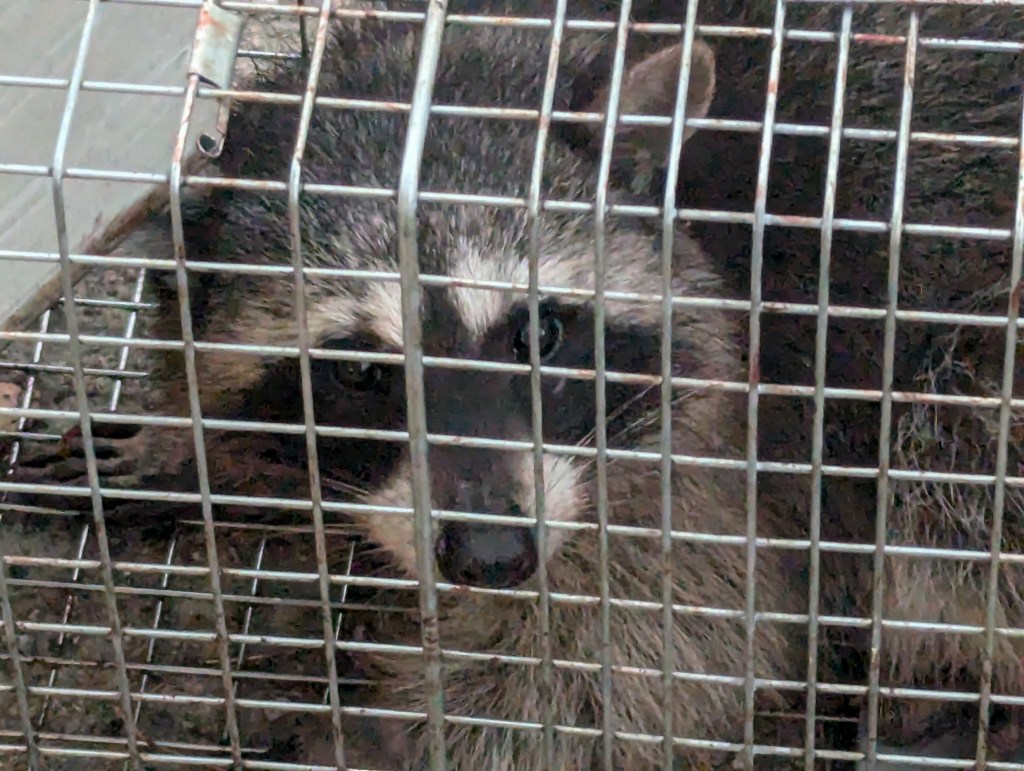
Winters are not very cold here. Otherwise, I might have assembled a fur coat. Instead, relocation of furs has been more practical than utilization. Besides, without exception, all were already in use when I encountered them. Actually, they were not relocated merely because I had no practical use for them, but, more importantly, because relocation was significantly less inconvenient to those who were wearing them at the time. Of course, it was not totally convenient either. That was sort of the objective. The inconvenience of relocation is a deterrent to those who wear the furs, who identify as racoons. They are unwelcome here. I realize that they eat mollusks and rodents; but neither mollusks nor rodents are problems here. I do not grow much vegetation that mollusks find to be appealing. Heather the kitty who identifies as a feline person is too proficient at deterrence of rodents to have use for any assistance. Actually, Heather is one of the two primary reasons that it is necessary to relocate raccoons. Rhody is the other. Unfortunately, raccoons have potential to become impolite or even dangerously hostile with my canine and feline housemates. Relocation does not permanently eliminate them, but it annoys them enough that, by the time they return, they are much more careful about avoiding us and our space. Also, their impressionable associates seem to learn from their examples. Because they can not be relocated off of the property, they go less than a mile away. So far, that seems to be sufficient. I do not know how long it takes for them to return, but I suspect that it takes quite a while. After this most recent relocation, I do not expect another relocation to become necessary until members of the most recent generation mature enough to become a problem.

History of Heather

Heather

Heather just became a bit less mysterious. We now know why she came here to work as a mouser, and protect fruits and vegetables from rodents. A neighbor, prior to relocation to Hawaii, left her and a few other kitties with another neighbor who intended to find new homes for them. Another kitty who already lived at the second home was so inhospitable to her that she stayed outside most of the time, and eventually disappeared. She was assumed to have been a victim of coyotes. All but one of the relocated kitties, who happens to be Heather’s mother, were assigned to new homes. Heather’s mother and the original kitty of the household then relocated a few miles away. It is impossible to know where Heather was between leaving her previous temporary home and arriving here. She could have been here longer than anyone was aware of. Because we knew nothing about her when she arrived, she likely got more vaccines than she needed. She was already spayed, although not provided with a chip. Ultimately, she seems to be happy here, and has been very proficient with dissuading rodents. I am pleased that she is happy and decided to stay.

Heather’s Mother

Heather

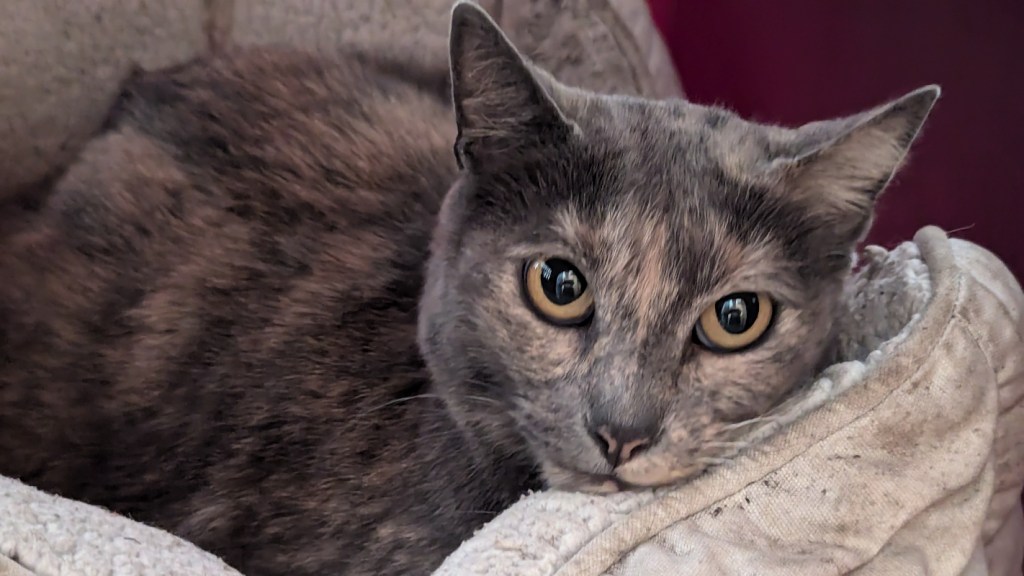
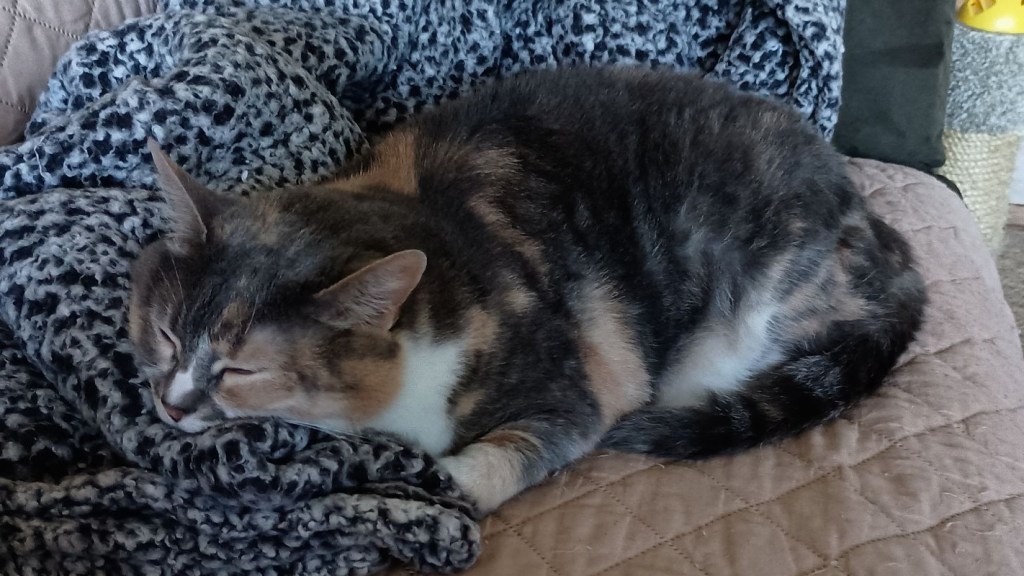
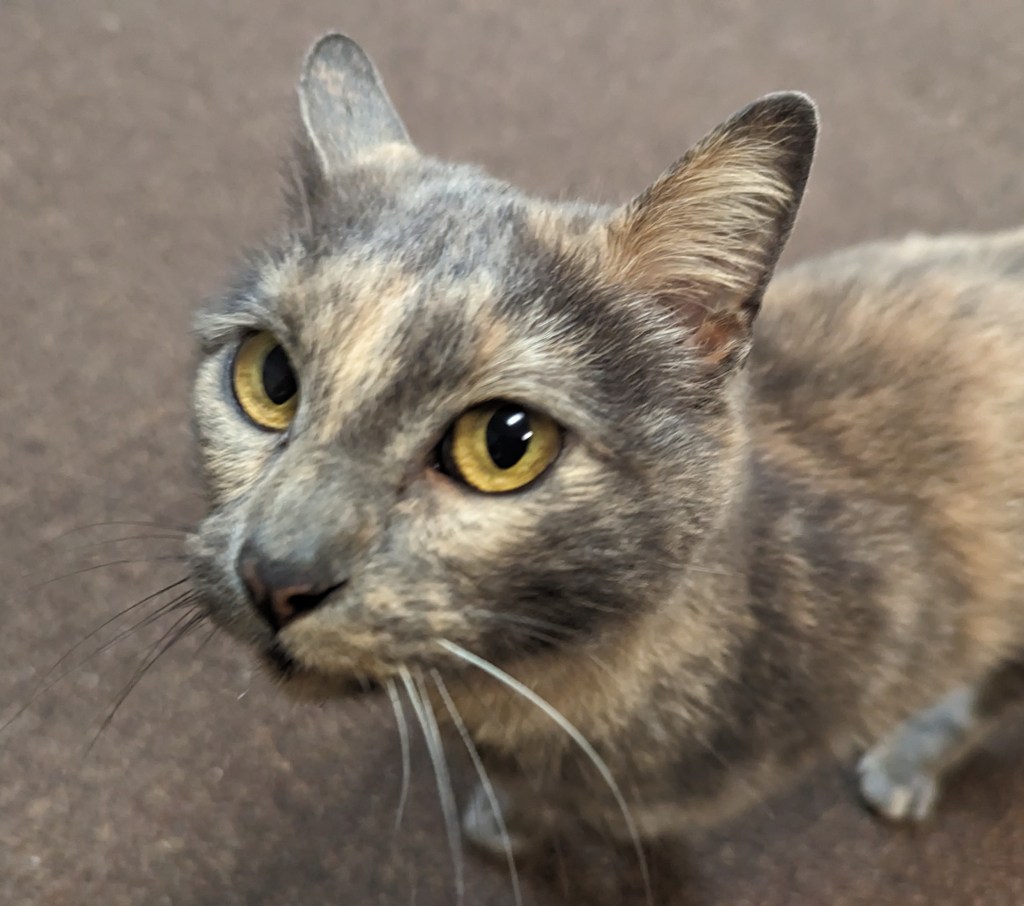
Heather is not related to Calluna vulgaris. She is feline, since she is a kitty, who is employed here as the only mouser within the maintenance shops. We did not hire her as such. She merely assumed the job. At the time, after Darla retired, we were in desperate need of a mouser. We do not know where Heather came from, and she can not tell us. She seems pleased to remain employed here. We are pleased to be without rodents.

Her technique is as mysterious as her origin. No one knows how she prevents rodent infestation. She does not seem to catch any. Instead, she seems to passively repel them, as if rodents vacated and will not return because of here presence. Skunks, opossums and raccoons are also notably absent since her arrival, and the raccoons were vicious.

Heather temporarily lived within the nursery when she first arrived and decided to stay. Shortly afterward, and after being named, she decided that she preferred the automotive shop across the road. If she had settled there originally, she might have gotten a lame name, such as Lexus, Tesla or Mercedes. Now, she is quite established here, and lives in a luxurious penthouse in the automotive shop mezzanine above the locksmith shop. She does not seem to venture away from the safety of the shop buildings or the surrounding fenced yard. She has several friends here, including Rhody.

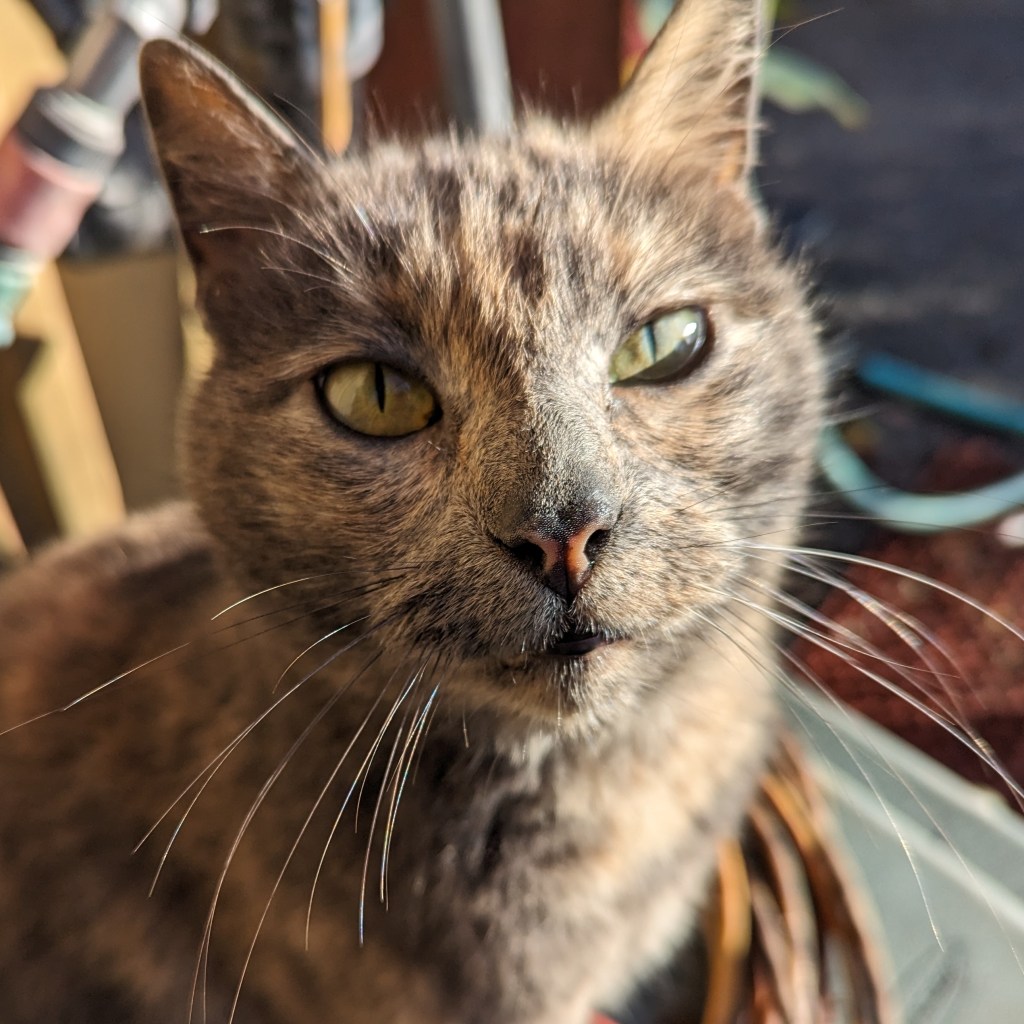
Fortunately, Heather does not seem to need anything more than she can figure out on her own. I know nothing about providing for a kitty. She does not seem to mind at all. Actually, she seems quite happy here, and purrs when petted. She seems to enjoy looking cute for those whom she meets for the first time, and for pictures such as this.

Heather (not Calluna vulgaris)

Heather – rodent mitigation specialist

Heather is the new rodent mitigation specialist. She has been here for quite a while. We have been unable to determine where she originated from. Unless or until we do, she can stay here to dissuade rodent incursion. She has been remarkably effective with her expertise. None of the formerly bothersome rodents have been observed since her arrival. The seedlings and small perennials that the rodents had been eating previously have incurred no subsequent damage.

This will take some getting accustomed to. I am not particularly familiar with kitties. I give her a can of food in the evening, with dry food available at other times. She has a sheltered bunk out in the nursery, but might want to come into the foyer when the weather gets frosty or rainy. If so, I may put a warming pad for kitties under her bunk, since it will be close to an electrical outlet. She does not seem to be too demanding yet, but I have no idea how kitties operate. She could get demanding later, and because she is a kitty, I can not argue with her.

She does not have much to say though. She meows when hungry. When petted, she makes that weirdly distinctive purring sound that kitties make, but mysteriously, without actually speaking. She was quite fond of Rhody before people could get close to her, and seemed to enjoy how he chewed her head, but now that people regularly pet her, she avoids Rhody, and actually hisses at him if he wants to chew her head. She could not tell us what her name is, so, after some minor deliberation, we named her Heather.

Notice her tail.

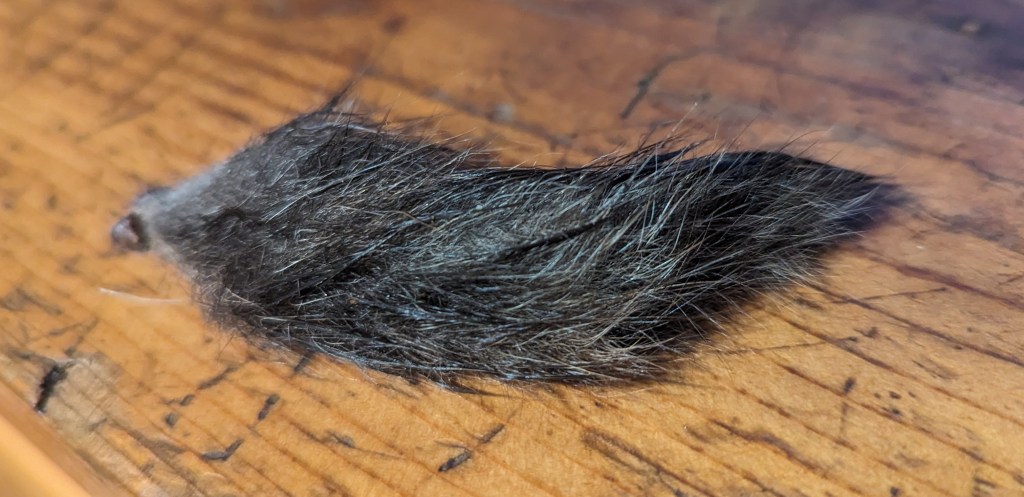
We do not know exactly how long Heather has been here, but after her arrival and prior to her socialization, we noticed that the tip of her tail was kinked. As she became socialized and pettable, we noticed that the tip of her tail beyond the kink seemed to be necrotic, and felt like an old fashioned rabbit’s foot keychain. A few days later, the kinked tip was no longer a concern.

tippy toupee

New Mouser II

Does a kitty even respond to a name?

The New Mouser seems content to stay with us here. Actually, she seems to be a bit too content. She has been coming inside, where some on staff do not want her to be. Darla, her predecessor, was never so presumptuous.

Now that she is so comfortable with people, I can get here into a kitty transportation device and take her to a veterinary clinic to determine if she has a chip, and to get her inspected. If necessary, and if she stays here, we may need to get her spayed. (We only assumed her gender according to her color pattern. She may need to be neutered.) I suspect that she was dumped here while young and before getting spayed.

If she stays here, she should get a name. The crew has not agreed on one yet, and several options remain. ‘Snickers’ seems to be the favorite option, although I dislike it. I prefer ‘Holly’. ‘Heather’ is not bad, and seems to suit her better. These are some others that I considered, only to determine that I am not so totally keen on them:

Rhoda – This confuses Rhody.

Erica – This is short for Ericaceae, which is the family of Rhododendron. It is not so bad.

Azalea – This is another type of Rhododendron. I dislike it for this particular kitty.

Lyona – This is short for Lyonothamnus floribundus ‘Asplenifolius’. I am unimpressed.

Leona – This is short for Leonotis leonurus. I am still unimpressed.

Typha – This is Latin for cattail, but sounds like punctuation or a fever.

Myrtle – This is a ‘no’.

Lily – This is for a white kitty.

Rose – This is for a prettier kitty

Daisy – This is for some other kitty that is not this one.

Violet – No.

Flower – No.

Blossom – No.

Aster – Jasmine – Ivy – Poppy — No – No – No and No.

New Mouser

Rodents departed when she arrived.

Darla, the former mouser here, relocated to a more domestic lifestyle in Santa Clara during the unusually stormy weather and flooding last winter. She is getting rather elderly, and has earned a comfortable retirement. Unfortunately though, rodents of all sorts arrived immediately after her retirement.

Mice and rats infested the buildings while gophers and ground squirrels infested exposed ground outside, including the recovery nursery. Rodents of some sort ate the tops off a few of my banana plugs, and chewed the base of my cup of gold vine. Another chewed into a bag of seed for mixed erosion control vegetation, and made a mess of it.

Then, the rodents seemed to leave as suddenly as they arrived. Even tree squirrels became scarce. At about that time, we noticed, on rare occasion, what seemed to be a stray kitty. I thought that the kitty must live nearby, and would eventually return home. It avoided us, but never completely left the area for long.

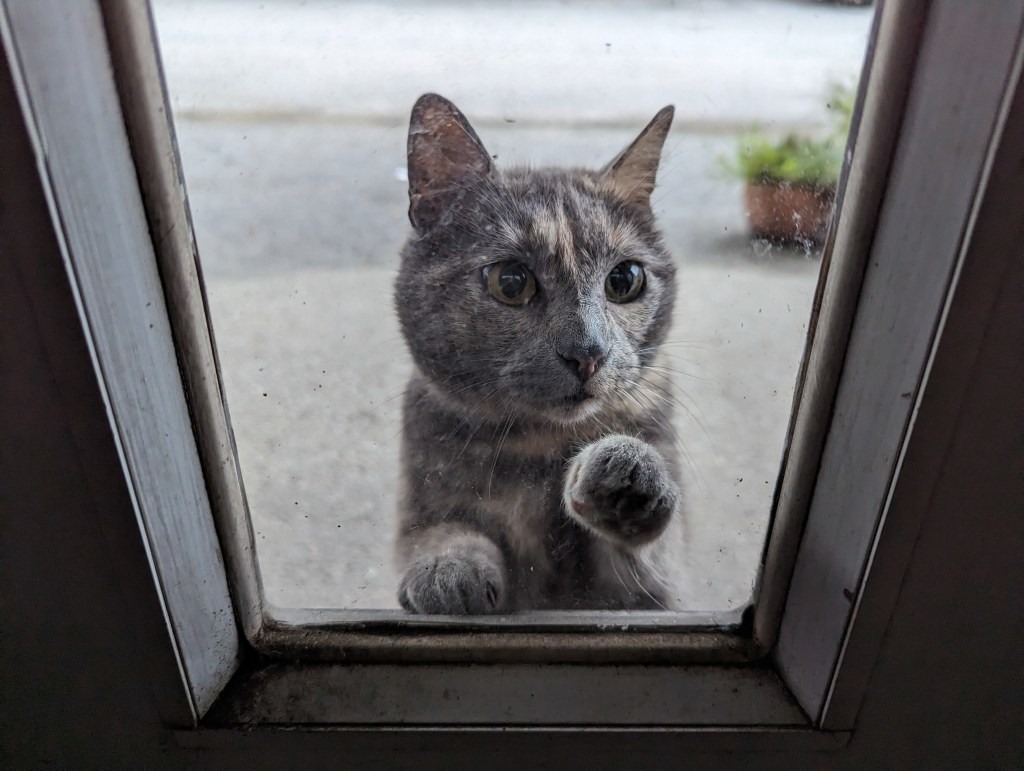
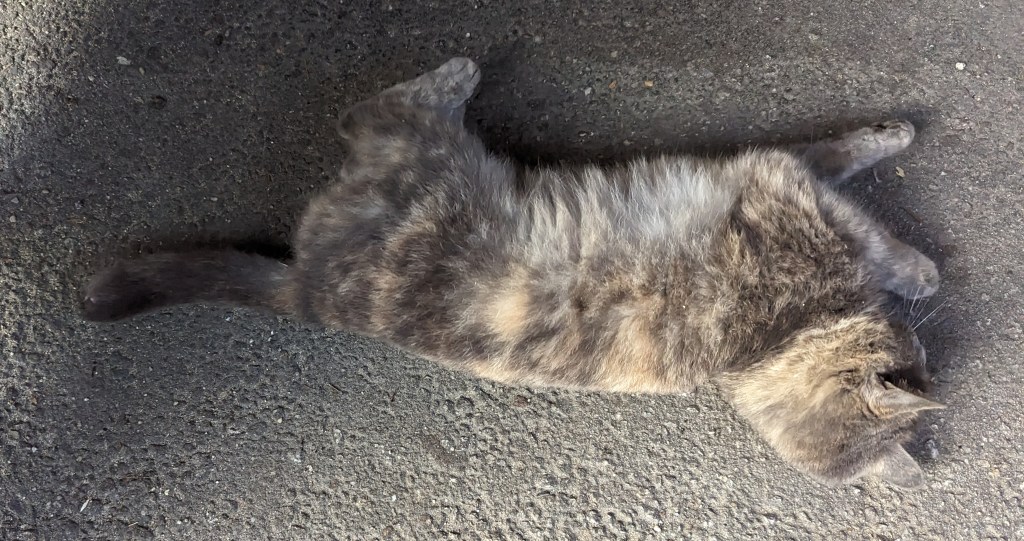
The kitty appears to be rather grungy because of its color pattern. I recently learned that this particular color pattern is known as tortoiseshell, and that almost all kitties with this tortoiseshell color pattern are female. I hope that she is not offended if my assumption of her gender as female is inaccurate. She is quite small and lean, with a thin tail that is kinked at the end. I intend to get a better picture of her to share with neighbors, just in case someone is missing her.

A bit more than a week ago, this kitty seemed to become a bit more interested in human activity here. For the first time, I offered her a bit of something that she might enjoy. Because there was no kitty food here, I gave her a small can of tuna from the galley. She enjoyed it so much that I got her some real kitty food. She now comes for it to the meeting room daily after the crew leaves. I have been able to get a bit closer to her daily, and petted her briefly for the first time a few days ago. She purrs quite loudly when petted, although she also seemed to be rather nervous. She prefers interaction with Rhody, who now chews her ears. I invited her into the hallway because it gets somewhat cool in the evening, but she does not want to come inside.

Because I believe that her presence here convinced the rodents to relocate, I would prefer her to stay if she has no other home to return to. If she only wants a bit of food from me, this could be a mutually beneficial situation. If so, we should determine what her name is.

Mousers

Kitties are very proficient with mind control techniques.

Rodents have become a problem at home without Darla the mouser kitty. I do not know if Darla actually caught many rodents, or merely deterred them from inhabiting her territory. It is irrelevant. The absence of rodents was more important. Now that she has gone to live a domestic lifestyle in Santa Clara, rodents of various types are damaging some of the vegetation within the nursery, particularly young perennials.

A pair of feral kitties are supposed to be relocating to our facility. They do not need to stay within the main building, although they will have adjacent shelter. I do not care how they intend to eliminate rodents and prevent them from returning. I only care that they do so. If they are half as effective as Darla was, I will be pleased.

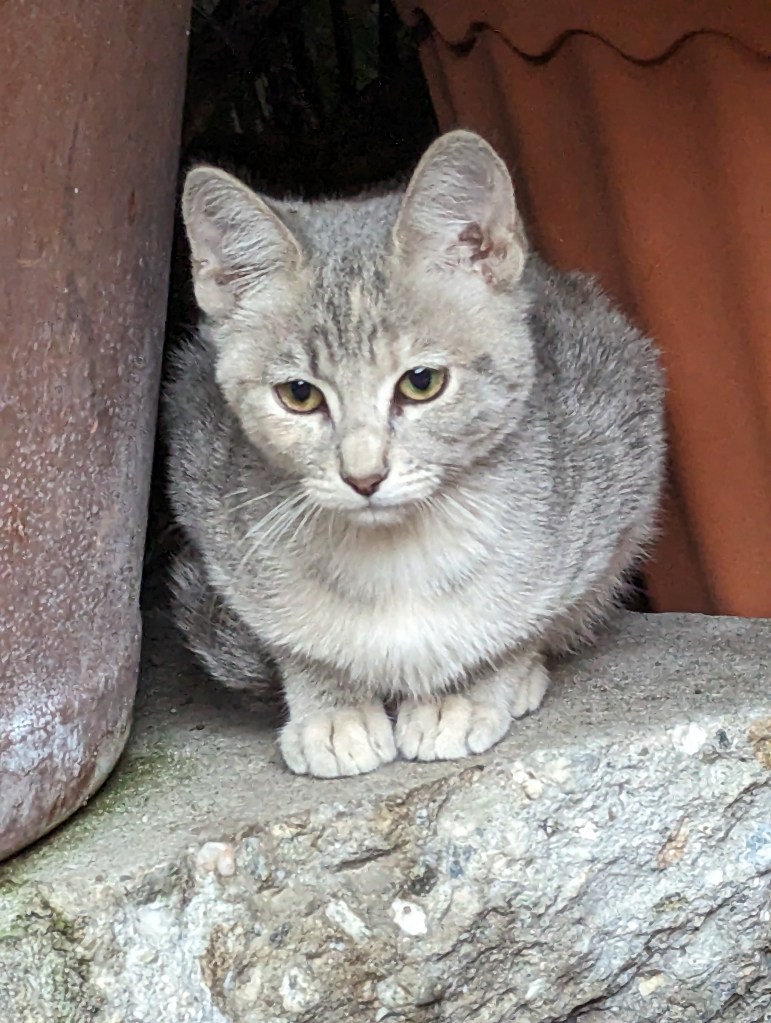
Brent, my colleague down south, recently procured three little kittens, supposedly to work as mousers like Darla did. They seem to be too friendly and playful though. I can not imagine them catching rodents. They certainly do not seem like the sort of kitties who rodents would fear. They are too playful and too nice.

If rodents avoid situations that are occupied by kitties, then any kitty could be effective. If rodents must be exterminated, then more diligent mousers would be necessary. I have no idea how instinctive mousing is for kitties. I suspect that it is different for each kitty, which is why some are better mousers than others.

At least these three little kittens are delightful. I mean, who would not appreciate such cute kitties in the garden? I regularly remind them that I am none too keen on kitties, but like all other kitties whom I have ever met, they do not care. They know how to get me to do whatever they demand.

Regardless of how weird kitties can be, they always seem to be dangerously cute.

Horridculture – Gophers!(?)

Who took the Louisiana iris?!

This is more infuriating than the rat or rats who ate the tops off of my rare young banana trees. I do not actually know who the culprit is, but can only guess that it is a gopher or a few gophers. Initially, I thought that it was someone who intended to pull weeds, but instead pulled the beloved Louisiana iris. All I know is that the iris were growing well, and are now completely gone!

These Louisiana iris were a gift from Tangly Cottage Gardening in Ilwaco, so were extremely important to me. After bringing them here at the end of last winter, I split and groomed them, and plugged them into a single row that was about thirty feet long. This row was on the edge of a pond, where I hoped they would form a network of rhizomes to help contain the shifting mud. It was an ideal situation. I watched them grow through the year, and expected them to bloom next season. They were totally awesome!

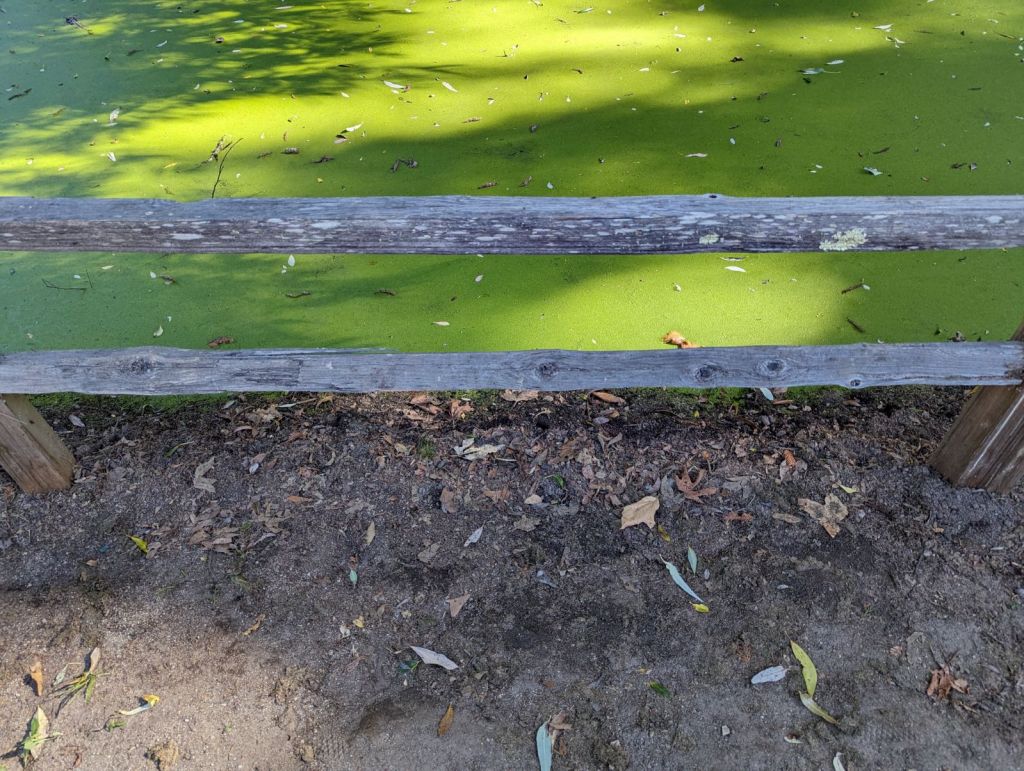
There is no indication that they were pulled or dug. Nor is there any indication that they were pulled downward from below. Although I found a few gopher tunnels, such tunnels were not sufficiently extensive to reach all of the rhizomes of the Louisiana iris.

Only four very small plugs remained. I dug and canned them to protect them from whomever or whatever took the rest of them. Although they can grow and multiply very efficiently, they will not replace the thirty foot long row for several years. Besides, even when they do proliferate, I do not know if I can safely install them back onto the edge of the pond. Without knowing what happened to the last colony, I can not protect a subsequent colony from the same fate.