What Is This?!

I have no idea what it is, but I intend to grow it.

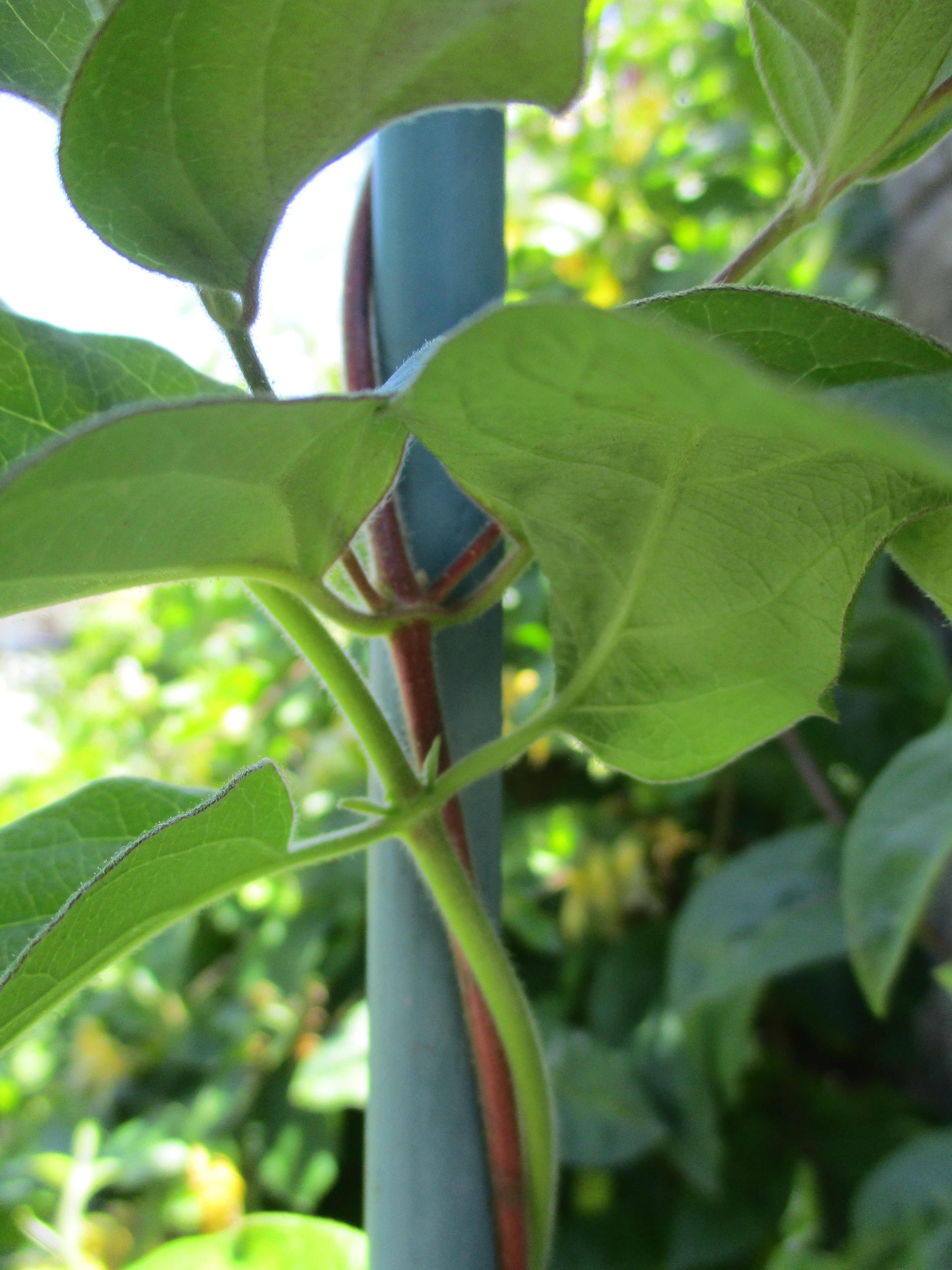
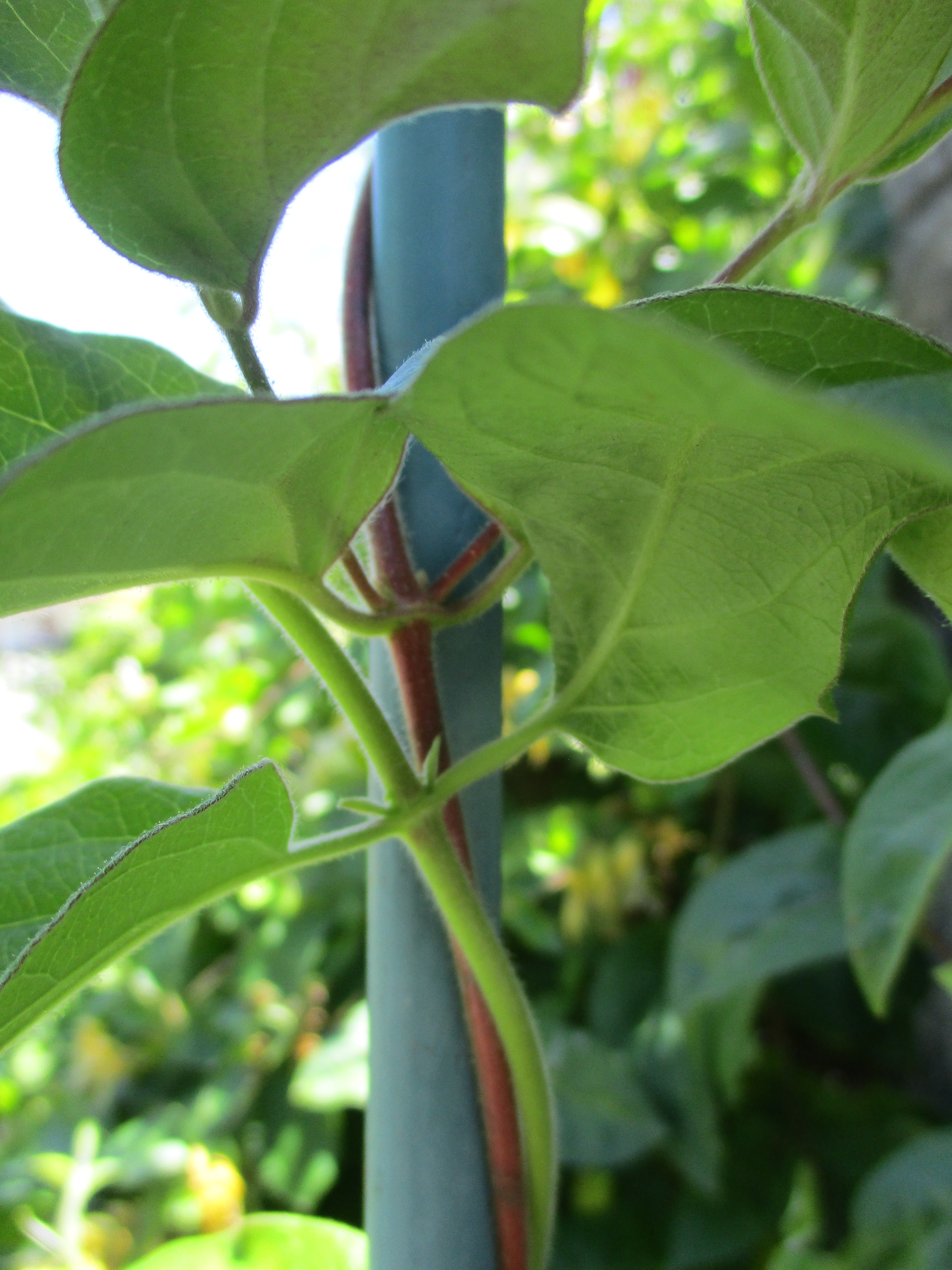
It is an evergreen vine that seems to sprawl over other vegetation rather than actually climb it. It lacks tendrils or other means with which to hold onto its support. It does not even seem to wrap around its support. Nor does it seem to get very high above the ground. It just sort of sprawls.

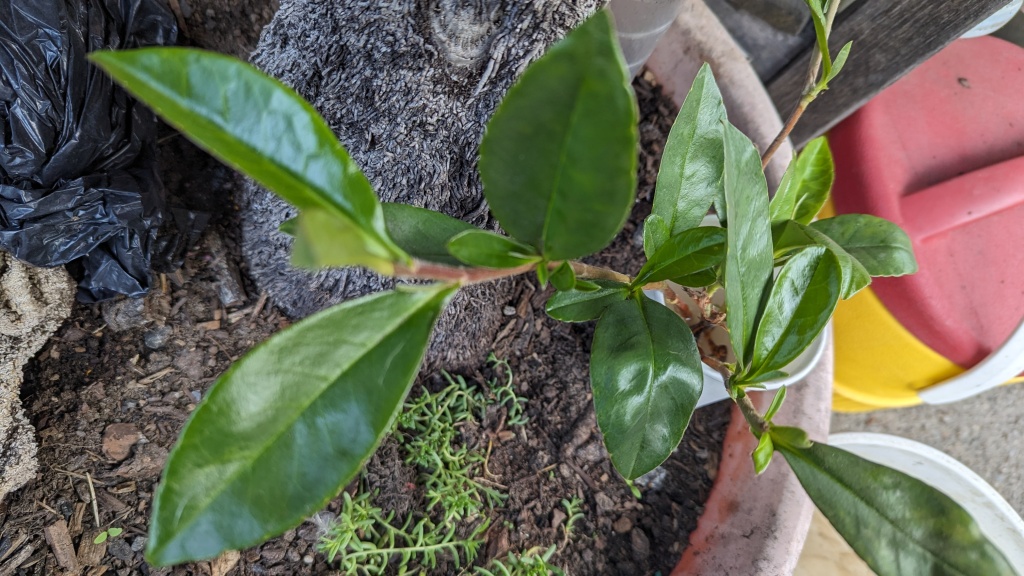
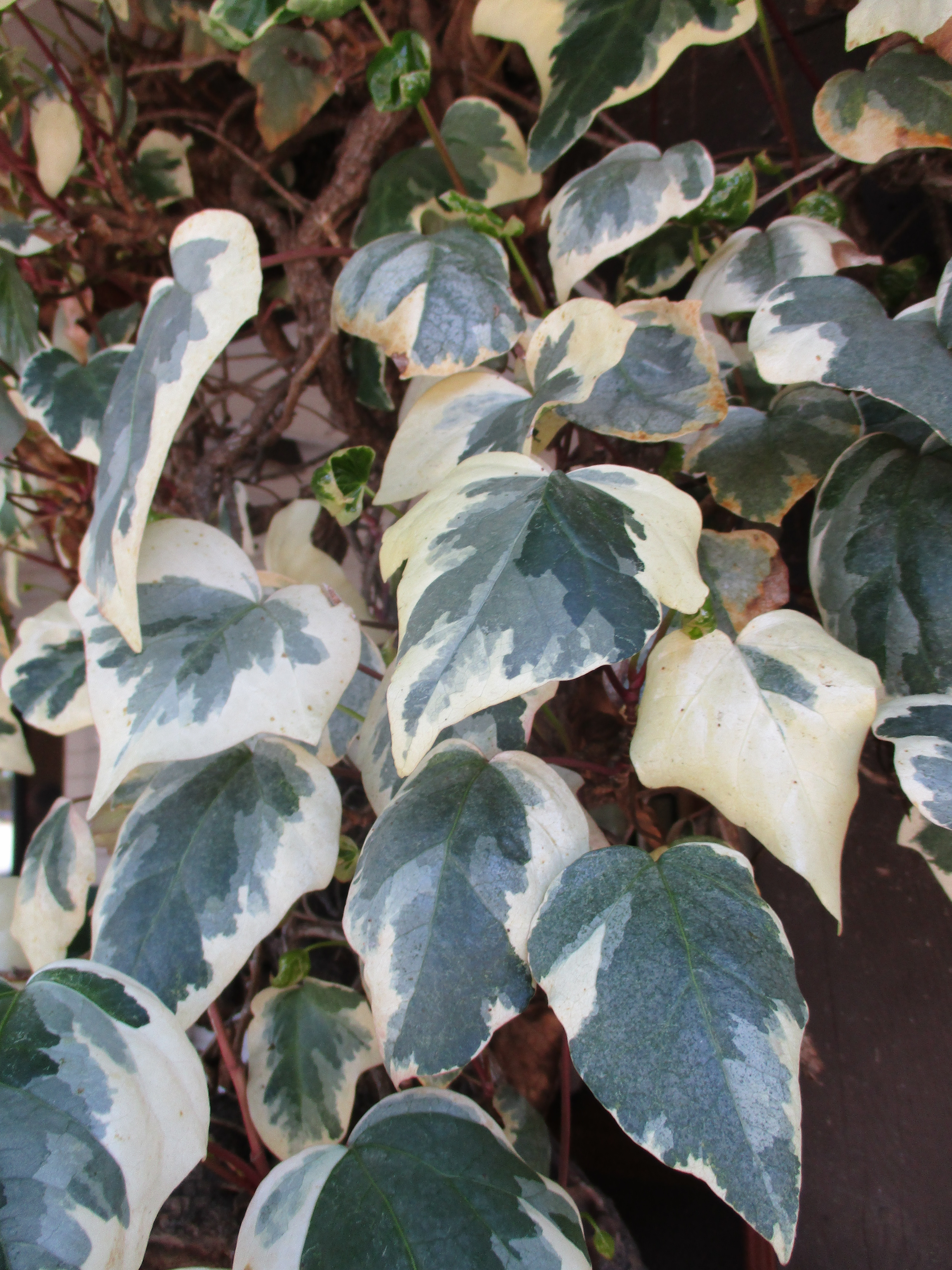
Its glossy leaves are rather simple, just like in the picture here.

Its bright yellow and staminate flowers, if I remember correctly, seem to resemble those of Saint John’s wort, but are a bit wider.

This vine, again if I remember correctly, seemed to be more popular years ago. I do not notice it much anymore. I can not remember when I last saw it in a nursery, or if I ever saw it a nursery. The few specimens that I am aware of inhabit old landscapes that have not been renovated in decades. I got these bits from where they were regenerating after their earlier removal from an old landscape.

Now that I have these bits, I intend to grow them, in order to get familiar with the species. I hope that I can eventually identify it. It should not be so difficult for something that had formerly been popular, or at least common enough for me to recognize it as something that had formerly been familiar.

I do not often encounter a species that I can not identify, and I even more rarely admit to it. If I do not recognize a species, I can typically recognize the genus, or at least the family, and then key it out. For this seemingly simple vine, I can not identify its family. I asked Brent, which I almost never do. He recognized it about like I did, but also could not remember its name.

Fiddle Leaf Fig

Fiddle leaf fig starts out as a clinging epiphytic vine.

What a weird tree! Fiddle leaf fig, Ficus lyrata, is an uncommon but familiar large scale houseplant that we might not welcome into our homes if we knew how it behaves where it grows wild in the lower rainforests of Western Africa. Although it can grow upward from the ground like almost all other trees do, it often germinates and begins to grow as an epiphyte, within organic debris that accumulates in the branch unions of other trees. While suspended, it extends roots downward. Once these roots reach the forest floor, they develop into multiple trunks that overwhelm and crush the host tree as they grow.

The bold foliage is typically dark drab green, like the shades of green that were so popular for Buicks in 1970, with prominent pale green veins. Individual leaves are about a foot long and potentially nearly as broad at the distal (outward) ends, often with randomly wavy margins. Like fiddles, they are narrower in the middles, or actually more often narrower at the proximal (inward) ends. When pruning becomes necessary, the caustic sap should be soaked from fresh cuts with paper towels so that it does not drip and stain.

Vines Are Aggressive Social Climbers

English ivy can cling to anything.

Regardless of how appealing many of them are in home gardens and landscapes, vines are flagrantly exploitative. They rely on shrubbery, trees or anything they can climb on for support. As they reach the tops of their supports, they extend their foliar canopies above. Vines have no reservations about overwhelming and maybe killing their own supporters. 

Vines climb with clinging roots, twining stems, tendrils, twining leaves, or even thorns or spines. Some vines are annuals or perennials. The most aggressive or destructive sorts are woody plants. Some creep along the ground while young, and then climb when they find support. Some mature to support their own weight as they lose their original support. 

English ivy and Algerian ivy, in their juvenile forms, can be practical ground cover plants. However, when they encounter shrubbery, trees or buildings, they become clinging vines that can overwhelm their supports, and ruin infrastructure. As they mature, clinging vines evolve into shrubbier and obtrusively bulky adult growth that blooms and produces seed. 

Boston ivy, which incidentally is not actually ivy, is more practical as a clinging vine than the other ivies. It does not grow as ground cover anyway. Nor does it develop bulky adult growth. However, it also has limitations. Because it attaches to its supports with clinging tendrils, it is only practical for surfaces that it can not wreck, such as reinforced concrete.

Bougainvillea is a delightful and shrubby vine. It neither clings to surfaces nor grips onto support by twining. It simply generates long and vigorous canes that eventually lie down onto its surroundings. Long thorns help to anchor these canes in place. Canes should be satisfied with trellises, but sometimes mingle with shrubbery or trees, or spill over fences. 

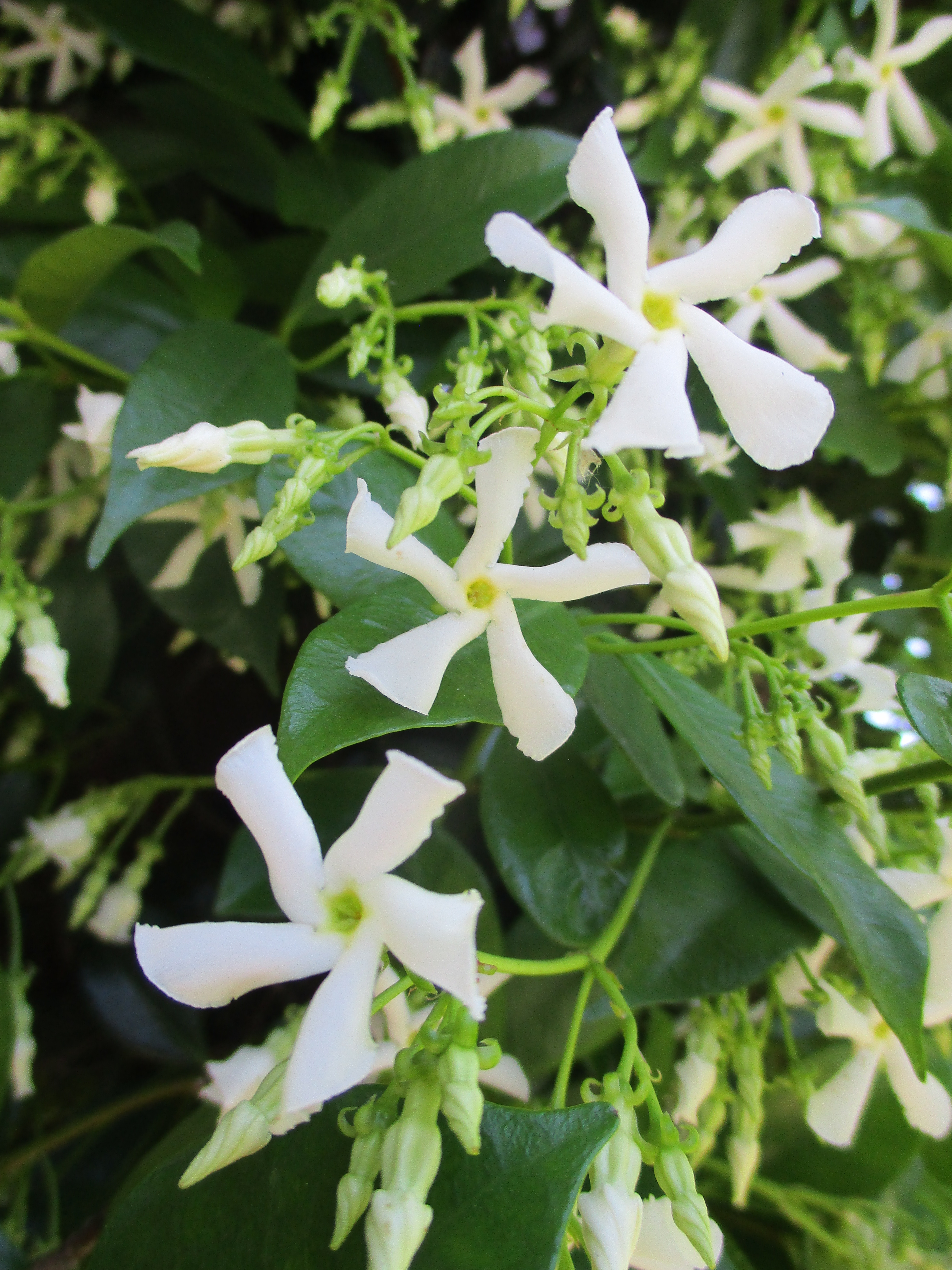
Carolina jessamine, lilac vine and mandevilla climb with twining stems, but are relatively docile. Star jasmine, which performs well both as a ground cover plant and as a climbing vine, can crush flimsy lattice with its twining vines. Wisteria might crush substantial trellis beams. Passion flower climbs with wiry tendrils, but can be overwhelmingly voluminous. 

Woody Vines Need Constant Attention

00812thumb
Many woody vines have no limits.

Grapevines that were not pruned aggressively enough last winter are tangled messes by now. Many grapevines that were pruned properly are tangled messes as well. That is their nature. Woody vines like grapevines grow rapidly and vigorously. They rely on other plants for support, and do what they must to get to the top. Woody vines are not concerned about the plants that support them.

Woody vines climb structures also. Some cling to stucco and siding with aerial roots or modified tendrils (holdfast discs), that ruin paint and promote decay. Woody vines with twining stems wrap around posts and beams, and then crush them as they grow. All sorts of vines can dislodge shingles, roof tiles, gutters, downspouts or window screens. Some sneak into basement or attic vents.

Even relatively docile woody vines can get out of control fast. Star jasmine performs well as ground cover, but can climb more than twenty feet up trees if neglected long enough. Pink jasmine, lilac vine and Carolina jessamine are tame enough for lattice, but get overgrown on top if not pruned down. American wisteria is much smaller than Chinese wisteria, but can still strangle small shrubs.

Woody vines are certainly worth growing. Chinese wisteria, autumn clematis, honeysuckle, bougainvilleas and various trumpet vines all have their attributes. They just require diligent maintenance and serious commitment. Most need more than just winter pruning. Some of the more vigorous sorts may need specialized pruning a few times annually. They also need serious accommodation.

Trellises and supportive structures must be resilient to the destructive forces of particular woody vines. For example, Chinese wisteria deserves a trellis or arbor of posts and lumber that its heavy vines will not crush. Boston ivy can climb bare concrete retaining walls, but must not attach to painted or wooden surfaces. No vines should climb on roofs, chimneys, vents, gutters or utility cables.

Just as importantly, woody vines require enough room to grow without crowding or climbing into trees or other plants.

Vines Do Not Replace Hedges

90619thumbUrban homes are innately close to other urban homes. Newer homes are even closer to each other than older homes are, and are more imposing. Establishing or maintaining privacy can be a challenge, especially for high windows in narrow spaces. Even though home builders prefer to place windows strategically, some windows invariably face into neighboring windows or gardens.
Trellised vines are a popular but rarely effective remedy to this dilemma. The narrow spaces between houses and below the eaves can be dark enough to inhibit growth. Consequently, vines are typically sparse or bunched on top of their trellises. Their most vigorous growth is often awkwardly long shoots trying to find a way out of the shade. Vines are not exactly easy to work with anyway.

There are of course exceptions. With regular maintenance, some finely textured vines that are reasonably tolerant of shade can be effective for downstairs windows. (Upstairs windows are out of reach.) If shorn very regularly, English ivy on lattice works almost like a hedge. (Ivy does not fill in on more open trellises.) Trellised star jasmine is even better, but needs more depth (front to back).

Yet, with few exceptions, big evergreen shrubs or small evergreen trees that tolerate shade are more practical. They support their own weight, so only need to be pruned for confinement and clearance from the houses that they provide privacy for. Some shrubs and trees should be pruned to stay at the desired height, so that superfluous upper growth does not shade out lower growth.

The various podocarpus are some of the better small trees for narrow spaces between houses because they are are somewhat tolerant to shade, and are so easily pruned into shape. Some of the taller and more upright pittosporums work nicely in sunnier spots. Arborvitae tolerates more shade, and naturally stays narrower. Since some of these better options might grow slowly, they can be planted with faster growing shrubbery that can be pruned back, and eventually removed as the preferred plants mature.90619

Vines Are Naturally Social Climbers

70906thumbIf more of us knew how vines compete in the wild, fewer of us would grow them in our home gardens. Understory plants that are satisfied with the sunlight that reaches them through a higher forest canopy are the most passive. Taller trees compete for sunnier exposure above. Vines are the most aggressive as they climb and overwhelm trees to get the best exposure on top of everything.

English and Algerian ivies happens to be among the more efficient of aggressive vines. While young, juvenile growth creeps along the ground searching for victims. Once it encounters something to climb, the stems develop aerial roots so that they can climb vertically. Once the climbing stems reach the top of the support, they develop shrubby adult growth that blooms and produces seed.

In home gardens, ivy is a popular and practical groundcover. However, if allowed to climb as a vine, it can root into walls and ruin paint. Even if the vines are removed, the unsightly aerial roots remain. The shrubby adult growth can overwhelm and even shade out and kill the trees or shrubbery that originally supported it. If it climbs onto a roof, it can accumulate debris and promote rot.

Creeping fig is even nastier. Its network of clinging vines grafts together as it grows, and then strangles the supportive trees as they continue to grow within the constrictive network of grafted stems. Yet, it and Boston ivy work nicely and harmlessly on concrete freeway sound-walls where their aggressive behavior is a major advantage, and their clinging aerial roots are not a problem.

Wisteria and red trumpet vine are considerably better behaved, but even they will crush lattice and anything else they wrap around. If they get into trees, they quickly grow out of reach. They may seem to be more appealing than the trees that they climb are, but can strangle and kill substantial limbs. Even without aerial roots, red trumpet vine clings with holdfast discs that damage paint.

Even though many vines are practical for home gardens, their personalities need to be considered. Star jasmine and honeysuckle can either grow as groundcover or as climbing vines. They can get big, but are not often destructive. Potato vine works nicely on fences, but gets aggressive in trees. Carolina jessamine, lilac vine and mandevilla are some of the more complaisant of vines.

Grapes And Vines Of Wrath

70531thumbAnyone can plant a grapevine. With a bit of work, almost anyone can make a grapevine grow. Most who put forth the effort can figure out how to prune and cultivate a grapevine. Yet, grapevines so often get very out of control. They easily escape confinement, overwhelm nearby plants, climb into trees and overburden their trellises or arbors. It is easy to forget how aggressive they can be.

The primary problem with aggressive vines is that they require pruning for confinement. The most aggressive vines need the most aggressive pruning. Grapevines can actually be quite docile if pruned properly. Chinese wisteria and red trumpet vine need even more aggressive pruning, and will never be completely tamed. It is important to know the personality of each vine in the garden.

The secondary problem with aggressive vines is they are expected to conform to unrealistic confinement. Small trellises that are lower than about eight feet, including common gate arbors, spires and obelisks, are really only big enough to accommodate docile small vines like clematis (hybrid), American wisteria, well pruned mandevilla and vining annuals like morning glory and pole bean.

Chinese wisteria, large types of bougainvillea and other big and heavy vines need big and stout trellises or arbors. Lattice will not do. Chinese wisteria becomes entangled with lattice, and then crushes it as the vines expand. Bougainvillea does the same to a lesser extent, but then pulls the lattice apart as the intertwined vines sag from the increasing weight of foliage and growing vines.

Clinging vines like creeping fig and Boston ivy present another problem. They are not interested in trellises or arbors. They do not grab onto support by twining stems or tendrils. They instead cling directly to surfaces with specialized aerial roots that damage paint, stucco or even bare wood fences. Clinging vines should therefore only be allowed to climb surfaces that they will not ruin, such as concrete walls. They are better vines for freeway soundwalls than for home gardens.