Vines Are Aggressive

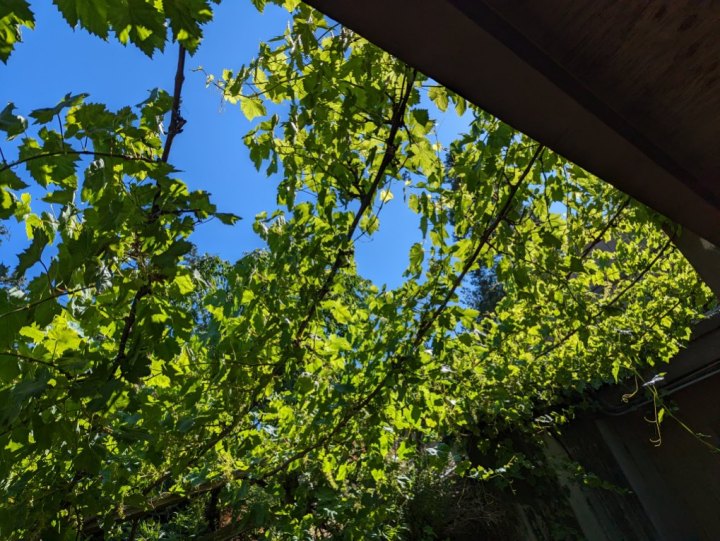
Grapevines need to be tamed.

So many of the vines that we enjoy in our gardens might not be so appealing if we knew how they behave in the wild. Many of their characteristics that are often practical in garden situations are detrimental to neighboring plants in natural settings. If they can get away with it, vines can be just as brutal in our own gardens.

Creeping fig is perhaps the most brutally aggressive of vines. Like many other vines, it exploits trees for support. While it reaches the top of the trees, it wraps the tree trunks with a grafted network of stems that expands as it grows, literally strangling the trees that gave it support. By the time the supporting tree trunks decay, the creeping fig has developed its own self supporting trunk. Algerian and English ivies can do the same.

Fortunately, these vines rarely get such opportunities in garden situations. Nonetheless, they need to be kept out of trees that might otherwise get overwhelmed. Since they attach to the surfaces that they climb by aerial roots, they should not be allowed to climb onto painted surfaces, stucco, or anything else that they can damage.

Boston ivy supports itself by holdfast disks, which it leaves on everything that it gets a hold of. If the vines get removed to paint a wall, the disks remain. Like creeping fig and the ivies, Boston ivy, should therefore only be allowed to climb surfaces that are not likely to be damaged by its climbing techniques. Creeping fig and Boston ivy both happen to be quite practical for freeway infrastructure and sound-walls, but are difficult to accommodate in tame urban landscapes.       

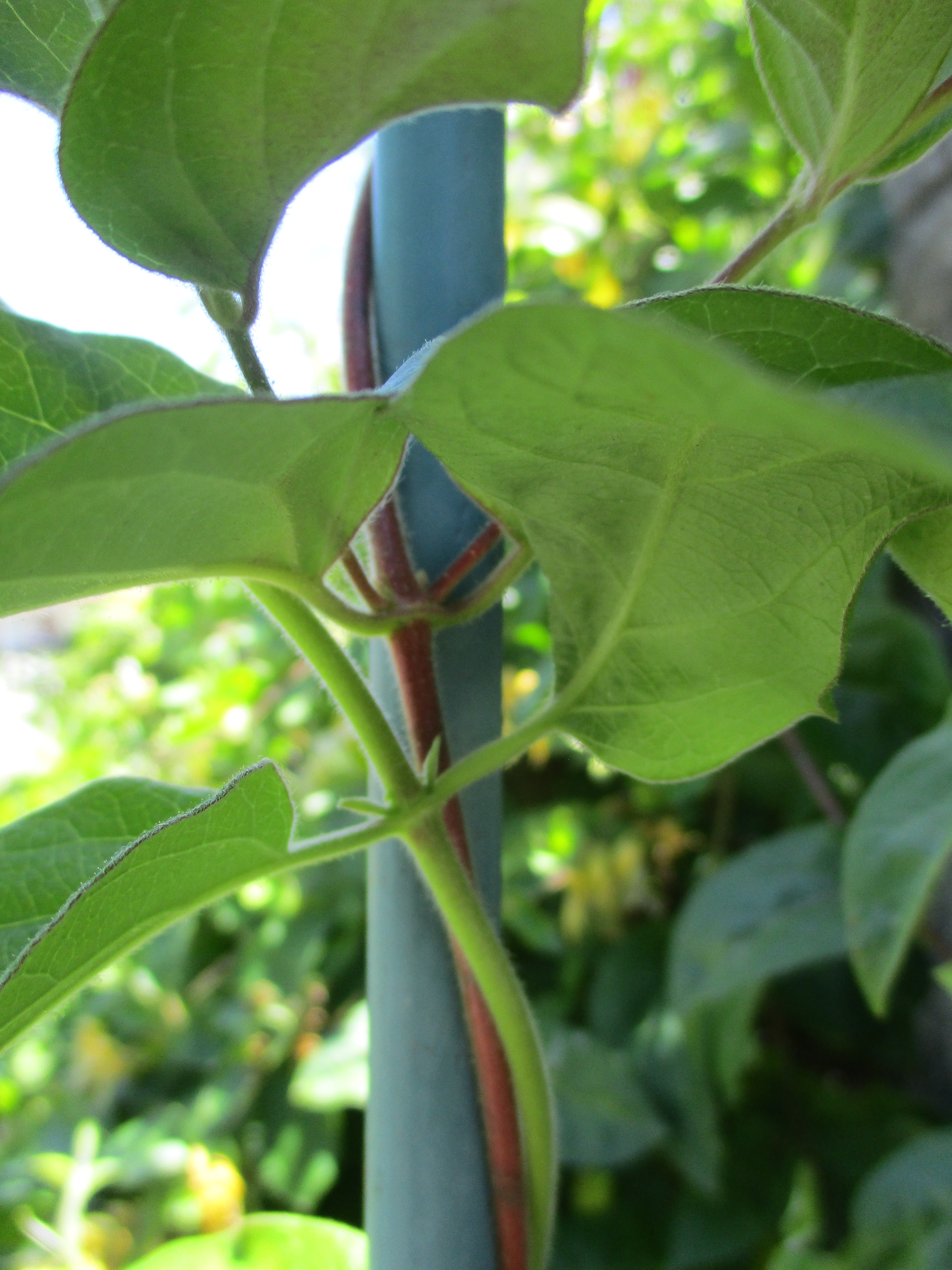
Wisteria is another very aggressive vine that can overwhelm small trees and shrubbery, but lacks aerial roots. It instead climbs by twining stems, which are safer for painted surfaces, but can constrict and crush light trellises, wooden shingles, lattice or anything else that that wrap around. It is certainly worth growing, but needs adequate support.

Bougainvillea and climbing roses do not climb on their own, but instead produce ‘scrambling’ canes that shoot upward and then lean onto their surroundings for support. If grown as vines, they need to be fastened to their support. If not pruned back occasionally, they can get quite overgrown and shrubby. Most varieties that are popular now fortunately stay small and manageable.

Honeysuckle, potato vine, blue dawn flower, evergreen clematis, star jasmine and the various trumpet vines are more manageable, but are still moderately aggressive. Carolina Jessamine, lilac vine, mandevilla, and passion vine are among the more docile of vines, only outdone by the annual vines like annual morning glory and climbing nasturtium.   
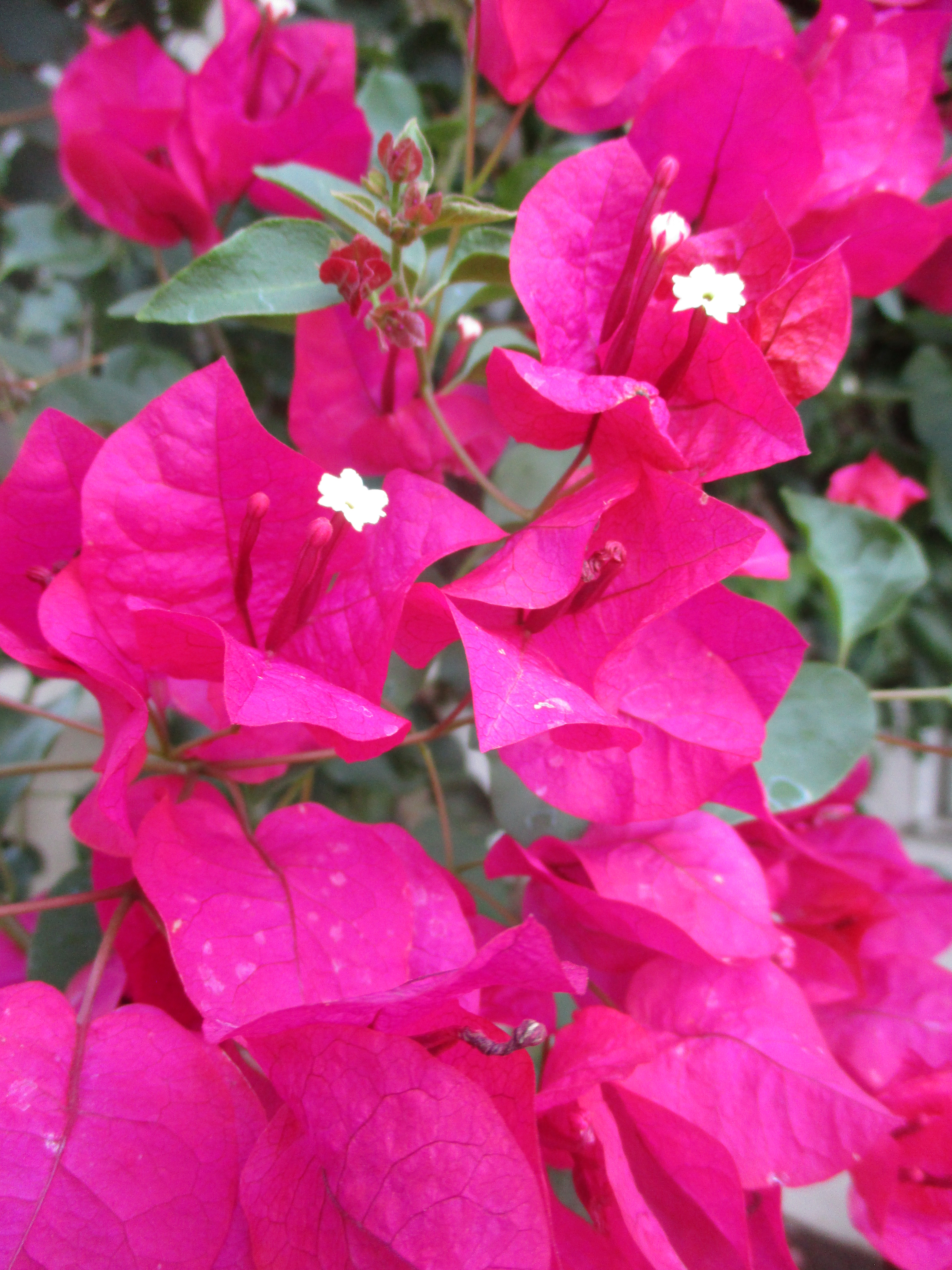
Bougainvillea

00812
Bougainvillea is profuse and vividly colorful.

No other bloom is comparable to that of bougainvillea. It is often profuse enough to nearly obscure the foliage. The color is remarkably vibrant. Magenta is the most popular color. Purple might be the second most popular color. Other cultivars bloom in delightfully rich hues of pink, red, orange, yellow and white. Some bloom with double flowers. A few dwarf cultivars have variegated foliage.

Bougainvillea is a thorny vine that leans on its support, rather than cling to it. Like climbing roses, it must be tied or woven into trellises. Larger cultivars can mix with the branches of trees and big shrubs to eventually reach more than thirty feet high. Many cultivars stay much lower. Some grow slowly, and do not get more than three feet tall. The lush foliage is evergreen with regular watering.

However, bougainvillea does not want too much water, and actually prefers to get a a bit dry between regular irrigation. Excessive irrigation may promote vegetative growth while inhibiting bloom. Excessive fertilizer does the same. Sunny and warm exposure promotes fuller bloom. In late spring, the first and most profuse of perhaps a few bloom phases can continue for more than a month.

Poison Oak Tree

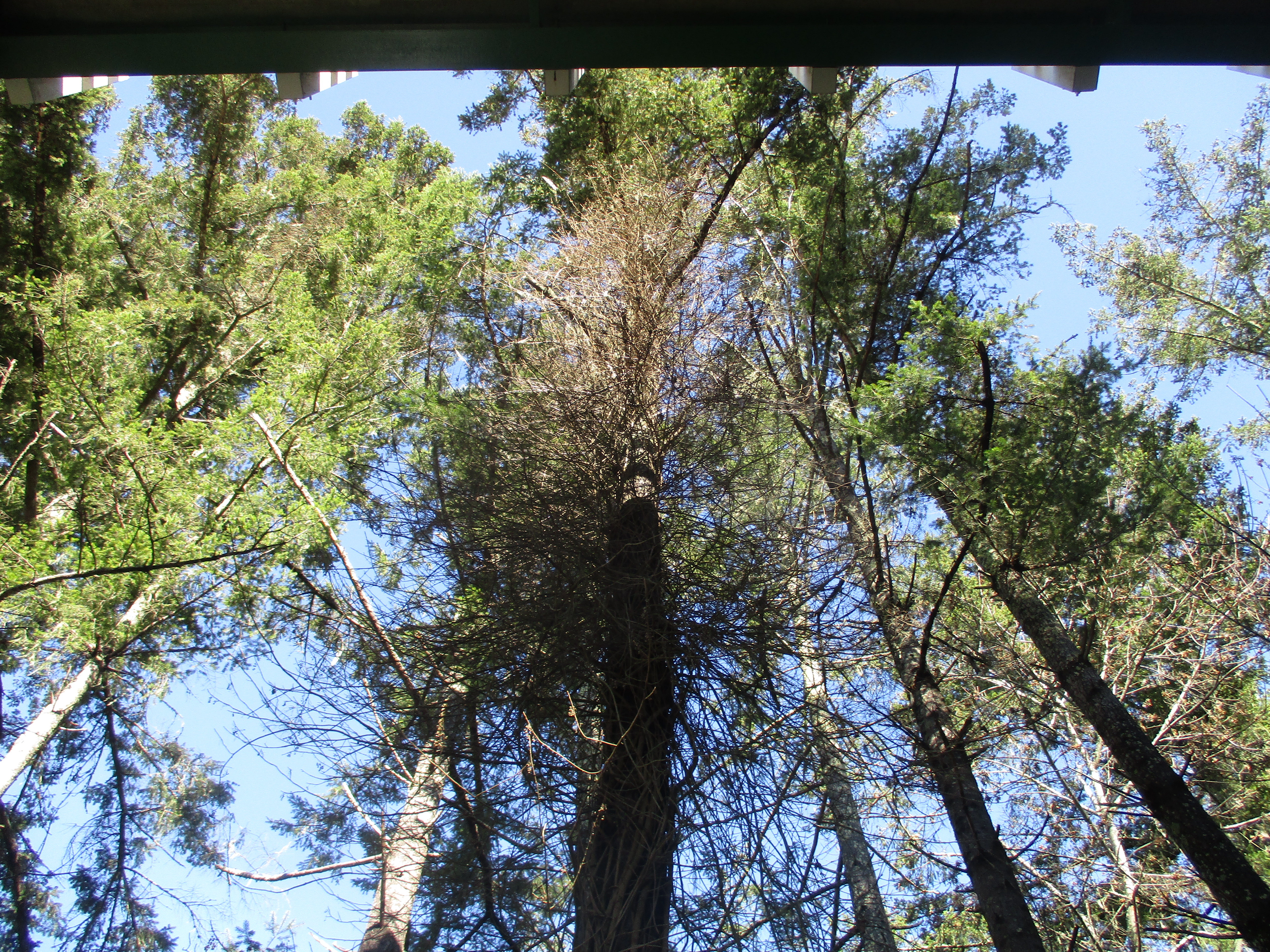
P91229From below, this looks like a shrubby deciduous tree. It is really just a Douglas fir, like those around it. All the defoliated thicket growth is overgrown poison oak. It has likely been climbing the fir tree since it was quite young. Poison oak is not very proficient at climbing bare trunks. It typically climbs into lower limbs, and then into higher limbs before the lower limbs are shed.

No one has bothered to cut this poison oak out of the fir tree because it is not within a landscapes area. That dark margin at the top of the picture is the underside of a bridge, from which, not much of the thicket growth below is visible. The area from which this picture was taken is used for piling greenwaste and parking, where no one is concerned about wild vegetation beyond.

However, now that I sometimes park in that particular parking area, I am finding this mess of poison oak difficult to ignore. There was a similar but even bigger thicket of poison oak up in a redwood tree at the farm, from where it tossed seed into horticultural commodities below. The resulting seedlings added a whole new dimension to weeding the stock. The thicket had to go.

The problem with the thicket in the picture above, although not as serious, is that it too tosses seed into area where people work. Seedlings are likely to grow where greenwaste is processed, and where I sometimes park. Poison oak that grows on the far side of this fir grove will be uncomfortably close to the right field foul line of a ball field that will eventually be restored there.

I have no intention of cutting the poison out of the fir tree. I will merely sever the main trunk at the base, as seen in the picture below. As it deteriorates over several years, no one will mind if it is somewhat unsightly on the industrial yard side. The adjacent fir trees sufficiently obscure it from view from the ball field side. The priority will be preventing seed from proliferating.P91229+

Horridculture – Clinging Vines

P91113Ivy often climbs into trees, buildings and all sorts of other situations where it becomes problematic. It might have been planted intentionally. It might have grown from seed left by birds. When it gets into trouble, we can easily blame it on the ivy. Even that which was planted was intended to be mere ground cover. It only climbs out of control because that is what ivy does.

BAD IVY!!!

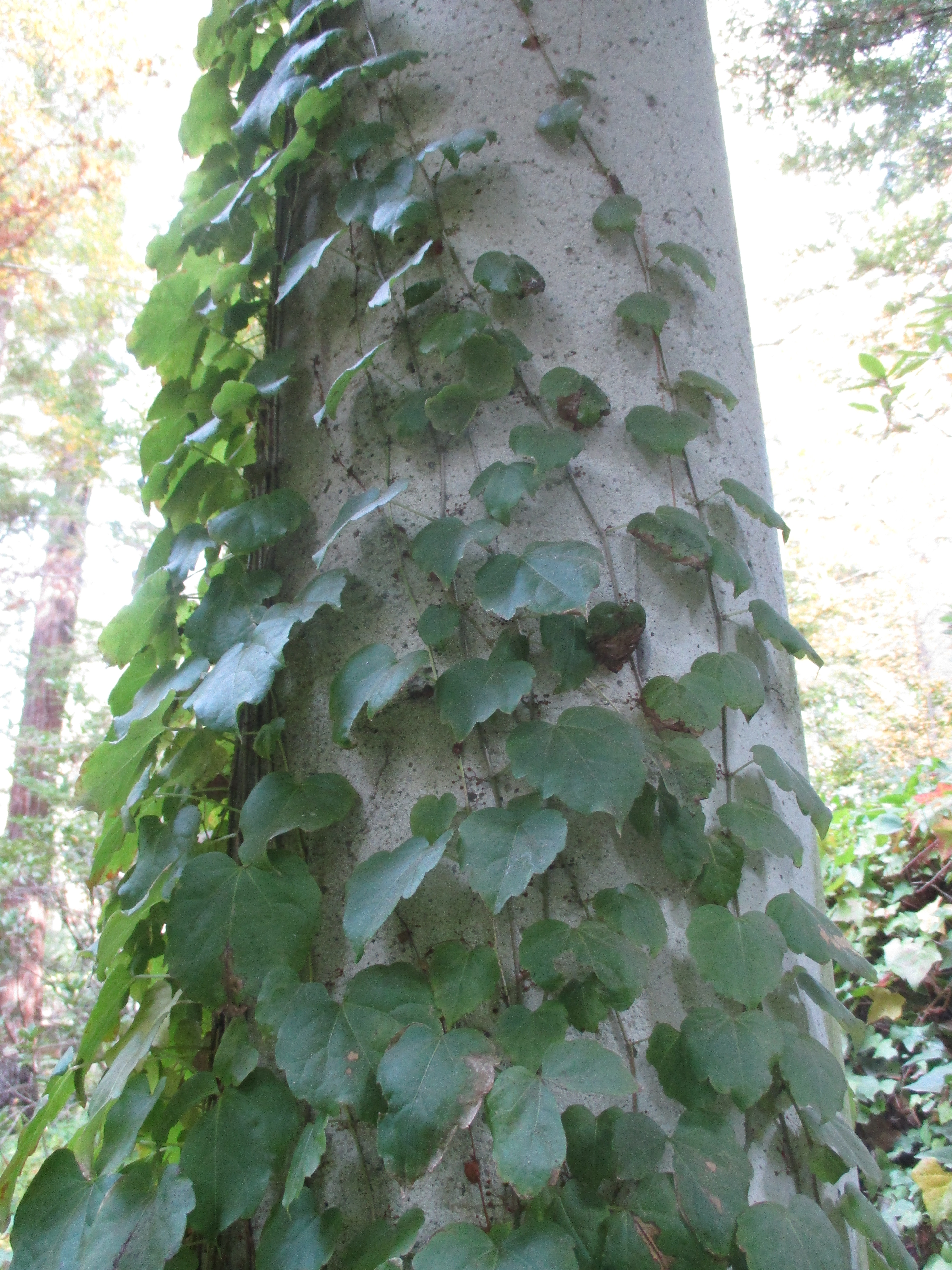
This Boston ivy that . . . ‘someone’ planted almost a year ago was actually expected to climb. That is what Boston ivy does. Even if it would be willing to grow as a ground cover, it would not work well as such because it is deciduous. As a climber, it covers freeway sound walls and any associated graffiti with vibrant green foliage that turns fiery orange and red this time of year.

The problem with it is that there are not many practical applications for it. Yes, it does well on freeway sound walls. It also does well on concrete parking structures, where it can not reach painted or wooden surfaces. There are a few unpainted reinforced concrete building out there that it would work nicely on, as long as it gets trimmed around windows, doorways and roofs.

It has no business on painted wooden surfaces, or even stucco. It clings with these weird ‘suction discs’ that never let go! (They do not really use suction, but an adhesive instead.) You can see a few to the right in this picture below. When vines get pruned back every few years, the suction discs remain attached. Although not a problem for concrete, they promote rot in wood.P91113+

What concerns me with the Boston ivy in these pictures is that it grew to the top of the pillars that they were planted on in less than a year. Even if they get pruned down this winter, they will grow farther next year, and will reach the wooden bridge above. It will be a lot of work to keep them pruned back from the bridge.

As you can see I the picture below, Boston ivy is quite pretty on the concrete. Fall color is delayed this year. P91113++

Vines For Better Or Worse

90619thumbVines in the wild are downright exploitative. They do not support their own weight, so instead climb or sprawl over shrubbery and trees. Some are satisfied staying down below the canopy of the hosts who support them, as if aware that a healthy host will support them for a good long time. Many vines climb aggressively to the top and overwhelm their hosts, even if it eventually kills them.

There is nothing civil about the technique of the strangler figs, which incidentally includes two popular houseplants, fiddle-leaf fig (Ficus lyrata) and creeping fig (Ficus pumila). They wrap their hosts in networks of stems and roots that strangle the hosts as both the hosts and the clinging vines grow and expand. As the hosts die and rot, the vines develops into self supporting tree trunks.

That is how fiddle-leaf fig, as it is known as a houseplant, grows as a free standing tree rather than as a creeping vine. It is grown from cuttings from the self supporting adult growth rather than the creeping juvenile growth. Conversely, creeping fig is grown from juvenile vines, which find a support to cling to, and ultimately develop shrubby adult growth when they get to the top of the support.

English and Algerian ivies are not quite as aggressive, since they do not intend to kill their hosts. They are not often intentionally grown as vines, and are almost never planted anymore, but their juvenile growth still works as ground cover in many mature landscapes. One of the main problems with ivy is that it is constantly trying to climb walls and trees so that it can bloom and toss seed.

That is not such a problem on concrete walls, but ruins wooden and painted surfaces, and makes a mess of trees. Boston ivy (which is not really an ivy) lacks a juvenile ‘ground cover’ phase, but if kept off of painted and wooden surfaces, happens to work better on concrete infrastructures. It is important to know how a particular vine will behave before selecting it for a particular application.

Carolina jessamine, mandevilla, lilac vine and star jasmine are a few complaisant vines.