Wax Begonia

Wax begonia is actually a perennial.

Wax begonia, Begonia X semperflorenscultorum, exemplifies simplicity. Its floral color is white, pink or red. Its foliage is green, bronze or dark bronze. Each floral color combines with each foliar color for a total of only nine combinations. That must be enough, though. Variants of these nine simple options, including some with fluffier double bloom, are rare.

Wax begonia is most familiar as a common warm season annual. However, it is probably at least as popular as a cool season annual. Actually though, it is a short term perennial. Except for during the coolest winter weather, established specimens may bloom all year. After minor frost damage, most regenerate efficiently. They need only minimal grooming.

Mature wax begonia should not grow any higher or wider than a foot. As bedding plants, they blend together. Individually, they develop densely ovoid form. Flowers are small but abundant. Foliage and stems are succulent, with a waxy sheen. New plants grow easily from cuttings or division. Wax begonia prefers rich medium and very consistent watering. A bit of partial shade should be no problem, but a bit too much can inhibit bloom.

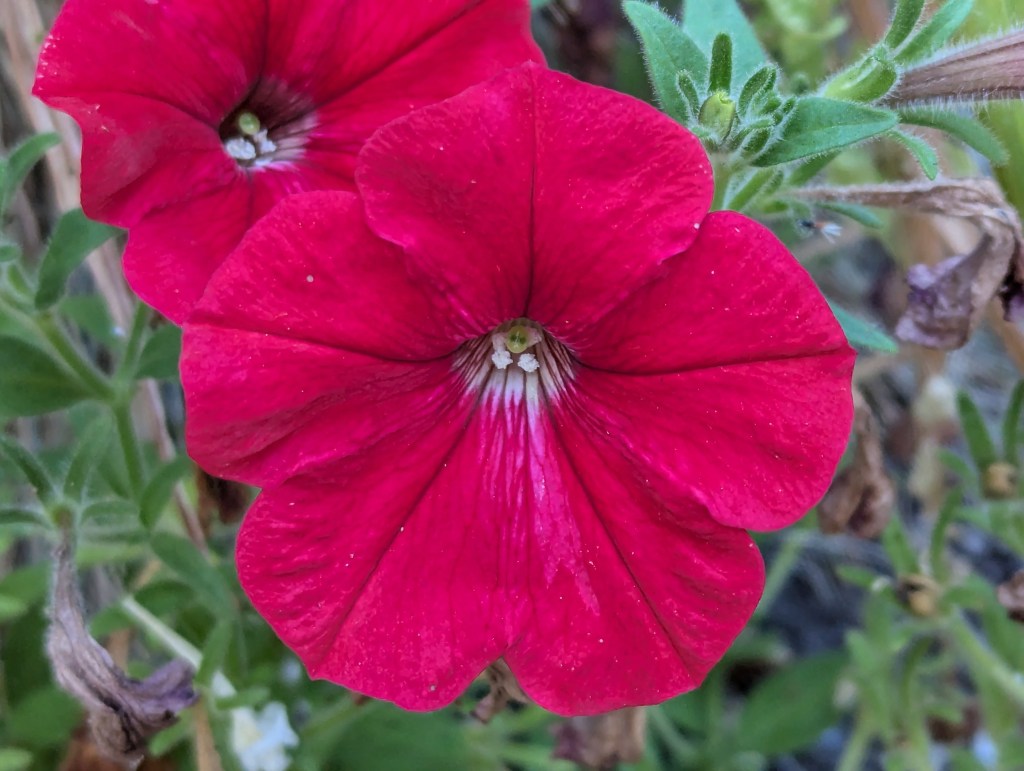
Petunia

Petunias appreciate rich soil or media.

Most popular modern petunia are hybrids of two primary species, and a few others. They classify collectively and simply as Petunia X hybrida. Although popular as warm season annuals, some can be short term perennials. They are only uncommon as such because they get shabby through winter. Yet, with a bit of trimming, they can regenerate for spring.

Petunia are impressively diverse. Their floral color range lacks merely a few colors. Also, flowers can exhibit spots, speckles, stripes, blotches, haloes or variegation. Flowers can be quite small, or as broad as four inches. Some are mildly fragrant. Some are quite frilly with double bloom. Cascading types can sprawl three feet while most are more compact.

Petunia are perhaps the most popular warm season annual. They can bloom from spring until frost, though they can get scrawny after a month or so. Trimming of lanky stems can promote more compact growth. Deadheading might promote fuller bloom for some types. Petunia enjoy sunny exposure, regular watering and rich soil. They perform well in pots. Cascading varieties are splendid for hanging pots and high planters.

Pincushion Flower

Pincushion blooms in pastel blue, lavender pink or white.

The oddly protruding stamens of pincushion flower, Scabiosa columbaria, are ideal for bees collecting pollen. To us, they resemble pins stuck into the somewhat flat surface of the composite (daisy like) flowers. To bees, they are a flea market (or bee market) of pollen. Bees easily stroll the two inch wide flowers to peruse the merchandise on display. 

The pale lavender, blue, pink or white flowers on limber stems are good cut flowers. The grayish foliage is deeply lobed and nicely textured. Mature plants can be two feet tall and broad. Bloom begins by summer and continued until frost if fading flowers get plucked. Although perennial in mild climates, pincushion flower is more often grown as an annual.

Warm Season Annuals Start Early

Nasturtium grows best directly from seed.

Cool season annuals that started late last summer should be finishing soon. A few might have potential to continue as perennials. However, about as many are done or decaying. Now, warm season annuals, or summer annuals, should eventually start to replace them. If it seems early, it typically does for such bedding plants before their respective seasons.

Some annuals can not decide if they are cool season annuals or warm season annuals. Stock is actually a cool season annual but becomes more popular now for spring bloom. Wax begonias might have survived through winter to resume growth for another season. Primrose is a cool season annual that rarely gets too warm locally to continue blooming.

These indecisive annuals can actually be an asset to home gardens. Stock, for example, can replace old pansies while it is still too early for petunias. It compensates for cool and warm season annuals with more definite seasons. Petunias will be ready before stock is done. Some garden enthusiasts replace seasonal annuals for each of their four seasons.

Warm season annuals, like all annuals, are contrary to sustainability. Although many can perform as perennials, few actually do. Those that truly are annuals complete their entire life cycles within one year. Their main purpose is to provide floral or perhaps foliar color. Texture and form are also assets. Annuals are popular because they serve this purpose.

The most popular of warm season annuals grow from cell packs. Those that start earliest are already available, including wax begonia and lobelia. Petunia, impatien and annuals that crave more warmth will become available later. Four inch potted annuals are bigger than those in cell packs, but more expensive. They are even more expensive in quantity.

Many more varieties of warm season annuals are available as seed. Countless more are available online than from nurseries. However, seed requires more effort. Most must start early. Although most grow well in flats or cells, some prefer direct sowing. Sunflower and nasturtium are very vulnerable to the distress of transplanting. Seed is the logical option. Many seed are less expensive than six cell pack seedlings.

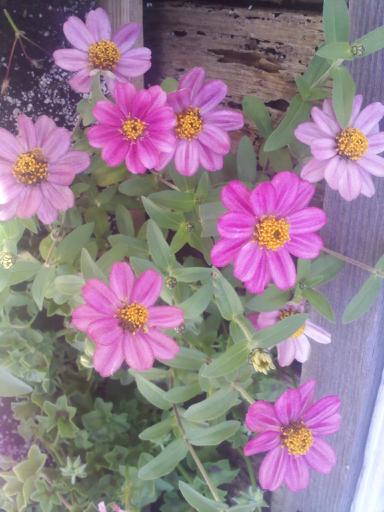
Zinnia

Zinnia look like small dahlia, but are annual.

The longer and cooler nights of autumn will soon finish the season for zinnias. (Most, but not all of the common zinnias are of the species Zinnia elegans.) They are really at their best while the weather is warm through summer and the beginning of autumn. As the garden warms up at the end of next spring, new seedlings can be planted, or zinnia seed can be sown. They like rich soil and regular watering, but are susceptible to mildew in humid spots. Sunny areas with good air circulation are best.

Like related chrysanthemums, zinnias are quite variable. Although the simpler forms remain more popular; double, cactus flowered and crested forms are also available.  Flowers can be less than an inch wide to more than five inches wide. Their color range includes white, yellow, orange, salmon, pink, red, rose, purple, lavender and even green. The narrowly oval leaves can get to about four inches long. Compact types stay about a foot tall and wide. Large types get twice as wide and more than three times as tall. 

Six on Saturday: Madness

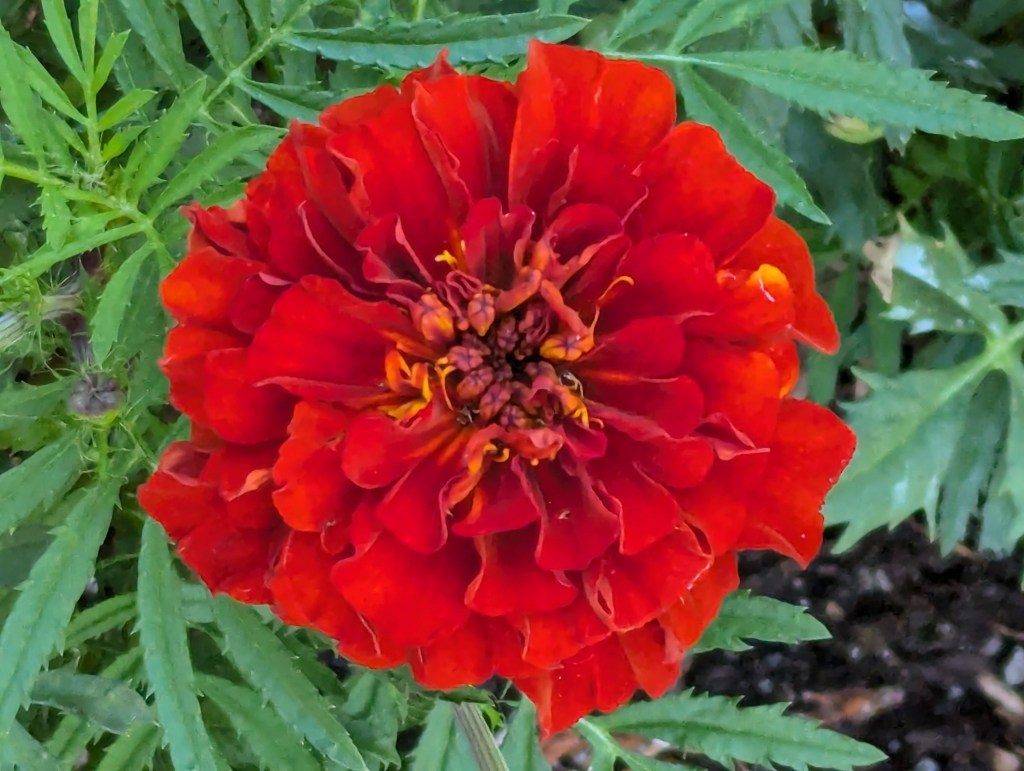
Cool season annuals are beginning to replace warm season annuals not because weather is beginning to cool for late summer, but because warm season annuals are beginning to deteriorate after their long and warm summer. Deterioration of remaining petunias was accelerated by warm weather today. It was warmer than a hundred degrees. Fortunately, marigolds are the first and only cool season annuals that were added into the landscapes already and they tolerate such warmth. I believe that they are varieties of ‘Durango’. I do not know what the petunias that they are replacing are, but they resemble old fashioned red, white and blue varieties of ‘Madness’ that were too popular during the Bicentennial Summer of 1976, although a comparable white variety is notably lacking.

1. ‘Madness – Blue Vein’, if I remember accurately, looks something like this. Its name is not as appealing as its color, and might have been less appealing in the summer of 1976.

2. ‘Madness – Blue’, which looks like this, was one of the three most popular varieties for the summer of 1976, with ‘Madness – Red’ and ‘Madness – White’, but is almost purplish.

3. ‘Madness – Red’ is more convincingly red, very much like this, and just like ‘Madness – Blue’ and ‘Madness – White’, was very popular in profusion through the summer of 1976.

4. ‘Durango – Gold’ is not very different from marigolds that were overly popular during the 1970s, when ‘Madness’ petunias were popular. I do not know when it was developed.

5. ‘Durango – Orange’ is just as familiar as ‘Durango – Gold’ because of its similarity with old fashioned varieties. Only a few specimens of ‘Durango – Flame’ are blooming nearby.

6. ‘Durango – Red’ is the only of these Six that, to me, does not seem to resemble the sort of varieties that were popular in the 1970s likely because red bloom was developed later.

This is the link for Six on Saturday, for anyone else who would like to participate: https://thepropagatorblog.wordpress.com/2017/09/18/six-on-saturday-a-participant-guide/

Bedding Dahlia

Bedding dahlias can perform as perennials.

Dahlias are as variable as related chrysanthemums. Rare tree dahlias can grow ten feet tall from the ground annually. Most popular dahlias grow less than half as high with more lavish bloom. Bedding dahlias are less than a foot and a half tall with smaller but profuse flowers. They are popular as warm season annuals, but can be perennial like the others.

Bedding dahlias are neither as ornate nor as diverse as those that are better cut flowers. They compensate with foliar density and floral profusion. Their flowers are less than five inches wide, and could be about half as wide. Their floral color range is limited to yellow, orange, red, pink and white. Floral variegation can add another color of the same range.

Bloom continues through summer and autumn, until frost. Deadheading promotes better bloom. Dormant tubers may remain in their gardens through winters here. They could rot, though, while their soil remains cool and damp. If dug and stored for winter, they prefer to return to their gardens prior to spring warmth. Dormant tubers propagate well by division.

Garden Verbena

Garden verbena sort of resembles lantana, with more variety of color.

When I first saw ‘Peaches ‘N Cream’ garden verbena, Verbena X hybrida, that was trendy in the early 1990’s, I thought that the variable shades of pale pink and nearly white of its flowers were too dull. Then I saw the flashy bright red, purple, blue and fluorescent pink of other modern varieties at the time, and gained a new appreciation for the more subdued color range, including white and more ‘normal’ pink. The flower color range may not be very extensive, but it is diverse.

Even though it is commonly grown as an annual, garden verbena is actually a short term perennial. It is a traditional component of mixed flower urns and planter boxes, but does not necessarily need to be replaced along with other annuals. Like English ivy and ferns that are so often planted with annuals, garden verbena can be salvaged, at least for a few seasons, as annuals come and go. It looks good in hanging pots or large urns where its slightly cascading form can be appreciated. In good soil, garden verbena can become a colorful small scale ground cover.

Mature plants do not get much more than six inches deep or two feet wide. Their coarsely dentate leaves are about two inches long. Their flat, two inch wide trusses of small flowers bloom mostly in summer. Hard pruning at the end of winter helps restore plants in spring, and keeps plants healthy longer. Mildew can become a problem in humid areas, particularly if air circulation is inhibited by crowded foliage.

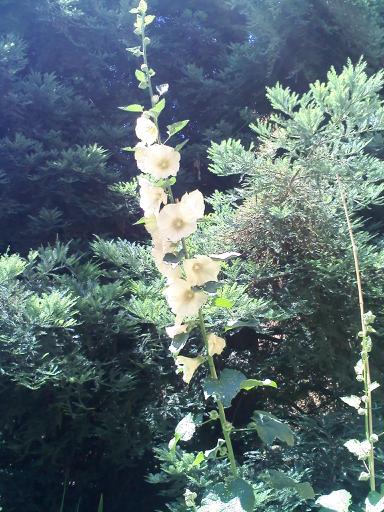
Hollyhock

Hollyhock was more popular within Victorian gardens.

Old fashioned hollyhock, Alcea rosea, can be a bit too imposing for small gardens, since their spire like flower stalks can get taller than eight feet. Modern varieties are more proportionate, standing about five or six feet tall. Some are only about two and a half feet tall. Many modern varieties also have fluffier semi-double or double flowers. Those with smaller flowers have denser flower set than old varieties (Flowers are closer together on the stem.).

The three to five inch wide flowers bloom through summer in shades of pink, red, purple, pale yellow, pale orange and white. Removal of spent flower stalks may promote shorter autumn blooms, but also prevents self sowing. Seed can be sown at the end of summer for blooms next year. The coarsely textured and variably lobed basal foliage does not get much wider than two feet. Snails and rust can be problematic.

New Guinea Impatiens

New Guinea impatiens can be perennial.

Busy Lizzie had been unavailable for years because of a downy mildew epidemic. It has only recently been regaining availability and popularity. During its absence, New Guinea impatiens, Impatiens hawkeri, became more popular. Although a closely related species of the same genus, the two are actually very different. Resistance to mildew is important.

Besides that, New Guinea impatien is about as foliar as it is floral. Its bolder and slightly bigger flowers are notably less abundant than those of busy LIzzie. Also, its floral color range is limited to white, pink, red, lavender, magenta or orange. Its rich green or bronze foliage below compensates though. Many cultivars are variegated with yellow or salmon.

New Guinea impatiens are unfortunately a bit more expensive than most other annuals. The smallest that are available are in four-inch pots. They are unavailable in smaller and less expensive cell packs. They can grow about a foot wide and slightly taller if crowded. During winter, they deteriorate; but they can be tender perennials with shelter from frost.