Busy Lizzie had been unavailable for years because of a downy mildew epidemic. It has only recently been regaining availability and popularity. During its absence, New Guinea impatiens, Impatiens hawkeri, became more popular. Although a closely related species of the same genus, the two are actually very different. Resistance to mildew is important.
Besides that, New Guinea impatien is about as foliar as it is floral. Its bolder and slightly bigger flowers are notably less abundant than those of busy LIzzie. Also, its floral color range is limited to white, pink, red, lavender, magenta or orange. Its rich green or bronze foliage below compensates though. Many cultivars are variegated with yellow or salmon.
New Guinea impatiens are unfortunately a bit more expensive than most other annuals. The smallest that are available are in four-inch pots. They are unavailable in smaller and less expensive cell packs. They can grow about a foot wide and slightly taller if crowded. During winter, they deteriorate; but they can be tender perennials with shelter from frost.
Winter continues. It will not end until March 19. Wintry weather is unconcerned with such dates though. It could end at any time, or continue a bit later. Vegetation is more aware of this than we are. It wants to be ready regardless. Cool season annuals linger as long as they can. As they no longer can, warm season annuals should be ready to replace them.
Warm season annuals, or summer annuals, include both bedding plants and vegetables. They perform seasonally as cool season annuals do, but through warm seasons instead. They perform for only one annual cycle, although several have potential to be perennial. Removal of perennials is necessary only because subsequent annuals need the space.
All sorts of annuals are available in cell packs from nurseries. They become available as they become seasonable. Those that bloom for late winter and early spring are available now. More of those that bloom best during warm weather should become available soon. It is still a bit too cool and early for most of them. It is not too early for their seed, however.
Although plugging cell pack seedlings into a garden is easier, some prefer to sow seed. Those who do so should begin about now so that the new seedlings are ready by spring. Many seedlings require the warmth and shelter of a greenhouse to grow. As they mature, and the weather warms, they relocate into their garden. Other seed prefer direct sowing.
Many more varieties of annuals are available as seed than as seedlings from nurseries. Even if only a few varieties of seed are in nurseries, countless more are available online. Also, some flowers from previous seasons provide viable seed for subsequent seasons. There are a few reasons to justify the extra effort of growing annual seedlings from seed.
Sunflower and nasturtium are among the warm season annuals that prefer direct sowing. Their roots dislike confinement within cell packs. They recover slowly from transplanting. Cosmos and alyssum do not mind transplanting, but also grow easily from direct sowing. Seed for many varieties can start now because the weather will be warmer as they grow. Petunia, impatien, zinnia and lobelia are easier from cell packs later.
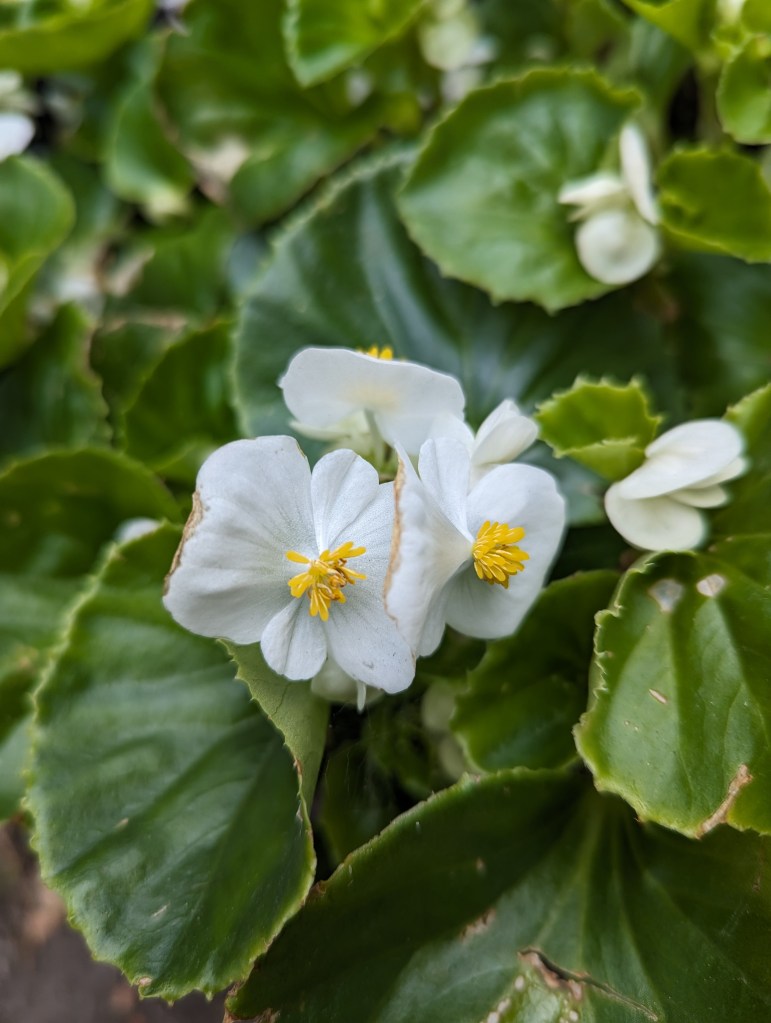
Simplicity is a recurring theme among wax begonia, Begonia X semperflorens–cultorum. Floral color is white, pink or red. Foliar color is green, bronze or dark bronze. Each floral color combines with each foliar color. Variation within this simple color range is minimal. So is variation of foliar or floral form. Cultivars with slightly fluffier double bloom are rare.
Perfection eliminated the potential for improvement. Regardless of such simple variation, wax begonia is among the most popular annuals. Technically, it is perennial. Technically, it prefers warm weather. It remains available as cool season color after summer because it blooms until frost. Later, it can recover from minor frost. Without frost, it blooms all year.
Mature wax begonia rarely grows higher or wider than a foot, with densely rounded form. Flowers are small but abundant. Both leaves and stems are succulent and tender, with a waxy sheen. Propagation is remarkably easy by cuttings or division. Consistent watering is very important. Partial shade is tolerable, but if too shady, can inhibit bloom somewhat.
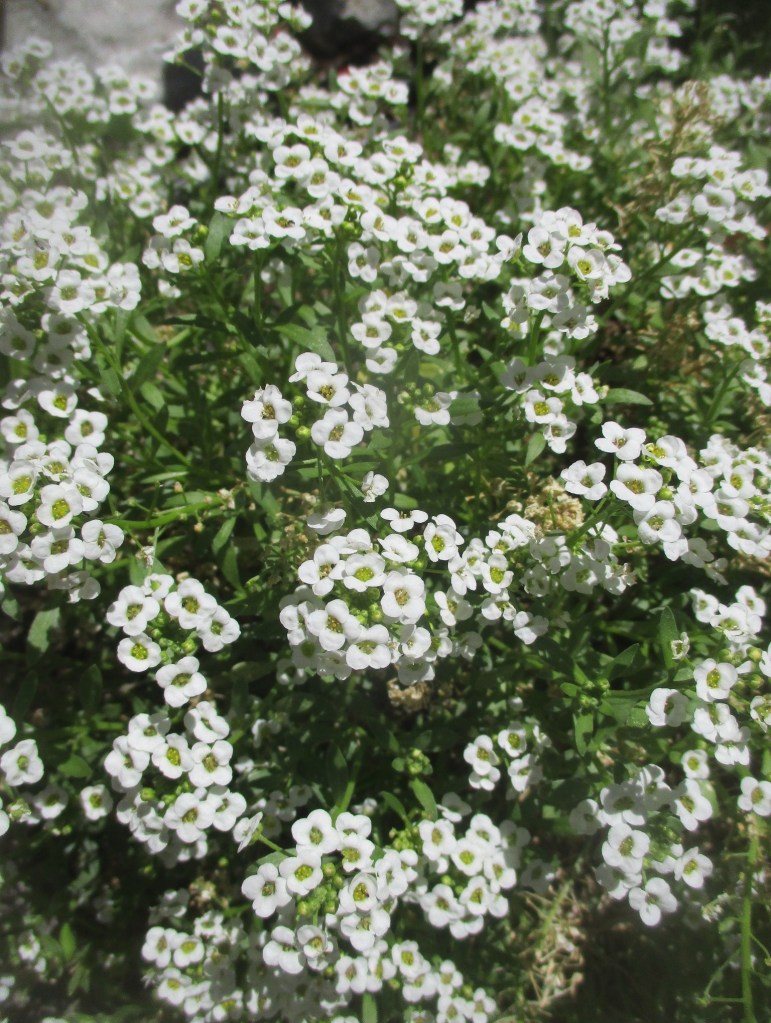
My neighbor describes sweet alyssum, Lobularia maritima, as a ‘polite’ weed. It naturalized over an area of her vegetable garden that was not in use at the time, but was easy to get rid of when the space was needed for something else. A few plants that were left in the perimeter bloom almost continuously and fill in other unused space between herbs and perennials without interfering with them.
As a bedding planting, sweet alyssum is most often planted from cell packs like most other annuals. Yet, seed is so easy to sow in bare spots among mixed annuals or perennials. Naturalized sweet alysssum sows seed so abundantly that new plants replace old plants before the old plants deteriorate.
Bloom is most often white, but can be shades of pink or purple. However, naturalized sweet alyssum eventually reverts to classic white. The minute, sweetly fragrant flowers form small, round clusters over the delicate mounds of finely textured and sometimes sparse foliage. The tiny leaves are only about an inch long and quite narrow. The largest naturalized plants are not often more than a foot tall.
Richmond begonia is very easy to propagate by cuttings.
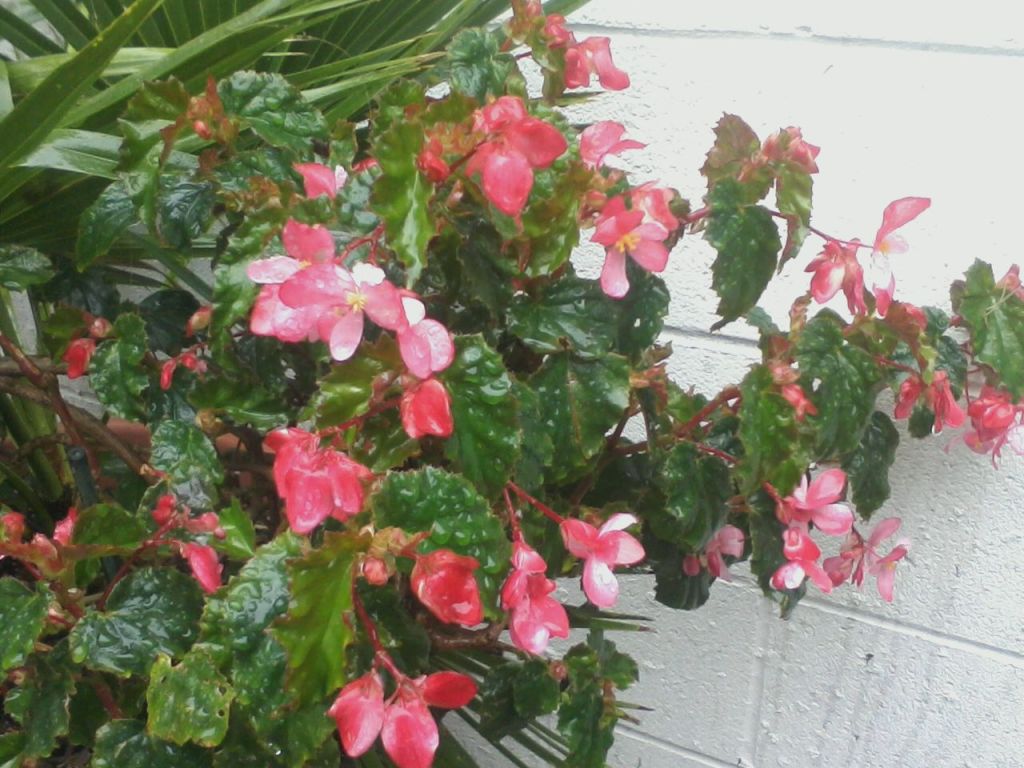
It is difficult to say whether Richmond begonia, Begonia ‘Richmondensis’, is grown more for unusual waxy pink flowers that bloom throughout the year, or rich glossy green leaves with bronzy red undersides. Perhaps it is the distinctive combination of both characteristics. Perhaps it is because Richmond begonia is so easy to grow in partial shade near porches or atriums where other flowering plants would want more sunlight. It only wants relatively rich soil and regular watering, and is quite happy in pots. Mature plants eventually grow to two feet tall and broad. Lanky branches that get cut back to promote dense growth can be rooted elsewhere in the garden.
Sweet alyssum can seem to be perennial, but bloom best during warm weather.
The common and almost stigmatized nasturtium has always been my favorite of the flowering annuals. It is technically a warm season annual that gets its seed sown at the end of winter so that it can grow and bloom with bright yellow, orange and sometimes even red flowers all spring and summer and into autumn. However, because winters are so mild here, the foliage is appealing even while bloom is inhibited by cool winter weather. By the time older plants die out, seedlings are already maturing to replace them; so they function like perennials. Nasturtiums are so easy to grow that many garden enthusiasts consider them to be weeds, or too cheap and common to bother with. Yet, their carefree nature is precisely why so many of us enjoy them so much.
Sweet alyssum shares the same reputation that causes it to be shunned by some but appreciated by others. It can be white, pink or purple when initially planted, but eventually reverts to white as it naturalizes. (Pink and purple types produce white blooming seedlings.) Like nasturtium, it blooms less over winter, but never really goes away, since seedlings are always there to replace older plants. It is easy to grow from seed sown late in winter, or can be planted from cell packs after winter for more immediate results.
All sorts of warm season annuals that are now available in nurseries are ready to replace the cool season annuals that bloomed through winter. Busy Lizzy (impatiens) and petunias are the most popular as well as the most colorful. French marigold has the best yellows and oranges, as well as bronze. Lobelia is a classic companion for sweet alyssum or marigold, providing all kinds of blues, as well as purple, purplish rose and white (although white is rather redundant to alyssum). Cosmos blooms in many shades of pink, from very pale to almost red, as well as white. Most varieties stay quite low while others get a few feet tall.
The less popular warm season annuals are sought by those who like their unique colors or other appealing characteristics. Floss flower blooms pale blue or lavender with funny fuzzy flowers. Cockscomb are mostly the colors of marigold as well as red, but with unusual plume-like blooms. Verbena and moss rose may not fill in soon enough to work as bedding plants, but have rich colors that look great with other assorted annuals or perennials. Although statice, pincushion flower (scabiosa) and zinnia can function as bedding plants, they are more often grown singly, in small groups or as borders around more homogenous bedding plants.
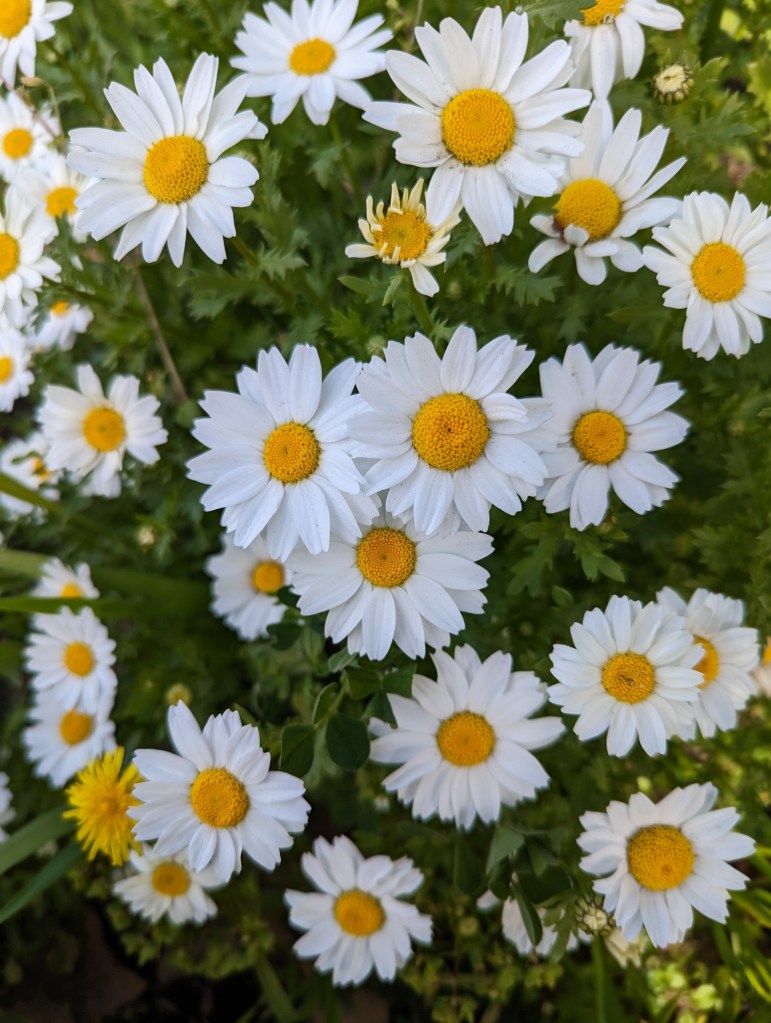
Like several annual warm season bedding plants, oxeye daisy, Leucanthemum vulgare, is actually perennial. Also, some of the less extensively bred sorts disperse enough seed to naturalize and potentially become invasive. Increasingly popular modern varieties that are prudent with seed might not be true to type. Some might revert to more prolific forms.
Modern varieties should not get much higher than a foot and a half. They should also be more dense than the simple species, which gets a few feet tall. Foliage and form is quite variable among varieties. Stems are solitary or branched. They may be leafy or sparsely foliated above basal rosettes. Leaves might be lobed or serrate, with or without petioles.
The solitary, paired or tripled composite blooms of oxeye daisy are not so variable. They are classic daisies, with a dozen to three dozen clear white ray florets surrounding bright yellow disc florets. Without deadheading, fresh new bloom overwhelms deteriorating old bloom. Oxeye daisy is splendid as a cut flower. Spring bloom continues through summer, and can actually continue sporadically for as long as the weather is warm.
Annual bedding plants are surprisingly more popular among those who enjoy gardening less. Those who procure the services of gardeners appreciate the rich colors and simple efficiency of annuals. Many who are more directly involved with their gardening consider them to be decadent. Nonetheless, warm season bedding plants will soon be in season.
Cool season bedding plants should perform well until the weather becomes too warm for them. There is therefore no rush to replace them yet. Besides, it is likely still a bit too cool for mature warm season bedding plants to be out in the garden. However, seed for warm season bedding plants takes time to grow. Some should start now to be ready for spring.
For example, petunia, impatien and zinnia are some of the most popular of warm season bedding plants. Almost all of them arrive at their respective gardens as somewhat mature plants within cell packs from nurseries. Presently, such plants may be vulnerable to frost. However, seed of these plants that begin now should start to grow after the threat of frost.
Not many of even the most avid of garden enthusiasts grow these popular warm season bedding plants from seed. Yet, a few do so. Some unusual or rare plant varieties are only available as seed. Many common wildflowers and ‘true to type’ annuals provide seed for subsequent generations. Such seed generally start in flats with shelter from frost indoors.
From flats, seedlings may graduate to cell packs or small pots prior to transitioning into a garden. Some should actually begin within cells rather than flats. Seedlings relocate into a garden when adequately mature, whether from flats, cells or pots. Seed for many warm season bedding plants perform best directly in the garden though, without transplanting.
Nasturtium seedlings do not grow well within the confinement of cells. Then, they remain somewhat pekid for a few days while they recover from transplanting into a garden. They grow so much more efficiently from seed sown directly into a garden. Marigold can grow about as well from seed directly in the garden as they can as seedlings that grew in flats.
Zinnia are enviable. They seem to perform exemplarily for everyone else and everywhere else. They have never done well for me though. I can not explain why. I stopped trying to grow them many years ago, but I encounter them at work, where the other horticulturist grows some as warm season annuals. This year here, some performed reasonably well as bedding plants, and a few more bloomed impressively within a pair of half wine barrels. They are done now that the weather is cool, but I got a few pictures of them as they were removed and replaced with pansies for winter.
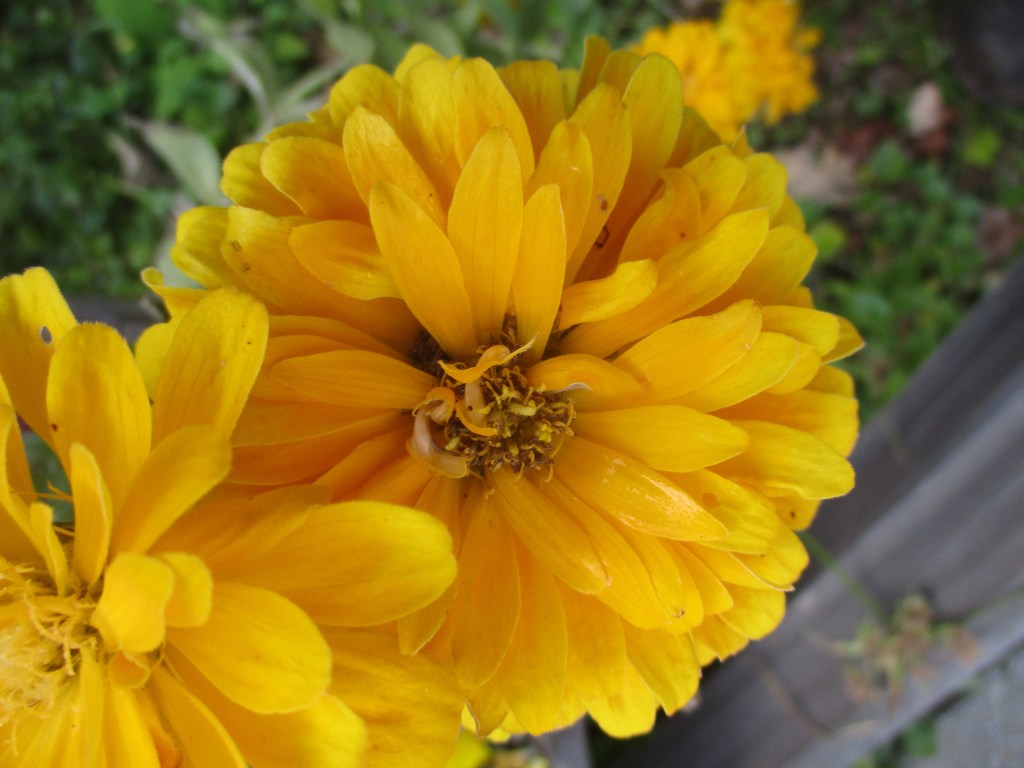
1. Yellow is a primary color, but the scarcest among the few prolific zinnia that grew in a pair of half wine barrels through summer. Only one of the ten zinnia here bloom yellow.
2. Orange is a secondary color between yellow and red, but is a bit more abundant in our barrels than either yellow or red. Maybe three or so of the ten zinnia here bloom orange.
3. Red is another primary color, which is beyond orange from yellow. Perhaps two or so zinnia bloom red, but they are less profuse than those that bloom pink, orange or white.
4. Pink is not really a color, but is merely a tint of red, or red mixed with white. Only two of the ten zinnia here bloom pink, but they are bigger and more profuse than the others.
5. White should be my favorite, but to me, seems to be mundane relative to other colors. Two of the ten zinnia bloom white, but they are neither prominent nor prolific in bloom.
6. Rhody is as unimpressed with our unusually florific zinnia as he is uncooperative with my attempts for a good picture of him. Fortunately, even a bad picture of Rhody is good.
Petunia must eventually be replaced, even if the tips of deteriorating stems continue to bloom.
Here in the mild climates on the west coast of California, the difficulty of getting new cool season annuals into the garden to bloom through autumn and winter is not selecting, procuring and installing the new annuals. It is the removal of the warm season annuals while they are still blooming and looking so good! Knowing that planting new annuals sooner than later will get them an earlier start is not always much consolation.
Pansy, viola, primrose, snapdragon and alyssum are probably the most familiar and favorite of cool season annuals, and are often allowed to bloom late into spring when they probably should be replaced by warm season annuals. Alyssum easily naturalizes, and can actually bloom all year in coastal or cool areas. Snapdragon are probably the most difficult of these favorites to grow, since they so often get infested with rust, a common fungal disease that proliferates where winters are mild.
Cornflower (bachelor’s button), stock, Iceland poppy, sweet William and calendula are probably a bit less popular only because they are not so conducive to mass planting as bedding plants. Cornflower and stock get taller than they should for beds, although they look great behind beds; and stock is excellently fragrant. Iceland poppy, sweet William and calendula do not often grow uniformly enough for large beds; and calendula does not offer much variety of color beyond shades of yellow and orange. Yet, all are great in mixed plantings.
Ornamental cabbage and kale are grown for their colorful foliage instead of flowers. Cabbage may be a bit more colorful; but kale can provide more variety of foliar texture. Because they form such bold rosettes of foliage that do not blend into each other like other bedding plants do, they are more often grown as narrow borders or in small mixed plantings instead of in broad uniform beds.
The ornamental potential of both Swiss chard and parsley should not be denied. Swiss chard has distinctively ruffled and glossy foliage that can be dark green or deep burgundy. Their prominent midribs and veins can be even more colorful with shades of greenish white, yellow, orange, red or pale purple. Parsley is rich green, with full, intricately textured foliage that happens to look quite sharp with white alyssum. The main problem with these two cool season vegetables is that their appearance can be compromised if they get eaten.





 Tony Tomeo