Soil Saturation Kills

Use irrigation responsibly.

London plane tree is trendy not because it is all that excellent, but because it is so reliable. It is actually a rather trashy and messy tree that is susceptible to anthracnose and powdery mildew. Landscapers and gardeners like it so much only because the various maples, oaks and other better trees are more sensitive to soil saturation while they get established.

The truth is that most landscapers and gardeners do not want to put any effort into proper watering. While many of us let our lawns die to conserve a bit of water, they waste enough water on lawns and landscapes to sustain rice paddies! This keeps lawns and landscapes superficially green, but eventually causes problems.

Powdery mildew, anthracnose, molds, blights, rots and all sorts of diseases proliferate in damp conditions. Of course, gardeners are happy to apply fungicides and other chemicals to help control diseases; for a price. Also for a price, they are there to replace plants that succumb to any of the many diseases associated with excessive moisture.

Like London plane, several other trees and plants can survive excessive moisture, but only by adapting. If lower soil is regularly saturated, roots are confined to upper soil. This is not a problem for lily-of-the-Nile and many other perennials that can sneak their roots unnoticed into to the upper few inches of soil. However, trees can not get away with this habit for long; since their shallow and buttressing roots eventually expand to displace pavement, other plants and anything else that gets in their way.

Mature and old trees do not adapt. Their deep roots are already set in their ways, so will only rot if they get significantly more water than they are accustomed to. Oaks are particularly susceptible.

Unfortunately, there is no exact formula for determining how much water lawns and gardens should get. There are simply too many variables, such as soil type, drainage, exposure, weather and demand for moisture. Lawns need frequent watering without much volume. Trees prefer more generous watering, but less frequently.

Lawns and trees and everything else in between all need air within the root zone. Watering should therefore not keep soil constantly saturated, but instead allow for adequate drainage and aeration of the soil between watering, without complete desiccation. New plants will of course need more attention until they disperse their roots, but will be happier and healthier with proper watering.

Real Drought Tolerance

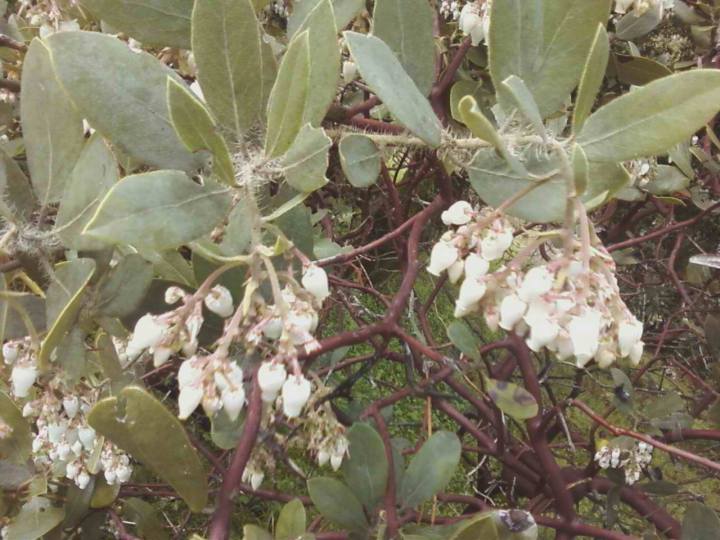
Even native manzanitas, which really are drought tolerant, need water until they disperse their roots.

Nearly every landscaper and gardener brags about using plants that do not need much water. Buzz words like ‘drought tolerant’, ‘native’, ‘sustainable’ and ‘xeriscape’ have become all too common, even though few actually spell ‘xeriscape’ properly. (It is NOT ‘zeroscape’!) Unfortunately though, most gardeners water so frequently and generously that drought tolerant and native plants are less sustainable than plants that want more water.

The difficulty is that drought tolerant plants generally need rather regular watering immediately after planting, while they are still dispersing their roots, but then want to dry out between watering once they are established. Otherwise, they are very susceptible to rot if the soil is constantly moist. Most drought tolerant plants should therefore not be mixed with plants or lawns that want regular watering.

Trees like incense cedar, beefwood, carob, silk oak, olive, California pepper tree and some eucalyptus, pine and oak can be nice shade trees in lawns that are not watered too much, but do not live as long as they would with less water. (Although many are messy in lawns anyway; and carob smells bad when it blooms.) California laurel, African sumac, Australian willow, strawberry tree and most acacia and cypress are less tolerant of lawn irrigation.

Eucalyptus, pine, oak and acacia have sensitive roots, so do better if planted while young instead of as larger specimens. For example, #5 (5 gallon) red ironbark eucalyptus get established faster and grow larger than 24” boxed red ironbark eucalyptus installed at the same time.

Bottlebrush, oleander, cotoneaster, hop bush, firethorn, grevillea, some types of wild lilac and all sorts of juniper can be happy with or without regular watering. Manzanita, coyote brush, rockrose, flannel bush and western redbud really want to dry out between watering. Like many plants from arid climates, wild lilac, coyote brush, rockrose, flannel bush and western redbud are naturally relatively short lived. Western redbud fortunately has an efficient technique of producing an abundance of seed and replacing itself with new seedlings before if finishes.

Lily-of-the-Nile is one of the most useful perennials, and can survive with annual rainfall or nearly saturated conditions. New Zealand flax is nearly as adaptable, but is more susceptible to rot if watered too much. Rosemary and several iceplants are nice ground covers with or without regular watering.

The various yuccas, aloes, agaves and their other relatives are some of the most practical perennials for arid climates, and many tolerate somewhat generous watering if necessary. However, most agaves and yuccas have nasty sharp leaves; and some agaves get too big to keep at a safe distance. Also, their bold personalities are not adaptable to every garden style.

Watering Increases As Rain Decreases

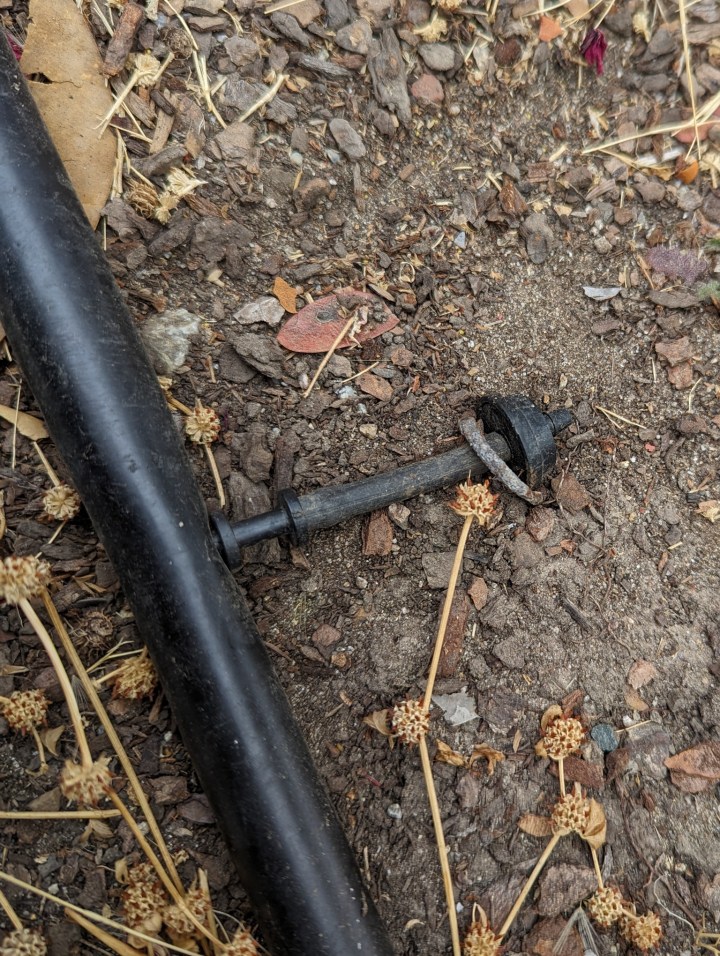
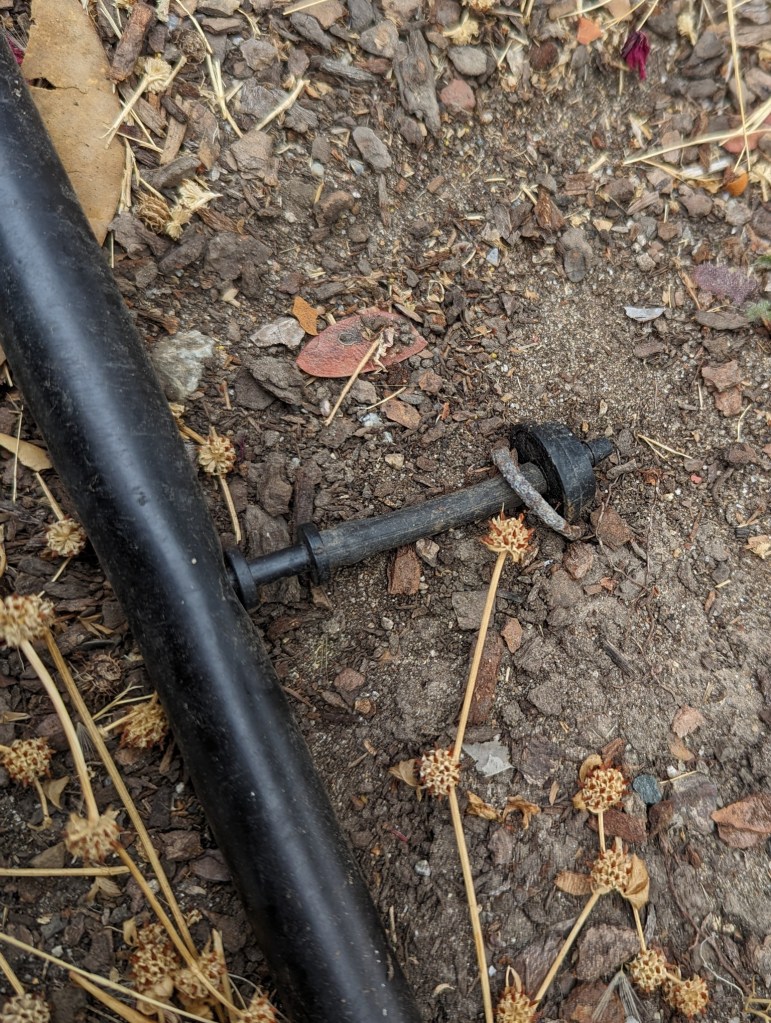
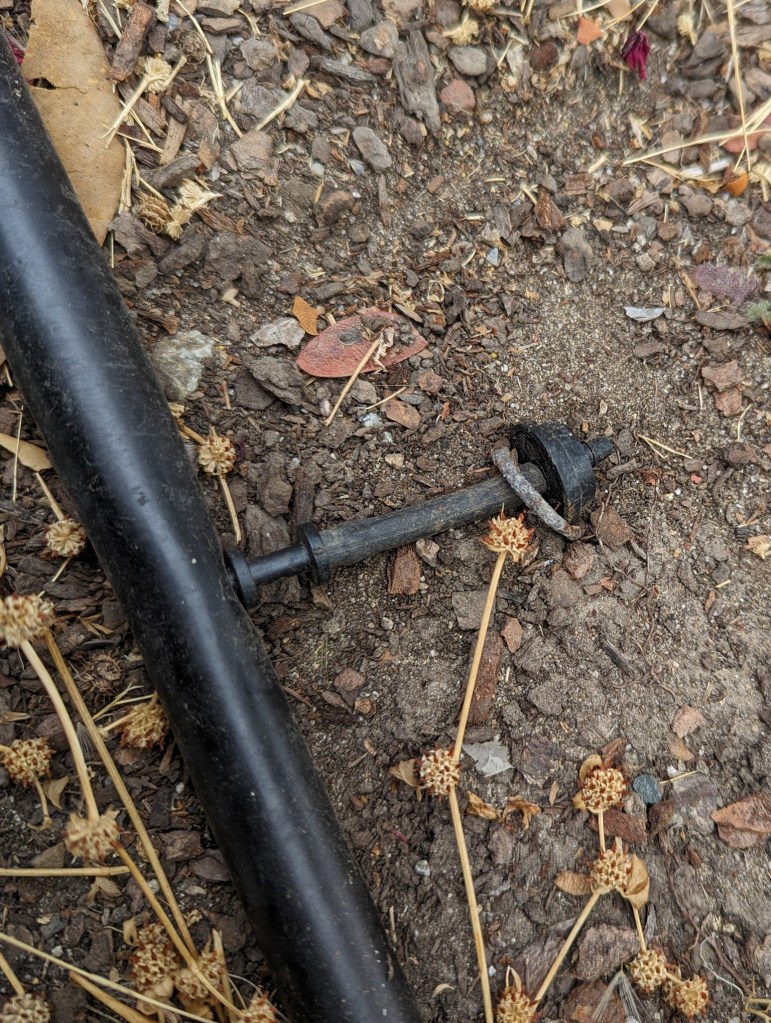
Automated irrigation should help conserve water.

Rain is less abundant and less frequent now that winter has become spring. Humidity is decreasing. Temperatures are increasing. Moisture within both the soil and the air is less abundant than it had been. Irrigation that discontinued as the rainy season began should resume soon. Only supplemental watering compensates for the increasing lack of water.

Warmer and drier weather does more than simply deprive vegetation of natural moisture. It also accelerates new growth of formerly dormant or partially dormant vegetation. Such growth requires more moisture as it becomes less available. Increasing day lengths with intensifying sunlight enhance this need for watering. Although natural, it all seems ironic.

This recent need for watering is progressive. Rain still sometimes interrupts it, but will be less frequent as spring progresses. Rain will be very unlikely after later spring. Humidity will continue to decrease as temperatures continue to increase. Watering frequency and volume must increase accordingly. They might not begin to decrease until after summer.

Soil composition and texture also influence the increasing need for watering. Organically rich soils retain moisture more efficiently than sandy soils, for example. Gravely soils that drain well may necessitate frequent watering, even if less copious. Potted plants require frequent watering because they can not disperse roots. Hanging pots require even more.

Furthermore, different types of vegetation need different or specialized types of watering. Fibrous but shallow roots usually need frequent watering, even if they do not need much. Species with deep roots usually need watering less frequently. Some of them need more significant volumes of water than others. Some vegetation prefers only minimal watering.

With all these many variables, there are no simple formulas to determine watering rates. Manual irrigation is easiest to monitor, but is also tedious. Automated irrigation, although less tedious, requires more diligent monitoring. For any particular type of vegetation, soil should not remain too dry for too long. Also, vegetation should not exhibit any symptoms from desiccation.

Fe

ICK!

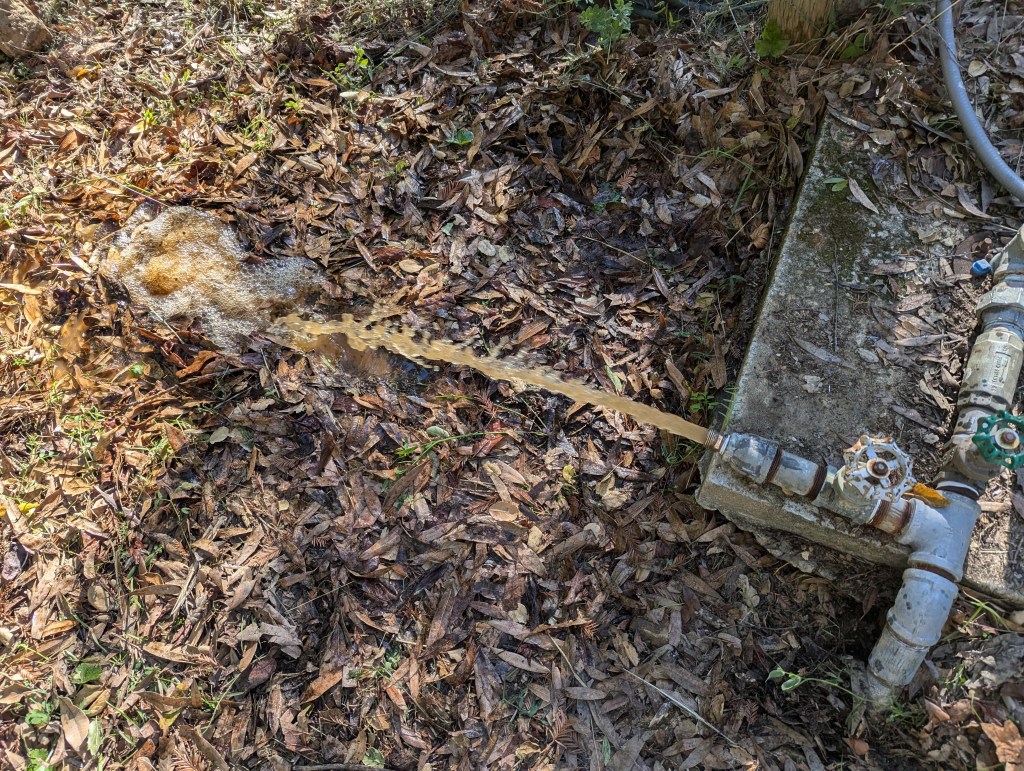
Ferrum, which is abbreviated as “Fe”, is the chemical and element name of iron. It is apparently too abundant in this well water. Actually though, it is from the lining of the well. It accumulated because the pump has been inactive for so long. I am impressed that it functions at all after being idle for so long. I am concerned about the lining of the well, though. The hydrologic engineer tells me that I must superchlorinate the well to kill most of the iron oxidizing bacteria, and then flush the well by operating the pump for a long time. That all sounds like quite a bit of risky work. I do not like the concept of pouring something into a well that does not belong there. I am also concerned about what to do with the chlorinated water as it gets pumped out. I suppose that I could apply it to undesirable vegetation around the well. There will undoubtedly be a large volume of such water; but there is also a large amount of undesirable vegetation. I suppose that I could collect some or much of the water into an otherwise unusable tank to let the chlorine slowly volatilize from it. For now, until this superchlorination process begins, I suspect that this water is safe for irrigation. I do not mind if it leaves a temporary rusty residue that eventually rinses away. The water was even muckier before, and will get less mucky as more of it is used, so it could appear to be clean before superchlorination. Besides, I suspect that mucky water is less toxic to vegetation than superchlorinated water is. Because the rain stopped as suddenly as the rainy season began, and no rain is forecast for the next week, irrigation is now becoming a priority.

Horridculture – Saturation

Saturation is almost a universal problem within almost all of the landscapes that I inspect that are ‘maintained’ by mow, blow and go ‘gardeners’. Without exception, all of such landscapes are outfitted with automated irrigation systems. Some of such systems are scheduled to apply much more water than they should for more time than they should. More typically, irrigation is applied much too frequently. Sometimes, irrigation is both too abundant and too frequent. Such excessive irrigation maintains unhealthy saturation within the soil. Roots are unable to disperse their roots into such saturated soil, and many roots that try ultimately rot. Some trees try to compensate by dispersing roots close to the surface of the soil, but because they are unable to disperse their roots deeply, they lack stability. Also, their shallow roots damage pavement and compete with other vegetation. What is even more egregious about saturation within ‘maintained’ landscapes is that, almost without exceptions, the so-called ‘landscape’ companies that ‘maintain’ them, likely after installing them, brag about their ‘water-wise’ and ‘sustainable’ landscape maintenance techniques. They install irrigation systems that could be quite efficient if they were to operate properly, but then never operate them properly. They install drought tolerant species that can survive with minimal irrigation, but then kill them with excessive irrigation. They replace the deceased plant material, only to kill and replace it again. They do not mind wasting water that their clients pay for, any more than they mind wasting plant material that their clients pay for. In fact, replacement of plant material is profitable for them, since they get paid for procedures associated with removal and installation. Realistically though, they are probably as oblivious to the profitability of their technique as they are to proper technique. In other words, they simply do not care.

Automated Irrigation Should Adjust To The Weather.

Some irrigation becomes temporarily obsolete through the rainy season.

Now that it has started to rain, what should be done with automatic watering systems? In almost all situations, automatic irrigation systems should be adjusted to accommodate for moisture provided by rain. If rain is sufficient to provide enough or too much water, irrigation can be discontinued until needed again when the rain stops a few months from now.

If the first few storms are discontinuous enough with warm and dry weather mixed in between, lawns and plants that want more substantial watering may need to be watered a few times until the rain becomes more reliable. However, because of cooler temperatures and shorter days, plants do not use nearly as much water as they did during the summer anyway, so do not need to be watered nearly as much as they were only a month or so ago.

Deciduous plants that are losing their leaves need the least moisture, since they can not lose any moisture through evapotranspiration (evaporation from foliar surfaces). The very few plants that bloom or even start to grow during winter use a little bit more water than those that really are dormant, but are still likely get all they need from rain even without getting watered.

Flowering annuals, particularly left over warm season annuals that continue blooming late, may get moldy with too much rain. Their flowers and some of their foliage can turn to mush until there is a break in the rain. Removal of damaged flowers and leaves slows the spread of the mold but does not cure it. Good air circulation among well spaced plants and in exposed areas helps inhibit mold. Regardless, moisture from abundant rain can eventually cause mold to be a problem.

In fact, the only plants that are not likely to get all the water that they need from rain are those that are in pots and planters under eaves or in the home as houseplants. Nonetheless, sheltered plants that are outside should still get much less water now than they do during the long and warm days of summer. These plants are either dormant or at least more sedate because of the shorter cooler days through winter. Houseplants may likewise use less water because the home environment is also cooler.

However, if the heating system of the home decreases humidity, some large houseplants may actually want a bit more water through winter! Humidity fluctuates most in older deficiently insulated homes that are heated by wood stoves or fireplaces; since these homes get humid without a fire burning, but then get much drier with a fire. 

Late Summer Heat Confuses Some Vegetation

(This article is recycled from several years ago, so some of its information is irrelevant to current conditions. Also, it posted more than half a day late.)

Weather should but does not always get cooler at this time of year.

After the coolest July in a century, and one of the mildest summers in memory, the recent warm weather at the end of August seemed unseasonable, even though it is actually not unusual for this time of year. Predictions of an Indian summer for this year were made shortly after predictions for this past El Nino winter materialized. The ash blasted into the atmosphere by a volcano in Iceland may have changed all that. No one really knows. The weather continues to change like the weather.

For right now though, the damage caused by the sudden warmth is becoming evident. Fortunately, most of the damage is harmless and should be gone by winter. Some is a bit unsightly. The desiccation of small or potted plants may unfortunately be as serious as it looks. The most severely damaged plants may not recover.

The yellowing inner foliage that eventually turns reddish brown in redwood trees is actually a normal response to foliar desiccation that results from warm or dry weather. As long as the outer foliage remains healthy, this discoloration is harmless. Inner foliage that is more expendable is merely being shed to conserve moisture for the more important outer foliage. This shedding foliage will deteriorate and get cleaned out by wind and rain in autumn.

This older foliage typically sheds naturally throughout summer. However, because the summer was so mild, much of the foliage that should have been shed was not shed. As the weather only recently but suddenly became warm, all the foliage that should have been shed earlier became discolored and began to shed at the same time, which is why it is now so much more noticeable.

A few other trees are also shedding some of their foliage. Trees in areas that are not landscaped or watered may drop dried leaves in even slight breezes. Leaves of deciduous trees that would be colorful and pliable if they fell on schedule in autumn are instead crispy and brown. Maple, oak, ash, sycamore (including plane), willow, poplar, eucalyptus and madrone are among the most affected. Fortunately, this is a harmless response to the warm weather after such a mild summer.

Some Japanese maples are damaged more significantly, but should recover. Because they are naturally understory trees (which prefer to grow in the partial shade and ambient humidity of larger trees), they are not well adapted to warm and dry weather, particularly if it becomes warm as suddenly as it recently did. Some got roasted so quickly that the foliage stays attached to the stems as it shrivels and dries. Foliage that is still partially viable (and hopefully functional) should fall in autumn and winter. Foliage that is necrotic (dead) may linger until it is forced to fall by new foliage that emerges next spring.

Potted plants that were desiccated by the heat may not be so fortunate. Even though they can be unsightly, roasted plants that may be rooted into the ground through their drainage holes should not be moved right away, since the roots that are in the ground are the least damaged and the best hope for recovery. Similarly, roasted plants that hang over the edges of their pots should not be pruned back too severely until later, since exposing the pots to more sunlight will cause more heat to be absorbed if the weather gets warm again.

Irrigation Must Not Be Excessive

Too much water can be a problem.

Remember when the Brady Bunch went to the Grand Canyon? Mrs. Brady read aloud from a brochure about how the Grand Canyon was formed by erosion of the Colorado River. Peter then commented, “Wow! No wonder you tell us not to leave the water running.” Too much watering in the garden certainly will not cause a canyon to form, but can cause all sorts of other big problems.

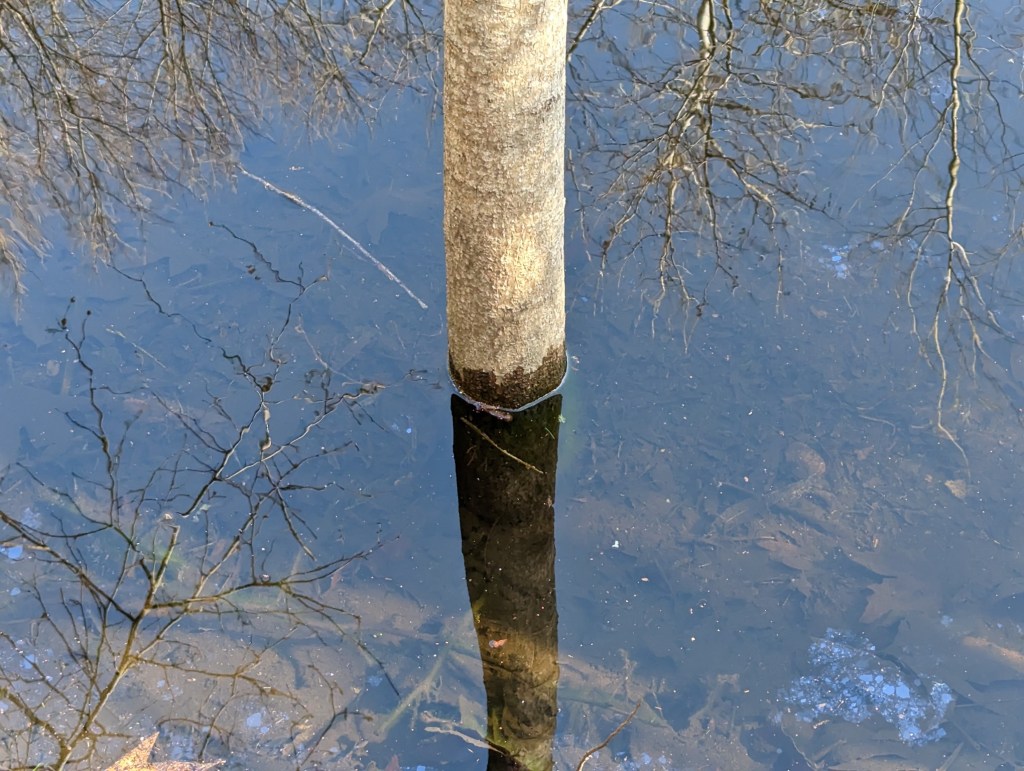
Roots rot if the the soil is constantly too wet. If the soil stays saturated, roots suffocate from the lack of aeration. Trees that survive saturation of deeper soil strata will disperse their roots shallowly near the less saturated surface, and will consequently be unstable. Besides, excessive watering is wasteful.

There are too many variables, such as exposure, drainage, humidity and temperature, to prescribe irrigation schedules that work for every site. Just remember that most plants like the soil to drain enough for the surface of the soil to at least look somewhat dry before getting watered again. Moss on the surface is an indication that things are too wet. Plants that like more water, like azaleas, rhododendrons, fuchsias, ferns and impatiens, do not mind if the soil stays somewhat damp, but only if the soil is porous and drains enough to also be aerated.

The most drought tolerant plants, which are generally also the most sensitive to excessive irrigation, ironically like to be watered somewhat regularly for the first few months after getting planted. This is because they are so reliant on well dispersed root systems. They need less, if any, watering once their roots get dispersed.

Watering should be done in the morning so that plants can soak in the water during the day, and the area can dry somewhat before the following evening. It is also better to water less frequently and a bit more generously than to water too frequently. This allows time for drainage and promotes deeper rooting. Fungal organisms associated with rot and foliar diseases proliferate overnight if the ground is damp at the surface and the air is humid.

Except for the few plants that like humidity, and those that need to be rinsed of aphid and honeydew, there is no need to wast water on foliage where it is simply lost to evaporation. Water should be applied to the soil where it is needed.

RAIN!

Rain is naturally and innately . . . wet.

(February 12, 2012)

More than a week ago, many of us were astonished to witness countless drops of water miraculously falling out of the sky! What could this be? Where did this water come from? It is actually not such a mystery. These unfamiliar falling drops of water are merely a type of weather known as “rain”. “Rain” is actually nothing new, and happens every winter. Typically, there should have been an abundance of “rain” by this late in winter.

The problem with “rain” is that it is wet. Whatever it encounters also becomes wet, and often messy. Wet dirt becomes mud. Wet roads are hazardous to traffic. It is uncomfortable to go outside to do any gardening when everything is wet and muddy.

However, “rain” is very important to everyone’s survival. It is what moves water from the oceans back onto land, so that it can be collected and used for the many things that water is needed for. “Rain” also brings needed water to gardens, landscapes, and even the forests outside of urban areas. In one way or another, every living thing needs “rain”.

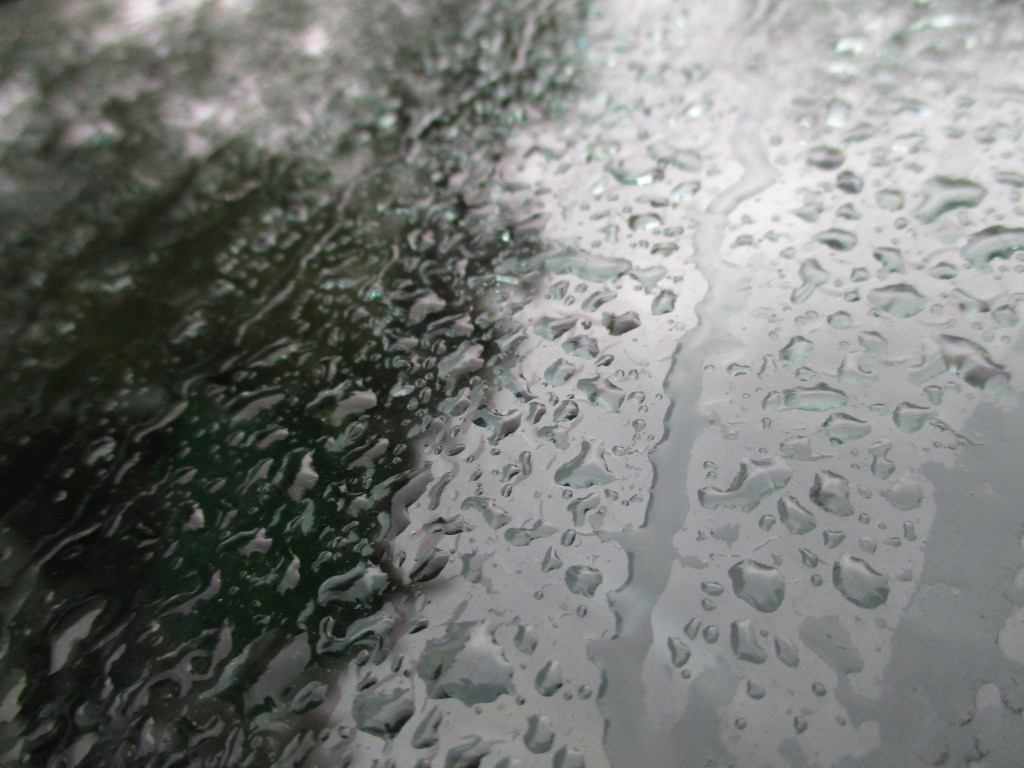
But wait! There’s more! “Rain” so efficiently waters gardens and landscapes that no other watering is needed! Most watering systems should therefore be turned off as long as there is enough “rain” to keep everything wet. Even when the “rain” stops, cooler temperatures and higher humidity keep things from drying as efficiently as they would during warm summer weather. Consequently, most watering systems can remain off until after winter, when the “rain” stops until next winter, and the weather gets warmer.

Actually, the only plants that may want water are those that are sheltered from the “rain”, and perhaps a few large potted evergreen plants that continue to lose enough moisture by evaporation from their foliage to get a bit dry between periods of “rain”. Even these sheltered and potted evergreen plants use less moisture this time of year because they are less active, and evaporation from their foliage is limited by the weather.

Remember; for plenty of moisture that is one hundred percent natural and absolutely free, try “RAIN”!

Too Much Water Is A Serious Problem.

Well, . . . this is an exaggeration.

The most common problem with landscapes that are maintained by maintenance gardeners is excessive irrigation. In fact, with very few exceptions, the only lawns that are maintained by gardeners that are not also irrigated excessively are too dry because the irrigation systems are not operational. Excessive irrigation is not only unhealthy for the landscapes, but costly.

Wasted water is obviously expensive, but also causes all sorts of expensive damage. Saturation of soil inhibits deep dispersion of roots, causing shallow roots to displace pavement. Shallowly rooted trees that are easily destabilized by wind can cause expensive damage, and are expensive to remove. Smaller plants that do not cause damage as they succumb to saturation and rot are still expensive to replace. The gardeners who get paid to maintain the landscapes should assume liability for the damages they cause, but instead charge to repair it! If they can not repair the damage, they typically happen to know someone who can.

Fortunately, those of us who maintain our gardens, or are at least involved with the maintenance, are not so generous with water. Although lawns need quite a bit of water, they also need adequate drainage. Besides, we tend to be more aware of the expense of water than gardeners are.

Now that it is autumn, irrigation needs to be decreased for various reasons. Rain will be providing more moisture as the seasons progress. While the weather gets cooler and more humid, and the days get shorter (less sunlight) not so much moisture evaporates. Most plants are either dormant or at least less active, so consume less moisture.

There are unfortunately no accurate formulas for decreasing frequency and duration of irrigation as the weather changes. It must be done by trial and error, by providing enough irrigation during dry spells without keeping conditions too wet. Of course, no irrigation is necessary during rainy weather, except only for plants that are sheltered by eaves. Hanging pots should be monitored because they are both sheltered from rain (if hanging from eaves), but also exposed to drying wind.

Also during autumn and winter, dormant plants need no fertilizer. That can wait until they wake up early in spring. Raking falling leaves from lawns, ground cover and low shrubbery is important though, since such debris shades the plants below while sunlight is already less abundant, and can also promote rot.