Weeding Season

Weeds pull up relatively easily while the soil is still damp from winter rain.

My garden may lack the sort of ‘riot of color’ that landscapers like to promote to achieve the other popular cliché of a ‘tranquil garden retreat’, but is the victim of a different kind of violence. The desirable plants and undesirable weeds are about as compatible as the terms ‘riot’ and ‘tranquil’ are. Recently, the weeds have been gaining ground in the ongoing battle between the two. In another heroic effort to help the plants that I want in my garden, I will soon venture onto the battlefield to do what I can to defeat the weeds. The native sky lupine, California poppy, California fescue and some sort of native iris would otherwise be displaced by the invading oat grass, oxalis, burclover and sowthistle.

Different weeds invade other areas. Perennial weeds like nutsedge, dandelion, Bermuda grass, bindweed and brambles (blackberry) are among the worst in most areas. Annuals like purslane and spruge can be just as troublesome though. I really dislike the various twining vetches, even though they are good for the soil. Pampas grass, giant reed, blue gum eucalyptus, black acacia and Acacia dealbata are the largest weeds and the most difficult to battle.

All of the weeds that I need to contend with pull out easily while the soil is still damp from winter rains. If I do not pull them now though, they will be difficult to pull as the soil dries. Broom, the nastiest weed in my garden, comes out relatively easily now, but is ridiculously hard to pull from dry soil. Brambles and poison oak also come out easier now like the rest of the weeds, but are of course always difficult to handle.

Sometimes, if I do not have enough time to pull all the weeds in an area, I at least like to keep them from spreading if possible. If I cut annual oat grass down with a weed whacker before it blooms and sets seed, it is unable to reproduce to replace itself before it dies at the end of its season. This also works for sowthistle. Dandelion is perennial, so does not die at the end of its season, but will not spread so aggressively without its flowers or seed.

This has not worked so well with other weeds. Spurge sets seed before I catch it. Yellow oxalis and nutsedge reproduce more profusely by offsets than by seed. Bermuda grass is a creeping perennial that does not mind if it loses its seed. Burclover and bindweed are so low to the ground that pulling them is the only option. Broom and the various weed trees may initially be deprived of their seed, but are harder to pull when they regenerate after getting cut back.

Regardless of what it takes, this is the best time of year to get weeds under control. Later in the season, they will have had time to set seed or get more established. As the soil dries and gets baked by the sun, pulling weeds, or in some cases, digging them, becomes more difficult.
Weeds Are Prolific And Invasive

Weeds are now growing vigorously everywhere.

Warming spring weather accelerates bloom and growth. Early spring bloom is now much more colorful than the best of winter bloom. Fresh foliage is already replacing defoliated deciduous foliage and faded evergreen foliage. Vegetation will soon be more active than they will be during any other time of year. Such vegetation unfortunately includes weeds.

Weeds are only weeds because they are unwanted. That is their only commonality. Most are exotic, or not native, but a few are native. Most are annuals, but a few are perennials, vines, shrubs or trees. Annuals grow from seed, but several of the others can perpetuate vegetatively. Some are appealing where appropriate, but migrate to where they are not.

Weeds become weeds because they are generally invasive. Many are aggressively so. They grow wherever they can, and compete with any desirable vegetation for resources. The most aggressive annual weeds begin growing before preferable species. They can overwhelm their slower victims. Several have bloomed and are already dispersing seed.

Exotic weeds are here for a variety of reasons. Some arrived inadvertently as seed in fur or digestive systems of livestock. Some were fodder for livestock. Many were originally desirable flowers for home gardens. A few were formerly useful as cover crops or erosion control. Many lack natural pathogens from their native ranges that limit their proliferation.

Regardless of their origins, weeds now necessitate weeding. They grow throughout the year, but most are most active as winter becomes spring. Obviously, they grow like their horticultural designation implies. Those that are not already dispersing seed should not get the opportunity to do so. Less weeding will be necessary later if more happens now.

Besides, weeding is easier while the soil is still evenly damp from winter rain. Roots are more pliable and less dispersed. They toughen and disperse as the season progresses. Rhizomes, stolons and other perennial weed parts are likewise easier to pull or dig now. Tilling might be more efficient for eradication of small but profuse young weed seedlings.

Some Weeds Were Not Always Weeds

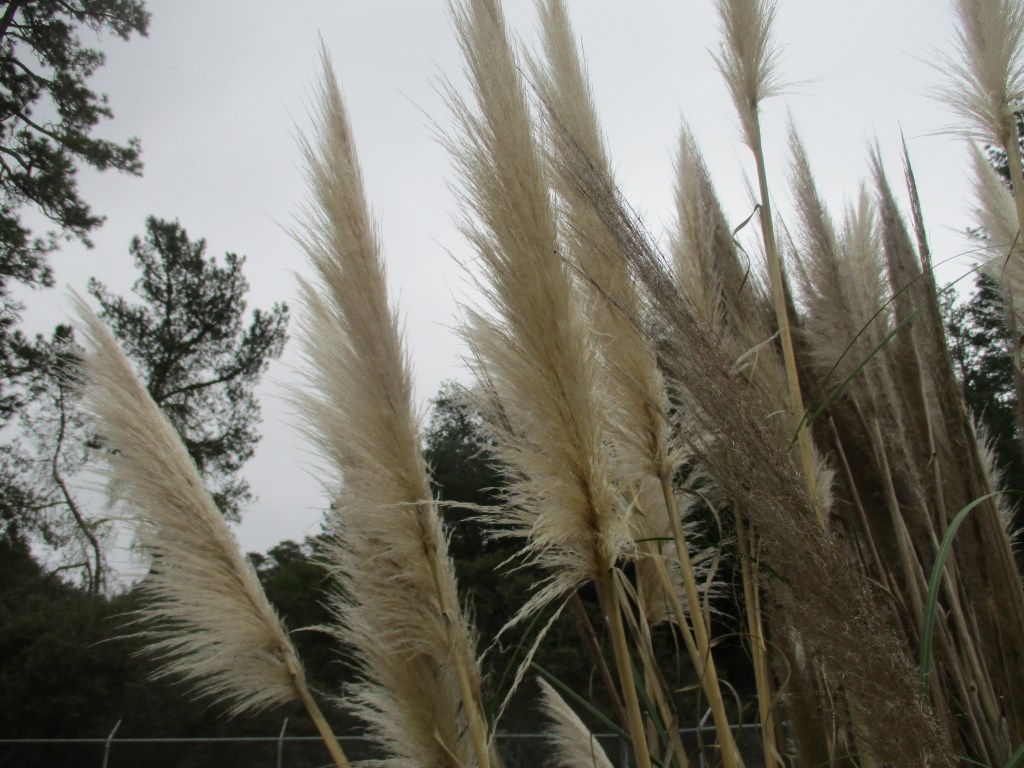
Pampas grass was planted intentionally a long time ago, but then became a weed.

Weeds can be so very sneaky; getting into the weirdest places, and taking on all sorts of forms. They are mostly annuals or perennials that infest lawns and beds, but can be shrubs, vines and even big trees that grow among desirable plants, in untended areas, in cracks in pavement and even in roof gutters and on flat roofs. Many look appealing at first, but then later get out of control and displace the plants around them, or wreck whatever fence, pavement or building they encounter. Heck, I even suspect that it was a weed that stole my neighbor’s Pontiac!

While the soil is still damp from earlier rain, the most common annual weeds that are just developing are easiest to pull. They will put up more of a fight later, after they have dispersed roots, and the soil has gotten a bit more firm. Perennial weeds that were already established before winter will be considerably more stubborn, but not as stubborn as they will be as the soil dries later. Bermuda grass and crabgrass are always nasty.

The biggest, sneakiest and most stubborn weeds are ironically descendents of substantial perennials, shrubs and trees that were once actually planted in gardens. They are sneaky because they look as pretty as their parents when they first appear, in order to dissuade us from pulling them. The problems are that they are often too abundant, and very often get into spots where they will be problematic as they grow.

For example, Acacia dealbata and black locust are rather appealing trees while they are young, especially when they bloom. This is why they were originally planted in local gardens. It is tempting to allow self sown seedlings to grow instead of pulling them when they first appear. However, because they were not actually planted strategically where they can necessarily be accommodated, they grow in random situations, too near to pavement, fences or eaves, or in areas that are already landscaped. As they mature, they can damage these features or the plants around them.

Privet, pampas grass, castor bean and a variety of palms, acacias, ivies and several other plants that do a bit too well in local gardens have certain potential to become invasive or aggressive big weeds. Tree of Heaven, giant reed, the various brooms and the most invasive of acacias  have not been available in nurseries for many years because they are so problematic, but continue to be some of the most invasive and aggressive weeds in California.

Weeding Before Weeds Start Seeding

Some cultivated species can become weeds.

Weeds are weeds simply because they grow so aggressively where they do not belong. They begin before the weather gets warm enough for desirable plants to grow. Some are already blooming and dispersing seed. This is why weeding is presently very important. Weeds innately compete with desirable vegetation for space, water and other resources.

Weeding should ideally eliminate target weeds before they disperse seed. Some weeds are sneaky. They bloom and disperse seed while young and seemingly innocent. Some conceal their bloom and seed with their lush foliage. They seem to know to do so during rainy weather that discourages weeding. They effectively provide their own replacement.

Some weeds regenerate vegetatively. They grow from stolons, rhizomes, bulbs, corms or other dromant storage structures. Many of these structures were dormant through winter. Some were dormant even longer. They are aware that winter is becoming spring, so now begin to grow. As they do, they generate more of the same structures, perhaps with seed.

Weeding is easiest as soon as weeds are big enough to grip. Their young roots separate easily from their soil before more thorough dispersion. Also, their soil remains thoroughly damp and soft from winter rain. However, it may be easier to eliminate a profusion of tiny seedlings by tilling. Weeding bulkier weeds, such as pampas grass, can involve digging.

Only a few weeds are woody vines, shrubs or trees. More weeds are perennial. The vast majority of weeds are annual. Regardless, the most substantial weeds are woody. Some can regenerate persistently from their stumps. Therefore, weeding of such weeds should involve removal of their entire stumps. It is important to dig rather than cut oak seedlings.

Few native species proliferate undesirably. Therefore, most weeds are exotic. Most were originally desirable, but naturalized. English daisy, periwinkle, pampas grass and broom were formerly popular flowers. Blue gum eucalyptus formerly provided wood pulp. Other weeds formerly grew as vegetables, fruits or grain. Many weeds were once forage crops.

Delay Some Gardening Between Seasons

Plants are still going to seed.

For gardening, this is one of those in between times of year, when summer chores are under control, but it is a bit too early for much of the work that will need to be done in autumn. Automated watering systems have already been adjusted for the longest and warmest days of summer, so will only need to be adjusted the other way as days eventually get cooler and shorter. Growth of most plants slows; and some of the plants that will later be the earliest to show fall color begin to fade from bright green to paler green.

The last of the summer fruits should be gone, leaving the trees that produced them looking somewhat tired. The weight of large fruit, particularly peaches, might have pulled stems downward where they may now be obtrusive. Pruning a few minor stems should not be a problem. However, trees are still too vascularly active for major pruning. That needs to wait for dormant pruning while trees are bare in winter.

A few plants with sensitive bark are susceptible to sun scald if pruned to expose too much bark on interior stems while the sun is still high and warm. This is not so likely to be a problem if pruned during winter because the sun is lower and cooler, and foliage grows back before the following summer. Actually, that is why English walnut and various maples are able to defoliate during winter, even though their smooth bark needs to be shaded.

Pruning of plants that are potentially sensitive to frost should likewise be delayed. Otherwise, pruning is likely to stimulate development of tender new growth that will be even more sensitive to frost during winter. Besides, new growth develops slower this time of year, so plants look freshly pruned for a longer time than if pruned late in winter, just prior to spring.

Some types of pittosporum are more susceptible to disease if pruned in late summer or autumn because their open pruning wounds heal slowly and stay open to infection during rainy winter weather. However, slow recovery from pruning can be an advantage to formally shorn hedges that are not so sensitive to frost or disease, such as the various boxwoods, or glossy or wax privets. If shorn now, they might stay trim until spring.

The dried foliar remains of any summer bulbs that are finished blooming can now be plucked and disposed of. Gladiolus and montbretias that are still green can be deadheaded (pruned to remove deteriorated flower stalks), but should be allowed to turn completely brown before getting plucked. Watsonias are not so easy to pluck without also pulling up the bulbs, so should instead get their dried foliage pruned off.

Weeds outside of landscaped areas may not seem to be a problem, but many are now producing seed that gets blown into the garden. Even if such weeds do not need to be pulled, their flowers and seeding stalks should still be cut off and removed if possible.

Exotic Weeds Are The Worst

English daisy gets prolific in lawns.

Exotic species are not native. It is that simple. There is nothing fancy about it. They came from elsewhere to live here. They are not necessarily rare, unusual or innately desirable. Most plant species within most refined landscapes and home gardens are exotic. Native species that inhabit unrefined areas, although trendy, remain unpopular for landscaping.

Not only are exotic plant species not necessary rare or desirable, many are too common or undesirable. With few exceptions, the most aggressively invasive of weeds are exotic. For a variety of reasons, they proliferate faster than native species. Some are aggressive because they are endemic to competitive ecosystems. Most lack natural pathogens here. 

A weed is merely any undesirable plant. Some might be desirable in some situations but not others. English ivy, for example, which is a practical ground cover within landscapes, is also an aggressively invasive weed within coastal forests. Most weeds are annuals or biennials, but others are perennials, shrubbery, vines, aquatic plants or substantial trees. 

An unfortunate reality about exotic weeds is that they are not here by mistake. Generally, their importation was justifiable at the time. Most were ornamental plants for gardens and landscapes. Some came as fruits, vegetables, herbs, cover crops or forage for livestock. Some came as timber. Species that escaped cultivation and naturalized became weeds.

Such weeds compete for the same resources that desirable plants utilize, and are mostly visually unappealing. Some enhance the combustibility of landscapes and forests. A few weeds produce seed structures that are hazardous to pets and wildlife. Even if problems are not directly obvious, weeds disperse seed to share their innate problems elsewhere.

This is typically the best time of year to pull or grub out weeds, although more weeds will grow later. Annual weeds are mature enough to get a good grip on. Soil should be damp enough from winter rain for roots to pull out relatively easily. Weeding will likely require a bit more effort this year because of the extended dry and warm weather since December. 

Wildflowers Are Flowers Gone Wild

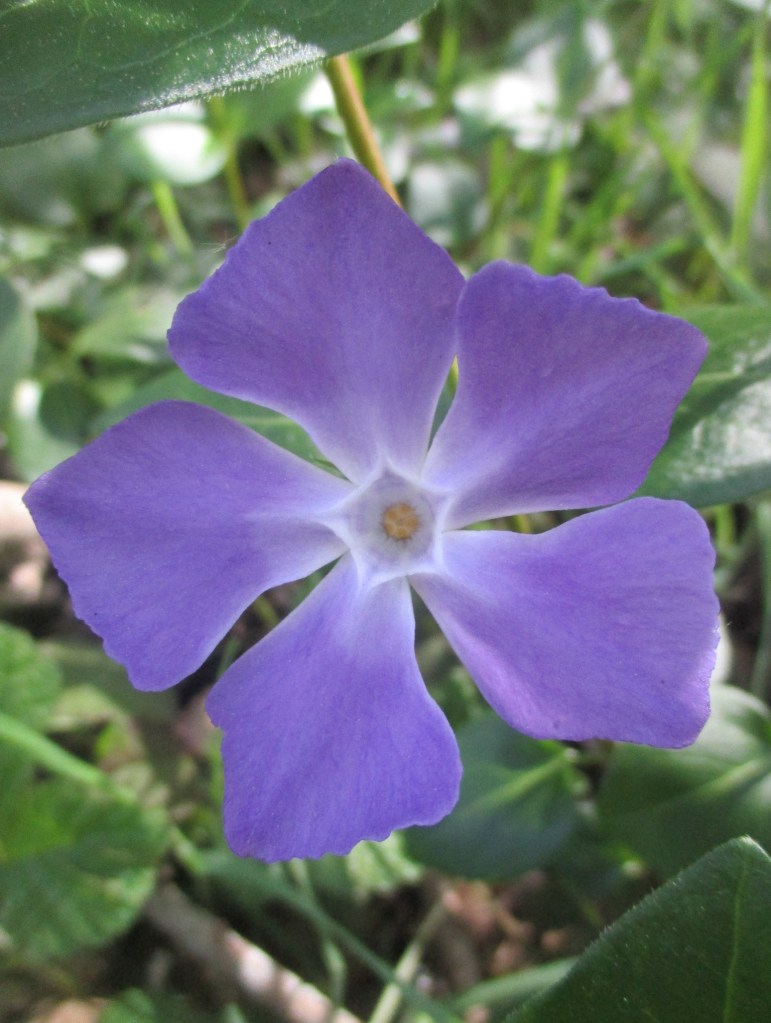
Periwinkle is pretty for a weed.

Wildflowers have been quite a fad. Relative to most fads, they are not so impractical. For some situations, they are a good excuse to waste less effort and resources on unrefined parts of the garden. Of course, they all require some degree of effort and resources. Most are neither as wild nor as natural as their marketing suggests them to be. Few are native. 

Wildflowers that lived here centuries ago, prior to the introduction of exotic species, were relatively unimpressive. Although some bloomed spectacularly, they did so within a brief season. Winter is too cool for pollinators that wildflowers intend to attract. Summer is too dry for bloom to last long. Most bloom was limited to the transition from winter into spring. 

The same native wildflowers bloom even less now than they did centuries ago because of competition with exotic species. Most exotic species that compete with wildflowers are feral forage crops that lack colorful bloom. They grow so vigorously that they obscure the natives. Mitigation of such undesirable vegetation ruins wildflowers that mature within it.

Most of the best wildflowers here now are as exotic as feral forage crops. Those that are native might be more reliant on unnatural cultivation. California poppy, evening primrose, and native annual lupines might prolong bloom with a bit of extra water through summer, but need weeding. With the same watering, (non-native) cosmos stands up to the weeds. 

Unfortunately, vegetation management is more important than wildflowers outside of the refined garden. Overgrown weeds are combustible and can be dangerous to pets. Weed whacking too often involves wildflowers before they get their chance to bloom, as well as foliage of spring bulbs after bloom. (It sometimes damages bark of trees and shrubs too.)

Some low and dense perennial wildflowers are more reliable than annual sorts because they exclude annual weeds. Saint John’s wort and periwinkle are invasive exotic plants, but work well as ground covers. Mowing or shearing them late in winter slows their competing weeds, and also enhances their foliar density before competing weeds regenerate.

Weeds Are Full Of Surprises

Pokeweed is rapidly becoming more common.

While it was busy naturalizing in Australia, South Africa and southern South America, the California poppy was getting forced out of parts of its own native range by more aggressive exotic plants that were also busy getting naturalized. Technically, any plant that is not native is exotic. Any exotic plant that becomes naturalized in a foreign environment is able to proliferate without any help, as if it were native. Naturalized exotic plants that get too aggressive become invasive weeds.

Weeds are plants where they are not wanted. This is a very broad definition that includes plants ranging from simple little dandelions in urban lawns to humongous bluegum eucalyptus in forests. Naturalized exotic weeds can be much more problematic than weeds that can only proliferate where they get watered in gardens and landscapes, because they can get established where they are not expected.

Water hyacinth that clogs the Sacramento and San Joaquin River Delta is not often a problem in terrestrial landscapes. However, giant reed, pampas grass, Acacia dealbata and blackberry brambles can infest home gardens just as easily as they infest wild lands. Because they do not need to be watered, they can get established and grow quite large in unused parts of the garden before anyone notices.

Many naturalized weeds somehow seem to much more aggressive and problematic than even the most prolific of native plants. Even the common native lupines are relatively docile compared to annual oat grass. Native blackberry may seem impossible to eradicate, but is actually neither as persistent nor as unpleasant to handle as the exotic Siberian blackberry!

Young weeds are easiest to pull now while the soil is still evenly damp, and young roots are only beginning to disperse. They will be more difficult to pull after roots are dispersed and soil hardens. Tree weeds and large perennial weeds that were cut down last year instead of pulled will likely need to be dug. Bermuda grass is a relatively low perennial grass that always seems to be difficult to dig. Mowing or cutting down annual grass weeds with a weed whacker will not eliminate them, but limits the development and dispersion of seed for the next generation. Burclover, sowthistle, bindweed, purslane, spurge and the various oxalis are some of the other common weeds that really get going this time of year.

Invasive Weeds Waste No Time

Aggressively invasive exotic species become weeds.

With few exceptions, the most aggressively invasive weeds here are exotic. In other words, they are not native. They came from other regions where they were likely compliant participants of their respective ecosystems. At home, where they must compete with other members of their ecosystem, they may not be so aggressively invasive. Ecology is the opposite of a home field advantage.

Exotic species become invasive weeds in foreign ecosystems for a variety of reasons. For some, the climate is more favorable. Some grow and proliferate more freely without diseases, insects and animals that troubled them back home. There are also several that simply compete more aggressively for space and resources than native species are accustomed to. It is a jungle out there.

Most invasive exotic species are annuals. Many are biennials or perennials. Some are vines, shrubs or even trees. Most were imported intentionally, for a variety of reasons, and then naturalized. Forage and cover crops were some of the earliest of exotic species to become invasive. Other invasive species escaped from home gardens. Blue gum eucalyptus was imported for wood pulp.

Regardless of their origins or physiological forms, invasive species are weeds. They compete for the same resources that desirable plants use. They impede on the aesthetic appeal of gardens and landscapes. Some types of weeds become hazardously combustible. Even if not directly problematic, invasive weeds disperse seed that can be problematic nearby. Many disperse stolons.

Most weeds start early and grow fast to get ahead of their competition. They are more active at this time of year than at any other time. They are also vulnerable. While the soil remains damp from winter rain, they are relatively easy to pull intact. They have not yet dispersed seed for their subsequent generation. Later, they are likely to leave behind seed and bits of roots that can regenerate.

It is important to pull or grub out seedlings of unwanted shrubbery and trees, as annual weeds. They are likely to regenerate if merely cut.

Snails, Weeds And Falling Leaves

Gardening does not slow for autumn.

The coloring of foliage is a bit slow this autumn. The cooling nights after such warm weather is bringing some of the deciduous foliage down while it is barely yellowing. Honeylocust and black oak have already gotten notably sparse without much notable color. Hopefully, the more colorful sweetgum, flowering pear, pistache and gingko trees will retain their foliage later into cooler weather, so that they can put on a worthy show before filling compost piles.

It is probably slightly too early to clean gutters and downspouts. Unless the rainy season somehow starts first, this should probably wait until most of the foliage that is expected to fall has already fallen. Lawns, certain ground covers, decks and pavement should be raked as needed though. Decks and pavement can get stained from the tannins that leach from decomposing foliage. Lawn and ground cover do not like the shade under the debris.

However, slugs and snails really dig the mess. Fallen foliage keeps the ground cool, damp and shaded. Raking leaves does not eliminate slugs and snails, but inhibits their proliferation. There are always plenty of other hiding places. As the weather eventually gets cooler and damp, snails that stay out in the early morning should be collected and disposed of. Of course this technique is not convenient for everyone, since most snails hide before the sun comes up. Small slugs hide earlier in the morning and are even more unpleasant to handle.

Once found, neither slugs nor snails are too elusive . . . or fast. Yet, plucking and collecting them is not a fun job. Once collected, no one knows what to do with them. They can be put into plastic bags and disposed of; and will eventually succumb. Some people prefer to simply toss them onto a dry and sunny driveway or roof where they succumb more quickly and get taken by birds. Snails may need to be squashed to limit mobility.

Even though it is too late to prevent most types of weeds from dispersing their seed, a few types continue to disperse seed as they deteriorate through autumn and winter. Weeds in areas that get watered last longer and disperse their seed later than those without watering. Perennial weeds that are still green in dry areas areas will be easier to pull after the first rain.