Weeds Are Prolific And Invasive

Weeds are now growing vigorously everywhere.

Warming spring weather accelerates bloom and growth. Early spring bloom is now much more colorful than the best of winter bloom. Fresh foliage is already replacing defoliated deciduous foliage and faded evergreen foliage. Vegetation will soon be more active than they will be during any other time of year. Such vegetation unfortunately includes weeds.

Weeds are only weeds because they are unwanted. That is their only commonality. Most are exotic, or not native, but a few are native. Most are annuals, but a few are perennials, vines, shrubs or trees. Annuals grow from seed, but several of the others can perpetuate vegetatively. Some are appealing where appropriate, but migrate to where they are not.

Weeds become weeds because they are generally invasive. Many are aggressively so. They grow wherever they can, and compete with any desirable vegetation for resources. The most aggressive annual weeds begin growing before preferable species. They can overwhelm their slower victims. Several have bloomed and are already dispersing seed.

Exotic weeds are here for a variety of reasons. Some arrived inadvertently as seed in fur or digestive systems of livestock. Some were fodder for livestock. Many were originally desirable flowers for home gardens. A few were formerly useful as cover crops or erosion control. Many lack natural pathogens from their native ranges that limit their proliferation.

Regardless of their origins, weeds now necessitate weeding. They grow throughout the year, but most are most active as winter becomes spring. Obviously, they grow like their horticultural designation implies. Those that are not already dispersing seed should not get the opportunity to do so. Less weeding will be necessary later if more happens now.

Besides, weeding is easier while the soil is still evenly damp from winter rain. Roots are more pliable and less dispersed. They toughen and disperse as the season progresses. Rhizomes, stolons and other perennial weed parts are likewise easier to pull or dig now. Tilling might be more efficient for eradication of small but profuse young weed seedlings.

Horridculture – Inexhaustible Resources

Wild cucumber is not a particularly substantial vine. Except for its tubers, it is quite delicate.

Wild cucumber, Marah fabacea, is also known as manroot because it develops massive tubers that can weigh as much as a man. Such tubers can supposedly weigh more than two hundred pounds, and some sources claim that they can weigh twice as much. That is a lot of storage.

Their thin leaves, slender vines, tiny flowers and fleshy fruit are not very substantial, and can not be very consumptive. They are quite watery, and leave minimal debris when cut and dried, or when they die back after frost.

So, why does wild cucumber store so much resources within their massive tubers? I have no idea. I realize that it is a survival technique, but this is major overkill. No winter is long enough to justify such extreme storage. No summer is dry enough. No wildlife is voracious enough. No forest fire burns the same place more than once in a season. Furthermore, no gardener is diligent enough.

Seriously, these things are impossible to kill. The vines pull up quite easily, with no resistance. The tuber simply makes more. Secondary vines pull up as easily as the first. The tuber simply makes more. No matter how many times the vines get pulled up, the tuber simply makes more. It never exhausts its resources. Removal of the vines deprives it of its ability to accumulate more resources, or replenish what is used to generate the vines, but it has enough to generate vines for many years.

The only way to eliminate these weeds is to dig up their massive tubers, which are fortunately not very deep underground. Even then, the tubers do not die. This one sat around through last summer, and is still viable. I suppose that we should dispose of it with the trash, since we can not compost it.

This wild cucumber tuber is bigger and much heavier than Rhody, but is smaller than average.

Sustainable Horticulture Should Be Sustainable

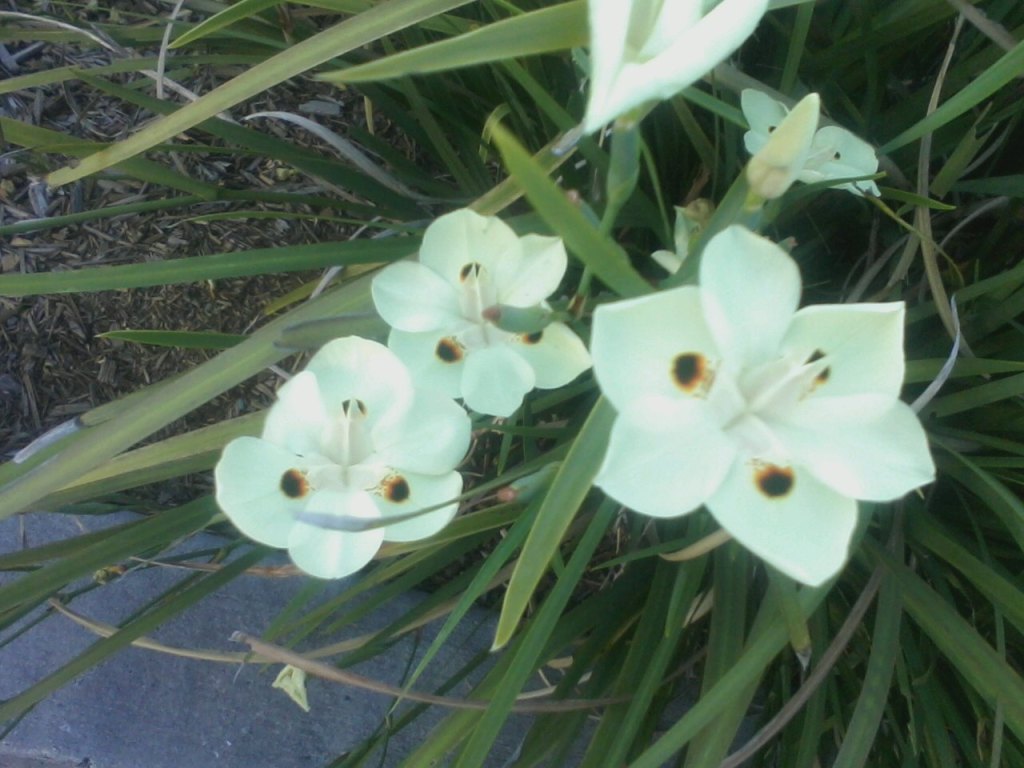
Lily of the Nile is sustainable!

There is no doubt about it. Weeds are sustainable. Otherwise, they would not be weeds. By definition, they grow where they are undesirable. Less sustainable vegetation should be less invasive. Also, it should be less resistant to eradication than most familiar weeds are. Unfortunately, also by definition, weeds are undesirable. They can not become fads.

Sustainable horticulture is a fad though. Unlike most fads, it is actually quite sensible. In theory, it is horticulture that requires as minimal intervention as possible. It excludes that which requires intensive or impractical cultivation. For example, native species that grow wild are sustainable. Tropical species that may survive only within greenhouses are not.

A problem with the sustainability fad is its marketability. ‘Sustainable’ and ‘Sustainability’ have become cliche buzzwords. They too often describe merchandise that is contrary to the fad. Realistically, genuine sustainability is unsustainable within profitable marketing. Truly sustainable merchandise would eliminate most of the need to ever purchase more.

Modern cultivars can qualify as ‘new and improved’ as they first become available. They are certainly new. However, their improvements may be questionable. Hybridization and extensive breeding can cause genetic deficiency. Even natural variegation compromises vigor. Seed is not true to type. Most aesthetic improvements are contrary to sustainability.

Native species are technically sustainable. Once established, they might survive without irrigation or other attention. Unfortunately though, some are not very adaptable to refined home gardens. Some are vulnerable to rot if nearby vegetation needs frequent irrigation. Some perform vigorously only for a few years. Several species are innately combustible.

Ironically, several of the most passe and old fashioned species are the most sustainable. That is why some of them became passe. Lily of the Nile can survive indefinitely. If it gets overgrown, it is easy to divide and relocate. It may be available for free from neighbors or friends. African iris, New Zealand flax, bergenia, most aloe and many yucca are similarly sustainable.

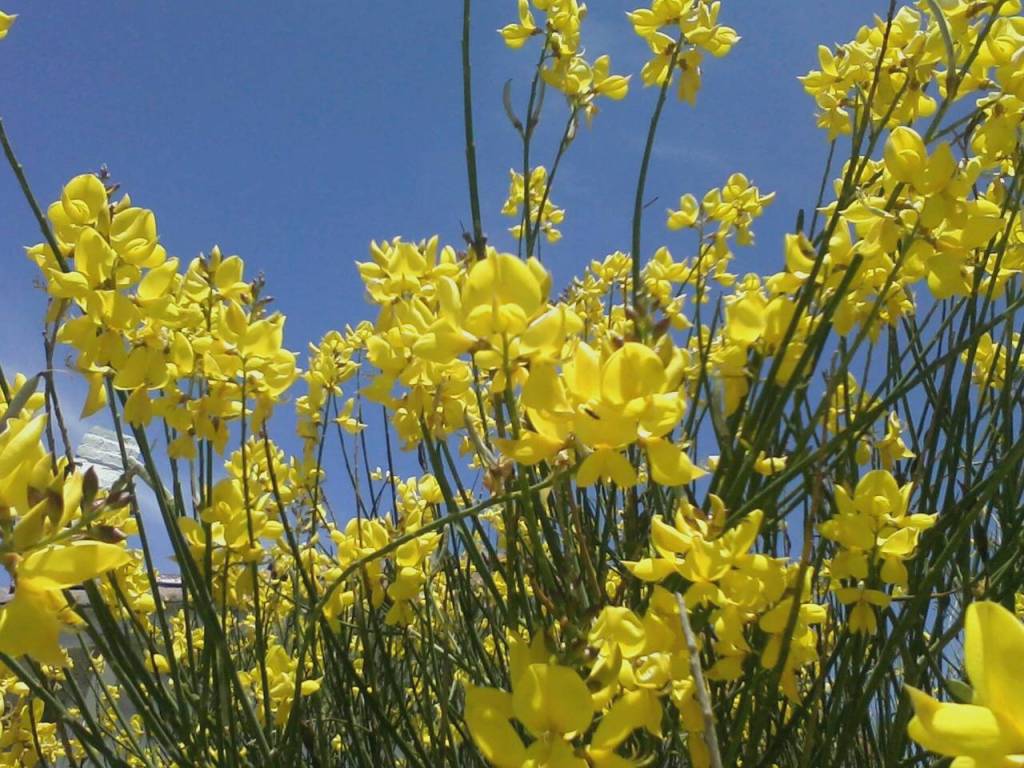
Broom

Most broom is an aggressively invasive weed.

French, Spanish, Mediterranean and common brooms are the most familiar of the brooms because they are among the most invasive and aggressive of weeds in rural areas. Many other brooms (that are primarily within the two genera of Cytisus and Genista) that are tame enough for home gardens unfortunately share the bad reputation, even though many of the modern varieties are hybrids that do not even produce viable seed. Once established in sunny, well drained sites, brooms are not at all demanding.

Broom bloom is almost always bright yellow, although a few varieties of broom have white, pink, pale orange or even purplish flowers. Most have finely textured evergreen foliage. Others are foliated only for a short time in spring before they drop their foliage in early summer to reveal distinctive bare green stems. The most popular modern varieties are fluffy, low shrubs less than four feet tall. Some of the more traditional types get taller than ten feet.

Some Weeds Were Not Always Weeds

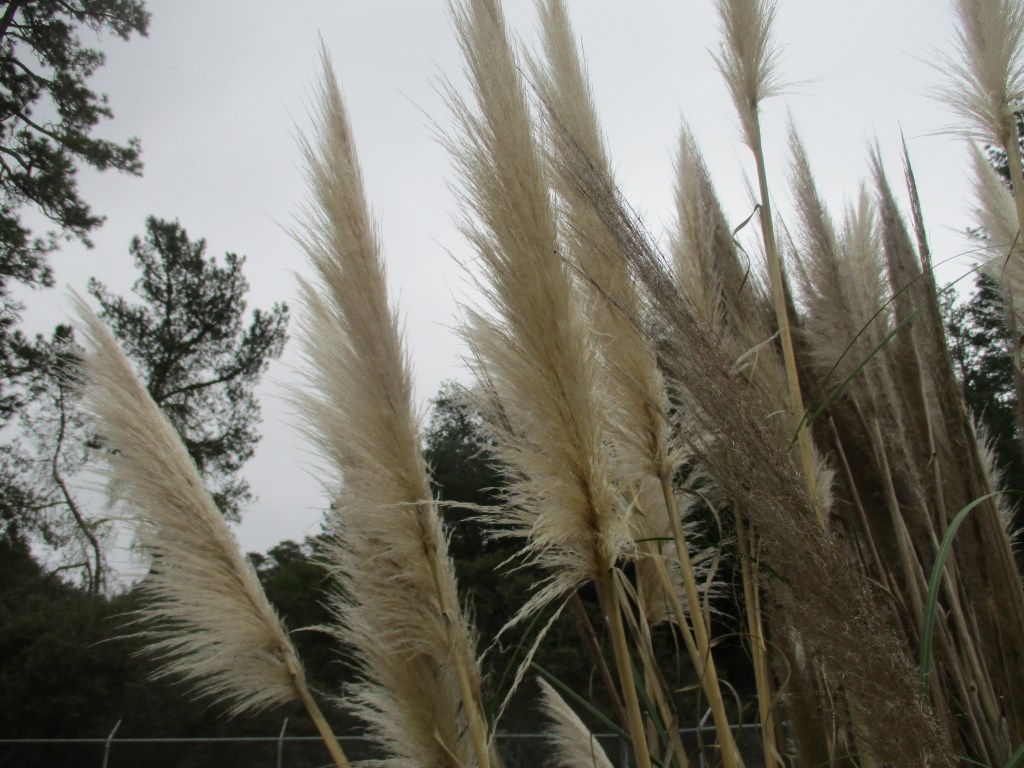
Pampas grass was planted intentionally a long time ago, but then became a weed.

Weeds can be so very sneaky; getting into the weirdest places, and taking on all sorts of forms. They are mostly annuals or perennials that infest lawns and beds, but can be shrubs, vines and even big trees that grow among desirable plants, in untended areas, in cracks in pavement and even in roof gutters and on flat roofs. Many look appealing at first, but then later get out of control and displace the plants around them, or wreck whatever fence, pavement or building they encounter. Heck, I even suspect that it was a weed that stole my neighbor’s Pontiac!

While the soil is still damp from earlier rain, the most common annual weeds that are just developing are easiest to pull. They will put up more of a fight later, after they have dispersed roots, and the soil has gotten a bit more firm. Perennial weeds that were already established before winter will be considerably more stubborn, but not as stubborn as they will be as the soil dries later. Bermuda grass and crabgrass are always nasty.

The biggest, sneakiest and most stubborn weeds are ironically descendents of substantial perennials, shrubs and trees that were once actually planted in gardens. They are sneaky because they look as pretty as their parents when they first appear, in order to dissuade us from pulling them. The problems are that they are often too abundant, and very often get into spots where they will be problematic as they grow.

For example, Acacia dealbata and black locust are rather appealing trees while they are young, especially when they bloom. This is why they were originally planted in local gardens. It is tempting to allow self sown seedlings to grow instead of pulling them when they first appear. However, because they were not actually planted strategically where they can necessarily be accommodated, they grow in random situations, too near to pavement, fences or eaves, or in areas that are already landscaped. As they mature, they can damage these features or the plants around them.

Privet, pampas grass, castor bean and a variety of palms, acacias, ivies and several other plants that do a bit too well in local gardens have certain potential to become invasive or aggressive big weeds. Tree of Heaven, giant reed, the various brooms and the most invasive of acacias  have not been available in nurseries for many years because they are so problematic, but continue to be some of the most invasive and aggressive weeds in California.

Weeding Before Weeds Start Seeding

Some cultivated species can become weeds.

Weeds are weeds simply because they grow so aggressively where they do not belong. They begin before the weather gets warm enough for desirable plants to grow. Some are already blooming and dispersing seed. This is why weeding is presently very important. Weeds innately compete with desirable vegetation for space, water and other resources.

Weeding should ideally eliminate target weeds before they disperse seed. Some weeds are sneaky. They bloom and disperse seed while young and seemingly innocent. Some conceal their bloom and seed with their lush foliage. They seem to know to do so during rainy weather that discourages weeding. They effectively provide their own replacement.

Some weeds regenerate vegetatively. They grow from stolons, rhizomes, bulbs, corms or other dromant storage structures. Many of these structures were dormant through winter. Some were dormant even longer. They are aware that winter is becoming spring, so now begin to grow. As they do, they generate more of the same structures, perhaps with seed.

Weeding is easiest as soon as weeds are big enough to grip. Their young roots separate easily from their soil before more thorough dispersion. Also, their soil remains thoroughly damp and soft from winter rain. However, it may be easier to eliminate a profusion of tiny seedlings by tilling. Weeding bulkier weeds, such as pampas grass, can involve digging.

Only a few weeds are woody vines, shrubs or trees. More weeds are perennial. The vast majority of weeds are annual. Regardless, the most substantial weeds are woody. Some can regenerate persistently from their stumps. Therefore, weeding of such weeds should involve removal of their entire stumps. It is important to dig rather than cut oak seedlings.

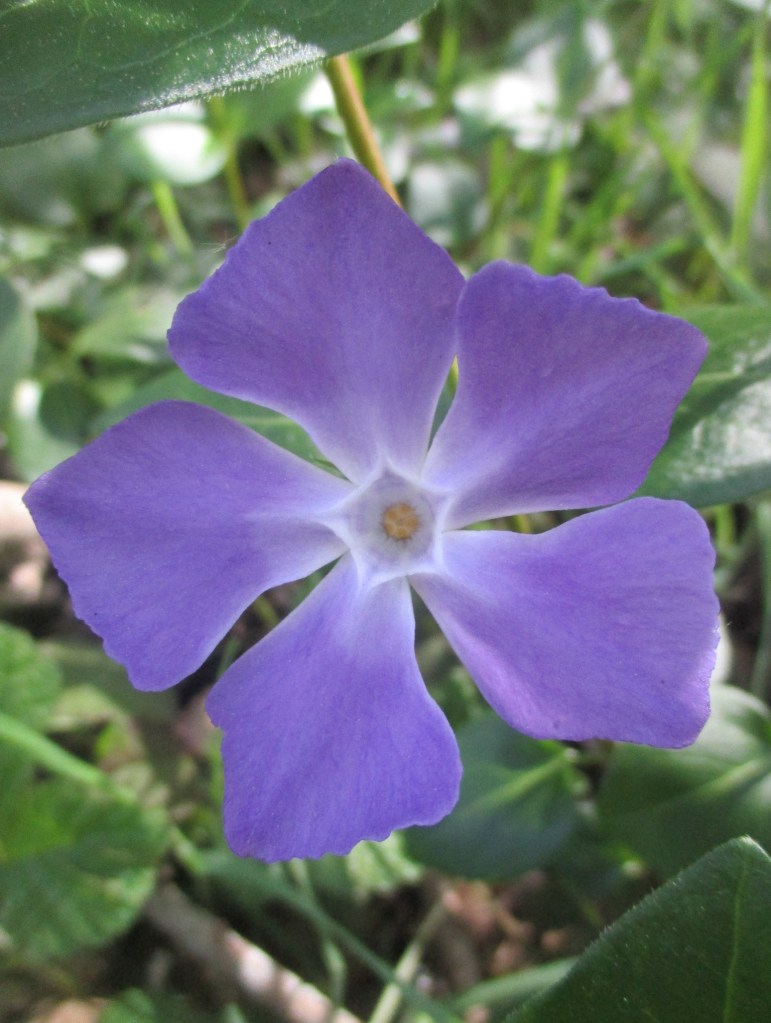
Few native species proliferate undesirably. Therefore, most weeds are exotic. Most were originally desirable, but naturalized. English daisy, periwinkle, pampas grass and broom were formerly popular flowers. Blue gum eucalyptus formerly provided wood pulp. Other weeds formerly grew as vegetables, fruits or grain. Many weeds were once forage crops.

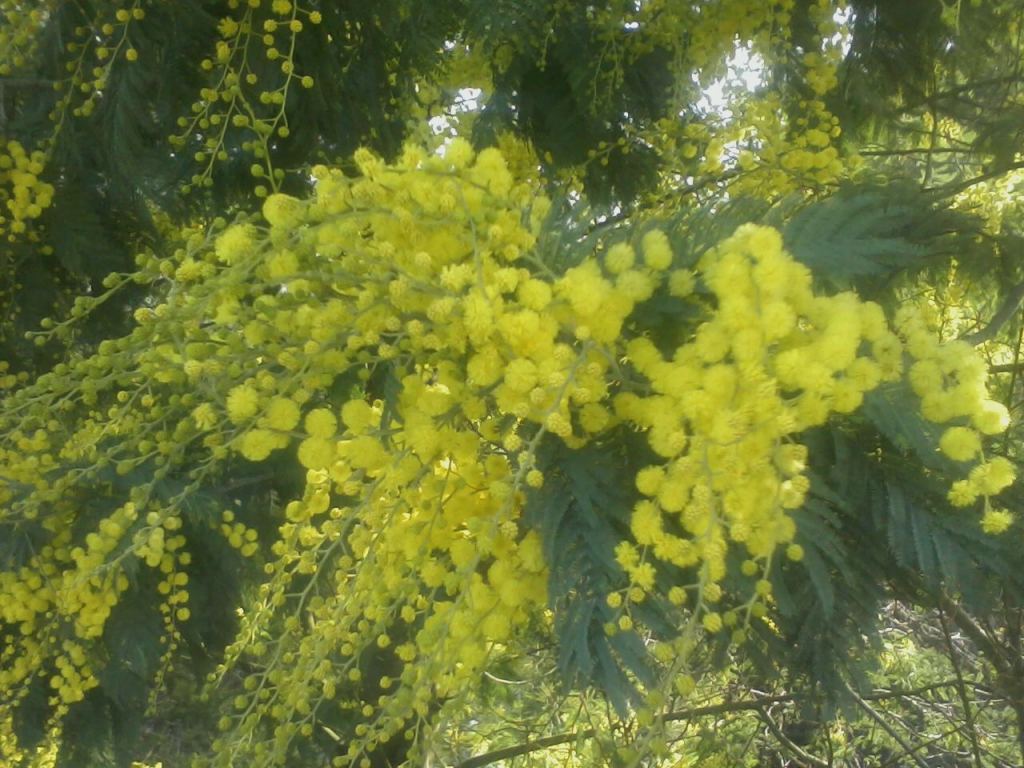
Acacia dealbata

It is an aggressively invasive exotic weed, but at least it is pretty about it.

Some of the worst weeds in California are substantial naturalized trees. The most famous of these is probably the Tasmanian blue gum (eucalyptus), which gets very big very fast, and crowds out other trees and plants in the process. The silver wattle, which is most commonly known locally by the Latin name Acacia dealbata, is even more voracious and prolific. It may seem simple enough to cut down an invading Acacia dealbata before it gets too big, but the seedlings from the original tree may continue to invade unrefined landscapes or wildlands for years afterward.

Even urban Acacia dealbata that lack space to disperse seed are problematic. After only about thirty years, they begin to deteriorate, but can die a slow unsightly death for another ten years! Deteriorating trees are likely to fall without much warning. They can get  more than sixty feet tall, and typically fall intact, so can do considerable damage.

The only attribute of Acacia dealbatais that it can be so visually appealing. The somewhat gray, bi-pinnately compound foliage is very finely textured, and provides just enough shade without being too shady. (Bi-pinnately compound leaves are divided into smaller leaflets, which are also divided into even smaller leaflets.) Individual leaves are about three to five inches long. The fuzzy staminate (lacking petals) flowers that bloom in winter are so abundant that most of the foliage is obscured. The floral fragrance that is objectionable to some is appealing to others.

Catch Weeds Before They Go To Seed.

Seed pods not only look unkempt and inhibit continued bloom, but can disperse too many seeds of otherwise worthy plants.

It may seem futile to pull certain weeds this late in the season. Those in unrefined parts of the garden that get little or no irrigation might be so dry that they only deteriorate and scatter their abundant seeds when pulled. The soil may be so dry that roots are difficult to extract, especially since the drying foliage now separates from the roots so easily. The only hope is that removal of dying weeds might eliminate at least some of the seeds for the next generation of weeds.

Foxtail and burrclover are not only annoying, but are also dangerous to dogs and cats as their seeds mature and dry. After all, the seeds rely on animals for dispersion, so intentionally stick to fur. The problem is that seeds can get stuck in more than fur, and sometimes get into ears, eyes, nostrils and elsewhere. Seeds from a few other weeds can do the same.

Cheeseweed is not a dangerous weed, and is relatively easy to eradicate. The roots even stay attached to the stems when they get pulled. The problem with leaving them to mature is that they become infested with rust (a fungal disease) that spreads to other desirable plants. Saint John’s wort, snapdragons and roses are particularly susceptible to rust.

Feral Jupiter’s beard and montbretia that grow where they were not intentionally planted are often allowed to bloom before getting pulled. However, after bloom, stems separate so easily from roots that most of the roots remain to regenerate as soon as they are able. If left long enough after bloom, both Jupiter’s beard and montbretia sow seeds to infest even more.

Fortnight lily (or African iris) are not often a weed, but can get that way if their seed capsules are not removed before they mature and pop open. Besides, development of these capsules diverts resources from continued bloom. It is best to remove the capsules before they get floppy, and to remove as much of the finished flower stem as possible without removing stems that have not yet bloomed.

Both dusty miller and coleus are grown for their distinctive foliage but not their bloom. Flowering stems stretch and exhibit inferior foliar color and texture, so can actually get snipped before they bloom.

Blue Gum

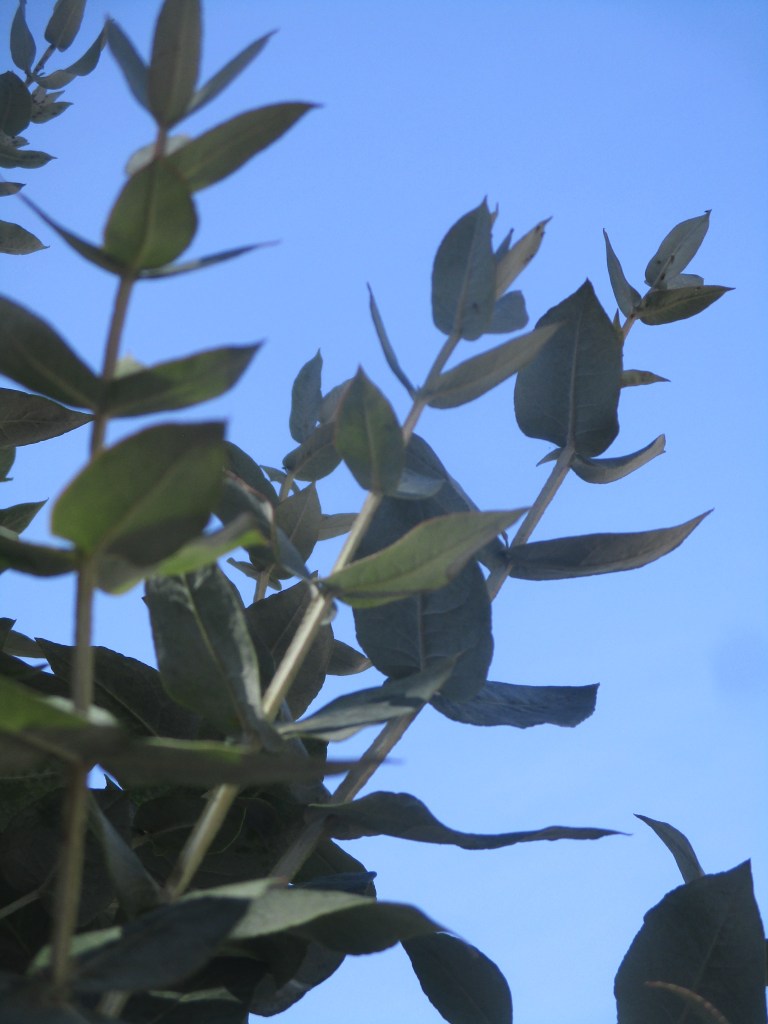
Juvenile blue gum foliage is very aromatic.

This is the primary eucalyptus that earned a bad reputation for all other eucalyptus. Blue gum, Eucalyptus globulus, arrived in California in the 1850s, and grew on plantations for timber. As its timber proved to be of inferior quality, and demand for wood pulp dwindled, the plantations succumbed to abandonment. Feral trees naturalized into adjacent areas.

Although once a common timber and wood pulp commodity, and effective as windbreaks for agricultural purposes, blue gum was never popular for landscapes. Those that inhabit urban or suburban situations were generally there prior to urban expansion around them. They are far too massive, messy and combustible, and inhibit the growth of other plants.

Mature blue gum trees can be significantly taller than a hundred feet, with elegantly high branched form. Limbs that fall freely from such heights are very dangerous. The aromatic foliage is evergreen. Adult leaves are stereotypically lanceolate and curved. Silvery blue juvenile leaves are blunt, sessile (lacking petioles) and more aromatic than adult foliage. Strips of smooth tan bark shed to reveal paler bark.

Exotic Weeds Are The Worst

English daisy gets prolific in lawns.

Exotic species are not native. It is that simple. There is nothing fancy about it. They came from elsewhere to live here. They are not necessarily rare, unusual or innately desirable. Most plant species within most refined landscapes and home gardens are exotic. Native species that inhabit unrefined areas, although trendy, remain unpopular for landscaping.

Not only are exotic plant species not necessary rare or desirable, many are too common or undesirable. With few exceptions, the most aggressively invasive of weeds are exotic. For a variety of reasons, they proliferate faster than native species. Some are aggressive because they are endemic to competitive ecosystems. Most lack natural pathogens here. 

A weed is merely any undesirable plant. Some might be desirable in some situations but not others. English ivy, for example, which is a practical ground cover within landscapes, is also an aggressively invasive weed within coastal forests. Most weeds are annuals or biennials, but others are perennials, shrubbery, vines, aquatic plants or substantial trees. 

An unfortunate reality about exotic weeds is that they are not here by mistake. Generally, their importation was justifiable at the time. Most were ornamental plants for gardens and landscapes. Some came as fruits, vegetables, herbs, cover crops or forage for livestock. Some came as timber. Species that escaped cultivation and naturalized became weeds.

Such weeds compete for the same resources that desirable plants utilize, and are mostly visually unappealing. Some enhance the combustibility of landscapes and forests. A few weeds produce seed structures that are hazardous to pets and wildlife. Even if problems are not directly obvious, weeds disperse seed to share their innate problems elsewhere.

This is typically the best time of year to pull or grub out weeds, although more weeds will grow later. Annual weeds are mature enough to get a good grip on. Soil should be damp enough from winter rain for roots to pull out relatively easily. Weeding will likely require a bit more effort this year because of the extended dry and warm weather since December.