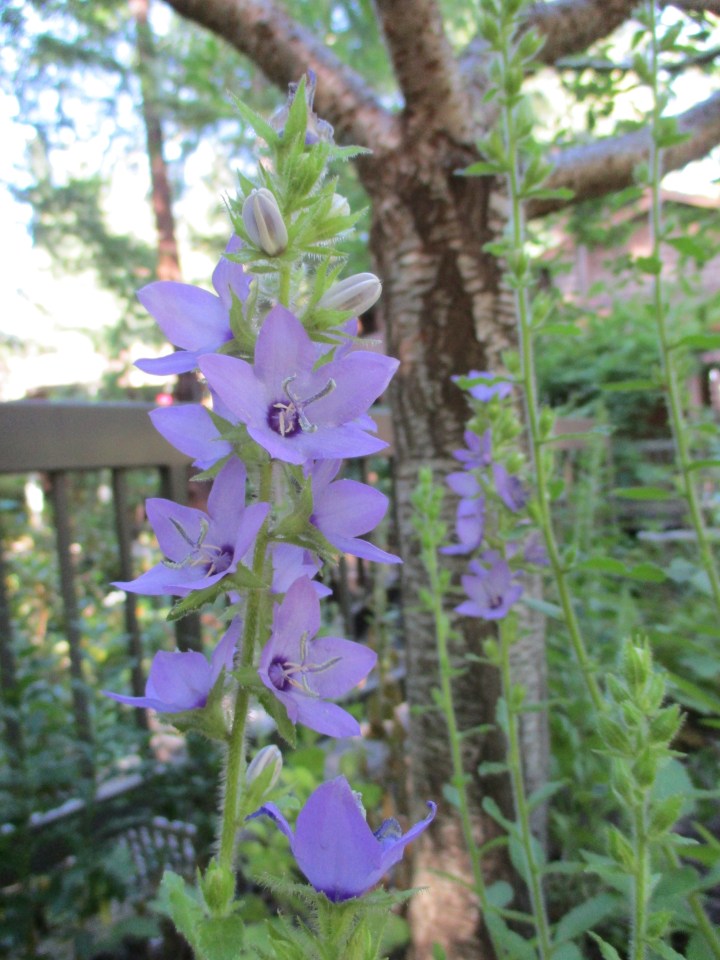
 The seed is not really bad. At least I do not think that it is. It is merely misunderstood. Perhaps it would be more accurate to say that it is simply unidentified. I really do not know what it is. I do not say that very often, especially about seed that I bother to collect to sow elsewhere. I believe that it is of American bellflower, Campanula americana. If not, it is very closely related.
It appeared in part of one of the landscapes at work. Because it looked like some sort of campanula, we left it to see what it would do. It got quite tall, but never started to look like something we did not want to take a chance on. We were rewarded for taking the risk when it bloomed with these elegant spikes of small sky blue flowers. That was a little more than a year or so ago.
No one bothered to deadhead it immediately after bloom. It was only a few plants on the back edge of rather relaxed landscape, so was easy to ignore. By the time the dried floral stalks were noticed and removed, the seed had already been tossed. Consequently, there were many more of them through this last season, both in the same area, and in adjacent parts of the landscape.
In fact, there were too many to ignore when their floral spikes had finished blooming. I deadheaded them myself so that I could collect the dried floral carcasses in a small bucket. Some seed had already been tossed for next year. Nonetheless, there is enough dust-like seed in the bottom of the bucket to share with other landscapes. I intend to sow it just prior to winter storms.
So, this unidentified seed should be an asset to the landscapes.
 Compared to extensively bred garden varieties, wild roses are not much to look at. Their tiny flowers do not get much wider than two inches, and may not get much wider than those of blackberry, with only about five petals. Flower color ranges only between pale luminescent white and pale pink. Bloom is typically rather brief in mid spring. Only a few healthy specimens bloom again later.
 There were barely enough blue elderberries left this late in the season for the blue elderberry jelly that should have won the blue ribbon at the Harvest Festival. It’s a long story.
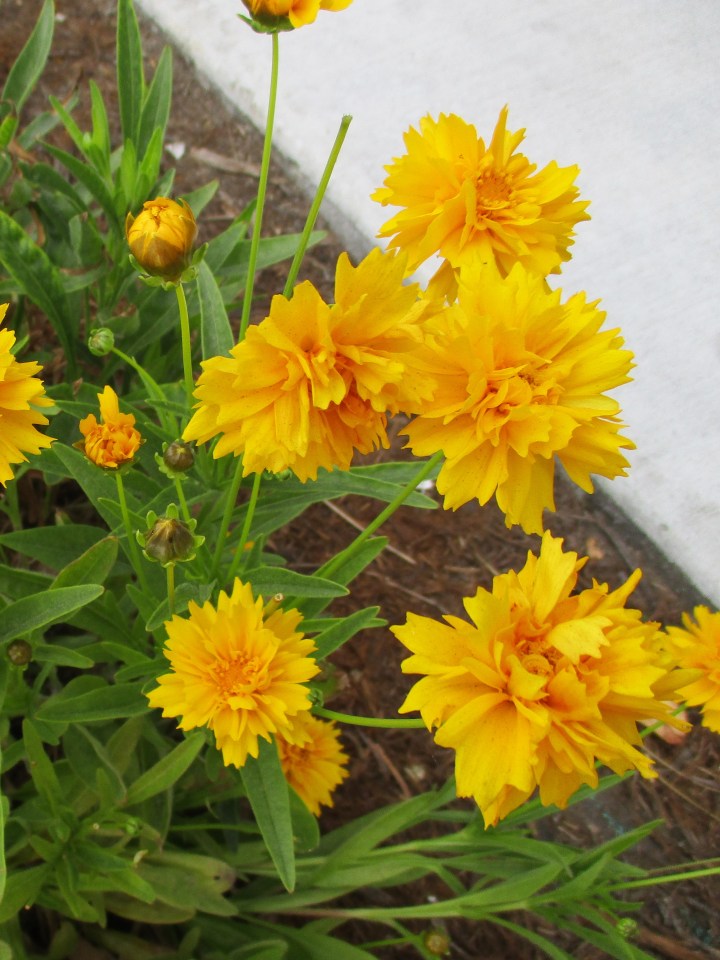 It is a common theme. Coreopsis was a much simpler group of only a few specie and cultivars in the 1980s. There are now too many hybrids and cultivars to keep track of. They have been bred so extensively that they do not produce viable seed like the old fashioned types that can self sow so nicely, and were more closely related to the unimproved specie that would be found in the wild.
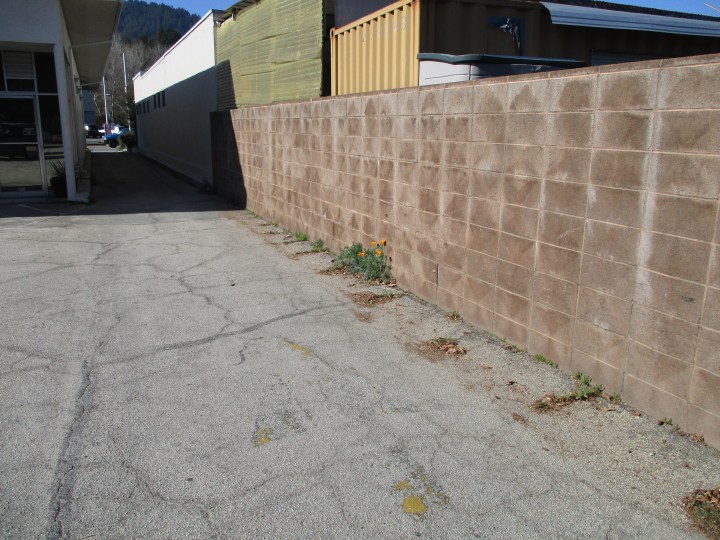 Not just any poppies; California poppies, the state flower of California.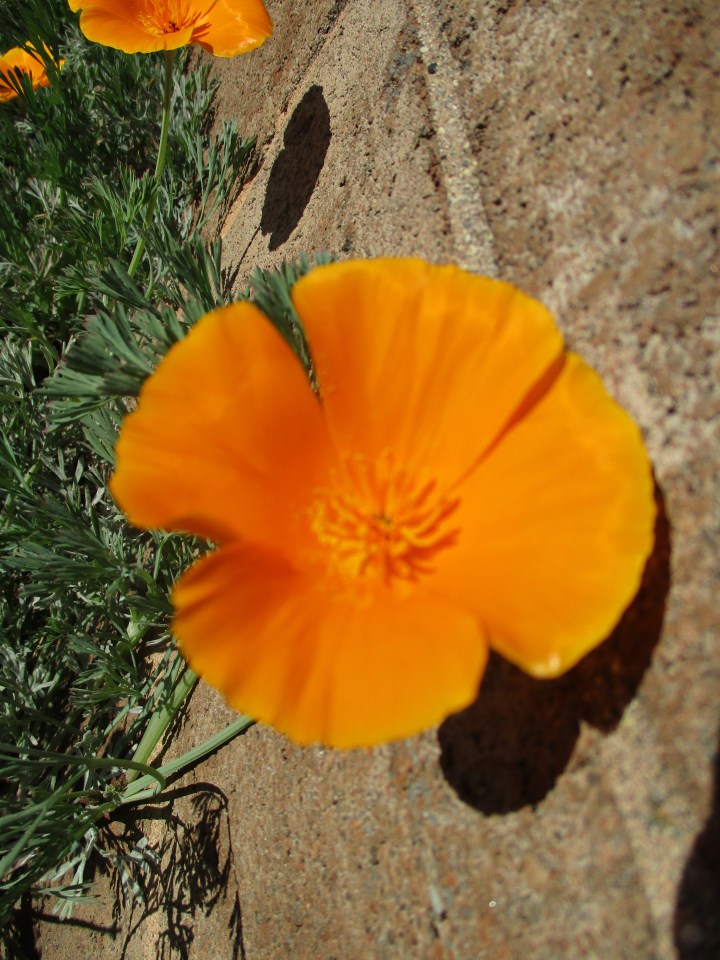
 Is it coincidence that the Latin name of black-eyed Susan is Rudbeckia, or was Becky rude enough to give Susan her black eye? The dark center is something that all varieties have in common, and what distinguishes them from most of the related blanket flower varieties. The daisy flowers of black-eyed Susan are traditionally yellow. Modern varieties can be orange, reddish or bronzed.
 Known more as a medicinal herb, and by its Latin name, coneflower or Echinacea, is a delightful prairie wildflower that works just as well in refined home gardens. It blooms in summer and again in autumn, although autumn bloom can be inhibited if plants are not groomed of deteriorating stems from the previous bloom. Like related gaillardia and rudbeckia, coneflower is a nice cut flower.
 Tony Tomeo