 Of all the colorful berries that ripen in autumn, firethorn, Pyracantha coccinea, is the most colorful, and also the most familiar. The berries are almost always bright red, deep red or reddish orange. Cultivars with orange berries have become rare. Those with yellow berries are even more rare, and are weaker plants anyway. The berries can linger through winter, but typically get eaten by birds half way through.
Firethorn earns its name with formidable thorns. A hedge of firethorn is more impenetrable than a fence topped with barbed wire, but much more appealing with glossy evergreen foliage. The only problem is that no one wants to prune such a nasty hedge! The arching stems can get taller than ten feet, and without adequate pruning, can easily get as broad. Young plants are limber enough to be espaliered.
The fragrance of the profuse clusters of tiny white flowers that bloom in spring and summer may be objectionable to some. Shade inhibits bloom and subsequent development of berries. Feral seedlings sometimes appear, but they are wimpier, thornier, and less prolific with berries than their modern cultivar parents are.
 The bright red berries of late cotoneaster, Cotoneaster lacteus, that ripen in autumn may not be as profuse or as bright red as those of firethorn, but they last longer, and even into winter. Birds strangely seem to avoid them. Although the clustered small berries can look just like firethorn berries, they are usually less shiny, and darker red. Clusters of tiny pale white flowers bloom in spring. The small evergreen leaves have a nice glossy and veined texture on top, with hazy gray or tan tomentum (fuzz) below. The grayish brown bark of old stems resembles that of apple or pear trees.
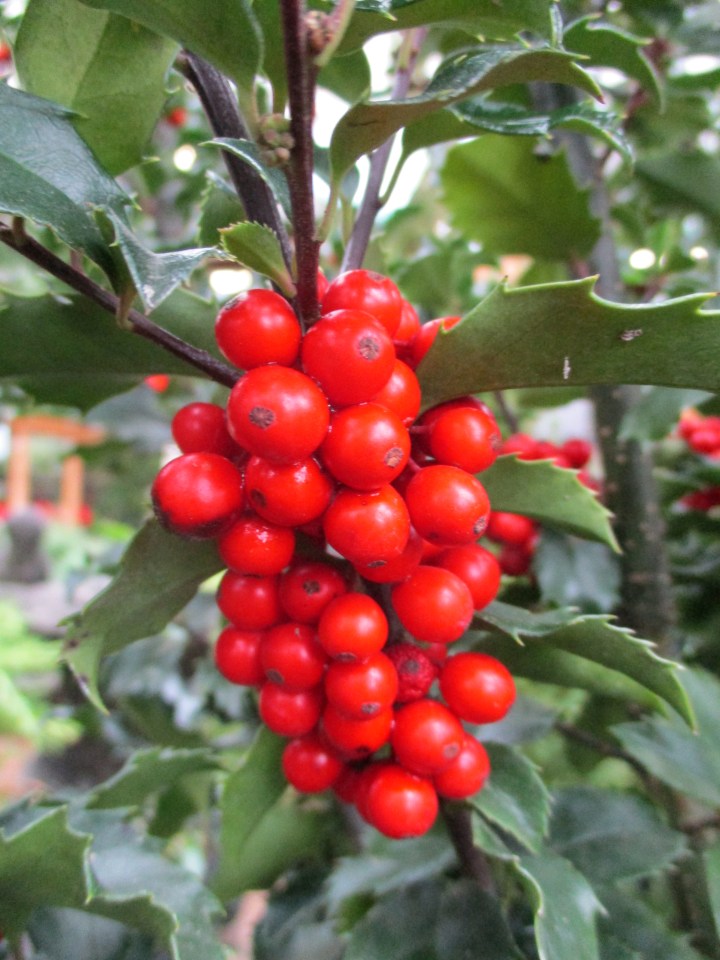 Plants compensate for their immobility by procuring the services of animals and insects. They bloom with flowers that attract pollinators with colors, fragrances and flavors. Their fruits use similar techniques to attract those who consume the fruits to disperse the seeds within. It is a pretty ingenious system. The animals and insects probably think that they are taking advantage of the plants.
 Tony Tomeo