Hellebore

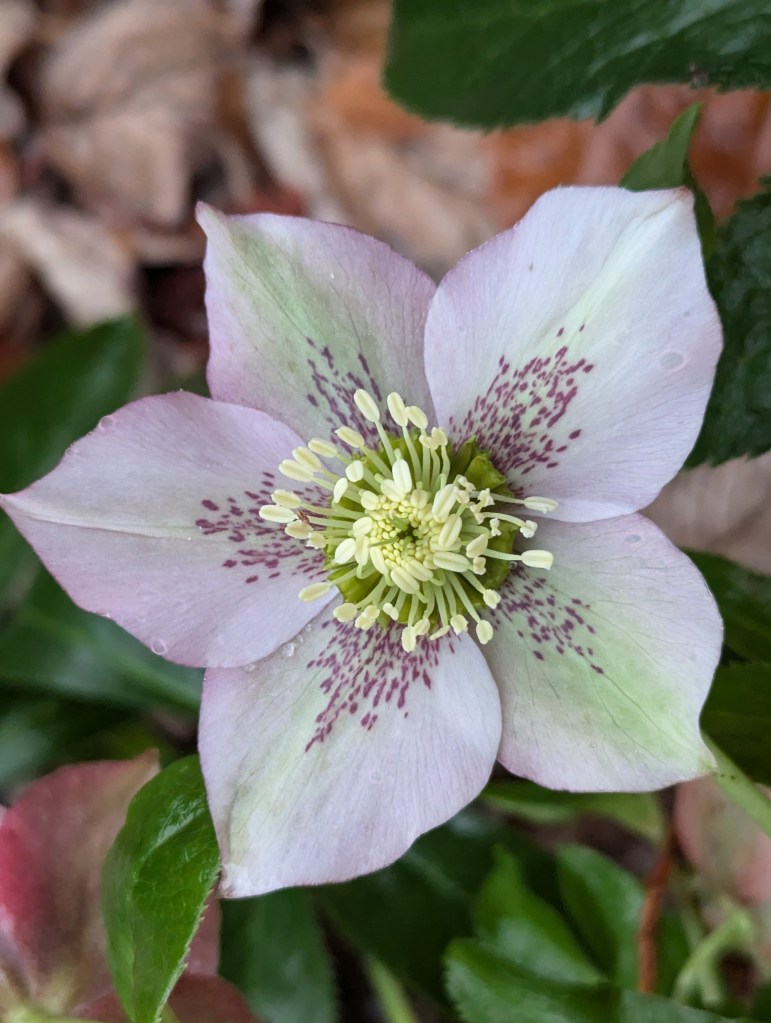
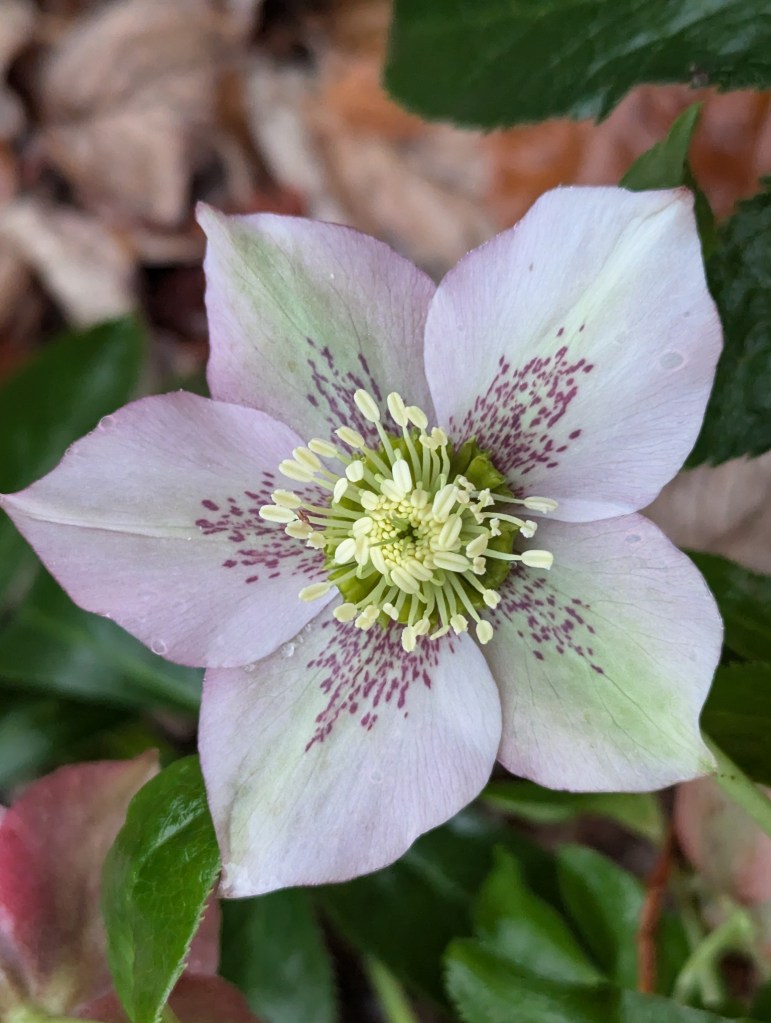
Hellebore is popular within cooler climates.

Where winters are too cool or damp for much else to bloom, hellebore are more popular. The most popular are Helleborus X hybridus, which are hybrids of a few similar species. Most are direct descendants of Helleborus orientalis. They are more resilient to frost than to arid warmth during summer. Actually, that is very likely why they are less popular here.

Locally, hellebore are useful for cool, damp or partly shady situations. However, they are not as substantial as ferns. Also, they can get a bit wimpy as the weather warms through summer. Although evergreen, they shed some of their older yellowing foliage. They grow most during late autumn, winter and perhaps early spring. They crave richly organic soil.

Floral color is typically subdued but interesting. Most common hellebore flowers are pale pink or almost grayish white with spots. Alternatively, they can be rusty red, maroon, pale green, yellow, gray or almost black. Some exhibit more or less spots, blotches, stripes or picotee edges. Double flowers are rufflier than single flowers are. All hellebore are toxic, and for some, can cause dermatitis.

Winter Flowers Bloom In Season

Some flowers naturally bloom during winter.

Evergreen foliage and colorful berries might be more prominent than flowers about now. They should be. Evergreen foliage is, as implied, evergreen. Colorful berries need to be appealing to wildlife that disperses their seed through winter. Not so many winter flowers bloom, though. Most flowers want their bloom season to be favorable for their pollinators.

Flowers that do not rely on pollinators can bloom whenever they choose to. Yet, because they do not rely on pollinators, most waste no resources on floral color. Flowers are, after all, only colorful to attract pollinators. Therefore, if flowers that need no pollinators bloom now, most are easy to ignore. Flowers that are colorful now can probably justify being so.

Most colorful flowers bloom while their pollinators are most active, during warm weather. Some from cooler climates can bloom now simply because they do not know it is winter. Some from milder climates can bloom now because they do not know how cool winter is. Several winter flowers actually bloom now to exploit pollinators who are active in winter.

Winter flowers of some species of Salvia appeal very specifically to hummingbirds. Such species are native to regions where hummingbirds overwinter. Their floral colors are the sort that hummingbirds pursue. Their floral structure and nectar favor the eating habits of hummingbirds. They bloom during winter because that is when they expect their guests.

Camellias of various cultivars are among the most popular and reliable of winter flowers. Different cultivars bloom at slightly different times. Witch hazel cultivars can bloom nicely on bare stems where chill is adequate. Winter jasmine requires less chill and blooms as splendidly, but only with yellow. Oregon grape is also limited to yellow, but is evergreen.

Cool season annuals generally provide the most colorful of winter flowers. Unfortunately, most perform only until warmer spring or summer weather. Pansy, viola and primrose are the most familiar. Primrose becomes popular a bit later, and can continue as a short term perennial. Ornamental kale looks like big winter flowers, but is really big colorful foliage.

‘Yuletide’

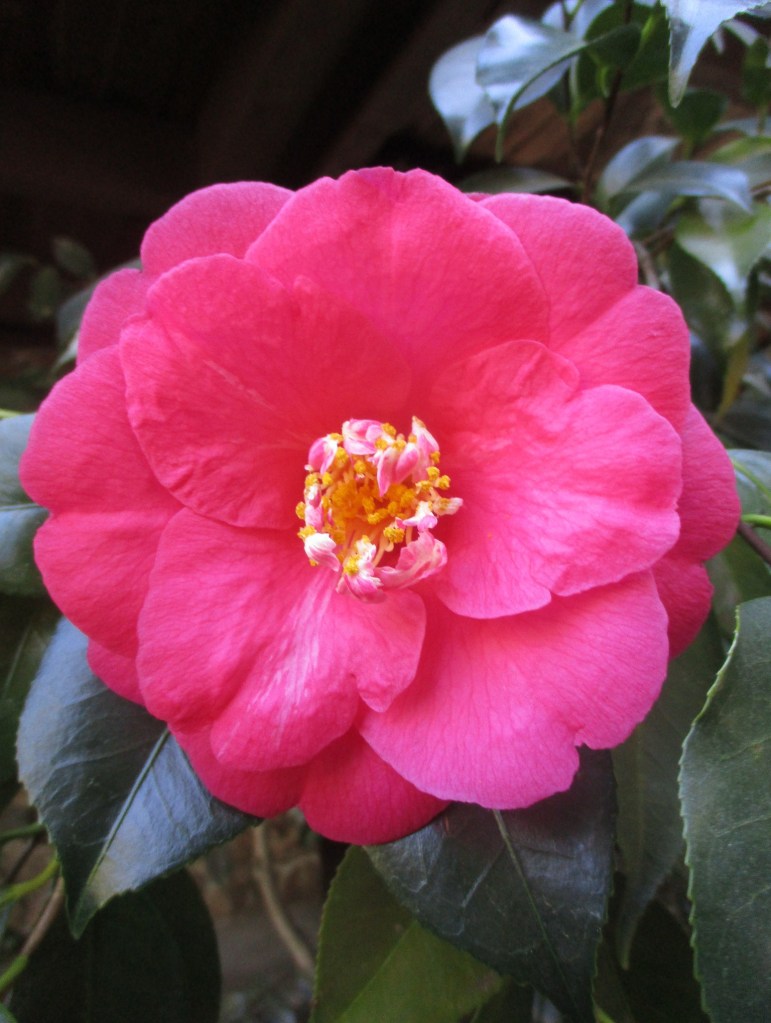
Camellia sasanqua ‘Yuletide’

‘Yuletide’ Camellia sasanqua should bloom for Christmas, as the name implies. It typically does. However, it sometimes blooms early or late. It might be slightly late this year, but has been blooming for quite a while, and was beginning to bloom by Christmas.

It certainly is a delightful red. It seems to me that it can be slightly more reddish, with less of a pink influence, in some situations. Perhaps the bright yellow of the staminate centers cause it to appear as such within certain weather conditions or sunlight exposures. This particular flower may seem to be slightly pinkish as a result of distress. The hedge that it bloomed on had been infested with red spider mite earlier.

This particular cultivar of Camellia sasanqua develops distinctly upright and perhaps ovoid form, and can get quite tall. Most other cultivars develop more irregular or sprawling form, with long and limber stems, and relatively short stature.

I am impressed that this bloom is so resilient to wintry weather. Although much of the foliage is under a wide eave, most of the bloom is not under the eave, so has been exposed to both rain and frost. Apparently, Camellia sasanqua bloom is resilient to frost that is colder than it gets here. Camellia flower blight is common regionally, but mysteriously does not damage many flowers within the landscapes here. White and light pink Camellia japonica flowers are more vulnerable, but even they bloom quite nicely here, with only a few flowers succumbing before they finish bloom, and generally as their cumulative bloom cycle is finishing anyway.

Deer eat any cultivar of any species of Camellia, but avoid camellias here more mysteriously than camellia flower blight. I do not remember ever encountering damage that was caused by deer; and there are many camellias here.

Heath

Heath for winter. Heather for summer.

Heaths, which are several species of Erica, derive their name from their natural habitats. They are endemic to shrublands of acidic and seasonally dry soil of inferior quality. Such ecosystems, or heaths, do not sustain many big trees or shrubbery. Species from heaths should be resilient to dry chaparral summers. However, they dislike locally alkaline soils.

This is unfortunately why heaths are quite rare within gardens here. They are popular as blooming potted plants for winter, but become scarce afterward. Within planters of potting media, they may grow and bloom for many years. In the ground though, they are likely to languish without acidifying amendment. They prefer the company of coniferous species.

Heath blooms for winter or very early spring. Heather is a similar relation, but blooms for summer or autumn. Floral color ranges from white to pink to rustic purplish pink. Flowers are dinky but abundant. Comparably dinky evergreen leaves are like soft juniper scales. Almost all available heaths grow less than five feet high. Most grow less than a foot high.

Winter Bloom Might Be Limited (deferred from yesterday)

Some camellia varieties bloom for winter.

Except for flowers that bloom randomly throughout the year, most autumn bloom is done. Much of the formerly spectacular autumn foliar color succumbed to wintry rain and wind. Many colorful winter berries have already gone with migratory birds who consume them. Overwintering birds appreciate what lingers. Fortunately, some winter bloom continues.

Cool season annuals likely provide most winter flowers prior to spring. Ornamental kale generates a foliar display like a pastel version of summer coleus. Snowdrop bulbs bloom only white, but look sharp if other bloom is scarce. A few species contribute winter bloom merely because they lack regard for seasons. African daisy blooms whenever it wants to.

However, winter bloom is not comparable to spring bloom. That is an unfortunate reality. Most species that bloom randomly throughout the year bloom best for spring or summer. Most species that bloom specifically during winter are relatively subdued about doing so. Although pollinators are less active, competition for their pollination services is minimal.

Witch hazel is becoming more popular locally for its fragrant winter bloom on bare stems. Modern cultivars bloom with earthy tones of yellow, orange, red, and burgundy red. They prefer cool wintry weather though. Bloom may be inhibited somewhat within mild coastal climates. Winter jasmine bloom, although limited to only brilliant yellow, is more reliable.

Some species of Mahonia likewise bloom reliably but exclusively bright yellow. They are evergreen instead of deciduous. So is andromeda. Its pendulous ivory white or pale pink blooms are more striking in form than color. Daphne, which likely finished bloom already, is more striking in fragrance than color. Its light pink bloom is mostly obscured by foliage.

Camellias are among the most reliably colorful of winter bloom. Their floral color ranges through all hues between white and red. Floral form and abundance are notably diverse. Some bloom rather sparsely. Various cultivars bloom at various times throughout winter. Sasanqua camellias generally bloom earlier, with relatively smaller but profuse flowers. Camellias unfortunately lack fragrance.

Heath

Heath prefers rich and acidic soils.

For Scotland, various species and cultivars of heath, Erica, may be as common as lily of the Nile is here. It has become somewhat popular in the Pacific Northwest and the North Coast of California also. It is likely less popular locally because it prefers acidic soil, and cooler and moister climates. Here, it appreciates regular watering and shelter from wind.

Mature heath is generally less than five feet tall, with densely mounding form. Only a few rare species get significantly taller. Most popular cultivars stay lower. Some creep slowly over their ground without getting more than half a foot deep. Their small and very narrow leaves are no more than half of an inch long, and almost resemble small spruce needles. 

Even with such a fine texture, this evergreen foliage is delightfully woodsy. It is generally dark forest green. Some cultivars produce ruddy, yellow or gray new foliage in spring. Of these, some retain their rich foliar color through much of the year. Tiny heath flowers that bloom most abundantly through winter or spring are white, pink, red, or purplish.

Camellia

Many camellias have already finished bloom.

While other bloom might be lacking through late winter, camellia, Camellia japonica, can help compensate. Although generally not as profuse as spring and summer bloomers, its individual flowers display elegantly against luxuriantly glossy evergreen foliage. Lack of sturdy stems for cutting is no problem for a few flowers simply floating in a shallow bowl.

Centuries of breeding has produced more than two thousand cultivars of camellia. Floral form can be single, semi-double, double, formal double, paeony, anemone or rose, so is quite variable. Floral color ranges from pure white to deep red, with many hues of pink in between. Stripes, speckles, blotches or picotee margins are within the same color range. 

Camellia generally develops as nicely dense shrubbery that stays lower than the eaves. Some cultivars stay even lower. A few slowly mature as small and perhaps sparse trees. Individual flowers are about three inches wide. Some are smaller. A few are comparably bulky. Camellia sasanqua is a separate species with smaller but more abundant flowers.

Cyclamen

Autumn is not far behind cyclamen.

The advantage of cyclamen, Cyclamen persicum, is nonconformity. Bloom begins in autumn when there are not many other flowers to provide color, and continues until spring. Cyclamen then defoliate and go dormant through summer while most other plants enjoy the warm weather. Even their red, pink, white, purple or salmon flowers are inside out, with petals flared back. The flowers can stand as high as six inches, just above the somewhat rubbery foliage. The rounded leaves are mostly dark green with silvery or gray marbling

If used as annuals for one season, cyclamen are uniform enough for bedding. However, if later overplanted with warm season annuals and allowed to stay through summer dormancy, regeneration the following season is variable, with larger and smaller plants, and some that do not survive. As perennials, cyclamen therefore work best in mixed plantings, where variety is not a problem. Cyclamen should be planted with their tubers about halfway above the soil level, and should not be mulched. Soil should be rich and drain well.

Six on Saturday: Late Bloomers

Winter is brief here. There is no snow, and only occasional mild frost. Chill is insufficient for many plants that need it. Rain can be copious during storms; but storms are not as frequent as in other climates. Many flowers typically bloom slightly earlier than they do in other regions. Of course, every season is unique.

1. English holly may have bloomed on time last year, but the berries are lingering late this year. The birds who eat them must have found something else to be more appealing. This is an odd cultivar that is neither as prickly nor as dense as common English holly elsewhere in its garden. Incidentally, it resides in the Santa Clara Valley, not here. I have no idea who the pollinator is.

2. Winter daphne should bloom in . . . well, winter. What I mean is that is should have bloomed a bit earlier in winter. Surprisingly, the foliage lacks variegation. All daphne here is variegated!

3. Calla should bloom in summer. This one is so late that that it is early. I mean that it is closer to next summer than it is to last summer. Really though, it blooms whenever it wants to here.

4. Daffodil continues to bloom in some locations. There are actually a few varieties blooming in this same area, with at least one colony that is only beginning to bloom. This late bloom is nice.

5. Narcissus continue to bloom late also! I believe that this is the only colony of paperwhite narcissus here. It is my favorite though, both because it is white, and also because it is so fragrant.

6. Rhody is always the most popular topic of my Six on Saturday. I do not know why he took a momentary interest in the camera. I just quickly exploited the opportunity to take his picture.

This is the link for Six on Saturday, for anyone else who would like to participate:

https://thepropagatorblog.wordpress.com/2017/09/18/six-on-saturday-a-participant-guide/

Daphne

Perhaps fragrance could be more colorful.

The small trusses of tiny, pale pink flowers of daphne, Daphne odora, really do not need to be too flashy with such powerful fragrance. Actually, the flowers might be considered to be less interesting than the glossy evergreen foliage. The most popular cultivar, ‘Marginata’, has a narrow ivory or pale yellow edge to each leaf. Each leaf is only about two or three inches long. Each domed flower truss is about as big as half of a ping pong ball. Daphne is sometimes grown to compliment and provide fragrance for boldly colorful but fragrantly deficient camellias.

Daphne is unfortunately notorious for being somewhat finicky. It likes rich soil and reasonably regular watering, but quickly rots if soil stays too damp or drains inadequately. The roots are quite sensitive to excavation. Partial shade is no problem. Yet, even the biggest and happiest specimens do not get much more than three feet high and five feet wide, and rarely live more than ten years. Daphne is toxic, and the sap can cause dermatitis.