Bulbs Are Not Finished Yet

41015thumbIt might seem creepy to think about what spring bulbs are doing right now out in the garden. Like victims of a horror movie, they were buried in shallow graves last autumn. They were not dead though. They were undead but merely dormant. While no one can see what they are up to, they disperse roots and begin to push new foliage up to the surface of the soil. Some might bloom soon.

Now it is getting to be time for summer bulbs. Unlike spring bulbs, summer bulbs do not prefer to hang out in the garden through the cool and rainy weather of winter. If planted too early, they can start to grow prematurely, and could potentially get damaged by frost. If planted much too late after winter rain, they will need to be watered more carefully while young, and are likely to bloom late.

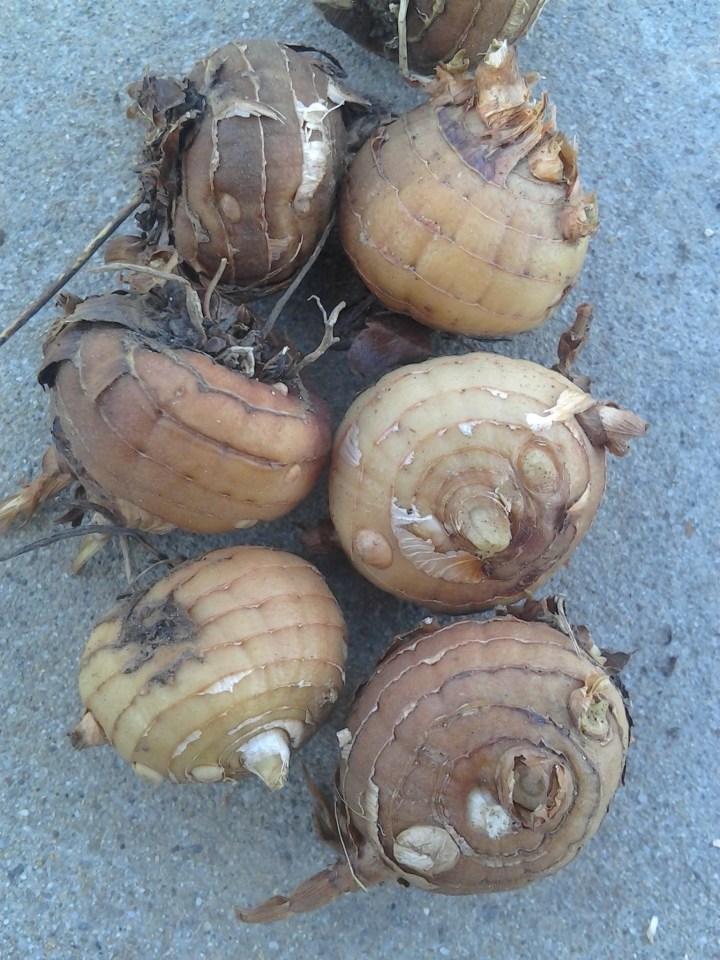
Just like spring bulbs, most summer bulbs are really corms, rhizomes, tubers or tuberous roots. Only a few are actual bulbs. Although they are very different physiologically, they perform the same function. They store resources from a previous season through dormancy in order to sustain growth for the next season. Some summer bulbs bloom more than once annually or with many blooms.

Dahlia, canna, crocosmia, hardy orchid (Bletilla) and the old fashioned big white calla are some of the easier to grow summer bulbs. Dahlia is the most colorful, but blooms late in summer or early autumn, and might only perform well for a single summer. With regular watering, canna can grow like a big weed, but in a nice way. The others can grow well enough to get invasive over the years.

Gladiolus and lily will probably bloom for only one summer, but are so colorful that those who enjoy them do not mind. Tuberous begonia is fussier, so is usually grown in pots. Allium, astilbe and maybe liatris have potential to thrive and multiply in the right conditions, but more often bloom for only a few years. Small colored callas are unpredictable too. They are showy but rarely prolific.

After bloom, deteriorating flowers should be pruned away to conserve resources while lingering foliage recharges bulbs for the next winter. This process is known as ‘deadheading’. Gladiolus, lily and any others bulbs that bloom only once obviously need to be deadheaded only once. Dahlia, canna and others that bloom over an extended season will want to be deadheaded a few times.

Snow

P80110It seems that almost all of us in the Northern Hemisphere are talking about it. Those of us who lack it can get to feeling somewhat deprived. It looks so pretty in pictures. It seems like such a natural part of winter. To many of us, it is a good excuse to take a break from gardening, stay inside, and write more compelling articles than the more technical sorts written when there is more activity in the garden.

In California, we get almost everything. Although most of the most densely populated ares lack snow, parts of the Sierra Nevada get more snow than anywhere else in the world. Californians can go to the snow to ski, hike, take pictures and do whatever people want to do in the snow; but we do not need to live with it at home like most people in other states do.

I grew up without snow. It snowed only once in 1976. It was only half an inch deep. The snow fell overnight while everyone slept, and it melted by early afternoon. Because the turf in the schoolyard was not resilient to snow, we were not allowed out there until the snow was gone. I later saw snow only when we went to where the snow was, in the Sierra Nevada. Snow only rarely fell at my home near the summit of the Santa Cruz Mountains above town, and it stayed for only a few hours.

I never had to live with snow until I went to Oklahoma at the end of 2012. Even then, it was minimal. The first snow fell only about three weeks before we left, and it never accumulated more than two inches or so. The difference from what I had experienced prior to that was that it lingered. It took a few days to melt. As minimal as it was, I could totally understand why people who live with snow dislike it so. I really can not imagine living with more accumulation of snow for months at a time.

First of all, snow is cold. It is very cold. It is, after all, frozen. That would not seem like much of a problem when the air is already cold, but snow is different. It sticks to the sides of boot and makes them cold inside. It seems to hold the cold on whatever it covers, including parked cars.

Also, snow is wet. Yes, as I already mentioned, it is is frozen, but it is frozen ‘water’, and it does not stay frozen when one is trying to get warm after being out in it. It gets clothing and everything else wet, just like a light rain. Frozen snow gets tracked in on boots and then melts just inside the doorway.

To go along with that, snow is messy. As cars drive through it, it becomes muddy, but does not necessarily melt right away. It becomes slushy mud that splatters onto otherwise clean cars.

There is actually quite a list of things to dislike about snow. It is dangerous on roadways. When it gets pushed off of roadways, it piles up around parked cars and on top of plants that happen to be in the way. I think that I prefer to see it in pictures of Switzerland, Minnesota, Ontario and Mount Hood as it looks from Portland.

Sometimes I think that it would be nice if we got a bit more of a chill here. We would be able to grow more varieties of apples, pears and other fruits. Perhaps peonies would do better, and autumn foliar color would be more spectacular. There are so many things that we can not grow or that do not perform as well as they want to in such a mild climate. However, all those frost sensitive plants that we can grow that others can not grow are nice too. Either way, I will pass on the snow.

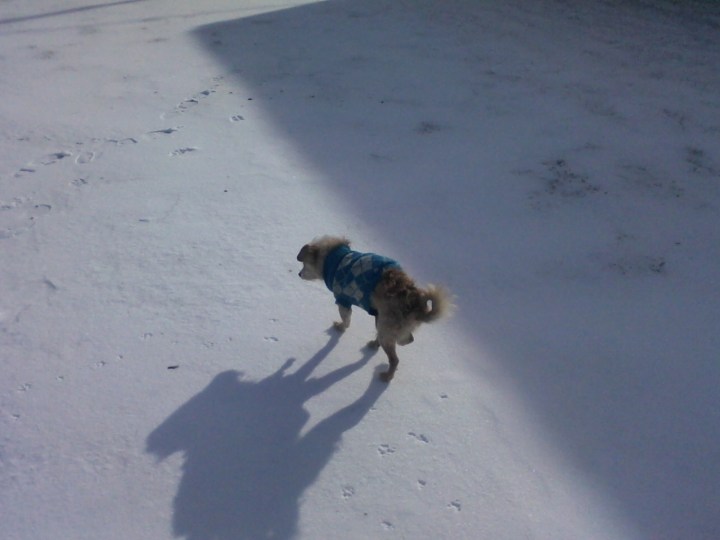
Bill was mostly blind by the time we went to Oklahoma, but he could feel the snow on the ground well enough to determine that he did not like it either.P80110+.jpg

Unseasonable Weather Can Confuse Plants

70920thumbEven without any of the five senses that we are outfitted with, plants are remarkably perceptive of the weather and the changing seasons. They know precisely what time of year it is because they know how long the sun is up. Their calendar is just as accurate as ours is. They also know that the weather has been getting progressively cooler through autumn, and that it rained a bit earlier.
New Zealand tea tree, torch lily, euryops daisy and many other plants from other temperate climates do not seem to care that they should not be blooming at this time of the year, if the weather is telling them otherwise. If the weather is warm enough during the day, even if it gets cool at night, these plants will bloom right up until things get really cold, even if some of their bloom gets frosted.

Saucer magnolia, lilac, apple and the many other plants from climates with cooler winters should know better than to bloom this time of year. Many bloom only once annually, so whatever blooms now will not bloom when it should next spring. Besides, the flowers that try to bloom now will bloom slowly, and probably be ruined by cool or rainy weather before they can develop completely.

Roses had a particularly weird year. They bloomed well and on schedule last spring, but then idled through much of summer, only to express a new interest in blooming now that they should be going dormant for winter! No one wants to prune them while they have more buds than they did in August. Fortunately for them, they bloom more than once annually, so should recover by spring.

The colorful foliage of sweetgum and Chinese pistache, as well as the observable weather, indicate that everything is more or less in order for this time of year. Autumn might have started out mild, but it had been even warmer in past years. It is impossible to say why some magnolia, lilac and apple are trying to bloom already. They each have such distinct personalities, and respond to so many different variables besides the obvious; daylength, temperature and humidity.

Frost!

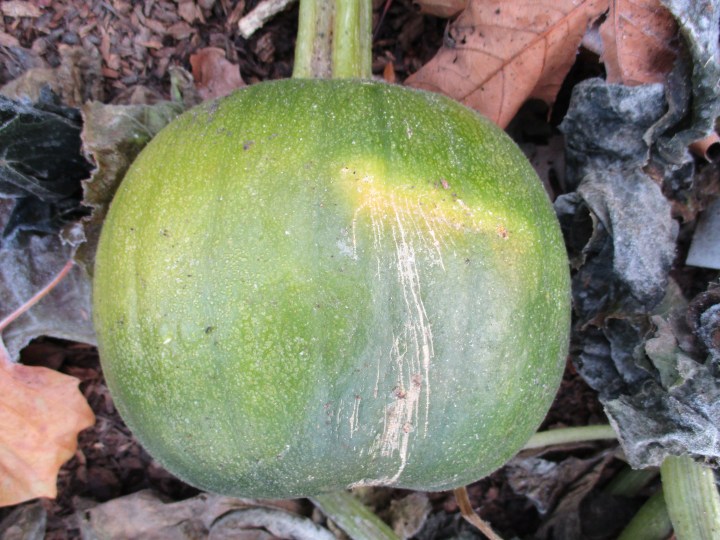
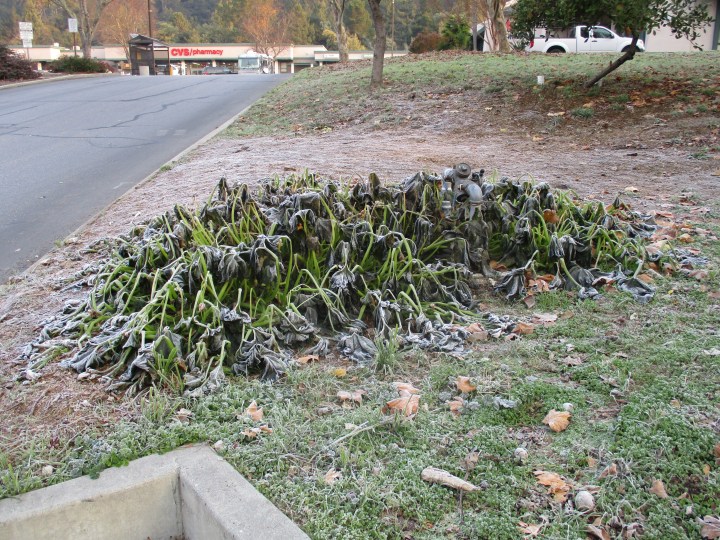
P71208+K1Yes, we get it too. It took a while, but we finally got it just like most of everyone else in North America and the Northern part of the Norther Hemisphere. It is not much to brag about, but it is enough to melt the big feral pumpkin vine that I wrote about earlier ( https://tonytomeo.wordpress.com/2017/12/03/too-late-for-pie/ ). It has actually been frosting for a few nights. I just got around to getting this picture this morning.

Now that the foliage is melting and collapsing, a leak is now visible in the exposed valve manifold that was obscured in the previous picture. It did not get cold enough to freeze the pipe, so the water was dripping freely. This confirms the earlier theory about where the pumpkin vine was getting water from.

Two pumpkins are also exposed by the collapsing foliage. They were not visible earlier. Unfortunately, they are too under-developed to mature and ripen. A neighbor will likely take them and set them aside on the porch, just in case they are able to finish ripening. It would be nice if they did. The vine certainly put a lot of work into them!P71208+K2P71208+K3

While taking this picture, I was reminded why people who live with cooler weather dislike it so. First of all, and most obviously, it kills things. The season is over for pumpkin vines, which is not a problem. The problem is that so many of the citrus, avocados and other plants from mild climates that we grow so easily here get damaged or killed by frost in other climates.

The second reason to dislike cool weather is that it is too cool, maybe even cold. It is uncomfortable to be out in long enough to walk over and get these pictures of the pumpkin vine and pumpkins. I am glad that it does not get much colder here.

Winter Is The Season For Pruning

71213thumbNow that winter is only two weeks away, and many deciduous plants are defoliating and dormant, it may seem as if there will be less work to do in the garden. After all, not much is growing. The funny thing is that this is the best time to sneak up on some of them, and prune them while they are sleeping. Depending on what is in the garden, winter can be just as busy as any other season.

There are a few things that should most certainly not be pruned in winter. Maples and birches should either be pruned before or after winter. They bleed profusely if pruned in winter. Plants that bloom in winter or early spring should be pruned after they have finished blooming. Pruning forsythias, flowering cherries and flowering crabapples earlier will remove much of the blooming stems.

Deciduous fruit trees are of course an exception to that rule. They require annual winter pruning so that they to do not produce too much fruit. Excessive fruit is of inferior quality, and can break limbs. It is acceptable when pruning fruit trees to leave a few unpruned stems to cut and bring in later, as long as they are not forgotten. They can be less refined alternatives to flowering cherries.

Once we determine what should not be pruned in winter, it is easier to see that most deciduous plants should be pruned while bare in winter. Elm, oak, poplar, willow, mulberry, pistache, gingko, crepe myrtle and most popular deciduous trees are sound asleep and unaware of what might happen to them for the next few months. They would be pleased to wake already pruned next spring.

Some evergreen plants should probably be pruned as well. Tristania, redwood, podocarpus, Carolina cherry, bottlebrush and the various eucalypti would prefer to be pruned while the weather is cool. Conifers bleed less this time of year; and pine and cypress are less susceptible to pathogens that are attracted to wounds during warm weather. Avocados and citrus, particularly lemons, should not be pruned in winter, because pruning stimulates new growth which is more sensitive to frost.

The Physics Of Fruit

datsun_b210_1_76Sir Isaac Newton had something to say about an apple that was a victim of gravity. My high school physics professor was even better. He taught us all about velocity, force, inertia, vectors and much of what he had to teach us about physics with the help of a very ripe persimmon . . . and an insipid green 1976 Datsun B210.

I was reminded about these lessons a few years ago while Brent and I were in his old neighborhood in Los Angles. He pointed out an old burnt-orange Caprice that was in remarkably good condition. It had less than the typical wear and tear for a car that was nearly as old as we were. Brent pointed out a nearly imperceptible but specific dent in the driver side tail flank, and explained that it was made by a hard under-ripe peach. I did not need to ask how a green peach had attained sufficient force to cause such damage. I grew up in the Santa Clara Valley, where we all know the joy of attacking cars with fruit.

Most of our ammunition was apricots in various stages of ripeness. While in season, the orchard provided an unlimited supply. While they were out of season, we took what we could get from other fruit trees. Winter was meager; but just before 1977 became 1978, we discovered the gloriously humongous and squishy fruit of the ‘Hachiya’ persimmon tree in a neighbor’s front yard. Each fruit had the destructive force of a large ‘Marsh’ grapefruit, but with a squish factor of tapioca pudding! We had never seen anything like it!

Our first victims probably did not know what hit them. They probably heard the mild thuds on their cars, and drove home believing that they had been hit with the typical and mess-less lemons or oranges that are available in winter. Only after parking their shiny cars and getting out did they witness the horror or ‘Hachiya’ persimmon! Perhaps that is how ‘Hachiya’ got its name. It sounds Japanese for something someone would say in response to such a hideous mess. “Hachiya! What happened to my Mitsubishi?!” I do not know if Mitsubishi was around back then. Most of our targets were big American cars.

Then one day, we got a more challenging and more appropriately Japanese victim; a bland green Datsun B210. It was a smaller and speedier target than what we were accustomed to. Our small herd of neighborhood boys ran out to greet it; but then something unexpected happened. The car stopped. The red-headed leprechaun driving it saw us coming and just stopped there before the first persimmon took flight.

We were baffled. The other boys dropped their fruit and ran. I was too annoyed. I did not want to waste the big fruit that the persimmon tree had put so much work into. So, . . . I threw it. It made first contact on the right side of the windshield, and slid its sloppy ripe goo over most of the windshield to the driver’s side. Yes, it was glorious!

I stood there briefly in awe before I realized that the driver of the car was just glaring back at me . . . with the LOOK! Yes, it was the look; the look that said, “If I did not have these short leprechaun legs, I would run after you and beat you into the mud!”. Then I ran off to join the other boys, believing that was the end of it. I occasionally saw the Datusn around the neighborhood afterward, but did not think much of it, unless the leprechaun driving it happened to glare menacingly back at me.

We started high school a few years later. Part way through the first day, I got to my physics class just before the teacher arrived. I was already seated when he walked in, and glared right at me. Yes, it was HIM; the leprechaun! For the first time ever, I saw him smile. He did not have long fangs dripping with blood, but he was terrifying nonetheless. This was going to be a long nine months!

It wasn’t that bad. In fact, the leprechaun was one of many excellent professors at my high school. We all liked him. He did have an odd way with word problems though; you know, those situations involving ‘object A’ and ‘object B’. We had word problems like, “If object ‘persimmon’ weighs .75 pounds and is traveling east at 25 mph, and object ‘Datsun’ weighs 2,000 pounds and is traveling southwest at 25 mph, how much force will object ‘persimmon’ exert against object ‘Datsun’ when they collide?”.