
Curve leaf yucca is one of a few species of the genus that is difficult to identify. It may be a distinct species, Yucca recurvifolia. It may be a naturally occurring variety of mound lily, Yucca gloriosa var. tristis or recurvifolia. Yet, it may be a natural hybrid of Yucca aloifolia and Yucca flaccida. To complicate all of this, its physical characteristics are inconsistent.
The evergreen leaves of curve leaf yucca are typically pliable, and curve downward. Yet, they can be quite rigid and upright. Foliar color is typically grayish green but can be olive drab. Stout but upright trunks can potentially develop, but may never do so. Only their tall floral stalks that bloom for summer are consistent. Individual flowers are small and white.
Curve leaf yucca enjoys warm and sunny exposures. Occasional watering through warm weather may improve vigor, but is unnecessary. Old colonies form large mounds that can slowly grow as high and wide as ten feet. With the exception of gophers, which eat roots, not much bothers curve leaf yucca. In fact, it can be very difficult to eradicate if unwanted. Pups may continue to develop from rhizomes for many years.

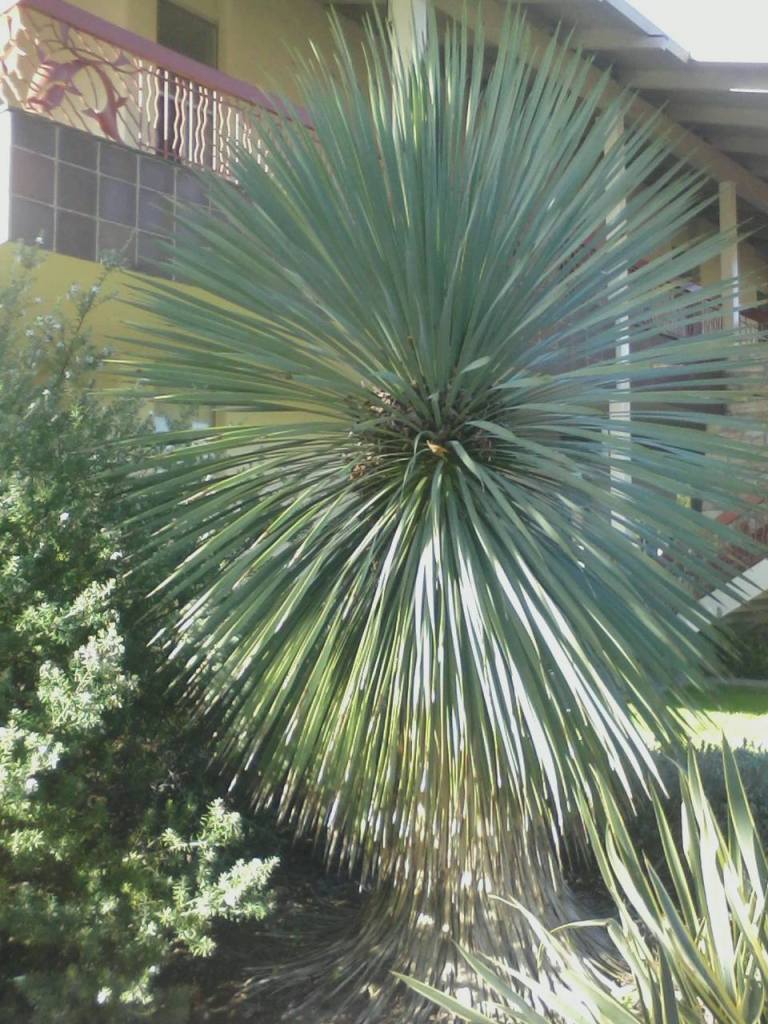
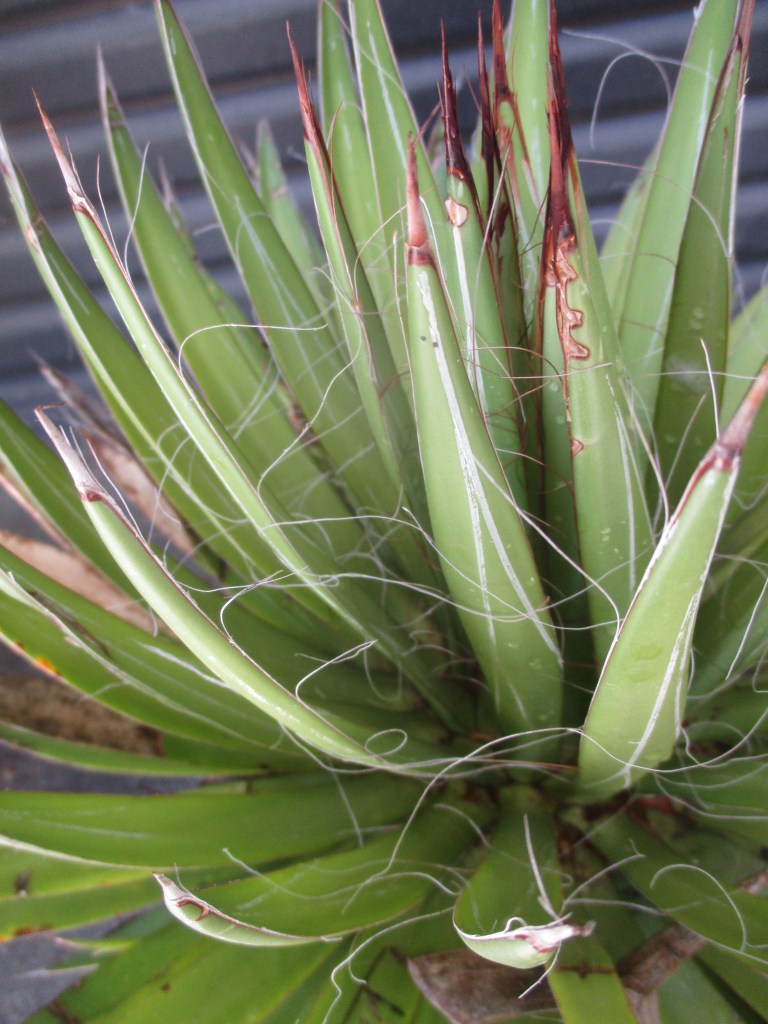


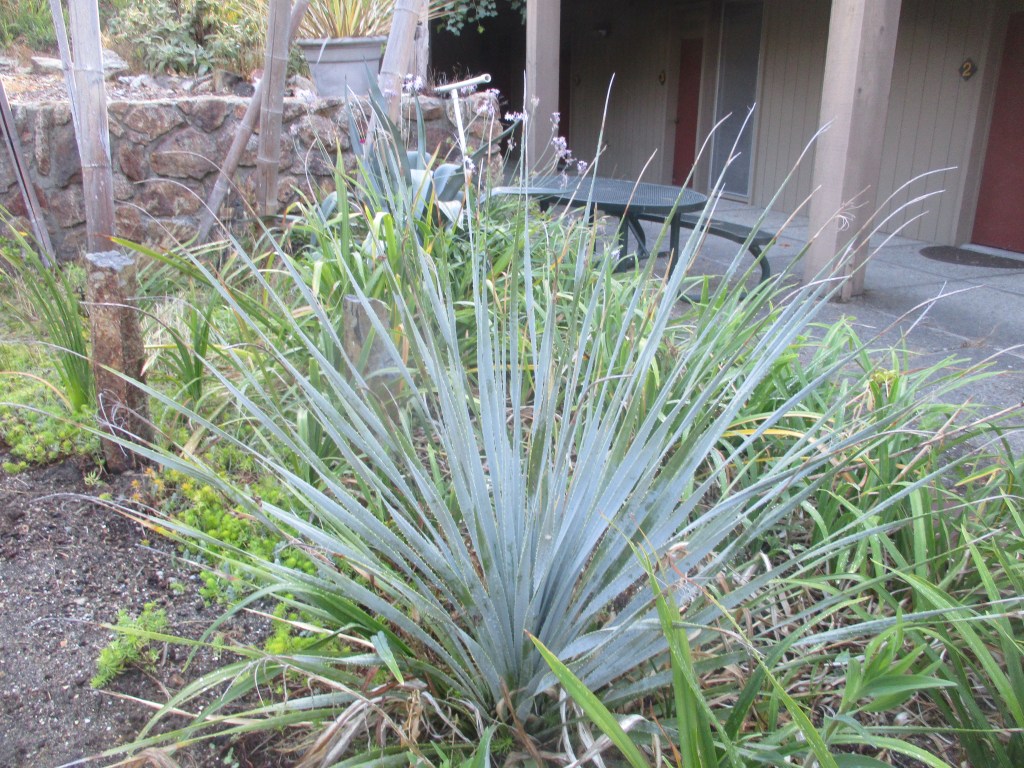

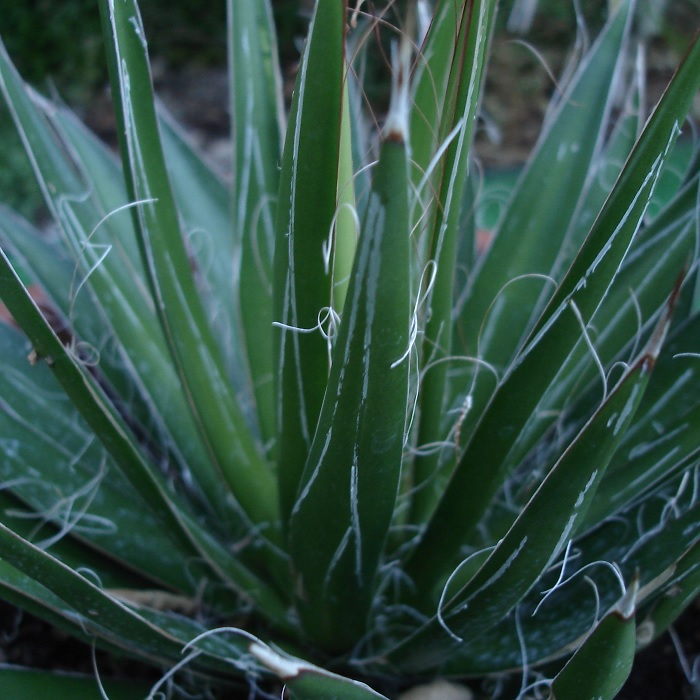
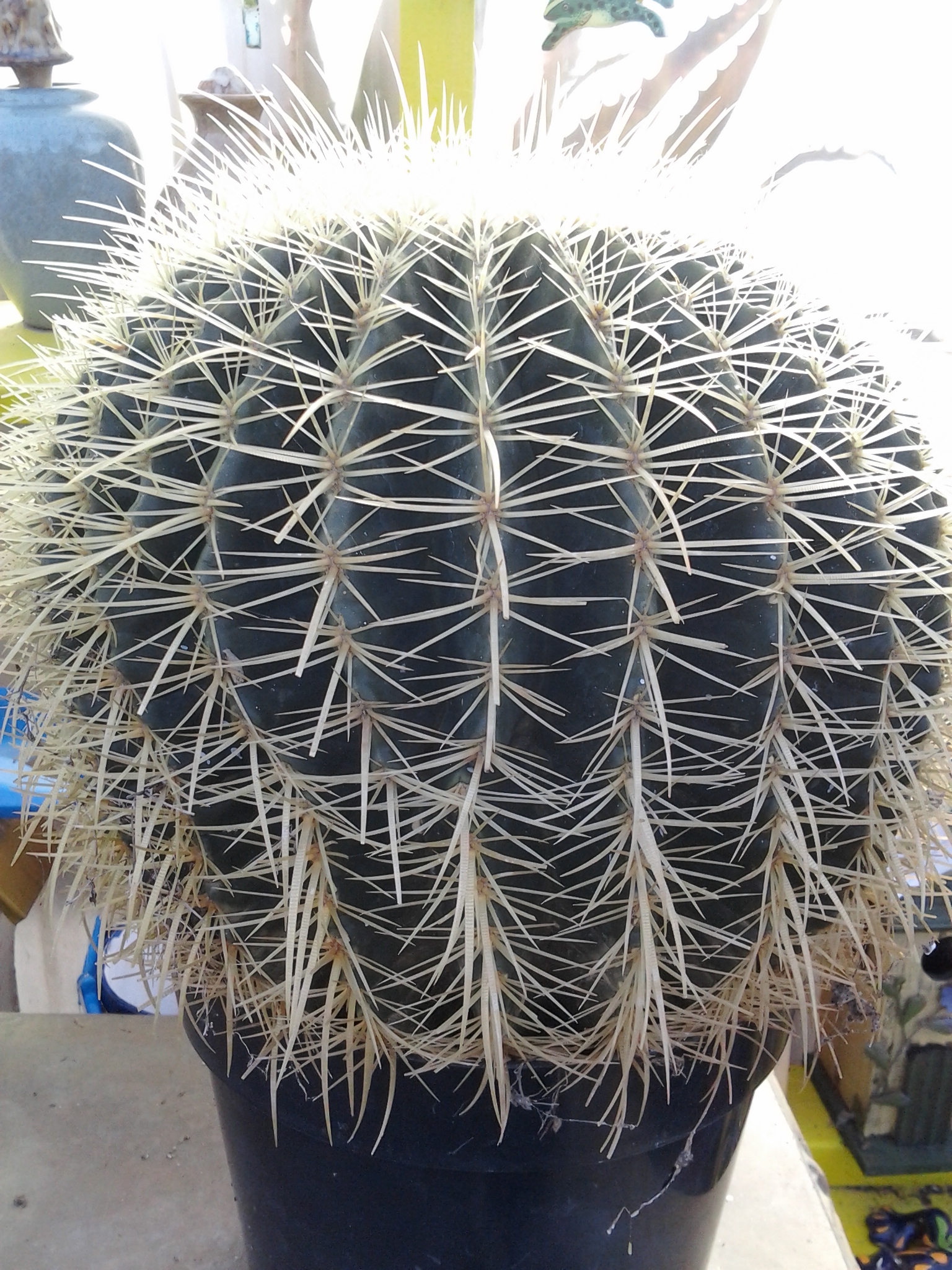
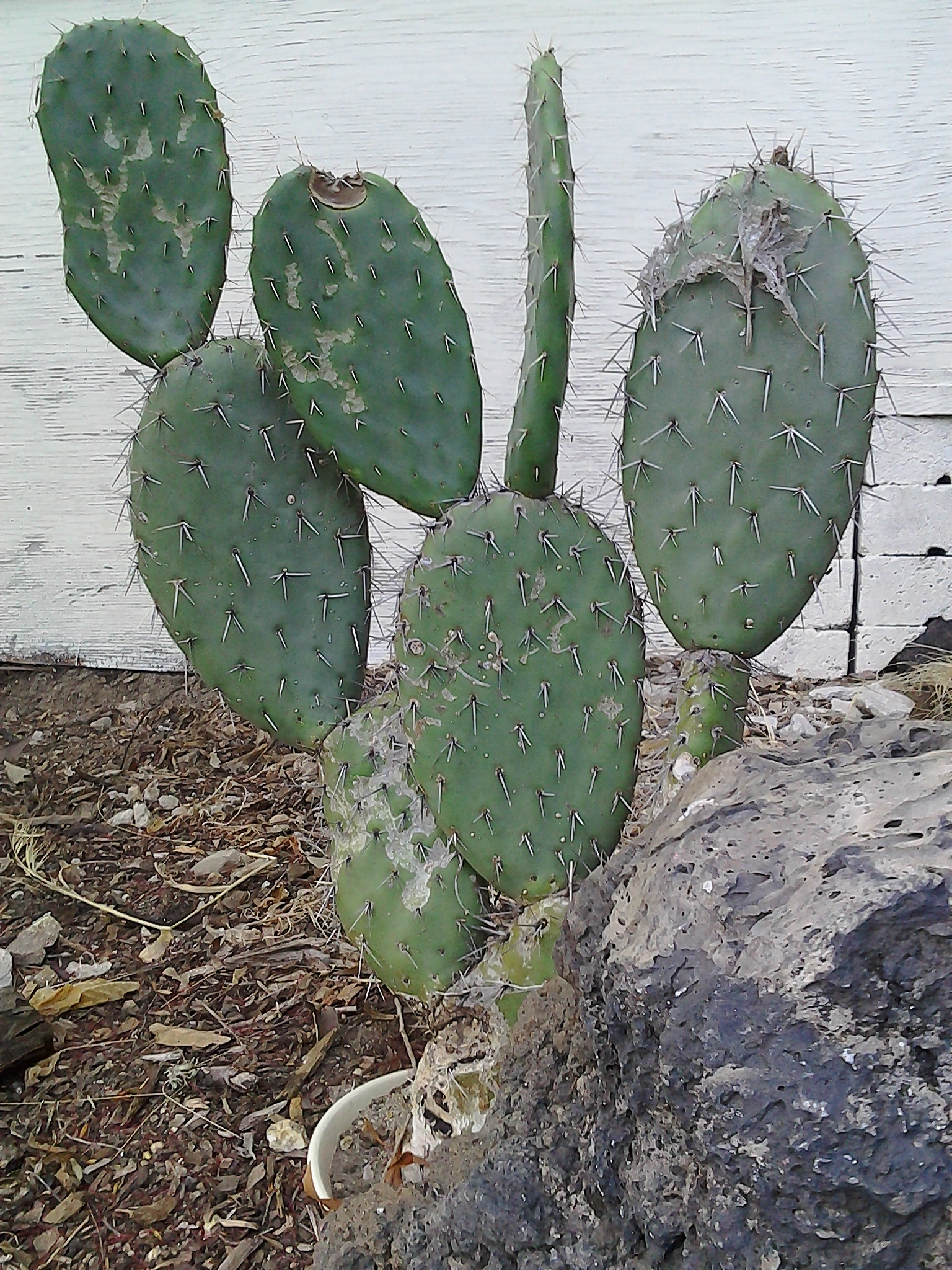
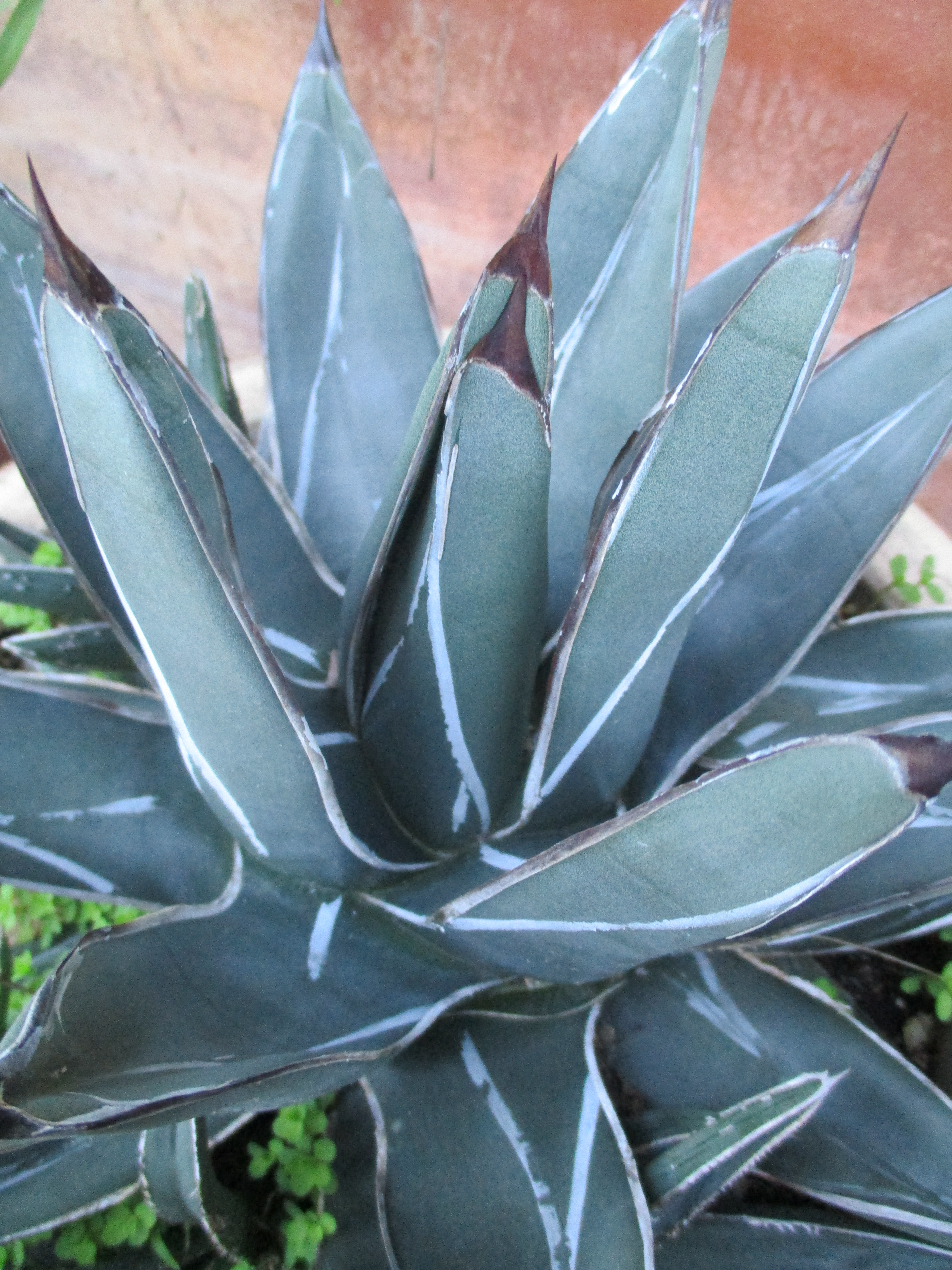 Although a relatively small agave, the Queen Victoria agave, Agave victoriae-reginae, is also one of the most striking. Mature plants form dense foliar rosettes that are between only a foot, and a foot and a half tall and wide. What is so striking about them is the abundance of stout succulent leaves that can be so densely set that some older plants look like big, round and green pine cones.
 From a simple picture, Spanish bayonet, Yucca aloifolia, is indistinguishable from the common giant yucca. The narrow leaves are about two feet long, and flare upward and outward from terminal buds. Plump conical trusses of waxy white flowers with purplish highlights stand vertically just above the foliage. The main difference is that the leaves are more rigid than they appear to be, with nastily sharp terminal spines.
 Tony Tomeo