Scofield Tree Update – Spring 2018

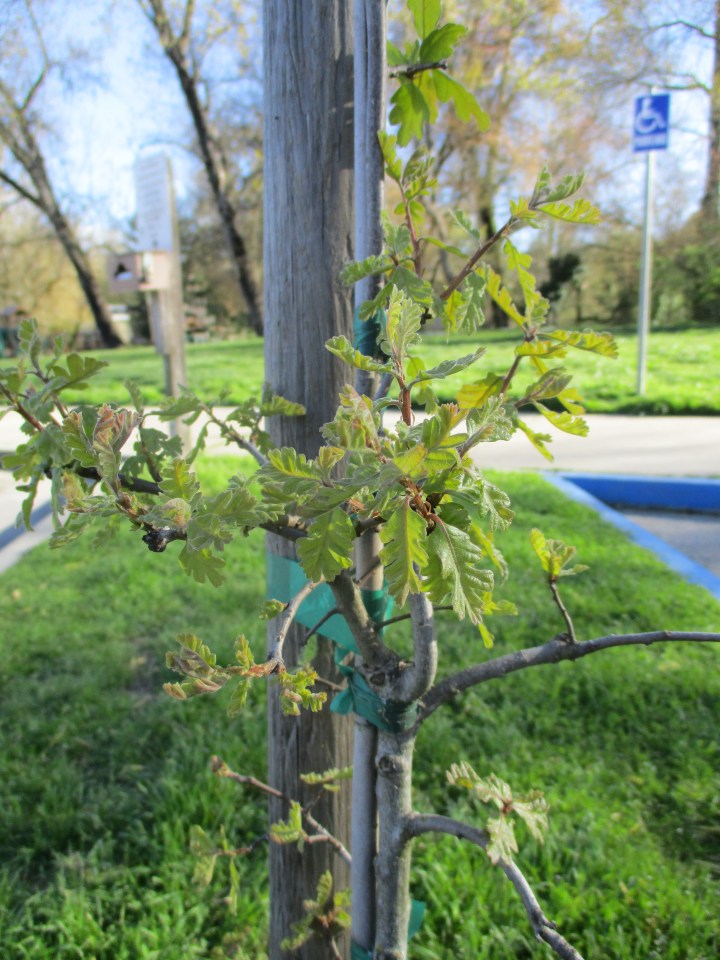
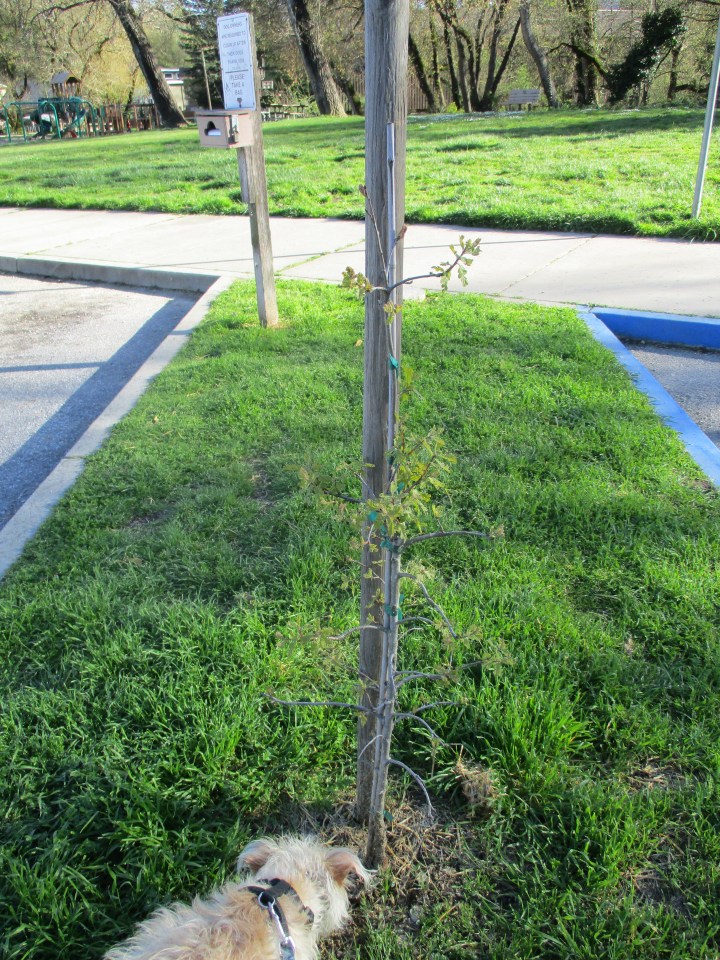
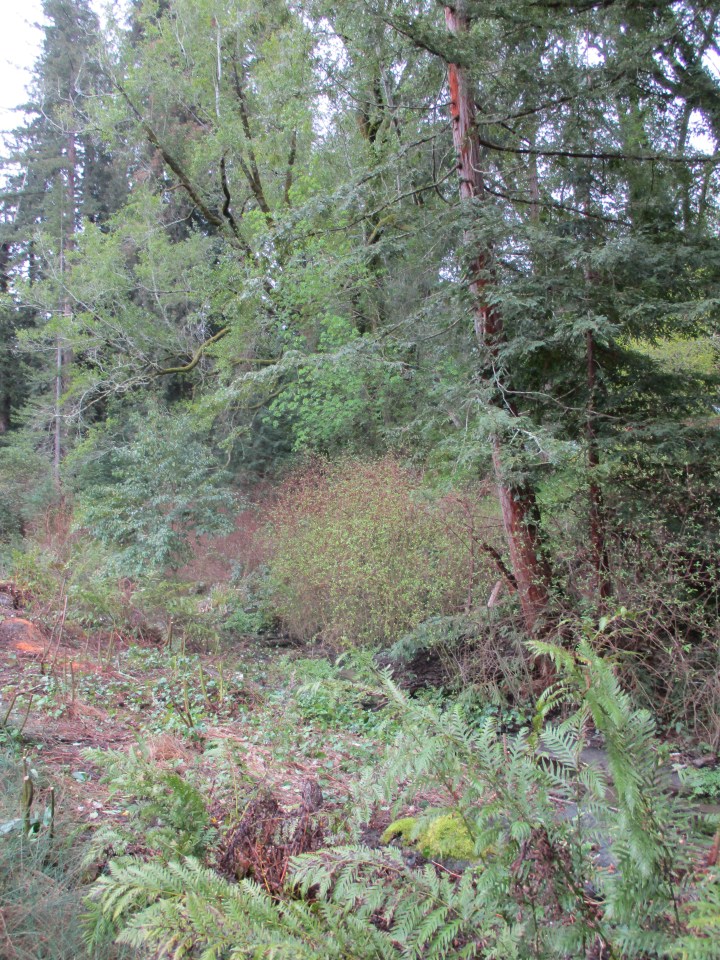
P80331KNot much has happened since the last update on Christmas Eve. https://tonytomeo.wordpress.com/2017/12/24/scofield-tree-update/ The Scofield Tree has been bare all winter, and is only now developing new foliage.

It was planted more than two years ago, but had been set back by some serious damage from an altercation with a weed whacker. Unbelievably, after emphatic explanation of how dangerous weed whackers are to such young trees, and an unfulfilled promise that the tree would be outfitted with a tree guard, a ‘gardener’ attacked the tree with a weed whacker AGAIN! Fortunately, the tree had previously developed enough scar tissue to not be damaged by this latest assault.

It will certainly be pampered this year. It really needs to grow. The bark at the base needs to be tough enough to survive an even more aggressive weed whacker attack. The trunk must be resilient to someone bumping into it, or a dog getting a leash tangled around it. Eventually, the trunk will be resilient to a car bumping into it, which is a possibility in the parking lot in which it is located. The canopy must eventually grow up and above the height of parked cars and those getting into and out of those cars. Ideally, it should be out of reach of gardeners with cutting tools that they do not know how to use properly.

The old lodgepole stake will be replaced because it is likely rotten at the base. The binding stake will also be replaced because it has warped in the last two years. Such binding is not horticulturally correct, but is necessary to correct disfigurement, as well as to help protect from more damage. Fertilizer should accelerate growth.

The first article about the Scofield Tree was posted back on October 6. https://tonytomeo.wordpress.com/2017/10/06/small-tree-in-a-big-park/P80331K+
Six on Saturday: New Leaf


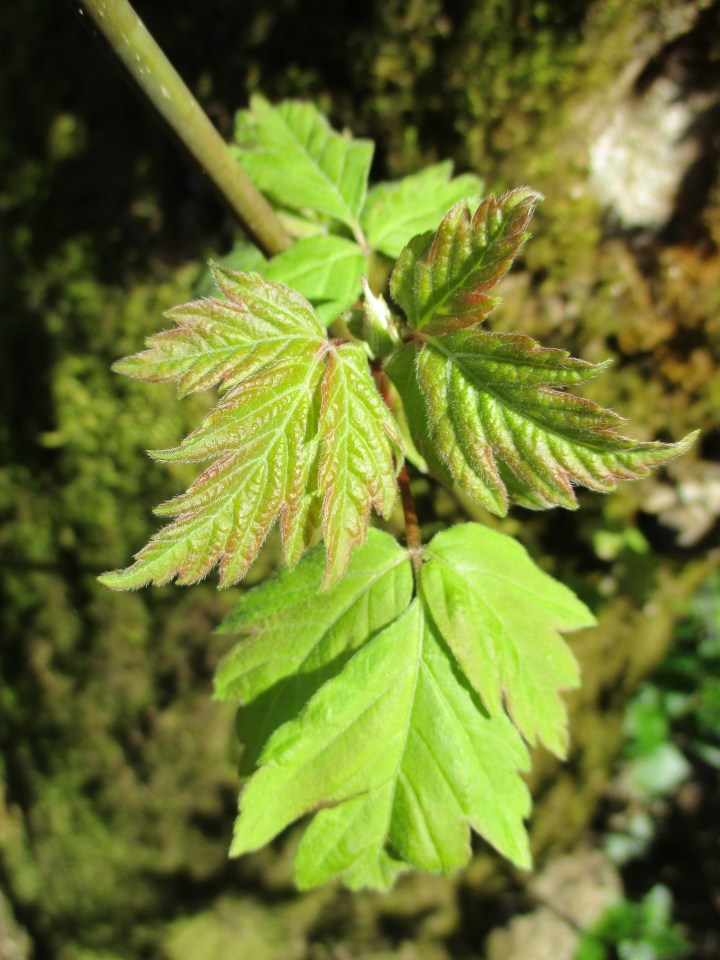
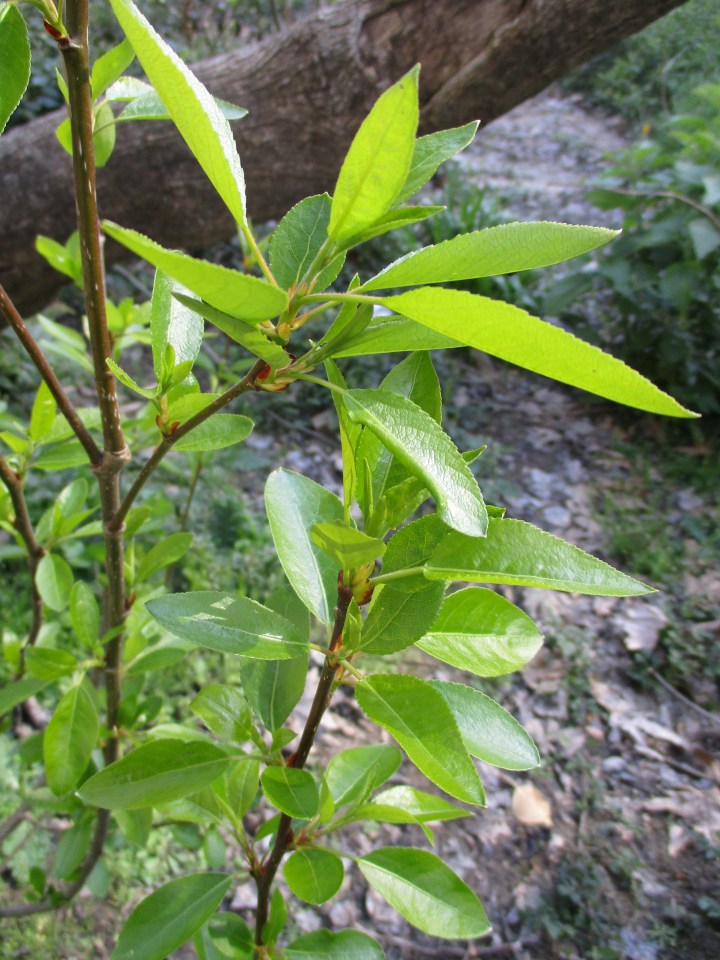
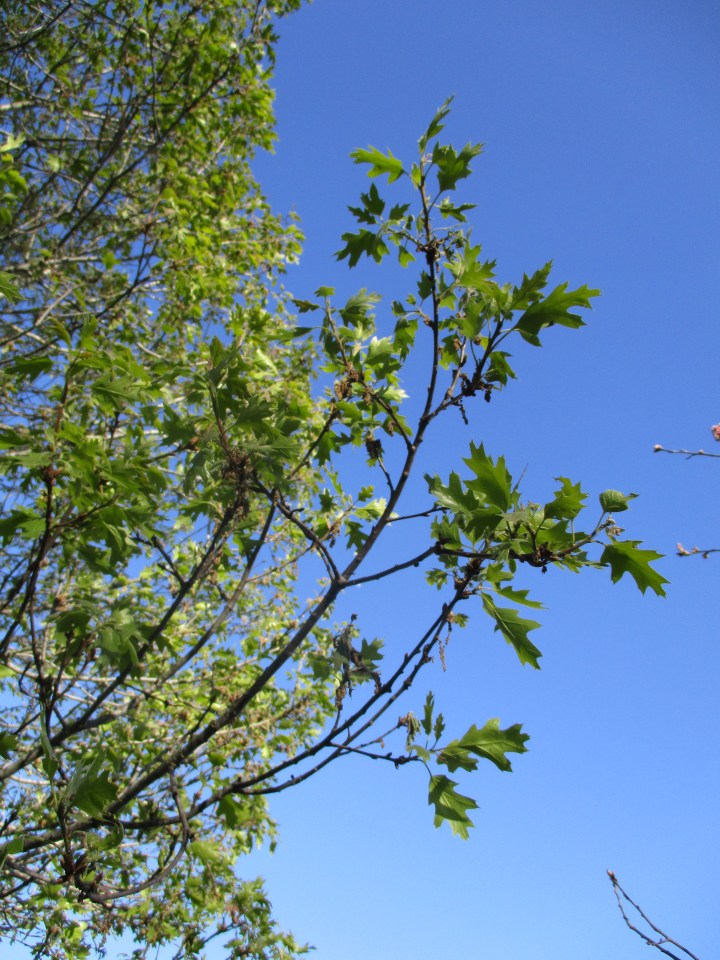
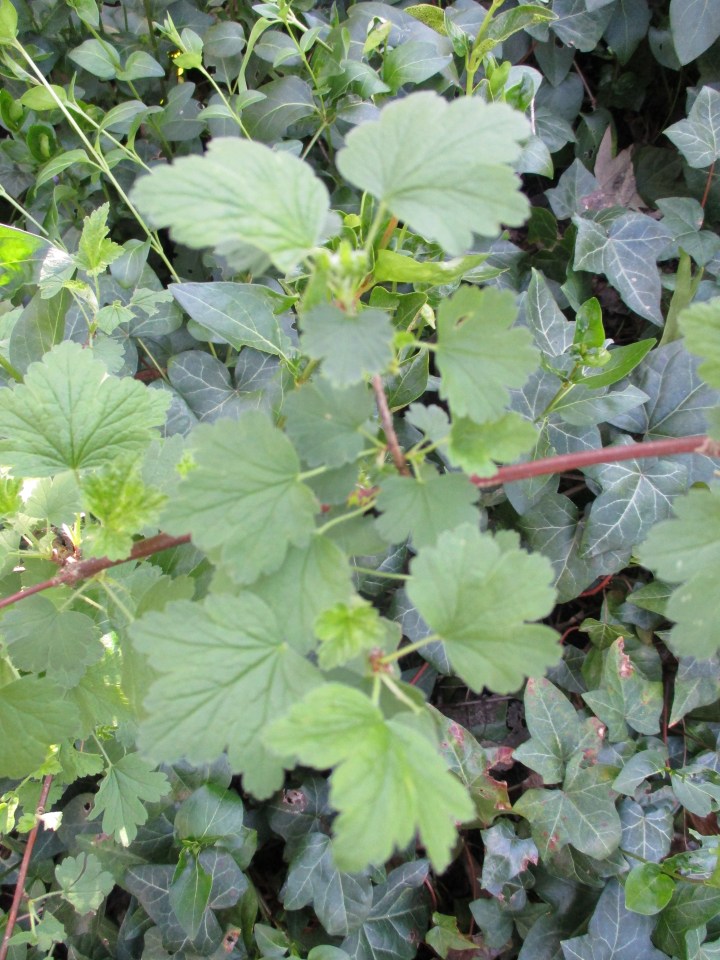
New foliage develops immediately after the earliest spring flowers. All six specie shown here are locally native to the San Lorenzo Valley in Santa Cruz County of California. With the exception of #4 (California) black oak, these specie are riparian specie found near the San Lorenzo River, which is the wet thing in the background behind #3 red willow. #4 (California) black oak naturally prefers drier situations a mile or so away, but happens to be in the area. #6 gooseberry is unidentified, and could have a color in the name like most of the others. #1 box elder has no color in the name, and is not related to #5 blue elderberry. Nor are #2 black cottonwood and #4 (California) black oak related to each other. #5 blue elderberry really is blue, unlike the black elderberries of eastern North America and elsewhere, which incidentally, are related to neither #2 nor #4. This is getting confusing. #3 red willow is also known by a few other names.

1. box elderP80331
2. black cottonwoodP80331+
3. red willowP80331++
4. (California) black oakP80331+++
5. blue elderberryP80331++++
6. gooseberryP80331+++++
This is the link for Six on Saturday, for anyone else who would like to participate:

https://thepropagatorblog.wordpress.com/2017/09/18/six-on-saturday-a-participant-guide/

Algerian Ivy

70329+This is one of those plants that many of us have strong feelings about. Many of us who remember it from when it was more popular in the 1970s might consider Algerian ivy, Hedera canariensis, to be an aggressively invasive weed. Those of us who are less familiar with it might appreciate it as a vigorous and resilient groundcover that gets dense enough to exclude most other weeds.

Without regular pruning for confinement, Algerian ivy grown as groundcover becomes a vine to climb trees, fences, walls and anything else it can get into. As the vines mature and get closer to the top of their support, they develop shrubby adult growth. Algerian ivy can easily ruin the surfaces that it climbs, or overwhelm shrubbery and trees, but might not be so bad on bare concrete walls.

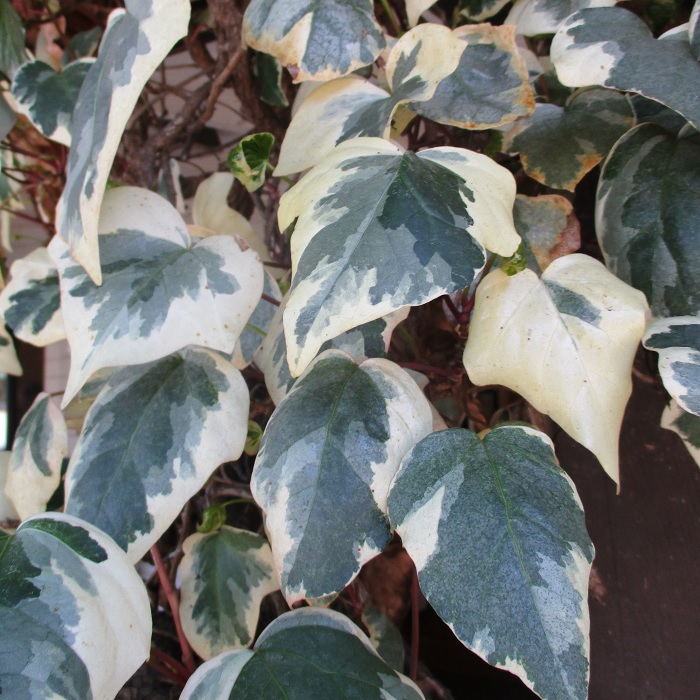
Well contained Algerian ivy might get about two feet deep. The glossy dark green leaves are about six inches wide, with three or five rounded corners. Leaves of vining or adult growth are smaller and more rounded. New plants are very easy to propagate from cuttings or by layering. ‘Ghost ivy’ is delightfully variegated with white, but usually loses variegation as new growth replaces the old.

Summer Vegetables Enjoy Warming Weather

40910thumbIf there are any cool season vegetables left in the garden, they should probably be harvested pretty soon. If left too much longer, they will be ruined by warming weather. Cabbage will bolt (start to bloom) once it realizes that it is spring. Cauliflower and broccoli, which are juvenile flowers, will become bitter as the flowers mature and try to bloom. Besides, they all need to get out of the way.

Warm season vegetables need the space. Tomato, pepper, eggplant, zucchini and other squash plants are ready to disperse their roots and get to growing. They are usually planted as seedlings because only a few of each are needed. A few seedlings of each type are more reliable, but not much more expensive than a packet of seeds; and they do not need to take the time to germinate.

However, because they are so easy to grow, seed for zucchini and other squash, as well as melon, are popularly sown directly where plants are desired. There was no need to sow them indoors earlier to plant in the garden as seedlings now. Onions can be grown from seed for late harvest, or they can be grown from juvenile onions known as ‘sets’ for earlier harvest or for green onions.

There are two main reasons why cucumbers, beans and corn should be grown from seed, although cucumber seedlings can be practical if only a few are desired. Otherwise, so many individual plants are needed that it would be relatively expensive to purchase enough seedlings. The main reason for sowing seed directly is that their seedlings are sensitive to the stress of transplanting.

Tomato, zucchini and beans are likely the most popular of warm season vegetables because they are so productive and reliable, even in limited space. Pole beans can be grown on trellises against fences or walls in very tight spots. Corn is less popular because it needs so much space, and needs to be watered so regularly. Too few plants may not be adequate for cross pollination. Pepper and eggplant, as well as okra, are not too demanding, but appreciate rich soil, regular watering and warm exposure.

Hanging Gardens of Babylon

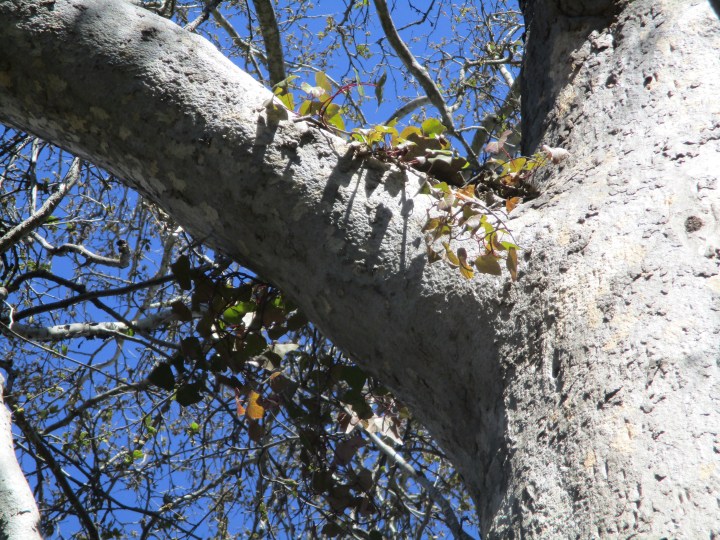
P80328The ivy in this sycamore did not just climb up from the ground to hang over this big limb. If you look closely, you will see no vine coming up from the ground. This small patch of ivy as well as a small pyracantha, are growing in a decayed cavity on top of the big limb. The ivy may have climbed up a long time ago, and then rooted into the cavity before the original vine was somehow removed. Alternatively, the ivy might have grown from a seed that was dropped by a bird or ivy vines that are higher up in nearby box elder trees. It is impossible to say now.P80328+It is also difficult to say why there is such a large cavity on top of the limb. It could have originated as a large scar incurred from the impact of another large limb that fell from above. There are a few cavities higher up that were caused by large limbs breaking away. Although unlikely, the cavity could have developed from sun scald damage, after the upper surface of the big limb suddenly became exposed by the loss of limbs higher up.P80328++This other aerial patch of ivy hangs from a smaller cavity higher in the same tree. Oddly, among sycamores, such cavities on upper surfaces of large limbs are not uncommon. Sycamores often drop large limbs from high in their canopies, exposing or damaging lower limbs below. Their lightly colored bark is very susceptible to sun scald if suddenly exposed after always being shaded. It is also not very resilient to heavy impact. Of course, more typical cavities develop on trunks where significant limbs broke or were pruned away. Other plants can grow in these as well, as demonstrated by the ‘epiphyte’. https://tonytomeo.wordpress.com/2017/11/15/epiphyte/

Pink Flowering Currant

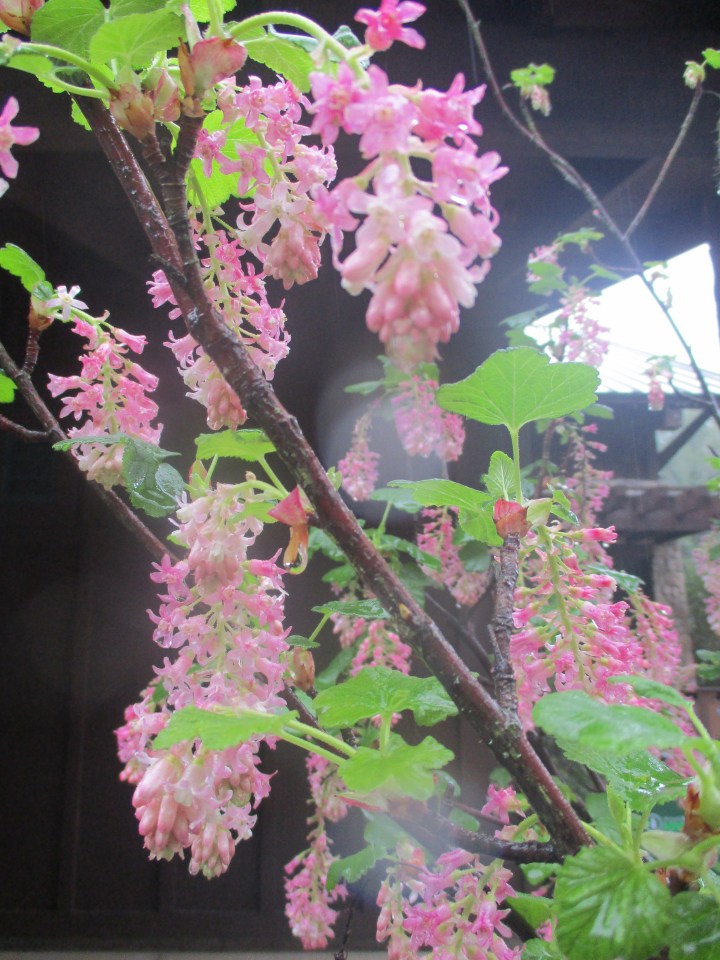
80404We tend to think of currants as being from Europe, Russia or Eastern North America. The pink flowering currant, Ribes sanguineum glutinosum, is actually endemic to canyons and riparian sites of the coastal ranges of California. Because it is an understory species that lives in the partial shade of large trees, it is quite tolerant of shade, and even prefers a bit of shade rather than full sun.

Mature specimens might reach first floor eaves, and get as wide as six feet. Aging stems of maturing plants should be pruned out to promote growth of new stems. New plants should probably be staked loosely until they disperse stabilizing roots. Although tolerant of drought, pink flowering currant is happier with occasional watering, and will actually tolerate poor drainage through winter.

Pendulous trusses of tiny pink flowers bloom like small wisteria flowers late in winter or early in spring. They are mostly done by now. Small and sparse currants get eaten by birds almost before they get seen. The deciduous foliage turns only soft yellow before falling in autumn. The handsome and slightly aromatic palmate leaves look and smell almost like those of a scented geranium.

Houseplants Might Enjoy Some Weather

80404thumbThey were not always houseplants. They came from somewhere else. Most came from shady tropical forests, which is why they have such big dark green leaves, and are so tolerant of shady home interiors. They are pretty good sports about tolerating the domestic lifestyles that we subject them to, but they would really prefer to be thousands of miles away, growing wild back home.

Home interiors lack the sort of weather that the natural environments of houseplants get. The majority of houseplants would prefer rain, humidity, occasional breezes and perhaps more warmth. Some succulents may not miss the rain, but might crave heat and more sunlight. Regardless of what houseplants want, that can not get all of it in the comfort of our homes. They want to get out!

Unfortunately, that is not an option. Plants that have adapted to the relative darkness and protection from (shortwave or SUV) ultraviolet light in the home would roast if suddenly exposed to direct sunlight. (Windows block SUV light.) They would get battered by wind and damaged or killed by frost in winter. Those that become outdoor plants should be transitioned slowly and methodically.

However, there are a few times a year when the weather is not expected to get too cold, hot or windy, when houseplants can come out to the garden to get very lightly rinsed with a hose. Taking them out immediately prior to a light rain is even better. Rain is gentler and more sustained than a brief and coarse hose rinsing. Both techniques rinse away dust and residue from insect activity.

Rinsing does not eliminate mite, scale or mealybug infestations, but temporarily eliminates the residue from such infestations, and somewhat disrupts their activity. Mites prefer dusty plants to clean ones. While plant are outside, it would be a good time for any necessary repotting, or to apply horticultural oil to control mites or scale. Mineral deposits can also be scrubbed from saucers and the bottoms of pots. If hosed during sunny weather, houseplants should be shaded by a larger tree or awning.

Fertilizer

P80325‘Fertilizer’ is a polite term for ‘recycled vegetation’.
‘Recycled vegetation’ is a polite term for something else.

This is not a synthetic type of fertilizer that gets tossed about or poured on. It gets added to compost and allowed to compost some more before being spread out as a mulch over the surface of the soil, just before chipped vegetation gets dispersed over the top. Alternatively, it sometimes gets mixed into the soil. It is quite useful. You can’t beat the price.

It is recycled differently from the compost or chipped vegetation (from a brush chipper). It is recycled through a horse, or more specifically, two horses. As the picture above suggests, it begins at the front of the horse, and ends at the rear of the horse, which is not pictured.

The horses happen to be quite efficient at recycling vegetation. They do it all the time. They are probably doing it right now. I would describe the process, but I do not know how it works.

Three times weekly, on Mondays, Wednesdays and Fridays, some poor sucker must go to where the horses live and work to collect the binned ‘fertilizer’, and deliver it to the compost pile. By the time it gets mixed into the compost, and composted more, it is not recognizable. Otherwise, it might be a problem in the parts of the landscape where it gets dispersed with the compost.

The landscape seems to like it. Only a few plants with special needs get any sort of synthetic fertilizer.

This sort of recycling is not new technology. It has been around as long as horses have been serving humans. In fact, it was not even invented by humans. Horses were doing it long before humans merely discovered, refined and took the credit for it.P80325+

Cherry Blossom Festival

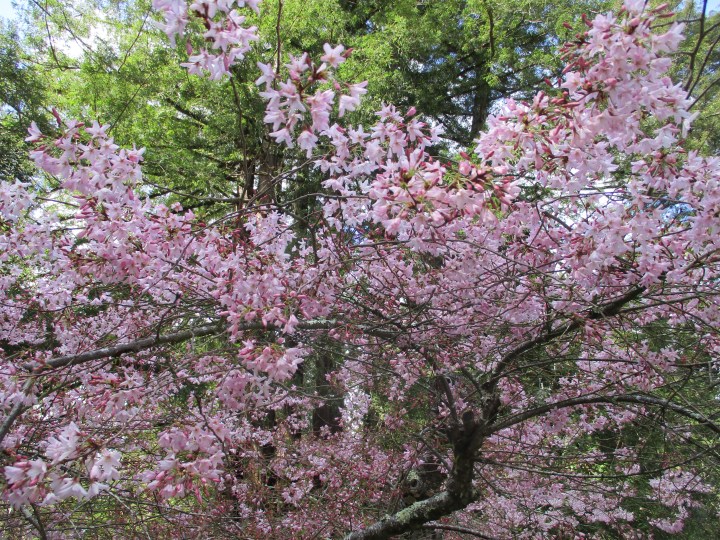
P80324KI would say that this is our own private Cherry Blossom Festival, but it really gets a crowd. These two old trees are at the edge of the main roadway through town, so several people driving by stop to take pictures. They may not seem to be very impressive compared to healthier flowering cherry trees, but they are what we have, and we are happy to get the bloom.
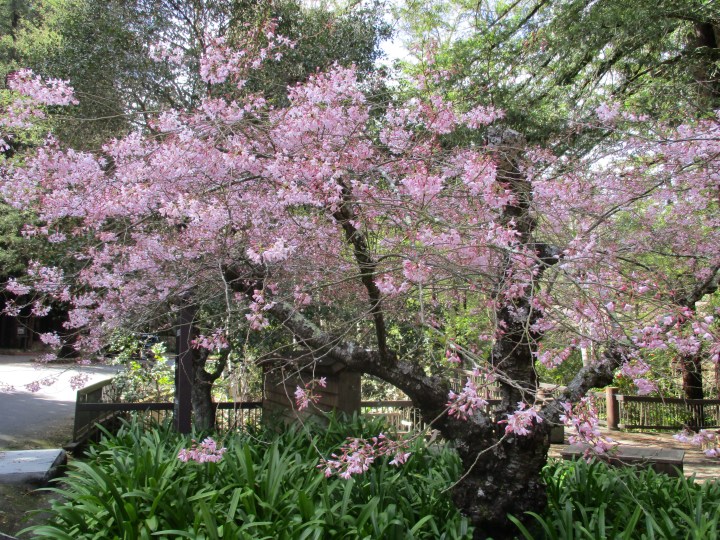
Decades ago, fruiting cherries were some of the more common orchard trees in the Santa Clara Valley. Flowering cherries were only somewhat popular in home gardens, and might have been less popular without the Japanese influence. They are more popular in cooler climates, not only because they are happier in cooler climates, but also because those who live where winters are harsh have a better appreciation for bloom that so happily celebrates the end of winter.

These particular trees are unfortunately deteriorating. They are quite old, and the trunks and main limbs rot and die back a bit more each year. No one wants to cut them down because they are such a familiar landmark this time of year. Few people can remember when the trees were not there.

We are grateful for the bloom this year because the weather could have easily ruined it. It was so warm earlier in winter that bloom could have very easily been accelerated, and happened just as frosty or rainy weather resumed. The trees seemed to know what time of year it was, and waited for the right time. It did happen to rain just prior to when these pictures were taken, but the blossoms had just opened, so were resilient to the rain. Weather should be milder for the next few days, until these trees are finished with their bloom.P80324K+

Six on Saturday: Vegetation Management


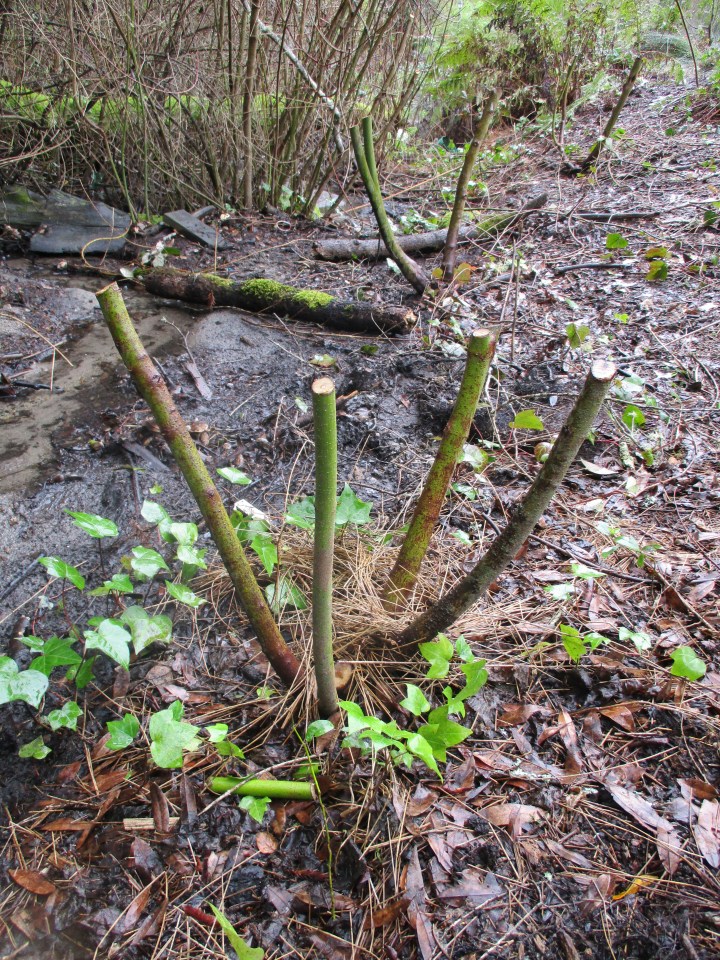
It sounds so unglamorous; probably because it is. We had been working on this project for three weeks, and just finished on Thursday. Most of the work was cutting back thickets of native (but installed) redtwig dogwood. It was neither coppicing nor pollarding, but something in between. They could not be coppiced completely because they are in trafficked areas where they might be tripping hazards until they regenerate. They were not quite pollarded because there were no real trunks remaining, just short stubs of canes. We also needed to removed brambles that were mixed with the redtwig dogwood, as well as a few exotic (non-native) plants that had grown in amongst the whole nasty mess. There were a few nice pyracanthas and privets that needed to be removed. In a better situation, they would have been nice specimens. This was not the right situation for any of them. Besides, privets seed profusely and are quite invasive.

1. Now you see it. This is a privet that needed to be removed.P80324
2. Now you don’t. This is the same privet noticeably absent.P80324+
3. Evidence. There really was a privet here.P80324++
4. And there it goes!P80324+++
5. Except for the foliage that just recently developed, this thicket of redtwig dogwood that will not be pruned is what the rest of it looked like.P80324++++
6. This is what it looks like now.P80324+++++
This is the link for Six on Saturday, for anyone else who would like to participate:

https://thepropagatorblog.wordpress.com/2017/09/18/six-on-saturday-a-participant-guide/