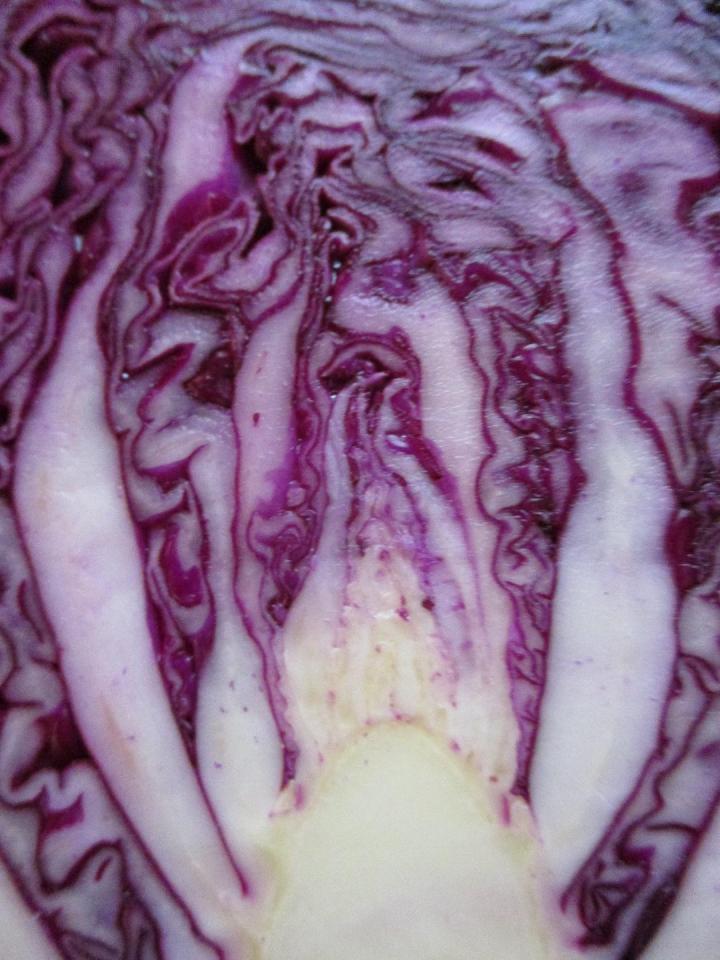
 There are those of us who can grow cabbage well, and there are the majority of us who wish we could. Mild winters allow cabbage to be grown in autumn as well as in spring; but warm weather can also compromise flavor and promote premature bolting (blooming), which ruins the heads. Cabbage demands rich soil and regular watering. If the weather is evenly mild, they dig that too.
Spring grown cabbage was planted last winter, about a month prior to the last frost. Now it is time for autumn cabbage, about a month or two before frost. New plants can be planted a bit deeper than they were originally grown, so that the wiry and fragile sections of stem below the lowest leaves can be buried. Plants should be at least a foot apart and might get larger with more space. It takes at least two months for dense round heads of common green or red cabbage to mature. Slower varieties are worth growing for their unique flavors.
 Tony Tomeo
I love red cabbage! you have reminded me to buy some plugs from the next market. It’s the bugs that are always a killer with cabbage and brassicas.. They seem to move in overnight and leaves resemble lace curtains 🙂
LikeLiked by 1 person
We are fortunate to see that only in pictures. I suppose it happens where cabbage are grown on farms, but not nearly to the extent that it happens in other regions. My cabbage get fat aphid though! ICK!
LikeLike
I’ve always liked the patterns revealed by slicing through a head of cabbage.
LikeLiked by 1 person
It seems like the cabbage put way too much effort into arranging its leaves like that for them to be simply eaten.
LikeLiked by 1 person
I gave up on cabbage and collards this year, because of worms. 😦
LikeLiked by 1 person
OH! Is that the cabbage looper that others have been talking about?
LikeLiked by 1 person
Other years I had a few regular cabbage worms: little green ones that came from the white butterflies, both common here. I usually just used some Bt occasionally and picked some off. This spring, after the plants got a good start, suddenly there were worms all over them; a little bigger worm, sort of bluish-green. I didn’t know what they were then or what moth/butterfly they came from but they made lace quick and I gave up and removed the plants. Looking at the pictures of those loopers later, I guess that’s what they were. New kinds of pests, oh goodie, another gardening challenge! 😦
LikeLiked by 1 person
You would think that after contending with all the problems of dispersing exotic specie into places where they do not belong, humanity would learn to be more careful. Yet, these things are getting around now worse than they have ever done before!
LikeLiked by 1 person
You would hope that people would think, yes. But the phrase common sense implies that everybody has some. And everybody travels globally now and things go with them I guess.
LikeLiked by 1 person
I can’t grow cabbage, but I love to eat cabbage. Especially red cabbage cooked with vinegar, apples, bacon, and a little sugar. As for ornamental cabbages, they do nothing for me.
LikeLiked by 1 person
Ha! That is how I feel. I just did not want to say so. Ornamental cabbages look too much like vegetables, and my former neighbors complained when I grew vegetables in the front garden. What makes it okay for ornamental cabbage?
Why would cabbage not grow there? The limiting factor for us in inland valleys is the lack of humidity. However, just a few miles away, in the Pajaro and Salinas Valleys, cabbage is one of the main vegetable crops.
LikeLiked by 1 person
Oh, cabbages can grow here, I just don’t grow them because I have almost no space for vegetables.
LikeLiked by 1 person
Oh, of course. They are rather bulky.
LikeLiked by 1 person