They are still one of my favorites!
via Dago Pansies
They are still one of my favorites!
via Dago Pansies
Genesis 1: 11-12 describes the creation of all vegetation and the beginning of horticulture on the Third Day of Creation. Those must have been such happy times. Nowadays, it is getting to be more like the Book of Revelation! During this time of pestilence, while smoke obscures the sun, moon and stars, I have been contending with locusts. The premature defoliation of box elders that I mentioned last week (supposedly) might be associated with diminishment of sunlight by so much smoke.
1. Gloves which seem to have been worn for the Battle of Armageddon were my primary defense against the hellacious swarms of locusts that have been tormenting us for more than a year.

2. Thorns of black locust, Robinia pseudoacacia, are nasty! They are paired like the horns of Satan! The thorns are modified stipules, so are actually neither thorns nor spines, but ‘prickles’.

3. Swarms of locusts are more numerous this year because more mature locust trees were cut down last November, leaving more stumps and many more roots of the not quite so deceased.

4. Smoke and fog filled the sky with old fashioned smog before the sun rose on Wednesday. (‘Smog’ is an abbreviation of ‘smoke’ and ‘fog’.) Not much is from the CZU Lightning Complex Fire.

5. Smoke was so dark at noon that street lamps and this porch light came on. That is a big coast live oak in the middle, with a California buckeye to the left and a coastal redwood to the right.

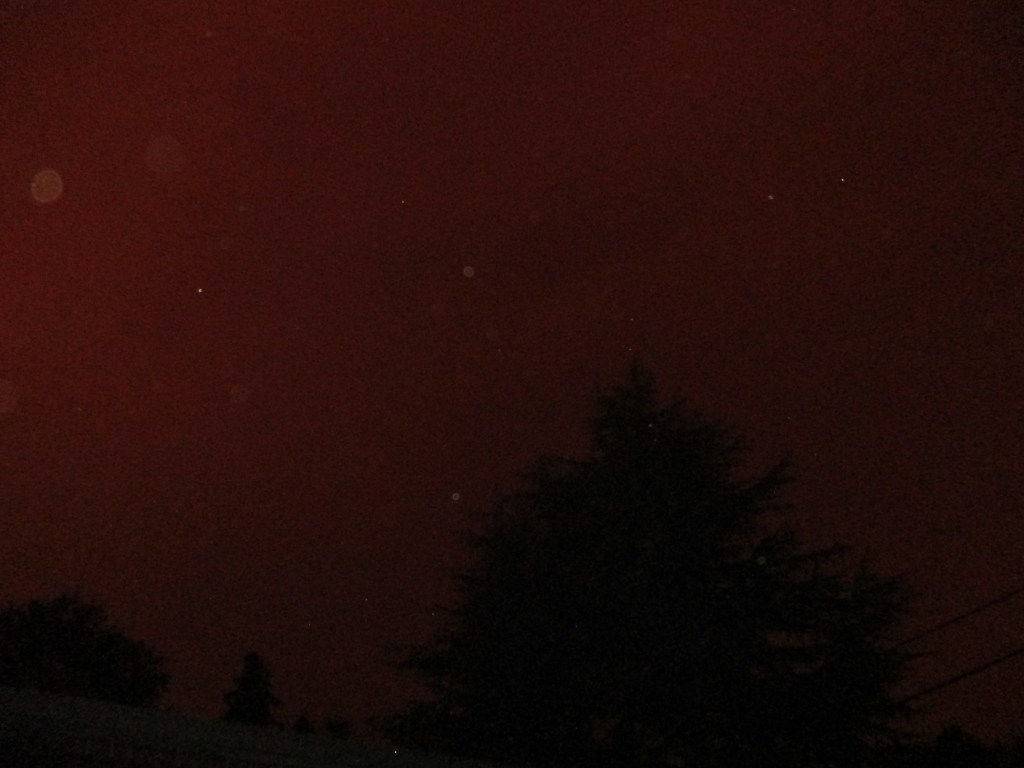
6. That was not the worst of it. It was so dark by 4:00 that I needed headlights to drive back. Those are deodar cedar to the right, a cottonwood to the left, and a coastal redwood in between.
This is the link for Six on Saturday, for anyone else who would like to participate:
https://thepropagatorblog.wordpress.com/2017/09/18/six-on-saturday-a-participant-guide/
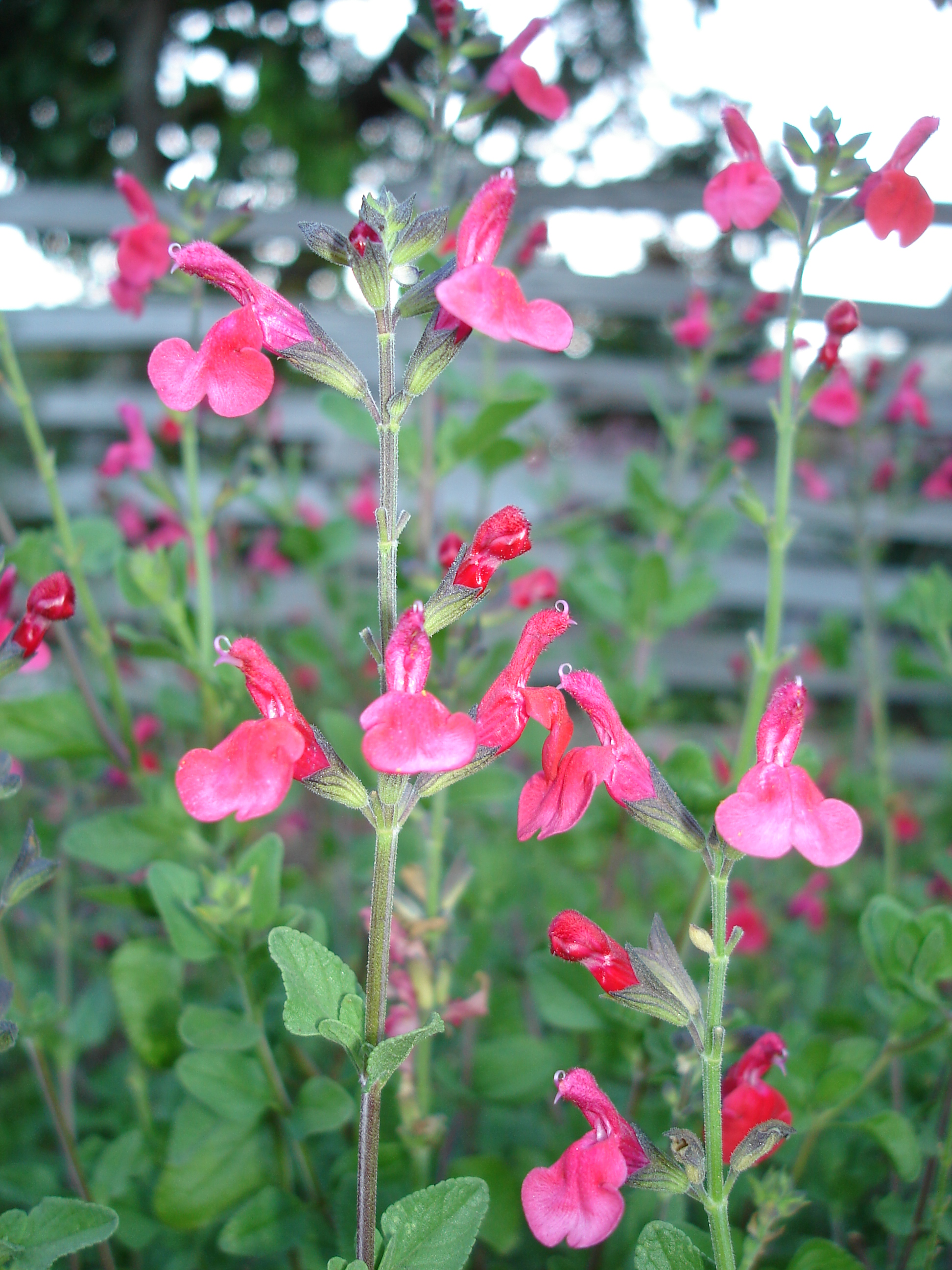
Perhaps in the wild, it blooms in autumn. Where it gets watered in home gardens, even if watered only occasionally, autumn sage, Salvia greggii, blooms all through summer as well. If pruned back severely over winter, it starts to bloom even sooner in spring. The tiny flowers are red, rose, pink, peach, very pale yellow, lavender or white. Some poplar cultivars have bi-colored flowers.
Compact autumn sage that does not get much more than a foot tall is uncommon. Larger cultivars get four feet tall and broad, with more open growth. Most get about three feet high and a bit wider. Without severe winter pruning, stems can eventually get twiggy, with sparse foliage on the exterior. The tiny aromatic leaves are less than an inch long, and visually resemble oregano.
Even though it is not native to California, autumn sage is popular for native landscaping because it does not need much water. Just like native sages, it attracts butterflies and hummingbirds.

From the time they get planted in early spring, tomato plants are expected to perform a bit better than they did earlier in the season. They start out with only a few early tomatoes, but quickly become prolific. Production continues to increase as the plants grow all through summer . . . until now. Newer leaves on top are not staying so far ahead of fading leaves below.
While the weather is still warm, it is difficult to say how tomato plants know that autumn will soon replace summer. They do not seem to be intelligent enough to realize that every day is imperceptibly shorter than the one before. Nor do they seem to be sensitive enough to notice if the nights get slightly cooler. They just know, and they tell all their friends.
If zucchini plants have not started to fade and sag, they will soon. As weather cools, they no longer grow faster than the mildew that they tolerated all summer. Any fruits that are present now should have time to finish developing, but there probably will not be many more after that. (Zucchini fruits are eaten before mature anyway.) Other warm season vegetables are in a similar state.
Acorn, Hubbard, butternut and other winter squash grow through summer just like summer squash do, but are not harvested until the vines wither in autumn and winter. Unlike summer squash that continue to produce many tender juvenile fruit to replace what gets harvested through summer, winter squash plants put all their effort into one or two large ripe fruit.
Warm season vegetable plants still need to be watered as the foliage slowly deteriorates. They only begin to need less water as they lose foliage and the weather gets cooler. They may like to be fertilized one last time, but will not not need it again. Any last phases of corn will stay thirsty later than other vegetable plants because they deteriorate slower, and are rather thirsty anyway.
Seed for broccoli, cauliflower, cabbage, kale and certain other cool season vegetables can be sown in flats or cell packs now so that their seedlings are ready to go when the warm season vegetables relinquish their space in the garden. If space allows, seed for beet, turnip and turnip greens can be sown directly into the garden. Carrot seed should still wait for cooler weather.
This old recycled article is offensive enough to perhaps qualify for the ‘Horridculture’ meme for Wednesdays. (I still do not know when I can resume writing new articles.)
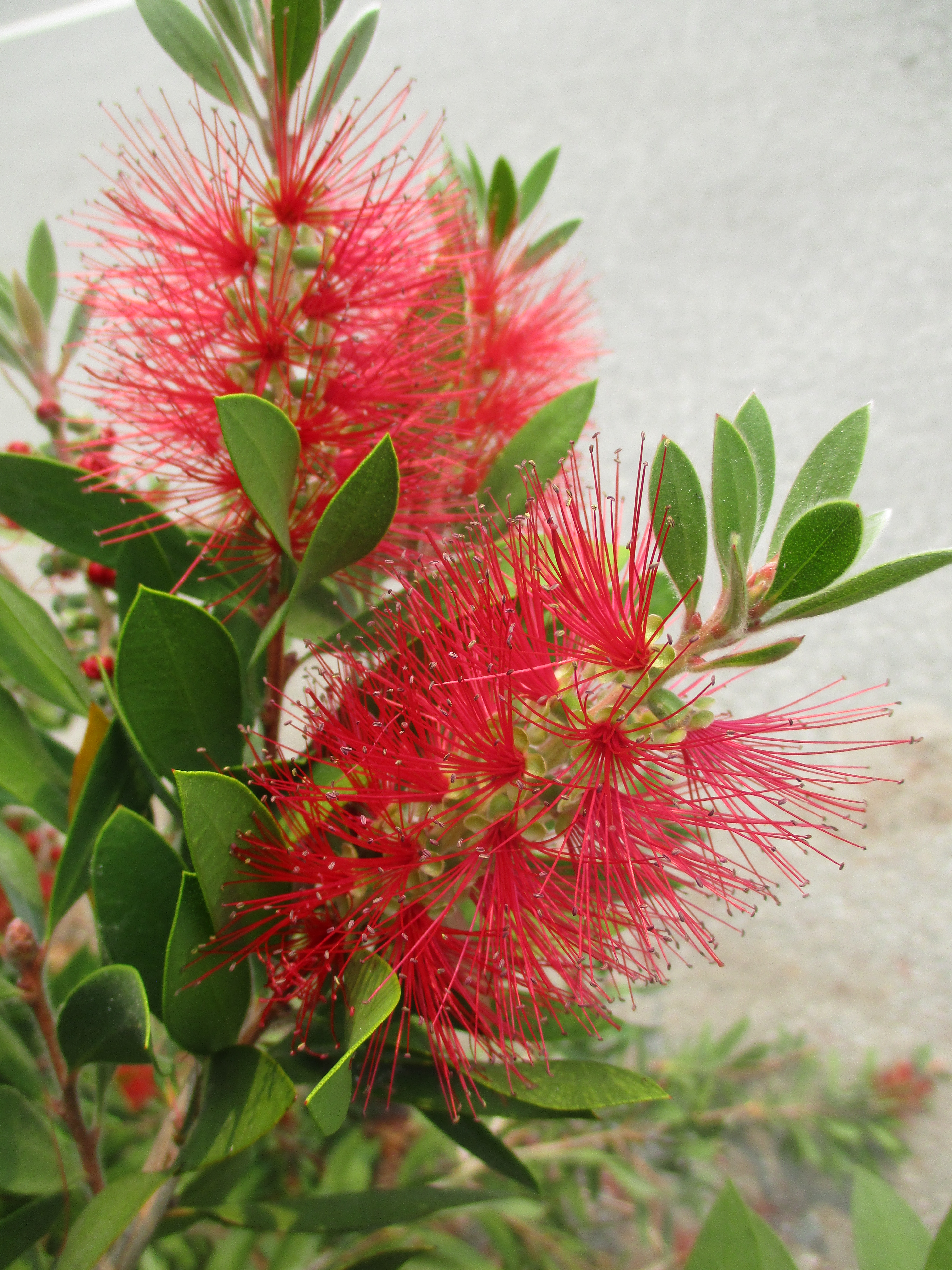
As its compact cultivars gained popularity over the years, the formerly common lemon bottlebrush, Callistemon citrinus, became passe. Most are mature specimens in old fashioned landscapes. It is unfortunate. Only lemon bottlebrush and weeping bottlebrush can grow as small trees. (However, lemon bottlebrush is now classified as Melaleuca citrina. Most Melaleuca get notably larger.)
If competing for sunlight, mature specimens of lemon bottlebrush can almost reach upstairs eaves. Well exposed specimens may not get much more than half as tall, with mounding form of about equal width. Removal of low growth to expose sculptural trunks and handsomely shaggy bark promotes higher growth above. Shearing of hedges should not be too frequent to allow some bloom.
Bright red bloom is sporadic through the year, and gets more abundant as summer becomes autumn. The small and staminate flowers are densely set in cylindrical ‘bottlebrush’ formation. These blooms are about two or three inches long, almost as wide, and popular with hummingbirds. Dense evergreen foliage is aromatic. Individual leaves are narrow and about two or three inches long.

Early spring bloom is best. That is simply how the schedule of the majority of flowers works. The priority of flowers is pollination. Pollination is necessary for the production of seed. The production of seed and any associated fruit takes time. Seed, whether contained within fruit or not, then disperses before winter. After soaking and chilling through winter, seed germinates for the next spring.
For a variety of reasons, some flowers prefer to bloom earlier, later, or randomly through the year. Some are from climates in which they want to avoid harsh weather of a particular season. Some rely on pollinators who are active for a limited time. Regardless of the reasons for their bloom schedule, early, late and randomly blooming flowers add color to the garden before and after spring.
Many flowers that bloom randomly through the year tend to bloom better and later with a bit of persuasion. Cutting roses regularly seems innocent enough, but actually deprives rose plants of their efforts to produce seed. So does deadheading to remove their developing fruit structures that contain seed. Plants respond by trying to bloom again or more prolifically than they would otherwise.
Lily of the Nile reliably provided much of the color through the middle of summer. Many gardens have some. Some gardens have many. Their color range is limited, but effective. Now that they are done, canna, dahlia and delphinium should continue to bloom until frost. Mexican blue sage that took a break after spring bloom should bloom even better as summer ends, and into early autumn.
The bloom schedule of many flowers of the Compositae (or Asteraceae) family also coincide with late summer. Some have been blooming since spring. Some just started recently. These include but are not limited to cone flower, blanket flower, zinnia, cosmos, coreopsis, sunflower and Japanese anemone. African daisy and euryops daisy often bloom well after the earliest rains of autumn.
Eucalypti that bloom colorfully, such as red flowering gum, Eucalyptus ficifolia, bloom after the warmth of summer, but before cooling autumn weather.
This is an old article about the beginning of the the Memorial Tree, that I have so commonly written about since then.
I like to think that some of the trees that get planted now will be appreciated for decades afterward, and that a few might be appreciated for a century or more.
The CZU Lightning Complex Fire got no closer than a mile and a half from here. Except for the ash and the aroma of smoke, there is not much evidence of a fire. The burn zone is within view from here, but the forest is just as green as it was prior to evacuation. I received news while away that smoking debris was falling from the sky here, so did not know what to expect when we returned. So many neighbors were not as fortunate.
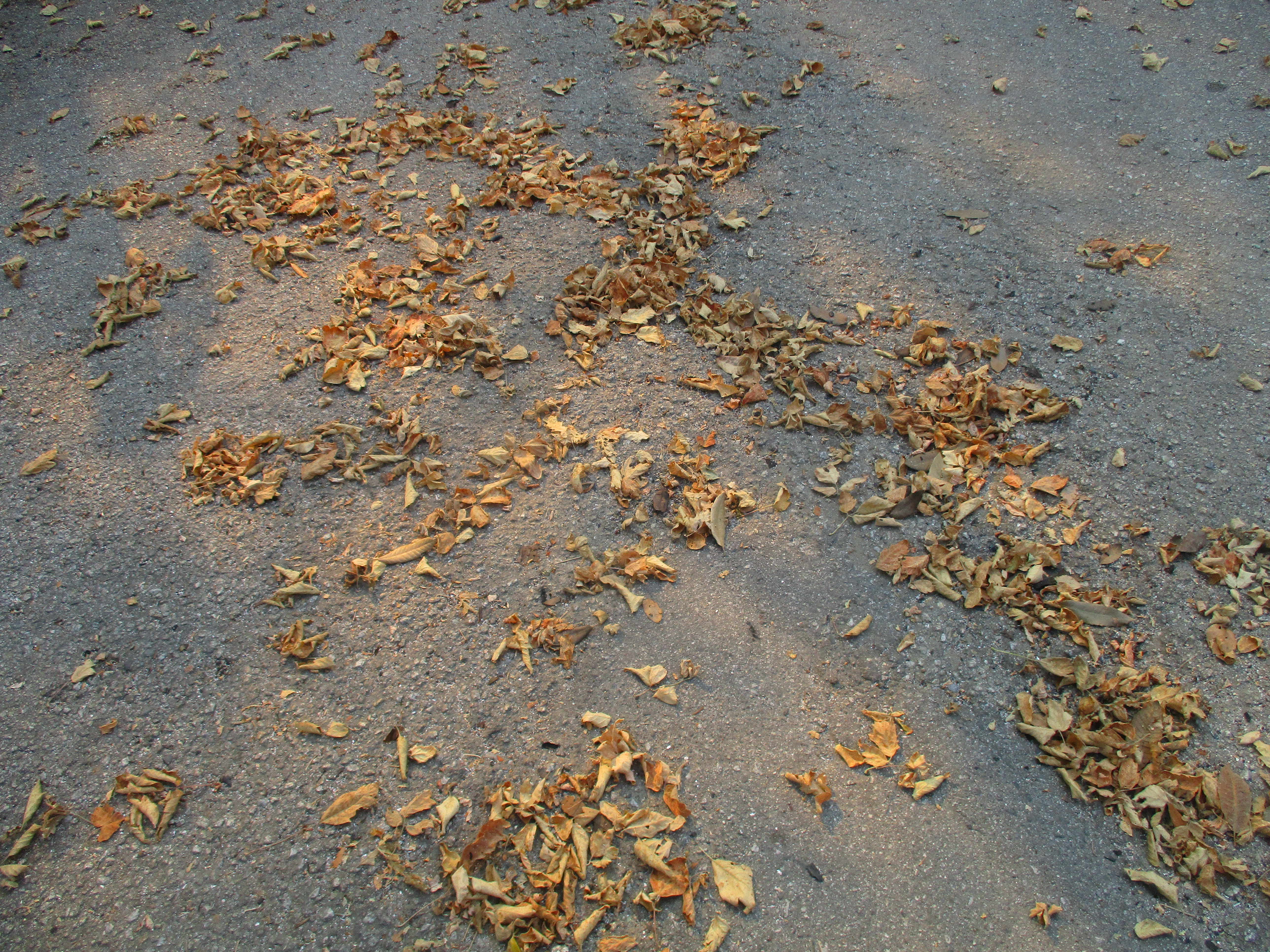
1. Fire roasted leaves blew in from the fire. Some were still smoking as they fell. These are two madrone leaves at the top, three tanoak leaves at the bottom, and redwood below the middle.

2. Ash is everywhere! I left on the day prior to the yet unforeseen evacuation, with the intention of returning later, so left windows open. It now smells like a barbecued bacon burger in here.

3. Summer squash survived days of warm weather without irrigation. This was the worst of the wilt. There was nothing ‘ini’ about the ‘zucchini’. They looked like a herd of green dachshunds.
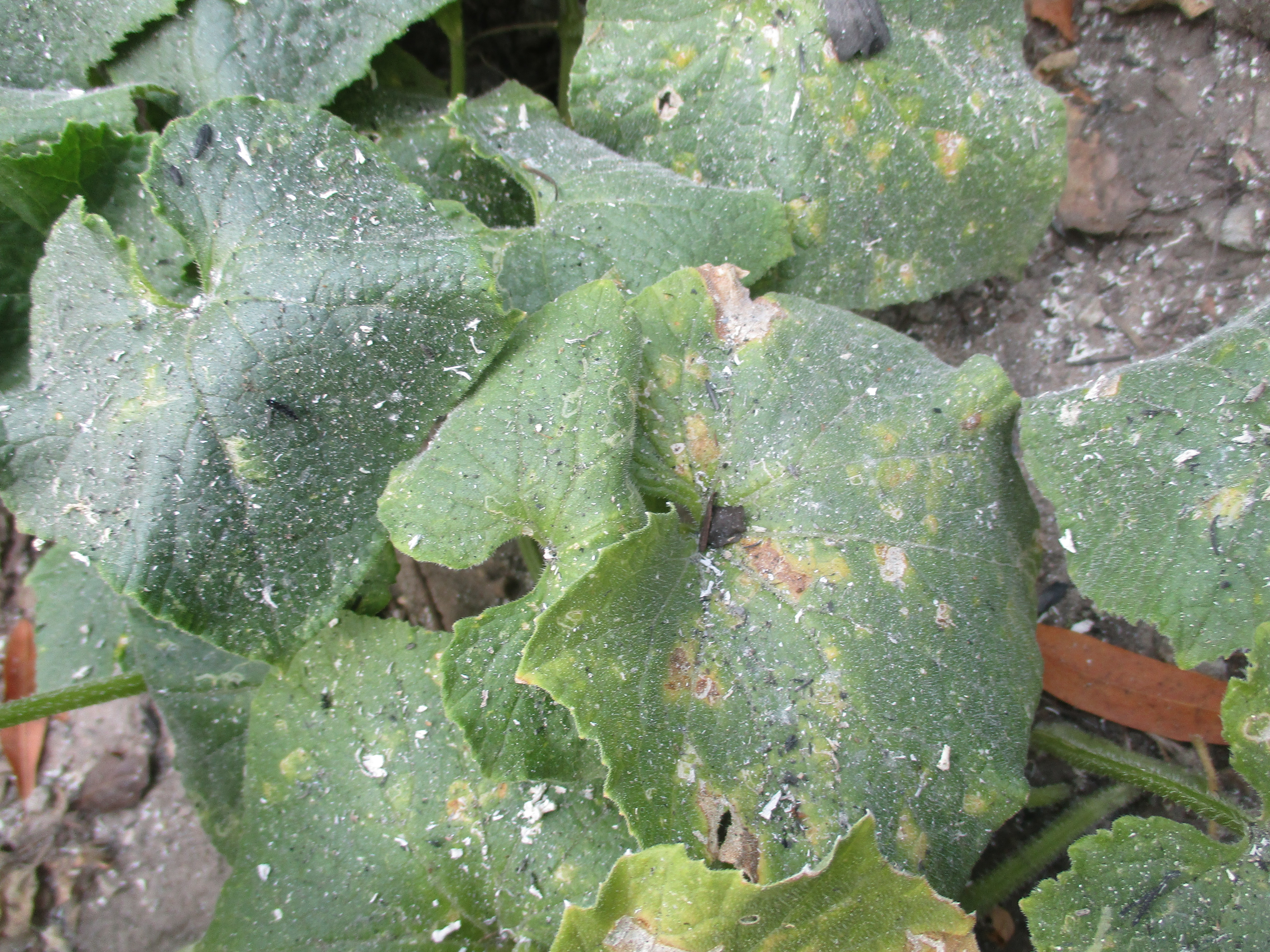
4. Pole beans were in reasonably good condition as well. They recovered rather efficiently after getting irrigated. The few beans that started to wilt and dry were just plucked and discarded.

5. Boxelder are suspiciously defoliating prematurely under a smoky orange sky. I do not know if it is associated with the smoke or the weather, but I doubt that President Trump is involved.
6. Blue gum that is still confined to a #15 can did not wilt any more than the summer squash or pole beans. I am impressed! It must have rooted into the ground below the bottom of the can.

This is the link for Six on Saturday, for anyone else who would like to participate: https://thepropagatorblog.wordpress.com/2017/09/18/six-on-saturday-a-participant-guide/
 Tony Tomeo